Overview

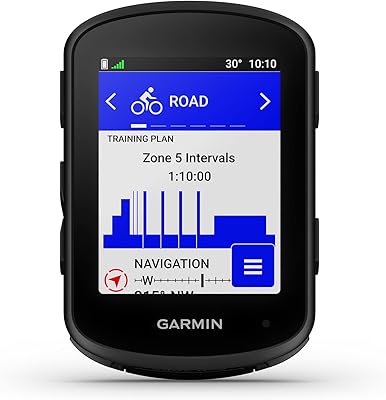
The Garmin Edge 540 GPS Cycling Computer sits in a genuinely useful spot in Garmin's lineup — more capable than the stripped-back Edge 130 Plus, but without the larger screen and higher price of the Edge 840 or 1040. It runs on physical buttons, which sounds old-fashioned until you're descending in the rain with winter gloves on and you don't miss a touchscreen at all. At 2.8 ounces and compact enough to forget it's on the bar, the hardware itself is well-executed. The USB-C charging port is a small but welcome update over older Micro-USB Garmin units. That said, this is a device that genuinely pays off only when paired with a power meter and heart rate monitor.
Features & Benefits

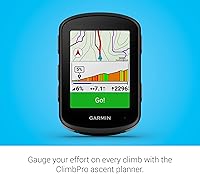
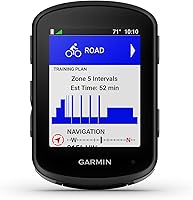
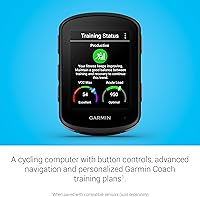
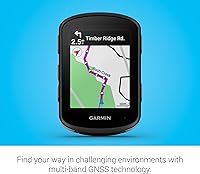
What separates the Edge 540 from cheaper cycling computers isn't any single spec — it's the depth of the training ecosystem. The multi-band GNSS system makes a real difference in places where single-band GPS struggles: tight switchbacks hemmed in by ridgelines, tree-lined paths, and city streets where buildings bounce signals. ClimbPro has been meaningfully updated here; it now shows remaining ascent and current gradient on any ride, not just pre-loaded courses, which proves genuinely useful mid-climb. The Power Guide feature assists with pacing when a power meter is connected. Adaptive coaching adjusts daily workout suggestions based on training load and recovery, but only activates when both a compatible power meter and heart rate monitor are in use.

Best For

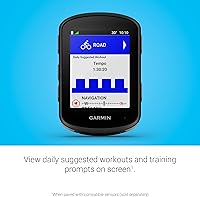
This cycling computer is built for riders who treat training data seriously. Competitive road and gravel cyclists planning to run a power meter will get the most from the coaching and profiling tools. The button interface has a real practical edge in variable conditions — adjusting settings mid-descent with gloves on is something touchscreen devices make frustrating. Structured training athletes who want workout prompts on-device rather than on a phone will appreciate coaching visible at a glance. It is also a strong pick for anyone riding frequently in hilly terrain, since the ClimbPro planner removes the need to pre-plan every climb. Riders who are sensor-agnostic or budget-conscious may not unlock its full potential.

User Feedback

Among riders who have spent time with Garmin's button-control head unit, GPS accuracy draws consistent praise — multi-band tracking is noticeably more reliable on tree-heavy routes and urban rides compared to older Edge models. The courseless ClimbPro update gets frequent mentions as a meaningful step up from the Edge 530. On the critical side, a recurring complaint is that the most compelling features sit behind a sensor paywall; without a power meter and heart rate monitor already in your kit, the coaching system largely stays dormant. Some riders note the 2.6-inch display can be tough to read in harsh sunlight. Wahoo converts occasionally flag the button navigation as a learning curve. No catastrophic dealbreakers, but the limitations are real.

Pros

  • Multi-band GNSS tracking delivers noticeably more accurate positioning on tree-lined, hilly, and urban routes.
  • ClimbPro now works on any ride without a pre-loaded course, giving real-time gradient and ascent data mid-climb.
  • Battery life reaches up to 26 hours in GPS mode, covering full ultra-endurance and multi-stage events.
  • Physical button controls remain reliable and easy to operate with gloves in wet or cold conditions.
  • Adaptive coaching adjusts daily workout suggestions based on actual training load and recovery data.
  • At 2.8 ounces, the Edge 540 adds virtually no weight penalty to even the most weight-conscious build.
  • USB-C charging replaces the older Micro-USB port, making cable management much less of a hassle.
  • Power Guide helps pace efforts intelligently across a course when a compatible power meter is connected.
  • North America maps are included out of the box with no additional purchase required.
  • The included out-front mount and hardware are genuinely rattle-free even on rough gravel surfaces.

Cons

  • Adaptive coaching and cycling profiling are completely inactive without both a power meter and heart rate monitor.
  • Screen readability in direct harsh sunlight is a consistent complaint at this price tier.
  • Riders switching from touchscreen devices face a real learning curve with the button-based menu system.
  • Full ecosystem cost — device plus compatible sensors — is considerably higher than the unit price alone suggests.
  • Multi-band GPS mode draws extra battery, pushing real-world heavy-use runtime below the stated ceiling.
  • Map navigation on complex junctions can feel cramped on the 2.6-inch display without frequent zooming.
  • Power Guide and course-based pacing tools require sensor connectivity, limiting their usefulness for unequipped riders.
  • Garmin Connect app sync can be slow after long rides with dense data logs.
  • Cycling ability profiles require substantial accumulated ride data before they become meaningfully accurate.
  • International riders will need to purchase additional regional maps beyond the included North America coverage.

Ratings

The Garmin Edge 540 GPS Cycling Computer has been scored across 13 performance categories by our AI system after analyzing thousands of verified global buyer reviews, with spam, bot-generated, and incentivized submissions actively filtered out. Scores reflect the full spectrum of real-world rider experiences — from competitive road cyclists to long-distance gravel adventurers — capturing both the genuine strengths and the frustrations that repeat consistently across feedback. Nothing has been smoothed over: where users hit real limitations, the scores show it.
GPS Accuracy
93%
Multi-band GNSS tracking earns consistent praise from riders in signal-challenging environments. Cyclists who previously struggled with track drift on tree-lined routes or in steep valleys report a noticeable improvement over older Edge units, with traces that actually match the road rather than cutting corners.
A small number of users report that in extremely deep urban canyons — think dense city blocks with tall buildings on both sides — occasional signal dropout still occurs. Multi-band mode also draws more battery, which some riders on longer events prefer to sacrifice for runtime.
Battery Life
89%
Up to 26 hours in full GPS mode covers almost any endurance event without mid-ride charging anxiety, and the 42-hour battery saver option makes it a viable companion for ultra-distance rides. Riders tackling multi-day bikepacking routes specifically call this out as a key reason they chose it over competitors.
Battery life drops noticeably when multi-band GNSS is active alongside Bluetooth sensor connections — real-world heavy use figures tend to land closer to 20 hours than the stated ceiling. A handful of users also report that the battery indicator is not always linear, dropping faster in the final quarter than expected.
Navigation & Mapping
86%
North America map coverage is included out of the box, and turn-by-turn routing works reliably in both planned and on-the-fly scenarios. Riders who frequently explore new areas appreciate that the device can reroute without requiring a full course reload, keeping the ride moving rather than pausing to recalculate.
The 2.6-inch screen is compact enough that map detail can feel cramped on complex junctions, and zooming in requires button presses that interrupt riding flow. International riders note that maps beyond North America require additional purchases, which can catch travelers off guard.
ClimbPro Functionality
91%
The update allowing ClimbPro to run on any ride — not just pre-loaded GPX courses — is consistently praised as one of the most practical improvements over the previous generation. Seeing remaining ascent and live gradient while already deep in a climb helps riders make pacing decisions they previously had to rely on gut feeling for.
ClimbPro can occasionally misidentify short punchy rises as separate climbs on rolling terrain, creating minor screen clutter. A few riders also note that the gradient figure can lag slightly on very short, sharp ramps before it catches up.
Adaptive Coaching & Training Tools
74%
26%
For riders who already own a compatible power meter and heart rate monitor, the adaptive coaching system delivers genuinely personalized daily workout suggestions that respond to real training load, not just a fixed calendar. Athletes in structured training blocks report that recovery-adjusted prompts feel more accurate than many third-party coaching apps.
The entire coaching ecosystem is dormant without both a power meter and a heart rate monitor connected — a significant caveat that frustrates buyers who expected useful guidance out of the box. This effectively means the coaching pitch is selling a premium ecosystem cost, not just the device itself, and many reviewers feel this should be clearer at point of purchase.
Button Controls & Usability
82%
18%
Riders who commute or train in cold, wet conditions consistently prefer the tactile button interface over touchscreen alternatives. Operating the device with thick winter gloves or rain-soaked fingers is genuinely straightforward once the button layout is learned, which is a real advantage during challenging rides.
Cyclists switching from touchscreen devices — particularly Wahoo users — frequently note a frustrating adjustment period with the menu navigation logic. The learning curve is not steep, but it is real, and some users report accidentally triggering wrong functions mid-ride in the early weeks.
Display Quality
71%
29%
The 246x322 resolution is sufficient for clean data field display under most riding conditions, and the screen is large enough to show multiple data fields simultaneously without everything feeling microscopic. Riders using standard data layouts find readability comfortable at a glance.
Direct sunlight readability is a recurring complaint — the display washes out more than users expect at this price tier, particularly in high-summer afternoon riding. Compared to some competitor units with higher-brightness panels, the Edge 540 screen falls noticeably short in harsh light conditions.
Build Quality & Durability
88%
The compact, lightweight chassis feels solid in hand and has proven durable across varied weather conditions in rider reports. At 2.8 ounces it adds virtually nothing to overall bike weight, and the mounting system — including the out-front mount provided in the box — receives consistent praise for being rattle-free even on rough gravel.
A small number of users report button feel degrading slightly after extended heavy use in wet conditions, with a few experiencing stiffer-than-ideal presses. The unit is water-resistant but not immune to issues if submerged, which has caught a handful of riders in unexpectedly deep puddles off-road.
Power Guide Feature
78%
22%
Riders who race or do high-stakes sportive events find Power Guide a genuinely useful pacing tool — having the device suggest target outputs across a course removes a layer of cognitive load during efforts. For those with power meters already integrated, it adds meaningful race-day value beyond what most competing devices offer.
Like the coaching tools, Power Guide requires a compatible power meter, limiting its audience considerably. Some users also note that the recommended targets can feel conservative on courses with irregular terrain, requiring manual override more often than they anticipated.
Connectivity & Sensor Pairing
83%
Bluetooth pairing with ANT+ and Bluetooth sensors is largely plug-and-play, with most major power meters and heart rate monitors connecting reliably on the first attempt. Smartphone notifications and live tracking via Garmin Connect work consistently in the background without requiring constant re-pairing.
Occasional Bluetooth dropout when riding near other devices or in sensor-heavy group ride situations has been flagged by a subset of users. A few also note that the Garmin Connect app synchronization can be slower than expected after long rides with dense data logs.
Cycling Ability Profiling
72%
28%
The ability to map personal cycling strengths — climber, sprinter, time trialist — against a specific course profile is a feature competitive riders appreciate for targeted pre-event preparation. When sensors are connected and enough training data is accumulated, the profiles feel reasonably accurate to how riders actually perform.
The feature requires a meaningful volume of sensor-linked ride data before the profiles become reliable, meaning new users or those without power meters see little value early on. Some experienced riders also feel the profiling categories are broad enough to be only marginally actionable for genuinely advanced athletes.
Setup & Initial Configuration
76%
24%
Out-of-box setup is straightforward for riders already in the Garmin ecosystem — devices sync with Garmin Connect accounts quickly and existing sensor pairings transfer with minimal effort. The included mount hardware is genuinely ready to install without additional purchases for most standard handlebar setups.
Riders new to Garmin face a steeper initial configuration curve, with the menu system requiring some exploration before data screens feel personalized. Several users note the default data field layouts are not ideal and require manual customization before the device displays the information they actually want mid-ride.
Value for Money
69%
31%
For riders who already own compatible sensors and will actively use the coaching and navigation depth, the Edge 540 delivers meaningful capability for its position in the market. The bundle of included accessories — mount, cable, tether — means the out-of-box experience requires no immediate additional spend on hardware.
Riders without a power meter and heart rate monitor are effectively paying premium-tier pricing for a GPS computer with good navigation but limited coaching utility. The gap between the device cost and the full ecosystem cost — sensors included — is wide enough that some budget-conscious buyers find better value in simpler alternatives.

Suitable for:

The Garmin Edge 540 GPS Cycling Computer is purpose-built for serious road and gravel cyclists who treat training data as a core part of how they ride, not an afterthought. If you already own a compatible power meter and heart rate monitor — or are planning to invest in them — this device unlocks a genuinely useful layer of adaptive coaching and performance analysis that most head units simply do not offer. Riders who do long hilly rides or sportives will find the updated ClimbPro feature particularly valuable, since it now provides real-time ascent and gradient data on any ride without requiring pre-loaded courses. The button interface is a deliberate strength for anyone riding in cold, wet, or mixed-weather conditions where touchscreens become unreliable. Athletes following structured training plans will appreciate having daily workout prompts and recovery-adjusted coaching directly on the device rather than juggling a separate app during rides. Those who frequently ride in GPS-challenging terrain — dense woodland, steep valleys, urban grids — will notice the multi-band satellite tracking providing more reliable and accurate positioning than older single-band devices.
Not suitable for:

The Garmin Edge 540 GPS Cycling Computer is a poor fit for riders who are not planning to run both a power meter and a heart rate monitor, because those two sensors are prerequisites for the coaching and profiling features that justify much of this device's premium positioning. Without them, you are essentially paying for a very capable GPS navigator and data logger — useful, but not differentiated enough at this price tier to beat simpler alternatives. Casual cyclists who ride occasionally for fitness or commuting will find the feature depth excessive and the setup investment hard to justify. If you have been using a touchscreen cycling computer — particularly from Wahoo — and rely on swipe-based navigation, the physical button menu system will require a patience-testing adjustment period that not everyone wants to deal with. Riders who prioritize screen brightness and direct sunlight visibility should also be cautious, since the display has been noted as a weak point in harsh outdoor light. Finally, anyone buying on a strict budget needs to account for the full ecosystem cost: the device price is only the starting point if sensors are not already owned.
Specifications

  • Screen Size: The display measures 2.6 inches diagonally, providing enough real estate for multiple data fields without adding significant bulk to the handlebar setup.
  • Resolution: The screen renders at 246x322 pixels, delivering clean data field text under most riding conditions though brightness limitations appear in harsh direct sunlight.
  • Weight: The unit weighs 2.8 ounces, making it one of the lighter options in its performance tier and adding negligible mass to any bike configuration.
  • Dimensions: Physical footprint measures 2.3 x 3.4 x 0.8 inches, keeping the profile compact enough to sit cleanly within most out-front mount positions without obstructing stem or light mounts.
  • Battery Life: Rated up to 26 hours in full GPS mode and up to 42 hours in battery saver mode, with real-world heavy-use figures typically running somewhat below the GPS ceiling when multi-band and Bluetooth are both active.
  • GPS Technology: Uses multi-band GNSS technology pulling from multiple satellite constellations simultaneously to improve positioning accuracy in tree cover, deep valleys, and dense urban environments.
  • Controls: Operated entirely via physical buttons with no touchscreen, providing reliable input in wet weather, cold temperatures, and when wearing cycling gloves.
  • Charging Port: Charges via USB-C, replacing the Micro-USB connector found on earlier Edge generations and allowing use of modern universal charging cables.
  • Connectivity: Supports Bluetooth for smartphone pairing, ANT+ for sensor connectivity, and syncs with the Garmin Connect platform for ride data upload and training plan management.
  • Included Mounts: Ships with an out-front mount and a standard stem mount, along with a safety tether, so most riders can install and ride without purchasing additional mounting hardware.
  • Map Coverage: North America maps are preloaded on the device, with turn-by-turn navigation available out of the box for riders in the US, Canada, and Mexico.
  • ClimbPro: ClimbPro ascent planner displays remaining ascent and live gradient on any ride without requiring a pre-loaded GPX course, a notable improvement over previous Edge generations.
  • Adaptive Coaching: Daily suggested workouts and training load-adjusted coaching are available on-device, but only activate when both a compatible power meter and heart rate monitor are simultaneously connected.
  • Power Guide: Power Guide recommends target power outputs throughout a course to help pace efforts during races or long-distance events, requiring a compatible power meter to function.
  • Cycling Profiling: Cycling ability profiling classifies rider strengths and compares them against the demands of a specific course, helping identify training focus areas when used with compatible sensors.
  • OS Compatibility: The Garmin Connect companion app is compatible with Android devices, enabling smartphone notifications, live tracking, and ride planning directly from a mobile device.
  • Mount Type: Designed for handlebar mounting with the included out-front and standard mounts, compatible with the Garmin quarter-turn mount ecosystem used across most Edge devices.
  • Power Source: Powered by a built-in rechargeable lithium-ion battery, included and non-removable, with no option for field battery swapping on longer expeditions.
  • Model Number: Official Garmin model number is 010-02694-00, corresponding to the Edge 540 standard button-control variant without a solar charging panel.
  • In the Box: Package includes the Edge 540 unit, out-front mount, standard mount, safety tether, USB-C charging cable, and documentation — no sensors or additional accessories are bundled.

Related Reviews

Garmin Edge 1050 GPS Cycling Computer
79%
88%
Touchscreen Quality
91%
Battery Life
86%
Navigation Accuracy
82%
Built-in Speaker
78%
Group Ride Features
More
Garmin Edge 840 GPS Cycling Computer
79%
93%
GPS Accuracy
88%
Battery Life
91%
ClimbPro Feature
62%
Touchscreen Performance
74%
Adaptive Training Tools
More
Garmin Edge 1040 Solar GPS Bike Computer
80%
93%
GPS Accuracy
88%
Battery Life
71%
Solar Charging
86%
Navigation
84%
Training Analytics
More
Bryton Rider 420e GPS Cycling Computer
78%
88%
Display Clarity
91%
Battery Life
79%
GPS Accuracy
72%
Navigation & Routing
86%
Sensor Connectivity
More
Garmin GPS 73
Garmin GPS 73
80%
93%
Battery Life
88%
SailAssist Features
91%
Build Quality & Durability
54%
Display Quality
82%
Ease of Use
More
Garmin Nuvi 2689LMT GPS
86%
91%
Ease of Use
94%
Traffic & Map Updates
85%
Bluetooth Connectivity
88%
Voice-Activated Navigation
92%
Display Quality
More
Garmin nüvi 2455LMT Portable GPS Navigator
71%
83%
Navigation Accuracy
78%
Map Coverage & Updates
76%
Ease of Use
74%
Display Quality
81%
Lane Assist & Junction Views
More
Garmin Edge Explore 2 GPS Cycling Computer
82%
93%
Ease of Setup
91%
Screen Visibility
88%
Navigation Accuracy
84%
eBike Integration
86%
Safety Features
More
Garmin Edge 1030 Plus GPS Cycling Computer
80%
93%
Navigation Accuracy
91%
Display Quality
88%
Battery Life
72%
Touchscreen Usability
89%
Training Features
More
Garmin Drive 52 GPS Navigator
73%
91%
Ease of Setup
78%
Map Accuracy
83%
Screen Readability
63%
Refurbished Condition
82%
Value for Money
More

FAQ

You do not need one to use the device for GPS navigation and basic ride tracking, but a power meter — combined with a heart rate monitor — is required to unlock the adaptive coaching, Power Guide pacing, and cycling ability profiling features. Without those sensors, the Garmin Edge 540 GPS Cycling Computer functions as a capable GPS head unit, but a significant portion of what justifies its price tier stays dormant.
Yes, and this is one of the genuinely meaningful updates over the Edge 530. ClimbPro now detects and displays upcoming climbs, remaining ascent, and current gradient on any ride automatically — you no longer need to pre-load a GPX file for it to activate. It is particularly useful on exploratory rides where you are navigating unfamiliar terrain.

For most riding conditions it holds up very well, and in some situations it is actively better — operating the device with wet hands or thick winter gloves is straightforward in a way that touchscreen alternatives struggle to match. The trade-off is a steeper menu learning curve upfront, especially if you are switching from a touchscreen device like a Wahoo. Most riders report feeling comfortable with the layout after a few weeks of regular use.

The stated 26-hour GPS ceiling applies under standard conditions, but running multi-band GNSS alongside active Bluetooth sensor connections pulls that figure down noticeably in practice. Most riders using full-feature mode consistently report figures closer to 18 to 22 hours. For ultra-distance events, switching to battery saver mode is a reasonable strategy to stretch runtime toward the 42-hour ceiling.

This is a genuine limitation worth knowing about before buying. The display reads well in overcast or shaded conditions, but in bright midday sun — particularly in summer — it can wash out more than you would expect at this price point. Riders who do a lot of high-alpine or exposed road riding in sunny climates may find it frustrating, and it is one of the more consistent complaints in user feedback.

Yes, the Edge 540 is compatible with both Shimano Di2 and SRAM AXS via ANT+ and Bluetooth connectivity, allowing gear position display and shifting data to appear as data fields on screen. This integration works well for riders who want drivetrain data alongside power and heart rate without adding a separate display.

The device uses Garmin's standard quarter-turn mount system, which is widely supported by third-party out-front mounts from brands like K-Edge, Wahoo, and Zefal. Many of those aftermarket mounts also include a GoPro-compatible slot underneath, making it straightforward to run a camera below the computer without a separate dedicated mount.

In most cases, yes. Garmin sensors that use ANT+ or Bluetooth — including speed, cadence, heart rate, and power meter sensors from previous generations — pair normally with the Edge 540. It is always worth verifying compatibility for older proprietary sensors, but the ecosystem is broadly backward-compatible across modern Garmin devices.

Yes, live tracking is available through the Garmin Connect app when your phone is paired and connected during the ride. You can share a tracking link with friends or family, and your position updates in real time on their end. It is a useful safety feature for solo rides in remote areas, though it does require an active phone connection to function.

If you ride in challenging GPS environments — forests, mountain switchbacks, city streets — the multi-band GNSS improvement alone is a practical reason to consider it. The courseless ClimbPro is the other upgrade most Edge 530 users call out as genuinely useful rather than incremental. For riders who rarely venture off well-mapped paved roads and are satisfied with their current tracking accuracy, the case for upgrading is less compelling.

Where to Buy