Overview

The Garmin Edge 1040 Solar GPS Bike Computer is built for cyclists who take long rides seriously — not the occasional weekend warrior, but endurance athletes and performance-focused riders who need a computer that keeps pace with them. The solar charging is a genuine differentiator here; this isn't marketing spin bolted onto an existing device. At this price tier, you're investing in a feature set that most riders will never fully exhaust. Worth noting upfront: the box contains the unit and mounting hardware only. Advanced metric tracking requires separately purchased sensors. The physical unit is compact at 4.7 ounces, handlebar-mounted, with a 3.5-inch touchscreen backed by physical buttons for gloved hands.

Features & Benefits

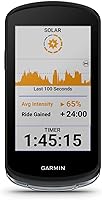
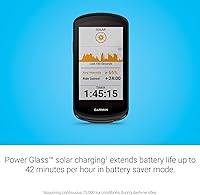
The Power Glass solar lens is the headline feature, but context matters: Garmin claims up to 42 additional minutes per hour in battery saver mode under continuous 75,000 lux — think blazing midday sun, not typical overcast conditions. On a multi-day summer tour, that difference is meaningful. The multi-band GNSS system genuinely earns its place, holding signal lock through tree cover and tight city streets where cheaper units lose position. Power Guide helps you pace a course by recommending power targets, while Stamina Insights keeps tabs on how much harder you can realistically push — both features require a paired power meter to function properly.

Best For

This solar-powered cycling computer makes most sense for a fairly specific type of rider. Endurance athletes doing back-to-back centuries, ultra-distance events, or bikepacking trips — where charging opportunities are scarce — will get the clearest return from the extended battery life. Data-driven athletes who already own a power meter and heart rate monitor will unlock the depth of analytics that justify the price. Mixed-terrain and gravel riders benefit from reliable GPS lock across unpredictable environments. If you're already embedded in the Garmin Connect ecosystem, the integration is genuinely smooth. Casual riders or those on a tighter budget will find capable alternatives at a fraction of the cost.

User Feedback

Riders who use the Edge 1040 Solar regularly tend to praise its GPS accuracy and the reassurance of knowing battery life isn't a concern on big days out. The depth of training metrics gets consistent credit too. On the critical side, the solar charging expectations gap is real — cloudy days or rides that start early and end late simply don't reap the advertised gains. Touchscreen sensitivity in wet conditions or with gloves frustrates a meaningful number of users. Advanced features like Power Guide and Cycling Abilities only activate with compatible sensors, which surprises buyers who expect them out of the box. Garmin has addressed some early firmware bugs via updates, though a few edge cases linger.

Pros

  • Multi-band GNSS delivers dependable GPS lock on technical trails, in cities, and in poor weather conditions.
  • Solar charging provides meaningful battery extension on long, sunny rides without any extra hardware.
  • Battery saver mode stretches usage to around 100 hours with solar — enough for multi-day bikepacking trips.
  • Power Guide and Stamina Insights give real-time pacing intelligence that endurance racers and gran fondo riders will appreciate.
  • On-device data field editing means you can adjust your display mid-ride without pulling out your phone.
  • The box includes three different mount types, covering road, gravel, and mountain bike setups right away.
  • Garmin Connect integration is polished and works reliably with a wide range of third-party sensors.
  • Physical buttons alongside the touchscreen make the unit usable even when the screen is unresponsive to wet fingers.
  • Training Status and Heat and Altitude Acclimation features add genuine training load intelligence for goal-focused athletes.
  • At under 5 ounces, this Garmin unit adds almost nothing to the overall bike weight.

Cons

  • Solar gains are highly conditional — overcast skies or shaded routes produce noticeably less battery benefit than advertised.
  • Most advanced analytics require a separately purchased power meter, which adds significant cost on top of an already premium price.
  • Touchscreen responsiveness in wet conditions or with gloves is a recurring frustration among real-world users.
  • The device-only packaging means new cyclists need to budget extra for sensors before unlocking the full feature set.
  • The interface depth can feel overwhelming for riders who just want navigation and basic stats without a steep learning curve.
  • Some firmware bugs from the original launch still surface occasionally, even after multiple update cycles.
  • At this price point, riders in consistently cloudy regions are paying a solar premium they may rarely benefit from.
  • Bluetooth-only connectivity means no ANT+ direct smartphone sync, which can complicate some third-party app integrations.

Ratings

The scores below reflect an AI-driven analysis of verified global user reviews for the Garmin Edge 1040 Solar GPS Bike Computer, with spam, bot-generated, and incentivized feedback actively filtered out before scoring. Each category is rated independently to give you an honest picture of where this solar-powered cycling computer genuinely excels and where real buyers have run into frustration. Both the standout strengths and the recurring pain points are transparently reflected in every score.

GPS Accuracy
93%
Multi-band GNSS is consistently praised by riders tackling switchback mountain trails, dense urban environments, and long gravel routes where signal reliability matters most. Users moving between road and off-road regularly report that lock acquisition is fast and position drift is rare even under tree canopy.
A small number of users have reported occasional position jumps after firmware updates, though Garmin has addressed most of these in subsequent patches. The improvement over single-band units is meaningful, but not every rider will notice the difference on open roads.
Battery Life
88%
On multi-day touring rides and ultra-distance events, the Edge 1040 Solar consistently draws praise for outlasting competitors without requiring a mid-route charge stop. Riders doing back-to-back centuries in the summer report the battery saver mode as a genuine safety net.
The advertised 100-hour ceiling applies specifically to battery saver mode with continuous solar input — demanding GPS mode with full features active is a very different story. Riders who push the device hard with active navigation and sensor recording should expect considerably shorter real-world runtime.
Solar Charging
71%
29%
On bright summer days during long outdoor rides, the solar contribution is real and measurable, with users reporting noticeably slower battery drain compared to the non-solar model. For cyclists in sun-rich climates doing all-day rides, the Power Glass lens delivers tangible peace of mind.
The 75,000 lux condition required for peak solar gain is rarely met in practice outside of midday summer riding with clear skies. Riders in northern climates, shade-heavy routes, or anyone logging most miles before 9am or after 4pm will see minimal benefit, making the solar premium harder to justify.
Navigation
86%
Course loading from Garmin Connect, Komoot, and Strava is reliable, and turn-by-turn prompts are clear enough that riders rarely miss a junction even at speed. The map rendering on the 3.5-inch screen is readable in most lighting conditions without squinting.
The display size is a real limitation for riders who want to study detailed route topology while moving — it works well for following a course but is not ideal for on-the-fly rerouting in unfamiliar areas. Some users also find the map zoom and pan controls less intuitive than they expect.
Training Analytics
84%
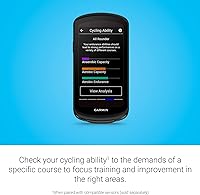
For athletes with a full sensor setup, the depth of available metrics — Power Guide pacing, Stamina Insights, Training Status, and Cycling Abilities profiling — is among the richest of any cycling computer at any price. Riders preparing for gran fondos or stage races find the course demand analysis genuinely useful for pre-event strategy.
Every one of those headline features requires separately purchased compatible sensors to function, which adds significant cost and creates a frustrating expectation gap for buyers who assumed the device worked standalone. Without a power meter in particular, a large portion of the analytics simply sit dormant.
Build Quality
82%
18%
The unit feels solid and well-assembled, and the IPX7 water resistance rating holds up in real riding conditions including heavy rain and muddy spray. Most long-term users report no issues with button feel, housing integrity, or mount security after extended use across multiple seasons.
The silicone case included in the box, while a thoughtful addition, has attracted some criticism for attracting dirt and being fiddly to fit cleanly. A handful of users have reported minor cosmetic wear on the Power Glass lens after sustained use on rough terrain.
Touchscreen Usability
63%
37%
In dry conditions the touchscreen is responsive and the on-device data field editing is a genuine convenience, letting riders adjust their display layout without opening the app. The screen is bright enough to be readable on sunny days without needing to shield it.
Wet weather responsiveness is a persistent complaint — rain on the screen can cause phantom touches or unresponsive taps that require switching to physical buttons mid-ride. Riders who use thick winter gloves find the touchscreen largely unusable, and navigating menus with buttons alone during a ride requires a learning curve.
Ease of Setup
77%
23%
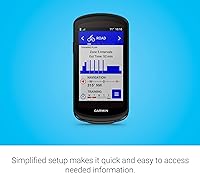
Pairing the unit with the Garmin Connect app is generally smooth, and the streamlined interface helps new users get a basic ride profile running without digging through menus for an hour. The three included mount types mean most riders can get physically installed without any additional purchases.
Setting up the advanced training features, particularly custom data fields and sensor pairing sequences, takes considerably more time and patience than the simplified interface implies. New users unfamiliar with the Garmin ecosystem often underestimate the configuration effort required to get full value from the device.
App & Connectivity
79%
21%
Garmin Connect is a mature platform with broad third-party integration, and syncing ride data after returning home is fast and reliable for most users. Smartphone notification passthrough works consistently once paired, which is appreciated on long solo rides.
Bluetooth-only smartphone connectivity can feel limiting compared to units that also offer Wi-Fi sync, particularly when uploading large activity files. A small but vocal group of users reports occasional dropped connections between the unit and the app that require re-pairing.
Value for Money
67%
33%
For endurance athletes and serious data-driven cyclists who use the device to its full capability — especially those in sunny climates who benefit from solar — the feature density relative to price is genuinely competitive at the top of the market. The included accessory bundle with three mounts and a silicone case adds some perceived value.
For anyone who cannot exploit the solar charging or does not own compatible sensors, the price is difficult to defend against capable mid-range alternatives that cover navigation and core metrics for significantly less. The device-only packaging means the total investment to unlock all advertised features can be substantially higher than the sticker price.
Weight & Portability
88%
At 4.7 ounces, the unit is light enough that weight-conscious road riders rarely mention it as a concern, and the compact dimensions fit cleanly on any handlebar setup without creating a cluttered cockpit. The tether included in the box is a practical touch for rough terrain.
Compared to the lightest cycling computers on the market, this Garmin unit is not the smallest option available, and some minimalist riders who prioritize an uncluttered setup find the 3.5-inch screen slightly larger than they prefer.
Firmware Stability
72%
28%
Garmin has been active in pushing firmware updates since launch, and the device is meaningfully more stable today than it was at release. Most users who keep the firmware current report a reliable, frustration-free experience in day-to-day use.
A subset of users has experienced regressions after specific firmware updates, including GPS glitches and touchscreen sensitivity changes that were not present before updating. The update cadence is appreciated, but the inconsistency in stability across versions has eroded trust among some long-term owners.
Display Readability
81%
19%
The 282 x 470 pixel LCD is sharp enough for comfortable data reading at a glance during a ride, and brightness levels hold up well in direct sunlight, which matters on the long outdoor rides this device is built for. Customizable data fields let riders prioritize the numbers they actually watch.
The LCD panel does not perform as well as AMOLED alternatives in very low light conditions, which can be an issue for early morning or late evening rides without additional lighting. Some users also find the color rendering somewhat flat compared to newer display technologies on competing devices.
Sensor Compatibility
83%
ANT+ and Bluetooth Smart dual protocol support means the Edge 1040 Solar works with a wide range of third-party sensors from established brands, giving buyers flexibility rather than locking them into a proprietary ecosystem. Pairing multiple sensors simultaneously is stable and reliable once initially configured.
The dependency on external sensors for core advertised features is a significant caveat that Garmin does not make prominent enough in marketing materials. Buyers who discover post-purchase that Power Guide requires a separate power meter investment often feel the device was misrepresented.

Suitable for:

The Garmin Edge 1040 Solar GPS Bike Computer is purpose-built for endurance and performance cyclists who spend serious time in the saddle. If you regularly tackle multi-day tours, ultra-distance events, or back-to-back century rides where charging stops are an inconvenience or simply not possible, the solar-assisted battery life is a practical advantage — especially on sun-heavy routes. Data-driven athletes who already own or plan to invest in a power meter and heart rate monitor will find the depth of analytics here genuinely rewarding, from Power Guide pacing to Stamina Insights mid-ride. Gravel and mixed-terrain riders benefit from the multi-band GNSS reliability, which holds signal in conditions where cheaper units frequently drop out. Those already embedded in the Garmin Connect ecosystem will find the integration with existing sensors and training history refreshingly straightforward.

Not suitable for:

Riders who primarily cycle in overcast climates or mostly log pre-dawn and post-dusk hours should be realistic: the solar charging on the Garmin Edge 1040 Solar GPS Bike Computer is conditional on sustained bright sunlight, and cloudy days return modest gains at best. Casual cyclists who ride a few hours on weekends will find little use for the advanced analytics, and the premium price is hard to justify when mid-range computers cover navigation and basic metrics for significantly less. Buyers expecting the full suite of training features out of the box will be caught off guard — Power Guide, Stamina Insights, and Cycling Abilities all require separately purchased compatible sensors to function. If you are new to GPS bike computers, the sheer volume of settings and data options can feel overwhelming without a learning curve investment. Those who ride predominantly in heavy rain or with thick gloves may also find the touchscreen less cooperative than they would like.

Specifications

  • Screen Size: The device features a 3.5-inch LCD touchscreen with a resolution of 282 x 470 pixels.
  • Dimensions: The unit measures 2.3″L x 0.8″W x 4.6″H, keeping it compact enough for any handlebar setup.
  • Weight: At 4.7 ounces, the device adds minimal mass to your bike regardless of riding discipline.
  • Battery Life: Battery life reaches up to 100 hours in battery saver mode with solar assist, or up to 45 hours in demanding GPS mode with solar under optimal conditions.
  • Battery Type: The unit uses a built-in rechargeable Lithium Polymer cell that charges via USB-C.
  • Solar Charging: The Power Glass solar lens adds up to 42 minutes of battery per hour in battery saver mode, assuming continuous 75,000 lux sunlight conditions.
  • GNSS Technology: Multi-band GNSS support delivers enhanced positioning accuracy across GPS, GLONASS, and Galileo satellite systems.
  • Connectivity: The device connects via Bluetooth for sensor pairing, Garmin Connect app sync, and smartphone notifications, and charges via USB-A to USB-C cable.
  • Input Methods: Riders can interact via the touchscreen or physical buttons, providing a reliable backup input in wet or gloved conditions.
  • Mounting: Three mount types are included in the box: a standard mount, a flush out-front mount, and a mountain bike mount.
  • Sensor Support: The unit is compatible with heart rate, cadence, speed, and GPS sensors, though most must be purchased separately.
  • Special Features: Key features include Power Guide, Stamina Insights, Training Status, Cycling Abilities, Course Demands, and Heat and Altitude Acclimation.
  • In-Box Contents: The package includes the Edge 1040 Solar unit, silicone case, tether, USB-A to USB-C cable, three mount types, and documentation.
  • Display Type: The screen is an LCD panel with wireless scanner capability and ambient display support for outdoor readability.
  • Water Resistance: The device is rated to IPX7 standards, meaning it can withstand immersion in up to 1 meter of water for up to 30 minutes.
  • Market Ranking: The unit holds the number 11 position in the Cycling GPS Units category on Amazon and ranks within the top 36,000 in overall Electronics.

Related Reviews
Garmin Edge 540 GPS Cycling Computer
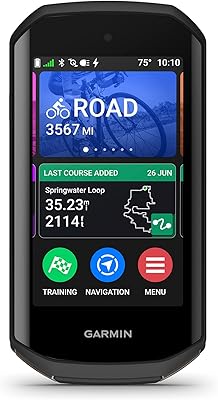
81%
93%
GPS Accuracy
89%
Battery Life
86%
Navigation & Mapping
91%
ClimbPro Functionality
74%
Adaptive Coaching & Training Tools
More
Garmin Edge 840 GPS Cycling Computer
79%
93%
GPS Accuracy
88%
Battery Life
91%
ClimbPro Feature
62%
Touchscreen Performance
74%
Adaptive Training Tools
More
Garmin Edge 1050 GPS Cycling Computer
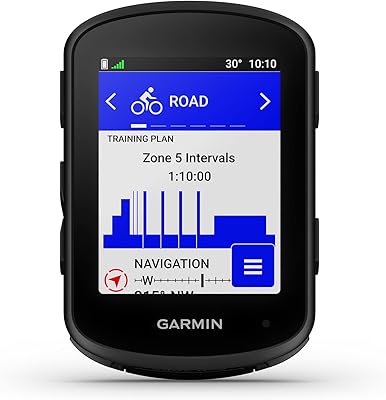
79%
88%
Touchscreen Quality
91%
Battery Life
86%
Navigation Accuracy
82%
Built-in Speaker
78%
Group Ride Features
More
Timex T5K615 GPS Bike Computer
69%
83%
GPS Accuracy
86%
ANT+ Sensor Pairing
79%
Battery Life
71%
Training Peaks Integration
58%
Display Readability
More
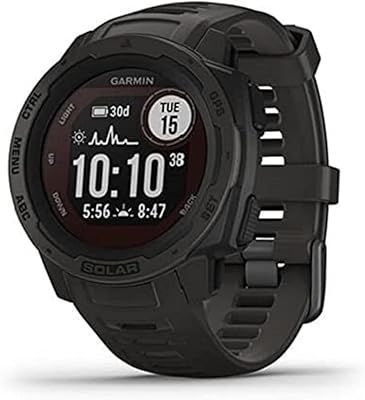
Garmin Instinct Solar Rugged Smartwatch
78%
88%
Battery Life
93%
Build Quality
91%
GPS Accuracy
89%
Navigation Features
74%
Solar Charging
More
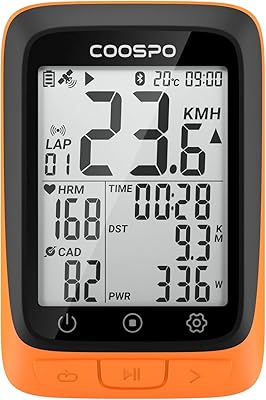
CooSpo BC107 GPS Bike Computer
76%
91%
Value for Money
86%
GPS Accuracy
78%
Ease of Setup
62%
App Experience
79%
Build Quality
More
Bryton Rider 17 GPS Cycling Computer
78%
88%
Screen Readability
91%
Battery Life
87%
Value for Money
69%
GPS Performance
63%
App Reliability
More
Garmin Enduro 3 GPS Smartwatch
83%
96%
Battery Life
91%
GPS Accuracy
93%
Build Quality
88%
Comfort & Wearability
89%
Navigation & Mapping
More
Garmin eTrex Solar Handheld GPS Navigator
80%
91%
Battery Life
88%
GPS Accuracy
93%
Build Quality
58%
Display Quality
67%
Solar Performance
More
Beeline Velo 2 Cycling GPS Computer
77%
88%
Ease of Setup
79%
Navigation Accuracy
86%
Battery Life
83%
Build Quality & Durability
74%
Display Readability
More

FAQ

It depends heavily on your conditions. On a sunny summer day with the unit fully exposed to direct sunlight, the solar gain is real and measurable — Garmin claims up to 42 extra minutes per hour in battery saver mode. But if you ride early mornings, in forested areas, or in a climate with frequent cloud cover, the gains shrink significantly. Think of it as a meaningful bonus on bright days rather than a reliable daily top-up.

Yes, and this catches a lot of buyers off guard. Power Guide requires a paired power meter, and Stamina Insights also depends on sensor data to calculate output. The Garmin Edge 1040 Solar GPS Bike Computer ships as a device-only unit, so you will need to invest in compatible accessories separately to unlock those advanced analytics. If you already own Garmin-compatible sensors, setup is straightforward.

This is a known weak point. The touchscreen can become unreliable when wet, and thick cycling gloves further reduce sensitivity. The good news is that Garmin included physical buttons alongside the touchscreen specifically for these situations, so you are not completely stuck — but navigating complex menus mid-ride with buttons alone takes some getting used to.

The Edge 1040 Solar supports the standard ANT+ and Bluetooth Smart sensor protocols, which means it works with a wide range of third-party sensors including those from Wahoo, 4iiii, Stages, and others. You are not locked into the Garmin sensor ecosystem for hardware, though the Garmin Connect platform works most fluidly with Garmin's own accessories.

Via the included USB-A to USB-C cable, a full charge from zero typically takes around three hours. The solar lens can top things off incrementally during a ride, but it is not a substitute for a proper cable charge if the battery is significantly depleted.

It works well off-road. The box actually includes a dedicated mountain bike mount, and the multi-band GNSS handles GPS signal loss in dense tree cover better than single-band units. The mapping and navigation features are built for both on and off-road routes, so gravel and trail riders are well served.

The core feature set is identical — the solar version simply adds the Power Glass lens that extends battery life in sunny conditions. If you ride primarily indoors, at night, or in overcast climates, the non-solar Edge 1040 saves you money without meaningful trade-offs. If you do long sunny outdoor rides regularly, the solar model pays for itself in reduced charging anxiety over time.

Yes, the Edge 1040 Solar includes built-in navigation with turn-by-turn routing, course following, and back-to-start functionality. You can load courses directly from Garmin Connect or compatible platforms like Komoot and Strava. The map rendering is clear on the 3.5-inch display, though the screen is not as large as dedicated navigation units.

Garmin has pushed multiple firmware updates since the device launched, addressing several early issues with connectivity, data field behavior, and touchscreen responsiveness. The update process is handled through Garmin Express on a computer or via the Garmin Connect app over Bluetooth. A few minor bugs still surface in community forums, but the unit is considerably more stable than it was at launch.

Garmin covers the unit with a one-year limited warranty against manufacturing defects. Their customer support is generally considered solid within the cycling tech community, with phone, chat, and email options available. Extended warranty coverage can be purchased separately, which is worth considering given the premium price of the device.

Where to Buy