Overview

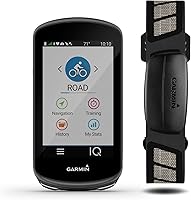
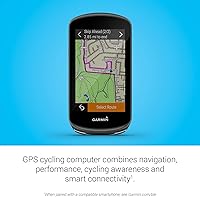
The Garmin Edge 1030 Plus GPS Cycling Computer sits at the top of Garmin's consumer Edge lineup — there is nothing above it for road or trail riders who want comprehensive data without pulling out a phone mid-ride. The 3.5-inch color touchscreen is genuinely large by cycling computer standards, making it easy to read at speed. The bundle sweetens the deal considerably: you get an HRM-Dual heart rate monitor plus speed and cadence sensors right out of the box. That said, the price is steep, and it is worth being upfront about that — this device makes sense for dedicated cyclists, not occasional weekend riders.
Features & Benefits

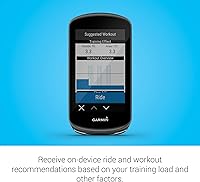
ClimbPro is arguably the standout feature for road riders — it reads ahead on your loaded route and displays remaining ascent and gradient per climb, which is genuinely useful when you are pacing yourself across a multi-climb sportive. On-device workout suggestions are driven by your training load and VO2 max, meaning the Edge 1030 Plus can nudge you toward the right session without logging into an app. Battery life stretches to 24 hours, covering most ultra-endurance efforts comfortably. Trail riders also get MTB-specific metrics — Grit difficulty scores, Flow descent ratings, and jump tracking — features you rarely find at this tier.

Best For

This GPS bike computer is built for riders who are serious about training — road cyclists following structured plans, gran fondo regulars, and mountain bikers who want trail data beyond a basic speed readout. Bikepacking and touring riders will appreciate the full navigation suite and a battery that does not quit after eight hours in the saddle. If you are already running Garmin sensors or a Garmin watch, the ecosystem pairing is practically effortless. Where it falls short is for casual riders or commuters — the feature depth is overkill if you simply want to log mileage, and a more affordable Edge model would serve those riders just as well.

User Feedback

Owners of this Garmin cycling computer consistently praise the map clarity and screen readability at a glance, even in direct sunlight. ClimbPro accuracy on familiar routes earns high marks from sportive and gran fondo riders who rely on it for pacing. That said, the touchscreen has a real weak spot: it can be unresponsive with wet gloves, which frustrates riders in rainy climates. Initial setup through the Garmin Connect app trips some people up, though once configured, day-to-day syncing runs without much friction. Durability feedback is broadly positive, with the device holding up well to crashes and prolonged wet-weather riding over months of use.

Pros

  • ClimbPro accurately displays remaining ascent and gradient per climb, making multi-climb ride pacing far less stressful.
  • The 3.5-inch color touchscreen is among the largest in its category and reads clearly even in bright sunlight.
  • A 24-hour battery comfortably covers ultra-endurance events without requiring a power bank mid-ride.
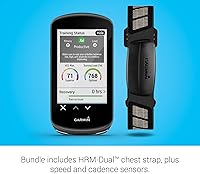
  • The bundle includes an HRM-Dual heart rate monitor plus speed and cadence sensors, adding genuine out-of-box value.
  • On-device workout suggestions adapt to your current training load, giving useful guidance without opening a separate app.
  • ANT+, Bluetooth, and Wi-Fi connectivity means the Edge 1030 Plus plays nicely with virtually every third-party training platform.
  • MTB-specific metrics like Grit, Flow, and jump tracking are rare at this level and add real replay value for trail riders.
  • North America maps are preloaded, so turn-by-turn navigation works without additional downloads or subscriptions.
  • Durability holds up well over extended outdoor use, including wet weather and the occasional crash.
  • Garmin Connect integration provides a rich historical training log that compounds in value the longer you use the device.

Cons

  • The touchscreen becomes unreliable with wet gloves, which is a recurring complaint from riders in rainy climates.
  • Initial device setup and Garmin Connect configuration can be fiddly and time-consuming for first-time Garmin users.
  • inReach satellite compatibility requires a separate device and an active subscription, adding cost for backcountry riders.
  • On-device workout suggestions only function when paired with compatible sensors, limiting usefulness for sensor-free riders.
  • The price is steep, and casual cyclists will realistically use only a fraction of the available features.
  • At 2.08 ounces, the unit is noticeable on the bars compared to lighter, more minimalist cycling computers.
  • Map coverage is limited to North America, so international travelers will need to source additional maps separately.
  • Compared to the Edge 830, the size increase is meaningful — riders who prefer a compact setup may find it bulky.
  • The companion app can be slow to reflect device changes, occasionally requiring a manual sync to confirm updates.
  • Training load and VO2 max suggestions depend heavily on accurate sensor data — inaccurate pairing leads to unreliable recommendations.

Ratings

The scores below for the Garmin Edge 1030 Plus GPS Cycling Computer were generated by our AI after analyzing thousands of verified global user reviews, with spam, bot activity, and incentivized feedback actively filtered out. Each category reflects the honest distribution of real rider experiences — both the aspects that consistently impress and the friction points that keep coming up. Nothing has been smoothed over to flatter the product.
Navigation Accuracy
93%
Riders consistently report that the onboard GPS locks quickly and holds its signal reliably, even under dense tree cover or in narrow mountain valleys. ClimbPro's ability to read ahead on a loaded route and deliver accurate remaining ascent data has earned specific praise from gran fondo and sportive regulars who depend on it for pacing strategy.
A small subset of users note occasional map rerouting glitches when deviating from a planned course, requiring a manual correction rather than a clean automatic recalculation. It is not a frequent complaint, but it surfaces often enough to note for riders who rely heavily on turn-by-turn guidance in unfamiliar areas.
Display Quality
91%
The 3.5-inch color touchscreen draws consistent praise for its clarity, with riders reporting that data fields remain readable at speed even in direct afternoon sunlight. The screen real estate allows for well-spaced data layouts that reduce the need to squint or slow down to check metrics.
Brightness at the lowest setting can still be slightly high for pre-dawn riding without eye adjustment, and a handful of users feel the anti-glare coating picks up smudges faster than competing devices. Neither issue significantly impairs usability, but they are worth noting for riders with specific display preferences.
Battery Life
88%
The 24-hour rated battery holds up well in real-world testing, with most ultra-endurance riders reporting finishing long events with capacity to spare under standard GPS and moderate backlight settings. For bikepacking trips and audax events, this is one of the few cycling computers that genuinely removes charging anxiety from the equation.
Enabling full map rendering, elevated backlight brightness, and constant Bluetooth streaming simultaneously can trim the effective life to closer to 18 hours, which some users discovered mid-event rather than in advance. Setting expectations around power-hungry feature combinations would help new owners plan more accurately.
Touchscreen Usability
72%
28%
Under dry conditions, the touchscreen is responsive and intuitive, with menu navigation feeling closer to a smartphone than a traditional cycling computer. Riders who do most of their riding in fair-weather conditions rarely report any frustration with touch input during rides.
Wet gloves are where this screen consistently lets riders down — multiple users across different climates describe missed taps and unresponsive swipes that force a fallback to the physical buttons. For anyone who rides year-round in the UK, Pacific Northwest, or similarly wet regions, this is a genuine day-to-day annoyance rather than a rare edge case.
Training Features
89%
The combination of on-device workout suggestions, structured workout sync from TrainingPeaks and TrainerRoad, and real-time training load tracking gives serious athletes a coaching layer that sits comfortably on the handlebar. Riders following periodized plans specifically appreciate that the Edge 1030 Plus adapts its suggestions based on recent training history rather than serving up generic sessions.
The training suggestion engine requires paired compatible sensors to deliver meaningful output — without a heart rate monitor and ideally a power meter, the recommendations lose much of their precision. Some users also report that VO2 max estimates can take several weeks of consistent sensor use before stabilizing into reliable numbers.
Connectivity & Syncing
86%
The triple connectivity stack of Bluetooth, ANT+, and Wi-Fi means the device pairs with an exceptionally wide range of sensors and syncs automatically to Garmin Connect whenever it is within range of a known network. Riders who use multiple sensors — power meter, heart rate, radar — report that simultaneous pairing is stable and dropout-free during typical road rides.
The initial pairing and app configuration process is more involved than users coming from simpler devices expect, with several steps required before Wi-Fi auto-sync activates correctly. Occasional delays between completing a ride and data appearing in third-party platforms like Strava have also been flagged, though these are usually resolved by a manual sync.
Build Quality & Durability
84%
Long-term owners report that the device holds together well after sustained outdoor use, including gravel riding, mountain bike trails, and extended exposure to rain and mud. The housing shows minimal flex under pressure and the screen has proven resistant to scratching under normal riding conditions without a screen protector.
A small number of users who experienced handlebar crashes report cracked housings, suggesting the casing prioritizes weather resistance over impact absorption. The included tether helps prevent loss after a mount failure, but does not fully protect the unit from impact damage if it hits a hard surface at speed.
MTB-Specific Metrics
78%
22%
Trail riders who use Grit and Flow scores consistently praise them as genuinely motivating — having a repeatable difficulty and descent quality score encourages revisiting familiar trails with a competitive goal in mind. Jump metrics including hang time and distance add a playful data layer that mountain bikers rarely get from a GPS computer at any price.
The MTB dynamics features require a compatible sensor setup and consistent trail riding to produce meaningful trend data, which limits their appeal for riders who mix disciplines. Some users feel that Flow scores in particular do not always reflect subjective descent quality on technical trails, making it a fun metric rather than a precise analytical tool.
Setup & Onboarding
67%
33%
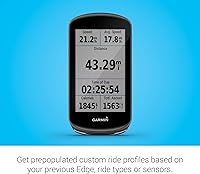
Riders already familiar with the Garmin ecosystem generally get up and running within 20 minutes, and the pre-populated ride profiles based on previous Edge devices make the transition from an older unit notably smooth. The Garmin Connect app walks new users through the core setup steps in a logical sequence.
First-time Garmin users frequently describe the initial setup as overwhelming, with multiple configuration menus, sensor pairing steps, and app account requirements creating a friction-heavy first experience. A number of users specifically call out Wi-Fi sync configuration as the most confusing part of onboarding, requiring more trial and error than it should at this price point.
Map Coverage
76%
24%
Preloaded North America maps are detailed enough for reliable turn-by-turn navigation on both paved roads and trail networks, and the map rendering speed on screen is praised by the majority of domestic riders. For the target audience of North American cyclists, the included maps cover the vast majority of real-world riding scenarios without needing additional downloads.
International riders are left without usable maps out of the box, which is a meaningful omission for a device at this price tier. Sourcing and installing additional regional maps requires navigating Garmin's website and some technical patience, which feels like an afterthought for a flagship product marketed to global endurance athletes.
Value for Money
71%
29%
When assessed as a bundle — device, heart rate monitor, and speed and cadence sensors together — the overall package offers more components per dollar than purchasing those items separately. Dedicated cyclists who will actively use the training features, ClimbPro, and third-party app integrations tend to feel the investment pays off over the long term.
Casual riders or those who only want GPS tracking and basic metrics consistently feel the price is difficult to justify given how little of the feature set they actually use. The gap between this and mid-range Edge models is significant financially, and the real-world benefit of the additional features is not always proportional to the price difference.
App Ecosystem
81%
19%
Garmin Connect provides a rich training history and data visualization platform that compounds in usefulness the longer you ride with the device. Integration with major third-party apps — particularly TrainingPeaks and TrainerRoad — is stable and reliable once configured, making the Edge 1030 Plus a practical hub for structured training.
Garmin Connect's interface is functional but not particularly intuitive for new users, and the sheer volume of data it surfaces can feel more confusing than useful in the early weeks. Some users also report that the Connect app occasionally requires a forced update to maintain stable sync, introducing unexpected interruptions.
Weight & Form Factor
73%
27%
The 3.5-inch screen makes the Edge 1030 Plus one of the most readable cycling computers on the market, and riders who spend hours per session looking at data fields find the larger display format meaningfully easier to use at a glance. Both mount options included in the box cover the most common handlebar and stem configurations without requiring aftermarket hardware.
At 2.08 oz the unit is noticeably heavier than compact alternatives, and weight-conscious road cyclists — particularly those who count grams on climbs — may find the bulk hard to justify. Compared to smaller Edge models, the physical footprint is substantial and can feel intrusive on lighter road bike setups.
inReach Compatibility
69%
31%
For backcountry mountain bikers and remote bikepacking riders, the ability to pair an inReach communicator and manage two-way satellite messaging through the Edge 1030 Plus screen is a meaningful safety feature that few competitors offer at any level. Users who already own an inReach device describe the integration as clean and genuinely useful in areas with no cellular coverage.
The inReach compatibility is entirely contingent on owning a separate inReach device and maintaining an active satellite subscription, both of which add significant cost on top of an already premium purchase. For the majority of riders who do not venture into remote terrain, this feature is invisible and contributes nothing to the day-to-day value of the device.

Suitable for:

The Garmin Edge 1030 Plus GPS Cycling Computer is purpose-built for riders who treat cycling as more than a hobby — think structured training plans, regular long-distance events, and a genuine interest in performance data. Road cyclists preparing for gran fondos or multi-day tours will get real mileage out of ClimbPro, which takes the guesswork out of pacing on back-to-back climbs. Mountain bikers looking for trail-specific metrics beyond speed and distance will appreciate the Grit and Flow scores, which add a competitive layer to familiar trails. Bikepacking and ultra-endurance riders benefit from the 24-hour battery and robust onboard navigation, reducing reliance on a phone in areas with patchy signal. Athletes already invested in the Garmin ecosystem — paired sensors, a Garmin watch, Garmin Connect history — will find the setup almost effortless and the data continuity hard to replicate elsewhere.
Not suitable for:

If you ride mostly for commuting, light fitness, or casual weekend outings, the Garmin Edge 1030 Plus GPS Cycling Computer is probably more device than you need, and the price gap versus simpler alternatives is hard to justify. Riders who only want to log distance and check speed will use maybe ten percent of what this computer offers, which is an expensive proposition. The touchscreen, while generally responsive, can be frustratingly unresponsive when wearing wet gloves — a genuine issue for anyone who rides regularly in rainy conditions. Budget-conscious cyclists who are newer to data-driven training will likely find the feature depth overwhelming rather than empowering. Android users get full app compatibility, but the initial setup and device configuration process has a learning curve that can frustrate less tech-savvy buyers regardless of platform.
Specifications

  • Screen Size: The device features a 3.5″ full-color touchscreen display, one of the largest in the cycling computer category.
  • Battery Life: Rated for up to 24 hours of continuous use on a single charge, suitable for ultra-endurance rides and multi-day touring.
  • Weight: The unit weighs 2.08 oz, which is noticeable compared to lighter cycling computers but reasonable given its feature set.
  • Dimensions: The device measures 2.83 x 5.47 x 5.47 inches, making it a full-size handlebar mount rather than a compact form factor.
  • Connectivity: Supports Bluetooth, ANT+, and Wi-Fi simultaneously, enabling broad sensor compatibility and wireless data syncing without a USB cable.
  • Map Coverage: North America maps come preloaded on the device, supporting full turn-by-turn navigation without additional downloads.
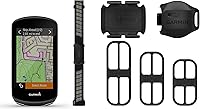
  • Included Sensors: The bundle includes an HRM-Dual heart rate monitor, a speed sensor, and a cadence sensor, providing a complete data collection setup out of the box.
  • MTB Metrics: Trail-specific metrics include Grit difficulty rating, Flow descent score, jump count, jump distance, and hang time for mountain bike rides.
  • Training Apps: Natively integrates with Garmin Connect, TrainingPeaks, and TrainerRoad for structured workout sync and training load analysis.
  • Navigation Tool: ClimbPro reads ahead on a loaded route and displays the remaining ascent and gradient for each upcoming climb in real time.
  • Satellite Comms: Compatible with Garmin inReach satellite communicators for two-way messaging in areas without cellular coverage, though an active subscription and separate device are required.
  • Power Source: Powered by a built-in rechargeable lithium polymer battery that is included and charges via the supplied USB cable.
  • Mount Options: Ships with both a flush mount and a standard mount, giving riders flexibility across different handlebar and stem configurations.
  • OS Compatibility: The Garmin Connect companion app is compatible with Android devices for ride syncing, configuration, and training data management.
  • Input Method: The primary interface is a capacitive touchscreen, supplemented by physical buttons along the device edge for use during rides.
  • Model Number: The official item model number is 010-02424-01, corresponding to the Edge 1030 Plus bundle configuration.
  • Wireless Display: Supports wireless data display and sensor readout, removing the need for wired connections to compatible peripherals.

Related Reviews
Garmin Edge 1050 GPS Cycling Computer
79%
88%
Touchscreen Quality
91%
Battery Life
86%
Navigation Accuracy
82%
Built-in Speaker
78%
Group Ride Features
More
Garmin Edge 840 GPS Cycling Computer
79%
93%
GPS Accuracy
88%
Battery Life
91%
ClimbPro Feature
62%
Touchscreen Performance
74%
Adaptive Training Tools
More
Garmin Edge 540 GPS Cycling Computer
81%
93%
GPS Accuracy
89%
Battery Life
86%
Navigation & Mapping
91%
ClimbPro Functionality
74%
Adaptive Coaching & Training Tools
More
Garmin Edge 1040 Solar GPS Bike Computer
80%
93%
GPS Accuracy
88%
Battery Life
71%
Solar Charging
86%
Navigation
84%
Training Analytics
More
Bryton Rider 420e GPS Cycling Computer
78%
88%
Display Clarity
91%
Battery Life
79%
GPS Accuracy
72%
Navigation & Routing
86%
Sensor Connectivity
More
Garmin GPS 73
Garmin GPS 73
80%
93%
Battery Life
88%
SailAssist Features
91%
Build Quality & Durability
54%
Display Quality
82%
Ease of Use
More
Garmin Edge Explore 2 GPS Cycling Computer
82%
93%
Ease of Setup
91%
Screen Visibility
88%
Navigation Accuracy
84%
eBike Integration
86%
Safety Features
More
Garmin Striker Plus 9SV Fish Finder
79%
93%
Sonar Image Quality
88%
Display Readability
86%
GPS Accuracy
84%
Ease of Use
81%
Value for Money
More
Garmin Nuvi 2689LMT GPS
86%
91%
Ease of Use
94%
Traffic & Map Updates
85%
Bluetooth Connectivity
88%
Voice-Activated Navigation
92%
Display Quality
More
Garmin nüvi 2455LMT Portable GPS Navigator
71%
83%
Navigation Accuracy
78%
Map Coverage & Updates
76%
Ease of Use
74%
Display Quality
81%
Lane Assist & Junction Views
More

FAQ

Yes, the Edge 1030 Plus is compatible with the full range of ANT+ and Bluetooth sensors, which covers virtually all current Garmin sensors. If you already own a Garmin heart rate strap, power meter, or speed sensor, they will pair without any issues. The bundle already includes an HRM-Dual and a speed and cadence sensor if you are starting fresh.

ClimbPro requires a loaded route or course to function — it reads the elevation data ahead of your position to calculate remaining ascent and gradient for each climb. It will not activate during a free ride without a route loaded. For planned events like gran fondos or sportives, it works exactly as advertised and is genuinely one of the more useful navigation features available on any cycling computer.

The screen works fine in rain on its own, but it can struggle to register touches when you are wearing wet gloves — this is a recurring complaint from riders in consistently wet climates. The physical buttons along the edge of the device are there specifically for situations where the touchscreen is unresponsive, so you are never completely without control. It is worth getting familiar with those buttons before your first wet ride.

The rated 24 hours is achievable under normal GPS conditions, though enabling features like full map routing, backlight at higher brightness, or frequent wireless syncing will reduce that figure. Most riders report battery life well within usable range for anything up to a long one-day event. For multi-day bikepacking trips, carrying a small power bank as a backup is still sensible.

The preloaded maps cover North America only. If you plan to ride internationally, you will need to source and install additional maps separately. Garmin does offer maps for other regions through their Connect IQ platform and direct downloads, but they are not included in the box.

Yes, both TrainingPeaks and TrainerRoad are directly supported. You can sync structured workouts from either platform to the device and follow them on-screen during a ride. This makes it a strong option for athletes who follow coach-assigned plans rather than relying solely on Garmin's own workout suggestions.

The inReach functionality requires a separate Garmin inReach device and an active satellite subscription — neither is included in the bundle. What the Edge 1030 Plus offers is compatibility, meaning it can display inReach messages and status on its screen when the two devices are paired. It is a useful safety add-on for backcountry riding, but the entry cost goes up considerably once you factor in the inReach hardware and subscription.

The initial configuration involves pairing the device with the Garmin Connect app on your phone and walking through a setup wizard. Most of it is straightforward, but some users find the first sync and sensor pairing process a bit drawn out compared to simpler cycling computers. Budgeting 30 to 45 minutes for setup on day one is a reasonable expectation. After the initial setup, daily syncing is largely automatic over Wi-Fi.

They are genuinely useful if you ride trails regularly and want a repeatable score to compare across rides or sessions. Grit measures overall trail difficulty and Flow measures how smoothly you descend, giving you something concrete to aim to improve. That said, if you ride mostly on roads or gravel, these metrics will not appear and are essentially irrelevant to your day-to-day use of the device.

Long-term user feedback is generally positive on durability. The device holds up well to prolonged wet weather and the kind of minor crashes that happen on trail rides, and the screen has proven resistant to scratching under normal use. It is not indestructible, but it is built to be ridden hard rather than babied. A mount tether is included in the box, which helps prevent total loss if the unit takes a knock.

Where to Buy