Overview

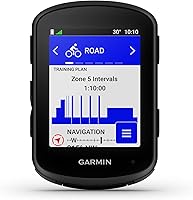
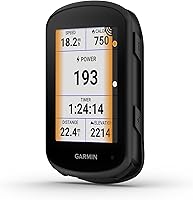
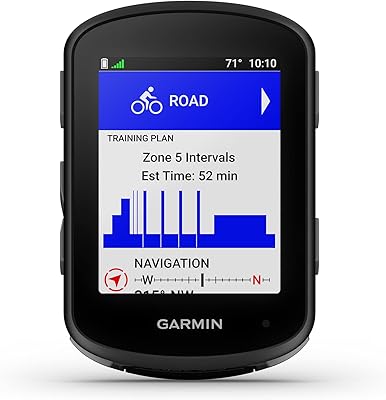
The Garmin Edge 840 GPS Cycling Computer occupies a well-defined spot in Garmin's lineup — serious enough for competitive riders, compact enough to not feel like a brick on your handlebar. At just 2.8 oz with a 2.6-inch display, it punches above its weight both physically and technically. The hybrid touchscreen and button control is one of its most practical traits; you get the swipe convenience of a smartphone interface without sacrificing the reliability of physical buttons on rough terrain. Battery life runs up to 26 hours under demanding conditions, stretching to 32 in battery saver mode — enough for nearly any long-distance event without a mid-ride recharge.
Features & Benefits

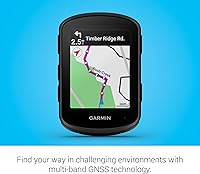
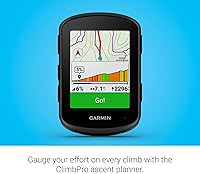
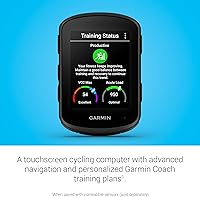
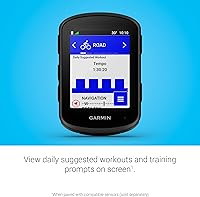
One standout upgrade in the Edge 840 is multi-band GNSS, which genuinely makes a difference when riding through tree-lined canyons or city corridors with tall buildings eating your signal. ClimbPro now activates on any ride — not just pre-loaded routes — so you see real-time grade and remaining ascent whether or not you planned ahead. The adaptive coaching is useful, but worth noting clearly: it requires both a compatible power meter and heart rate monitor to function; without those sensors, you're leaving a significant portion of the device's intelligence untapped. Power Guide and cycling ability profiling round out the performance tools for riders who want course-specific pacing and targeted training direction.

Best For

This cycling computer makes the most sense for competitive road cyclists and structured athletes already invested in a power meter and heart rate monitor setup. Gran fondo regulars and sportive riders will appreciate ClimbPro's real-time pacing on unfamiliar climbs. If you're upgrading from an older Edge device — a 520 or 530, for example — the touchscreen convenience adds genuine day-to-day usability without the size jump that comes with the 1040. It's also a strong pick for anyone riding terrain where GPS accuracy has historically been a frustration. Casual riders who primarily track basic metrics may find the feature depth excessive and the investment difficult to justify.

User Feedback

Riders consistently praise GPS lock speed and build quality — most report acquiring a signal quickly even in challenging start locations, and the unit feels solid without being bulky. ClimbPro on unfamiliar routes earns frequent real-world appreciation. On the downside, wet-weather touchscreen performance comes up regularly; gloved fingers and rain make the screen noticeably less responsive, which is a fair criticism at this price tier. The menu system has a learning curve that frustrates some newcomers. Adaptive training tools draw mixed responses — structured athletes engage deeply with them, while recreational riders rarely touch them. A handful of users have flagged occasional firmware quirks, though Garmin's update cadence typically addresses these over time.

Pros

  • ClimbPro works on any ride — no pre-loaded course needed — giving real-time grade and ascent data on the fly.
  • Multi-band GNSS delivers noticeably more reliable positioning in challenging environments like forests and urban corridors.
  • The hybrid touchscreen and button interface balances modern convenience with reliable physical control.
  • Battery life holds strong across long rides, with up to 26 hours of demanding use before needing a charge.
  • GPS signal locks in quickly at ride start, even in less-than-ideal satellite conditions.
  • At 2.8 oz, the Edge 840 is impressively compact for the amount of functionality packed inside.
  • Power Guide helps riders pace wattage targets intelligently across a course, reducing the guesswork on race day.
  • Cycling ability profiling gives structured athletes a concrete way to match training focus to course demands.
  • LiveTrack and smart notifications keep riders connected without requiring a phone in hand.
  • The included mounting hardware covers both out-front and standard setups right out of the box.

Cons

  • Touchscreen responsiveness drops noticeably in rain or with gloved hands, which is a real issue for wet-climate riders.
  • Adaptive coaching is essentially locked behind a power meter and heart rate monitor — no sensors, no coaching.
  • The menu system has a steep learning curve that can frustrate riders new to the Garmin ecosystem.
  • Casual riders will find much of the feature set unused and may struggle to justify the investment.
  • Occasional firmware bugs have been reported by users, though these are typically patched over time.
  • The price gap between this unit and the Edge 1040 sparks frequent debate about whether the step-up is worth it.
  • Screen size, while adequate, may feel limiting for riders who rely heavily on mapping during navigation.
  • Setup and customization require a meaningful time investment before the device feels truly dialed in.
  • No solar charging option exists, unlike some competing devices at a similar tier.
  • Stamina Insights and MTB Dynamics, while useful for some, add complexity that many road-focused riders will never engage with.

Ratings

The Garmin Edge 840 GPS Cycling Computer earns strong marks overall from verified buyers worldwide, with our AI-driven scoring system analyzing thousands of real user reviews while actively filtering out incentivized, bot-generated, and spam feedback. Scores reflect where the device genuinely excels and where riders have run into friction — no category has been softened to protect the product's reputation.
GPS Accuracy
93%
Multi-band GNSS receives consistent praise from riders who've dealt with dropouts on older units. Cyclists riding through forested switchbacks and city corridors both report noticeably tighter track lines and faster satellite acquisition compared to previous Edge generations.
A small number of users report occasional rerouting glitches in very dense urban environments, and a handful of firmware versions have introduced temporary positioning quirks that required updates to resolve.
Battery Life
88%
Most riders find the 26-hour ceiling more than sufficient for double centuries and ultra-endurance events without reaching for a battery pack. The battery saver mode at 32 hours gives meaningful extra headroom when riders forget to top up before a big day.
Battery drain is noticeably faster when all sensors, Bluetooth, and backlight are running simultaneously, and a small segment of users report degraded capacity after 18 to 24 months of heavy daily use.
ClimbPro Feature
91%
This is one of the most consistently praised features across all user segments. Riders tackling unfamiliar sportive routes specifically value the ability to see remaining ascent and gradient without needing a pre-loaded course, helping them distribute effort intelligently across a long day.
ClimbPro's detection can occasionally misread shorter rollers as significant climbs on certain terrain types, leading to minor display clutter. A few users also wish the threshold for what counts as a climb were adjustable.
Touchscreen Performance
62%
38%
In dry, warm conditions the touchscreen is responsive and intuitive — riders who commute or train in fair weather rarely complain, and the ability to swipe through screens mid-ride is genuinely convenient when fingers are dry.
Wet weather and gloved hands expose the touchscreen's most significant weakness. This is the single most recurring complaint across reviews, with many riders in rainy climates reporting that the screen becomes nearly unusable and that they rely on physical buttons almost exclusively in those conditions.
Adaptive Training Tools
74%
26%
Structured athletes with power meters and heart rate monitors find the adaptive coaching system genuinely responsive to training load and recovery state, making mid-cycle plan adjustments feel grounded rather than arbitrary. Power Guide in particular earns praise from racers targeting specific course demands.
The feature set is completely inaccessible without both a compatible power meter and heart rate monitor — a significant caveat that catches some buyers off guard. Recreational riders frequently report that these tools go entirely unused, reducing the perceived value of the device.
Build Quality
89%
The unit feels solid and well-machined in hand, with reviewers consistently noting it survives crashes, vibration on rough roads, and extended use in harsh conditions without cosmetic or functional deterioration. The buttons have a satisfying, positive click that holds up over time.
A small number of users have reported screen scratching more easily than expected without a screen protector, and the mount connection — while secure — occasionally shows wear at the locking tab after extended daily use.
Navigation & Mapping
83%
Having North American maps pre-loaded is a genuine convenience, and turn-by-turn directions function reliably on both pre-planned and spontaneous routes. Riders appreciate that the device can reroute on the fly without needing a phone connection.
The map rendering resolution can feel limiting on the 2.6-inch display when navigating complex urban intersections, and users wanting global map coverage need to manage and download additional regions manually through Garmin's platform.
Menu & Interface Usability
61%
39%
Once configured, the device operates smoothly and the customizable data field system is genuinely powerful. Experienced Garmin users upgrading from older Edge units tend to feel at home quickly and appreciate the consistency of the interface logic.
First-time Garmin users report a steep and sometimes discouraging learning curve navigating the nested settings menus. Initial setup can take several sessions to get data screens, alerts, and connectivity fully dialed in, and the documentation provides minimal guidance.
Connectivity & Syncing
86%
Automatic Bluetooth sync to Garmin Connect works reliably in the background for the vast majority of users, and Wi-Fi syncing on home networks adds a convenient backup. ANT+ and Bluetooth dual-band sensor pairing covers virtually every accessory a serious cyclist would use.
Occasional Bluetooth pairing drops between the device and specific third-party sensors have been reported, typically resolved by re-pairing. A handful of users also note that Wi-Fi sync can hang if the Garmin Connect app isn't up to date.
Value for Money
67%
33%
Riders who fully utilize the training ecosystem — power meter coaching, ClimbPro, advanced navigation — tend to feel the investment is justified relative to what comparable devices offer. The feature depth at this size is difficult to match from competing brands.
The comparison to the Edge 1040 creates genuine tension in buyer sentiment, with many questioning whether the price gap is warranted given the 1040's larger screen and solar option. Riders who don't use power meters are essentially paying a premium for features they cannot access.
Size & Portability
91%
At 2.8 oz the device is among the lightest at this feature level, and riders switching from bulkier head units consistently remark on how unobtrusive it feels on the bar. The compact footprint suits both road and mountain bike setups without looking oversized.
The smaller form factor is a deliberate trade-off, and riders who prioritize screen size for mapping or older eyes will find the 2.6-inch display limiting. There is no larger variant of the 840 for those who want this feature set in a bigger package.
Firmware Stability
71%
29%
Garmin's update cadence is generally regarded positively — known bugs tend to get patched within reasonable timeframes, and major feature improvements have been delivered post-launch via firmware rather than requiring a hardware upgrade.
Several firmware versions across the device's lifecycle have introduced temporary regressions, including connectivity drops and occasional screen freeze reports. Users who update immediately after release rather than waiting a few weeks have experienced more instability than those who wait.
Setup & Out-of-Box Experience
72%
28%
The included mounting hardware covers both out-front and stem configurations right out of the box, which is a practical inclusion that avoids an immediate accessory purchase. Hardware installation is quick and the mount system is secure.
The software side of setup is less welcoming — creating a Garmin Connect account, pairing sensors, and configuring data screens requires meaningful time investment that some buyers underestimate when purchasing. The in-box documentation does little to ease this process.

Suitable for:

The Garmin Edge 840 GPS Cycling Computer is built for riders who treat cycling as more than a hobby — specifically, athletes who train with structure and already own, or plan to invest in, a power meter and heart rate monitor. Gran fondo participants and sportive regulars will find ClimbPro particularly valuable on unfamiliar routes, where knowing the grade and remaining ascent of a climb in real time helps pace efforts far more accurately than guessing. Cyclists upgrading from older Edge units like the 530 will notice an immediate quality-of-life improvement from the hybrid touchscreen interface, without the bulk of a larger head unit. Anyone riding in terrain where GPS dropouts have historically been a problem — mountain switchbacks, city canyons, heavily forested trails — will appreciate the reliability that multi-band GNSS brings to positioning. It also suits riders who want deep integration with Garmin Connect, third-party sensors, and accessories like inReach devices, all within a compact package that doesn't dominate the handlebar.
Not suitable for:

The Garmin Edge 840 GPS Cycling Computer is a harder sell for casual or recreational cyclists who primarily want to track basic ride data like distance, speed, and elapsed time — there are far less expensive devices that handle those needs without the complexity. Riders who frequently cycle in wet conditions or who wear gloves year-round should be aware that the touchscreen can become frustratingly unresponsive when wet, which undermines one of the device's key interface advantages. The adaptive coaching system, while impressive on paper, requires both a compatible power meter and heart rate monitor to deliver meaningful output; without that sensor setup, you're paying a significant premium for features you simply cannot access. Beginners navigating Garmin's menu structure for the first time will likely find the learning curve steep, and the initial setup process takes real time and patience to configure properly. If maximum screen real estate is a priority, the larger Edge 1040 may be a better fit despite its added size and cost.
Specifications

  • Screen Size: The display measures 2.6 inches diagonally, offering a readable view of metrics and maps without adding excessive bulk to the handlebar.
  • Resolution: The screen renders at 246 x 322 pixels, providing clear data readability under varying light conditions.
  • Weight: The unit weighs 2.8 oz, making it one of the lighter options available at this feature tier.
  • Dimensions: Physical dimensions measure 2.3 x 3.4 x 0.8 inches, keeping the profile compact and aerodynamically unobtrusive on the bike.
  • Battery Life: Expect up to 26 hours of use in demanding GPS mode, or up to 32 hours when battery saver mode is enabled.
  • Control Input: The device supports both touchscreen gestures and physical buttons, allowing the rider to choose input method based on conditions.
  • GNSS Technology: Multi-band GNSS support improves satellite positioning accuracy in environments where single-band units commonly struggle, such as forests and urban canyons.
  • Connectivity: The unit connects via Bluetooth, Wi-Fi, and USB-C, supporting sensor pairing, wireless syncing, and wired charging or data transfer.
  • Map Coverage: North American maps are included out of the box, with the ability to add additional regional maps through Garmin's platform.
  • Mounting: The package includes both an out-front mount and a standard stem mount, with a tether for additional security.
  • Special Features: Key features include ClimbPro, Power Guide, Stamina Insights, MTB Dynamics, LiveTrack, and heat and altitude acclimation tools.
  • Sensor Compatibility: Works with ANT+ and Bluetooth sensors including power meters, heart rate monitors, speed and cadence sensors, and radar units.
  • inReach Support: The device is compatible with Garmin inReach satellite communicators, enabling two-way messaging and tracking integration during remote rides.
  • Training Tools: Adaptive event coaching adjusts training recommendations based on current fitness load and recovery, requiring a paired power meter and heart rate monitor.
  • Box Contents: The package includes the Edge 840 unit, an out-front mount, a standard mount, a tether, a USB-C cable, and documentation.
  • Power Source: The device uses a built-in rechargeable lithium-ion battery charged via the included USB-C cable.
  • Department: Marketed under the mens department category on Amazon, though the device is functionally unisex and suitable for any rider.
  • Model Number: The official Garmin model number is 010-02695-00, useful for identifying compatible accessories and warranty claims.

Related Reviews
Garmin Edge 1050 GPS Cycling Computer
79%
88%
Touchscreen Quality
91%
Battery Life
86%
Navigation Accuracy
82%
Built-in Speaker
78%
Group Ride Features
More
Garmin Edge 540 GPS Cycling Computer
81%
93%
GPS Accuracy
89%
Battery Life
86%
Navigation & Mapping
91%
ClimbPro Functionality
74%
Adaptive Coaching & Training Tools
More
Garmin Edge 1040 Solar GPS Bike Computer
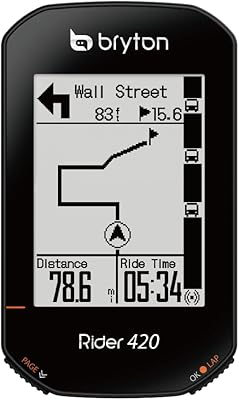
80%
93%
GPS Accuracy
88%
Battery Life
71%
Solar Charging
86%
Navigation
84%
Training Analytics
More
Bryton Rider 420e GPS Cycling Computer
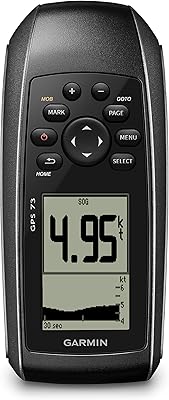
78%
88%
Display Clarity
91%
Battery Life
79%
GPS Accuracy
72%
Navigation & Routing
86%
Sensor Connectivity
More
Garmin GPS 73
Garmin GPS 73
80%
93%
Battery Life
88%
SailAssist Features
91%
Build Quality & Durability
54%
Display Quality
82%
Ease of Use
More
Garmin nüvi 2455LMT Portable GPS Navigator
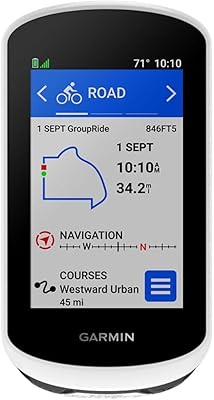
71%
83%
Navigation Accuracy
78%
Map Coverage & Updates
76%
Ease of Use
74%
Display Quality
81%
Lane Assist & Junction Views
More
Garmin Edge 1030 Plus GPS Cycling Computer
80%
93%
Navigation Accuracy
91%
Display Quality
88%
Battery Life
72%
Touchscreen Usability
89%
Training Features
More
Garmin Nuvi 2689LMT GPS
86%
91%
Ease of Use
94%
Traffic & Map Updates
85%
Bluetooth Connectivity
88%
Voice-Activated Navigation
92%
Display Quality
More
Garmin Edge Explore 2 GPS Cycling Computer
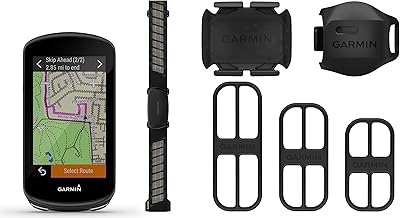
82%
93%
Ease of Setup
91%
Screen Visibility
88%
Navigation Accuracy
84%
eBike Integration
86%
Safety Features
More
Garmin tactix Delta Tactical GPS Smartwatch
78%
93%
Battery Life
91%
Durability & Build
89%
GPS & Navigation Accuracy
88%
Tactical Features
84%
Sports & Fitness Tracking
More

FAQ

ClimbPro now activates on any ride, not just pre-loaded courses. As you approach a climb, the Edge 840 detects it automatically and displays the grade and remaining ascent in real time, so you can pace yourself even on roads you've never ridden before.

You don't need a power meter for core functions like navigation, GPS tracking, or ClimbPro. However, the adaptive coaching, Power Guide, and cycling ability profiling features all require a paired power meter — and most also need a heart rate monitor. Without those sensors, a meaningful portion of the device's training intelligence simply won't be available to you.

Honestly, this is one of the more common complaints from riders who use it in cold or rainy conditions. The touchscreen can become less responsive when wet or when operated with gloved fingers. The physical buttons are there precisely for this reason, and most experienced users learn to rely on them when conditions get messy.

You get the head unit itself, an out-front mount, a standard stem mount, a tether, a USB-C cable, and basic documentation. No heart rate monitor or power meter is included — those are sold separately.

The 1040 has a larger screen and solar charging, which some riders find worth the extra spend, especially on very long days in the saddle. The Edge 840 covers the same core training and navigation features in a notably lighter and more compact form. If screen size and solar aren't priorities, most riders will find the 840 delivers everything they need.

It works well for mountain biking too. The device includes MTB Dynamics tracking, which logs jump metrics and grit and flow scores for trail evaluation. Multi-band GNSS also helps maintain positioning accuracy under tree cover, which is a common weak spot for older GPS units on singletrack.

A full charge typically takes around 2 hours via USB-C. Garmin does support charging while riding through certain mounts with USB passthrough, though you'd need a compatible mount and power source — the standard included mounts don't provide this functionality on their own.

There is a real learning curve, and it's worth acknowledging upfront. The depth of customization is one of the device's strengths, but it also means the settings menus are layered and not always intuitive at first. Most riders spend a few sessions configuring data fields and profiles before things feel natural. The Garmin Connect app helps with setup considerably.

Yes, as long as your phone's Bluetooth is active and the Garmin Connect app is running in the background, rides sync automatically when you stop. You can also sync over Wi-Fi if you're on a saved network, which is useful if you prefer not to rely on your phone.

The head unit supports a wide range of ANT+ and Bluetooth sensors including power meters, heart rate monitors, speed sensors, cadence sensors, radar units like the Varia, and inReach satellite communicators. It also works with electronic shifting systems from Shimano and SRAM that support ANT+ connectivity.

Where to Buy