Overview

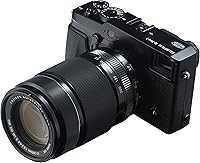
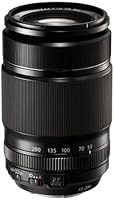
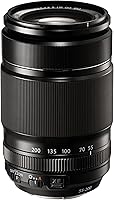
The Fujifilm XF 55-200mm F3.5-4.8 Telephoto Lens is built for Fujifilm X-mount shooters who want genuine telephoto reach without hauling a dedicated wildlife rig. On an APS-C sensor, that zoom range translates to an 83–300mm equivalent, which is enough to pull in distant subjects at a soccer match, frame tight portraits at an outdoor event, or isolate wildlife at a respectable distance. This telephoto zoom has been part of Fujifilm's lineup since 2013 — a run that speaks to how well it holds up against newer competition. It sits comfortably on X-series bodies, feels balanced in hand, and sets realistic expectations: this is a capable all-rounder, not a substitute for a professional prime.
Features & Benefits

The zoom range alone makes this telephoto zoom remarkably flexible for a single lens — you can shoot a compressed background portrait at 135mm then swing to 200mm to capture a bird on a branch, all without swapping glass. The linear autofocus motor runs quietly and keeps up well for most subjects, making it a reliable choice for video work or discreet candid shooting. Optical image stabilization, rated at 4.5 stops, genuinely helps at the longer end where camera shake becomes noticeable. The variable aperture of F3.5–4.8 is the honest trade-off for keeping weight under 580g. A 62mm filter thread means polarizers and ND filters are easy to source without hunting for oddball sizes.

Best For

This Fujifilm zoom lens is an obvious choice for travel photographers who need one lens to handle everything from candid street moments to distant landmarks. Bring it to a zoo and the 200mm end lets you frame animals naturally without crowding the enclosure; take it to an outdoor wedding and the quiet AF becomes genuinely useful. Wildlife photographers working in good daylight will appreciate the stabilization, though anyone expecting to shoot birds in flight in dim conditions should weigh the variable aperture carefully. The XF 55-200mm also makes a strong case as a first telephoto for new X-series owners — it rounds out a kit lens setup without demanding a large investment in a prime.

User Feedback

Owners consistently praise sharpness through the mid-range, with many noting that the lens performs particularly well between 55mm and 135mm before a modest softening appears at the extreme 200mm end. The size-to-reach ratio earns frequent appreciation — most buyers did not expect a lens this compact to deliver this kind of range. Criticisms tend to center on autofocus: in lower light or when tracking faster-moving subjects, the AF can lag compared to more recent Fujifilm glass. The variable aperture catches some buyers off guard, especially those coming from faster primes. No weather sealing is another limitation buyers mention, particularly for a lens often used outdoors. Long-term retention rates seem high — many users report holding onto this telephoto zoom for years.

Pros

  • The 83–300mm full-frame equivalent range covers portraits, travel, wildlife, and events in a single, versatile lens.
  • At under 580g, this telephoto zoom is genuinely light enough to carry all day without fatigue.
  • Optical image stabilization rated at 4.5 stops makes a real difference when shooting handheld at longer focal lengths.
  • The linear autofocus motor is quiet — ideal for video work and candid photography where noise matters.
  • Image sharpness in the 55–135mm sweet spot consistently impresses for a zoom at this price tier.
  • The 62mm filter thread is a common size, making polarizers and ND filters easy and affordable to source.
  • Long-term owner retention is high — many buyers report using this lens for years without feeling the need to upgrade.
  • The XF 55-200mm pairs naturally with X-series bodies in terms of size, balance, and handling.
  • A minimum focus distance of 1.10m adds moderate close-up flexibility that a strict telephoto often does not offer.

Cons

  • Autofocus can hesitate with fast-moving subjects or in dim conditions — a real limitation for action and indoor shooting.
  • The variable aperture reaching F4.8 at 200mm limits low-light performance in ways buyers sometimes underestimate.
  • No weather sealing means you will need to be cautious shooting in rain, dust, or harsh outdoor environments.
  • Sharpness at the 200mm end drops noticeably compared to the mid-range, which can disappoint pixel-peepers.
  • Older autofocus architecture feels slower when compared side-by-side with more recent Fujifilm telephoto options.
  • The zoom ring requires a confident grip — the extension at 200mm shifts the balance point meaningfully.
  • Lack of a focus distance window or hard manual focus stops can frustrate photographers who prefer tactile manual control.
  • At this focal length and price, the absence of weather resistance stands out as an oversight for outdoor-focused buyers.

Ratings

The scores below reflect an AI-driven analysis of verified global user reviews for the Fujifilm XF 55-200mm F3.5-4.8 Telephoto Lens, with spam, bot-generated, and incentivized submissions actively filtered out to ensure integrity. This telephoto zoom earns strong marks in several key areas, though the analysis does not shy away from the genuine trade-offs that real buyers encounter. Both the standout strengths and the recurring frustrations are reflected transparently in every category score.

Image Sharpness
83%
Users consistently report impressive center sharpness through the mid-range, particularly between 55mm and roughly 135mm equivalent — a zone where portrait and travel shots come out crisp and detailed even when pixel-peeping. At standard web and print sizes, the lens regularly exceeds expectations for a zoom in this class.
At the 200mm end, corner sharpness drops noticeably, and some users describe a softness that becomes apparent when cropping heavily. It is not a dealbreaker for most shooting situations, but photographers who regularly shoot at maximum focal length and need edge-to-edge clarity will feel the limitation.
Autofocus Speed
71%
29%
The linear stepper motor delivers quiet, confident autofocus in good lighting conditions, which users shooting outdoor portraits, zoo wildlife, and travel scenes find more than adequate. The near-silent operation is a genuine advantage for video shooters and anyone working in environments where discretion matters.
In lower light or when tracking erratic, fast-moving subjects — birds in flight, children at play, indoor sports — the AF hesitates in ways that frustrate users who have tried newer Fujifilm lenses. Multiple reviewers note that the system feels a generation behind compared to more recent XF glass released in the last few years.
Image Stabilization
86%
Real-world OIS performance earns consistent praise from users who shoot handheld at 150mm and 200mm — conditions where most lenses demand a tripod or fast shutter speed. Travel photographers report capturing sharp handheld shots in shaded outdoor scenes that would have otherwise required significantly faster shutter speeds.
The 4.5-stop claim holds up well in controlled conditions but leaves some room for doubt in practice, particularly at 200mm with subjects that have any movement. A handful of users note that the stabilization introduces a subtle lag in the viewfinder that takes some getting used to during panning shots.
Build Quality
74%
26%
The lens feels solid and well-assembled in hand, with a smooth zoom action and a focus ring that moves predictably without play or wobble. Most users describe it as a reliable companion to X-series bodies, matching their build aesthetic and feeling proportionally balanced even on compact bodies like the X-T30.
The absence of weather sealing is the most-cited build complaint, especially for a lens that naturally invites outdoor use. Several reviewers also note that while the overall feel is good, the plastic-dominant construction does not quite match the premium tactile quality of Fujifilm's higher-tier XF lenses.
Value for Money
79%
21%
For what it delivers — a wide zoom range, built-in OIS, and quiet autofocus — most buyers feel this telephoto zoom is priced fairly and punches above its weight compared to third-party alternatives in the same range. Long-term ownership satisfaction is high, with many users reporting years of use without feeling compelled to upgrade.
At its asking price, the lack of weather sealing and the aging AF architecture give some buyers pause, particularly when newer options with better tracking have entered the market. Those upgrading from older Fujifilm bodies may find the value case stronger than those comparing it against the latest generation of X-mount glass.
Zoom Range Versatility
88%
Covering 83–300mm full-frame equivalent in a single lens makes this Fujifilm zoom lens remarkably flexible for photographers who do not want to carry multiple telephoto options. Users describe using it across a single day trip for everything from compressed street scenes to distant bird captures, all without a lens swap.
The zoom range requires conscious aperture management — at 200mm, you are at F4.8, which narrows your creative options in anything less than bright daylight. Some users wish the range extended further toward 400mm equivalent for more demanding wildlife situations.
Portability & Weight
87%
At roughly 580g, this telephoto zoom is light enough to carry mounted all day on a hiking trail or during a city photo walk without causing fatigue. Users frequently contrast it favorably with heavier full-frame telephoto options they previously used, calling the weight reduction a meaningful lifestyle improvement.
The barrel extends noticeably when zooming to 200mm, shifting the balance point and making single-hand shooting feel less stable than at shorter focal lengths. This is a design trade-off rather than a defect, but it does affect ergonomics in a way that some users find distracting.
Low-Light Performance
58%
42%
At 55mm with an F3.5 aperture, the lens handles early morning and golden-hour shooting reasonably well, and combined with OIS, it can produce clean results at moderate ISO settings indoors near windows. Users shooting in predictably bright conditions rarely run into issues.
The variable aperture sliding to F4.8 at 200mm becomes a genuine obstacle in mixed or artificial light, and users frequently report needing to push ISO higher than they would like to maintain shutter speed. Photographers expecting low-light performance comparable to a fast prime will be disappointed.
Video Usability
77%
23%
The linear motor's quiet operation makes this telephoto zoom a legitimate choice for video use, with autofocus transitions that are smooth enough for documentary-style shooting and casual content creation. Users recording outdoor events or nature footage particularly value not having the AF motor noise audible in their clips.
Continuous tracking during video is serviceable but not class-leading — fast-moving subjects or quick reframing can cause the AF to momentarily hunt before locking again. Breathing at certain focal lengths is also noticeable enough to bother users who shoot at wider apertures while zooming.
Ease of Use
84%
Newcomers to telephoto zooms find this Fujifilm zoom lens approachable — the controls are logically laid out, the zoom is smooth, and there is no steep learning curve in terms of handling. Fujifilm shooters already familiar with the XF lens family will feel immediately at home with the ring layout and aperture behavior.
The variable aperture requires new users to internalize how exposure changes as they zoom, which can produce unexpected results until the habit is formed. The lack of a hard manual focus stop and a focus distance window is a minor frustration for users who like to estimate focus distances by feel.
Autofocus Noise
89%
The near-silent focusing is one of the most consistently praised aspects among video creators and candid street photographers alike. Users note that even in quiet environments — a museum, a ceremony, a library — the AF engages without drawing attention to the photographer or disrupting the moment.
While the motor itself is near-silent, occasional light mechanical sounds from the zoom ring and barrel mechanism are audible in very quiet environments when operating with a microphone attached. This is a minor concern but one that microphone-sensitive video users have flagged in detailed reviews.
Compatibility
91%
Full compatibility across the entire Fujifilm X-mount lineup — from entry-level bodies to the X-H2S — means users can hold onto this telephoto zoom through multiple body upgrades without losing any functionality. Buyers who switch between several Fujifilm bodies report seamless operation across all of them.
Outside the Fujifilm X-mount ecosystem, this lens has no compatibility at all, which is simply the nature of a proprietary mount system rather than a product flaw. Buyers considering a future switch to a different system should factor this into their long-term investment thinking.
Filter Usability
86%
The 62mm thread size is common enough that users find compatible filters from nearly every major brand without needing step-up rings or paying a premium for rare sizes. Landscape and travel photographers appreciate being able to use the same polarizer across multiple lenses that share the same thread diameter.
There is no built-in filter holder slot for larger drop-in systems, which limits options for serious ND filter stacking without external adapter solutions. A small number of users also report vignetting when using thicker-framed filters at the wide end of the zoom.
Long-Term Reliability
82%
18%
Given that this lens launched in 2013 and continues to receive strong endorsements from long-term owners, its durability record is genuinely reassuring. Many users report years of regular outdoor use — hiking, travel, events — without functional degradation in autofocus or OIS performance.
The lack of weather sealing introduces a vulnerability that some long-term users have felt acutely — a few report moisture or dust ingress after extended outdoor use in challenging conditions. Buyers who intend to use this lens in genuinely harsh environments should factor this risk into their decision.

Suitable for:

The Fujifilm XF 55-200mm F3.5-4.8 Telephoto Lens is a strong match for Fujifilm X-series shooters who want one versatile telephoto zoom they can rely on across a wide range of everyday situations. Travel photographers in particular will appreciate how much reach it packs into a bag-friendly 580g frame — whether you are shooting compressed cityscapes, pulling in architectural details, or framing wildlife at a national park, the 83–300mm equivalent range handles all of it without requiring a lens change. Outdoor portrait and event photographers will find the quiet linear autofocus especially useful, letting them work discreetly without drawing attention. Nature enthusiasts heading to a zoo or a birding spot on a bright day will get genuinely useful results from the optical stabilization, which takes real pressure off handheld shooting at 200mm. For X-series owners who already have a wide or standard zoom and are building out their kit logically, this telephoto zoom is a natural, well-priced next step.
Not suitable for:

Photographers who regularly shoot in low light or indoors should think carefully before committing to this telephoto zoom, as the variable aperture of F3.5–4.8 narrows to its slowest point exactly when you need the most light. Action sports shooters tracking fast, unpredictable movement — motorsports, indoor basketball, birds in flight — may find the autofocus motor struggles to keep up with newer, faster-focusing Fujifilm options. The lens also lacks weather sealing, which is a meaningful gap for anyone planning to shoot consistently in rain, dust, or harsh outdoor conditions. Professional photographers who need the absolute sharpest corner-to-corner performance at 200mm, or who depend on a lens in demanding commercial environments, will likely find this XF 55-200mm better suited as a backup than a primary workhorse. If your shooting is primarily indoors or in mixed artificial light, a fast prime in the 56mm or 90mm range would serve you better.

Specifications

  • Focal Length: This telephoto zoom covers a 55–200mm range, equivalent to 83–300mm on a full-frame camera when used on an APS-C sensor body.
  • Max Aperture: The maximum aperture varies from F3.5 at the wide end to F4.8 at 200mm, with a minimum aperture of F22.
  • Autofocus Type: A linear stepper motor (LM) drives autofocus, delivering fast and near-silent operation suited to both stills and video recording.
  • Stabilization: Built-in optical image stabilization (OIS) is rated at 4.5 stops of compensation, reducing the impact of camera shake during handheld shooting.
  • Min Focus Distance: The lens can focus as close as 1.10m (43.41 inches) from the subject across its zoom range.
  • Filter Thread: The front element accepts standard 62mm screw-on filters, including polarizers, ND filters, and UV protectors.
  • Dimensions: The lens measures 4.65 inches in length by 2.95 inches in diameter (approximately 118mm x 75mm).
  • Weight: Total weight is approximately 580g (1.28 lbs), keeping it manageable for extended handheld use.
  • Mount Compatibility: Designed exclusively for the Fujifilm X-mount, it is compatible with all Fujifilm X-series interchangeable lens camera bodies.
  • Lens Type: This is a telephoto zoom lens optimized for mid-to-long-range subject capture including portraits, wildlife, and travel photography.
  • Model Number: The official Fujifilm model designation is XF55-200mm, as listed on the lens barrel and in Fujifilm's product documentation.
  • Release Date: This lens was first made available in April 2013 and remains an active, non-discontinued product in Fujifilm's XF lens lineup.
  • Manufacturer: Designed and manufactured by Fujifilm, a Japanese optical and imaging company with decades of lens-making heritage.
  • Discontinued Status: As of the latest available information, this lens has not been discontinued and continues to be sold through authorized retailers.
  • Lens Construction: The optical design includes internal zoom mechanics that keep the physical barrel length consistent regardless of focal length setting.

Related Reviews
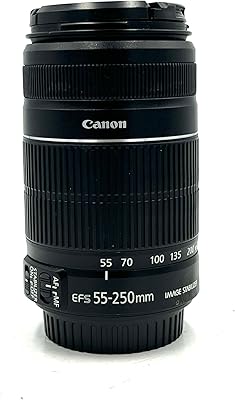
Canon EF-S 55-250mm f/4-5.6 IS II Telephoto Zoom Lens
82%
91%
Value for Money
88%
Image Stabilization Performance
65%
Autofocus Speed in Low Light
93%
Portability & Size
85%
Image Quality & Sharpness
More
Nikon 55-200mm f/4-5.6G VR Telephoto Zoom Lens
78%
91%
Value for Money
78%
Image Sharpness
88%
Vibration Reduction
73%
Autofocus Speed
62%
Build Quality
More
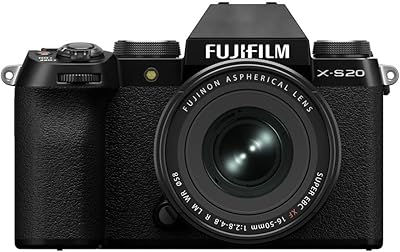
Fujifilm X-S20 XF16-50mm Mirrorless Camera Kit
80%
91%
Image Quality
94%
Film Simulations & Color Science
88%
In-Body Image Stabilization
86%
Video Capability
67%
Autofocus Performance
More
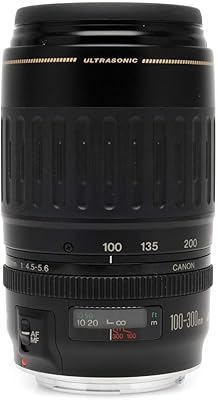
Canon EF 100-300mm f/4.5-5.6 Telephoto Zoom Lens
75%
88%
Autofocus Speed
91%
Autofocus Noise
67%
Image Sharpness
43%
Image Stabilization
78%
Build Quality
More
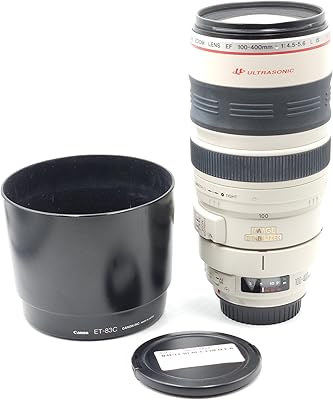
Canon EF 100-400mm f/4.5-5.6L Telephoto Zoom Lens
81%
91%
Autofocus Speed & Accuracy
88%
Image Stabilization
86%
Optical Sharpness
93%
Build Quality & Weather Sealing
67%
Push-Pull Zoom Mechanism
More
Panasonic Lumix G Vario 14-140mm Zoom Lens
81%
88%
Image Sharpness
93%
Zoom Range Versatility
86%
Optical Image Stabilization
61%
Low-Light Performance
82%
Build Quality & Durability
More
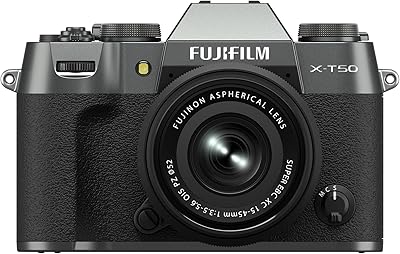
Fujifilm X-T50 Mirrorless Camera 15-45mm Kit
79%
93%
Image Quality
91%
Film Simulation & JPEG Output
78%
Build Quality & Design
72%
Autofocus Performance
88%
Video Capabilities
More
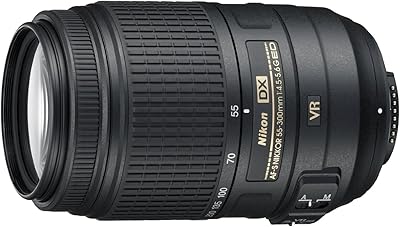
Nikon AF-S DX NIKKOR 55-300mm Zoom Lens
71%
78%
Image Sharpness
67%
Autofocus Performance
84%
Vibration Reduction
54%
Aperture Range
61%
Build Quality
More
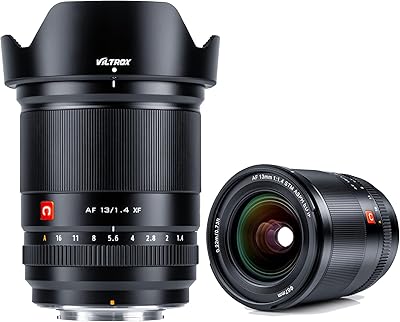
VILTROX AF 13mm F1.4 XF Lens for Fujifilm X-Mount
88%
92%
Image Quality
88%
Autofocus Speed
90%
Low-Light Performance
85%
Build Quality
93%
Portability
More
Canon EF 75-300mm III Telephoto Zoom Lens
70%
74%
Image Sharpness
58%
Autofocus Speed
69%
Build Quality
83%
Zoom Smoothness
88%
Value for Money
More
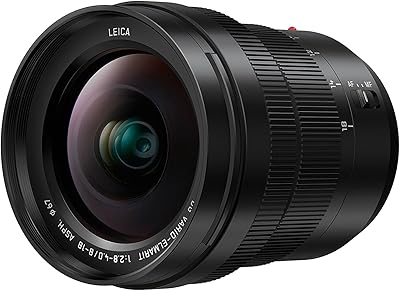
Panasonic LUMIX 8-18mm F2.8-4.0 Lens
89%
91%
Image Quality
88%
Autofocus Performance
89%
Build Quality & Durability
84%
Ease of Use
90%
Video Performance
More

FAQ

Yes, it is fully compatible with any Fujifilm X-mount body, including the X-T30, X-S10, X-T4, X-E4, and others in the X-series lineup. All autofocus and OIS functions work as expected across these bodies.

It makes a genuine difference, particularly when shooting handheld at 150mm or 200mm where camera shake becomes hard to avoid. The claimed 4.5-stop compensation is ambitious, but most users report confidently getting sharp shots at shutter speeds they would not otherwise attempt. It is not a substitute for good technique, but it gives you meaningful extra room.

It holds up well for video, largely because the linear autofocus motor runs quietly without the buzzing or clicking you get from older screw-drive lenses. Continuous AF tracking during video is smooth enough for casual and semi-professional use, though it is not quite on par with the fastest current Fujifilm lenses for fast-moving subjects.

It is not well-suited for astrophotography or dim-light shooting where you need a wide, fixed aperture. The F4.8 maximum at 200mm limits your light-gathering ability considerably. For low-light telephoto work, a faster prime would be a more practical choice.

Yes, Fujifilm includes a compatible petal-style lens hood in the box, which helps reduce lens flare in bright outdoor conditions and offers a degree of physical protection for the front element.

It is actually quite flattering for portraiture, especially in the 85–135mm equivalent range where background compression and subject separation look natural and appealing. The autofocus locks onto faces reliably in good light, and the rendering tends to be clean without being clinical.

No, this telephoto zoom does not include weather sealing. If you regularly shoot in rain, dusty environments, or extreme cold, you will want to be careful and consider a protective cover. It is a notable gap for a lens so often used outdoors.

The zoom action is smooth and well-damped, which makes precise framing easier. The barrel does extend as you zoom toward 200mm, so the balance point shifts slightly toward the front of the lens. Most users adapt to this quickly, but it is worth knowing if you are used to internal-zoom designs.

The 62mm thread size is widely available, so you will have no trouble sourcing circular polarizers, variable ND filters, or basic UV protectors from brands like B+W, Hoya, or Tiffen. It is a practical size that avoids the premium pricing that comes with larger step-up rings.

It is one of the more sensible first telephoto choices for X-series shooters. It covers a wide enough range to be genuinely useful across travel, wildlife, and event shooting, and it is light enough not to become a burden. Just go in knowing that the variable aperture is a real consideration in lower light — that awareness alone will help you get the most out of it.

Where to Buy