Overview

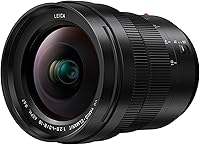
The Panasonic Leica DG 8-18mm Wide-Angle Zoom Lens entered the Micro Four Thirds market in 2017 and has held its ground as one of the most capable wide-angle options in that ecosystem. Co-developed with Leica, it targets a specific kind of shooter — someone who needs serious optical quality in a compact, weather-sealed package. In full-frame terms, the focal range translates to roughly 16-36mm, making it genuinely versatile for everything from tight interiors to sweeping landscapes. At its price point, this Leica-branded wide-angle zoom is clearly a premium investment, but what you're paying for is a lens built with professional intent, not just a badge.
Features & Benefits

The Nano Surface Coating on the 8-18mm Panasonic lens is one of its quieter strengths — shoot into the sun or near a bright window, and you'll notice far less of the washed-out halos that plague lesser wide-angle glass. The 240 fps linear motor autofocus is genuinely valuable for video work: focus transitions are whisper-quiet and exposure stays stable as aperture shifts, which matters enormously when rolling 4K. Speaking of aperture, the F2.8-4.0 variable range deserves an honest mention — at the 18mm end you lose a full stop of light, so low-light shooting at the longer focal length requires real awareness. The metal barrel construction, rated splashproof, dustproof, and freezeproof, pairs with a 67mm filter thread to make this MFT wide-angle glass genuinely field-ready.

Best For

This Leica-branded wide-angle zoom is a natural fit for travel and landscape photographers who refuse to haul a heavy kit but won't compromise on image quality. If you're a video creator using a GH6, G9 II, or any compatible OM System body, the silent focus motor and smooth aperture control make this a compelling choice for run-and-gun documentary or event work. Architecture and real-estate photographers will appreciate the controlled distortion at the wide end, which keeps vertical lines honest without heavy correction in post. And for anyone regularly shooting outdoors in unpredictable weather — mountains, coastlines, busy markets in the rain — the weather-sealed body is not a luxury but a practical necessity. This is a lens built to complete a pro kit, not just fill a gap.

User Feedback

With a 4.4-star average across 134 ratings, this MFT wide-angle glass earns consistent praise for sharpness across the entire zoom range and strong 4K video performance — two areas where buyers say it genuinely delivers at a professional level. Where opinions start to split is on value: a recurring thread in reviews compares this lens to the Olympus 7-14mm f/2.8 Pro and questions whether the variable aperture is an acceptable trade-off at this price point. Autofocus reliability scores well on recent GH6 and G9 II bodies, though a small number of users report slightly inconsistent lock-on with older OM System cameras. These are pointed critiques, not broad complaints, and most buyers who fit the intended use case come away satisfied.

Pros

  • Image sharpness across the full 8-18mm range is consistently strong, even toward the corners at wide-open aperture.
  • The 240 fps linear motor autofocus operates silently, making it an excellent choice for clean 4K video production.
  • Nano Surface Coating visibly reduces ghosting and flare when shooting into bright light sources or high-contrast scenes.
  • At just 11 ounces, this Leica-branded wide-angle zoom is light enough to carry all day without fatigue.
  • Splashproof, dustproof, and freezeproof sealing gives genuine confidence when shooting in rain, dust, or freezing conditions.
  • The 67mm filter thread accepts standard ND and polarizing filters, which landscape photographers will find immediately practical.
  • Silent aperture transitions during video recording mean exposure shifts won't create distracting jumps in your footage.
  • The metal barrel construction feels solid and premium, holding up well to the demands of regular professional use.
  • Compatible with both Panasonic and OM System mirrorless bodies, offering broad utility across the MFT ecosystem.

Cons

  • At 18mm, the aperture drops to f/4.0, noticeably limiting low-light performance compared to fixed-aperture alternatives at the same price.
  • The Olympus 7-14mm f/2.8 Pro maintains a constant maximum aperture throughout its range, making it a serious competitor worth evaluating.
  • Autofocus consistency has been reported as slightly variable on older OM System bodies compared to current Panasonic cameras.
  • There is no optical image stabilization built into the lens; handheld low-light results depend entirely on the camera body's IBIS.
  • Buyers outside the Micro Four Thirds system cannot use this MFT wide-angle glass without an adapter that may compromise AF capability.
  • Photographers who shoot wide angle infrequently will find the cost difficult to justify against capable but less expensive MFT alternatives.
  • Raw files at 8mm show more barrel distortion than processed JPEGs, since in-camera lens correction is often applied automatically.

Ratings

The Panasonic Leica DG 8-18mm Wide-Angle Zoom Lens has been evaluated across 15 performance categories using an AI-powered analysis of verified purchase reviews sourced from buyers worldwide, with spam, incentivized submissions, and bot-generated activity actively filtered before scoring. The ratings reflect what real photographers and videographers actually experience across a wide range of shooting conditions and camera pairings. Genuine strengths, honest trade-offs, and recurring buyer frustrations are all transparently accounted for in the scores below.
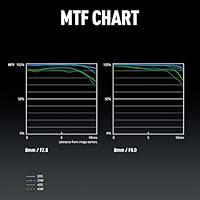
Image Sharpness
91%
Sharpness across the zoom range is one of the most frequently praised qualities in verified buyer feedback. Even at wide-open F2.8, center resolution is strong enough for demanding detail work like architecture and landscape shots. Corner performance holds up well for a wide-angle zoom and tightens further by F5.6.
A small but vocal group of buyers notes that extreme corner sharpness at 8mm wide open does not fully match what prime lenses deliver at similar focal lengths. Pixel-peepers shooting flat architectural subjects at wide apertures are most likely to notice the difference, while general shooters rarely report it as a meaningful concern.
Build Quality
93%
The metal barrel earns consistent praise for feeling genuinely substantial in hand, unlike the plastic-heavy construction of lower-tier lenses. Buyers who travel frequently and work in demanding conditions — rain-soaked coastlines, dusty markets, sub-zero mountain shoots — report that the triple sealing performs exactly as advertised across extended real-world use.
A handful of buyers mention that the zoom and focus rings feel stiff out of the box, loosening with use but requiring a noticeable break-in period. The barrel length is also longer than some compact MFT lenses, which can feel slightly front-heavy on smaller bodies like the GX series.
Video Performance
89%
For 4K video shooters on the GH6 and similar bodies, this lens is frequently cited as a go-to wide-angle option. The linear motor autofocus is quiet enough to avoid bleeding into on-camera recordings, and aperture shifts mid-shoot happen without the sudden exposure jumps that plague mechanically operated lenses.
At 18mm with the aperture at F4.0, low-light video shooting indoors becomes challenging without supplemental lighting, which event videographers working in dim venues consistently find limiting. Handheld shooters also note that the absence of lens-based optical stabilization places added demand on the camera body's IBIS, with results varying meaningfully by body model.
Low-Light Performance
67%
33%
At the 8mm end, F2.8 handles dusk landscapes, dimly lit interiors, and blue-hour cityscapes reasonably well for a wide-angle zoom. Buyers shooting at the widest focal length in moderate low-light conditions generally report clean, usable results without an excessive noise penalty when paired with a capable modern sensor.
Stepping to 18mm drops the maximum aperture to F4.0, a limitation that becomes tangible in dim venues like wedding receptions, stage events, or restaurant interiors. This single factor drives the majority of critical reviews and is the most common reason buyers ultimately choose the Olympus 7-14mm F2.8 Pro as an alternative.
Value for Money
69%
31%
Buyers who need the full package — weather sealing, Leica-developed optics, filter thread access, and video-ready autofocus in one lens — consistently feel the investment is justified. For working photographers who bill against their gear, the breadth of professional use cases this lens covers makes the cost logically defensible.
The sticking point for many reviewers is that comparable investment in the MFT ecosystem can secure a fixed F2.8 aperture from a competing lens. Buyers who don't actively use weather sealing or filter accessories report feeling like they're paying a premium for features that don't benefit their specific style of shooting.
Autofocus Performance
84%
On current Panasonic bodies, the 240 fps linear motor locks onto subjects quickly and tracks movement across the frame with minimal hunting. Buyers shooting street photography or documentary stills praise the responsiveness during continuous shooting, where the AF rarely loses a subject under normal daylight conditions.
A recurring pattern in verified reviews involves slower or less reliable autofocus when the lens is paired with older OM System bodies, particularly in low-contrast situations. This is a body-compatibility issue rather than an optical flaw, but it is worth factoring in for OM System shooters who are evaluating a purchase.
Flare & Ghosting Resistance
87%
The Nano Surface Coating delivers a meaningful real-world benefit when shooting into strong light sources — sunsets, street lamps, or a bright window positioned behind a subject. Multiple buyers specifically note that backlit portraits and architectural shots with high-contrast backgrounds show considerably less veiling glare than competing lenses they have tested on the same platform.
In extreme backlit situations with the sun placed directly in the frame at 8mm, some residual ghosting can still appear, particularly at smaller apertures around F11 or F16. This is not unusual for any wide-angle lens, but buyers expecting zero artifacts in demanding sun-in-frame compositions will occasionally encounter disappointment.
Distortion Control
82%
18%
Architecture and interior photographers consistently report that straight lines stay reasonably honest across the focal range, particularly in the mid-range between 10mm and 15mm. In-camera JPEG processing handles residual barrel distortion automatically on most Panasonic and OM System bodies, producing clean results without requiring a manual correction step.
Raw file shooters encounter more pronounced barrel distortion at 8mm that requires post-processing correction, adding a step to the editing workflow. While profiles are available in Lightroom and Capture One, photographers who prefer minimal post work may find the uncorrected raw output at the wide end frustrating to manage regularly.
Chromatic Aberration
85%
The combination of ED and aspherical elements does a solid job suppressing lateral chromatic aberration across most of the aperture and zoom range. Buyers shooting high-contrast edges — tree branches against a bright sky or building outlines against overcast backgrounds — report fringing that is minor and easily addressed with a single Lightroom correction slider.
Some longitudinal chromatic aberration can appear when shooting near minimum focus distance wide open at F2.8, which is harder to correct in post-processing than lateral CA. This is most noticeable to buyers who frequently shoot close subjects against bright backgrounds with the aperture fully open at the wide end.
AF Noise Level
92%
The linear motor drive operates at a level of near-inaudibility that video shooters specifically cite as a key reason they chose this lens over alternatives. In quiet indoor environments — interviews, sit-down content shoots, acoustic music capture — autofocus transitions add no detectable artifact to the audio track on-camera.
In near-silent recording environments with a high-sensitivity external microphone positioned very close to the lens barrel, a faint electronic signal can occasionally be picked up during active focus hunting. This is an edge-case complaint raised by only a small number of reviewers working in unusually demanding audio conditions.
Portability & Handling
83%
At 11 ounces with a metal barrel, this Leica-branded wide-angle zoom strikes a balance that most buyers find acceptable for a premium zoom in this class. Travel photographers who compared it against full-frame wide-angle alternatives consistently note that the size-to-quality ratio is one of the MFT system's most compelling practical arguments.
On compact MFT bodies like the GX series or older Pen models, the lens can feel slightly front-heavy and unbalanced compared to smaller kit options. Buyers accustomed to ultra-compact prime lenses describe a real adjustment period when switching to this zoom for all-day carry photography on lightweight bodies.
Bokeh Quality
73%
27%
At 8mm and F2.8 near minimum focus distance, moderate subject separation from the background is achievable for environmental portraits. Buyers who use it this way report that out-of-focus rendering is smooth and non-distracting, even if the effect is inherently subtle given the constraints of wide focal lengths.
Wide-angle lenses are inherently limited in background separation, and at 18mm with the aperture at F4.0, meaningful blur behind a subject requires uncomfortably close focus distances. Buyers expecting the subject isolation of a fast portrait prime will be disappointed regardless of how well this lens performs across its intended use cases.
Filter Usability
88%
The 67mm thread is a common, well-supported filter size that makes screw-in filter use genuinely practical for landscape photographers. Buyers who regularly use polarizing filters to manage reflections or ND filters for long exposures report that compatibility works exactly as expected, with no vignetting at typical shooting apertures.
At the 8mm extreme, vignetting can appear when using thicker filter stacks or a standard non-slim polarizer at F2.8. Buyers who stack multiple filters simultaneously — such as a polarizer combined with a variable ND — should invest in slim-profile versions to avoid visible corner darkening at the widest focal lengths.
Aperture Consistency
63%
37%
The variable aperture design keeps the lens noticeably more compact and lighter than a constant F2.8 alternative would require across this focal length range. For video shooters who lock exposure settings before rolling, the behavior is predictable and straightforward to plan around within a standard pre-shoot workflow.
The one-stop aperture drop from F2.8 at 8mm to F4.0 at 18mm is the most frequently cited disappointment in buyer reviews, particularly at this price tier. In mixed-light conditions where active zooming is necessary, managing exposure compensation while simultaneously tracking a moving subject adds unwanted complexity to the shooting process.
System Compatibility
81%
19%
The Micro Four Thirds mount standard means this MFT wide-angle glass integrates with both Panasonic and OM System cameras without adapters or electronic compromises. Buyers who own cameras from both brands report a smooth cross-platform experience, with full electronic communication and in-camera correction profiles functioning correctly on either system.
Autofocus performance and tracking behavior can differ noticeably between Panasonic and OM System bodies, particularly on older models where firmware optimization for cross-brand lenses is less thorough. A subset of OM System users on legacy bodies report occasional AF hesitation that does not appear when the same lens is mounted on a current Panasonic camera.

Suitable for:

The Panasonic Leica DG 8-18mm Wide-Angle Zoom Lens makes the most sense for Micro Four Thirds users who need a wide-angle option they can genuinely rely on across a range of professional scenarios. Travel and landscape photographers who want serious optical quality without the weight penalty of full-frame gear will find it a natural fit — at 11 ounces, it earns its place in a compact kit without compromising on sharpness or durability. Video creators working in documentary, event, or content production with a GH6 or G9 II will particularly value the silent linear motor autofocus and smooth aperture control, which keeps 4K footage clean and exposure-stable throughout a shoot. OM System users should know it pairs well with compatible bodies too, so the appeal is not limited to Panasonic shooters alone. Architecture, real estate, and interior photographers who need controlled distortion and a practical 67mm filter thread will also find it slots into their workflow without demanding extensive post-production corrections.

Not suitable for:

Shooters whose priority is maximum light-gathering at every focal length should approach the Panasonic Leica DG 8-18mm Wide-Angle Zoom Lens with clear eyes: the variable aperture is a real operational trade-off, not a minor footnote. If your work regularly involves dimly lit venues — wedding receptions, stage performances, or low-light interiors — the Olympus 7-14mm f/2.8 Pro offers a constant aperture that removes that variable from the equation entirely. Photographers who shoot wide angle only occasionally and don't require weather sealing or professional-grade build quality will find the price difficult to justify, given how capable more affordable MFT options have become. Anyone shooting on Sony, Canon, Nikon, or other non-MFT systems should understand this lens is designed exclusively for the Micro Four Thirds mount and won't integrate cleanly elsewhere without sacrificing autofocus functionality. And anyone relying on this as their primary handheld low-light stills lens should know that without built-in optical stabilization, results depend heavily on whatever IBIS the camera body contributes.

Specifications

  • Focal Length: Covers an 8-18mm zoom range, equivalent to approximately 16-36mm on a full-frame camera.
  • Maximum Aperture: Aperture varies from F2.8 at the wide end to F4.0 at 18mm as you zoom in.
  • Lens Mount: Built for the Micro Four Thirds mount standard, compatible with Panasonic and OM System mirrorless cameras.
  • Optical Formula: Constructed from 15 elements arranged in 10 groups to optimize sharpness, aberration control, and compactness.
  • Special Elements: Incorporates 1 aspherical ED, 3 aspherical, 2 ED, and 1 UHR lens element to suppress chromatic aberration and distortion.
  • Lens Coating: Nano Surface Coating is applied across key elements to reduce internal reflections, ghosting, and flare in high-contrast scenes.
  • Autofocus System: A 240 fps linear motor drive delivers fast, near-silent focus transitions suited to both stills and video recording.
  • Filter Thread: The 67mm front filter thread accepts standard screw-in ND, circular polarizing, and UV filters without an adapter.
  • Weather Sealing: Rated splashproof, dustproof, and freezeproof for use in adverse outdoor shooting conditions.
  • Construction: The barrel is built from durable metal, providing structural rigidity and a premium feel suited to professional field use.
  • Weight: Weighs 11 ounces, keeping the overall camera system manageable for extended handheld shooting sessions.
  • Video Support: Supports 4K video capture with silent aperture control that prevents mechanical noise from disrupting on-camera audio.
  • Min Focus Distance: Achieves focus as close as approximately 0.23m (about 9 inches) from the subject across the zoom range.
  • Model Number: The official Panasonic model designation for this lens is H-E08018.
  • Release Date: First made available in April 2017 and continues to be actively manufactured and sold.

Related Reviews
Sony FE 16-35mm F2.8 GM Zoom Lens
82%
94%
Optical Sharpness
91%
Aperture Consistency
89%
Autofocus Performance
88%
Build Quality & Weather Sealing
86%
Distortion Control
More
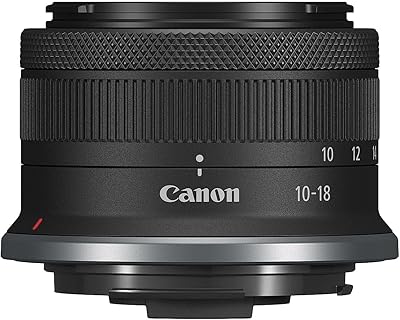
Canon RF-S10-18mm F4.5-6.3 IS STM Zoom Lens
83%
91%
Image Sharpness
84%
Autofocus Performance
88%
Image Stabilization
76%
Build Quality & Handling
93%
Vlogging Usability
More
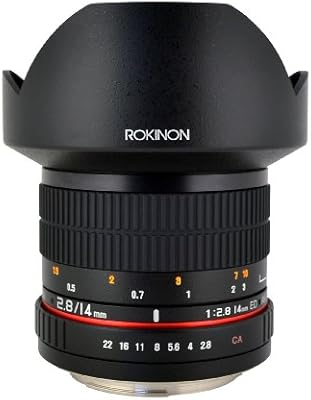
Rokinon 14mm F2.8 Wide Angle Lens
71%
83%
Optical Sharpness (Center Frame)
58%
Edge & Corner Sharpness
52%
Vignetting Control
61%
Chromatic Aberration
74%
Flare & Ghosting Resistance
More
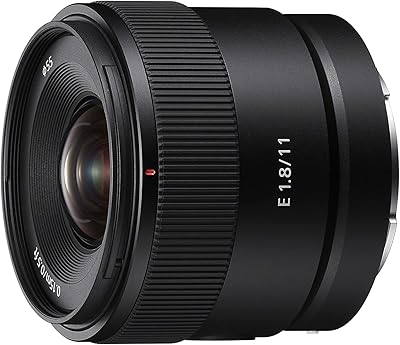
Sony E 11mm F1.8 APS-C Ultra-Wide-Angle Prime Lens
87%
93%
Autofocus Speed
91%
Image Quality
89%
Portability
74%
Low-Light Performance
88%
Build Quality
More
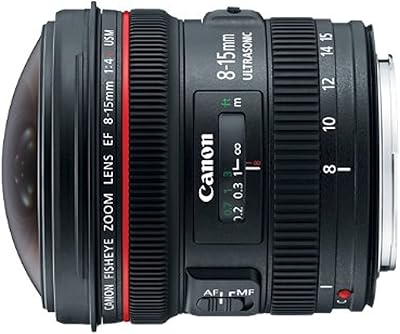
Canon EF 8-15mm f/4L Fisheye Zoom Lens
82%
93%
Optical Sharpness
91%
Zoom Versatility
88%
Autofocus Performance
94%
Build Quality
61%
Low-Light Capability
More
Brightin Star 7.5mm F2.8 III Fisheye Lens
75%
78%
Image Sharpness
88%
Value for Money
71%
Low-Light & Astrophotography Performance
82%
Build Quality & Construction
61%
Manual Focus Usability
More
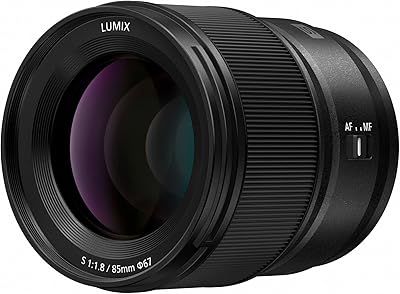
Panasonic LUMIX S-S85 85mm F1.8 Lens
82%
92%
Image Sharpness
84%
Bokeh Quality
71%
Autofocus Performance
83%
Build Quality
74%
Weather Sealing
More
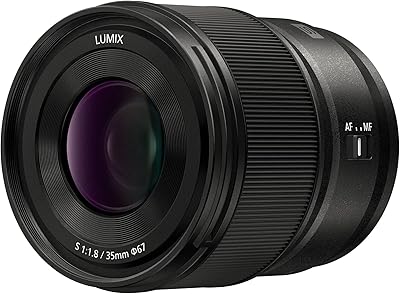
Panasonic S-S35 35mm F1.8 Prime Lens
83%
93%
Optical Sharpness
91%
Build Quality
67%
Autofocus Performance
88%
Video Usability
94%
Portability & Size
More
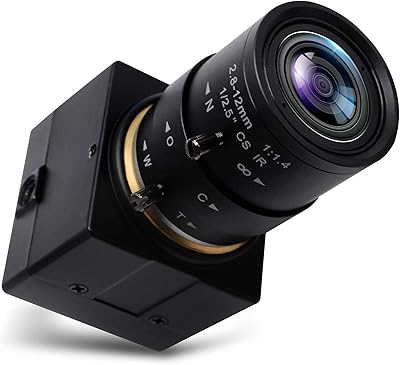
SVPRO 1080P HD Webcam with 2.8-12mm Zoom Lens
87%
88%
Video Quality
91%
Zoom Lens & Manual Focus
85%
Ease of Setup
93%
Compatibility
80%
Build Quality
More
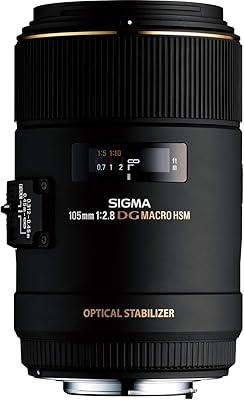
Sigma 16-28mm F2.8 DG DN Wide-Angle Lens
81%
91%
Optical Sharpness
74%
Distortion Control
88%
Autofocus Performance
86%
Build Quality & Weather Resistance
89%
Size & Portability
More

FAQ

The Panasonic Leica DG 8-18mm Wide-Angle Zoom Lens uses the Micro Four Thirds mount standard, so it fits and functions fully on both Panasonic and OM System (formerly Olympus) mirrorless cameras. Autofocus is electronically controlled on both platforms, though some users report that lock-on speed feels marginally less immediate on older OM System bodies than on current Panasonic cameras. On modern bodies from either brand, it performs well across the board.

At 8mm you have F2.8, which handles low-light situations reasonably well. Zoom toward 18mm and it steps down to F4.0 — a full one-stop difference that becomes meaningful in dim indoor environments, evening events, or any situation without supplemental lighting. For daytime photography, landscape work, or video shot in adequate light, most shooters find the trade-off has little practical impact.

Yes, this is one of the stronger wide-angle zoom choices for video on those bodies. The 240 fps linear motor autofocus runs quietly, which matters a great deal for on-camera audio, and the aperture transitions during recording are smooth enough to avoid visible exposure jumps. For run-and-gun content, documentary work, or event coverage, it holds up reliably.

These two lenses come up together in almost every premium MFT wide-angle conversation, and both are legitimate choices depending on your priorities. The Olympus maintains a constant F2.8 aperture throughout its entire range, which is a real advantage in low light. The 8-18mm Panasonic lens reaches a bit longer at 18mm and accepts standard 67mm screw-in filters, while the Olympus uses a built-in petal holder system instead. If consistent aperture in challenging light is your main priority, the Olympus has the edge; if you rely on screw-in filters or want a little extra reach at the long end, this lens makes more practical sense.

Yes — the front element has a standard 67mm thread that accepts any screw-in filter you already own, including ND, circular polarizer, and UV types. This is a genuine practical advantage over competing wide-angle designs that use a protruding front element and require a dedicated petal-style holder instead of common off-the-shelf filters.

Photographers who work outdoors regularly report that this MFT wide-angle glass handles light to moderate rain, dusty trails, and cold temperatures without issue. It is not rated for submersion or sustained heavy downpours, so treat the sealing as protection against the elements rather than full waterproofing. For the best results, pair it with a similarly sealed body like the GH6 or OM-1, since the protection at the mount connection relies on both the lens and body being sealed.

No, there is no optical stabilization inside the lens barrel. For handheld shooting, you will rely entirely on whatever in-body image stabilization your camera provides. Most current Panasonic and OM System bodies offer effective IBIS that compensates well at this focal length, but it is worth keeping in mind if you plan to shoot stills handheld in very low light without a tripod.

Center sharpness at F2.8 is consistently strong, and users regularly cite this as one of the lens's standout qualities. Corner performance is good wide open and improves further by F5.6 to F8, which is typical behavior for wide-angle zooms at this class. The combination of ED and aspherical elements does a solid job keeping lateral chromatic aberration and corner softness under control compared to less refined glass in similar focal length territory.

Some barrel distortion is present at 8mm, which is expected from any lens at that focal length. Panasonic and OM System cameras automatically apply lens correction profiles when producing JPEGs, so most users shooting in camera-processed formats will see clean, well-corrected results straight out of camera. Raw files will show more visible distortion, but correction profiles are widely available in Lightroom, Capture One, and other major editing tools, making post-processing straightforward.

The investment makes the most sense for working photographers and serious enthusiasts who will actively use the full feature set: weather sealing, Leica-developed optics, silent linear motor autofocus, and standard filter compatibility. If you shoot wide angle only occasionally and work mostly in controlled conditions, there are capable and less expensive MFT alternatives worth considering. The value case is strongest for shooters who depend on their gear in demanding environments and want glass that matches the capability of a professional kit.