Overview

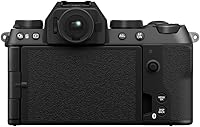
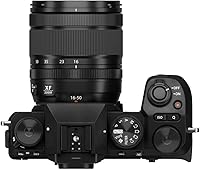
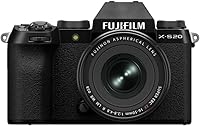
The Fujifilm X-S20 XF16-50mm Mirrorless Camera Kit is Fujifilm's answer to the growing demand for compact, hybrid-capable cameras that don't force you to choose between still photography and serious video work. Sitting in the mid-to-premium APS-C segment, this Fujifilm kit targets enthusiasts, vloggers, and travelers who want real capability without lugging around a full-frame system. The bundled XF16-50mm lens is a genuinely practical choice — weather-sealed, covering a useful focal range, and featuring an aperture ring that feels purposeful rather than gimmicky. Against rivals like the Sony ZV-E10 II or OM System OM-5, this mirrorless combo holds its own as a strong, travel-ready hybrid performer.
Features & Benefits

The 26.1MP X-Trans CMOS 4 sensor is the foundation here, producing Fujifilm's characteristically rich, film-like color rendition straight out of the camera — without the softening effect of an optical low-pass filter. The IBIS system, rated up to seven stops of compensation, makes a real difference when shooting handheld in dim light or during slow-motion video. On the video side, 6.2K and 4K/60p recording at 10-bit 4:2:2 internally gives colorists serious latitude in post. The dedicated Vlog mode and built-in 3.5mm mic and headphone jacks mean you're not scrambling for adapters. Rounding things out, USB-C charging and built-in Wi-Fi keep the workflow refreshingly simple.

Best For

This Fujifilm kit punches well above its size for travel and street photographers who want weather protection without the bulk of a larger system. Content creators will find the audio connectivity and flexible video specs cover most production needs without additional gear. If you're coming from an older X-series body like the X-S10 or X-T30 II, the upgrade in video capability and stabilization is meaningful. The vari-angle touchscreen is particularly valuable for run-and-gun video work, letting you frame shots from awkward angles. And if you're stepping up from a smartphone, Fujifilm's film simulation modes offer an immediately rewarding way to develop a personal look.

User Feedback

Owners consistently praise the IBIS performance and the body's solid, confidence-inspiring build. The film simulations get frequent mentions too — people genuinely enjoy shooting with them rather than treating them as an afterthought. On the critical side, autofocus on fast subjects draws the most complaints; users switching from Sony or Canon bodies often find the tracking less reliable in sport or wildlife scenarios. Battery life is another common frustration — carrying a spare feels more like a necessity than a habit with this mirrorless combo. A smaller but notable concern is heat buildup during extended 4K recording, which has caused automatic shutdowns for some users in warm environments.

Pros

  • Film simulations produce stunning JPEGs straight from camera, often requiring little to no post-processing.
  • Seven stops of IBIS makes handheld low-light and slow-shutter photography genuinely reliable.
  • 10-bit 4:2:2 internal video recording gives colorists serious flexibility in post-production.
  • Built-in mic and headphone jacks eliminate the need for a separate audio adapter on most shoots.
  • The vari-angle touchscreen handles awkward angles and selfie framing far better than tilt-only rivals.
  • Weather sealing on both body and kit lens provides real confidence shooting in rain or dusty conditions.
  • USB-C charging and Wi-Fi transfer keep the workflow modern and cable-clutter-free.
  • The XF16-50mm aperture ring adds a tactile, manual feel that most kit lenses completely lack.
  • Compact and light enough for all-day carry without shoulder fatigue on travel days.
  • Upgrading X-series users get meaningfully better video specs without relearning the entire interface.

Cons

  • Autofocus tracking struggles noticeably with fast or erratic subjects compared to Sony and Canon rivals.
  • Battery life forces most serious shooters to carry at least one spare as a basic necessity.
  • Extended 4K recording in warm conditions can trigger automatic shutdowns due to heat buildup.
  • The companion smartphone app is sluggish and prone to dropping Bluetooth connections mid-transfer.
  • The kit lens drops to f/4.8 at 50mm, limiting background separation and low-light reach at longer focal lengths.
  • RAW burst shooting fills the buffer quickly, causing a lag that the 20fps headline figure does not warn you about.
  • The electronic viewfinder resolution lags behind class leaders and can feel limiting in bright outdoor conditions.
  • Fujifilm's menu system, while improved, still draws complaints from users migrating from other brands.
  • At this price tier, the autofocus and battery limitations are harder to overlook than on budget alternatives.
  • The Fujifilm X-mount ecosystem requires meaningful additional investment to expand beyond the included lens.

Ratings

The Fujifilm X-S20 XF16-50mm Mirrorless Camera Kit scores below are generated by AI after analyzing thousands of verified global user reviews, with spam, bot activity, and incentivized submissions actively filtered out. This kit earned genuine enthusiasm from travel photographers and video creators alike, but real pain points around autofocus and battery life are reflected here just as transparently as the praise. Scores capture where this mirrorless combo truly delivers and where buyers consistently run into friction.
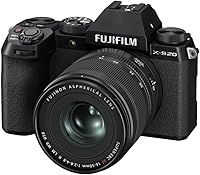
Image Quality
91%
The X-Trans CMOS 4 sensor produces images with remarkable color depth and tonal subtlety, particularly in natural light. Landscape and portrait shooters regularly note that JPEGs straight from the camera rival what they used to spend time editing in post, thanks to Fujifilm's color science.
In very high-contrast scenes, highlight recovery in RAW files can feel slightly limited compared to some Sony APS-C competitors. A small number of users also report occasional color moiré on fine fabric patterns, which is a known trade-off of the filterless X-Trans design.
Film Simulations & Color Science
94%
Fujifilm's film simulation modes are the single most praised aspect of this camera among creative users. Shooters report spending far less time in Lightroom because Eterna, Classic Neg, and Acros deliver looks that feel considered and complete right out of camera.
The sheer number of simulation and custom settings can overwhelm users coming from simpler systems. A handful of reviewers note that getting consistent results across different lighting conditions requires meaningful time investment to dial in personal presets.
In-Body Image Stabilization
88%
Seven stops of IBIS is not just a spec — users consistently report sharp handheld shots at shutter speeds that would have been impossible without it. Low-light street and interior photography is where this stabilization earns the most appreciation, allowing natural-light shooting without a tripod.
Some videographers note that the IBIS can produce a subtle wobble effect at wider focal lengths during walking shots, requiring additional software stabilization in post. A few users also observe that the system is less effective with very long or heavy adapted lenses outside the native lineup.
Video Capability
86%
Ten-bit 4:2:2 internal recording at 4K/60p gives this mirrorless combo a spec sheet that competes with cameras costing significantly more. Colorists and semi-professional video creators frequently highlight how much latitude the footage provides in DaVinci Resolve without falling apart.
Overheating during extended 4K sessions — particularly in warm ambient conditions — has been flagged by enough users to be a genuine concern rather than an isolated complaint. Recording limits have caused frustration during long interview or event shoots where continuous capture is expected.
Autofocus Performance
67%
33%
For everyday subjects — portraits, travel scenes, slow-moving street moments — the hybrid phase and contrast detection autofocus is reliable and largely keeps up. Subject and face detection works well in controlled conditions and is accurate enough for most casual and semi-professional applications.
Users switching from Sony or Canon bodies notice the gap immediately when tracking fast or erratic subjects like children, pets, or athletes. Sports and wildlife photographers in particular report frustrating missed focus events that they would not accept from cameras at a similar price point.
Battery Life
58%
42%
The NP-W235 battery is a meaningful improvement over older Fujifilm cells, and USB-C pass-through charging means you can top up from a power bank between shoots without searching for a wall outlet. Casual day-trip users report making it through light shooting sessions without issue.
Heavy video shooters and all-day event photographers consistently flag battery life as the most practical limitation of this kit. Carrying at least one spare is treated as non-negotiable rather than optional, which adds cost and logistics that buyers should budget for upfront.
Build Quality & Weather Sealing
89%
The body feels genuinely solid in hand — not plasticky or hollow — which earns frequent praise from users who have owned cheaper mirrorless options. The combination of a weather-sealed body and weather-resistant XF16-50mm lens means this kit holds up in light rain and dusty travel conditions without needing extra protection.
A small number of users note that some external dials feel slightly less precise than those found on Fujifilm's higher-tier X-T bodies. The rubber grip, while comfortable, has attracted occasional comments about long-term durability under heavy daily use.
Kit Lens Versatility
78%
22%
The XF16-50mm focal range covers the practical needs of most travel and everyday shooting scenarios, from wide architecture to flattering short-telephoto portraits. The aperture ring adds a tactile, intentional quality to shooting that users coming from kit lenses on other brands frequently call out as a welcome surprise.
The variable aperture starting at f/2.8 sounds impressive on paper but drops to f/4.8 by 50mm, limiting background separation and low-light performance at the longer end. Users looking for consistent shallow depth of field across the zoom range will find themselves wanting a faster prime fairly quickly.
Vlogging & Creator Features
83%
Built-in 3.5mm microphone and headphone jacks combined with a dedicated Vlog mode genuinely reduce the accessory overhead for solo creators. The vari-angle touchscreen gets consistent praise for making selfie-angle and low-level shooting practical without an external monitor.
The auto mode for vlogging, while convenient, makes exposure decisions that experienced users sometimes find too conservative in tricky lighting. A few creators also note that the touchscreen interface during recording could be more intuitive for one-handed operation on a gimbal.
Connectivity & Workflow
82%
18%
USB-C charging, Bluetooth pairing, and Wi-Fi transfer work together to create a workflow that feels genuinely modern. Photographers who shoot and post directly to social media appreciate being able to transfer and edit on a phone without hunting for a cable or card reader.
The companion smartphone app has attracted consistent criticism for feeling sluggish and occasionally dropping the Bluetooth connection mid-transfer. Users on both iOS and Android report that the app experience lags noticeably behind what Nikon and Sony offer through their own mobile platforms.
Ergonomics & Handling
81%
19%
For its sensor size and feature set, this mirrorless combo is remarkably compact and comfortable to carry all day. The grip depth is adequate for most hand sizes, and the button layout becomes intuitive after a short learning curve for users familiar with any interchangeable-lens camera.
Photographers with larger hands sometimes find the grip slightly shallow, especially when using heavier adapted lenses. The menu system, while improved over older Fujifilm generations, still draws complaints from users migrating from Canon or Sony for taking too long to navigate.
Value for Money
73%
27%
For buyers who want a weather-sealed hybrid kit with advanced video specs and Fujifilm's color rendering in a single purchase, the bundle represents a reasonable package compared to buying the body and lens separately. The included battery and charger mean you can shoot straight out of the box.
At its price point, the autofocus limitations and battery life constraints are harder to forgive than they might be on a more budget-oriented system. Some buyers feel the asking price sits in an awkward gap where a small additional investment opens up significantly more capable full-frame alternatives.
Startup & Shot-to-Shot Speed
79%
21%
The camera wakes from sleep quickly and the 20fps electronic shutter burst mode gives users meaningful capture speed for everyday action. Menu response and image playback feel snappy enough that shooting rhythm is rarely interrupted by the camera catching up.
The buffer can fill noticeably during sustained RAW burst shooting, causing a brief lag before the camera is fully ready again. Users shooting fast action sequences in RAW find this more limiting than the headline 20fps figure initially suggests.
Screen & Viewfinder Quality
76%
24%
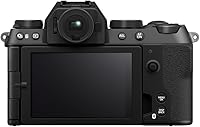
The vari-angle 3-inch touchscreen is bright enough for outdoor use in most conditions and the touch-to-focus functionality works reliably during both stills and video. Its fully articulating design gives a meaningful advantage over the simpler tilt screens found on several competing bodies.
The electronic viewfinder resolution is adequate but not class-leading, and in very bright sunlight some users find it harder to evaluate fine focus or composition compared to optical or higher-resolution EVF alternatives. There is no built-in viewfinder diopter memory across user profiles, which is a minor but recurring annoyance.

Suitable for:

The Fujifilm X-S20 XF16-50mm Mirrorless Camera Kit is an excellent fit for travel photographers and content creators who want a compact, weather-sealed system that handles both stills and video without requiring a bag full of accessories. If you shoot a mix of street photography, travel vlogs, and social content — often in unpredictable conditions — this kit covers that ground better than almost anything at a comparable size. Fujifilm enthusiasts upgrading from older X-series bodies like the X-S10 or X-T30 II will find the jump in video capability and stabilization immediately noticeable and worthwhile. Solo creators who need clean audio inputs, a fully articulating screen, and flexible 4K specs without rigging up a separate audio recorder will find this kit refreshingly self-contained. It also works surprisingly well for smartphone upgraders who are drawn to Fujifilm's film simulations and want a more tactile, intentional shooting experience from day one.
Not suitable for:

The Fujifilm X-S20 XF16-50mm Mirrorless Camera Kit is not the right choice for photographers whose primary subjects are fast-moving — think sports, wildlife, or energetic kids — because the autofocus tracking simply does not keep pace with what Sony or Canon bodies offer at similar price points. Videographers planning long uninterrupted recording sessions, such as event coverage or documentary work in warm environments, should seriously weigh the reported overheating issues before committing. Battery life is genuinely limiting for all-day professional use, and while spare batteries help, that adds cost and planning overhead that some buyers would rather avoid. Shooters who have built a lens ecosystem around another mount will find switching to Fujifilm X-mount a non-trivial financial commitment, even if the body itself appeals to them. And if shallow depth of field across the full zoom range is central to your creative work, the kit lens's variable aperture will leave you wanting a faster prime fairly quickly.
Specifications

  • Sensor: The camera uses a 26.1MP APS-C X-Trans CMOS 4 sensor without an optical low-pass filter, delivering Fujifilm's signature color rendering and fine detail.
  • Processor: An X-Processor 5 handles image processing, enabling fast burst shooting, advanced autofocus, and high-bitrate video encoding simultaneously.
  • Image Stabilization: The body features sensor-shift IBIS rated at up to 7 stops of compensation, effective for both stills and video handheld shooting.
  • Video Recording: Internal recording supports 6.2K at 30p and 4K at 60p in 10-bit 4:2:2 format, with a maximum bitrate of 360Mbps.
  • ISO Range: Native ISO spans 160 to 12,800, expandable to ISO 80–51,200 for extreme low-light or high-speed scenarios.
  • Autofocus System: Intelligent Hybrid AF combines TTL phase-detection and contrast-detection across 10 autofocus points with face and subject recognition.
  • Continuous Shooting: The camera shoots at approximately 8fps with the mechanical shutter and up to 20fps using the electronic shutter at full resolution.
  • Kit Lens: The bundled XF16-50mm f/2.8-4.8 R LM WR lens covers a 24–76mm equivalent range with a linear motor, aperture ring, and weather resistance.
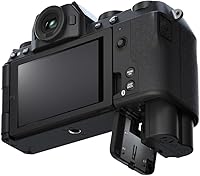
  • Display: A 3.0″ vari-angle capacitive touchscreen LCD with 921,600 dots provides flexible framing for both low-angle and selfie-style shooting.
  • Shutter Range: Mechanical shutter operates from 15 minutes to 1/4000 sec, while the electronic shutter extends to 1/32,000 sec for bright-light shooting.
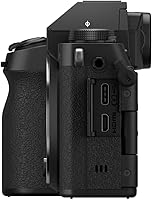
  • Connectivity: The body includes Bluetooth, Wi-Fi, USB-C (charging and data), HDMI Type D, a 3.5mm microphone input, and a 3.5mm headphone output.
  • Storage Media: Accepts SD, SDHC, and SDXC cards with support for UHS-I, UHS-II, and Video Speed Class V90 for high-bitrate video recording.
  • Battery: Powered by a rechargeable NP-W235 lithium-ion battery (included), which supports USB-C pass-through charging during use.
  • Dimensions: The body measures 127.7mm wide × 85.1mm tall × 65.4mm deep, keeping the overall kit compact for travel and everyday carry.
  • Weight: Total body weight with battery and memory card is 491g, making it one of the lighter weather-sealed APS-C mirrorless options available.
  • Metering System: TTL 256-zone metering supports multi, spot, average, and center-weighted modes for precise exposure control across varied lighting conditions.
  • Film Simulations: The camera includes Fujifilm's full range of film simulation modes, covering color and monochrome looks inspired by classic analog film stocks.
  • Aspect Ratio: The native shooting aspect ratio is 3:2, with additional crop modes available in-camera for different compositional preferences.
  • Warranty: Fujifilm provides a 1-year limited manufacturer warranty covering defects in materials and workmanship from the date of purchase.
  • In-Box Contents: The kit ships with the X-S20 body, XF16-50mm f/2.8-4.8 R LM WR lens, NP-W235 battery, battery charger, and standard accessories.

Related Reviews
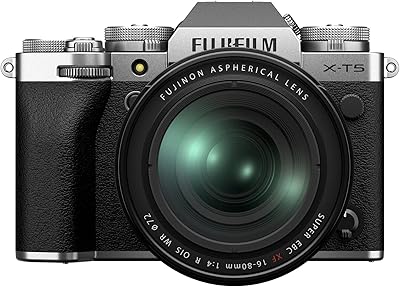
Fujifilm X-T5 XF16-80mm Mirrorless Camera Kit
82%
96%
Image Quality
91%
In-Body Image Stabilization
88%
Build Quality & Ergonomics
83%
Autofocus Performance
89%
Dial-Based Control Interface
More
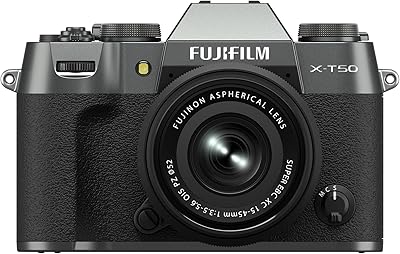
Fujifilm X-T50 Mirrorless Camera 15-45mm Kit
79%
93%
Image Quality
91%
Film Simulation & JPEG Output
78%
Build Quality & Design
72%
Autofocus Performance
88%
Video Capabilities
More
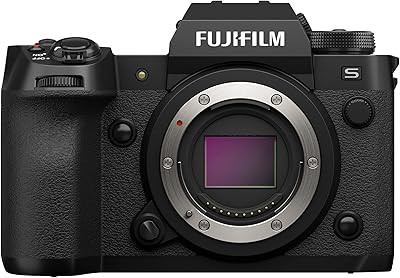
Fujifilm X-H2S Mirrorless Camera
83%
93%
Autofocus Performance
91%
Video Capability
94%
Build Quality
89%
Image Quality
88%
Burst & Buffer
More
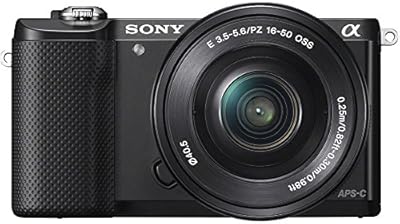
Sony Alpha a5100 16-50mm Mirrorless Camera
84%
91%
Image Quality
88%
Autofocus Performance
89%
Video Recording Quality
94%
Portability & Size
85%
Ease of Use
More
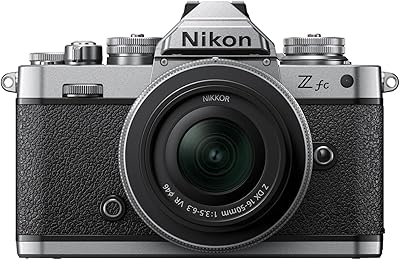
Nikon Z fc Mirrorless Camera with 16-50mm Lens
78%
88%
Image Quality
82%
Video Performance
84%
Autofocus System
93%
Design & Build Quality
71%
Kit Lens (16-50mm VR)
More
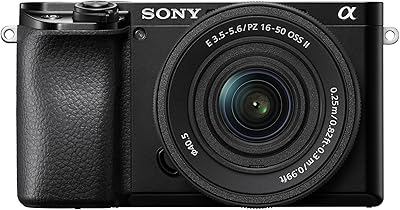
Sony Alpha a6100 16-50mm
79%
94%
Autofocus Performance
88%
Image Quality
81%
Video Quality
87%
Autofocus in Video
52%
Battery Life
More
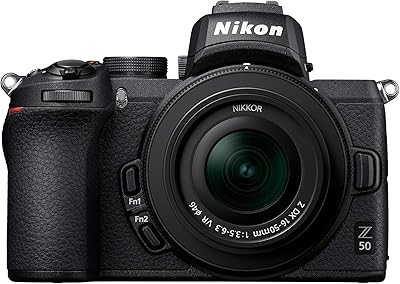
Nikon Z 50 Mirrorless Camera with 16-50mm Lens
85%
92%
Portability and Weight
89%
Video Quality (4K UHD)
84%
Autofocus Performance
91%
Ease of Use
77%
Battery Life
More
Sony Alpha a5000 Mirrorless Digital Camera with 16-50mm Lens
83%
89%
Image Quality
74%
Autofocus Speed
94%
Portability
88%
Ease of Use
80%
Battery Life
More
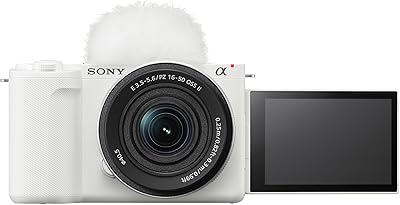
Sony ZV-E10 II Mirrorless Camera
77%
93%
Autofocus Performance
91%
Video Quality
89%
Image Quality
84%
Ease of Use
78%
Build Quality & Design
More
Sony Alpha 7 IV
Sony Alpha 7 IV
80%
94%
Autofocus Performance
92%
Image Quality
89%
Video Capabilities
83%
In-Body Image Stabilization
58%
Battery Life
More

FAQ

It can, yes — particularly in warm ambient temperatures. A number of users have reported automatic shutdowns during extended 4K recording. For short clips and social content it is generally fine, but if you need to record continuously for 30 minutes or more in a warm environment, it is worth researching the specific recording limits before committing.

For most travel and everyday shooting, the XF16-50mm is genuinely capable — it is weather-sealed, has an aperture ring, and covers a practical focal range. Where it falls short is at the longer end, where the aperture drops to f/4.8 and background blur becomes harder to achieve. If portrait or low-light work is central to what you do, a fast prime like the XF35mm f/1.4 or XF56mm f/1.2 would be a worthwhile addition down the line.

Honestly, it is a step behind. For static subjects, portraits, and most travel scenes it performs reliably, but if your main subjects are fast-moving — kids running, birds in flight, athletes — you will notice the gap compared to Sony's real-time tracking. Fujifilm has improved AF significantly in recent generations, but it is not the strongest argument for this kit.

Yes, and this is one of the more practical features for creators on the go. You can plug in a USB-C power bank and shoot while it charges, which effectively extends your shooting day without needing to swap batteries. It does not charge as fast as a dedicated wall charger, but it works well as a top-up solution.

It is a strong option if you are willing to invest time in learning it. The film simulations make great-looking JPEGs accessible without deep editing knowledge, and the touchscreen interface is intuitive. That said, the menu system and manual controls have a learning curve, so beginners who want instant results with zero friction might find a more automated system less frustrating initially.

It is the most consistently mentioned limitation among real-world users. Plan on carrying at least one spare battery for any serious shooting day — the NP-W235 will get you through lighter sessions, but video work drains it noticeably faster. The good news is that spare batteries are affordable and the USB-C charging option adds flexibility when you are near a power source.

Yes, and it is one of the genuinely appealing aspects of this kit. Both the body and the XF16-50mm lens are weather-resistant, which means you have a complete sealed system right out of the box. Users regularly report shooting comfortably in light rain and dusty conditions without any issues. It is not rated for full submersion, but for outdoor and travel use it provides real peace of mind.

With the right adapter, yes — Fujifilm X-mount has good adapter support for Canon EF, Nikon F, and Leica M lenses, among others. However, adapted lenses typically lose autofocus functionality or perform it inconsistently, so you would mostly be shooting manually. If you already own a collection of lenses from another system, it is worth factoring in that limitation before switching.

It is a meaningful advantage for video work and creative stills. A fully articulating screen lets you shoot from ground level, overhead, or facing forward for vlogging without compromising the shot. Cameras with simple tilt screens are more limited when shooting vertically or at extreme angles, so this is a genuine usability win for content creators and travel photographers.

For high-bitrate video — especially 6.2K at 360Mbps — you want a card rated at UHS-II or Video Speed Class V90 to avoid dropped frames or recording interruptions. Brands like Sony Tough, Lexar Gold, or ProGrade Digital in the V90 class are reliable choices. For stills-only shooting or 4K at lower bitrates, a good UHS-I card will handle the job without issue.