Overview

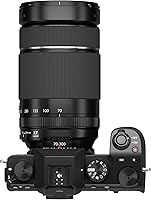
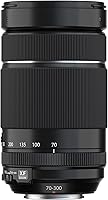
The Fujifilm Fujinon XF70-300mm Telephoto Zoom Lens is Fujifilm's most compelling answer yet for X-series shooters who want serious reach without hauling serious weight. In practical terms, the focal range translates to something closer to 107–457mm in full-frame language — enough to isolate a distant heron or compress a mountain backdrop without switching lenses. Within the XF lineup, it slots in as the go-to option for outdoor work, outpacing older telephoto choices in both optical refinement and weather protection. Dust- and moisture-resistant construction, combined with operability down to -10°C, makes it genuinely credible for cold-morning wildlife sessions or unpredictable travel conditions — a level of durability that is not always guaranteed at this price tier.
Features & Benefits

The XF70-300mm's linear motor autofocus is one of its strongest selling points — fast, near-silent, and reliable enough to lock onto birds mid-flight without the hunting behavior that plagues slower systems. The onboard OIS delivers meaningful shake correction, which matters most when shooting handheld at the long end in fading afternoon light. What many buyers overlook is the close-focus capability: at under a meter throughout the entire zoom range, this Fujifilm long zoom doubles as a capable tele-macro tool. Pair it with either compatible teleconverter and you are pushing past 600mm equivalent — approaching 900mm — without a separate prime. Two ED elements in the optical formula keep chromatic aberration under control even at full extension.

Best For

This telephoto zoom was clearly designed with wildlife and bird photographers in mind — the kind who hike into position before dawn and need a lens that won't turn every trail into a strength test. At around 580g, it is light enough to carry on a shoulder strap for hours without fatigue. Travel photographers will appreciate that it fits in a carry-on without drama, covering everything from candid street compression to distant architecture. Fujifilm X-series users building out a kit will find it pairs naturally with a standard zoom for full coverage. It is also a strong choice for amateur naturalists and safari visitors who want sharp, detailed images of distant subjects without the investment of a dedicated prime.

User Feedback

Among verified buyers, autofocus performance earns the most consistent praise — particularly for bird photography, where speed and precision separate good shots from missed ones. Build quality is frequently noted, with users reporting the weather sealing holds up reliably in rain and dusty conditions. The zoom ring is generally described as smooth and well-damped. The honest counterpoint: at the long end in dim light, the variable aperture becomes a real consideration, and you will find yourself managing ISO more than you might prefer. A handful of users also find manual focus feedback less tactile than expected. On balance, though, the prevailing sentiment is that this Fujifilm long zoom punches above its weight against competing telephoto zooms in its class.

Pros

  • Silent linear motor autofocus locks on quickly — a genuine asset for bird photography and skittish wildlife.
  • Weather sealing holds up reliably in rain, sea spray, and dusty trail conditions, not just in theory.
  • Surprisingly capable close-focus performance lets this telephoto zoom handle tele-macro work without a lens swap.
  • Pairing with the XF2X teleconverter unlocks near-900mm equivalent reach while retaining autofocus capability.
  • At roughly 580g, it is light enough to carry attached to a body for a full day without arm fatigue.
  • Strong OIS performance means more usable handheld shots at the long end in fading afternoon light.
  • Two ED elements in the optical formula keep chromatic fringing well controlled in high-contrast outdoor scenes.
  • The XF70-300mm fits in a carry-on bag, making it practical for international travel without checked luggage.
  • Smooth, well-damped zoom ring makes compositional adjustments deliberate and precise in the field.
  • Cold-weather operability down to -10°C keeps it functional during winter wildlife sessions when softer lenses fail.

Cons

  • Variable aperture sliding to F5.6 at 300mm forces higher ISO in mixed or shaded outdoor light.
  • Manual focus by-wire lacks the physical resistance and end stops that experienced photographers rely on instinctively.
  • Corner sharpness at 300mm wide open falls noticeably short of center performance, requiring stopping down for edge-to-edge results.
  • Autofocus tracking slows and hunts more with the 2x teleconverter attached, limiting its usefulness in fast action.
  • Mounted on smaller X-series bodies, the front-heavy balance becomes uncomfortable during extended handheld sessions.
  • No zoom lock mechanism means there is a risk of zoom creep when the lens is pointed downward.
  • Filter thread engagement can feel rough, requiring care to avoid cross-threading when attaching accessories quickly.
  • At maximum focal length in low contrast conditions — overcast skies, pale subjects — AF hunting is more frequent than at shorter focal lengths.

Ratings

The Fujifilm Fujinon XF70-300mm Telephoto Zoom Lens earns its ratings here from a synthesis of verified buyer feedback gathered globally — processed by AI to filter out incentivized reviews, duplicate submissions, and bot activity. What remains reflects genuine field experience from wildlife shooters, travelers, and birding enthusiasts who have put this telephoto zoom through real-world conditions. Scores capture both where the XF70-300mm genuinely excels and where it asks for compromise.
Autofocus Speed & Accuracy
91%
Users consistently report that the linear motor AF locks on quickly and quietly — a genuine advantage when photographing skittish birds or fast-moving wildlife at distance. Tracking performance on erratic subjects like gulls in flight or deer breaking from cover earns repeated praise across outdoor photography communities.
In very low contrast situations — think overcast skies with white birds — the system can occasionally hunt before confirming focus. A small number of users also note that burst tracking at the extreme long end is marginally less decisive than on dedicated sports primes.
Optical Image Stabilization
88%
The OIS system is one of the most frequently praised aspects of this telephoto zoom, with many users reporting consistently sharp handheld results at 300mm in fading light. For hikers who rarely shoot from a tripod, this translates directly into more keepers per outing without adding stabilization hardware to a pack.
A handful of users mention that OIS engagement produces a subtle jolt visible in the viewfinder when first activated, which can be mildly disorienting. At the absolute long end in very dim light, even strong image stabilization cannot fully compensate, and some motion blur does creep into shots.
Image Sharpness
89%
Center sharpness from around 70mm through to roughly 200mm is widely described as excellent, with fine feather detail and fur texture rendered cleanly. The two ED elements do meaningful work controlling chromatic fringing, particularly in high-contrast scenes like backlit foliage or bright sky backgrounds.
Corner sharpness at 300mm wide open draws occasional criticism, especially from users comparing output at 100 percent on-screen. Some photographers note a mild softness toward the edges of the frame at maximum focal length that tightens up noticeably when stopped down by a stop or two.
Build Quality & Weather Sealing
87%
Buyers who have used this Fujifilm long zoom in rain, sea spray, and dusty trail conditions almost universally report that the sealing holds up well. The zoom and focus rings feel solid without any play, and the overall construction inspires the kind of confidence that makes you willing to bring it out in conditions where you would hesitate with lesser lenses.
A few users note that the plastic barrel, while weather-resistant, does not feel as premium as metal-barreled alternatives. The zoom ring can also attract minor internal dust intrusion over extended use in very sandy environments, though this appears to be a minority experience rather than a widespread defect.
Variable Aperture Handling
63%
37%
At the wide end, the maximum aperture is usable enough for decent subject separation and reasonable shutter speeds in good light. Users who primarily shoot in bright outdoor conditions — daytime safaris, open wetlands — report that the aperture limitation rarely affects their results in practice.
Sliding to F5.6 at 300mm is a real constraint that experienced users cannot ignore, particularly when shooting in woodland shade or at dusk. ISO climbs faster than expected in mixed lighting, and users coming from faster primes feel the difference most acutely during golden hour wildlife sessions when shutter speed and aperture are both fighting against you.
Portability & Weight
93%
At around 580 grams, the XF70-300mm is remarkably light for the focal reach it provides, and users who have hiked with it attached to a body for six or eight hours straight report minimal fatigue. Compared to full-frame equivalents covering a similar range, the size difference is dramatic and frequently cited as the primary reason buyers chose this lens.
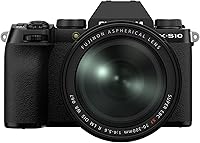
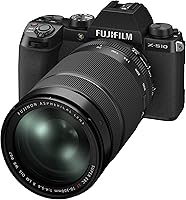
While light by telephoto zoom standards, attaching it to a smaller X-series body like an X-T30 or X-S10 does create a noticeable front-heavy imbalance that some users find awkward for extended handheld shooting. It is worth pairing with a body that offers a comfortable grip depth.
Teleconverter Compatibility
84%
The ability to slot in the XF2X and push reach toward 900mm equivalent is something users genuinely take advantage of — particularly birders photographing waders or raptors at water margins. The light loss is manageable in good conditions, and the combination remains autofocus-capable, which not every lens-teleconverter pairing can claim.
With the 2x converter, autofocus noticeably slows and hunts more in lower light, and some users feel the image quality trade-off at maximum extension is steep enough that they reach for the converter only as a last resort. The 1.4x is the more practical everyday pairing according to the majority of feedback.
Tele-Macro Capability
79%
21%
The consistent close-focus distance across the zoom range is a feature that catches many buyers pleasantly off guard. Users who photograph insects, wildflowers, or intricate textures in the field appreciate being able to switch from distant subject to near-macro framing without swapping lenses or adjusting working distance significantly.
At 0.33x maximum magnification, this is not a replacement for a dedicated macro lens, and users who came in hoping for true 1:1 work will be disappointed. The OIS helps considerably with close-up sharpness, but at minimum focus distance, even small movements introduce blur that requires careful technique or a support.
Zoom Ring Feel
81%
19%
The zoom action is consistently described as smooth and well-damped — not too stiff, not loose enough to creep when pointed downward. Most users settle into the zoom throw quickly, and the tactile feedback is considered appropriate for deliberate compositional adjustments in the field.
A smaller subset of users find the zoom throw slightly too long for rapid focal-length changes during fast-action shooting, where shaving half a second off a zoom adjustment can mean the difference between catching a subject and missing it. There is no zoom lock mechanism, which a minority of users feel is an omission.
Autofocus Noise
94%
The near-silent linear motor is frequently highlighted by videographers and photographers working near sound-sensitive wildlife or in quiet environments like hides and bird observatories. Users recording video with in-camera audio report that AF noise is essentially inaudible in final footage, which is a genuine practical advantage.
For most stills photographers this is a non-issue, but a very small number of users report that at very close focus distances, a faint mechanical sound becomes perceptible in exceptionally quiet conditions. This is unlikely to disturb wildlife but is worth noting for highly controlled video productions.
Value for Money
82%
18%
Across user reviews, the consensus is that this telephoto zoom delivers optical and mechanical quality that justifies its price tier — especially when weighed against the cost of building a comparable reach with Fujifilm primes. For X-series users who want one versatile outdoor lens rather than several specialized ones, the math tends to work out favorably.
At its asking price, some buyers feel the variable aperture limitation should have been addressed more aggressively in the optical design. Competing zoom lenses from other brands covering similar ranges are available at lower prices, which pushes some value-conscious shoppers to look outside the XF ecosystem.
Manual Focus Usability
67%
33%
The focus-by-wire manual focus ring is smooth enough for deliberate fine-tuning, and users doing tele-macro work or precise focus stacking find it serviceable with practice. Responsiveness can be adjusted via in-camera settings, which gives some degree of control over sensitivity.
By-wire manual focus is a polarizing design choice, and photographers who trained on mechanical rings find the lack of physical resistance and end stops frustrating. In fast field conditions, fine-tuning focus manually is rarely practical, and most users treat it as an emergency fallback rather than a primary workflow tool.
Cold Weather Performance
86%
Users photographing in genuinely cold environments — winter mornings in Scandinavia, mountain ranges in early spring — report that the lens continues to operate reliably at temperatures that would freeze out lesser optics. Zoom action remains smooth rather than stiffening up, which matters when wearing gloves in the field.
At the absolute lower edge of its rated temperature range, a few users note that the zoom ring becomes noticeably stiffer, requiring more deliberate force to adjust. Battery life in paired camera bodies drops faster in the cold than the lens itself, which tends to be the more limiting factor in extreme conditions.
Filter Thread & Accessory Ecosystem
77%
23%
The 67mm filter thread is a practical size that balances cost and availability well — circular polarizers and ND filters in this diameter are widely available and competitively priced. Users who already own 67mm filters from other XF lenses appreciate the shared sizing across their kit.
Users stepping up from lenses with smaller filter diameters will need to invest in new circular polarizers or step-up rings, which adds to the total cost of ownership. A small number of users also note that the filter thread engagement could be smoother, occasionally requiring care to avoid cross-threading when attaching filters quickly in the field.

Suitable for:

The Fujifilm Fujinon XF70-300mm Telephoto Zoom Lens is built for a specific kind of photographer — one who prioritizes reach, portability, and field reliability over maximum aperture. It is an ideal match for birders and wildlife enthusiasts who hike to their subjects, since the combination of fast silent autofocus and a carry-all-day weight makes long days in the field genuinely manageable. Travel photographers who refuse to check a bag but still want serious telephoto capability will find this Fujifilm long zoom fits neatly into carry-on-friendly kits without meaningful optical compromise. Safari-goers and naturalists shooting in variable outdoor conditions will appreciate the weather sealing, which holds up credibly in rain and dust rather than just existing on paper. X-series shooters who want to cover from wide to super-telephoto with a two-lens kit — this paired with a standard zoom — get a genuinely capable outdoor system without the weight or cost of prime alternatives.
Not suitable for:

The Fujifilm Fujinon XF70-300mm Telephoto Zoom Lens is not the right choice for photographers whose primary work happens in low light or shaded environments where aperture is a constant concern. Shooters who regularly work at dusk in woodland settings, or who photograph indoor sports, will hit the variable aperture ceiling frequently and end up pushing ISO harder than they would like. Photographers who demand true manual focus precision — particularly in controlled studio or scientific documentation contexts — will find the focus-by-wire ring a frustrating substitute for mechanical control. Anyone hoping to use this lens for serious video production should be aware that while AF noise is minimal, the by-wire manual focus and variable aperture behavior during zooming can create exposure shifts that complicate graded footage. Finally, photographers considering this lens as a stepping stone to professional wildlife work should understand that the optical performance at maximum focal length, while solid, does not match dedicated super-telephoto primes — if ultimate image quality at 300mm is the priority over versatility and portability, a prime deserves serious consideration instead.
Specifications

  • Focal Length: Covers 70–300mm on the Fujifilm X mount, equivalent to approximately 107–457mm in full-frame terms.
  • Max Aperture: Variable maximum aperture of F4 at 70mm, stepping down to F5.6 at the 300mm end.
  • Min Aperture: Minimum aperture of F22, available across the full zoom range in one-third stop increments.
  • Lens Construction: 17 elements arranged in 12 groups, including one aspherical element and two ED elements for chromatic aberration control.
  • Autofocus Type: Linear motor autofocus delivers near-silent, high-speed acquisition suitable for tracking moving subjects.
  • Image Stabilization: Optical Image Stabilization rated at up to 5.5 stops of shake correction for handheld shooting at long focal lengths.
  • Close Focus: Minimum focusing distance of 0.83m is maintained consistently throughout the entire zoom range.
  • Max Magnification: Maximum magnification of 0.33x at the telephoto end enables close-up tele-macro shooting.
  • Diaphragm: Nine rounded diaphragm blades designed to produce smooth, circular bokeh in out-of-focus areas.
  • Filter Thread: 67mm front filter thread accepts standard circular polarizers, ND filters, and UV filters.
  • Weight: Weighs approximately 580g, making it one of the lighter options available for this focal range.
  • Dimensions: Measures 3.52 × 5.22 × 5.22 inches, compact enough to fit in a standard shoulder bag or carry-on luggage.
  • Weather Sealing: Dust- and moisture-resistant construction protects internal components during outdoor use in rain or dusty environments.
  • Cold Weather Rating: Rated to operate reliably in temperatures as low as -10°C (14°F) without performance degradation.
  • Teleconverter Support: Compatible with the XF1.4X TC WR and XF2X TC WR teleconverters, extending reach to a 914mm equivalent with the 2x unit.
  • Camera Mount: Designed exclusively for the Fujifilm X mount system and is not compatible with other lens mounts.
  • Angle of View: Covers an angle of view ranging from 22.9° at 70mm down to 5.4° at 300mm.
  • Aperture Steps: Aperture adjusts in one-third EV steps across 16 discrete settings between maximum and minimum aperture.

Related Reviews

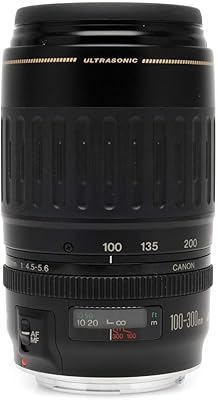
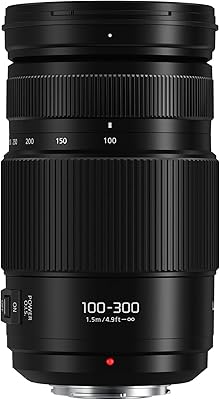
Canon EF 100-300mm f/4.5-5.6 Telephoto Zoom Lens
75%
88%
Autofocus Speed
91%
Autofocus Noise
67%
Image Sharpness
43%
Image Stabilization
78%
Build Quality
More
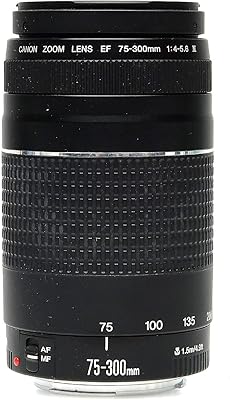
Canon EF 75-300mm III Telephoto Zoom Lens
70%
74%
Image Sharpness
58%
Autofocus Speed
69%
Build Quality
83%
Zoom Smoothness
88%
Value for Money
More
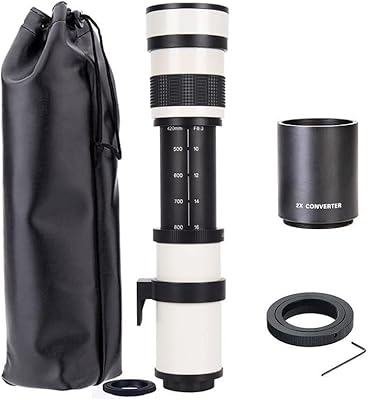
JINTU 420-1600mm Telephoto Zoom Lens for Canon EF Mount
79%
91%
Magnification Range
85%
Build Quality
65%
Manual Focus Usability
55%
Weight & Portability
87%
Value for Money
More
Panasonic LUMIX G II Vario 100-300mm Lens
82%
88%
Autofocus Speed & Tracking
83%
Image Sharpness
91%
Optical Stabilization
79%
Weather Sealing
84%
Build Quality & Durability
More
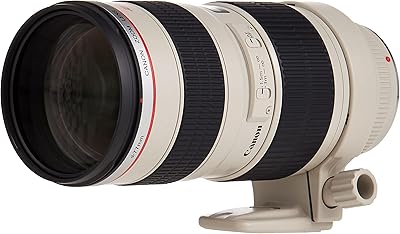
Canon EF 70-200mm f/2.8L USM Telephoto Zoom Lens
82%
91%
Autofocus Speed
93%
Image Sharpness
94%
Build Quality
92%
Aperture Consistency
89%
Bokeh & Subject Separation
More
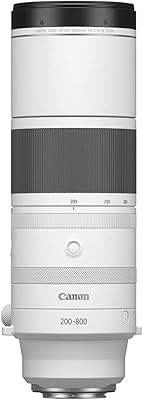
Canon RF200-800mm F6.3-9 IS USM Zoom Lens
82%
96%
Zoom Range Versatility
91%
Image Stabilization
83%
Autofocus Performance
89%
Portability & Weight
58%
Aperture Range
More
Lightdow 420-800mm F8.3 Telephoto Zoom Lens
68%
83%
Value for Money
61%
Image Sharpness
69%
Manual Focus Usability
58%
Build Quality
72%
Setup & Compatibility
More
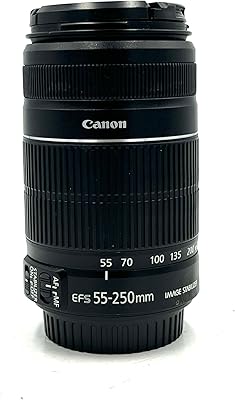
Canon EF-S 55-250mm f/4-5.6 IS II Telephoto Zoom Lens
82%
91%
Value for Money
88%
Image Stabilization Performance
65%
Autofocus Speed in Low Light
93%
Portability & Size
85%
Image Quality & Sharpness
More
Canon EF 100-400mm f/4.5-5.6L Telephoto Zoom Lens
81%
91%
Autofocus Speed & Accuracy
88%
Image Stabilization
86%
Optical Sharpness
93%
Build Quality & Weather Sealing
67%
Push-Pull Zoom Mechanism
More
Tamron 17-70mm F/2.8 Di III-A VC RXD Zoom Lens for Fujifilm X
86%
91%
Image Quality
88%
Vibration Compensation (VC) Effectiveness
84%
Autofocus Performance
90%
Build Quality and Durability
85%
Low Light Performance
More

FAQ

Yes, the XF70-300mm is compatible with the full range of Fujifilm X-mount bodies, including X-T, X-S, X-H, and X-Pro series cameras. Older bodies may have reduced autofocus performance depending on firmware, so it is worth keeping your camera firmware up to date for the best results.

Based on consistent user reports, the sealing holds up genuinely well in real conditions — light to moderate rain, sea spray, and dusty trails. A small number of users report minor dust ingress into the zoom barrel after heavy use in very sandy environments, but this appears to be an edge case rather than a widespread issue. For most outdoor use, the protection is credible and practical.

At 70mm you get F4, which is usable in a range of conditions, but by the time you reach 300mm you are at F5.6. In bright daylight this rarely matters, but in shaded woodland, overcast skies, or shooting near dawn and dusk, you will find yourself pushing ISO higher than you might expect. If a large portion of your shooting happens in low light at long focal lengths, this is a genuine trade-off worth factoring in before you buy.

Bird photography is arguably where this telephoto zoom earns its strongest reputation. The linear motor AF is fast and quiet enough not to startle wildlife, and tracking performance on birds in flight is solid across a range of X-series bodies. In very low-contrast situations — pale birds against bright skies, for instance — AF hunting can occur, but for general birding use the performance is well above average for this class of lens.

With the 1.4x teleconverter the optical quality holds up well, and autofocus remains responsive enough for practical field use. The 2x is a different proposition — image quality is noticeably softer at the long end, and autofocus slows considerably, especially in anything other than good light. Most experienced users treat the 2x as a situational tool for stationary or slow-moving subjects rather than an everyday attachment.

The near-silent autofocus makes it more video-friendly than many telephoto zooms, and in-camera audio picks up essentially no AF motor noise during tracking. The main limitation for video is the focus-by-wire manual focus ring, which lacks the smooth, mechanical damping that dedicated videographers prefer for smooth pulls. For casual or travel video it performs well; for professional production work the manual focus behavior is a known limitation.

At 0.33x maximum magnification, the Fujifilm Fujinon XF70-300mm Telephoto Zoom Lens gets you meaningfully closer than most telephoto zooms, and it is genuinely useful for insects, wildflowers, and detailed textures in the field. However, it is not a substitute for a true macro lens — dedicated macro optics reach 1:1 magnification and are optimized for flat-field sharpness at minimum distance. Think of the close-focus capability here as a useful bonus, not a primary feature.
In good to moderate light, yes — the OIS system delivers a meaningful improvement in handheld keeper rates at 300mm, and many users report sharp results at shutter speeds that would produce blur without stabilization. In very dim conditions, even strong image stabilization cannot fully compensate for subject motion or extreme camera shake, so matching shutter speed to conditions still matters. The OIS works best when combined with good handheld technique rather than as a substitute for it.

It is manageable but noticeably front-heavy on compact bodies without a deep grip. The X-S10 and X-T30 are on the lighter, smaller end of the X-series range, and extended handheld shooting can become fatiguing after a while. Attaching a hand grip or using a lens collar and strap can help distribute the weight more comfortably for longer sessions.

There is no dedicated zoom lock on this lens, which means there is a theoretical risk of zoom creep when the lens is angled downward — for example, when worn on a shoulder strap. In practice, the zoom ring damping is firm enough that most users do not experience significant creep during normal use, but it is worth being aware of if you plan to carry the lens extended and angled for long periods.

Where to Buy