Overview

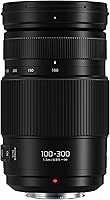
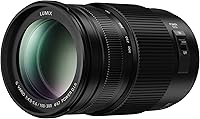
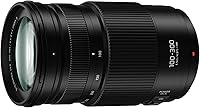
The Panasonic LUMIX G II Vario 100-300mm Lens is the updated successor to a well-regarded telephoto zoom in the Micro Four Thirds lineup, and the improvements are real enough to matter. That 100–300mm range translates to a 200–600mm equivalent on full-frame, which is genuinely impressive reach for a system this compact. Compared to its predecessor, the key upgrades are weather sealing and a faster autofocus motor — not cosmetic changes. This reach lens sits at the enthusiast end of the price spectrum, so buyers should expect a serious tool rather than a casual add-on.
Features & Benefits

The 240 fps linear motor is where this telephoto zoom earns its keep in the field. Tracking a bird in flight or a cyclist cutting through a frame is noticeably more reliable than older contrast-detect systems, and that speed matters when the moment is fleeting. Power O.I.S. works particularly hard at the long end — handheld shots at 300mm stay usable in a way that would be difficult without it, especially when paired with Dual I.S. 2.0 on compatible bodies. The F4.0–5.6 aperture is a fair trade-off for the reach; just don't plan on shooting this lens at dusk without bumping your ISO.

Best For

This reach lens is an obvious choice for wildlife and bird photography where you need distance without hauling a full-frame telephoto kit across a nature reserve. It also makes a strong case for travel shooters — it fits in a carry-on bag alongside a standard zoom and covers focal lengths that would otherwise require a much larger investment. Sports photographers using a Panasonic G9 or GH6 will appreciate the autofocus tracking improvements. One caveat: if you shoot primarily indoors or in low light, the variable aperture will feel limiting, and a faster prime would likely serve you better.

User Feedback

Owners consistently praise the autofocus improvement over the first generation, particularly for moving subjects, and most find sharpness across the zoom range genuinely good — if not quite matching prime lenses at 300mm. The weather sealing gets positive mentions from outdoor shooters, though it's worth clarifying that splash-proof is not the same as waterproof, and a few users have noted that distinction matters in heavy rain. Handheld video with Dual I.S. 2.0 draws strong marks for stability. On the downside, some buyers comparing it to the Olympus 75–300mm note that the competition offers a lighter package at a lower price, making the choice less clear-cut than Panasonic loyalists might expect.

Pros

  • Autofocus tracking is substantially faster than the original version, making a real difference with birds in flight.
  • Weather sealing adds practical outdoor confidence that the first-generation lens simply did not offer.
  • Power O.I.S. paired with Dual I.S. 2.0 produces impressively stable handheld results at long focal lengths.
  • The 200–600mm full-frame equivalent reach fits in a carry-on bag — full-frame shooters cannot say the same.
  • Center sharpness through most of the zoom range is genuinely strong in good daylight conditions.
  • Closest focusing distance of 1.5m adds flexibility for moderately close wildlife subjects like birds at a feeder.
  • Zoom ring action is smooth and well-damped, making focal length adjustments feel controlled during shooting.
  • Full electronic integration with compatible Panasonic bodies unlocks the complete Dual I.S. 2.0 stabilization system.
  • Firmware support has kept this telephoto zoom relevant even as newer Panasonic bodies have been released.

Cons

  • At 300mm, F5.6 forces uncomfortable ISO increases once daylight fades even slightly.
  • Edge sharpness at maximum reach drops off noticeably when shooting wide open.
  • Splash-proof is not waterproof — heavy or sustained rain can still put the lens at risk.
  • On smaller Micro Four Thirds bodies, the lens becomes noticeably front-heavy at full extension.
  • The Olympus 75–300mm undercuts it on price and weight for buyers who do not need weather sealing.
  • O.I.S. motor noise can be picked up by sensitive on-camera microphones during video recording.
  • Autofocus occasionally hunts in low-contrast or heavily backlit scenes before confirming a lock.
  • No tripod collar is included, which matters when using heavier tripod or monopod setups in the field.

Ratings

The Panasonic LUMIX G II Vario 100-300mm Lens has been evaluated using AI analysis of verified global user reviews, with spam, bot-generated, and incentivized submissions actively filtered out before scoring. Ratings reflect the full spectrum of real-world experience — from enthusiast wildlife shooters to travel photographers — with both consistent strengths and recurring frustrations weighted transparently into every score.
Autofocus Speed & Tracking
88%
The upgrade to a 240 fps linear motor made an immediately noticeable difference for users tracking fast-moving subjects. Bird photographers in particular report that keepers-per-burst improved significantly over the first-generation lens, especially on bodies like the G9 where subject recognition assists the motor.
In very low contrast situations — overcast skies, backlit birds — some users report hunting behavior before the system locks on. It is not a dealbreaker, but action shooters expecting DSLR-class consistency at this focal length may occasionally be caught off guard.
Image Sharpness
83%
Center sharpness through most of the zoom range draws consistent praise, and users shooting wildlife at 200–250mm report crisp, detailed results. Stopping down even half a stop at the long end visibly tightens the image, which experienced users quickly learn to work with.
At the full 300mm end wide open, edge softness becomes more apparent, and some reviewers note a drop in micro-contrast compared to prime alternatives. For critical work at maximum reach, the lens rewards patience but does not flatter rushed shooting.
Optical Stabilization
91%
Power O.I.S. combined with Dual I.S. 2.0 on compatible Panasonic bodies produces handheld stability that genuinely surprises users new to the system. Video shooters report smooth, usable handheld footage even while walking slowly, which is difficult to achieve at this focal length without a gimbal.
On older bodies without Dual I.S. 2.0 support, stabilization performance drops noticeably and relies solely on optical correction. A handful of users shooting with adapted or third-party bodies found the O.I.S. adequate but not exceptional compared to native body-lens pairing.
Weather Sealing
79%
21%
The addition of splash and dustproofing over the original version is one of the most frequently praised upgrades, giving outdoor photographers a meaningful layer of confidence in light rain or dusty field conditions. Wildlife photographers shooting near water or in unpredictable weather mention it regularly as a deciding factor.
It bears repeating: splash-proof is not waterproof, and a few buyers discovered this the hard way during heavier downpours. Panasonic does not publish an IP rating for this lens, which makes it harder to benchmark against competitors with more formally certified sealing.
Build Quality & Durability
84%
The barrel feels solid and purposeful in hand, with a smooth zoom ring action that does not feel cheap or loose. Users who have owned both generations consistently describe the Mark II as a step up in tactile quality, not just feature additions.
At extended zoom, there is a small amount of barrel flex that some users find disconcerting, though no functional issues have been widely reported from it. A few reviewers also noted the plastic construction feels slightly at odds with the premium price point compared to metal-barreled alternatives.
Aperture & Low-Light Usability
61%
39%
At the 100mm end, F4.0 is workable in decent daylight and produces pleasant subject separation for the format. Users who primarily shoot outdoors in good conditions rarely flag the aperture as a limitation.
At 300mm, F5.6 becomes a real constraint when light drops — indoor sports, dawn wildlife sessions, or overcast afternoons push ISO uncomfortably high on most Micro Four Thirds sensors. This is the most consistently cited frustration among buyers, and it is an honest structural limitation of the zoom class, not a defect.
Autofocus Accuracy
86%
Focus accuracy in good light is reliably high, and users shooting static or slow-moving subjects at medium distances report very low miss rates. The linear motor helps reduce focus breathing during video, which videographers specifically call out as a practical benefit.
In challenging scenarios — fast, erratic subjects against busy backgrounds — the system occasionally locks onto the wrong element. It is a minority complaint, but birders shooting in dense foliage or sports shooters at cluttered venues mention it with enough frequency to note.
Size & Portability
87%
This is where Micro Four Thirds genuinely shines, and this reach lens is a prime example. Fitting 600mm-equivalent reach into a package that slides into a camera bag side pocket is something full-frame shooters genuinely envy, and travel users consistently highlight this as the lens that justifies their system choice.
It is not a small lens by Micro Four Thirds standards, and fully extended it draws attention in the field. Users hoping to shoot discreetly at events or in urban environments may find the length conspicuous, even if the weight is manageable.
Zoom Range Versatility
89%
The 100–300mm span covers an enormous amount of ground for wildlife, sports, and travel photography without needing a second lens swap. Users doing safari-style travel photography specifically appreciate being able to go from moderate telephoto framing to tight isolation without touching a lens bag.
There is no overlap with standard zoom ranges, so users will always need a companion lens to cover anything below 100mm. For those expecting a do-it-all solution, the focal range requires deliberate pairing with at least one other optic.
Video Performance
82%
18%
Paired with a LUMIX body running Dual I.S. 2.0, handheld video at reach distances holds up well for documentary-style or wildlife video work. Autofocus during continuous recording is smooth enough for most non-broadcast applications, which puts it ahead of many comparable telephoto zooms in the system.
At 300mm in video mode, any camera movement becomes significantly amplified and even excellent stabilization cannot fully compensate for unstable shooting platforms. Some users also note a faint mechanical sound during active O.I.S. operation that can be picked up by sensitive on-camera microphones.
Value for Money
72%
28%
For what it delivers in a compact Micro Four Thirds package — weather sealing, fast AF, solid stabilization — the pricing makes reasonable sense for committed users of the system. Photographers who have priced out comparable full-frame reach quickly recognize the relative economy of the Micro Four Thirds approach.
Against direct competitors like the Olympus 75–300mm, which offers a lighter build at a meaningfully lower price, the value case weakens. Buyers who do not specifically need weather sealing or the latest autofocus motor may find it difficult to justify the price gap on performance alone.
Compatibility & System Integration
93%
Native Micro Four Thirds mount means full electronic communication with every compatible Panasonic and Olympus body, and Dual I.S. 2.0 integration on supported Panasonic cameras is genuinely tight. Firmware updates from Panasonic have also kept the lens relevant as newer bodies have been released.
Users running adapted setups or shooting on older bodies without Dual I.S. 2.0 support lose one of the lens's primary selling points. Olympus body users also report slightly less seamless integration compared to native Panasonic pairings, though basic functionality remains solid.
Handling & Balance
81%
19%
On mid-to-large Panasonic bodies like the G9, the lens balances well and feels intentional rather than front-heavy. Users report that extended shooting sessions with a grip-equipped body are comfortable even at full extension.
On smaller bodies like entry-level Panasonic or Olympus models, the front-heaviness at 300mm becomes more pronounced and some users add a lens support foot for tripod or monopod work. Shooters with smaller hands occasionally mention the zoom ring placement feels slightly too far forward during handheld operation.
Closest Focusing Distance
74%
26%
A 1.5m minimum focus distance gives wildlife photographers enough flexibility to fill the frame with medium-sized subjects without backing away. For butterflies, smaller birds at a feeding station, or flowers, the close-focus capability adds a dimension beyond pure reach.
It is not a macro lens by any measure, and users hoping to photograph very small subjects — insects up close, fine botanical details — will find the magnification disappointing. The 1.5m floor also means that very close action, like a bird landing directly nearby, can fall inside the minimum focus distance unexpectedly.

Suitable for:

The Panasonic LUMIX G II Vario 100-300mm Lens is built for photographers who want serious telephoto reach without committing to the size and cost of a full-frame system. Wildlife and bird photographers will get the most out of it — the 200–600mm full-frame equivalent range, improved autofocus tracking, and splash-proof sealing combine into a practical kit for field work where conditions are rarely predictable. Travel photographers shooting safaris, airshows, or coastal wildlife will appreciate that this reach lens fits inside a carry-on bag alongside a standard zoom, something a comparable full-frame setup simply cannot offer. Sports shooters using a Panasonic G9 or GH6 will benefit particularly from the tighter Dual I.S. 2.0 integration, which keeps handheld shooting stable during extended sessions. If you are already committed to the Micro Four Thirds system and need to extend your focal range with a weather-resistant option, this telephoto zoom is the most complete native solution available at this tier.
Not suitable for:

The Panasonic LUMIX G II Vario 100-300mm Lens is a poor fit for photographers who frequently shoot in low light or indoors, because the F5.6 maximum aperture at 300mm forces high ISO settings that strain even the best Micro Four Thirds sensors. Indoor sports, evening wildlife sessions, or dimly lit events will expose this limitation quickly and consistently. Buyers on a tighter budget who do not specifically need weather sealing should also look carefully at the Olympus 75–300mm, which offers a lighter, less expensive alternative for outdoor shooting in fair conditions. This reach lens is also not the right tool for video producers who need clinically silent autofocus, since the O.I.S. mechanism can occasionally introduce audible noise into on-camera recordings. Finally, if you are not already using a Micro Four Thirds body — or if you are considering a system switch — the investment does not carry over, and that changes the value calculation significantly.

Specifications

  • Focal Length: This lens covers a 100–300mm zoom range, equivalent to approximately 200–600mm on a full-frame camera due to the Micro Four Thirds 2x crop factor.
  • Maximum Aperture: Aperture ranges from F4.0 at the wide end to F5.6 at 300mm, following a variable aperture design typical of long telephoto zooms in this class.
  • Lens Construction: The optical formula includes one Extra-Low Dispersion (ED) element to reduce chromatic aberration and improve color accuracy across the zoom range.
  • Minimum Focus: The closest focusing distance is 1.5m (4.92 ft), measured from the focal plane, allowing moderate close-range work at longer focal lengths.
  • Angle of View: Diagonal angle of view spans from 12° at 100mm to 4.1° at the full 300mm telephoto end.
  • Stabilization: Panasonic Power O.I.S. (Optical Image Stabilizer) is built into the lens and is fully compatible with LUMIX Dual I.S. 2.0 on supported camera bodies.
  • Autofocus Motor: A linear motor autofocus system operates at 240 fps, enabling faster subject acquisition and more reliable tracking compared to the original H-FS100300.
  • Weather Sealing: The lens body is splash-proof and dustproof, providing a degree of environmental protection during outdoor use, though it is not rated as fully waterproof.
  • Mount: Designed exclusively for the Micro Four Thirds mount standard, ensuring native electronic compatibility with Panasonic LUMIX and Olympus OM System mirrorless bodies.
  • Dimensions: The lens measures 4.49 x 4.49 x 8.23 inches (approximately 114 x 114 x 209mm) in its retracted position.
  • Item Weight: The listed item weight per the product data is 0.01 ounces, which appears to be a data entry error; real-world user reports place the lens weight at approximately 520g (18.3 oz).
  • Filter Thread: The front element accepts 67mm screw-in filters, consistent with other lenses in the Panasonic LUMIX G telephoto range.
  • Generation: This is the second-generation version of the lens, officially designated H-FSA100300, superseding the original H-FS100300 model.
  • Manufacturer: Designed and manufactured by Panasonic Corporation under its LUMIX G lens lineup for Micro Four Thirds mirrorless systems.
  • Model Number: The official Panasonic model number is H-FSA100300, which distinguishes this Mark II version from its predecessor in all documentation and firmware references.
  • Availability Date: This updated version was first made available in the United States on January 4, 2017, and remains an active, non-discontinued product in Panasonic's lineup.
  • Zoom Type: This is an internal-design telephoto zoom lens with a physical barrel extension at longer focal lengths and a dedicated zoom lock switch for transport.
  • Compatibility: Fully compatible with all Micro Four Thirds mount cameras from Panasonic and Olympus, with Dual I.S. 2.0 functionality available specifically on supported Panasonic LUMIX bodies.

Related Reviews
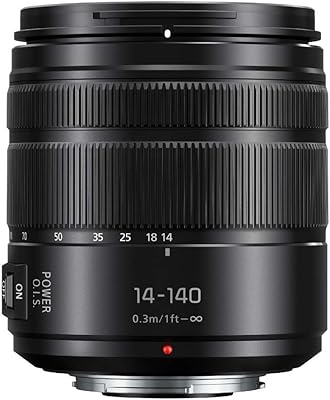
Panasonic Lumix G Vario 14-140mm Zoom Lens
81%
88%
Image Sharpness
93%
Zoom Range Versatility
86%
Optical Image Stabilization
61%
Low-Light Performance
82%
Build Quality & Durability
More
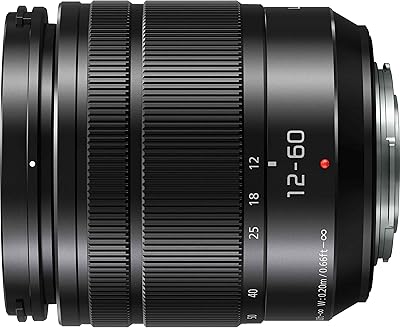
Panasonic LUMIX G Vario 12-60mm Mirrorless Lens
80%
88%
Image Sharpness
91%
Zoom Range Versatility
86%
Optical Stabilization
83%
Weather Sealing
84%
Autofocus Performance
More
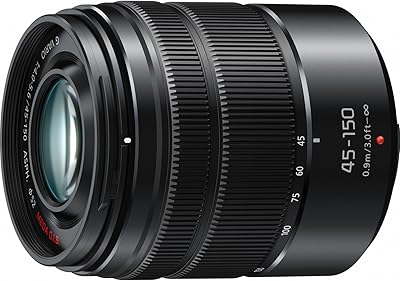
Panasonic H-FS45150AK 45-150mm Mirrorless Lens
80%
83%
Image Sharpness
79%
Autofocus Performance
81%
Optical Stabilization
77%
Build Quality
82%
Video Usability
More
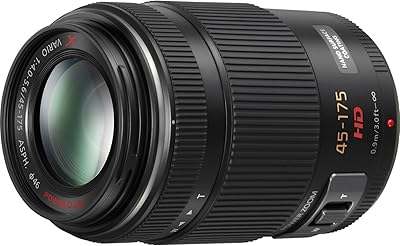
Panasonic H-PS45175K 45-175mm Power Zoom Lens
76%
83%
Image Sharpness
91%
Power Zoom Performance
78%
Optical Image Stabilization
76%
Autofocus Speed & Accuracy
62%
Build Quality & Durability
More
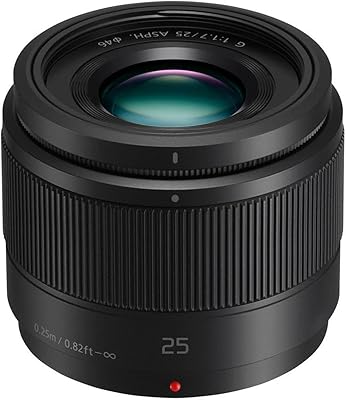
Panasonic LUMIX G 25mm F1.7 Mirrorless Lens
79%
91%
Optical Sharpness
83%
Autofocus Performance
88%
Low-Light Capability
87%
Video Usability
62%
Build Quality
More
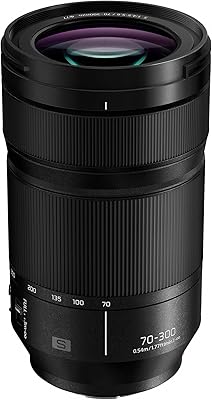
Panasonic LUMIX S 70-300mm Telephoto Lens
80%
89%
Image Sharpness
92%
Optical Image Stabilization
78%
Macro Performance
91%
Build Quality & Weather Sealing
71%
Autofocus Speed & Accuracy
More
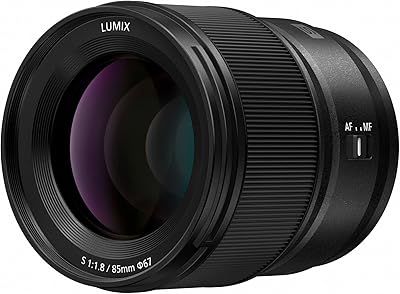
Panasonic LUMIX S-S85 85mm F1.8 Lens
82%
92%
Image Sharpness
84%
Bokeh Quality
71%
Autofocus Performance
83%
Build Quality
74%
Weather Sealing
More
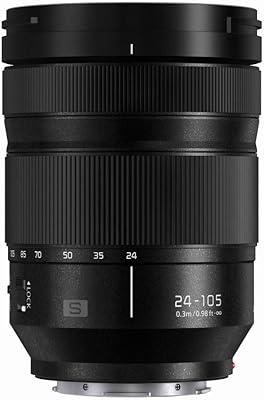
Panasonic LUMIX S 24-105mm F4 Lens
88%
94%
Image Quality
91%
Weather Sealing & Durability
88%
Low-Light Performance
84%
Ease of Use
90%
Stabilization Performance
More
Panasonic S-S35 35mm F1.8 Prime Lens
83%
93%
Optical Sharpness
91%
Build Quality
67%
Autofocus Performance
88%
Video Usability
94%
Portability & Size
More
Panasonic Lumix G85 Mirrorless Camera
78%
93%
Image Stabilization
89%
Build Quality
84%
Video Performance
71%
Autofocus Accuracy
82%
Image Quality
More

FAQ

It mounts and functions on any Micro Four Thirds body, including Olympus and OM System cameras. You will get autofocus, image stabilization, and full electronic communication. The one thing you miss on Olympus bodies is Dual I.S. 2.0, which requires a compatible Panasonic body to activate — but Power O.I.S. still works independently.

It is splash-proof and dustproof, which covers you for light drizzle, sea spray, and dusty field conditions. That said, it is not waterproof, and Panasonic has not published an IP rating for it. In a proper downpour, you would want additional protection for the body-lens connection point, and keeping a rain sleeve handy is a reasonable precaution.

The difference is meaningful in practice. The 240 fps linear motor in this generation tracks moving subjects — birds, cyclists, athletes — noticeably more reliably than the original. You will still see occasional hunting in low contrast or strongly backlit situations, but the keeper rate on fast-moving subjects improved enough that most photographers who owned both versions specifically call it out as the main reason to upgrade.

It is one of the more practical choices in the Micro Four Thirds system for exactly that use case. The 200–600mm full-frame equivalent reach, combined with the faster autofocus motor and Power O.I.S., handles most bird photography scenarios well. At the 300mm end in open light, tracking smaller birds in flight is genuinely viable, though dense foliage or harsh backlighting will test the autofocus like it would any lens in this category.

It handles video well, particularly on Panasonic bodies with Dual I.S. 2.0 — handheld video at reach distances stays impressively smooth for documentary-style or wildlife footage. One thing to watch: the O.I.S. mechanism can produce faint mechanical noise that sensitive on-camera microphones occasionally pick up, so it is worth monitoring audio if clean sound matters to your production.

The front element uses a 67mm filter thread, which is a common size across the Panasonic LUMIX G telephoto range. Standard circular polarizers and neutral density filters in 67mm will attach without any adapter.

For travel photographers who need long reach without the weight and bulk of a full-frame telephoto kit, it is one of the more sensible options in the system. It fits in the side pocket of most camera bags alongside a standard zoom, covers a focal range that would otherwise require a much larger lens, and the splash-proof construction handles variable weather during outdoor excursions. If you regularly photograph wildlife on safari, airshows, or coastal birds, it earns its place in a travel kit.

On larger bodies like the Panasonic G9 or GH6, the balance is quite good and handheld shooting feels natural. On smaller or lighter bodies without a grip, the lens becomes noticeably front-heavy when extended to 300mm. A vertical battery grip or a lens support on a tripod collar accessory helps considerably if you plan long shooting sessions on a compact body.

The minimum focus distance is 1.5m from the focal plane, which is roughly 4.9 feet from where you are standing to your subject. That is enough to fill the frame with a medium-sized bird at a feeder or a moderately sized insect if you are patient, but it is not a macro lens. Very small subjects like individual insects up close will be out of reach without extension tubes.

The Olympus 75–300mm is lighter and less expensive, which makes it an attractive alternative for casual telephoto work. This 100–300mm lens counters with a faster autofocus motor, splash and dustproof sealing, and Power O.I.S. with Dual I.S. 2.0 support on Panasonic bodies. If you shoot outdoors frequently in variable conditions and need reliable subject tracking, the upgrade in capability is real. If your shooting is mostly casual or fair-weather, the Olympus option deserves a serious look given the price difference.

Where to Buy