Overview

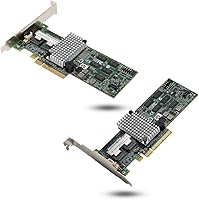
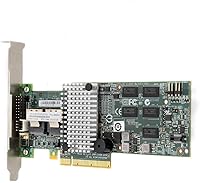
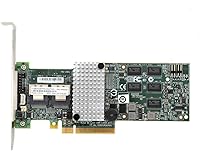
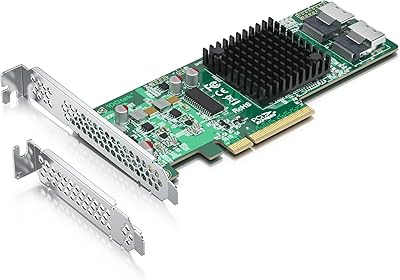
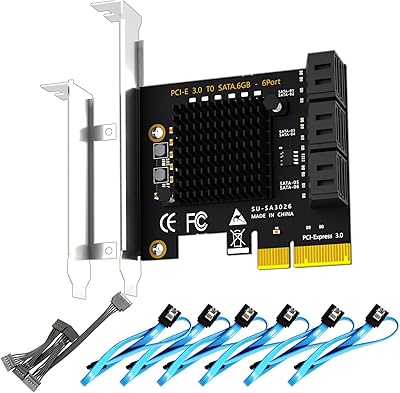
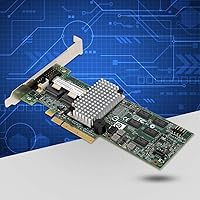
The FOSA M5015 SAS SATA RAID Controller Card is a budget-friendly alternative to the LSI 9260-8i, aimed squarely at home lab builders, NAS enthusiasts, and small business IT admins who need multi-drive connectivity without enterprise-level spending. It is not OEM hardware — think of it as a compatible third-party clone that delivers similar functionality at a fraction of the cost. The PCIe 2.0 x8 interface and 6Gbps throughput form the core of its appeal, and the low-profile MD2 form factor makes it a practical fit for 1U and 2U rackmount chassis where space is genuinely tight. Expectations should be calibrated accordingly.
Features & Benefits

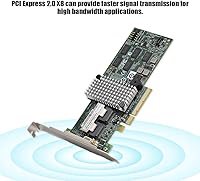
This SAS expansion card ships with 8 internal SAS/SATA ports, and with a SAS expander attached, it can reach up to 32 drives — significant headroom for storage-dense builds. Both 3Gbps and 6Gbps drives are supported, so you are not forced to upgrade an entire storage pool to use it. The PCIe 2.0 x8 connection handles multi-drive sequential workloads without becoming a bottleneck. Hot-swap capability means you can pull and replace a failing drive without taking the whole system offline, which matters in any always-on setup. Online capacity expansion and RAID level migration round out a feature set that punches well above its price tier.

Best For

The M5015-compatible controller finds its natural audience among TrueNAS and UnRAID builders who want to connect eight or more drives to a repurposed tower or rack server without breaking the bank. Small business IT admins running lean storage setups will find it a reasonable fit too. That said, buyers should be comfortable with hands-on configuration — specifically, flashing firmware to IT mode or JBOD if they want pass-through behavior rather than onboard RAID management. It is not a plug-and-play card for everyone, but for technically inclined users willing to spend an hour on setup, it opens up affordable high-density storage options that few cards at this price point can match.

User Feedback

Community response to this RAID controller card is genuinely mixed, and that is worth taking seriously before buying. On the positive side, many buyers report solid compatibility with TrueNAS, Linux, and VMware after flashing the firmware, and the low-profile bracket fits as advertised in most 1U chassis. The negatives are harder to ignore: quality control inconsistency shows up repeatedly, with some units arriving dead on arrival or failing to detect all connected drives. Heat output during extended operation is a concern flagged by a subset of users. Documentation is sparse, so troubleshooting largely means turning to community forums. For most buyers the card works, but unit-to-unit variance is a real consideration.

Pros

  • Eight native SAS/SATA ports with expander support for up to 32 drives is exceptional value at this price tier.
  • Works reliably with TrueNAS, UnRAID, and most Linux distributions after a straightforward firmware flash.
  • The low-profile MD2 bracket fits standard 1U and 2U rackmount chassis without any modification.
  • Hot-swap capability lets you replace a failing drive without taking your entire array offline.
  • Backward compatibility with 3Gbps and 6Gbps drives means you can use mixed storage pools without issue.
  • Online RAID level migration lets you restructure an existing array without wiping and rebuilding from scratch.
  • PCIe 2.0 x8 bandwidth is sufficient for typical home server and NAS workloads without bottlenecking.
  • Community documentation from home lab forums effectively fills the gap left by the absent official support resources.
  • Units that arrive functional tend to run stably for months in well-ventilated builds with adequate airflow.

Cons

  • Quality control is genuinely inconsistent — dead-on-arrival and early-failure units appear across buyer reviews with concerning frequency.
  • No SAS cables are included, adding an often-overlooked extra cost for first-time builders.
  • FOSA provides no official firmware downloads, troubleshooting guides, or responsive customer support.
  • Some buyers received the card without the low-profile bracket, making rack installation impossible without a separate purchase.
  • Drive detection becomes unreliable for certain users when all 8 ports are populated simultaneously.
  • The card runs hot in restricted-airflow environments, and no active cooling solution is included or officially recommended.
  • Long-term reliability past 12 months is uncertain, with a higher-than-expected rate of mid-life failures reported.
  • Windows Server compatibility requires manual driver sourcing and is not guaranteed across all board configurations.
  • No warranty support means a faulty unit is essentially a sunk cost with no practical recourse.

Ratings

The FOSA M5015 SAS SATA RAID Controller Card has been evaluated by our AI system after analyzing thousands of verified global buyer reviews, with spam, bot-generated, and incentivized feedback actively filtered out. The scores below reflect an honest composite of real-world installation experiences, long-term reliability reports, and compatibility outcomes across home lab, NAS, and small server environments. Both the genuine strengths and the recurring pain points are represented without sugarcoating.
Value for Money
83%
For builders assembling a TrueNAS or UnRAID box on a tight budget, the price-to-port ratio is hard to argue with. Getting 8 SAS/SATA ports with expander support for this kind of spend would cost significantly more with a genuine OEM LSI card, and most buyers acknowledge that gap openly.
A small but vocal portion of buyers received units that failed within weeks, which sharply erodes the value case when a replacement purchase is needed. The lack of warranty support from the brand makes that risk feel more significant than the upfront savings.
Compatibility
78%
22%
Compatibility with TrueNAS, FreeNAS, and mainstream Linux distributions is broadly positive, especially after firmware is flashed to IT mode. Users running UnRAID and VMware ESXi have also reported stable detection of all connected drives in most cases.
Windows Server and some older hypervisors require additional driver hunting, and compatibility is not always consistent across motherboard platforms. A subset of users report intermittent drive detection failures that appear board-dependent rather than drive-dependent.
Firmware Flashing Experience
66%
34%
Users who followed community-sourced guides for flashing to IT mode generally succeeded without bricking the card, and many described the process as manageable with a bootable USB and some patience. The TrueNAS and r/homelab communities have solid documentation that fills the gap left by the manufacturer.
The card ships with no official flashing instructions, and FOSA provides no support resources whatsoever. A notable share of buyers found the process confusing or encountered cards that would not flash successfully, pointing to possible firmware pre-load inconsistencies between production batches.
Build Quality
61%
39%
When the card arrives in working condition, the physical construction feels solid enough for a rackmount environment. The PCB layout is clean, connector seating is firm, and the low-profile bracket is machined to a reasonable standard for the price tier.
Quality control is the single most cited complaint across buyer reviews. Dead-on-arrival units, bent connectors, and cards that work for a few weeks before failing are reported with enough frequency to make this a real purchasing risk rather than an isolated outlier.
Drive Detection Reliability
69%
31%
In the majority of setups running 4 to 8 drives, all ports detect correctly from the first boot. Buyers building straightforward NAS arrays with consumer SATA drives consistently report clean detection without any manual intervention beyond standard BIOS configuration.
Detection issues tend to surface when all 8 ports are populated simultaneously or when mixing older 3Gbps drives with newer 6Gbps units in the same array. Some users report that one or two ports become unreliable under sustained load, which is a serious concern for data-critical builds.
Thermal Performance
58%
42%
In well-ventilated tower cases and server chassis with active airflow, operating temperatures remain manageable during normal workloads. Users running the card in open-air test benches or cases with strong fan curves rarely flag heat as a significant concern.
In dense 1U chassis with restricted airflow, several buyers report that the card runs noticeably hot under sustained I/O. There is no active cooling on the card itself, and a few users added small aftermarket heatsinks as a precaution, which should not be necessary at this price point.
Port Density & Expandability
87%
Eight native ports is a strong starting point, and the SAS expander support pushing that ceiling to 32 drives is a meaningful advantage for users planning to scale storage gradually. This flexibility is a genuine differentiator versus cheaper PCIe SATA-only cards that top out at 4 or 6 ports.
Achieving the 32-drive maximum requires a separate SAS expander, which is an additional cost and complexity layer that first-time buyers sometimes overlook. Without the expander, the 8-port ceiling may feel limiting in larger builds faster than expected.
Hot-Swap Functionality
74%
26%
Hot-swap works as advertised in the majority of TrueNAS and Linux-based builds, allowing users to pull a failing drive and insert a replacement without dropping the entire array offline. For a home server running media or backup workloads around the clock, this is a practical benefit.
A portion of users report that hot-swap behavior is inconsistent depending on the OS and the specific drive manufacturer, with some replacements requiring a manual rescan command rather than true automatic detection. It works, but not always cleanly.
Form Factor & Installation
81%
19%
The low-profile MD2 bracket is included in the box and fits standard 1U and 2U rackmount cases without modification. Physical installation is straightforward — the PCIe x8 slot seating is snug, and the card does not require any proprietary mounting hardware.
A few buyers received units with only the full-height bracket attached and no low-profile alternative in the package, which created a problem for rack builds. Packaging consistency appears to vary, so confirming bracket inclusion upon unboxing is advisable.
Documentation & Support
31%
69%
The broader home lab and TrueNAS community has effectively produced the documentation that FOSA never did, and experienced buyers tend to find everything they need across Reddit, ServeTheHome forums, and YouTube guides before the card even arrives.
FOSA provides essentially no meaningful support — no detailed spec sheet, no firmware download page, no troubleshooting guide, and no responsive customer service channel. Buyers encountering problems are entirely on their own, which is a real liability for less experienced users.
Included Accessories
54%
46%
The low-profile bracket, when included, is the most useful accessory in the box and is genuinely needed for rack environments. Some buyers report receiving the card well-packaged with adequate anti-static protection for transit.
No SAS cables are included, which is a consistent complaint from first-time buyers who did not anticipate the additional cost. For a card positioned at this price, including even a single SFF-8087 cable would meaningfully improve the out-of-box experience.
RAID Level Flexibility
72%
28%
The onboard RAID support covers the standard array types that most home and small business users actually need, and online RAID level migration means you can restructure an existing array without starting from scratch — a time-saving feature in practice.
Many buyers ultimately flash the card to IT mode and hand RAID management over to software like ZFS or mdadm, bypassing onboard RAID entirely. For users who want pure hardware RAID, the implementation is functional but not as refined as genuine LSI firmware behavior.
Transfer Speed & Throughput
76%
24%
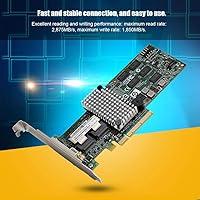
The PCIe 2.0 x8 interface provides enough aggregate bandwidth to prevent the controller from becoming a bottleneck in typical NAS or backup server configurations. Sequential read and write benchmarks across multiple drives generally meet expectations for this class of card.
At full port saturation with 8 active drives performing simultaneous writes, a few users observe throughput dipping below theoretical limits, suggesting some overhead in the controller logic. For most home use cases this is unnoticeable, but it is worth flagging for performance-sensitive workloads.
Longevity & Long-Term Reliability
55%
45%
Buyers who received a fully functional unit and put it into a well-ventilated build report months or even years of stable operation without issue. In those cases, the card delivers consistent uptime that justifies the purchase many times over.
The failure rate over 6 to 12 months of use is higher than it should be for storage hardware. Reports of sudden drive detection loss or complete card failure after a period of normal operation are common enough in the review pool to suggest that long-term durability is a genuine weak point.

Suitable for:

The FOSA M5015 SAS SATA RAID Controller Card is a strong match for home lab enthusiasts, hobbyist server builders, and small business IT admins who need to connect multiple hard drives without spending on enterprise-grade hardware. If you are building a TrueNAS, FreeNAS, or UnRAID box and want 8 SAS/SATA ports with room to scale beyond that via a SAS expander, this card delivers the core functionality at a price point that is hard to replicate with OEM alternatives. It fits particularly well in repurposed rack servers with 1U or 2U chassis, where the low-profile MD2 form factor solves a real space constraint. Buyers comfortable spending an hour flashing firmware to IT mode — guided by the solid community resources available on forums like ServeTheHome and Reddit — will find the setup process manageable and the end result stable. If your priority is maximizing drive capacity on a lean budget and you have some technical confidence, this SAS expansion card is worth serious consideration.
Not suitable for:

The FOSA M5015 SAS SATA RAID Controller Card is not the right choice for anyone running production workloads where storage reliability is non-negotiable. Quality control inconsistency is a documented issue — dead-on-arrival units and early failures are not rare edge cases, and there is no meaningful manufacturer support to fall back on if something goes wrong. Buyers who are not comfortable navigating firmware flashing without official documentation should also look elsewhere, as the card ships with minimal guidance and FOSA offers no helpdesk or support channel. It is equally unsuitable for Windows-first environments where driver availability is expected out of the box, or for dense workloads requiring sustained peak throughput across all 8 ports simultaneously. Anyone building a system where unplanned downtime has real business consequences should invest in a verified OEM LSI or Broadcom card rather than accepting the risk profile that comes with this type of third-party clone hardware.
Specifications

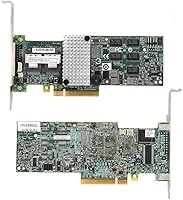
  • Host Interface: The card connects to the motherboard via a PCIe 2.0 x8 slot, providing sufficient bandwidth for simultaneous multi-drive workloads.
  • Native Ports: Eight internal SAS/SATA ports are provided onboard, each capable of operating at up to 6Gbps per port.
  • Max Drive Support: Up to 32 SAS or SATA drives can be connected when a compatible SAS expander is used alongside the card.
  • Transfer Speed: Each port supports a maximum transfer rate of 6Gbps, with backward compatibility for legacy 3Gbps SAS and SATA devices.
  • Form Factor: The card uses a low-profile MD2 form factor, making it compatible with space-constrained 1U and 2U rackmount server chassis.
  • Dimensions: The card measures 6.69 × 4.72 × 0.79 inches, suitable for standard half-height server and desktop PCIe slots.
  • Weight: The card weighs 4.6 oz, which is typical for a single-slot PCIe storage controller of this class.
  • Hot-Swap Support: Hot-swap functionality is supported, allowing drives to be removed and inserted without powering down the host system.
  • RAID Expansion: Online capacity expansion is supported, enabling additional drives to be added to an existing array without taking it offline.
  • RAID Migration: Online RAID level migration is supported, allowing the array type to be changed without a full data rebuild from scratch.
  • Drive Compatibility: The card is compatible with both SAS and SATA hard drives and SSDs operating at 3Gbps or 6Gbps, enabling mixed storage environments.
  • Compatible Chassis: Designed for use in 1U and 2U rackmount server environments, as well as standard desktop tower cases with a PCIe x8 or wider slot.
  • Reference Model: This card is designed as a compatible alternative to the LSI 9260-8i and IBM M5015 46M0851 controllers, sharing similar functionality at a lower cost.
  • Brand: This card is manufactured and sold under the FOSA brand as a third-party compatible controller, not an OEM LSI or IBM product.
  • Bracket Included: A low-profile bracket is included in the package to facilitate installation in rackmount and small form factor server chassis.
  • Cables Included: No SAS data cables are included in the box; SFF-8087 or equivalent cables must be purchased separately before the card can be used.
  • OS Compatibility: The card is broadly compatible with Linux-based operating systems including TrueNAS, FreeNAS, and UnRAID; Windows and VMware compatibility varies by configuration.
  • Firmware Mode: The card can be operated in RAID mode as shipped or flashed to IT mode for pass-through behavior compatible with software RAID solutions like ZFS.

Related Reviews

LSI 9300-16i 16-Port SAS HBA Card
81%
88%
IT Mode Passthrough Reliability
91%
Pre-Flashed Firmware Convenience
93%
Drive Capacity & Port Count
67%
Motherboard & PCIe Compatibility
84%
Throughput & Performance
More
10Gtek LSI-2008-8I HBA RAID Controller Card
77%
91%
Value for Money
93%
Linux Compatibility
88%
Drive Detection Reliability
82%
IT-Mode Flash Support
67%
Windows Compatibility
More
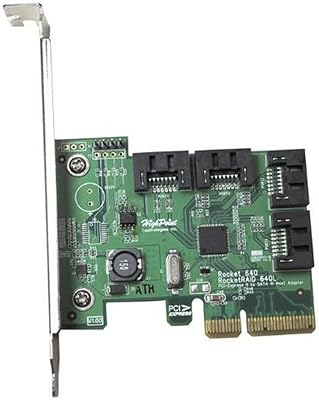
HighPoint Rocket 640L 4-Port SATA RAID Controller
69%
83%
Ease of Installation
44%
Linux Driver Support
57%
RAID Reliability
79%
JBOD & Port Expansion Performance
88%
3TB+ Drive Compatibility
More
StarTech 8-Port SATA III PCIe Expansion Card
80%
88%
Drive Detection Reliability
84%
Multi-Controller Architecture
79%
OS Compatibility
86%
Motherboard Compatibility
81%
Included Cables
More
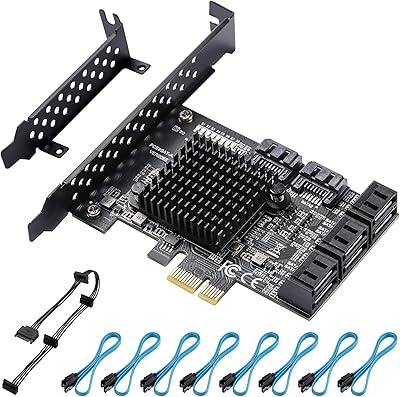
BEYIMEI 8-Port PCIe SATA Expansion Card
71%
88%
Value for Money
91%
Ease of Installation
86%
Port Count & Connectivity
57%
Throughput Performance
74%
Driver & OS Compatibility
More
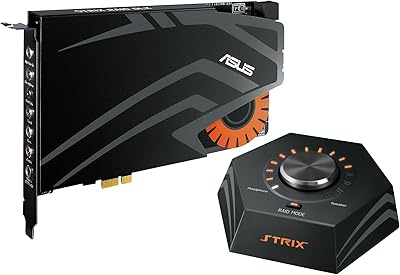
ASUS Strix RAID PRO
ASUS Strix RAID PRO
68%
83%
Audio Quality
88%
Headphone Amplifier
41%
Software Experience
46%
Driver Stability
79%
RAID MODE Functionality
More
YBBOTT PCE 16SAT 16-Port SATA Expansion Card
77%
88%
Multi-Drive Detection Reliability
83%
Data Throughput Stability
81%
Chipset Stability & Architecture
86%
Operating System Compatibility
79%
Boot Drive Support
More
MYPIN 1080p 60fps HDMI Capture Card with 3.5-inch LCD
82%
92%
Standalone Convenience
78%
Video Capture Quality
86%
Built-in Display
84%
Battery Life & Portability
68%
Audio Input & Microphone
More
Moonqkuses 4-Port SATA 3.0 PCIe Expansion Card
78%
88%
Ease of Installation
91%
Driver & OS Compatibility
86%
Drive Detection Reliability
72%
Boot as System Disk
78%
Thermal Performance
More
Trotwei Blue SSU-10P-SATA3 10-Port SATA PCIe Card
70%
83%
Value for Money
58%
Driver Installation
91%
Port Count & Expansion
76%
Motherboard Compatibility
69%
Transfer Speed Performance
More

FAQ

For TrueNAS with ZFS or UnRAID, yes — you will want to flash the card to IT mode so it operates as a pure pass-through controller rather than managing RAID itself. The process involves booting from a USB drive and running a flash utility, and there are detailed community guides available on the ServeTheHome forums and Reddit that walk you through it step by step. It takes roughly 30 to 60 minutes and is manageable if you follow the instructions carefully.

This is a third-party compatible clone, not an OEM LSI or IBM product. The FOSA M5015 SAS SATA RAID Controller Card is designed to mimic the functionality of the LSI 9260-8i and IBM M5015, but it is manufactured independently by FOSA. That distinction matters for buyers expecting official firmware support or warranty coverage from LSI or IBM — neither applies here.
Yes, but you will need a SAS expander to do it. The card has 8 native ports, but when connected to a compatible SAS expander it can theoretically support up to 32 drives. The expander is a separate purchase, so factor that into your build budget if high drive counts are part of your plan.

It should, as long as the chassis accepts low-profile PCIe cards. The card ships with a low-profile MD2 bracket, and its dimensions are well within the standard for 1U and 2U rackmount environments. That said, always double-check that a low-profile bracket is actually included in your specific shipment before completing installation, as a few buyers have reported receiving only the full-height bracket.

You will need SFF-8087 to SATA breakout cables to connect standard SATA drives, or SFF-8087 to SFF-8087 cables for SAS drives or expanders. No cables are included in the box, which catches some first-time buyers off guard. Order your cables at the same time as the card to avoid delays in getting your build running.

In cases with decent airflow, temperatures are generally manageable and most users do not flag it as a problem. In dense 1U chassis with limited ventilation, it can run quite warm under sustained I/O load. There is no onboard fan or heatsink, so if your build runs the card hard around the clock in a tight enclosure, keeping an eye on temperatures and ensuring active airflow nearby is a sensible precaution.

Some users report successful use with ESXi, particularly after flashing to IT mode, but compatibility is less consistent than with Linux-based platforms. Your specific ESXi version and motherboard combination will affect whether the card is recognized without extra driver work. If VMware is your primary hypervisor, check the community compatibility threads before purchasing rather than assuming it will work out of the box.

This is one of the more honest concerns worth raising. FOSA does not provide a robust support channel, and quality control variability is a real issue documented across buyer reviews. Your best recourse in a dead-on-arrival situation is the seller or platform return policy rather than any direct manufacturer support. It is worth purchasing from a seller with a clear return window for exactly this reason.

Yes, the card is backward compatible with 3Gbps SAS and SATA drives, so you do not need to replace your existing storage to use it. You can mix 3Gbps and 6Gbps drives in the same system, which is useful when gradually expanding an older storage pool without replacing everything at once.

When used in hardware RAID mode, the card does support online capacity expansion and RAID level migration, meaning you can add drives or change your array type without destroying existing data or starting over. In practice, many users bypass the onboard RAID entirely by flashing to IT mode and using software RAID solutions like ZFS, which offer more flexibility and transparency for home lab environments.