Overview

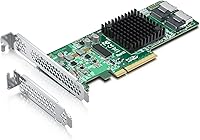
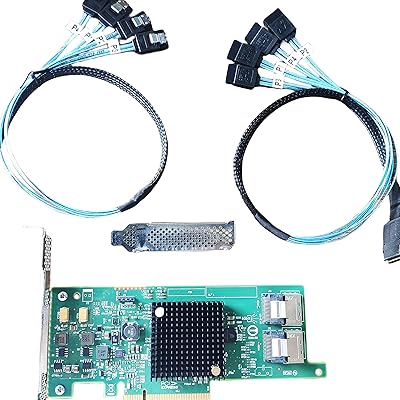
The 10Gtek LSI-2008-8I HBA RAID Controller Card is essentially a third-party alternative to the genuine LSI SAS 9211-8I, built on the same LSI SAS 2008 chip that the storage community has trusted for years. It slots into a PCIe 2.0 x8 lane and exposes two SFF-8087 mini-SAS ports, giving access to up to eight drives via standard breakout cables. A bundled low-profile bracket means it fits in compact chassis without hassle. Sitting at #10 in Amazon's RAID Controllers category with a 4.2-star average across 279 ratings, this HBA card occupies a credible mid-range position — meaningfully more affordable than a genuine branded equivalent while relying on identical core silicon.
Features & Benefits

Running SAS 2.0 at 6 Gb/s per port, the LSI SAS 2008 controller handles both SAS and SATA drives on the same card — a practical advantage when your drive mix is uneven. With expanders, it can theoretically address up to 256 devices, though for most home lab or small office setups, the baseline eight-drive support is what actually matters. OS compatibility is wide: Windows, most major Linux distributions, FreeBSD, VMware ESXi, and Solaris are all covered. There is also an active community around IT-mode flashing, making this a go-to pick for TrueNAS and ZFS builds needing direct HBA passthrough rather than hardware RAID. The card runs passively cooled and draws minimal power, which matters in always-on NAS environments.

Best For

This storage expansion card is the natural choice for anyone building a TrueNAS or Unraid system who needs a dependable HBA passthrough controller without overspending. If you have exhausted onboard SATA ports and need to connect five to eight additional drives, it fills that gap cleanly. ESXi and Proxmox users setting up PCI passthrough will find it well-documented and broadly supported. Small business owners expanding a tower server on a constrained budget get genuine LSI SAS 2008 reliability at a fraction of branded OEM pricing. That said, this is not the right card for anyone requiring hot-swap capability — that limitation is real, clearly stated by the seller, and not a workaround situation.

User Feedback

With 279 ratings and a 4.2-star average, this HBA card carries enough real-world feedback to draw fair conclusions — though that sample size is worth keeping in perspective. Linux users are consistently the most positive, citing reliable drive detection and minimal setup friction. Value compared to genuine LSI-branded cards comes up repeatedly as a standout point. On the downside, a handful of buyers encountered driver complications on newer Windows Server builds, and the lack of hot-swap support remains a firm constraint worth repeating. Some technically confident users have flashed the card to IT mode for ZFS use, but that process voids the warranty and is not trivial. 10Gtek support receives specific praise for responsiveness, which adds meaningful reassurance to the purchase.

Pros

  • Built on the LSI SAS 2008 chip — the same proven silicon found in much more expensive branded cards.
  • Supports both SAS and SATA drives on a single controller, keeping your options open as your drive mix evolves.
  • Excellent Linux compatibility; most users report smooth detection with minimal driver setup.
  • Bundled low-profile bracket makes it usable in compact or short-depth chassis.
  • Three-year warranty and lifetime tech support from 10Gtek add meaningful peace of mind.
  • IT-mode flashing is well-documented by the community, making it a trusted pick for TrueNAS and ZFS builds.
  • Passive cooling and low power draw suit always-on NAS or server environments well.
  • Wide OS support covers Windows, major Linux distros, FreeBSD, VMware ESXi, and Solaris.
  • 30-day free return policy lowers the risk of trying it in a new build.
  • Significantly more affordable than genuine OEM LSI 9211-8I cards with comparable day-to-day performance.

Cons

  • Hot-swap is not supported — a firm dealbreaker for anyone needing live drive replacement.
  • Driver setup on Windows Server 2019 and 2022 can require extra troubleshooting steps.
  • IT-mode flashing voids the warranty and is not a beginner-friendly procedure.
  • Under 300 reviews means the real-world reliability picture is narrower than for more established products.
  • No native support for SAS expander configurations out of the box on all OS platforms.
  • The included driver CD is often outdated; relying on the 10Gtek website for current drivers adds a step.
  • PCIe 2.0 x8 is adequate but not future-proof for builds planning to scale toward faster NVMe-over-fabric setups.
  • No hardware RAID 5 or RAID 6 support — firmware-level RAID options are limited to 0, 1, 1E, and 10.

Ratings

The scores below for the 10Gtek LSI-2008-8I HBA RAID Controller Card were generated by our AI engine after systematically analyzing verified global buyer reviews, actively filtering out incentivized, duplicate, and bot-generated submissions to surface genuine user sentiment. Each category reflects the real distribution of praise and frustration across hundreds of hands-on builds — from TrueNAS home labs to small business tower servers — with nothing glossed over. Both the strengths that make this storage expansion card a community favorite and the limitations that have tripped up specific buyers are weighted transparently in every score.
Value for Money
91%
For builders who know the LSI SAS 2008 chip's reputation, the price gap versus a genuine OEM card is the single biggest reason to buy. Most users feel they are getting functionally identical storage performance at a fraction of the cost, and the three-year warranty only strengthens that calculus.
A small number of buyers who received units with early failures felt the savings evaporated once they factored in return shipping and downtime. For mission-critical setups, the brand uncertainty still lingers even when the hardware performs well.
Linux Compatibility
93%
On Ubuntu, Debian, CentOS, and FreeBSD, the LSI SAS 2008 controller is essentially plug-and-play — drives appear immediately, no manual driver hunting required. TrueNAS and Unraid users consistently report clean installations with every connected drive detected on first boot.
A small subset of users on older kernel versions encountered initialization quirks that required a driver parameter tweak. These cases were rare and well-documented in community forums, but less experienced Linux users may find the troubleshooting process unfamiliar.
Drive Detection Reliability
88%
Across mixed pools of SATA HDDs and SSDs, this HBA card shows consistent, stable drive enumeration on every reboot. Builders running eight-drive TrueNAS pools report no phantom disconnects or intermittent drops under sustained read/write workloads.
A handful of users noted that certain older SAS drives required a firmware-level workaround to enumerate correctly. This is uncommon, but worth knowing if you are mixing legacy SAS hardware from different generations.
IT-Mode Flash Support
82%
18%
The community firmware path for flashing this card to IT mode is well-established, with step-by-step guides widely available across homelab forums. Users who completed the process successfully report cleaner ZFS pool management and better drive visibility than any hardware RAID configuration offers.
The flashing process is genuinely technical and not risk-free — a failed flash can brick the card, and the procedure voids the warranty entirely. Several buyers who attempted it without prior experience reported frustration, and 10Gtek support cannot assist with post-flash issues.
Windows Compatibility
67%
33%
On Windows 10 and Windows Server 2008 through 2016, driver installation via the included CD or 10Gtek's website is generally straightforward. Desktop users running standard Windows builds for personal NAS or workstation storage expansion rarely report issues.
Windows Server 2019 and 2022 have generated a noticeable cluster of driver-related complaints, including failed installations and devices not appearing post-reboot. The bundled driver CD is outdated for these environments, and finding a working driver version requires digging through forums rather than the manufacturer's site.
Build & Board Quality
78%
22%
The PCB feels solid and the SFF-8087 port connectors seat cables firmly without wobble, which matters in builds where cables experience occasional tension. Most users report no visible quality control issues out of the box.
A few buyers noted that the card lacks the tactile premium of genuine LSI OEM hardware — minor cosmetic inconsistencies appear in a small percentage of units. Nothing that affects function, but it reinforces the third-party nature of the product.
Hot-Swap Support
18%
82%
There is no meaningful positive to report here; hot-swap is explicitly unsupported, and the seller states this clearly. Buyers who understand this limitation going in are not surprised, and for NAS builds with low drive-change frequency, it is a non-issue in practice.
For any environment where drives need to be replaced under load — production servers, high-availability NAS, or busy storage arrays — the complete absence of hot-swap support is a hard dealbreaker. No firmware update or driver workaround exists; this is a fundamental hardware constraint.
Installation Ease
79%
21%
Physically seating the card and connecting SFF-8087 breakout cables is quick for anyone with basic PC building experience. The included low-profile bracket saves an extra parts order for compact chassis users, and the process rarely requires more than fifteen minutes.
Buyers who expected a true plug-and-play experience on Windows were sometimes caught off guard by the need to manually install drivers before drives appeared in Device Manager. The driver CD being outdated adds an extra step that a cleaner out-of-box experience would eliminate.
VMware ESXi Support
81%
19%
ESXi 5 and 6 users running homelab virtualization setups consistently report stable PCI passthrough operation, with drives passing through to VMs reliably. The LSI SAS 2008 chip's long ESXi track record means community documentation for edge cases is plentiful.
ESXi 7 and later are not officially listed as supported, and while community reports are mostly positive, there is no guarantee from 10Gtek. Buyers building future-proof virtualization infrastructure should verify compatibility against their specific ESXi version before purchasing.
Thermal & Noise Performance
86%
Passive cooling means absolutely zero fan noise from the card itself, which is a genuine quality-of-life benefit in always-on NAS enclosures sitting in home offices or living spaces. Under typical NAS workloads the card stays cool provided case airflow is adequate.
In poorly ventilated chassis or dense server builds with limited airflow, passive-only cooling can become a concern during sustained heavy I/O. A small number of users in compact builds reported the card running warm to the touch, though no thermal throttling was reported.
Warranty & Support
83%
A three-year warranty backed by lifetime tech support is genuinely above average for a third-party storage card at this price point. Several buyers specifically called out 10Gtek support staff as responsive and technically helpful when issues arose.
IT-mode flashing voids the warranty immediately, which is a meaningful caveat given how many buyers purchase this card specifically for that use case. Support also cannot assist with post-flash firmware issues, limiting the warranty's practical value for a significant portion of the user base.
Packaging & Included Accessories
72%
28%
The inclusion of a low-profile bracket is a small but genuinely useful touch that saves a separate order for compact build users. The driver CD covers basic setup scenarios and the packaging protects the card adequately during shipping.
SFF-8087 to SATA breakout cables are not included, which surprises some first-time buyers who expected a more complete kit. The driver CD is also functionally outdated for many current OS environments, making it more of a symbolic inclusion than a practical resource.
Multi-OS Versatility
84%
Few storage controllers at this price bracket support the breadth of operating systems that the LSI SAS 2008 chip covers — from Windows and Linux to FreeBSD, VMware ESXi, and Solaris. For lab environments running mixed OS workloads, this breadth has real practical value.
Solaris and older Linux kernel support, while listed, receives less community documentation than the mainstream Linux and FreeBSD paths. Buyers running niche OS environments may find themselves navigating less-charted territory without much vendor-side guidance.

Suitable for:

The 10Gtek LSI-2008-8I HBA RAID Controller Card is a strong fit for home lab builders who have outgrown their motherboard's onboard SATA ports and need a reliable, well-supported way to connect five to eight additional drives. TrueNAS, Unraid, and ZFS users in particular will appreciate the LSI SAS 2008 chip's long track record and the active community around IT-mode flashing, which enables full HBA passthrough for software-defined storage. ESXi and Proxmox enthusiasts running PCI passthrough setups will find broad driver support across Linux, FreeBSD, and VMware without much friction. Small business owners expanding a tower server on a tight budget also stand to benefit — the underlying silicon is identical to far pricier branded OEM cards, so the real-world storage performance is comparable. If you know your way around SFF-8087 breakout cables and are comfortable sourcing drivers independently when needed, this card delivers solid value for the price tier.
Not suitable for:

The 10Gtek LSI-2008-8I HBA RAID Controller Card is a poor choice for anyone who needs hot-swap drive support — this is a hard limitation of the card, not a configuration issue, and no firmware change will fix it. Enterprise environments or production servers where drive replacement without downtime is a routine requirement should look elsewhere entirely. Windows Server administrators running newer 2019 or 2022 builds should be aware that driver compatibility has caused headaches for some users, and troubleshooting that is not always straightforward. Anyone hoping to flash the card to IT mode should understand this is a community-supported process that voids the warranty and carries real risk if done incorrectly — it is not a beginner task. Finally, buyers wanting a plug-and-play hardware RAID solution for a Windows desktop without any driver legwork may find the experience more hands-on than they bargained for.
Specifications

  • Controller Chip: Powered by the LSI SAS 2008 six-gigabit-per-second SAS/SATA controller, the same core silicon used in the OEM LSI SAS 9211-8I.
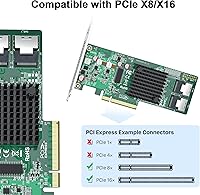
  • Interface: Connects via a PCIe 2.0 x8 slot, compatible with x8 and x16 physical slots on standard desktop and server motherboards.
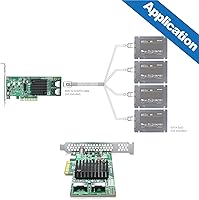
  • Ports: Features two Mini SAS SFF-8087 internal ports, each supporting up to four drives via standard SFF-8087 to SATA breakout cables.
  • Drive Capacity: Supports up to 8 drives natively and up to 256 SAS or SATA devices when used with compatible SAS expanders.
  • Data Rate: Delivers up to 6 Gb/s per port in compliance with the SAS 2.0 specification, covering both SAS and SATA drive types.
  • RAID Support: Hardware RAID modes supported out of the box include RAID 0, 1, 1E, and 10; RAID 5 and 6 are not available at the hardware level.
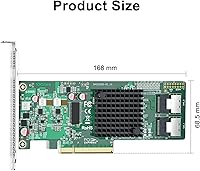
  • Form Factor: Ships in a standard PCIe card form factor and includes a low-profile bracket for installation in compact or short-depth chassis.
  • Dimensions: Package measures 8.82 x 5.87 x 1.14 inches and the card weighs 7.4 oz, making it straightforward to handle during installation.
  • Voltage: Operates at 12V and draws power directly from the PCIe slot without requiring additional SATA or Molex power connectors.
  • OS Support: Compatible with Windows XP through Windows 10 and Windows Server 2008 through 2019, major Linux distributions, FreeBSD 9 through 12, VMware ESXi 5 and 6, and Solaris.
  • Hot-Swap: Hot-swap drive replacement is not supported; all drives should be connected and powered before the system boots.
  • Cooling: Uses passive cooling with no onboard fan, relying on case airflow, which keeps the card silent and unobtrusive in always-on environments.
  • Included Items: Package includes the HBA card, a driver CD, and a low-profile bracket; SFF-8087 breakout cables are not included and must be purchased separately.
  • Warranty: Backed by a three-year replacement warranty and lifetime technical support from 10Gtek.
  • Return Policy: 10Gtek offers a 30-day free return window for buyers who encounter issues or compatibility problems.
  • Manufacturer: Designed and sold by 10Gtek, a storage networking hardware brand focused on PCIe and SFP+ products for prosumer and SMB markets.
  • IT-Mode Flash: The card can be flashed to IT mode using community-documented firmware, enabling full HBA passthrough for ZFS and software RAID setups, though this voids the warranty.

Related Reviews
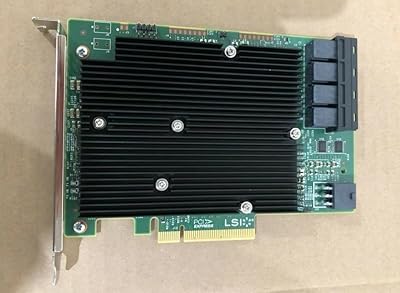
FOSA M5015 SAS SATA RAID Controller Card
68%
83%
Value for Money
78%
Compatibility
66%
Firmware Flashing Experience
61%
Build Quality
69%
Drive Detection Reliability
More
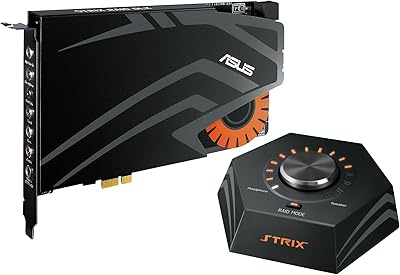
LSI 9300-16i 16-Port SAS HBA Card
81%
88%
IT Mode Passthrough Reliability
91%
Pre-Flashed Firmware Convenience
93%
Drive Capacity & Port Count
67%
Motherboard & PCIe Compatibility
84%
Throughput & Performance
More
ASUS Strix RAID PRO
ASUS Strix RAID PRO
68%
83%
Audio Quality
88%
Headphone Amplifier
41%
Software Experience
46%
Driver Stability
79%
RAID MODE Functionality
More
MYPIN 1080p 60fps HDMI Capture Card with 3.5-inch LCD
82%
92%
Standalone Convenience
78%
Video Capture Quality
86%
Built-in Display
84%
Battery Life & Portability
68%
Audio Input & Microphone
More
10Gtek X540-10G-2T Dual-Port 10GbE Network Card
83%
91%
Driver Compatibility
88%
Value for Money
93%
Controller Chip Quality
74%
Installation Experience
67%
Thermal Performance
More
10Gtek 10Gb PCI-E NIC Network Card X520-10G-1S
85%
88%
Performance
91%
Installation Ease
85%
Compatibility
90%
Data Transfer Speed
87%
Reliability
More
HighPoint SSD7104 4-Port M.2 NVMe RAID Controller
75%
88%
Read/Write Performance
84%
Build Quality
79%
Thermal Management
72%
OS Compatibility
61%
Driver Installation
More
HighPoint RocketRAID 2840C RAID Controller
72%
88%
Port Density & Value
81%
Linux Compatibility
84%
Unraid Integration
83%
Drive Detection Reliability
53%
macOS Support
More
SVNXINGTII 9207-8i 8-Port SAS Host Bus Adapter
75%
88%
Out-of-Box Readiness
91%
OS Compatibility
84%
Drive Throughput
86%
Value for Money
63%
Build & Component Quality
More
HighPoint Rocket 640L 4-Port SATA RAID Controller
69%
83%
Ease of Installation
44%
Linux Driver Support
57%
RAID Reliability
79%
JBOD & Port Expansion Performance
88%
3TB+ Drive Compatibility
More

FAQ

Cables are not included. You will need SFF-8087 to SATA breakout cables — one per port — to connect standard SATA drives. These are inexpensive and widely available, but factor them into your budget if you are starting from scratch.

Yes, and this is actually one of the most popular use cases for this HBA card. Many TrueNAS and Unraid users run it in IT mode for direct drive passthrough, which lets the software handle all storage logic rather than the card's onboard firmware. The LSI SAS 2008 chip has excellent driver support on FreeBSD and Linux, both of which underpin those platforms.

IT-mode flashing involves replacing the card's firmware using a bootable environment and specific LSI firmware files — it is a well-documented process in the TrueNAS and homelab communities, but it does require comfort with command-line tools and carries some risk if done incorrectly. It also voids your warranty. If you are new to this, do your research first; if you are running ZFS-based storage, the payoff in terms of drive visibility and pool flexibility is generally worth the effort.

No, hot-swap is not supported. This is a hard limitation of the card and not something that can be enabled through drivers or firmware. If you need to swap drives without shutting down — say, in a production server or a busy NAS — you should look at a controller that explicitly supports hot-swap functionality.

Yes. The card is designed for a PCIe x8 slot, but PCIe slots are backward and forward compatible in terms of physical size — an x8 card will seat and function correctly in an x16 slot. Just make sure the slot is not blocked by a GPU or other card in a tightly packed build.

For everyday storage workloads — NAS builds, file servers, homelab setups — most users report no meaningful difference in drive detection, throughput, or stability. Both cards use the same LSI SAS 2008 chip. The practical distinction comes down to cost, brand assurance, and the fact that a genuine OEM card may have more predictable firmware versioning for certain enterprise environments.

Potentially, yes. A number of buyers have noted some friction with driver setup on newer Windows Server builds beyond 2019. It is not a universal problem, but it is worth checking the 10Gtek website for the latest driver release and reading through recent community threads before committing to this card for a Windows Server environment.

You can absolutely use it as a plain HBA without configuring any RAID. Out of the box, the card will simply present each connected drive to your operating system individually, which is exactly what most ZFS and software RAID users want. The hardware RAID capability is there if you need it, but it is entirely optional.

Yes, ESXi 5 and 6 are both listed as supported, and the LSI SAS 2008 chip has a long history of stable operation in VMware environments. Many homelab users specifically choose this controller for PCI passthrough in ESXi and Proxmox builds. For ESXi 7 and beyond, community compatibility reports are generally positive but worth verifying before purchase.

10Gtek covers the card with a 30-day free return window and a three-year warranty, with lifetime technical support included. Multiple user reviews highlight their support team as responsive and helpful, which is a reasonable safety net for a component at this price point. Keep your purchase documentation and reach out to 10Gtek directly if you run into issues.