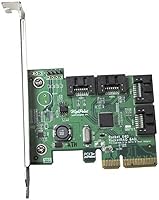
HighPoint Rocket 640L 4-Port SATA RAID Controller
Overview
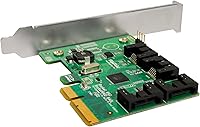
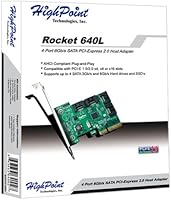
The HighPoint Rocket 640L 4-Port SATA RAID Controller is a no-frills PCIe expansion card built for desktop users who need more SATA ports without spending a lot. Launched back in 2012, this SATA expansion card has aged gracefully for what it is — a practical, affordable option for home NAS builders and power users running out of motherboard storage connections. It is not engineered for enterprise workloads, and it never claimed to be. Windows and Linux are both officially supported, which broadens its appeal considerably. For the right use case, it still earns its spot in a build today.
Features & Benefits
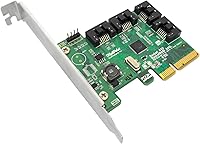
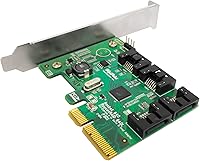
The Rocket 640L slots into a PCIe 2.0 x4 slot and remains backward compatible with older PCIe 1.0 boards, which is genuinely useful for legacy system upgrades. Its four SATA 6Gb/s ports each support up to 600 MB/s theoretical throughput — plenty for spinning hard drives and even modest SSD use. Critically, it handles drives larger than 3TB natively, so you can load it up with today's high-capacity HDDs without workarounds. The card requires no external power connector, draws little from the slot, and its compact 3.12 x 0.6 x 2.25-inch footprint fits comfortably in tight cases. RAID 0, RAID 1, and JBOD are all on the table.
Best For
This PCIe RAID controller makes the most sense for home NAS builders who need to stretch a budget without sacrificing port count. If you are migrating to large-capacity drives — think 4TB to 18TB HDDs — the native 3TB-plus support removes a common headache. Small office environments that just need basic RAID 1 mirroring for simple redundancy will also find it adequate. Legacy PC enthusiasts with PCIe 1.0 slots still in rotation will appreciate the backward compatibility. Linux users can potentially get it working, though that audience should research driver status for their specific kernel version before committing to a purchase.
User Feedback
With a 3.7 out of 5-star average across 125 ratings, the Rocket 640L divides opinion in fairly predictable ways. Windows users generally have a smooth experience — installation is straightforward and the card tends to behave as expected right out of the box. Linux users, however, frequently run into driver trouble, particularly on newer kernels, and that frustration shows in the lower ratings. There are also honest concerns about RAID rebuild reliability; this is not a true hardware RAID controller but a software-assisted one, which carries real implications for rebuild consistency and CPU overhead. That said, buyers using it in JBOD mode are largely content.
Pros
- Adds four full-speed SATA 6Gb/s ports to desktops that have run out of onboard connections.
- Natively supports drives larger than 3TB, solving a real compatibility gap on older platforms.
- Works in PCIe 1.0 slots, making it useful for system builds that predate PCIe 2.0 motherboards.
- No external power connector needed, keeping cable management simple and PSU load minimal.
- Windows installation is quick and largely plug-and-play for most users.
- JBOD mode works reliably for straightforward port expansion without RAID complexity.
- Compact dimensions fit easily into tight cases, including smaller mid-tower builds.
- Ranked in the top 15 in its Amazon category, reflecting genuine, sustained buyer interest over many years.
- Supports RAID 0 and RAID 1 configurations for users who want basic performance or redundancy setups.
Cons
- Linux driver support is outdated and unreliable on modern kernel versions — a serious issue for many buyers.
- Software-assisted RAID means CPU resources are consumed during array operations, unlike true hardware RAID.
- RAID rebuild inconsistencies reported by real users make it unsuitable for protecting genuinely critical data.
- Firmware and driver updates from HighPoint have been sparse for years, raising long-term compatibility concerns.
- The RAID management interface feels dated compared to what current competing cards offer at similar prices.
- A 3.7 out of 5 average rating signals a polarized user base — satisfaction is far from universal.
- Shared PCIe x4 bandwidth can become a bottleneck when all four drives are under simultaneous heavy load.
- Manufacturer customer support has received poor marks in user feedback for responsiveness and technical guidance.
Ratings
The HighPoint Rocket 640L 4-Port SATA RAID Controller earned its scores through AI-assisted analysis of verified global user reviews, with spam, bot-submitted, and incentivized feedback actively filtered out before any scoring was applied. What remains is an honest cross-section of real buyer experiences — from home NAS builders who swear by it to Linux users who ran into walls. Both the strengths and the frustrations are reflected here without sugarcoating.
Ease of Installation
Linux Driver Support
RAID Reliability
JBOD & Port Expansion Performance
3TB+ Drive Compatibility
Value for Money
Build Quality & Form Factor
PCIe Slot Compatibility
Power Efficiency
Windows Compatibility
Long-Term Firmware & Software Support
RAID Configuration Interface
Documentation & Support Resources
Suitable for:
The HighPoint Rocket 640L 4-Port SATA RAID Controller is a strong fit for home NAS and media server builders who have exhausted their motherboard's native SATA ports and need a cost-conscious way to add more. If you are loading up a home server with large-capacity HDDs — anywhere from 4TB to 18TB per drive — the card's native support for drives exceeding 3TB removes a compatibility headache that older onboard controllers often create. Legacy PC builders working with systems that only have PCIe 1.0 slots available will also find this card surprisingly versatile, since it maintains backward compatibility without requiring a platform upgrade. Small office environments that need a basic, no-fuss RAID 1 mirror for simple file redundancy — not mission-critical uptime — can get workable results here, especially under Windows. Users who plan to run it purely in JBOD mode as a straightforward port expander will likely have the smoothest overall experience and the fewest complaints.
Not suitable for:
Buyers expecting enterprise-grade RAID reliability should look elsewhere — the HighPoint Rocket 640L 4-Port SATA RAID Controller uses software-assisted RAID rather than a dedicated hardware RAID processor, which carries real consequences for rebuild consistency and CPU overhead under load. Linux users running modern distributions should approach this card with caution; driver support has not kept pace with current kernel versions, and getting it working on a recent Ubuntu or Fedora release can require significant manual effort with no guarantee of success. Anyone who needs active manufacturer support, regular firmware updates, or long-term software maintenance from the vendor will be frustrated — HighPoint's development activity on this product line has been minimal for years. If your storage setup involves critical data where a failed RAID rebuild could mean real data loss, the inconsistency reported by some users in rebuild scenarios makes this a risky choice for that specific responsibility. Buyers comparing options across current-generation SATA controllers will also find that newer alternatives offer better driver ecosystems and more polished management utilities for a comparable investment.
Specifications
- Brand: Manufactured by HighPoint Technologies, a company specializing in storage controller solutions for desktop and server platforms.
- Model Series: Part of the Rocket 640L series, designed as a lite, cost-optimized SATA expansion solution for non-enterprise use.
- Interface: Uses a PCIe 2.0 x4 host interface with full backward compatibility for PCIe 1.0 x4 slots on older motherboards.
- SATA Ports: Provides four internal SATA 6Gb/s ports, each capable of a theoretical maximum throughput of 600 MB/s.
- RAID Modes: Supports RAID 0 (striping for performance), RAID 1 (mirroring for redundancy), and JBOD (passthrough with no array).
- Drive Support: Natively compatible with drives larger than 3TB, including modern high-capacity HDDs up to and beyond 18TB.
- Max Devices: Supports up to four internal SATA hard drives or SSDs connected simultaneously across its four ports.
- OS Support: Officially compatible with Windows and Linux operating systems, though Linux driver support varies significantly by kernel version.
- Power Input: Draws power entirely from the PCIe slot and requires no external Molex or SATA power connector.
- Form Factor: Standard low-profile PCIe add-in card with a green PCB measuring 3.12 x 0.6 x 2.25 inches.
- Weight: The card weighs 5.6 ounces, making it lightweight and easy to handle during installation in any standard desktop case.
- Cooling: Operates without an active cooling solution; the card relies on ambient airflow within the case for thermal management.
- Launch Date: First made available in March 2012, making this one of the longer-running SATA controller cards still available at retail.
- BSR Ranking: Holds a Best Sellers Rank of number 13 in the Computer Internal SCSI Port Cards category on Amazon.
- User Rating: Carries a 3.7 out of 5 star average based on 125 verified ratings at the time of review.
- Manufacturer Status: Not discontinued by the manufacturer, meaning replacement units and official driver downloads remain available through HighPoint directly.
Related Reviews
HighPoint SSD7104 4-Port M.2 NVMe RAID Controller
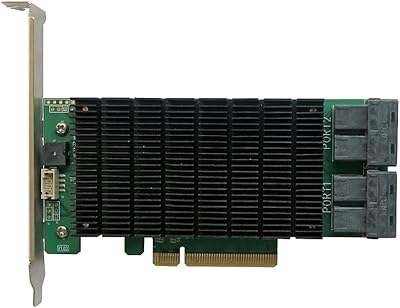
HighPoint RocketRAID 2840C RAID Controller
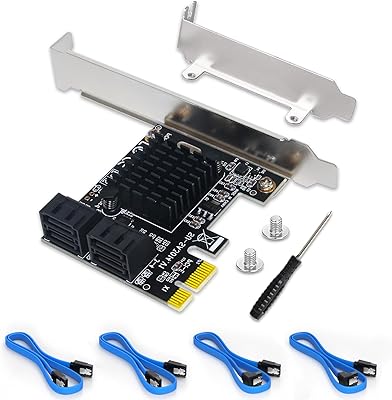
Moonqkuses 4-Port SATA 3.0 PCIe Expansion Card
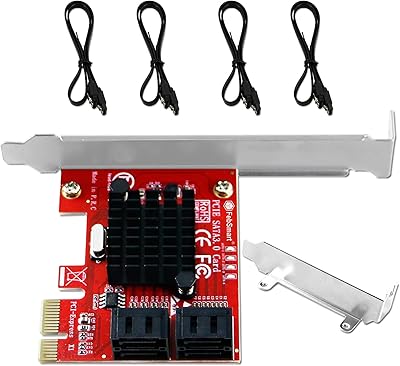
FebSmart FS-S4-Pro V2 PCIe SATA Expansion Card
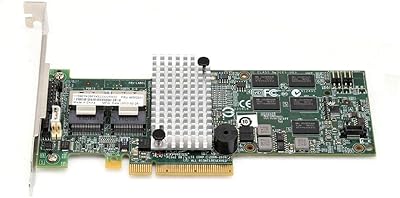
FOSA M5015 SAS SATA RAID Controller Card
YuLinca 6-Port Gigabit PoE Switch with 4 PoE+ Ports
Sabrent 1TB Rocket 4 Plus NVMe 4.0 SSD
UseeLink Smart Power Strip with 4 Outlets and 4 USB Ports
TJCXELE USB 3.0 Switch Selector 4-Port for 4 Computers