Overview

The LSI 9300-16i 16-Port SAS HBA Card is a popular pick among home lab builders and NAS enthusiasts who need to connect a large number of drives without hardware RAID overhead. What matters most here is understanding IT Mode passthrough — rather than managing RAID itself, the card presents each drive directly to the operating system, which is precisely what ZFS and unRAID require to handle disks on their own terms. Hardware RAID would undermine both platforms. Running over PCIe with 12Gb/s per-port throughput, this storage controller sits comfortably in the mid-range of the SAS controller market, making it a practical, no-fuss option for builders who know what they need.
Features & Benefits

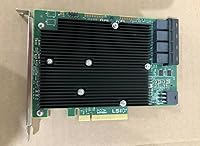
The 9300-16i offers 16 internal SAS ports via SFF-8643 connectors, allowing up to 16 drives per card slot — a real density advantage in any storage-heavy build. Each port runs at 12Gb/s, giving comfortable headroom whether you are mixing fast SSDs with spinning drives or running all-SSD arrays. One standout practical detail: this SAS HBA card ships pre-flashed to P16 IT Mode, sparing you from a firmware process that has caused real headaches for many builders sourcing older HBAs. The full-height PCIe form factor fits most server and desktop tower cases, compatibility with TrueNAS, unRAID, and ZFS is explicit out of the box, and power draw is noticeably lower than enterprise RAID cards carrying onboard battery backup units.

Best For

This storage controller is a natural fit for anyone building a TrueNAS or unRAID NAS with a double-digit drive count. ZFS users in particular need to avoid hardware RAID interference — the filesystem relies on direct disk access for integrity checks and snapshots to function correctly. The 9300-16i also suits enthusiasts repurposing older server hardware for home storage, and it works well for small-office backup servers where maximizing drive capacity without a large budget remains a priority. If firmware flashing has been a barrier to sourcing an HBA in the past, the pre-flashed P16 IT Mode removes that friction entirely and makes this a realistic plug-and-play option for most builds.

User Feedback

Across 55 ratings the 9300-16i holds a 4.1 out of 5 — solid, but with a few honest caveats worth knowing. The most consistent praise is around the pre-flashed IT Mode; buyers familiar with the older DIY flashing process genuinely appreciate not having to deal with it. On the downside, a handful of users encountered motherboard compatibility issues related to PCIe slot bifurcation, so confirming your board supports the card beforehand is a sensible step. Several reviewers also flagged that SAS-to-SATA breakout cables are not included and must be purchased separately. One recurring theme worth noting: stick to reputable sellers, as some buyers have raised questions about product authenticity when purchasing from lesser-known third-party listings.

Pros

  • Sixteen SAS ports from a single PCIe slot makes high-density drive arrays genuinely practical.
  • Ships pre-flashed to IT Mode, so you can skip the risky firmware process entirely.
  • ZFS, TrueNAS, and unRAID detect it without driver headaches in most standard configurations.
  • 12Gb/s per-port throughput provides comfortable headroom for both SSDs and spinning drives.
  • Draws significantly less power than enterprise RAID cards with onboard cache and battery modules.
  • Reported by multiple users to run stably for months in always-on, 24/7 NAS environments.
  • Full-height PCIe form factor fits most server platforms and standard desktop tower cases.
  • A strong value for what a 16-port IT Mode HBA costs when sourced from reputable sellers.

Cons

  • SAS-to-SATA breakout cables are not included and must be budgeted and purchased separately.
  • Motherboards with limited PCIe bifurcation support can cause detection issues requiring BIOS adjustments.
  • Seller authenticity is a genuine concern on marketplace platforms — verification is not straightforward.
  • The review pool of 55 ratings is still relatively thin for confident long-term reliability conclusions.
  • No documentation is included, leaving first-time SAS HBA buyers dependent on community forums.
  • Dense, poorly ventilated cases may require added airflow management under full 16-drive load.
  • Total aggregate throughput across all 16 ports can become a ceiling consideration in all-SSD high-performance builds.

Ratings

The LSI 9300-16i 16-Port SAS HBA Card has been evaluated using AI-driven analysis of verified global buyer reviews, with spam, bot-generated, and incentivized feedback actively filtered out to ensure accuracy. The scores below reflect real-world experiences from home lab builders, NAS enthusiasts, and small-office server administrators who have run this storage controller under genuine workloads. Both the strengths that make it a compelling choice and the friction points that have frustrated real buyers are represented transparently.

IT Mode Passthrough Reliability
88%
Buyers running TrueNAS and unRAID consistently report that the passthrough behavior works exactly as expected — drives are presented directly to the OS without interference, which is the entire point for ZFS users. Stability over weeks and months of continuous 24/7 NAS operation is one of the most frequently praised aspects.
A small number of users encountered unexpected drive visibility issues after initial setup, typically traced back to SAS expander configurations or specific motherboard PCIe slot behaviors rather than the card itself — but still frustrating to diagnose.
Pre-Flashed Firmware Convenience
91%
Arriving pre-loaded with P16 IT Mode firmware is a genuine time-saver that experienced builders genuinely appreciate. Anyone who has navigated the older LSI flashing process — booting from USB, using FreeDOS, risking a bricked card — understands exactly why skipping that step matters.
A handful of technically confident buyers reported that they could not independently verify the firmware version out of the box, which introduced a small layer of doubt. Trusting a third-party seller to have flashed it correctly is not always comfortable for cautious builders.
Drive Capacity & Port Count
93%
Sixteen internal SAS ports from a single PCIe slot is a substantial offering for home lab and small-office builds. Users assembling high-density storage arrays — think 12 to 16 spinning drives in a tower chassis — consistently note that this card handles the full load without complaint.
The SFF-8643 connectors mean you almost certainly need to budget for additional SAS-to-SATA breakout cables, which are not included. For builders new to SAS hardware, this discovery at installation time has caught a few people off guard.
Motherboard & PCIe Compatibility
67%
33%
In most standard server platforms and full-size desktop tower builds with a free PCIe x8 or x16 slot, the card installs without drama. Users with dedicated storage server motherboards report the smoothest experience by far.
Compatibility is not universal. Some consumer-grade motherboards with limited PCIe lane bifurcation have caused detection issues, and a subset of buyers had to relocate the card to a different slot or adjust BIOS settings before it was recognized reliably. This is worth researching before purchasing.
Throughput & Performance
84%
At 12Gb/s per port, the bandwidth ceiling is well above what most mechanical drives can actually saturate, and users mixing SSDs into their arrays report no noticeable bottlenecking. Sequential read and write performance in TrueNAS RAID-Z configurations holds steady across extended stress tests.
Users with all-SSD builds pushing higher sequential loads have noted that the aggregate throughput across all 16 ports can become a consideration at scale. This is not unique to the 9300-16i, but builders planning very high-performance SSD arrays should account for it.
Build Quality & PCB Construction
74%
26%
The card feels appropriately solid for a storage controller intended for server duty — the PCB is full-height standard, and the SFF-8643 connectors seat firmly without any wobble. Most buyers who installed it in tower cases reported no physical fitment problems.
A few reviewers noted that the card feels more utilitarian than premium, which is reasonable at this price tier. Some questioned whether cards sourced from certain third-party sellers matched the construction quality of genuine new LSI hardware.
Power Consumption
82%
18%
Compared to enterprise-grade RAID controllers with onboard cache, capacitors, and battery backup modules, the 9300-16i draws noticeably less power. For home lab builders watching their electricity bills or working within a tight PSU headroom, this is a practical advantage.
There is limited independent data on exact wattage under full 16-drive load, which makes it harder to plan precisely for PSU capacity. Most users estimate based on forums rather than measured readings.
OS & Software Compatibility
89%
TrueNAS SCALE, TrueNAS CORE, and unRAID all recognize the card immediately on boot in most tested configurations. Users also report success with Proxmox and VMware ESXi passthrough setups, broadening its appeal beyond the primary target platforms.
Windows and macOS support is essentially absent for practical storage use, which is expected but worth stating clearly. This card is firmly in the Linux and BSD ecosystem — buyers expecting broader OS support will be disappointed.
Seller Authenticity & Sourcing Trust
58%
42%
When purchased from established, well-reviewed sellers with a clear track record of LSI hardware, the majority of buyers report receiving what they paid for with no issues. Positive experiences from reputable sources are the norm rather than the exception.
Authenticity concerns are real and recurring in the review pool. Some buyers suspect counterfeit or remarked cards when purchasing from lesser-known marketplace listings, and verification is not straightforward without specialized tools. Sticking to sellers with strong feedback histories is the practical safeguard.
Value for Money
86%
For a 16-port IT Mode HBA delivered ready to install, the price point represents strong value within the SAS controller market. Builders who have priced out alternatives — including sourcing older cards and flashing them manually — consistently note that the convenience factor is priced in fairly.
Buyers who later discovered they needed to purchase SAS-to-SATA breakout cables separately felt the real-world cost was higher than the listing suggested. Factoring in cables, the value calculation shifts slightly, especially for multi-port builds needing several breakout cables.
Installation & Setup Experience
78%
22%
For anyone with prior experience building storage servers, installation is refreshingly straightforward. Slot the card in, connect drives, boot into TrueNAS or unRAID, and the drives appear. The pre-flashed firmware eliminates the most technically demanding step entirely.
First-time SAS HBA installers occasionally struggle with understanding the SFF-8643 connector ecosystem and cable requirements. The card ships with no documentation beyond the basics, so buyers are largely reliant on community forums for guidance.
Thermal Management & Heat Output
76%
24%
Under normal operating loads with 8 to 12 drives connected, the card runs warm but not alarmingly hot. Users in well-ventilated server cases and towers report stable temperatures over extended periods without requiring dedicated airflow.
In tightly packed cases with limited airflow, a few builders noted that the card ran hotter than expected under full 16-drive load. Adding a case fan oriented toward the PCIe area resolved the issue for most, but it is worth planning for in dense builds.
Long-Term Stability & Uptime
87%
A meaningful segment of reviewers specifically mention months of uninterrupted uptime in always-on NAS environments, which is exactly the use case this card is built for. ZFS scrubs and SMART tests complete without controller-related errors in the vast majority of reported setups.
The limited total review count — 55 ratings — means long-term failure data is thin. Buyers running mission-critical workloads may prefer hardware with a deeper reliability track record before committing to this card as their primary storage controller.

Suitable for:

The LSI 9300-16i 16-Port SAS HBA Card is built for a specific and well-defined audience: home lab builders, self-hosters, and small-office administrators who need to connect a large number of drives and want the operating system — not the controller — to manage them. If you are running TrueNAS, TrueNAS SCALE, or unRAID, this is exactly the type of card your setup demands, because ZFS in particular requires direct, unmediated access to each physical drive to perform its integrity checks, snapshots, and self-healing functions correctly. Enthusiasts repurposing older server hardware for a high-capacity NAS will find the 16 available ports genuinely useful, especially when building out arrays of 10 or more spinning drives. The pre-flashed P16 IT Mode firmware is a real practical advantage for buyers who want to skip the historically unreliable DIY flashing process and get straight to building. It also suits Proxmox users who want to pass the controller through to a VM, and anyone building a backup server where drive count and reliability matter more than raw enterprise polish.

Not suitable for:

The LSI 9300-16i 16-Port SAS HBA Card is a poor fit for anyone expecting traditional hardware RAID functionality — that is simply not what this card does, and attempting to use it as a RAID controller will lead to frustration. Windows users or anyone building a general-purpose desktop PC will find little practical use for it, since the card is firmly oriented toward Linux and BSD-based storage platforms. Buyers with consumer-grade motherboards that lack proper PCIe lane bifurcation support may encounter detection problems that require BIOS-level troubleshooting before the card behaves reliably. Anyone planning a fully SSD-based, high-throughput array pushing the limits of aggregate bandwidth should also look carefully at whether a single card meets their performance requirements at scale. Finally, buyers who are uncomfortable purchasing from third-party marketplace sellers — where authenticity verification is not straightforward — may prefer sourcing storage controllers through channels with stronger provenance guarantees.

Specifications

  • Brand: Manufactured by LSI, a well-established name in enterprise and prosumer SAS and RAID controller hardware.
  • Model: The exact model designation is 9300-16i, part of LSI's 9300 series of 12Gb/s SAS host bus adapters.
  • Port Count: Provides 16 internal SAS ports, allowing direct connection of up to 16 individual drives per card.
  • Connector Type: Uses SFF-8643 (Mini-SAS HD) connectors, requiring compatible SAS-to-SATA or SAS-to-SAS breakout cables for drive connectivity.
  • Interface Speed: Operates at 12Gb/s per SAS port, providing ample bandwidth headroom for both mechanical and solid-state drives.
  • Host Interface: Connects to the host system via a standard PCIe slot, compatible with PCIe Gen 3 platforms commonly found in servers and desktop towers.
  • Firmware Mode: Ships pre-flashed with P16 IT Mode (passthrough), presenting each connected drive directly to the operating system without hardware RAID abstraction.
  • Form Factor: Full-height PCIe card measuring 6.6 x 4.4 x 1 inches, fitting standard server chassis and full-size desktop tower cases.
  • Item Weight: Weighs 9 ounces, consistent with a standard single-slot PCIe controller card without onboard cache or battery modules.
  • Compatible OS: Explicitly compatible with TrueNAS (including CORE and SCALE), ZFS-based platforms, unRAID, and broadly supported under Linux and BSD kernels.
  • Proxmox Support: Widely reported to function correctly with Proxmox VE via PCIe passthrough to virtual machines, extending its usability beyond bare-metal deployments.
  • Power Draw: Draws considerably less power than enterprise RAID controllers equipped with onboard DRAM cache and battery backup units, making it suitable for home lab power budgets.
  • Cables Included: No SAS-to-SATA or SAS-to-SAS breakout cables are included in the package; these must be sourced and purchased separately.
  • BSR Ranking: Ranked #3 in the RAID Controllers category on Amazon at the time of evaluation, reflecting strong market visibility for this product type.
  • User Rating: Holds an average rating of 4.1 out of 5 based on 55 verified ratings, indicating solid overall satisfaction with some noted limitations.
  • Availability: First listed for sale in May 2022, making it a relatively recent market entry within the prosumer SAS HBA segment.

Related Reviews
FOSA M5015 SAS SATA RAID Controller Card
68%
83%
Value for Money
78%
Compatibility
66%
Firmware Flashing Experience
61%
Build Quality
69%
Drive Detection Reliability
More
YBBOTT PCE 16SAT 16-Port SATA Expansion Card
77%
88%
Multi-Drive Detection Reliability
83%
Data Throughput Stability
81%
Chipset Stability & Architecture
86%
Operating System Compatibility
79%
Boot Drive Support
More
10Gtek LSI-2008-8I HBA RAID Controller Card
77%
91%
Value for Money
93%
Linux Compatibility
88%
Drive Detection Reliability
82%
IT-Mode Flash Support
67%
Windows Compatibility
More
Cisco SG100-16 16-Port Gigabit Network Switch
72%
91%
Ease of Setup
54%
Build Quality
83%
Port Performance
49%
Value for Money
47%
Long-Term Reliability
More
Zyxel GS1100-16 16-Port Gigabit Ethernet Switch
85%
88%
Performance
94%
Ease of Setup
91%
Energy Efficiency
85%
Build Quality
92%
Noise Levels
More
YuLinca UMG16 16-Port Gigabit Network Switch
80%
92%
Value for Money
83%
Build Quality
96%
Ease of Setup
88%
Port Performance
97%
Noise Level
More
StarTech 8-Port SATA III PCIe Expansion Card
80%
88%
Drive Detection Reliability
84%
Multi-Controller Architecture
79%
OS Compatibility
86%
Motherboard Compatibility
81%
Included Cables
More
NICGIGA NIC-AI-FS1621GP 16-Port Unmanaged PoE Switch
76%
88%
Value for Money
93%
Ease of Setup
54%
PoE Port Speed
84%
PoE Power Delivery
79%
AI Watchdog Reliability
More
NETGEAR GS116PP 16-Port PoE+ Gigabit Switch
83%
96%
Ease of Setup
93%
PoE Port Coverage
68%
Power Budget Adequacy
88%
Build Quality
97%
Noise Level
More
STEAMEMO 16-Port Managed Gigabit Ethernet Switch
78%
91%
Value for Money
88%
Ease of Setup
84%
Build Quality
86%
Network Performance
74%
VLAN Functionality
More

FAQ

According to the listing and the majority of buyer reports, the LSI 9300-16i 16-Port SAS HBA Card ships with P16 IT Mode already loaded. Most buyers plug it in and their NAS OS detects the drives immediately without any firmware work. That said, if you want to be thorough, you can verify the firmware version after installation using standard LSI tools.

Yes, IT Mode passthrough is exactly what ZFS requires. Because the card presents each drive directly to the OS rather than abstracting them behind a RAID layer, TrueNAS SCALE and CORE can manage the drives natively. Most users report the card is recognized on first boot without any additional driver installation.

You will need SFF-8643 to SATA breakout cables — these are not included in the box. Each SFF-8643 connector on the card breaks out to four SATA ports, so for 16 drives you will need four breakout cables. Budget for these separately before your build; forgetting them is one of the most common surprises new buyers report.

Yes, this storage controller is well-supported in unRAID. Because unRAID also benefits from direct drive access rather than hardware RAID, IT Mode is the right firmware for the job, and the card integrates without special configuration in most unRAID builds.

It works in desktop tower motherboards as long as you have a free PCIe slot with adequate lane support. The potential complication is PCIe bifurcation — some consumer motherboards have limited lane configurations that can cause the card to go undetected. Check your motherboard specifications for PCIe slot bifurcation support before purchasing, and if issues arise, try a different physical slot first.

Up to 16 drives directly, one per SAS port. If you add a SAS expander downstream, you can extend that number significantly, though expander setups introduce additional complexity. For most home NAS builds, 16 ports covers the majority of real-world drive counts.

This is a legitimate concern worth addressing calmly. Stick to sellers with strong, established feedback histories and a track record specifically in storage hardware. Avoid unusually low-priced listings from unfamiliar sellers with thin reviews. After receiving the card, you can verify the firmware and device ID using LSI management tools, which will give you a reasonable level of confidence in authenticity.

This is a SAS HBA and only supports SAS and SATA drives. It does not support NVMe drives, which use a different interface entirely. If you are planning an NVMe array, you will need a different solution such as a PCIe bifurcation card or an NVMe HBA.

Under normal load in a reasonably ventilated case, most users report the card runs warm but well within acceptable limits. In tightly packed cases with poor airflow, it can get hotter than ideal. Positioning a case fan to direct airflow over the PCIe area is a sensible precaution if you are running close to the 16-drive maximum in a dense chassis.

Yes, PCIe passthrough with Proxmox is a well-documented and commonly used configuration with this storage controller. You pass the card through to a VM running TrueNAS or another storage OS, which then manages the drives directly. It is one of the more popular home lab setups for this particular card, and community guides for the configuration are widely available.

Where to Buy