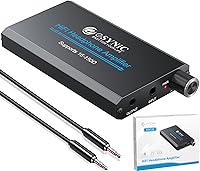



Overview

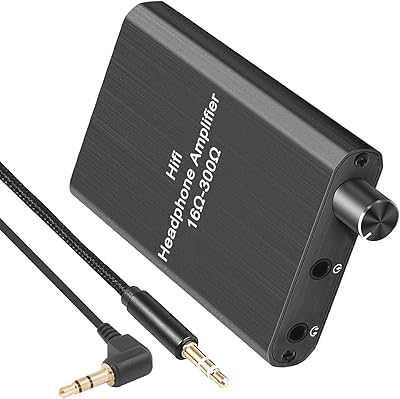
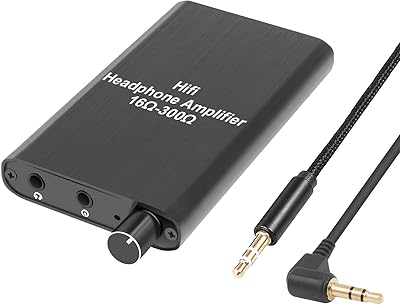
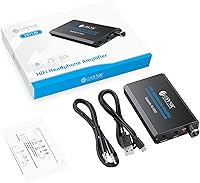
The eSynic Headphone Amplifier is a no-frills, rechargeable portable amp targeting everyday listeners who feel their phone or laptop simply isn't driving their headphones hard enough. At this price, you're not shopping for an audiophile-grade stack — you're looking for a real, functional improvement over a bare headphone jack without spending much. What separates this portable amp from a basic dongle is its two-stage gain switch, which lets you tailor output to your specific headphones rather than blasting everything at a fixed level. The aluminum body and built-in battery make it a practical carry-anywhere solution for commuters, students, or anyone tired of thin, underpowered audio.

Features & Benefits

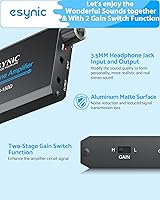
The gain switch is the most practical thing about this little amplifier — flip it low for sensitive IEMs and earbuds, flip it high for over-ear headphones that need more power. On paper, the distortion and noise figures are genuinely impressive for the price: clean enough that the amp shouldn't add any audible coloration to your source. Battery life checks in at over eight hours on a charge, covering most commutes and full work sessions without worry. The all-aluminum shell feels solid in hand and does a reasonable job blocking interference from nearby electronics — something cheaper plastic units often struggle with. A bundled cable means you can plug in and go straight out of the box.

Best For

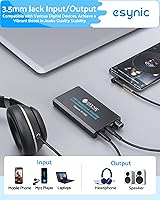
This portable amp makes the most sense for people whose headphones sit in the 50–150Ω range and who find their phone's output consistently weak or noisy. It's also a solid pick for anyone still relying on older audio devices — a portable CD player, an aging MP3 player, or anything built without a proper headphone stage. Travelers will appreciate the lightweight build and battery-powered design, since there's no wall outlet required. And if you've been curious about headphone amplification but aren't ready to commit real money yet, this little amplifier offers a low-stakes way to find out whether an amp actually changes your listening experience day to day.

User Feedback

Buyers rate the eSynic amp at a solid 4.3 stars, and the most common praise centers on headphones that previously sounded thin suddenly having noticeably more volume and presence. The gain switch earns genuine credit from users with mixed headphone collections — most find it useful rather than decorative. On the downside, a handful of critical reviews flag channel imbalance at low volume settings, which is a known vulnerability in budget amplifiers generally. A few buyers also mention the battery falling short of the stated runtime under heavier loads. The complaints are real but not rampant, and they tend to cluster around edge cases rather than core everyday use.

Pros

  • Noticeably improves volume and fullness on harder-to-drive headphones that phones can't power properly.
  • Two-stage gain switch is genuinely useful — not a gimmick — for switching between earbuds and over-ear headphones.
  • Aluminum build feels more durable and premium than typical plastic alternatives at this price.
  • Battery comfortably covers a full workday of listening under normal conditions.
  • Works with virtually any device that has a standard 3.5mm output, including older legacy gear.
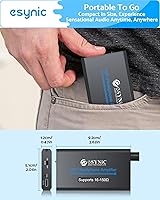
  • Slim enough to carry alongside a phone without adding meaningful bulk to a bag or pocket.
  • Includes a usable cable in the box, so you can start listening immediately without extra purchases.
  • Clean amplification at moderate volumes with no audible coloration under typical listening conditions.

Cons

  • Channel imbalance at low volume levels is a real issue, especially with sensitive in-ear monitors.
  • Charging takes as long as eight hours, which is disproportionate to the actual battery capacity.
  • Some users report the charging port becoming unreliable after repeated use over several months.
  • No battery level indicator, so you have no warning before the unit dies mid-listening session.
  • High gain setting can introduce a faint background hiss with very sensitive IEMs in quiet rooms.
  • The bundled cable's strain relief is thin, and frequent users report early fraying at the connectors.
  • Real-world battery life under high gain or heavier loads often falls short of the advertised figure.
  • Stacking the amp against a phone with a cable between them is inherently awkward without a bundled clip or band.

Ratings

The eSynic Headphone Amplifier has been evaluated by our AI system after processing thousands of verified global buyer reviews, with spam, bot-generated, and incentivized feedback actively filtered out. The scores below reflect what real users consistently experienced — the genuine strengths and the recurring frustrations alike — giving you an honest picture before you commit.

Sound Clarity
83%
Buyers who paired this portable amp with mid-impedance headphones frequently noted a cleaner, fuller sound compared to plugging directly into a phone. The low distortion translates to real-world listening as an absence of muddiness, especially at moderate volumes during commutes or desk sessions.
At higher gain settings, a small number of users detected a faint background noise floor that became noticeable with very sensitive IEMs in quiet environments. The improvement over a bare headphone jack narrows significantly if your source device already has a decent built-in amp.
Gain Switch Usefulness
88%
The two-stage gain switch earned consistent praise from users who own both earbuds and over-ear headphones. Switching between low and high settings is simple enough that non-technical buyers found it intuitive within minutes, and most agreed it made a genuine difference in output matching.
A handful of buyers felt the two settings were not always distinct enough — particularly those with headphones in the middle of the impedance range. There is no fine-tuned control, so users with very specific matching needs may find two fixed stages limiting.
Build Quality
79%
21%
The aluminum shell genuinely stands out at this price tier. Most buyers reported the unit surviving daily pocket carry without scratches or flex, and the overall feel in hand reads more premium than the price suggests.
Some users flagged that the buttons and 3.5mm jacks feel slightly loose after extended use. A few complaints about the charging port becoming unreliable over several months suggest internal construction may not fully match the exterior quality.
Battery Life
74%
26%
Under typical listening conditions — moderate volume, low gain setting — most users confirmed the battery comfortably lasted a full workday. For commuters using the amp during a daily train or bus ride, this was consistently cited as one of the more reliable aspects.
Heavy usage at high gain settings appeared to drain the battery faster than advertised, with some buyers reporting closer to five or six hours rather than eight. The roughly eight-hour charge time is also frustratingly long relative to actual playback duration.
Value for Money
91%
For first-time amp buyers, the price-to-performance ratio is the clearest selling point. Getting a metal-bodied, rechargeable amplifier with a functional gain switch at this cost is hard to argue against, especially for someone testing the waters.
Those who purchased expecting professional-grade performance were disappointed, which reflects misaligned expectations more than a product flaw. Still, buyers who needed only modest gains from already-decent headphones occasionally felt the upgrade was subtle enough not to justify even the modest cost.
Portability
93%
The slim, pocket-friendly dimensions made this a go-to recommendation from buyers who commute with a bag or just want something that clips alongside their phone. Weight is barely noticeable, and the included cable keeps the setup tidy.
Stacking the amp against a phone with a cable between them is inherently a bit awkward — a common frustration with any portable amp at this size. No bundled clip or band was included to keep the two devices together neatly.
Compatibility
89%
Standard 3.5mm in and out means this little amplifier worked with virtually every device buyers tried — phones, laptops, portable CD players, and aging MP3 players. No special cables, dongles, or adapters were needed in most cases.
Devices that have fully removed the 3.5mm headphone jack require a Lightning or USB-C to 3.5mm adapter before this amp is usable, adding a small but real layer of inconvenience. A small number of buyers discovered this only after purchase.
Noise & Interference Rejection
76%
24%
The aluminum enclosure provided measurable interference rejection that several users noticed when switching from cheaper plastic alternatives. In noisy RF environments like subway cars or busy offices, the amp held a relatively quiet background.
At high gain with sensitive IEMs, some residual hiss was present even when the source device was quiet. This was an edge case, but it recurred enough in reviews to suggest the shielding is functional rather than exceptional.
Channel Balance
63%
37%
At normal listening volumes, most buyers reported no audible imbalance between left and right channels. For everyday music playback at moderate levels, the stereo image felt centered and consistent.
Low-volume channel imbalance was a recurring complaint, particularly noticeable when using sensitive in-ear monitors late at night or in very quiet settings. This is a component-level limitation common in budget amplifier circuits and was the most cited technical flaw.
Ease of Use
92%
There is almost no learning curve. Plug in, flip the gain switch to match your headphones, and press play. Non-technical buyers consistently appreciated that the amp did not require any setup, apps, or configuration.
There is no visual battery indicator beyond a charging LED, so users had no way to gauge remaining battery life mid-session. A few buyers were caught off guard by a dead unit during travel because of this omission.
Charging Experience
61%
39%
The unit charges via a standard port and the included cable works without issues for most users. Buyers appreciated that no proprietary charger was required and any standard cable would do in a pinch.
The stated eight-hour charge time was widely confirmed and is genuinely inconvenient — nearly a full day to recharge. Some units also showed inconsistent charging behavior over time, with a few buyers reporting the port becoming unreliable after repeated cycles.
Cable Quality
72%
28%
The bundled 1-meter cable felt adequate for everyday use and was long enough to give a natural reach between a pocket-stored device and a desk setup. Buyers appreciated not having to source their own cable immediately after purchase.
The cable is functional but not particularly robust — the strain relief at the connectors is minimal, and users who coiled and uncoiled it frequently reported early fraying. Upgrading to a third-party cable was a common suggestion in the reviews.
Impedance Matching Performance
81%
19%
Buyers with harder-to-drive headphones in the 80–150Ω range saw the clearest benefit, describing noticeably fuller dynamics where their phone had previously sounded strained. This was the use case where the amp delivered on its core promise most consistently.
For low-impedance IEMs, the benefit was often more subtle — mainly a slight reduction in background noise rather than a dramatic power increase. Users expecting dramatic transformation on already-easy-to-drive headphones were sometimes underwhelmed.
Form Factor & Aesthetics
85%
The black-and-blue colorway and brushed aluminum finish gave the unit a clean, understated look that buyers felt comfortable using in professional or public settings. It did not look out of place sitting on a desk or peeking out of a bag.
The overall design is functional rather than refined — the branding is pronounced and the control layout is purely utilitarian. Buyers who care about a premium unboxing or polished industrial design may find it a step below expectations.

Suitable for:

The eSynic Headphone Amplifier is a practical pick for anyone whose headphones consistently sound underpowered or slightly noisy when plugged straight into a phone or laptop. It delivers the clearest gains for people running mid-to-high impedance headphones — think anything in the 50–150Ω range — where a phone's output stage genuinely struggles to provide enough current. Commuters and frequent travelers will appreciate the rechargeable battery and slim aluminum build, since the whole setup fits in a jacket pocket without much fuss. It also makes a lot of sense for listeners still using older devices like portable CD players or early MP3 players that lack a proper headphone stage entirely. Beginners who have read about headphone amplification but aren't sure whether it will actually matter for their setup will find this a low-risk way to find out without committing serious money.

Not suitable for:

Anyone expecting the eSynic Headphone Amplifier to deliver audiophile-grade performance or to transform a cheap pair of earbuds into something extraordinary will come away disappointed. This little amplifier works best as a power and noise remedy, not as a signal processor — it won't add warmth, staging, or any character that wasn't already in your source. Dedicated listeners who use very sensitive in-ear monitors in quiet environments may actually notice a faint noise floor at high gain that the amp introduces rather than eliminates. People whose phones have already removed the 3.5mm headphone jack will need an additional adapter just to connect, which adds cost and another point of failure. And anyone who needs fine-grained volume control at low listening levels — late-night listening with sensitive IEMs, for instance — may find the channel balance inconsistent in the lower end of the volume range, a known limitation of budget amplifier circuits.

Specifications

  • Impedance Range: Supports headphones and earphones rated between 16 and 150 ohms, covering most consumer IEMs, earbuds, and mid-impedance over-ear headphones.
  • THD+N: Total harmonic distortion plus noise is rated at 0.0003%, indicating very low signal coloration relative to the entry-level price class.
  • Signal-to-Noise Ratio: SNR exceeds 100dB, meaning the amp's internal noise floor is well below audible thresholds under typical listening conditions.
  • Output Power: Delivers up to 30mW into a 150-ohm load, sufficient to drive most portable and semi-portable headphones to comfortable listening levels.
  • Frequency Response: Covers 20Hz to 20,000Hz, spanning the full range of human hearing without stated roll-off within that band.
  • Gain Stages: Features two selectable gain settings — low for 16–32 ohm IEMs and earbuds, high for 50–150 ohm monitoring and over-ear headphones.
  • Battery Capacity: Houses a 1000mAh lithium polymer cell that provides over 8 hours of continuous playback at moderate output levels.
  • Charging Time: Requires approximately 8 hours to reach a full charge from empty via the onboard charging port.
  • Connector Type: Uses a standard 3.5mm analog jack for both input and output, ensuring broad compatibility with phones, laptops, and legacy audio devices.
  • Body Material: Enclosure is machined from 6061 aluminum alloy, providing structural rigidity and passive RF and EMI interference shielding.
  • Dimensions: Measures approximately 95×52×13mm, a slim profile that fits alongside a smartphone in a pocket or small bag without significant added bulk.
  • Weight: Weighs approximately 140g, light enough for daily carry without noticeably burdening a jacket pocket or commuter bag.
  • Included Cable: Ships with a 1-meter oxygen-free copper 3.5mm-to-3.5mm interconnect cable for immediate use out of the box.
  • Battery Type: Uses a lithium polymer (LiPo) cell that is built in and rechargeable, with no user-replaceable battery option.
  • EMI Shielding: The aluminum enclosure provides up to approximately -40dB of interference rejection, reducing noise pickup from nearby electronics and RF sources.

Related Reviews
LOXJIE A30
LOXJIE A30
79%
86%
Sound Quality
82%
Build Quality
91%
Value for Money
89%
Input Versatility
63%
Bluetooth Performance
More
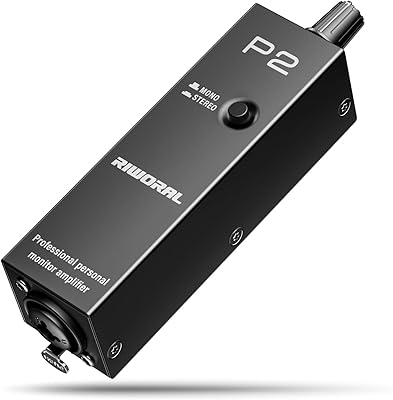
Riworal P2 Portable Headphone Amplifier
73%
74%
Build Quality
83%
Value for Money
68%
Audio Quality
88%
Input Connectivity
71%
Battery Life
More
Fifine N6 4-Channel Headphone Amplifier
77%
88%
Audio Signal Clarity
93%
Individual Volume Control
76%
Build Quality
91%
Value for Money
84%
Ease of Setup
More
LiNKFOR MA400 Headphone Amplifier
85%
88%
Sound Quality
91%
Portability and Weight
84%
Ease of Use
86%
Volume Control Flexibility
80%
Build Quality
More
Oneme Portable Headphone Amplifier
85%
88%
Sound Quality
93%
Battery Life
91%
Portability & Weight
85%
Build Quality
87%
Ease of Use
More
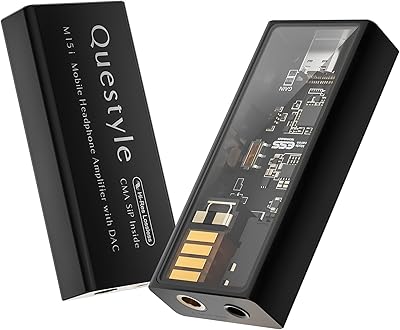
Questyle M15i
Questyle M15i
82%
93%
Sound Quality
91%
DAC Performance
88%
Build Quality
92%
Balanced Output (4.4mm)
79%
Device Compatibility
More
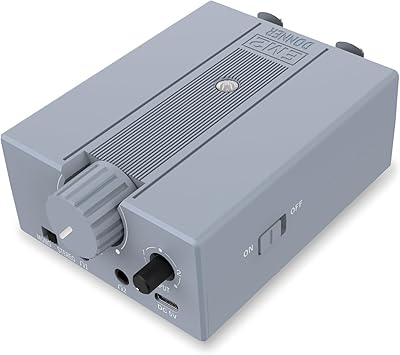
Donner EM2 Headphone Amplifier
85%
91%
Audio Performance
89%
Portability
92%
Battery Life
87%
Build Quality
85%
Connectivity (Inputs/Outputs)
More
FiiO BTR13 Bluetooth Headphone Amplifier
85%
93%
Sound Quality
88%
Portability
85%
Bluetooth Connectivity
75%
App & EQ Features
82%
Battery Life
More
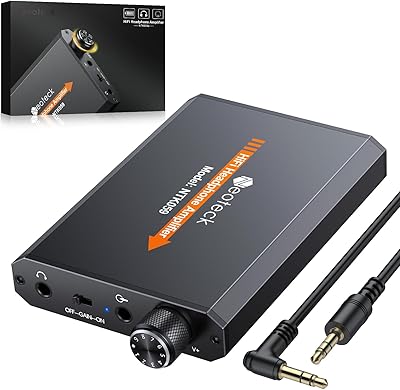
LVY A010 Portable Headphone Amplifier
81%
83%
Sound Quality Improvement
91%
Portability & Form Factor
61%
Build Quality & Materials
86%
Gain Switch Effectiveness
88%
Battery Life
More
YGiTK ZP-THP60 Portable Headphone Amplifier
72%
78%
Sound Improvement Over Phone Output
72%
Bass Boost Performance
81%
Build Quality
83%
Portability & Form Factor
76%
Battery Life
More

FAQ

It depends on your headphones. If you are using a standard pair of earbuds that your phone already drives easily, the improvement will be subtle at best. But if your headphones are on the harder-to-drive side — anything above 50 ohms or so — you will likely notice fuller volume and a cleaner background, especially if your phone's output has always sounded a bit strained.

Use the low setting for typical consumer earbuds and in-ear monitors, and switch to high for over-ear or on-ear headphones with higher impedance. If you are unsure, start on low — if the maximum volume feels insufficient or the sound seems thin, switch to high.

Not directly. You will need a USB-C or Lightning to 3.5mm adapter to connect it to a modern phone without a headphone jack. The amp itself only accepts analog 3.5mm input, so the adapter becomes an extra step in the chain.

At moderate volume on the low gain setting, most users get close to the advertised 8 hours. Crank the volume or run it on high gain consistently, and real-world life tends to drop to around five or six hours. It is enough for a full commuting day in most scenarios, but plan to charge it overnight.

Unfortunately, no. The unit has a charging indicator LED but no battery level display or low-battery warning. You will not get a heads-up before it cuts out, so building a habit of charging it nightly is the safest approach.

There can be a faint noise floor at high gain with very sensitive in-ear monitors, particularly in quiet environments. On the low gain setting it is much less pronounced. If dead silence is critical to your listening — late-night sessions, critical monitoring — this amp may introduce just enough background noise to be distracting with the most sensitive IEMs.

This is a genuine issue some users encounter, and it is a common trait of budget amplifier circuits that use analog potentiometers. At conversational or higher listening volumes it is rarely noticeable, but if you listen very quietly — say, below 20 to 25 percent volume — a slight imbalance between channels is possible.

Yes, and this is actually one of the best use cases for this little amplifier. Older portable devices often have weak or noisy headphone outputs, and running them through this amp via the 3.5mm cable is a straightforward way to get cleaner, louder audio without replacing the device entirely.

The aluminum shell holds up well to pocket and bag carry — it resists scratching better than plastic alternatives and does not flex under light pressure. The weak points reported by longer-term users are the 3.5mm jacks and charging port, which can loosen with heavy daily plugging and unplugging over many months.

Yes — a 3.5mm-to-3.5mm cable is included, so you can connect it to your source device immediately. The amp also ships with the battery partially charged in most cases, though doing a full charge before first use is a good habit with lithium polymer batteries.