Overview

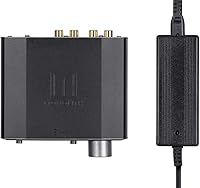
The Monoprice Liquid Spark Headphone Amplifier is the result of a genuine collaboration with respected audio engineer Alex Cavalli, and that pedigree shows in ways you do not always expect at this price tier. Since its 2018 launch, the Liquid Spark has quietly built a loyal following among budget-minded listeners who refuse to compromise on sound quality. The chassis is compact — aluminum and ABS — small enough to share desk space without complaint. What sets it apart conceptually is its DC-coupled signal path, which removes the capacitors that many amps use and that can subtly color the audio. For what it costs, the performance on offer is genuinely hard to argue with.
Features & Benefits

The engineering here is more considered than the price tag suggests. By using laser-matched low-noise JFETs in the input stage, the Cavalli-designed amplifier keeps distortion impressively low — figures that competing units at this tier rarely match in practice. The MOSFET output stage delivers real headroom for headphones in the 32–300 ohm range without the amp visibly straining. There is also a volume-controlled RCA preamp output on the back, letting you run powered speakers from the same unit — a genuinely useful feature that many buyers discover after setup and immediately appreciate. One input, one output, clean signal throughout.

Best For

This desktop amp is an easy recommendation for anyone moving away from the headphone jack on a laptop or phone and wanting an immediate, meaningful upgrade. It handles moderately demanding headphones confidently — Sennheiser HD 6XX-style 150–300 ohm models being a popular pairing — without requiring uncomfortable volume levels. The dual-purpose desk setup angle also makes it a natural fit for listeners running powered bookshelf speakers alongside headphones, since the preamp output covers both without extra hardware. Minimalists will appreciate the clean front panel: a single knob, one output jack, nothing to overthink or misconfigure.

User Feedback

The general consensus among owners is that the Liquid Spark sounds warm yet transparent for its class, with many specifically praising its synergy with Sennheiser and Beyerdynamic headphones. Build quality earns decent marks overall, though the volume knob feels a bit lightweight compared to pricier competitors. One recurring complaint worth knowing upfront: a small number of users notice slight channel imbalance at the very lowest volume positions — a known limitation of budget potentiometers rather than a defect. Long-term reliability appears solid across the board, with few reports of failures surfacing even among buyers who have owned the unit for several years.

Pros

  • Warm, transparent sound character that outperforms its price tier with the right headphones.
  • DC-coupled signal path means no capacitors introducing coloration between your source and ears.
  • Volume-controlled preamp output doubles as a speaker amp controller — genuinely useful for mixed desktop setups.
  • Pairs exceptionally well with popular mid-impedance headphones like the Sennheiser HD 6XX and Beyerdynamic DT 880.
  • Very low distortion figures translate to a noticeably clean background during quiet musical passages.
  • Compact footprint takes minimal desk space without sacrificing connectivity.
  • Simple single-input, single-output design means zero configuration headaches for new users.
  • Long-term reliability is strong, with few failure reports even from multi-year owners.
  • The 30-day money-back guarantee makes it a low-risk first purchase for amp newcomers.
  • Designed by Alex Cavalli, whose engineering credentials lend genuine credibility to the circuit design.

Cons

  • Channel imbalance at the lowest volume positions is a real and recurring complaint, not an isolated incident.
  • The volume knob feels noticeably cheap relative to the overall unit and does not inspire daily confidence.
  • Only one RCA input means multi-source setups require an external switcher purchased separately.
  • No included RCA cable, which catches budget-focused first-time buyers off guard at unboxing.
  • High-sensitivity IEMs can reveal a faint hiss that full-size headphone users will never notice.
  • The external power brick adds an extra cable to manage on already-crowded desks.
  • One-year warranty is shorter than what several competing brands now offer at similar price points.
  • No input mute or headphone-to-speaker toggle makes switching between outputs a manual, slightly awkward process.
  • Warranty claim and replacement process has drawn mixed feedback, particularly from buyers outside the US.

Ratings

The Monoprice Liquid Spark Headphone Amplifier has been scored by our AI system after parsing hundreds of verified owner reviews from global marketplaces, with spam, bot activity, and incentivized feedback actively filtered out. The resulting scores reflect a clear-eyed picture of where this desktop amp genuinely delivers and where real buyers have run into frustration. Both standout strengths and recurring pain points are represented transparently in the categories below.
Sound Quality
88%
Owners consistently describe the sonic character as warm without being muddy — a balance that is surprisingly hard to find at this price tier. Listeners pairing it with mid-impedance headphones report a noticeably cleaner background compared to integrated motherboard audio, with better instrument separation on complex tracks.
A small subset of users with highly resolving headphones feel the amp adds a very slight coloration that purists may notice on critical listening sessions. It is not a neutral reference amp, and buyers expecting studio-monitor-flat performance may find themselves wanting more.
Value for Money
93%
For buyers coming from phone or laptop headphone jacks, the performance jump feels dramatic relative to the outlay. The combination of a capable amplifier stage and a functional preamp output in a single unit means fewer separate purchases for a basic desktop audio setup.
As the market has grown, a handful of newer competitors have appeared at similar or slightly lower prices, making the value proposition feel slightly less exceptional than it did at launch. Still strong, but no longer completely unchallenged in its segment.
Build Quality
71%
29%
The aluminum and ABS chassis feels solid enough for a desktop unit that rarely moves once placed, and the overall fit and finish looks clean without any obvious gaps or sharp edges. Long-term owners report no structural degradation after years of daily use.
The volume knob is the most frequently criticized hardware element — it feels lightweight and plasticky against the otherwise reasonable chassis, and does not inspire confidence during daily adjustments. A few buyers noted minor chassis flex under firm pressure, though this rarely affects function.
Volume Control & Channel Balance
62%
38%
For normal listening at moderate to high volumes, the volume pot tracks cleanly across both channels and allows precise enough control for most users. The range of the pot suits a wide variety of headphone sensitivities reasonably well.
At the very low end of the dial — the first 10 to 15 degrees of rotation — a measurable channel imbalance appears, which is a known limitation of budget potentiometers. Users with sensitive, easy-to-drive headphones who prefer very quiet background listening are the most likely to be bothered by this.
Amplifier Power & Headphone Compatibility
84%
The amp handles headphones in the 32 to 300 ohm range without any audible strain, and popular models like the Sennheiser HD 6XX and Beyerdynamic DT 880 are repeatedly cited as excellent pairings. There is genuine headroom for dynamic swings on demanding tracks.
Planar magnetic headphones with low sensitivity can push the amp closer to its limits, and a few users report running the volume pot higher than expected for comfortable listening levels. It is not the right choice for anyone planning to drive a collection of power-hungry planars.
Preamp Output Functionality
86%
The volume-controlled RCA preamp outputs let users run powered bookshelf speakers from the same unit, which buyers frequently call out as an unexpected bonus in a desktop setup. Switching between headphones and speakers requires no rewiring — just turning the volume down before removing headphones.
There is no dedicated speaker output toggle or mute switch, so managing the transition between headphone and speaker use requires manual volume management. Users with passive speakers will also need a separate power amp stage, as the preamp output alone will not drive them.
Signal Transparency & Distortion
89%
The DC-coupled design means there are no capacitors in the signal path introducing phase shifts or low-frequency roll-off — a detail that audio-savvy buyers specifically seek out and appreciate. Measured distortion figures are genuinely low for the category and hold up well in practice.
The real-world benefit of the DC-coupled topology is most obvious with high-quality source material and resolving headphones. Buyers using compressed streaming audio or entry-level headphones are unlikely to notice a meaningful difference compared to a more conventional design.
Ease of Setup
94%
Plug in the power supply, connect an RCA cable from a DAC or source, and the amp is ready to go — the entire process takes under two minutes with no software, drivers, or configuration required. Beginners consistently mention how uncomplicated the first-time experience is.
The unit ships without an RCA cable, which catches a few first-time buyers off guard if they have not purchased one separately. The lack of any input switching also means users with multiple sources need an external selector or manual cable swapping.
Desktop Footprint & Form Factor
91%
At roughly 11 by 7 inches, the Liquid Spark occupies a modest patch of desk real estate and slides neatly alongside a keyboard or monitor stand without dominating the workspace. The freestanding design needs no mounting or installation.
The external power brick is a mild annoyance for users with already-cluttered desk setups, adding an extra cable to manage. A few buyers in smaller workspaces specifically mentioned the power supply cord as the only ergonomic friction point.
Input Options & Connectivity
67%
33%
The RCA input is the standard connection for pairing with an external DAC, which is the most common use case for buyers at this level. The single input keeps the front panel uncluttered and the signal chain short.
Having only one input means anyone wanting to connect multiple sources — a DAC and a turntable phono stage, for instance — needs an external switcher. The absence of a 3.5mm input is also mildly inconvenient for users coming directly from a laptop without an RCA output.
Long-Term Reliability
88%
Owners who have used the amp for two or three years without issue are easy to find in buyer forums and review threads, and there are no widespread component failure patterns reported across the user base. The simple circuit topology likely contributes to its durability.
Monoprice's after-sales support has received mixed reviews in some regional markets, and getting a warranty replacement can reportedly involve longer wait times than buyers expect. The one-year warranty window is also shorter than some competing brands offer.
Noise Floor & Background Silence
83%
With most dynamic headphones, the background is effectively silent at idle — no audible hiss, hum, or interference from nearby electronics in typical home or office environments. This clean noise floor is one of the more pleasant surprises for buyers upgrading from consumer-grade gear.
Owners of very high-sensitivity in-ear monitors have reported a faint hiss that becomes noticeable during quiet passages, making this amp a less ideal match for IEMs than for full-size headphones. The issue is sensitivity-dependent rather than a consistent flaw.
Aesthetic & Visual Design
74%
26%
The understated rectangular chassis with a centered knob and minimal labeling has a clean, functional look that blends into most desk environments without calling attention to itself. The dark finish ages well and does not show minor dust accumulation prominently.
There is nothing visually distinctive about the design, and buyers who enjoy the visual character of boutique audio gear will find it unremarkable. The front-panel labeling is small and can be hard to read at a glance in dimly lit setups.
Warranty & Buyer Protection
79%
21%
The 30-day money-back guarantee gives first-time buyers a meaningful safety net to evaluate whether the amp suits their specific headphones and listening habits before fully committing. Combined with the one-year repair warranty, the purchase feels lower-risk than many competitors offer.
The one-year warranty is functional but not generous by audiophile brand standards, where two or three years is increasingly common. A handful of buyers have noted that the claims process requires persistence, particularly for international orders.

Suitable for:

The Monoprice Liquid Spark Headphone Amplifier is a strong fit for anyone making their first serious step into dedicated headphone audio — particularly listeners who have been relying on the headphone jack built into a laptop, motherboard, or phone and are starting to feel its limitations. It is especially well-matched with full-size dynamic headphones in the 32 to 300 ohm range, where models from Sennheiser and Beyerdynamic are consistently called out as ideal pairings by long-term owners. If your desk setup includes a pair of powered bookshelf speakers, the volume-controlled preamp output on the back lets you run both headphones and speakers from a single unit — a genuinely practical arrangement that saves money and reduces clutter. Minimalists will appreciate that the front panel asks nothing of you beyond turning a single knob. Budget-conscious audiophiles who care more about measured performance and honest engineering than premium branding will find a lot to respect here.
Not suitable for:

The Monoprice Liquid Spark Headphone Amplifier is not the right tool for every listener, and it is worth being clear about where it falls short before buying. Users who primarily listen at very low volumes — late-night sessions at near-silent levels, for instance — may notice a faint channel imbalance in the lowest range of the volume pot, a limitation tied to its budget potentiometer rather than the amplifier circuit itself. Owners of high-sensitivity in-ear monitors may also pick up a faint background hiss that is simply not present when using full-size dynamic headphones. Power-hungry planar magnetic headphones with low sensitivity can push the amp toward its limits, so anyone building a collection around planars would be better served by a dedicated high-current design. If you need multiple inputs for different source components, this desktop amp offers only one RCA input, which means an external switcher becomes a necessary accessory. Finally, buyers expecting the tactile quality of boutique audio hardware — a weighted, dampened volume knob, premium chassis machining — will likely find the physical build underwhelming compared to significantly pricier competitors.
Specifications

  • Dimensions: The unit measures 11.1 × 7.3 × 2.8 inches, making it compact enough to sit beside a keyboard on most desks.
  • Materials: The chassis is constructed from a combination of aluminum and ABS plastic, providing a reasonable balance of rigidity and lightweight construction.
  • Output Power: The amplifier delivers up to 1.3 watts into a 50-ohm load, with usable power across a broad range of headphone impedances.
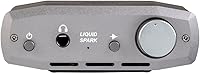
  • Headphone Output: A single 1/4-inch (6.35mm) stereo headphone jack is located on the front panel.
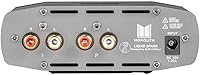
  • Audio Inputs: One pair of stereo RCA inputs is provided on the rear panel for connection to a DAC or other line-level source.
  • Preamp Output: A pair of RCA preamp outputs on the rear panel is controlled by the front-panel volume potentiometer, suitable for driving powered speakers.
  • Signal Path: The amplifier uses a DC-coupled topology with no capacitors in the signal path from input to output.
  • Input Stage: The differential input stage uses laser-matched, low-noise JFETs to minimize distortion and channel variation.
  • Output Stage: High-performance MOSFETs are used in the output stage to deliver clean amplification from a compact circuit footprint.
  • THD+N (1Vrms): Total harmonic distortion plus noise measures 0.007% at 1kHz and 1Vrms (approximately 20mW output).
  • THD+N (5Vrms): At 5Vrms (approximately 530mW), THD+N rises to 0.035% at 1kHz, remaining well within acceptable limits for listening use.
  • Signal-to-Noise: The signal-to-noise ratio is rated at 108dB, indicating a very low noise floor relative to maximum output.
  • Power Supply: The unit operates on 18V DC external power with a supply current draw of 72 milliamps.
  • Mounting Type: The amplifier is a freestanding desktop unit and requires no rack mounting or permanent installation.
  • Certifications: The product meets FCC and ICES-003 electromagnetic compliance standards for use in North America.
  • Warranty: Monoprice provides a one-year repair warranty and a 30-day money-back guarantee from the date of purchase.
  • Manufacturer: Designed by audio engineer Alex Cavalli and manufactured by Monoprice under the Monolith product line.
  • Model Number: The official model number is 133304, first made available in October 2018.

Related Reviews
LOXJIE A30
LOXJIE A30
79%
86%
Sound Quality
82%
Build Quality
91%
Value for Money
89%
Input Versatility
63%
Bluetooth Performance
More
Riworal P2 Portable Headphone Amplifier
73%
74%
Build Quality
83%
Value for Money
68%
Audio Quality
88%
Input Connectivity
71%
Battery Life
More
Oneme Portable Headphone Amplifier
85%
88%
Sound Quality
93%
Battery Life
91%
Portability & Weight
85%
Build Quality
87%
Ease of Use
More
Donner EM2 Headphone Amplifier
85%
91%
Audio Performance
89%
Portability
92%
Battery Life
87%
Build Quality
85%
Connectivity (Inputs/Outputs)
More
Fifine N6 4-Channel Headphone Amplifier
77%
88%
Audio Signal Clarity
93%
Individual Volume Control
76%
Build Quality
91%
Value for Money
84%
Ease of Setup
More
Questyle M15i
Questyle M15i
82%
93%
Sound Quality
91%
DAC Performance
88%
Build Quality
92%
Balanced Output (4.4mm)
79%
Device Compatibility
More
LiNKFOR MA400 Headphone Amplifier
85%
88%
Sound Quality
91%
Portability and Weight
84%
Ease of Use
86%
Volume Control Flexibility
80%
Build Quality
More
LZSIG LHA1 4-Channel Headphone Amplifier
82%
88%
Audio Clarity
84%
Build Quality
91%
Value for Money
93%
Ease of Setup
87%
Channel Independence
More
Monoprice Unity Power Amplifier 450W
87%
94%
Power Output
87%
Build Quality
90%
Ease of Setup
82%
Heat Management
88%
Reliability
More
eSynic Headphone Amplifier
81%
83%
Sound Clarity
88%
Gain Switch Usefulness
79%
Build Quality
74%
Battery Life
91%
Value for Money
More

FAQ

You will need a source with RCA outputs, so a standalone DAC is the most practical pairing for a PC setup. Most computers do not have RCA outputs, meaning a USB DAC sitting between your computer and the amp is the standard configuration. Entry-level DACs from brands like Schiit, JDS Labs, or Topping pair well with the Liquid Spark without breaking the budget.

Yes, this is actually one of the most frequently recommended pairings in the user community. The HD 6XX and HD 650 sit at 300 ohms, and the Cavalli-designed amplifier handles them confidently without running out of headroom at normal listening levels. Many owners specifically bought the amp with this combination in mind and report very satisfying results.

It is real but context-dependent. The issue appears at the very lowest positions of the volume pot — the first few degrees of rotation — where one channel can be slightly louder than the other. If you typically listen at low-to-moderate volumes and your headphones are not extremely sensitive, you will likely never hit that range. Owners of high-efficiency headphones who prefer near-silent listening levels are the most likely to notice it in practice.

Technically the preamp outputs are active whenever the amp is on, so sound will pass to both simultaneously. In practice, most users simply turn the powered speakers off or down when switching to headphones. There is no hardware mute switch for one output or the other, so a little manual management is part of the workflow.

The sweet spot is roughly 32 to 300 ohms for dynamic headphones, which covers the vast majority of popular full-size models. Very low impedance headphones under 32 ohms generally work but may expose the slight noise floor that sensitive drivers can detect. Very high impedance or low-sensitivity planar magnetic headphones may require the volume pot to be pushed higher than comfortable, suggesting a more powerful amp might serve them better.

No, an RCA cable is not included, which is worth knowing before your order arrives. You will need at least one RCA stereo cable to connect a DAC or other source. They are inexpensive and widely available, but it is an easy thing to forget if you are new to this type of setup.

With most full-size dynamic headphones, the background is effectively silent at idle — one of the things owners consistently appreciate about this amp. The exception is high-sensitivity in-ear monitors, which can reveal a faint hiss due to their low noise threshold. If you exclusively use IEMs, this desktop amp is not the most ideal match.

The chassis gets mildly warm to the touch after an hour or more of continuous use, which is completely normal for a Class A-influenced analog amplifier design. It does not get hot enough to cause concern, and there are no reported heat-related reliability issues among long-term owners. Leaving it on for a full workday is not unusual for regular users.

Only if your turntable has a built-in phono preamp stage or you have a separate phono preamp in your signal chain. The amp accepts line-level RCA signals and has no phono stage of its own, so a raw cartridge output will sound extremely quiet and thin without proper RIAA equalization upstream.

Monoprice covers the amp with a one-year repair warranty and a 30-day money-back guarantee. For warranty claims, you would contact Monoprice support directly — response times and claim experiences have been generally positive for domestic US buyers, though a few international customers have reported longer resolution timelines. The 30-day return window at least gives new buyers a reasonable trial period to confirm the amp suits their needs.