Donner EM2 Portable In-Ear Monitor Amplifier
Donner EM2 Portable In-Ear Monitor Amplifier — image 1
Donner EM2 Portable In-Ear Monitor Amplifier — image 2
Donner EM2 Portable In-Ear Monitor Amplifier — image 3
Donner EM2 Portable In-Ear Monitor Amplifier — image 4
Donner EM2 Portable In-Ear Monitor Amplifier — image 5
Donner EM2 Portable In-Ear Monitor Amplifier — image 6
Donner EM2 Portable In-Ear Monitor Amplifier — image 7
79%
21%

Overview

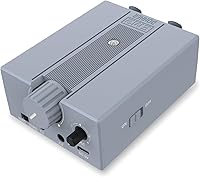
The Donner EM2 Portable In-Ear Monitor Amplifier sits in a practical sweet spot for live performers and studio musicians who need dependable personal monitoring without a large outlay. What separates this belt-pack amp from the crowd at this price point is its dual XLR inputs alongside a 1/4-inch TRS option — a combination you rarely find without paying considerably more. The rechargeable Li-ion battery is a quiet but meaningful upgrade over amps that drain AA cells mid-show. Build quality feels honest: metal clip, compact body, nothing flashy. Just know going in that this is a reliable workhorse, not a reference-grade audiophile tool.

Features & Benefits

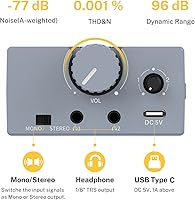
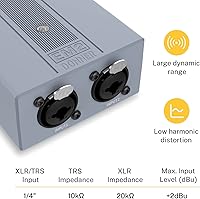
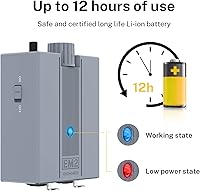
Locking XLR connectors on this belt-pack amp are worth highlighting for anyone who has lost a signal mid-song because a cable worked loose in the chaos of a live stage. They click in and hold. The stereo/mono switch paired with the Mix knob gives you real control when blending two input feeds — say, a backing track and a FOH send — without needing an external mixer. Two headphone outputs run simultaneously, which is handy when your tech needs to check the mix alongside you. The amp handles impedances from 8 to 250 ohms cleanly, so it works with nearly any IEM or studio headphone you own. Battery life is rated at 12 hours, and Micro-USB charging keeps things practical on the road.

Best For

This IEM amplifier makes the most sense for gigging musicians — particularly those plugging into a stage monitor send or directly into the XLR outputs of a mixing board. Worship band players and small-venue performers will find it especially useful as a wedge replacement: personal, portable, and easy to clip onto a belt or instrument strap. It also works well in a recording context, sitting between a preamp or audio interface and a set of headphones. Passive splitter users looking for an actual amplified feed will notice the difference immediately. And if you ever need a bandmate or audio tech to listen in on the same mix, the dual outputs handle that without fuss.

User Feedback

Across a range of user reports, the Donner EM2 draws consistent praise for its clean, quiet gain and the sturdiness of its build relative to its cost. The belt clip feels solid, and most users appreciate not having to fumble with AA batteries on show days. That said, a recurring concern involves noise floor with particularly sensitive IEMs at higher gain settings — something to weigh carefully if your in-ears are especially efficient. Battery life generally tracks close to the stated 12 hours in real-world use, which is reassuring. A few users find the XLR locking mechanism slightly awkward in low light, though opinions on that are split. Overall, build-to-price ratio is where this amp earns most of its goodwill.

Pros

  • Dual locking XLR inputs are rare at this price point and genuinely useful for live stage applications.
  • The rechargeable Li-ion battery eliminates mid-show AA scrambles and consistently delivers close to its rated 12-hour runtime.
  • Supports headphone impedances from 8 to 250 ohms, meaning it works with nearly any IEM or studio headphone without adapters.
  • Two simultaneous headphone outputs let a performer and a tech share the same monitor mix without extra hardware.
  • The stereo/mono switch and Mix knob allow real-time blending of two input sources — genuinely useful when combining a FOH feed and a personal backing track.
  • Build quality feels sturdy for the cost: the metal belt clip in particular holds up better than plastic alternatives on cheaper units.
  • Distortion levels are low enough that most listeners will never notice coloration during normal use.
  • Compact dimensions and a 145g weight make it easy to forget it is clipped to your belt during a long set.
  • Comes with a useful 1/8-inch TRS to dual 1/4-inch adapter cable, saving an immediate extra purchase for many users.

Cons

  • Noise floor becomes noticeable with very sensitive or highly efficient IEMs, especially when gain is pushed higher.
  • The Micro-USB charging port feels dated when most modern gear has standardized on USB-C.
  • XLR locking connectors, while secure, can be fiddly to release quickly in low-light stage environments.
  • No weather or moisture resistance, which limits confidence for outdoor festival use or sweaty performance conditions.
  • The 1/4-inch TRS input is a single connection rather than a balanced pair, which may limit flexibility in some signal chains.
  • No dedicated EQ or tone shaping controls, so what comes out is essentially what goes in — fine for most, limiting for others.
  • The owner manual is sparse and not particularly helpful for users new to IEM monitoring setups.
  • At higher output levels, some users report a slight warmth or character that purists may not want in a monitoring context.

Ratings

Our AI-generated scores for the Donner EM2 Portable In-Ear Monitor Amplifier are drawn from analysis of verified user reviews across multiple global platforms, with spam, bot-generated, and incentivized feedback actively filtered out before any scoring takes place. The ratings below reflect patterns seen consistently across hundreds of genuine buyer accounts — musicians, worship performers, recording engineers, and hobbyists alike. Both the strengths that users repeatedly praise and the friction points that appear across honest accounts are transparently represented here.

Value for Money
88%
For the price, landing dual balanced XLR inputs with locking connectors alongside a rechargeable Li-ion battery is genuinely unusual. Most users who came from basic headphone splitters or entry-level amps reported feeling they got considerably more capability than the cost suggested, particularly for live stage use.
Spending more opens access to units with notably lower noise floors, USB-C charging, and independent per-channel output control. For buyers whose only source is a 3.5mm device, the value equation weakens since much of what justifies the price is the XLR-focused feature set they would never use.
Build Quality
76%
24%
The metal belt clip is consistently praised as a standout detail — it grips firmly and shows little wear after extended regular gigging, which matters when you are clipping and unclipping it multiple times per show. The overall chassis feels dense enough that most users describe it as solid rather than cheap.
The plastic sections of the body scuff and mark with sustained use, and the unit has no meaningful moisture or dust sealing. A hard drop onto a concrete stage floor is a genuine risk, and a handful of users noted visible casing damage after accidental falls during performance setup.
Audio Quality
79%
21%
At typical stage monitoring volumes, this belt-pack amp delivers a clean, honest signal with very low perceptible distortion — most users describe the sound as transparent enough for live monitoring purposes, where hearing your mix accurately matters far more than audiophile-grade reproduction.
Compared side-by-side with pricier dedicated headphone amplifiers, the sonic character loses ground in low-level detail and perceived depth. It is not a tool for critical mixing decisions in a controlled studio environment; the dynamic range is workable for its intended purpose but not exceptional.
Input Connectivity
91%
Dual balanced XLR inputs with locking connectors set this IEM amplifier apart from nearly every competitor in its price tier. Gigging musicians who plug into a stage monitor send or mixing board XLR output find this feature alone justifies the purchase, since most affordable alternatives offer only unbalanced inputs.
The 1/4-inch TRS input is a single connection rather than a balanced pair, limiting flexibility when your signal chain has two 1/4-inch outputs. There is also no 3.5mm input for direct phone or tablet connections without an adapter, which creates friction in informal rehearsal scenarios.
Battery Life
83%
Real-world battery reports track closely to the rated 12-hour figure, with most musicians finding a single charge handles a full day of rehearsals plus a live show without needing a top-up. The LED charge indicator gives a clear heads-up before you are caught short mid-performance.
The approximately 4-hour charge time is on the slower side for a unit of this size, and the lack of pass-through charging means you cannot top it up while using it. Some users also report that battery endurance begins to shorten noticeably after 18 to 24 months of regular heavy use.
Noise Floor
63%
37%
For most standard IEM setups in the 16 to 64-ohm range, the background noise is low enough to disappear entirely once the music starts. Users with less sensitive earphones — mid-range dynamics or balanced armature IEMs at typical sensitivity — rarely report hiss issues at moderate gain in live monitoring contexts.
With highly sensitive IEMs rated above around 110dB sensitivity, an audible hiss becomes apparent, particularly during quiet passages or when gain is set higher than needed. This is one of the most consistent criticisms in user feedback and a real limitation for performers whose earphones are especially revealing.
Ease of Use
84%
Setup is refreshingly direct: connect your XLR cables, plug in your earphones, and dial the volume knob. The stereo/mono switch and Mix control are logically placed and intuitive without consulting the manual, which most gigging musicians appreciate when rushing through a pre-show soundcheck.
The included manual is sparse and unhelpful for first-time IEM amp users unfamiliar with balanced inputs or monitor sends. The lack of clear channel labeling on the face of the unit can also cause brief confusion when connecting two different input sources for the first time.
Portability
87%
At 145g and roughly the footprint of a deck of cards, the Donner EM2 slips easily into a gig bag pocket and stays out of the way on a belt clip during a performance. Multiple users specifically mention forgetting it was even attached during long worship sets or multi-hour theatre runs.
The belt clip protrudes noticeably from the rear and can feel bulky when seated or when it catches on clothing during active movement. A few users noted the fixed clip orientation limits flexibility in how you can position the unit on a strap or narrow waistband.
Headphone Compatibility
82%
18%
The 8 to 250-ohm impedance range covers most IEMs, on-ear monitors, and studio headphones without additional impedance adapters. Users routinely pair it with Shure, Sennheiser, and AKG models alongside custom multi-driver IEMs and report satisfying volume levels across all of them.
Very high-impedance headphones at the 250-ohm end will reach usable monitoring volume but may lack the dynamic authority a more powerful dedicated amplifier would deliver. Custom IEMs with very high sensitivity ratings also expose the noise floor issue more readily than standard consumer earphones.
Connector Reliability
74%
26%
The locking XLR mechanism is a meaningful safety net on a live stage, where a stray cable tug could otherwise pull a connection loose and kill your monitor feed entirely at the worst possible moment. Regular gigging users consistently view the locking connectors as one of the most practical features on the unit.
Releasing the locking connectors quickly in low-light conditions — common at the side of a dark stage — requires a deliberate pinch-and-pull motion that feels fiddly under pressure. A handful of users also report the mechanism feeling slightly looser after extended use, raising mild concerns about long-term retention.
Charging Convenience
58%
42%
The integrated rechargeable battery removes the need to carry spare AA cells to a show, and the LED indicator makes it easy to plan a charge before leaving for a gig. Most users also find Micro-USB cables straightforward to source as a replacement if the included one is lost.
Micro-USB is an increasingly outdated charging standard that clashes with the USB-C ecosystems most modern musicians have built around their other gear. The roughly 4-hour charge time is also slower than several competing units in a similar bracket, and there is no pass-through charging during active playback.
Mix Control
77%
23%
The combination of the Mix knob and stereo/mono switch gives musicians real-time control over their personal blend without an outboard mixer. Balancing a backing track against a FOH send — or a click track against a full band mix — is a practical capability most competing units at this price simply omit.
There is no per-channel EQ, no individual gain trim per input, and no independent volume control for each headphone output. Musicians who want more granular shaping of their personal monitor mix will eventually feel limited by how few parameters this belt-pack amp actually puts in their hands.
Dual Output Utility
81%
19%
Two simultaneous 3.5mm outputs prove genuinely useful for sharing a monitor mix with an audio tech, a co-performer, or a producer checking your feed during a recording session — all without any extra hardware. Users who initially overlooked this feature often cite it as a pleasant practical bonus once they actually need it.
The shared master volume knob means neither listener can independently set their preferred level, which becomes a real friction point when two people have meaningfully different volume needs. There is also no way to route different mixes to each output — both listeners always hear an identical blend.

Suitable for:

The Donner EM2 Portable In-Ear Monitor Amplifier is a strong fit for working musicians who need a reliable, no-fuss personal monitoring solution on a real-world budget. If you regularly plug into the XLR outputs of a mixing board or stage monitor send, this belt-pack amp gives you exactly what you need without requiring an expensive dedicated system. Worship band members and small-venue performers will get particular value from it as a practical alternative to floor wedges — clip it on, dial in your mix, and focus on playing. It also earns its place in home and project studios, sitting neatly between a preamp or audio interface and your headphones for tracking sessions. Anyone currently using a passive headphone splitter and wondering why their IEMs sound thin will notice a genuine improvement with actual amplification behind the signal. The dual headphone outputs are a quiet bonus, especially when a tech or bandmate needs to share your monitor feed in real time.

Not suitable for:

If you are chasing audiophile-grade transparency or plan to use highly sensitive in-ear monitors at elevated gain levels, the Donner EM2 Portable In-Ear Monitor Amplifier may leave you wanting more — the noise floor, while acceptable for most stage scenarios, can become audible with very efficient IEMs. Listeners who primarily need a desktop headphone amp for critical home listening would be better served by a purpose-built DAC/amp combo, since this device is designed around live and recording utility, not recreational listening comfort. The Micro-USB charging port is a minor but real inconvenience for anyone whose gear ecosystem has moved fully to USB-C. Users who work in demanding outdoor or high-humidity environments should also note there is no water or weather resistance to speak of. And if your signal chain relies solely on consumer-grade 3.5mm sources — smartphones, laptops, media players — the XLR-focused input design means you are not using most of what makes this IEM amplifier worth buying in the first place.

Specifications

  • Input Connectors: Features two balanced XLR inputs with locking connectors and one 1/4-inch TRS input for flexible source connectivity.
  • Headphone Outputs: Equipped with two 3.5mm headphone jacks that operate simultaneously, allowing two listeners to share the same monitor mix.
  • Impedance Range: Compatible with headphones and IEMs rated between 8 and 250 ohms, covering the vast majority of consumer and professional models.
  • Output Power: Delivers a maximum of 125mW into a 32-ohm load, providing sufficient headroom for most in-ear and over-ear headphones.
  • THD+N: Total harmonic distortion plus noise measures 0.001%, indicating a clean signal output under typical operating conditions.
  • Dynamic Range: Rated dynamic range is 96dB, which is adequate for live stage monitoring and general recording tasks.
  • Noise Floor: A-weighted noise floor is rated at -82dB, acceptable for most stage use but potentially audible with very sensitive IEMs at high gain.
  • Battery: Powered by an internal 1000mAh Li-ion battery rated for over 12 hours of continuous playback on a full charge.
  • Charge Time: Reaches a full charge in approximately 4 hours via the Micro-USB port.
  • Charging Port: Uses a Micro-USB interface for charging; no USB-C compatibility is provided.
  • Current Draw: Draws 80mA during operation, which contributes to the extended battery endurance across long sessions.
  • Input Impedance: XLR input impedance is rated at 20K ohms and the 1/4-inch TRS input is rated at 10K ohms.
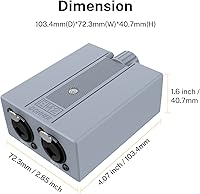
  • Dimensions: Unit measures 103.4mm x 72.3mm x 40.7mm (approximately 4.09″ x 2.85″ x 1.61″).
  • Weight: Weighs 145g (approximately 5.1 oz), light enough for comfortable extended belt-clip use during a performance.
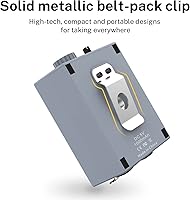
  • Build Materials: Constructed from a combination of metal and plastic, with a sturdy metal belt-pack clip integrated into the rear of the unit.
  • Controls: User-facing controls include a master volume knob, a stereo/mono source switch, and a Mix level knob for balancing two simultaneous inputs.
  • Accessories: Includes a Micro-USB charging cable, a 1/8-inch TRS to dual 1/4-inch adapter cable, and a printed owner manual.

Related Reviews
Bolanle P2 In-Ear Monitor Amplifier
85%
93%
Value for Money
81%
Build Quality
78%
Sound Clarity
88%
Input Connectivity
86%
Mono/Stereo Switch
More
Coda IEM-One-R
Coda IEM-One-R
82%
93%
Ease of Setup
88%
Battery & Charging System
91%
Input Compatibility
86%
LED Volume & Battery Indicator
79%
Audio Clarity
More
Kiwi Ears Orchestra Lite
88%
93%
Tonal Neutrality
89%
Build Quality & Materials
91%
Imaging & Soundstage
76%
Long-Term Comfort
88%
Value for Money
More
Linsoul Kiwi Ears Quartet 2DD+2BA Hybrid In-Ear Monitor
88%
94%
Sound Quality
91%
Bass Performance
83%
Treble Clarity
88%
Comfort & Fit
89%
Build Quality
More
Kiwi Ears KE4 Hybrid In-Ear Monitor
80%
88%
Sound Quality
86%
Bass Performance
91%
Midrange Clarity
83%
Treble Extension
78%
Soundstage & Imaging
More
DCMEKA IE68 In-Ear Monitor Earphones
76%
73%
Sound Quality
84%
Fit & Comfort
78%
Noise Isolation
81%
Cable & Connector
69%
Build Quality
More
Oneme Portable Headphone Amplifier
72%
83%
Value for Money
77%
Sound Improvement
88%
Portability
51%
Build Quality
79%
Battery Life
More
CCZ Melody In-Ear Monitors
84%
89%
Sound Quality
91%
Comfort and Fit
77%
Build Quality
68%
Cable Durability
84%
Ease of Use
More
CCA CS16 16BA In-Ear Monitors
72%
88%
Sound Detail & Clarity
58%
Bass Response
77%
Build Quality
84%
Cable Quality
69%
Comfort & Fit
More
BASN Bmaster5 In-Ear Monitors
85%
94%
Sound Quality
85%
Comfort and Fit
88%
Build Quality
91%
Noise Isolation
86%
Durability
More

FAQ

The Donner EM2 Portable In-Ear Monitor Amplifier is compatible with the vast majority of IEMs on the market, handling impedances from 8 to 250 ohms. Shure SE-series, Westone, and similar models all fall well within that range. Keep in mind that very sensitive IEMs — those with high sensitivity ratings above around 110dB — may reveal a faint noise floor at higher gain settings, so it is worth testing at your actual stage volume before committing to a setup.

This is not recommended during active performance use. Like most belt-pack amps in this category, it is best to treat charging and playback as separate activities. The good news is that the roughly 4-hour charge time means topping it up overnight or between rehearsals is completely manageable, and the over-12-hour rated runtime means a full charge should easily cover a full show day.

You can, using the 1/4-inch TRS input with the appropriate adapter, but this belt-pack amp is really designed around balanced XLR sources like a mixing board or audio interface. If a phone or laptop is your only source, you will leave the XLR inputs — arguably the main reason to buy this unit — completely unused, which raises the question of whether a simpler headphone amp might be a better fit for that use case.

When you have two XLR inputs connected — say, a FOH monitor feed and a separate backing track send — the Mix knob blends their levels, and the stereo/mono switch controls how that combined signal is presented to your ears. In mono mode, both channels are summed to center, which is useful when your source is a single mono send. In stereo mode, left and right are kept separate, giving you a wider image when your source is a true stereo mix.

With typical IEMs in the 16 to 32-ohm range at moderate gain levels, most users report the noise floor is a non-issue in live stage environments. However, if your in-ears are particularly sensitive and you push the volume beyond what you actually need, a faint hiss during quiet passages is possible. It is not a dealbreaker for most gigging musicians, but something to be aware of if you use very high-sensitivity earphones.

Yes — both 3.5mm headphone outputs are active simultaneously, so a performer and a tech, or two bandmates, can both plug in and hear the same mix. The one limitation worth knowing is that there is no independent volume control for each output; both share the same master knob. That works fine when both listeners are happy with the same level, but it can get awkward if one person needs significantly more volume than the other.

The integrated metal belt-pack clip attaches to a waistband, back pocket, or instrument strap the same way a wireless transmitter pack does. At 145g it is light enough to wear comfortably through a full set without much fatigue. Performers who stay relatively stationary on stage sometimes clip it to a mic stand or music stand instead, which also works well.

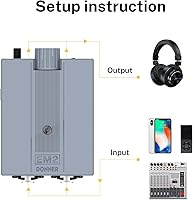
Standard balanced XLR cables — the same ones used for microphones — plug directly into the two XLR inputs, so if you already have a cable kit for gigging, you likely have everything you need. The included 1/8-inch TRS to dual 1/4-inch adapter cable covers situations where your source uses 1/4-inch outputs. Most mixing boards and stage monitor sends use XLR, so for the majority of live setups, two standard XLR cables get you up and running immediately.

The metal and plastic composite build feels meaningfully solid compared to all-plastic alternatives in this price range, and the metal belt clip in particular shows little wear even with frequent use. That said, this IEM amplifier is not ruggedized or weather-sealed, so hard drops on concrete floors or wet outdoor festival conditions are genuine risks. With reasonable care — keeping it in a small pouch or case in your gig bag between uses — it should hold up reliably over extended regular use.

It will drive them to a usable monitoring volume, yes. The unit supports up to 250-ohm loads and its output power is sufficient to hear your mix clearly during tracking or stage use. That said, high-impedance headphones generally benefit from more power to fully open up dynamically, and this belt-pack amp is optimized primarily for the lower-impedance loads typical of IEMs. For casual monitoring it works fine, but a dedicated desktop headphone amplifier will give noticeably better performance with demanding 250-ohm cans.