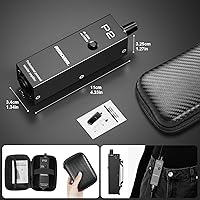

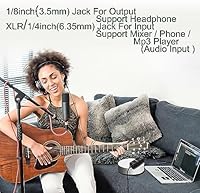
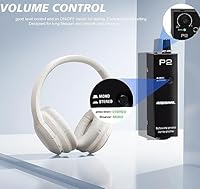
Overview

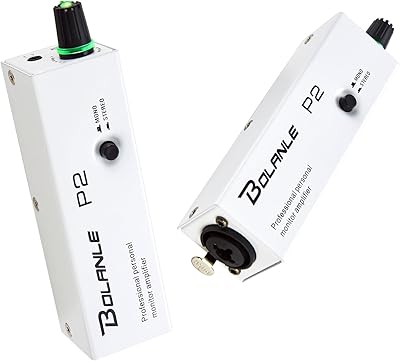
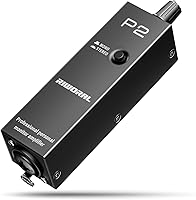
The Riworal P2 Portable Headphone Amplifier is a compact, battery-powered monitor amp built for musicians who need a dependable personal monitoring solution without lugging around rack gear. What separates it from cheap consumer alternatives is the XLR/TRS combo input with a locking mechanism — a detail that actually matters when you're on stage. The aluminum housing keeps things light while still feeling solid in hand. Worth noting upfront: AAA batteries are not included in the box, even though the unit runs on them, so plan accordingly before your first rehearsal.

Features & Benefits

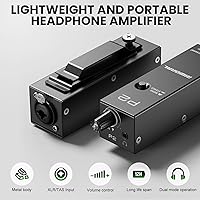
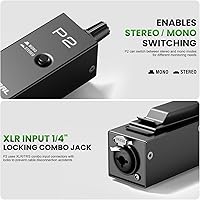
The locking XLR input is the standout practical feature here — it physically secures your cable so a stray tug mid-set won't kill your monitor feed. A mono/stereo toggle adds real flexibility, useful when your source is mono but you want it spread across both ears. Runtime stretches to around 12 hours on a fresh set of AAA batteries, which comfortably covers a full gig or long rehearsal. The 3.5mm output handles everything from budget earbuds to high-impedance headphones up to 600 ohms, giving the P2 amp more headroom than its price suggests.

Best For

This personal headphone booster makes the most sense for gigging musicians who rely on in-ear monitors and need a lightweight, pocketable amp they can clip to a belt or drop in a gear bag. Singers, instrumentalists, and even audio engineers doing quick field monitoring work will find it fits their workflow without adding bulk. It also works well as a first dedicated headphone amp for someone stepping up from plugging straight into a phone or cheap mixer. Anyone who regularly switches between XLR and TRS sources will particularly appreciate having both inputs on one device.

User Feedback

Buyers tend to praise the build quality relative to the price, noting the metal housing feels more substantial than expected at this tier. The mono/stereo switch gets mixed reactions — experienced users find it genuinely handy, while some newcomers find the labeling a bit unclear at first. A recurring complaint involves the AAA battery requirement, since many buyers would prefer a built-in rechargeable cell. Audio quality feedback is generally positive for the price range, with users reporting a noticeable improvement over headphone jacks on mixers or phones. A small number of longer-term users have raised questions about locking mechanism durability after extended use.

Pros

  • Locking XLR input physically secures your cable, preventing accidental disconnects mid-performance.
  • Accepts both XLR and TRS sources from a single combo jack, reducing the need for adapters.
  • Aluminum housing feels substantially more durable than comparable plastic-bodied amps at this price.
  • Up to 12 hours of battery life reliably covers full rehearsals and multi-set gigs.
  • Drives headphones up to 600 ohms, giving the P2 amp real versatility across different IEM and headphone types.
  • Mono/stereo toggle lets you adapt a single mono stage feed for comfortable two-ear monitoring on the fly.
  • Compact and light enough to slip into a gig bag pocket without adding noticeable bulk.
  • Noticeable audio improvement over smartphone and budget mixer headphone outputs in live monitoring contexts.
  • USB-C charging cable and power plug included, so mains-powered studio use requires no extra accessories.
  • Straightforward controls mean setup takes seconds, with no apps, drivers, or pairing required.

Cons

  • AAA batteries are not included in the box, which is an easy oversight that can catch you out before a show.
  • No built-in rechargeable battery means ongoing running costs and the need to carry spares on tour.
  • No low-battery indicator, so signal dropout is your only warning that power is nearly exhausted.
  • Background hiss is noticeable at higher volume settings, particularly with sensitive low-impedance IEMs.
  • The mono/stereo switch label is small and difficult to read under typical stage lighting conditions.
  • Volume and gain share a single knob, leaving no way to fine-tune signal level independently from listening volume.
  • The locking collar on the XLR input can be stiff to disengage quickly during fast teardowns after a gig.
  • Long-term reliability of the toggle switch and volume knob has been questioned by users past the one-year mark.
  • Brand support outside the Amazon platform is inconsistent and warranty terms are not clearly documented.

Ratings

The Riworal P2 Portable Headphone Amplifier has been evaluated by our AI system after processing verified buyer reviews from multiple global markets, with spam, bot activity, and incentivized feedback actively filtered out. Scores reflect a balanced picture of where this portable monitor amp genuinely delivers for gigging musicians and where it falls short — no sugar-coating, no inflated numbers.

Build Quality
74%
26%
For a budget-tier personal amp, the aluminum housing surprises a lot of buyers. It feels more rigid than comparable plastic-bodied alternatives, and most users report it surviving the rough handling of regular gig bags and transit cases without visible wear.
The plastic elements around the input jacks and toggle switch feel noticeably cheaper than the metal shell itself. A few buyers noted slight wobble in the mono/stereo switch after several weeks of regular use, which raises questions about long-term durability.
Value for Money
83%
At its price point, the combination of a locking XLR input, 600-ohm impedance rating, and aluminum housing is hard to argue with. Most buyers feel they got noticeably more than they expected, especially those upgrading from plugging IEMs directly into a cheap mixer output.
The omission of AAA batteries from the box stings a little when you factor in the total cost of ownership, and buyers who need a rechargeable built-in cell will need to look elsewhere. The value equation weakens slightly for anyone already owning a better-specified amp in a similar price range.
Audio Quality
68%
32%
Users consistently report a cleaner, fuller signal compared to the headphone outputs on entry-level mixers or smartphones. For stage monitoring purposes, the improvement in clarity and volume headroom is real and noticeable, particularly with in-ear monitors at moderate impedance levels.
Audiophiles and studio-focused buyers will find the output noticeably thin at the frequency extremes. Background hiss is reported at higher gain settings, and the overall sound signature is functional rather than refined — adequate for live monitoring but not suited to critical listening sessions.
Input Connectivity
88%
The XLR/TRS combo jack with its locking mechanism is the feature buyers mention most positively. On a busy stage, the ability to physically lock in your XLR cable removes a genuine anxiety — one less thing to worry about mid-performance when cables get bumped or pulled.
There is only one input, so users who want to blend two sources simultaneously will need an external solution. A small number of buyers also reported that the locking collar required more force to disengage than expected, which can be awkward when breaking down gear quickly after a show.
Battery Life
71%
29%
The claimed 12-hour runtime holds up reasonably well under real-world testing, with most users hitting the 10 to 12 hour range on a fresh set of alkaline AAAs. That comfortably covers a full day of rehearsals or back-to-back gig sets without needing to swap batteries.
The reliance on AAA batteries is a consistent frustration. Buyers who travel frequently or play regular shows find the ongoing battery cost adds up, and there is no low-battery indicator to warn you before the signal drops. The USB-C charging port powers the unit from mains but does not charge internal batteries.
Portability & Size
91%
At under 10 ounces and roughly the footprint of a small paperback, this personal headphone booster genuinely disappears into a gig bag or coat pocket. Musicians who already carry heavy gear appreciate how little space and weight it adds to their setup.
The size advantage is slightly offset by the need to carry spare AAA batteries as backup. The unit has no clip or attachment point, so securing it to a belt or microphone stand requires a separate solution like velcro or a pouch.
Ease of Use
82%
18%
Setup is straightforward — plug in your source, plug in your headphones, set mono or stereo, adjust the volume knob. Most buyers had it running within a minute of unboxing, with no driver installation or app pairing required.
The mono/stereo switch labeling is small and hard to read in low stage lighting, which has caught out several first-time users mid-performance. The manual is basic and does not explain the impedance matching implications clearly for newcomers to headphone amplification.
Headphone Compatibility
77%
23%
The 600-ohm impedance ceiling means the P2 amp can drive a wider range of headphones than most smartphone outputs or mixer headphone jacks. Users with mid-impedance studio headphones in the 80 to 250 ohm range report solid, consistent volume levels without strain.
At the extreme end of the impedance range, some users found the output power insufficient to drive 600-ohm headphones to comfortable listening levels in louder stage environments. Very low-impedance IEMs sometimes exhibit a faint noise floor at higher volume settings.
Mono/Stereo Switching
66%
34%
For users working with mono XLR sources who want a natural stereo spread in both ears, the toggle is a genuinely useful feature. Sound engineers doing quick field monitoring checks particularly appreciate being able to switch modes on the fly without rewiring.
The switch position is easy to bump accidentally, which has caused confusion for several buyers who thought their signal had died. There is no visual indicator beyond the physical switch position itself, making it hard to confirm the current mode without careful inspection.
Durability Over Time
61%
39%
Short to medium-term feedback on durability is largely positive, with most buyers reporting the unit performs consistently after months of regular gigging. The metal chassis holds up well against the cosmetic wear and minor impacts typical of live performance environments.
Longer-term reliability data is limited given the product's relatively recent market entry. The few users who have owned the unit for over a year report occasional inconsistency in the locking mechanism and volume knob smoothness, suggesting internal component quality may not match the external build.
In-Box Contents
58%
42%
Including both a 5V power plug and a USB-C cable means buyers can power the unit from mains in a studio or rehearsal room without immediately needing batteries, which is a practical touch for stationary use cases.
The absence of AAA batteries is the most commonly flagged omission in buyer reviews, especially given that the product is marketed as portable and ready for live use. The included manual is thin on technical detail, leaving users who want to understand gain staging or impedance matching to research independently.
Stage Practicality
79%
21%
The combination of a locking input, lightweight chassis, and long battery life makes the P2 amp a credible on-stage tool for performers who monitor through IEMs. It handles the basic demands of a live set reliably, without requiring any configuration beyond a volume adjustment.
The lack of a dedicated gain control separate from the volume knob limits fine-tuning options in complex monitor mixes. Users coming from more capable personal monitor amps may find the feature set too stripped back for demanding live audio scenarios.
Brand & Support
53%
47%
Riworal responds to a reasonable proportion of Amazon buyer questions and reviews, and replacement units have been issued in documented cases of early failure. The USB-C charging addition suggests the brand is iterating based on user feedback.
Brand recognition in the professional audio space is low, which makes some buyers hesitant despite the competitive specifications. Customer support response times outside of the Amazon platform appear inconsistent, and warranty terms are not prominently documented in the product listing.

Suitable for:

The Riworal P2 Portable Headphone Amplifier is a strong fit for gigging musicians — singers, instrumentalists, and small-band performers — who monitor through in-ear monitors and need a reliable personal amp without adding significant weight to their gear load. If you regularly plug into an XLR feed from a stage snake or mixing desk, the locking combo input is a practical safeguard that more expensive alternatives often overlook at this size. It also works well for audio engineers doing lightweight field work who just need a clean headphone boost away from their main rig. Budget-conscious buyers exploring their first dedicated headphone amp will find it a meaningful upgrade over the headphone socket on a smartphone or entry-level mixer. The mono/stereo flexibility adds genuine value for anyone working with both mono stage feeds and stereo studio sources across different sessions.

Not suitable for:

Buyers expecting studio-grade audio fidelity should look elsewhere — the Riworal P2 Portable Headphone Amplifier is built for live performance practicality, not audiophile listening, and the sound quality reflects that honest trade-off. If you need to drive true high-impedance headphones, such as 300-ohm or 600-ohm models, to satisfying volumes in loud stage environments, this personal headphone booster may fall short of what you need. The ongoing AAA battery requirement will frustrate anyone who prefers a rechargeable built-in cell, particularly touring musicians who do not want to manage disposable batteries on the road. There is no low-battery warning, no gain control separate from the volume knob, and no way to blend two simultaneous sources — limitations that will feel constraining for more demanding monitor setups. Anyone who needs a multi-channel solution to feed several musicians at once should know this is strictly a single-channel personal amp, regardless of any labeling confusion in the product listing.

Specifications

  • Brand: Manufactured by Riworal under the model designation P2 Headphone Amplifier.
  • Dimensions: The unit measures 5.51 x 3.94 x 1.57 inches, making it compact enough to fit in a coat pocket or small gear bag.
  • Weight: The amplifier weighs 9.1 oz (0.26 kg), keeping the load light for performers who carry substantial gear.
  • Housing Material: The outer casing is constructed from aluminum with plastic elements around the controls and jack housings.
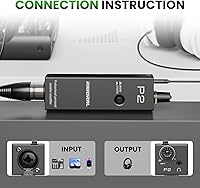
  • Input Jack: A single XLR/TRS combo jack accepts both balanced XLR and standard TRS connections, with a locking collar to secure XLR cables.
  • Output Jack: A single 3.5mm stereo headphone output jack is provided for connecting IEMs or headphones.
  • Impedance Rating: The amplifier supports headphone impedances up to 600 ohms, covering a wide range of IEMs and studio headphones.
  • Mono/Stereo Switch: A physical toggle switch allows the user to select between mono and stereo output modes to suit different source signals.
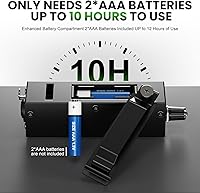
  • Battery Type: The unit is powered by AAA batteries, which are not included in the box; battery count required is not specified in official documentation.
  • Battery Life: Riworal rates battery runtime at up to 12 hours on a full set of AAA batteries under normal operating conditions.
  • Charging Port: A USB-C port is provided for powering the unit from a mains adapter; it does not recharge internal or external batteries.
  • Bluetooth: The P2 amp does not support Bluetooth or any wireless connectivity; it is a fully wired device.
  • In-Box Contents: The package includes the amplifier unit, a 5V mains power plug, a USB-to-USB-C charging cable, and a basic user manual.
  • Channels: This is a single-channel personal headphone amplifier; it is not a multi-channel distribution amp despite some listing color names suggesting otherwise.
  • Volume Control: A single rotary knob controls output volume; there is no separate gain stage or EQ adjustment.
  • Noise Cancellation: The unit offers passive noise isolation only, dependent entirely on the headphones or IEMs connected to the output.
  • Wireless Tech: RF is listed as a wireless communication technology in the product data, though the device has no active wireless functionality.
  • Date Available: The product was first listed for sale on Amazon on June 18, 2023.

Related Reviews
Oneme Portable Headphone Amplifier
85%
88%
Sound Quality
93%
Battery Life
91%
Portability & Weight
85%
Build Quality
87%
Ease of Use
More
Neoteck NTK059 Headphone Amplifier
78%
83%
Audio Clarity
88%
Gain Switch Utility
79%
Build Quality
93%
Portability
86%
Battery Life
More
LVY A010 Portable Headphone Amplifier
81%
83%
Sound Quality Improvement
91%
Portability & Form Factor
61%
Build Quality & Materials
86%
Gain Switch Effectiveness
88%
Battery Life
More
TNP Products AMP_A1343 Headphone Amplifier
77%
88%
Value for Money
71%
Audio Performance
66%
Build Quality
94%
Ease of Setup
83%
Input Flexibility
More
HiBy FC4
HiBy FC4
81%
91%
Sound Quality
93%
Balanced Output Performance
86%
Driving Power
74%
MQA Decoding
89%
Hi-Res Format Support
More
FiiO KA15
FiiO KA15
84%
93%
Sound Quality
91%
Output Power
82%
Battery Impact & Power Management
74%
EQ & App Experience
78%
Build Quality
More
Bolanle P2 Portable In Ear Monitor Amplifier
87%
88%
Sound Quality
91%
Portability
85%
Battery Life
89%
Build Quality
82%
Ease of Use
More
Questyle M15C
Questyle M15C
82%
91%
Sound Clarity
93%
Noise Floor
86%
Balanced Output Quality
83%
Build Quality
88%
Portability & Form Factor
More
FiiO Q3 MQA Portable DAC Headphone Amplifier
87%
94%
Sound Quality
91%
Battery Life (AUX)
87%
Build Quality
89%
Portability & Size
88%
Compatibility
More
iFi hip-dac2
iFi hip-dac2
81%
91%
Sound Quality
88%
Build Quality
89%
Balanced Output Performance
74%
MQA Decoding
87%
Driving Power
More

FAQ

Yes, you do. The unit runs on AAA batteries, and they are not included in the box. It is worth picking up a pack before your first rehearsal or gig, otherwise you will have nothing to power it with on arrival. You can also run it from mains power using the included USB-C cable and 5V plug if a socket is available.

Yes, the P2 amp is rated up to 600 ohms, so 250-ohm headphones are well within its range. Most users with mid-impedance headphones report solid volume levels and a clean enough signal for monitoring purposes, though this is a live performance tool rather than a studio reference amp.

When your source signal is mono — like a single XLR feed from a stage snake — the stereo setting spreads that signal across both ears so your monitoring feels natural rather than one-sided. The mono setting keeps the signal as-is. It is a handy feature for stage use, though the small label can be hard to read under dim lighting.

Yes, it accepts any standard 3-pin XLR cable. The locking collar is an added layer of security — you twist it to lock the cable in place, which prevents accidental pulls from disconnecting your feed mid-performance. To release it, you twist the collar in the opposite direction before pulling the cable out.

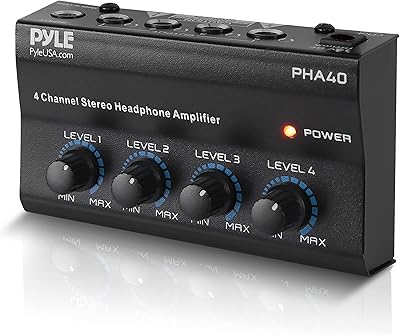
No. The Riworal P2 Portable Headphone Amplifier is a single-channel personal monitor amp with one input and one headphone output. The 4-channel reference you may have seen comes from a product listing color or variant name and does not reflect the actual channel count of this unit.

Unfortunately, there is no low-battery indicator on this amp. The first sign is usually a drop in output volume or a slight degradation in signal quality. It is a good habit to carry a spare set of AAA batteries to any performance, especially if you are unsure how much charge is left.

Yes, the combo jack accepts standard TRS jack plugs as well as XLR, so connecting it to the headphone or monitor output of an audio interface is straightforward. Just make sure your cable matches the output format of your interface.

Its compact size and wired-only design mean it should not cause any issues at airport security. The main thing to note is that if you are carrying spare AAA batteries, most airlines require loose batteries to be stored in carry-on rather than checked luggage, so keep that in mind when packing.

Not directly — there is only one 3.5mm output jack. If you need to split the signal for two sets of headphones, you would need a separate headphone splitter connected to that output, though that will reduce the available volume for each listener.

Most users notice a real improvement, particularly in volume headroom and signal clarity. Mixer headphone outputs are often underpowered and can introduce noise, especially at higher volumes. The P2 amp provides a cleaner, stronger signal path for your IEMs, which makes a meaningful difference during live monitoring when you need to hear yourself clearly over stage noise.