Overview

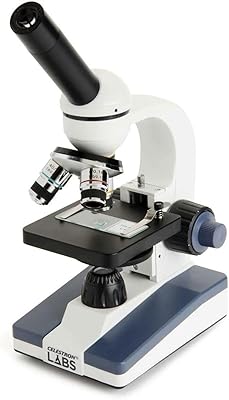
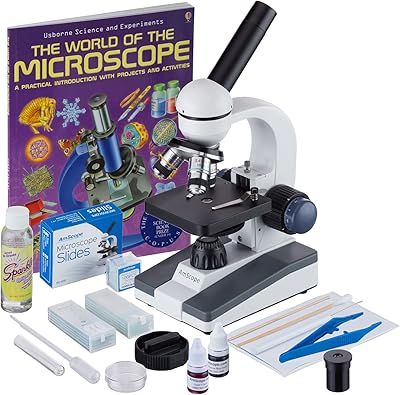
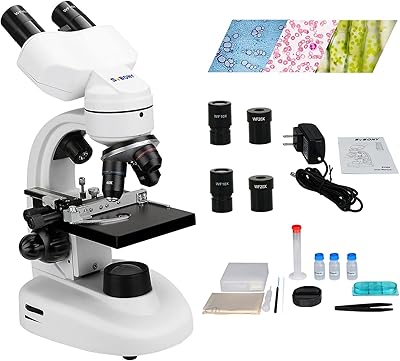
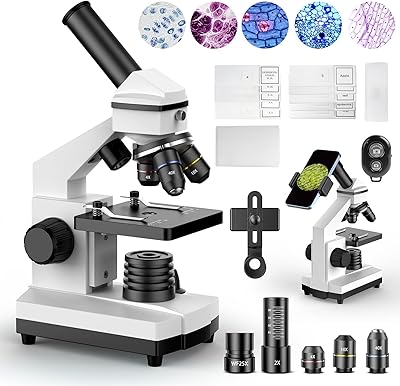
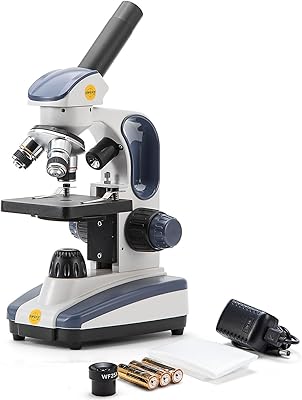
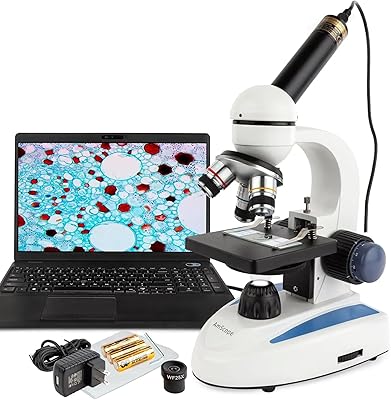
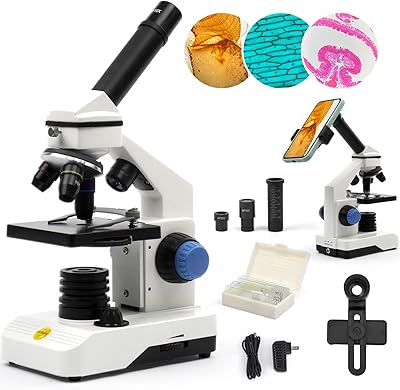
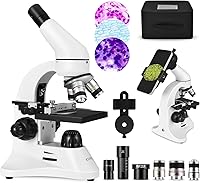
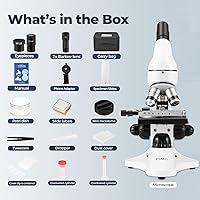
The ESAKO KO-48MP Compound Microscope sits in an interesting spot for a student-oriented optical instrument — it's built with a metal body at a price point where most competitors cut corners with plastic frames. That alone makes it feel more substantial than you'd expect. It runs on dual LED lighting, meaning you can examine both translucent slides and opaque surfaces without swapping equipment. The package includes prepared slides, blank slides, a carry bag, and a phone adapter, so you're genuinely ready to start the moment it arrives. Just be clear-eyed: this is a capable beginner science tool, not something you'd find in a university research lab.

Features & Benefits

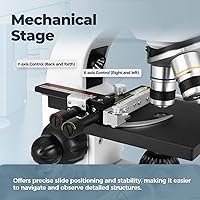
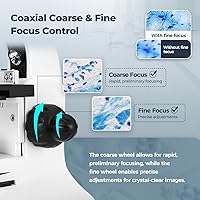
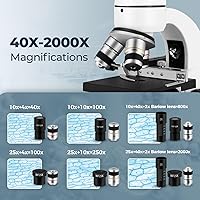
The optical range spans from 40x up to 2000x, achieved through two wide-field eyepieces, three achromatic objectives, and a 2x Barlow lens. In practice, lower to mid-range magnifications — up to around 400x — are where image quality really holds up. The mechanical stage is a genuine highlight: it lets you move slides incrementally with two control knobs, making it far less frustrating to locate a specific cell or fiber than fussing with a basic clip. The coaxial focus system, with both coarse and fine knobs, pairs well with the 45-degree tilting, fully rotating head to keep viewing sessions comfortable. A five-color filter wheel adds useful contrast flexibility depending on your specimen.

Best For

This compound microscope is a natural fit for middle and high school students working through biology assignments or independent science projects. Parents building a home learning space will appreciate that it arrives with enough accessories to start experimenting immediately — no separate slide kit purchases required. Amateur naturalists who want to examine pond water, insect parts, or leaf cross-sections will find the mid-range magnifications more than adequate. Classroom educators looking for a durable scope that can survive being packed up and transported will value the metal frame and included carry bag. Where it falls short is for anyone expecting professional-grade optics — if you need sharp, reliable imaging above 400x regularly, you'll want to budget higher.

User Feedback

Across 81 ratings, the ESAKO scope holds a 4.2 out of 5, which tells a fairly consistent story. Buyers tend to praise the build quality and the ease of getting it running — most find they're looking at specimens within minutes of unboxing. Clarity at lower magnifications earns consistent appreciation. The friction points are predictable: the advertised 2000x ceiling is technically possible, but reviewers frequently note the image becomes soft and difficult to focus at those extremes, a known limitation of optics in this tier. A few buyers flagged the battery-powered LEDs as an ongoing inconvenience. On the upside, the carry bag and pre-made slide set get repeated positive mentions for making the experience feel complete right out of the box.

Pros

  • Metal body construction feels noticeably more solid than plastic-framed competitors in the same price tier.
  • Mechanical stage makes precise slide positioning straightforward, even for first-time microscope users.
  • Dual LED illumination handles both translucent slides and opaque surface specimens without extra accessories.
  • Coaxial coarse and fine focus knobs give real control over depth without losing your specimen.
  • The 45-degree tilting, fully rotating head reduces neck and back strain during longer viewing sessions.
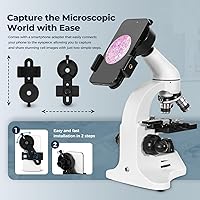
  • Included phone adapter lets students photograph or record specimens directly for school reports.
  • Comes with 10 prepared and 10 blank slides, so there is no need to buy a starter kit separately.
  • Five-color filter wheel adds useful contrast flexibility when working with different specimen types.
  • The carry bag makes storage and transport genuinely convenient, especially for classroom use.
  • Setup is quick and approachable — most buyers report being operational within minutes of unboxing.

Cons

  • Image quality at the upper magnification range degrades noticeably; the 2000x ceiling is rarely usable in practice.
  • Runs on 2 AA batteries with no AC adapter option, which adds up in cost during regular use.
  • At just over five and a half pounds, this compound microscope is not the lightest option for young children to handle alone.
  • No carrying handle on the body itself, making the bag more of a necessity than a bonus.
  • The 40x achromatic objective produces the sharpest results, but the jump in quality between objective lenses is uneven.
  • Phone adapter compatibility can vary by smartphone model, and alignment takes some trial and error.
  • The 25x wide-field eyepiece, while versatile, offers a narrower usable sweet spot than experienced users might expect.
  • No spare bulbs or fuses are included, leaving buyers to source replacements independently if an LED fails.

Ratings

The scores below reflect our AI-powered analysis of verified global buyer reviews for the ESAKO KO-48MP Compound Microscope, with spam, bot-generated, and incentivized submissions actively filtered out before scoring. Each category is weighted against real usage patterns — from first-time student setups to regular hobbyist sessions — so both genuine strengths and recurring frustrations are represented honestly. No category has been softened to protect the overall impression.

Build Quality
83%
The metal body is one of the most consistently praised aspects across the review pool. Parents and teachers specifically note that it feels sturdy enough to survive the bumps and knocks of a shared classroom or a curious child's bedroom desk, which is not something you can say about most plastic scopes at this price.
A handful of buyers noted that while the main body is solid, some of the smaller moving parts — particularly the filter wheel and Barlow lens mount — feel less robust by comparison. A few reviews mention early loosening of the stage control knobs after repeated use.
Optical Clarity
71%
29%
At lower magnifications, particularly in the 40x to 400x range, the achromatic objectives deliver clean, reasonably sharp images that genuinely impress beginners examining onion skin cells or textile fibers for the first time. The wide-field eyepieces give a comfortable viewing area that makes it easier to navigate a slide.
Image sharpness drops off noticeably as you push toward the higher magnification combinations. At 1000x and above, chromatic fringing and softness become hard to ignore, and many users report struggling to achieve a focused image at the claimed 2000x ceiling — a known optical limitation at this price tier.
Ease of Use
81%
19%
Most buyers report getting a usable image within the first ten minutes of unboxing, which speaks well to the intuitive layout of the controls. The coaxial focus knobs are particularly well-received — having coarse and fine adjustment on the same axis means beginners are less likely to overshoot their focal point and lose the specimen entirely.
The 25x eyepiece can be trickier to use effectively for newcomers since the narrower depth of field makes fine focusing more demanding. A few parents noted that younger children needed adult assistance to manage the mechanical stage controls comfortably.
Mechanical Stage
86%
Reviewers who had previously used entry-level clip-stage scopes consistently highlight this as a meaningful upgrade. The ability to nudge a slide in small, controlled increments — rather than pushing it around freehand — makes scanning a prepared slide for specific cells or structures far less frustrating in day-to-day use.
The stage travel range is adequate for standard slides but limited when you want to scan larger specimens. Some users also noted that the control knobs, while functional, lack the smooth damping feel of pricier mechanical stages and can feel slightly loose out of the box.
Illumination System
74%
26%
The dual LED setup — one below the stage for transmitted light and one above for incident — genuinely extends what this compound microscope can do. Being able to examine opaque objects like small insects or rock fragments under the top light, then switch to slides with the bottom light, adds real versatility for curious students.
Running on 2 AA batteries is the consistent sticking point in this category. Regular users note the batteries drain faster than expected during extended sessions, and the absence of an AC adapter option means ongoing replacement costs that add up over time for daily classroom or home use.
Value for Money
78%
22%
Considering the metal construction, mechanical stage, dual illumination, and a full accessory bundle — including slides, a phone adapter, and a carry bag — buyers broadly feel the price is fair for what is delivered. It punches above its weight compared to similarly priced plastic competitors in terms of functional features.
The value perception drops for buyers who were expecting the full 2000x magnification claim to hold up in practice. Those who discover the optical ceiling earlier than expected can feel misled by the headline spec, which undercuts the overall value impression despite the solid hardware package.
Included Accessories
82%
18%
The bundle is one of the more complete starter kits in this category. Having 10 prepared slides ready to go means a student can start exploring immediately, and the blank slides encourage hands-on preparation experiments. The carry bag receives particular praise from teachers who move equipment between rooms or take it on field trips.
The phone adapter, while a thoughtful inclusion, requires patience to align correctly and does not lock securely on all phone sizes. The toolkit is fairly minimal — essentially a basic set of tweezers and a cleaning cloth — so do not expect anything comprehensive in that department.
Phone Adapter Usability
61%
39%
For school projects where students need to document observations with a photo or short video clip, the adapter does work well enough when properly aligned. Reviewers who took the time to set it up carefully reported usable images at lower magnifications that were good enough for a class presentation or science fair poster.
Getting a clean, centered image through the adapter is fiddly — alignment drifts easily, and the adapter does not grip most modern phones as securely as users would like. At higher magnifications, vibration from the phone itself can blur the image, making it difficult to capture anything worth keeping.
Focusing System
79%
21%
The coaxial coarse and fine adjustment system is well-regarded for a scope in this price range. Having both adjustments on one knob shaft reduces the learning curve significantly — users can rough in the focus quickly and then dial it in precisely without hunting for a separate knob.
At very high magnification combinations, the fine focus travel range feels insufficient, and minor vibrations from the focus knob itself can shift the image enough to lose a focused specimen. This is less an issue for everyday lower-magnification work, but it limits usefulness at the upper end of the range.
Color Filter Wheel
66%
34%
Having five filter options built in — rather than loose glass filters that can be misplaced — is a practical design choice. Students and hobbyists working with unstained biological slides often find that switching to a blue filter improves contrast enough to make otherwise difficult specimens much more readable.
The filters are more of a bonus feature than a precision tool at this level. The color shift is fairly strong and can look artificial, and there is limited guidance in the instructions about which filter suits which specimen type, leaving most users to experiment through trial and error.
Ergonomics & Comfort
77%
23%
The 45-degree viewing angle on the rotating head is meaningfully more comfortable than fully upright designs, particularly during longer sessions. Students working on assignments for 20 to 30 minutes at a stretch generally find the neck and shoulder strain much more manageable compared to straight-tube beginner scopes.
At just over five and a half pounds with a fixed footprint, the scope does not leave much room for a notebook or worksheet on a small student desk. Younger users may also find the eyepiece height a bit high without a proper chair adjustment, which parents occasionally flag as a setup concern.
Portability
72%
28%
The included carry bag makes transport practical, and the battery-powered lighting means there is no need for a nearby power outlet — a real convenience for educators who rotate equipment between classrooms or take the scope outdoors for nature observation sessions.
Five and a half pounds is on the heavier side for a student to carry independently, and the bag has no internal padding compartments to protect the objectives or eyepieces during transit. A few reviewers mentioned small optical components shifting or detaching slightly during transport.
Setup & Assembly
84%
The assembly process is short and mostly intuitive — attaching the eyepiece and inserting batteries takes only a few minutes. Most reviewers note the instructions, while basic, are sufficient to get a first image within 15 minutes, which matters a lot when you are unboxing with an excited child or preparing for a class.
The included instruction manual is fairly thin and does not cover intermediate techniques like slide preparation, optimal filter selection, or how to clean the optics safely. New users wanting to go beyond the basics will need to find external resources to fill in those gaps.
Durability Over Time
67%
33%
The metal frame holds up well with normal use, and the optical components have not generated widespread complaints about degradation over months of regular viewing. For a tool that sits on a student desk and gets used a few times per week, the build appears to hold its own over a typical school year.
Longer-term reviews — those past the six-month mark — occasionally surface issues with the stage knob tension loosening and the rotating head becoming harder to lock securely. These are wear-related issues rather than immediate defects, but they do suggest the component tolerances are not built for years of intensive daily use.

Suitable for:

The ESAKO KO-48MP Compound Microscope is a strong match for families and educators who want a step up from toy-grade optics without committing to a professional instrument budget. Middle and high school students tackling biology assignments will find the mechanical stage and coaxial focus system genuinely useful for coursework — these aren't features you typically get at this price point. Parents setting up a dedicated home science station will appreciate that the kit arrives complete: prepared slides, blank slides, a carry bag, and a phone adapter mean the first session can happen the same afternoon it's unboxed. Amateur naturalists curious about pond water organisms, leaf cell structures, or insect anatomy will get plenty of mileage from the 40x to 400x range where image quality is reliably good. Classroom teachers who need a portable, durable scope that can handle being packed and transported repeatedly will find the metal frame and included bag a practical combination.

Not suitable for:

Anyone expecting professional or research-grade optics should look elsewhere — the ESAKO KO-48MP Compound Microscope is an entry-level instrument, and that distinction matters at higher magnifications. The advertised 2000x maximum is technically achievable, but in practice image quality at those extremes tends to become soft and difficult to focus cleanly, which can frustrate users who expect crisp results across the full range. The battery-powered LED system keeps things portable, but buyers who plan extended daily sessions may find the ongoing battery consumption inconvenient compared to scopes with AC adapters. Advanced hobbyists or undergraduate students needing consistent high-magnification clarity for detailed specimen analysis will likely hit the optical ceiling of this compound microscope faster than expected. It is also not a good fit for anyone needing phase contrast, polarized light, or specialized illumination configurations that belong to a different class of instrument entirely.

Specifications

  • Magnification Range: Supports 40x to 2000x magnification through a combination of two wide-field eyepieces, three achromatic objectives, and a 2x Barlow lens.
  • Eyepieces: Includes two wide-field eyepieces: 10x and 25x, both designed to provide a broader field of view than standard eyepieces.
  • Objectives: Fitted with three achromatic objective lenses at 4x, 10x, and 40x magnification for stepped optical clarity.
  • Barlow Lens: A 2x Barlow lens is included to double the effective magnification of any eyepiece and objective combination.
  • Body Material: The frame and housing are constructed from metal, providing greater structural rigidity than plastic-bodied alternatives in this category.
  • Stage Type: Features a mechanical stage with two-axis control knobs for precise, repeatable slide positioning in both X and Y directions.
  • Head Movement: The monocular head tilts to 45 degrees and rotates 360 degrees for flexible, ergonomic viewing angles.
  • Focus System: Uses a coaxial focusing mechanism with separate coarse and fine adjustment knobs for accurate depth control.
  • Illumination: Equipped with dual LED lighting — one transmitted (below the stage) and one incident (above the stage) — to support both translucent and opaque specimens.
  • Power Source: The LED illumination system is powered by 2 AA batteries, which are not included in the package.
  • Light Adjustment: A dimmer wheel allows stepless adjustment of LED brightness to suit different specimen types and ambient conditions.
  • Filter Wheel: A five-position color filter wheel is built into the base to allow contrast enhancement across different specimen preparations.
  • Included Slides: The package includes 10 factory-prepared microscope slides and 10 blank slides for user-prepared specimens.
  • Accessories: Also includes a smartphone adapter, a basic toolkit, and a padded carry bag for storage and transport.
  • Phone Compatibility: The included phone adapter is compatible with smartphones and allows users to capture photos or video of specimens through the eyepiece.
  • Package Dimensions: The shipping box measures 14.53 x 13.15 x 8.15 inches, accommodating the microscope and all included accessories.
  • Item Weight: The complete package weighs 5.57 pounds, reflecting the metal body construction and bundled accessories.
  • Objective Lens Type: All three objective lenses use an achromatic optical design to reduce chromatic aberration at standard working magnifications.
  • Brand & Model: Manufactured by ESAKO under model number KO-48MP, first made available in June 2020.
  • User Rating: Holds an aggregate rating of 4.2 out of 5 stars based on 81 customer reviews on Amazon.

Related Reviews
AmScope B490B Compound Binocular Microscope
85%
94%
Optical Clarity
90%
Build Quality
85%
Ease of Use
92%
Value for Money
93%
Magnification Range
More
SWIFT SS121 Compound Monocular Microscope Kit
80%
88%
Build Quality
81%
Optical Clarity
84%
Illumination System
86%
Ease of Use
72%
Magnification Range
More
Celestron CM1000C Monocular Compound Microscope
81%
91%
Value for Money
88%
Image Clarity and Magnification
85%
Ease of Use for Beginners
90%
Build Quality and Durability
83%
Focus Control Precision
More
AmScope M150C Student Compound Microscope
82%
89%
Value for Money
85%
Build Quality
88%
Ease of Use
82%
Performance at High Magnification
86%
Image Clarity
More
PalliPartners SWXWJ-1 Compound Microscope
76%
83%
Optical Clarity (Low Power)
57%
Optical Clarity (High Power)
76%
Build Quality & Stability
81%
Focus System Usability
79%
Illumination System
More
SVBONY SV605 Binocular Compound Microscope
85%
90%
Value for Money
88%
Ease of Setup
85%
Build Quality
89%
Optical Performance
91%
Illumination System
More
AmScope M158 USB Compound Microscope
74%
88%
Build Quality
79%
Optical Clarity
51%
Camera Quality
91%
Ease of Setup
62%
Software Experience
More
SWIFT SW200DL Compound Monocular Microscope
81%
83%
Optical Clarity
78%
Magnification Range
91%
Dual Illumination System
88%
Build Quality & Durability
86%
Fine Focus Mechanism
More
AmScope T490B Compound Trinocular Microscope
74%
88%
Optical Clarity
91%
Trinocular Head
78%
Camera Integration
86%
Mechanical Stage
89%
Build Quality
More
Herwicm RM Binocular Compound Microscope
73%
78%
Optical Clarity
74%
Build Quality
86%
Ease of Setup
76%
Focusing Mechanism
81%
Lighting System
More

FAQ

It works well for kids around that age, particularly if an adult helps with the initial setup and shows them how to use the focus knobs. The coarse adjustment is intuitive, and the prepared slides that come in the box mean a child can start looking at real specimens right away without needing to prepare anything themselves. It is not a toy scope, but it is not overwhelming either.

Technically yes, the combination of eyepieces, objectives, and Barlow lens can reach 2000x. In practice though, image quality at that extreme tends to be soft and difficult to focus sharply — this is a common limitation of optics in this price bracket, not a defect specific to this compound microscope. You will get the best, clearest results in the 40x to 400x range.

It uses two standard AA batteries, which are not included in the box. Battery life varies depending on how often and how long the LEDs are running, but expect to replace them periodically if the scope is used regularly. If you plan on daily sessions, keeping a spare set on hand is a good idea.

Yes — the incident LED positioned above the stage is specifically designed for opaque objects, so you can place a coin, insect, or small rock on the stage and illuminate it from above without needing a transparent slide. The lower magnifications work best for this kind of surface viewing.

The adapter attaches to the eyepiece and holds your phone camera over the lens opening so you can capture what you see through the scope. Alignment takes a little patience to get right, and compatibility can vary depending on your phone model and camera placement. Most standard smartphones work, but very large phones or those with unusual camera layouts may need more adjustment.

Most buyers report having it assembled and working within about 15 to 20 minutes. The main steps are attaching the eyepiece, inserting the objectives, loading the batteries, and placing a slide on the stage. The included slides mean you can start viewing immediately without having to prepare your own specimens first.

Use a soft, lint-free lens cloth or optical tissue — never paper towels or regular fabric, which can leave fine scratches. For fingerprints or smudges, a small amount of lens cleaning solution applied to the cloth works well. Avoid touching the objective lenses directly during normal use, and store the microscope with the dust cap or in the carry bag when not in use.

The color filters change the tone of the transmitted light coming through the stage, which can improve contrast for certain specimens. For example, a blue filter often works well for unstained biological slides, while a yellow filter can help reduce glare on highly reflective specimens. It is mostly a matter of experimenting to see what makes a particular specimen easier to see clearly.

For anyone doing any serious slide work, yes — it makes a noticeable difference. With a clip stage, repositioning a slide to find a specific area means nudging it by hand, which is imprecise and easy to overshoot. The mechanical stage lets you make small, controlled movements with the control knobs, which is far less frustrating when you are trying to examine a specific cell or section.

In principle, the standard eyepiece tube size used by this student microscope is compatible with many third-party eyepieces and objectives sold separately. That said, not all aftermarket optics are guaranteed to pair well with this specific body, so it is worth researching compatibility before purchasing upgrades. If you find yourself regularly needing higher performance, it may be more cost-effective to consider a purpose-built intermediate scope rather than upgrading piecemeal.