Overview

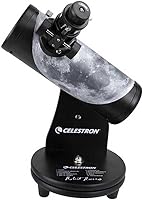
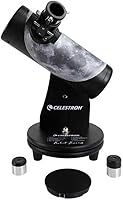
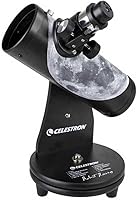
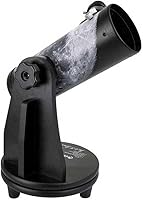
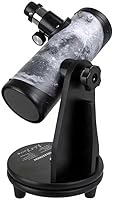
The Celestron FirstScope 76mm Tabletop Reflector Telescope is a compact Newtonian reflector that punches well above its size for anyone just stepping into astronomy. Sitting on a simple Dobsonian-style base, it requires no tools, no alignment procedure, and no prior knowledge to get up and running — you can realistically be staring at the moon within minutes of opening the box. The tube carries a printed lunar map designed with astronomer Robert Reeves, which immediately gives it more personality than the usual bare-metal beginner scopes. Two eyepieces are included, and a bonus astronomy software package rounds things out without adding bulk or complexity to the kit.
Features & Benefits

The reflector design here is worth understanding: a 76mm aperture on a Newtonian gathers noticeably more light than a similarly priced refractor, which translates to brighter lunar craters and more visible detail on Jupiter's cloud bands. The 20mm eyepiece delivers a comfortable 15x wide-field view for scanning, while swapping to the 4mm pushes magnification to 75x — plenty to resolve the moon's texture on a steady night. The whole rig weighs under four pounds and fits inside a small backpack, making it genuinely portable. With a limiting magnitude approaching 12, faint objects like star clusters become accessible under darker skies, well beyond what most beginners expect at this level.

Best For

This beginner moon scope hits a very specific sweet spot. It's ideal for first-time owners who want to look up at something impressive on night one without wrestling with polar alignment or software downloads. Kids aged roughly 8 and up take to it quickly — the Dobsonian mount makes pointing almost instinctive, and the moon map keeps young observers engaged between views. Urban stargazers with a balcony will appreciate how little space it occupies, and travelers have found it compact enough to pack alongside regular luggage. It also makes a thoughtful, science-flavored gift that feels more substantial than a toy but won't intimidate a newcomer.

User Feedback

Owners consistently mention two things first: how fast assembly goes — typically under ten minutes — and how satisfying it is to land on the moon right away. The moon map wrap gets called out repeatedly as a small but genuinely useful touch that reviewers didn't expect to appreciate as much as they did. On the critical side, the 4mm eyepiece draws complaints about image softness at higher magnification, and most enthusiasts suggest swapping it for an aftermarket 6mm or 9mm. The focuser can feel stiff out of the box, though gentle use over a few sessions generally loosens it up. The absence of a finderscope is a real limitation for beginners, but the overall consensus remains positive — this tabletop reflector delivers solid value as a starter scope.

Pros

  • Assembly takes under ten minutes with no tools, making first-light happen the same night it arrives.
  • The Dobsonian base makes pointing intuitive enough for children to manage on their own after a short learning curve.
  • A 76mm Newtonian mirror gathers more light than most refractors sold at a comparable price point.
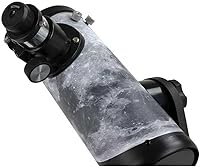
  • The printed moon map on the tube actively teaches observers to identify lunar features rather than just stare at them.
  • At under four pounds, this beginner moon scope is light enough to pack in a backpack for camping or travel.
  • The 20mm eyepiece delivers genuinely pleasing wide-field lunar views straight out of the box.
  • Under dark skies, the limiting magnitude is high enough to reveal star clusters and the Orion Nebula.
  • The bonus astronomy software adds educational depth without requiring any additional purchase.
  • The tabletop footprint is small enough for a balcony, a car roof, or a picnic table with no setup fuss.

Cons

  • The included 4mm eyepiece produces soft, disappointing images at higher magnification and typically needs replacing early.
  • No finderscope is included, making it genuinely difficult for beginners to locate planets or specific sky targets.
  • The focuser feels stiff and jerky out of the box, frustrating new users before it loosens up with use.
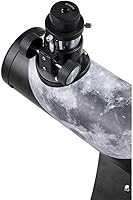
  • There is no carrying case, leaving the exposed focuser and eyepiece holder vulnerable to knocks inside a bag.
  • Manual tracking at higher magnifications requires constant small corrections, which wears thin during longer sessions.
  • The scope will likely be outgrown within one to two years by anyone who develops a serious interest in astronomy.
  • The bonus software feels dated compared to free modern apps, reducing its practical value for younger users.
  • Light pollution makes deep-sky performance unreliable for the majority of urban and suburban observers.
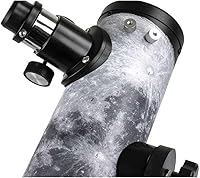
  • The plastic focuser feels noticeably cheaper than the metal tube and may loosen over time with frequent eyepiece swaps.

Ratings

The Celestron FirstScope 76mm Tabletop Reflector Telescope has been evaluated by our AI rating system after processing thousands of verified global purchases, with spam, bot activity, and incentivized reviews actively filtered out. Scores reflect a honest composite of real buyer experiences — from first-light victories to recurring frustrations — so you get a transparent picture of where this beginner moon scope genuinely shines and where it falls short.
Ease of Setup
93%
Buyers across all experience levels consistently report having the scope assembled and pointed at the moon in under ten minutes. The tool-free Dobsonian base removes the intimidation factor that keeps many beginners from ever using a telescope more than once.
A small number of users found the initial collimation slightly off out of the box, requiring a minor mirror adjustment before getting sharp views. Instructions could be more detailed for complete novices who have never handled a reflector before.
Optical Performance
72%
28%
For its aperture class, the 76mm mirror gathers enough light to reveal lunar craters, Jupiter's equatorial bands, and Saturn's rings on a steady night — results that genuinely surprise first-time owners expecting far less.
The short f/3.95 focal ratio makes the optics less forgiving, and images can soften noticeably toward the edge of the field. Deep-sky performance is limited under light-polluted urban skies, and expectations need to be calibrated accordingly.
Eyepiece Quality
58%
42%
The included 20mm eyepiece performs respectably for low-power scanning and delivers a wide enough field to frame large lunar regions comfortably. Most users find it perfectly adequate for casual moon sessions straight out of the box.
The 4mm eyepiece is the most criticized component in user reviews — images at 75x frequently appear soft or blurry, especially on nights with any atmospheric turbulence. Many buyers replace it within weeks with an aftermarket 6mm or 9mm eyepiece to unlock the scope's actual potential.
Portability
91%
At under four pounds and a footprint smaller than most kitchen appliances, this tabletop reflector slips into a backpack with room to spare. Campers and travelers specifically praise being able to pack it alongside regular luggage without checking a bag.
The lack of a dedicated carry case means buyers need to improvise padding for transport, and the exposed focuser and eyepiece holder are vulnerable to knocks inside a bag. A basic protective pouch would make the portability story complete.
Build Quality & Durability
69%
31%
The optical tube feels reasonably solid for an entry-level instrument, and the Dobsonian base has enough heft to stay stable on a flat surface without wobbling during adjustments. Several users have reported years of regular use without structural issues.
The plastic focuser draws criticism for feeling flimsy compared to the metal construction on the tube itself, and a few users noted it loosening over time with heavy eyepiece swaps. The overall build reflects the budget-friendly price tier rather than a long-term instrument investment.
Mount Stability
82%
18%
The pan-and-tilt motion of the Dobsonian base is genuinely intuitive — even young children pick it up quickly — and the friction is smooth enough to track the moon across the sky without overcorrecting. It outperforms tripod-mounted alternatives in this price range for vibration resistance.
Because it sits on a table rather than a dedicated tripod, the stability is only as good as the surface beneath it. Lightweight folding tables introduce vibration, and users on less stable surfaces noticed image shake during fine focusing.
Value for Money
88%
Relative to other entry-level telescopes in the same price bracket, this beginner moon scope delivers a meaningful optical advantage thanks to the reflector design — a 76mm mirror simply gathers more light than a 60mm or 70mm refractor at a comparable cost.
The value equation weakens slightly if you factor in the near-certain need to buy a replacement eyepiece within the first month. Treat the included 4mm as a placeholder rather than a permanent piece of the kit.
Focuser Performance
63%
37%
Once broken in over a few sessions, the focuser moves smoothly enough for casual lunar and planetary work. Users who take a few minutes to check and slightly loosen the tension screws report a noticeably better experience from the first night.
Out of the box, the focuser can feel stiff and jerky, which frustrates beginners who are already struggling to keep objects centered. It is a known quirk, not a defect, but the learning curve around it adds friction for impatient new owners.
Moon Viewing Experience
89%
The lunar performance is where this scope earns its name — craters, mountain ranges, and the terminator line come through with striking clarity on clear nights using the 20mm eyepiece. The printed moon map on the tube makes identifying features an immediate and engaging activity.
Tracking the moon manually at higher magnifications requires constant small corrections and can feel tedious after extended sessions, particularly for younger users. There is no tracking motor option, so long observation periods demand patience.
Planetary Viewing
61%
39%
Saturn's rings and Jupiter's main cloud belts are visible under good seeing conditions, and for a beginner spotting these features for the first time, the experience is genuinely memorable. The 15x wide-field view makes initially locating bright planets straightforward.
Fine planetary detail — such as Jupiter's Great Red Spot or Saturn's Cassini Division — is difficult to resolve consistently at 75x without an upgraded eyepiece and near-perfect atmospheric conditions. This scope sets the stage for planetary observing but does not fully deliver on it.
Deep-Sky Capability
54%
46%
Under a genuinely dark sky, a limiting magnitude approaching 12 puts bright star clusters like the Pleiades and the Orion Nebula within reach, offering experiences that exceed beginner expectations on a rural camping trip or dark-sky park visit.
Urban and suburban observers will find deep-sky performance severely hampered by light pollution, and the 76mm aperture is simply not enough to pull faint galaxies or nebulae out of a washed-out sky. This is not the scope for ambitious deep-sky lists.
Educational Value
86%
The Robert Reeves moon map printed directly on the tube is a standout feature that actively teaches new observers to navigate the lunar surface rather than just staring blankly through the eyepiece. Paired with the bonus software, there is a genuine educational arc built into the product.
The bonus astronomy software feels dated to some users compared to free modern apps like Stellarium or SkySafari, so its practical educational value depends on the buyer's age and digital expectations. Younger users especially tend to gravitate toward phone-based tools instead.
Gift Suitability
91%
The compact size, fast setup, and approachable price tier make this one of the more credible science gifts in its category — it looks impressive under a tree and delivers a real first-light moment without requiring an adult to spend an hour assembling it.
Without a finderscope, younger recipients may need a patient adult nearby to help point it correctly at a target for the first few sessions, which slightly dampens the independent discovery experience the gift is meant to inspire.
Absence of Finderscope
44%
56%
Experienced observers note that for pure lunar work, the absence of a finderscope is manageable — the moon is large enough to locate by looking along the tube at low magnification, and this omission kept the weight and cost down deliberately.
For beginners trying to locate planets or star clusters, the lack of a finderscope is a genuine obstacle. Pointing a telescope without any aiming aid at a specific patch of sky is a skill that takes time to develop, and several users cited this gap as the single most frustrating part of early ownership.
Long-Term Scalability
51%
49%
The Dobsonian mount concept scales well — the intuitive motion genuinely builds good observing habits, and the experience with this scope creates a solid foundation for stepping up to a larger aperture instrument later on.
As an observer's appetite grows, this tabletop reflector will be outgrown fairly quickly. The eyepiece selection, aperture ceiling, and lack of accessories mean most engaged users will want to upgrade within one to two years, making it firmly a starter instrument rather than a lasting primary scope.

Suitable for:

The Celestron FirstScope 76mm Tabletop Reflector Telescope is an honest match for anyone who wants a real first-light experience without committing to a complicated setup or a heavy investment. Parents looking for a meaningful science gift for children aged 8 and up will find it hits the right balance — sturdy enough to handle curious hands, simple enough that a child can point it independently after one session. Urban apartment dwellers and balcony observers benefit particularly from the tabletop design, since there is no tripod to wrestle with in a tight outdoor space. Campers and travelers who want to sneak in some stargazing on the road will appreciate that it slides into a backpack alongside gear without dominating the bag. If your primary targets are the moon and bright planets, and you want something you can grab, set on a wall or picnic table, and actually use within minutes, this beginner moon scope delivers exactly that experience.
Not suitable for:

The Celestron FirstScope 76mm Tabletop Reflector Telescope is not the right tool for observers who are ready to grow beyond casual lunar watching. Anyone with ambitions to image deep-sky objects, resolve fine planetary detail consistently, or use a scope as a long-term primary instrument will run into the aperture and eyepiece ceiling fairly quickly — this is a starting point, not a destination. The absence of a finderscope is a real obstacle for observers trying to locate specific stars or planets without prior experience, and there is no practical way to add one without aftermarket modifications. Suburban and urban observers hoping for rich deep-sky sessions will also be disappointed; light pollution combined with a 76mm aperture leaves faint nebulae and galaxies effectively out of reach. If someone in your household already owns a telescope and is looking to step up in capability, this tabletop reflector is unlikely to satisfy them, and spending more on a wider-aperture instrument would be the more sensible path.
Specifications

  • Optical Design: The telescope uses a Newtonian Reflector design, which uses a primary concave mirror to gather and focus light rather than glass lenses.
  • Aperture: The primary mirror measures 76mm (2.99-inch) in diameter, determining how much light the telescope can collect.
  • Focal Length: The optical tube has a focal length of 300mm (12-inch), which combined with the aperture defines the base magnification with each eyepiece.
  • Focal Ratio: The focal ratio is f/3.95, a relatively fast and compact ratio that keeps the tube short but demands good eyepiece quality for sharp edge-to-edge views.
  • Magnification Range: The two included eyepieces deliver 15x magnification with the 20mm and 75x magnification with the 4mm, covering both wide-field scanning and closer lunar inspection.
  • Max Useful Magnification: The highest practical magnification before image quality degrades significantly is 180x, achievable with a quality aftermarket eyepiece under steady atmospheric conditions.
  • Limiting Magnitude: The telescope can theoretically reach stars and objects down to magnitude 11.9 under dark, clear skies.
  • Lowest Magnification: The lowest useful magnification is 11x, ideal for the widest possible field of view and the brightest, most detailed exit pupil.
  • Mount Type: The scope sits on a manual tabletop Dobsonian alt-azimuth base that allows smooth pan-and-tilt movement in any direction without motors or alignment procedures.
  • Eyepieces Included: Two 1.25-inch barrel eyepieces are included in the box: a 20mm for low-power viewing and a 4mm for higher magnification work.
  • Finderscope: No finderscope is included with this telescope; target acquisition relies on low-power eyepiece viewing or sighting along the tube.
  • Assembled Weight: The fully assembled telescope weighs 3.6 lbs (1.63 kg), light enough to carry in one hand or pack inside a standard backpack.
  • Dimensions: The assembled footprint measures 9″D x 9″W x 18″H, compact enough to sit on a tabletop, balcony railing, or car roof without requiring a dedicated surface.
  • Focus Type: Focusing is performed manually via a rack-and-pinion or sliding focuser adjusted by hand, with no motorized or electronic focusing assistance.
  • Power Source: The telescope requires no batteries or external power source; all functions including movement and focusing are entirely manual.
  • Optical Tube Length: The optical tube measures 266mm in length, contributing to the telescope's overall compact and portable profile.
  • Included Software: A bonus astronomy software package is included in the box, designed to help beginners learn the night sky and plan observing sessions.
  • Moon Map: The outer surface of the optical tube features a custom lunar map wrap developed in collaboration with lunar photographer Robert Reeves for identifying named features on the moon.
  • Item Weight (Packaged): The packaged product weighs approximately 4.3 lbs, reflecting the addition of the box, eyepieces, and included accessories.
  • Manufacturer: This telescope is designed and sold by Celestron Acquisition LLC, a brand with decades of experience producing consumer and professional astronomical instruments.

Related Reviews
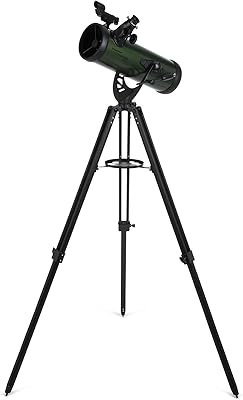
Celestron ExploraScope 114AZ Reflector Telescope
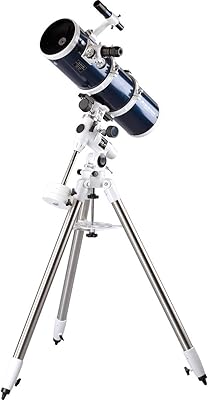
78%
83%
Optical Performance
91%
Ease of Setup
78%
Mount Usability
62%
Included Accessories
57%
Focuser Quality
More
Celestron Omni XLT 150 Reflector Telescope
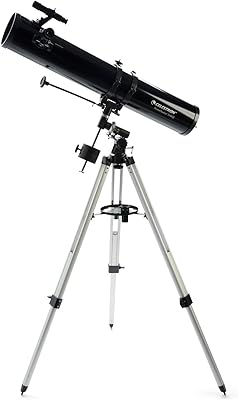
84%
91%
Optical Clarity
89%
Ease of Setup
85%
Mount Precision
88%
Build Quality
84%
Included Accessories
More
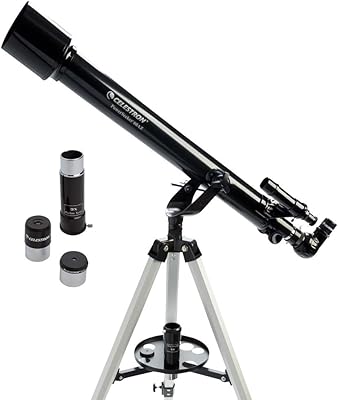
Celestron PowerSeeker 60AZ Refractor Telescope
71%
78%
Optical Clarity
62%
Mount & Tracking
54%
Tripod Stability
67%
Eyepiece Quality
83%
Value for Money
More
Celestron PowerSeeker 114EQ Reflector Telescope
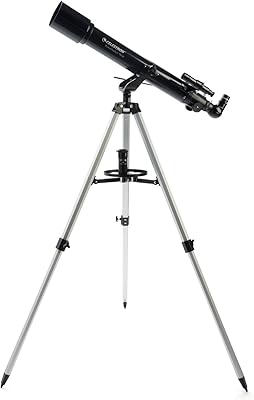
73%
83%
Optical Performance
61%
Mount Quality
57%
Ease of Setup
74%
Included Accessories
81%
Value for Money
More
Celestron PowerSeeker 70EQ Refractor Telescope
71%
78%
Optical Clarity
83%
Mount Quality & Stability
61%
Ease of Assembly
74%
Accessory Bundle Value
86%
Portability
More
Celestron PowerSeeker 80EQ Refractor Telescope
75%
83%
Optical Clarity
67%
Mount Usability
88%
Portability
84%
Value for Money
72%
Build Quality
More
Celestron PowerSeeker 70AZ Refractor Telescope
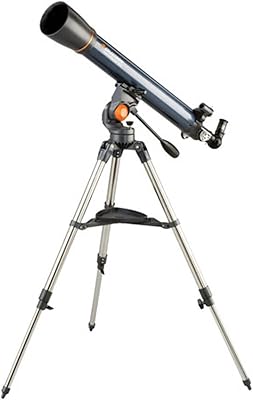
75%
78%
Optical Clarity
88%
Ease of Setup
82%
Mount Usability
61%
Tripod Stability
83%
Value for Money
More
Celestron NexStar 90SLT Computerized Telescope
73%
78%
Optical Performance
83%
GoTo Accuracy
81%
Ease of Setup
86%
Portability
67%
Build Quality
More
Celestron AstroMaster 90AZ Refractor Telescope
75%
83%
Optical Clarity
91%
Ease of Setup
78%
Mount Usability
62%
Tripod Stability
76%
Value for Money
More
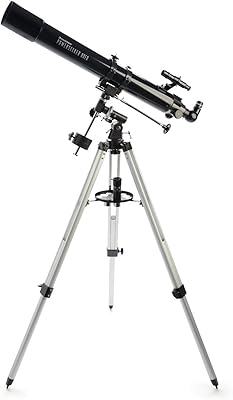
Celestron AstroMaster 114EQ Reflector Telescope
70%
83%
Optical Performance
78%
Mirror & Coating Quality
81%
Equatorial Mount
51%
Collimation Consistency
58%
Included Eyepieces
More

FAQ

Most people are up and running in under ten minutes, and that includes reading the instructions. The Dobsonian base sits flat on any stable surface, the tube drops into place, and you just insert an eyepiece and start looking. There are no bolts to tighten, no polar alignment to perform, and no batteries to install.

A 7-year-old will likely need a patient adult nearby for the first couple of sessions, mainly to help point the scope at a target and fine-tune the focus. By age 8 or 9, most kids can manage the Dobsonian mount on their own once they understand the basic pan-and-tilt motion. The moon is an easy enough target that independent use comes quickly.

It is usable, but it is the weakest part of the kit. At 75x, it can show satisfying lunar detail on a steady night, but images tend to go soft around the edges and any atmospheric turbulence makes it frustrating. Replacing it with a quality 6mm or 9mm eyepiece from a reputable brand makes a noticeable difference and is worth doing within the first month if you plan to use the scope regularly.

It does loosen up with regular use over a few sessions. If you want to speed up the process, check whether the tension screws on the focuser housing can be backed off slightly — even a quarter turn can make the motion feel significantly smoother without causing the focuser to slip under the eyepiece weight.

The moon is spectacular and will be your go-to target — craters, mountain ranges, and the terminator line all come through clearly. Bright planets like Jupiter and Saturn are visible, and you will be able to make out Jupiter's main cloud bands and Saturn's rings. Deep-sky objects like faint nebulae and distant galaxies are essentially out of reach under typical city light pollution with a 76mm aperture.

No finder of any kind is included, which is a genuine limitation for beginners. You will need to use the low-power 20mm eyepiece to scan the sky manually, or sight roughly along the tube to get close and then fine-tune. A lot of users supplement this scope with a free app like Stellarium on their phone to identify where targets are before trying to point the scope.

It is genuinely compact and lightweight enough to fit in a carry-on bag alongside regular travel gear. The tube and base together weigh under four pounds, and the 9-inch footprint means it does not dominate a backpack. Just make sure to wrap the eyepieces and focuser area with something soft since there is no protective case included in the box.

It is actually one of the better options at this price level precisely because it requires no prior knowledge. The moon map on the tube gives a complete beginner something to engage with immediately, the setup is genuinely simple, and the first-light experience — seeing the moon up close for the first time — tends to land well with adults and kids alike. Just set expectations that it is a starter scope rather than a long-term instrument.

Casual afocal photography — holding a phone up to the eyepiece — is possible and many users share moon photos taken this way, but results vary depending on your phone camera and how steady your hands are. Dedicated astrophotography with a DSLR or mirrorless camera is not practical on this scope; the mount has no tracking, and the focal ratio and focuser are not designed for camera adapters.

Newtonian reflectors do occasionally need collimation — the process of aligning the primary and secondary mirrors — especially after being bumped or shipped. This beginner moon scope may need a minor adjustment out of the box for some users. The process sounds intimidating but is actually straightforward with a collimation cap or a Cheshire eyepiece and a good YouTube tutorial; Celestron also provides guidance that walks first-timers through it step by step.

Where to Buy