Overview

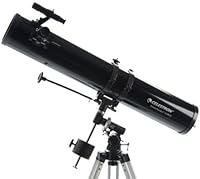
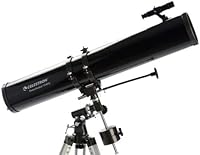
The Celestron PowerSeeker 114EQ Reflector Telescope has been a go-to recommendation for new stargazers since it first appeared in 2004, and over two decades later it still holds a firm spot near the top of the beginner reflector category. That kind of staying power means something. With a 114mm aperture, it collects noticeably more light than the small refractors typically sold at toy stores, making it a genuine optical step up without a painful price tag. That said, honest expectations matter here: the optics are solid, but the German Equatorial mount will require patience and a willingness to learn. This is not a point-and-look telescope, and buyers who understand that upfront tend to enjoy it far more.
Features & Benefits

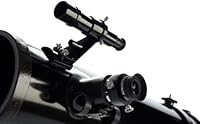
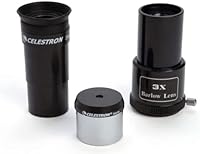
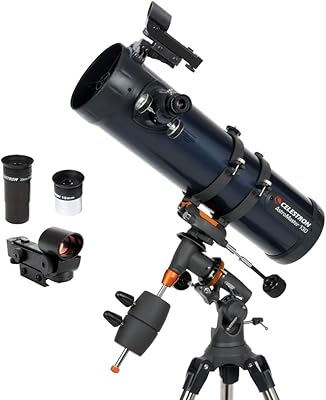
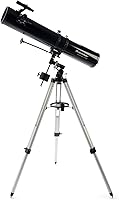
The heart of this Newtonian reflector is its 114mm primary mirror, which paired with a 900mm focal length gives a practical magnification range between 45x and 225x — enough to split Saturn's rings from its disk and trace the Moon's craters in crisp detail. Two eyepieces and a 3x Barlow lens come in the box, so you have real flexibility without buying extras immediately. The included 5x24 finderscope helps you land on a target before zooming in, something beginners appreciate quickly. A bundled astronomy software download adds context for what you are looking at, and at under 19 lbs the whole setup is light enough to carry to a darker site when the backyard sky is not cooperating.

Best For

The PowerSeeker 114EQ is a strong fit for first-time astronomers who already know they want more than a starter refractor but are not ready to invest in a dedicated mount system. It works especially well as a shared hobby between parents and kids — the manual controls make it a learning experience rather than a passive one. Observers primarily chasing the Moon, Jupiter, or Saturn will get plenty of satisfaction; those hoping to image or closely study faint galaxies should set more modest expectations at this aperture. One honest caveat: anyone unwilling to spend an evening learning polar alignment will find the experience frustrating. Patience with setup is genuinely rewarded here.

User Feedback

Across more than 10,000 reviews, this beginner telescope earns consistent praise for its out-of-the-box clarity on the Moon and brighter planets — many buyers describe their first clear view of lunar craters as a genuine wow moment. The criticisms, though, are equally consistent. Assembly instructions leave a lot to be desired, particularly the equatorial mount setup steps, which frustrate newcomers expecting something more intuitive. The bundled 4mm eyepiece also draws complaints: at maximum magnification the exit pupil becomes uncomfortably tight, and experienced buyers widely suggest replacing it with a quality 9mm eyepiece early on. Overall the consensus is fair — strong value for the optics, but the mount demands more from beginners than the packaging implies.

Pros

  • The 114mm aperture delivers crisp, rewarding views of the Moon and bright planets straight out of the box.
  • A 3x Barlow lens and two eyepieces give a solid magnification range without requiring immediate extra purchases.
  • At under 19 lbs assembled, the PowerSeeker 114EQ is light enough to carry to dark-sky sites with minimal effort.
  • The German Equatorial mount, once mastered, allows smooth and accurate tracking of celestial objects.
  • Build quality consistently earns positive remarks from buyers across thousands of verified reviews.
  • A bundled astronomy software download helps beginners learn the night sky alongside hands-on observing.
  • The 2-year US warranty and access to Celestron's domestic support team add meaningful peace of mind.
  • Over 20 years on the market with consistently high sales volume is a strong signal of genuine, lasting value.
  • The 5x24 finderscope makes locating targets easier before committing to the main eyepiece.

Cons

  • Assembly instructions for the equatorial mount are widely criticized as unclear and beginner-unfriendly.
  • The included 4mm eyepiece produces a very tight exit pupil, making high-magnification viewing uncomfortable for most users.
  • Polar alignment takes meaningful time and practice — first-time users should expect a frustrating learning period.
  • No motorized drive means tracking requires constant manual adjustments, which interrupts relaxed observing sessions.
  • The focuser and secondary mirror may need occasional recollimation, a maintenance step the manual barely addresses.
  • Deep-sky performance is limited; faint galaxies and dim nebulae appear as little more than smudges at this aperture.
  • The tripod, while functional, can feel slightly wobbly at higher magnifications if the ground is uneven.
  • Replacing the bundled 4mm eyepiece with a better mid-range option is almost universally recommended, adding extra cost.
  • No carrying case is included, which makes transporting the optical tube and accessories less convenient than it could be.

Ratings

The scores below reflect an AI-driven analysis of thousands of verified global reviews for the Celestron PowerSeeker 114EQ Reflector Telescope, with spam, bot activity, and incentivized feedback actively filtered out before any scoring was applied. Both the genuine strengths and the recurring pain points buyers have experienced in real-world use are transparently represented in each category. Whether this beginner telescope earns a strong recommendation or a cautious one depends heavily on which categories matter most to you.

Optical Performance
83%
For a beginner-tier reflector, the views this Newtonian delivers of the Moon and bright planets consistently impress first-time users. Lunar craters appear with sharp contrast, Saturn's rings resolve cleanly, and Jupiter's equatorial bands are visible on steady nights — results that exceed most buyers' initial expectations at this price level.
Deep-sky performance is where the 114mm aperture shows its limits. Faint nebulae and distant galaxies appear as dim, diffuse smudges rather than the dramatic objects seen in photographs, and from suburban skies with any light pollution, many such targets simply disappoint.
Mount Quality
61%
39%
Once a user invests time in learning polar alignment, the German Equatorial mount does what it promises — celestial objects stay in the field of view with minor slow-motion rod adjustments rather than constant repositioning. Experienced buyers who have gone through the learning curve tend to appreciate this advantage over basic altazimuth mounts.
For true beginners, the mount is a serious friction point. The polar alignment process is non-trivial, the included instructions are widely considered inadequate, and the first several sessions often involve more frustration than stargazing. The tripod also shows minor wobble on uneven ground at higher magnifications, which disrupts views at critical moments.
Ease of Setup
57%
43%
The optical tube itself attaches to the mount without much difficulty, and users familiar with any equatorial mount will have the full system ready to observe in a reasonable amount of time. The overall component count is manageable and nothing requires specialized tools.
The assembly documentation is one of the most consistently criticized aspects of this telescope across thousands of reviews. First-time buyers frequently report spending an hour or more struggling with the equatorial mount before finding a third-party tutorial video that makes the process clear. This is a meaningful barrier for the exact demographic the product targets.
Included Accessories
74%
26%
The bundled accessory package punches above its weight for a beginner kit. Two eyepieces covering a wide magnification range, a 3x Barlow lens, a functional 5x24 finderscope, and a free astronomy software download together give a new user a genuinely complete starting toolkit without forcing immediate additional purchases.
The 4mm eyepiece is the kit's weakest inclusion and generates consistent complaints. Its very short focal length creates a narrow, uncomfortable exit pupil that makes high-magnification viewing genuinely difficult, and most experienced buyers advise replacing it with a 6mm or 9mm eyepiece as a first upgrade.
Value for Money
81%
19%
Measured purely by aperture per dollar, the PowerSeeker 114EQ sits in a strong position among beginner reflectors. A 114mm mirror at this price tier is objectively better value for optical performance than any refractor in the same range, and the included accessories add meaningful practical value on day one.
The mount quality does temper the value equation somewhat. If a buyer ends up frustrated by the equatorial system and adds the cost of replacement eyepieces and third-party tutorials, the effective cost of entry is higher than the list price suggests. Some buyers feel a simpler altazimuth mount would have delivered better value for the target audience.
Build Quality
76%
24%
The optical tube feels solid and well-finished for the price tier, and the primary mirror holds its collimation reasonably well under normal home and backyard use. Most buyers describe the overall construction as noticeably better than the toy-grade telescopes sold in department stores.
Certain mount components, particularly the slow-motion control rod connections and some plastic fittings on the tripod, feel less robust under repeated use. A few users report parts loosening over time, which requires periodic tightening to maintain a stable observing platform.
Portability
82%
18%
At under 19 lbs total assembled weight, this beginner telescope genuinely qualifies as portable in a practical sense. Many owners routinely carry it to darker observing sites, and it fits easily in the back of a standard car without disassembly beyond detaching the optical tube from the mount.
No dedicated carrying case is included, which means packing and protecting the components for travel requires either purchasing a case separately or improvising with padding. This is a noticeable omission for a product marketed partly on its portability.
Optical Clarity
79%
21%
Images through the primary mirror are clean and well-corrected for a mass-produced beginner reflector. Color fringing, which is a common issue with cheap refractors at this price, is essentially absent in a reflector design, and contrast on planetary surfaces holds up well at moderate magnifications.
Like all Newtonian reflectors, collimation — the precise alignment of the primary and secondary mirrors — affects image quality and can drift after transport. Users who do not know to check and correct this may blame the optics for what is actually an alignment issue, leading to unfairly negative impressions.
Tracking Accuracy
63%
37%
After polar alignment is correctly completed, the slow-motion altitude control rod enables smooth, accurate manual tracking that keeps objects centered without having to repeatedly reposition the entire tube. This is a genuine advantage over basic altazimuth designs during longer observing sessions.
Without a motorized drive, any tracking is entirely manual and requires continuous small adjustments to compensate for Earth's rotation. At higher magnifications objects drift out of view noticeably fast, and for users accustomed to GoTo or motorized mounts, the manual process feels laborious and distracting.
Beginner Friendliness
64%
36%
The optical side of the experience is as beginner-friendly as any telescope at this price — point it at the Moon on the first night and the views are immediately gratifying. The included software adds useful educational context that helps new astronomers understand what they are looking at.
The equatorial mount significantly undermines the overall beginner-friendly proposition. A newcomer who expected a simple observing experience and instead encounters a polar alignment process with inadequate instructions is likely to feel the product misrepresents its own ease of use. The learning curve is real and steeper than the marketing suggests.
Collimation Stability
68%
32%
Under careful backyard use, the mirrors tend to hold alignment well enough that casual observers may go weeks between needing to recollimate. The design makes the secondary mirror adjustment straightforward once a user understands the process.
Transporting the telescope even by car can be enough to shift the secondary mirror alignment noticeably, and the included documentation barely addresses collimation at all. New users who do not know to check this before each session may consistently observe with degraded image quality without realizing the cause.
Software Bundle
71%
29%
The bundled astronomy software download is a thoughtful inclusion that adds real educational value. It helps beginners plan observing sessions, understand what objects are visible from their location on a given night, and learn the sky layout in a structured way that complements hands-on telescope use.
The software is a download code rather than a physical disc, and a small but vocal group of users report difficulty redeeming or installing it. The application itself is also desktop-only, which feels dated at a time when most beginners are accustomed to mobile astronomy apps that are free and frequently updated.
Warranty & Support
84%
A 2-year US warranty backed by a domestic support team is a meaningful differentiator in this product category, where many competitors offer shorter or less accessible coverage. Celestron's US-based support has a solid reputation for responding to legitimate product issues, and the long brand history provides additional confidence.
Some users report that warranty service on mount components in particular can involve slow turnaround times, and the support team's guidance on the equatorial mount setup, while available, is not proactively surfaced to buyers at the time of purchase when it would be most useful.

Suitable for:

The Celestron PowerSeeker 114EQ Reflector Telescope is a well-matched choice for anyone taking their first serious step into amateur astronomy and wanting real optical performance without spending a fortune. It works particularly well for parents and children exploring the hobby together, since the manual controls turn every session into a learning exercise rather than a passive experience. If your main targets are the Moon, Saturn's rings, or Jupiter's cloud bands, this reflector delivers genuinely satisfying views that will hold your interest for years. Hobbyists who enjoy tinkering — those willing to spend an evening learning to polar-align a German Equatorial mount rather than demanding instant results — will get the most from what this telescope offers. Its portable weight also makes it practical for anyone who wants the option of escaping light pollution on weekends without hauling heavy gear.
Not suitable for:

The Celestron PowerSeeker 114EQ Reflector Telescope is a poor fit for buyers expecting a simple, no-setup observing experience right out of the box. The German Equatorial mount is the telescope's most demanding aspect: without understanding polar alignment, tracking objects across the sky becomes an exercise in frustration, and the included instructions do little to ease that process. Observers with a strong interest in deep-sky targets — faint galaxies, distant nebulae, or star clusters that require large aperture — will quickly feel limited by the 114mm mirror and should consider stepping up to a larger Dobsonian reflector instead. Astrophotography enthusiasts should also look elsewhere, as a manual mount without a motorized drive is not a practical base for camera work. Anyone who wants plug-and-play simplicity would be better served by a GoTo computerized scope, even if the upfront cost is higher.
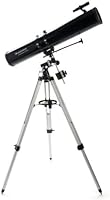
Specifications

  • Optical Design: This telescope uses a Newtonian Reflector design, which gathers light via a parabolic primary mirror rather than a lens.
  • Aperture: The primary mirror measures 114mm (4.49″) in diameter, giving meaningful light-gathering capability for a beginner-class instrument.
  • Focal Length: The optical tube has a focal length of 900mm, which determines the magnification produced with each eyepiece.
  • Focal Ratio: The focal ratio is f/8, which produces a moderately narrow field of view well suited to planetary and lunar observation.
  • Magnification Range: With the included eyepieces and 3x Barlow lens, practical magnification spans from 45x up to 225x for real-world use.
  • Limiting Magnitude: Under good conditions, this reflector can reach a limiting stellar magnitude of 12.8, revealing objects invisible to the naked eye.
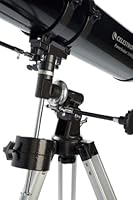
  • Mount Type: The telescope ships with a manual German Equatorial mount featuring a slow-motion altitude control rod for tracking objects across the sky.
  • Included Eyepieces: Two eyepieces are included in the box: a 20mm wide-field eyepiece and a 4mm high-magnification eyepiece.
  • Barlow Lens: A 3x Barlow lens is included and effectively triples the magnifying power of each eyepiece when inserted before it.
  • Finderscope: A 5x24 finderscope is mounted on the tube to help locate and center celestial targets before switching to the main eyepiece.
  • Assembled Weight: The complete setup, including mount and tripod, weighs 18.9 lbs (8.6 kg) when fully assembled.
  • Product Dimensions: The optical tube measures 34.4″ in depth, 16″ wide, and stands 51″ tall when mounted on the included tripod.
  • Focus Type: Focusing is performed manually via a rack-and-pinion focuser; no electronic or motorized focusing system is included.
  • Power Source: No batteries or external power source are required; the mount and focuser are entirely manually operated.
  • Software Bundle: A free download code for a top-rated desktop astronomy software package is included with purchase.
  • Warranty: Celestron covers this telescope with a 2-year US warranty backed by a US-based customer support team.
  • Manufacturer: Celestron is a California-based optics company with a history in the telescope market stretching back to 1960.

Related Reviews
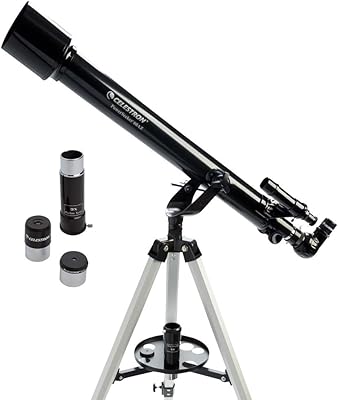
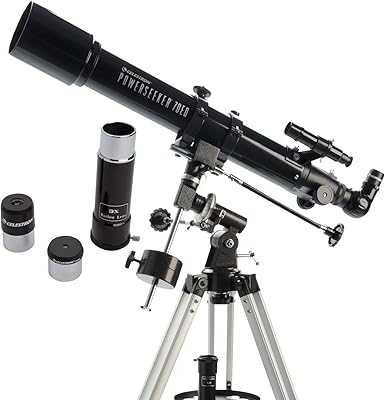
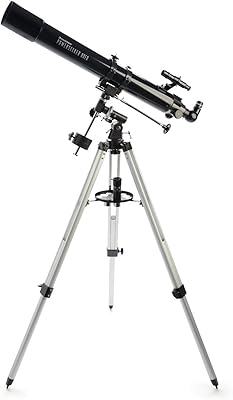
Celestron PowerSeeker 80EQ Refractor Telescope
75%
83%
Optical Clarity
67%
Mount Usability
88%
Portability
84%
Value for Money
72%
Build Quality
More
Celestron PowerSeeker 70AZ Refractor Telescope
75%
78%
Optical Clarity
88%
Ease of Setup
82%
Mount Usability
61%
Tripod Stability
83%
Value for Money
More
Celestron PowerSeeker 70EQ Refractor Telescope
71%
78%
Optical Clarity
83%
Mount Quality & Stability
61%
Ease of Assembly
74%
Accessory Bundle Value
86%
Portability
More
Celestron AstroMaster 114EQ Reflector Telescope
70%
83%
Optical Performance
78%
Mirror & Coating Quality
81%
Equatorial Mount
51%
Collimation Consistency
58%
Included Eyepieces
More
Celestron PowerSeeker 60AZ Refractor Telescope
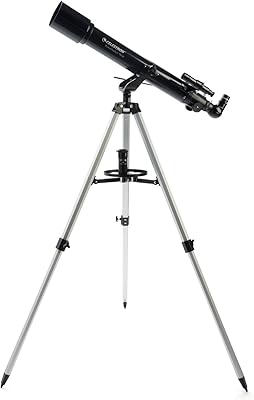
71%
78%
Optical Clarity
62%
Mount & Tracking
54%
Tripod Stability
67%
Eyepiece Quality
83%
Value for Money
More
Celestron ExploraScope 114AZ Reflector Telescope
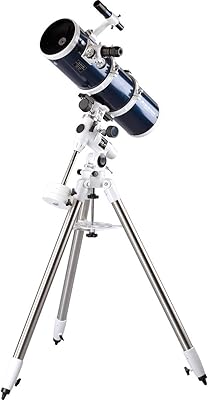
78%
83%
Optical Performance
91%
Ease of Setup
78%
Mount Usability
62%
Included Accessories
57%
Focuser Quality
More
Celestron Omni XLT 150 Reflector Telescope
84%
91%
Optical Clarity
89%
Ease of Setup
85%
Mount Precision
88%
Build Quality
84%
Included Accessories
More
Celestron AstroMaster 102AZ Refractor Telescope
77%
78%
Optical Clarity
91%
Ease of Setup
74%
Mount Usability
71%
Tripod Stability
83%
Value for Money
More
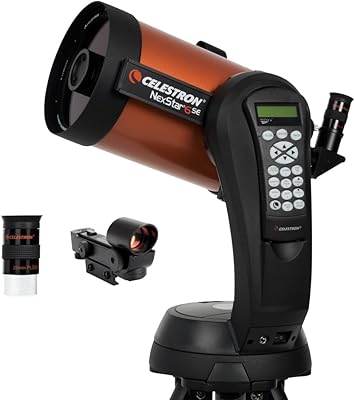
Celestron NexStar 6SE Computerized Telescope
72%
88%
Optical Performance
83%
GoTo Mount Accuracy
86%
SkyAlign Ease of Use
61%
Mount Stability
81%
Portability & Setup Time
More
Celestron AstroMaster 90AZ Refractor Telescope
75%
83%
Optical Clarity
91%
Ease of Setup
78%
Mount Usability
62%
Tripod Stability
76%
Value for Money
More

FAQ

Yes, with one important caveat. The optics are genuinely beginner-friendly and the views of the Moon and planets are rewarding right away. The challenge is the German Equatorial mount, which requires learning how to polar-align it before you can track objects smoothly. Budget an evening to watch a tutorial video on equatorial mounts before your first session, and the experience becomes much more enjoyable.

Yes, clearly. Saturn's rings are visible as a distinct structure separate from the planet's disk, and Jupiter's four Galilean moons appear as small bright dots on either side of the planet. At higher magnifications you can also make out Jupiter's main cloud bands. These are among the most satisfying targets for the PowerSeeker 114EQ and well within its optical capability.

The optical tube itself is straightforward to set up, but the equatorial mount is where most beginners struggle. The printed instructions are widely considered inadequate for someone who has never used an EQ mount before. The practical solution is to search for a setup video specific to this mount on YouTube — it makes a significant difference and most users who do this report a much smoother experience.

The included kit is enough to get you observing on night one. That said, the bundled 4mm eyepiece is the weakest link — its very short focal length produces a cramped, difficult view at maximum magnification. Many users replace it early on with a quality 6mm or 9mm eyepiece, which gives a more comfortable high-power experience. It is not a day-one necessity, but it is a worthwhile upgrade once you get comfortable with the telescope.

The Orion Nebula and a few other bright nebulae will be visible as faint, hazy patches. Open star clusters like the Pleiades look attractive at low power. However, faint galaxies and most globular clusters will appear as little more than smudges at 114mm of aperture, especially from any suburban location with moderate light pollution. If deep-sky observing is your primary goal, a larger aperture instrument would serve you better.

It works well as a shared activity between an adult and a child aged roughly 10 and up. Younger children can certainly look through it and enjoy the views, but operating the equatorial mount and making adjustments independently requires a level of patience and coordination better suited to older kids and teenagers. The telescope is described as a unisex adult product by the manufacturer, so parental involvement is genuinely part of the experience.

Not in any practical sense. The manual equatorial mount has no motorized drive, which means the Earth's rotation causes objects to drift out of frame within seconds at higher magnifications. You can capture basic lunar shots by holding a smartphone up to the eyepiece, but dedicated planetary or deep-sky photography requires a motorized tracking mount. If astrophotography is your end goal, this is not the right starting point.

It is genuinely portable by reflector telescope standards. At under 19 lbs total and with a tripod that breaks down into manageable pieces, it fits in the back of a car without much trouble. It does not come with a dedicated carrying case, so you will want to either purchase one separately or wrap the components carefully for transport. Many owners take it to campsites and dark-sky parks regularly.

Occasionally, yes. The primary and secondary mirrors can fall slightly out of alignment over time — a process called collimation — especially after the telescope has been transported or handled roughly. Checking and correcting collimation is a standard part of owning any Newtonian reflector and is something you can learn to do yourself with a collimation cap or laser tool. The mirrors themselves should never be touched; if dust collects, a gentle puff of air is the safest cleaning method.

At this price point, a 114mm reflector gives you significantly more aperture than a comparable refractor, which means more light-gathering power and better performance on dim objects. Refractors tend to require less maintenance and have no mirrors to collimate, making them slightly more forgiving for total beginners. The reflector wins on raw optical value; the refractor wins on simplicity. If you are happy to invest a little time learning the equipment, this Newtonian reflector is the stronger long-term choice.

Where to Buy