
Overview

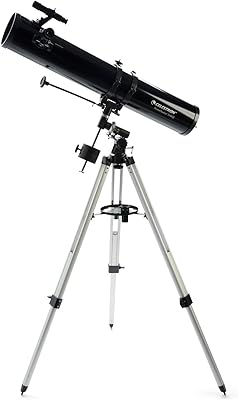
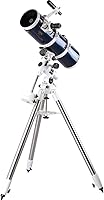
The Celestron Omni XLT 150 Reflector Telescope sits in an interesting position — it's not a beginner scope, and it's not trying to be. Built around a 150mm parabolic mirror, it gathers noticeably more light than the smaller reflectors most hobbyists start with, which translates directly into richer views of galaxies, star clusters, and planetary detail. The included German equatorial mount is a genuine step up from alt-azimuth designs on entry-level scopes, offering more precise tracking once you've learned to use it. Everything you need is in the box — tripod, finderscope, eyepiece, and Starry Night software. Just go in knowing that the EQ mount demands patience before it truly rewards you.

Features & Benefits

The 150mm primary mirror is where the Omni XLT 150 earns its keep. At this aperture, the difference over smaller reflectors isn't subtle — you can resolve the Orion Nebula's structure, pick out Saturn's Cassini Division, and begin detecting faint galaxies that a 4-inch scope would simply miss. Celestron's StarBright XLT coatings cover every optical surface, cutting stray light and pushing more of what the mirror collects to your eye. The CG-4 mount's worm gear slow-motion controls let you nudge targets precisely without jarring the view, and ball bearings on both axes keep movement fluid. The bundled 25mm Plossl is a competent starting eyepiece, and the standard 1.25-inch barrel means affordable upgrades are easy to find.

Best For

This Celestron reflector is squarely aimed at observers who have already spent time under the stars with a smaller scope and are ready for something more capable. If your main targets are deep-sky objects — nebulae, galaxies, open clusters — the 150mm aperture makes a real, visible difference. That said, it's not a casual grab-and-go instrument. At 45.5 pounds fully assembled, this 150mm Newtonian needs a dedicated setup spot or a car large enough to handle the gear. Polar alignment takes practice, so budget early sessions just for learning the mount. Aspiring astrophotographers will find it a reasonable manual starting point, though a motorized drive would eventually be the logical next step.

User Feedback

Across 57 ratings, the Omni XLT 150 holds a 4.1-star average — a score that reflects genuine satisfaction tempered by consistent complaints. On the positive side, buyers frequently highlight the optical clarity, noting that views of planets and brighter deep-sky objects exceeded what they expected from a scope in this class. The sticking point for many is the CG-4 mount itself — getting a solid polar alignment without prior experience can be genuinely frustrating, and several reviewers wished the included manual offered more practical guidance. Periodic mirror collimation also comes up, though most agree it's manageable once you've done it a couple of times. A handful of buyers simply underestimated how heavy and bulky the full rig is to move around.

Pros

  • The 150mm aperture pulls in dramatically more light than typical beginner reflectors, making faint deep-sky targets actually visible.
  • StarBright XLT coatings on every optical surface deliver crisp, high-contrast views with minimal light lost to reflection.
  • The CG-4 equatorial mount with worm gear controls allows smooth, precise manual tracking once properly aligned.
  • Ball bearings on both axes keep movement fluid and reduce the vibration that can ruin high-magnification views.
  • The included 25mm Plossl eyepiece is genuinely usable right out of the box — not just a throwaway accessory.
  • Standard 1.25-inch eyepiece barrel means a huge selection of affordable third-party eyepiece upgrades are compatible.
  • The 6x30 finderscope makes acquiring targets much faster than star-hopping blind through the main eyepiece.
  • Starry Night software adds real educational value, especially for newer observers learning the night sky.
  • Setting circles on both axes help observers who want to locate objects by coordinates rather than star-hopping.
  • Optics earn consistent praise from buyers for delivering satisfying planetary and deep-sky views at this price tier.

Cons

  • Polar alignment on the CG-4 mount has a steep learning curve, and the included instructions offer little practical help.
  • At 45.5 pounds fully assembled, transporting this 150mm Newtonian to a remote dark-sky site is a real logistical challenge.
  • No motorized drive is included, so manual tracking requires constant small adjustments during longer observing sessions.
  • The optical tube requires periodic collimation to maintain peak performance — a task that intimidates some buyers.
  • The bundled eyepiece selection is minimal; one 25mm Plossl leaves gaps in magnification range that require additional purchases.
  • The full-height steel tripod, while sturdy, adds significantly to the overall bulk and storage footprint.
  • The 6x30 finderscope, while adequate, is a step below the reflex finders many hobbyists prefer for speed and comfort.
  • With only 57 ratings on record, there is a relatively thin pool of long-term ownership data to draw reliable conclusions from.
  • Buyers who skip the learning phase often report mount frustration dominating their early experiences rather than actual sky time.
  • The scope's size and weight make spontaneous or impulsive observing sessions unlikely, which can dampen motivation for casual users.

Ratings

Our AI rating engine analyzed verified owner reviews of the Celestron Omni XLT 150 Reflector Telescope from buyers worldwide, filtering out incentivized, duplicate, and bot-generated feedback to surface what real hobbyists actually experienced. The scores below reflect both where this 150mm Newtonian earns genuine praise and where it consistently frustrates buyers, so you get an honest picture before committing.

Optical Performance
88%
Owners consistently describe the views through this Celestron reflector as a genuine revelation compared to their previous scopes — Saturn's rings, Jupiter's cloud bands, and the core of the Orion Nebula are routinely cited as standout moments. The StarBright XLT coatings noticeably reduce washout, even when viewing near moderately lit suburban skies.
A small number of buyers received units where the primary mirror arrived slightly out of collimation, requiring adjustment before the optics delivered their best. Out-of-the-box optical quality is high, but results do vary enough that first-light disappointment occasionally appears in reviews.
Mount Usability
58%
42%
Observers who invested time in learning the CG-4 equatorial mount report that the worm gear slow-motion controls feel precise and satisfying once polar alignment is mastered. The ball bearings on both axes make nudging the scope fluid rather than jerky, which experienced users genuinely appreciate during extended sessions.
The learning curve on the CG-4 is the single most common complaint across the review pool — polar aligning a German EQ mount in the dark, without clear instructions, frustrates a meaningful share of buyers. Several reviewers described abandoning the mount's tracking function entirely in early sessions out of sheer frustration.
Ease of Setup
54%
46%
Once owners develop a personal setup routine, assembly becomes faster and more predictable over time. The steel tripod is sturdy and locks securely, and attaching the optical tube to the CG-4 head is straightforward after the first few attempts.
Initial setup is genuinely demanding for anyone unfamiliar with equatorial mounts — the included documentation does not walk buyers through polar alignment in enough detail, and first-night setup times of over an hour are commonly reported. This is not a scope you can confidently set up in the dark without prior practice in daylight.
Build Quality
81%
19%
The optical tube feels solid and well-finished, and the steel tripod legs inspire more confidence than the flimsy aluminum found on many competing setups at lower price points. Most buyers describe the overall construction as appropriate for the investment, with no reported issues around loose fittings or cosmetic defects on the tube itself.
Some owners note that certain plastic components on the focuser and mount accessories feel inconsistent with the otherwise solid build. A few buyers flagged minor play in the focuser drawtube under heavier eyepieces, which can be a mild annoyance during precise focus adjustments.
Portability
43%
57%
For observers with a fixed backyard setup or a vehicle large enough to handle the gear, portability is largely a non-issue. The tripod and tube break down into manageable separate pieces, and seasoned owners have developed carrying routines that work for them.
At 45.5 pounds fully assembled, the Omni XLT 150 is a genuinely heavy rig — multiple reviewers explicitly stated they underestimated the physical effort involved in moving it to a dark-sky site and back. It rules out spontaneous observing trips and is a poor fit for anyone without reliable vehicle access or physical limitations.
Collimation
66%
34%
Experienced buyers treat collimation as a routine part of ownership and report that once they learned the process, keeping the mirrors aligned takes under ten minutes. The telescope responds well to proper collimation, and the optical improvement afterward is immediately noticeable.
For newcomers, the need to collimate is an unexpected maintenance hurdle that is not clearly communicated at purchase. Several first-time reflector owners described initial confusion about why their views seemed soft, only later discovering the mirrors needed realignment after shipping.
Value for Money
76%
24%
Buyers who committed to learning the equipment consistently describe the Omni XLT 150 as genuinely good value for a 150mm Newtonian on an equatorial mount, especially given the included accessories and Starry Night software. The optical quality delivered for the price tier earns repeated mention in positive reviews.
Buyers who underestimated the learning curve or overestimated portability tend to feel the price was not justified by their actual experience. The lack of a motorized drive also means that astrophotography-focused buyers often discover they need to spend significantly more to make the setup truly functional for imaging.
Included Accessories
69%
31%
The bundled 25mm Plossl is a legitimately useful eyepiece rather than a token throwaway, and the 6x30 finderscope is adequate for star-hopping to bright targets. The Starry Night software download adds genuine value, particularly for users who want to plan sessions and learn their way around the night sky.
One eyepiece leaves obvious gaps in the magnification range — buyers quickly realize a higher-power option is needed for planetary observing and must budget for that separately. The finderscope, while functional, is a basic unit that many intermediate observers eventually replace with a reflex or red-dot model.
Finderscope Quality
62%
38%
The 6x30 optical finderscope is sufficient for locating bright stars, planets, and easy deep-sky targets when used in darker skies. It is properly mounted and reasonably easy to align with the main tube, which reduces early frustration during target acquisition.
In light-polluted suburban settings, the finderscope's small aperture limits its usefulness significantly. Many intermediate observers note that upgrading to a wider reflex finder is one of the first improvements they made, which suggests the stock unit is more of a placeholder than a long-term solution.
Tracking Precision
61%
39%
After proper polar alignment, the CG-4 mount's worm gear slow-motion controls allow skilled users to manually track objects with genuine precision during visual sessions. The mechanism feels deliberate and controlled rather than sloppy, which experienced observers credit as a meaningful advantage over alt-azimuth alternatives.
Manual tracking demands continuous attention — you cannot step away from the eyepiece for more than a minute before a target drifts noticeably. Without a motorized drive, this is an inherent limitation of the system that frustrates buyers expecting effortless celestial tracking.
Documentation & Support
47%
53%
Celestron has a reasonably active online presence, and a strong third-party community of CG-4 users has produced tutorials and guides that fill the gaps left by the official manual. Buyers who sought out online resources generally found satisfactory answers to their setup questions.
The included documentation is widely considered inadequate for users new to equatorial mounts — polar alignment in particular receives only cursory treatment in the manual. Multiple reviewers explicitly said a better getting-started guide would have saved them hours of frustration on their first few nights.
Deep-Sky Capability
84%
The 150mm aperture is where the Omni XLT 150 makes its strongest argument — observers in reasonably dark skies report satisfying views of Messier galaxies, globular clusters, and emission nebulae that a 4-inch or smaller scope simply cannot replicate. Light-gathering at this aperture is genuinely meaningful for visual deep-sky work.
Urban observers with significant light pollution find the deep-sky experience considerably diminished, as the larger mirror amplifies sky glow along with faint objects. The scope's potential in this category is highly site-dependent, which is not always clear to buyers shopping from a city.
Astrophotography Readiness
39%
61%
The equatorial mount provides a legitimate tracked platform that makes the Omni XLT 150 more capable for basic astrophotography than any alt-azimuth setup at a similar price. Buyers interested in learning the fundamentals of tracked imaging — especially lunar and planetary video — find it a workable starting point.
Without a motorized drive, long-exposure deep-sky imaging is essentially impractical, and the manual tracking demands make consistent astrophotography extremely difficult. Buyers who purchase this scope primarily with imaging ambitions in mind tend to be disappointed and quickly realize a motorized upgrade is necessary.

Suitable for:

The Celestron Omni XLT 150 Reflector Telescope is built for hobbyists who have already spent real time with a starter scope and are ready to move up without jumping straight to professional-grade equipment. If your observing sessions regularly include hunting down faint nebulae, resolving globular clusters, or pulling in planetary detail, the 150mm aperture will give you a noticeably richer experience than most entry-level reflectors can manage. It suits people with a dedicated backyard setup or a consistent dark-sky site, where the effort of polar-aligning the CG-4 mount pays off over the course of a full night's observing. Those who are methodical learners — willing to spend a few sessions just mastering the equatorial mount before chasing targets — will get the most out of what this scope offers. Casual astrophotographers looking for an affordable manual EQ platform to experiment with tracked exposures will also find it a reasonable, if limited, starting point.

Not suitable for:

The Celestron Omni XLT 150 Reflector Telescope is a poor fit for anyone expecting a quick, effortless setup each time they head outside. At just over 45 pounds fully assembled, moving this rig from storage to a dark observing spot and back is a genuine physical commitment — buyers who underestimate that often regret the purchase. It is also not the right choice for true beginners who have never used an equatorial mount before and lack the patience or resources to learn polar alignment from scratch; frustration tends to follow fast in those situations. Urban observers with minimal dark sky access will also find the experience underwhelming, since the wider aperture amplifies light pollution as readily as it amplifies starlight. Serious astrophotographers expecting long guided exposures should look elsewhere — this is a manual mount with no motorized drive, and its tracking capabilities are firmly in the hands-on, starter category.

Specifications

  • Optical Design: Newtonian reflector using a parabolic primary mirror to focus incoming light without chromatic aberration.
  • Aperture: 150mm (approximately 5.9-inch) primary mirror diameter for strong light-gathering performance on deep-sky and planetary targets.
  • Lens Coating: All air-to-glass surfaces are treated with Celestron's StarBright XLT multi-layer anti-reflective coatings to maximize light transmission.
  • Included Eyepiece: One 25mm Plossl eyepiece with a standard 1.25-inch barrel is included, providing a wide, comfortable starting field of view.
  • Eyepiece Compatibility: The 1.25-inch focuser barrel accepts any standard third-party 1.25-inch eyepieces, diagonals, or accessories.
  • Finderscope: A 6x30 optical finderscope is included to help visually locate targets before viewing through the main optical tube.
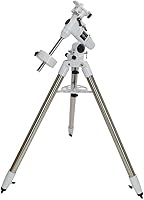
  • Mount Type: CG-4 German equatorial mount with manual slow-motion controls via worm gears on both the right ascension and declination axes.
  • Mount Bearings: Ball bearings are installed on both the RA and Dec axes to reduce friction and provide smooth, stable movement during tracking.
  • Setting Circles: Graduated setting circles on both axes allow coordinate-based object location when the mount is properly polar aligned.
  • Tripod: Full-height steel tripod with 1.75-inch diameter legs provides a stable, vibration-resistant base for the optical tube and mount.
  • Focus Type: Manual rack-and-pinion or single-speed focuser; no electronic or motorized focusing mechanism is included.
  • Item Weight: The complete assembled system weighs approximately 45.5 pounds, which should be factored into transport and storage planning.
  • Dimensions: The optical tube assembly measures approximately 31″ in length by 15.5″ wide by 13.75″ tall in its packaged configuration.
  • Included Software: A free download code for Starry Night astronomy software is included, giving access to a database of over 36,000 celestial objects and printable sky maps.
  • Drive System: No motorized drive is included; tracking is performed manually using the slow-motion control cables on the CG-4 mount.
  • Manufacturer: Designed and distributed by Celestron, a California-based optics company with a long history in consumer and professional telescope manufacturing.
  • Model Number: The official Celestron model number for this optical tube and mount combination is 31057.
  • Availability: This product has not been discontinued by the manufacturer as of the most recent available listing data.

Related Reviews
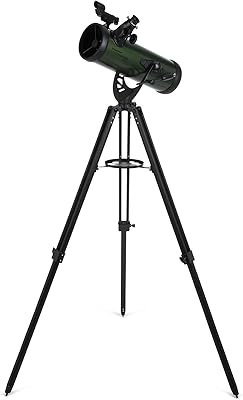
Celestron ExploraScope 114AZ Reflector Telescope
78%
83%
Optical Performance
91%
Ease of Setup
78%
Mount Usability
62%
Included Accessories
57%
Focuser Quality
More
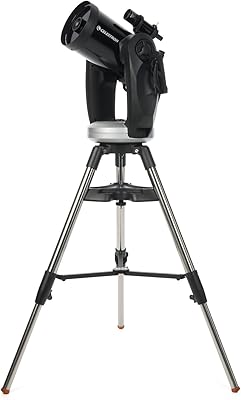
Celestron CPC 800 XLT Computerized Telescope
76%
93%
Optical Clarity
84%
GoTo Accuracy
88%
GPS Alignment System
86%
Build Quality
38%
Portability
More
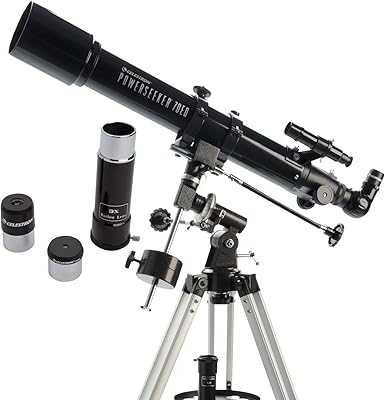
Celestron PowerSeeker 70EQ Refractor Telescope
71%
78%
Optical Clarity
83%
Mount Quality & Stability
61%
Ease of Assembly
74%
Accessory Bundle Value
86%
Portability
More
Celestron AstroMaster 102AZ Refractor Telescope
77%
78%
Optical Clarity
91%
Ease of Setup
74%
Mount Usability
71%
Tripod Stability
83%
Value for Money
More
Celestron AstroMaster 90AZ Refractor Telescope
75%
83%
Optical Clarity
91%
Ease of Setup
78%
Mount Usability
62%
Tripod Stability
76%
Value for Money
More
Celestron PowerSeeker 70AZ Refractor Telescope
75%
78%
Optical Clarity
88%
Ease of Setup
82%
Mount Usability
61%
Tripod Stability
83%
Value for Money
More
Celestron PowerSeeker 60AZ Refractor Telescope
71%
78%
Optical Clarity
62%
Mount & Tracking
54%
Tripod Stability
67%
Eyepiece Quality
83%
Value for Money
More
Celestron PowerSeeker 114EQ Reflector Telescope
73%
83%
Optical Performance
61%
Mount Quality
57%
Ease of Setup
74%
Included Accessories
81%
Value for Money
More
Celestron NexStar 6SE Computerized Telescope
72%
88%
Optical Performance
83%
GoTo Mount Accuracy
86%
SkyAlign Ease of Use
61%
Mount Stability
81%
Portability & Setup Time
More
Celestron AstroMaster 114EQ Reflector Telescope
70%
83%
Optical Performance
78%
Mirror & Coating Quality
81%
Equatorial Mount
51%
Collimation Consistency
58%
Included Eyepieces
More

FAQ

It depends on the person. The optics are excellent, but the CG-4 equatorial mount genuinely takes time to learn — polar alignment in particular can be frustrating without prior experience. If you are patient and willing to spend your first few sessions learning the mount rather than observing, it is manageable. If you want something you can just point at the sky right away, a simpler alt-azimuth mount would serve you better to start.

Polar alignment is the one task that trips up most new owners of the Omni XLT 150. The basic process involves pointing the mount's polar axis toward Polaris and making fine adjustments — it sounds simple, but getting it precise enough for satisfying visual tracking takes practice. There are plenty of good tutorials online specifically for the CG-4, and after three or four sessions most people find a reliable routine that works for them.

Quite a lot, honestly. The Orion Nebula shows real structure and color, Saturn's rings and the Cassini Division are well-resolved, Jupiter's cloud bands and its four Galilean moons are easily visible, and you can pick up fainter galaxies like the Andromeda Galaxy and some Messier objects that a smaller scope would struggle with. Dark skies make a significant difference — light pollution will limit what the aperture can pull in.

It comes with a solid foundation: a 25mm Plossl eyepiece, a 6x30 finderscope, a steel tripod, and the CG-4 mount. For most visual observing, that is enough to get started. Many observers eventually add a higher-magnification eyepiece (something in the 10mm range) to get better planetary views, but it is not mandatory on night one.

Reflectors need periodic collimation — the process of realigning the mirrors so light focuses correctly. For this scope, checking collimation every few sessions is a reasonable habit, especially after transporting it. It sounds intimidating at first, but Celestron provides a guide and there are detailed video tutorials online. After you have done it once or twice with a collimation cap or laser collimator, it typically takes under ten minutes.

In a limited sense, yes. The CG-4 equatorial mount provides a stable, trackable platform, which is the foundation astrophotography requires. However, without a motorized drive, keeping a target centered for long exposures means constant manual corrections — which is impractical for anything beyond short planetary videos or quick snapshots of the moon. Think of it as an introduction to tracked astrophotography rather than a serious imaging rig.

Technically yes, but do not underestimate the effort involved. The full setup weighs around 45.5 pounds, which means loading and unloading from a vehicle, carrying pieces out to a field, assembling in the dark, and polar aligning before you can observe. People with an SUV or truck and a clear routine manage it regularly. But if you are hoping to throw it in the back seat of a compact car for a spontaneous trip, that is unlikely to go smoothly.

Any standard 1.25-inch eyepiece will work, and that covers the vast majority of accessories on the market. The included 25mm gives you a wide, low-power view ideal for finding targets and observing extended objects like nebulae. A good first upgrade is a 9mm or 10mm Plossl or wide-angle eyepiece for higher magnification planetary views. Avoid very short focal length eyepieces (below 6mm) early on — exit pupils get small and atmospheric turbulence becomes a limiting factor.

Yes, it is a legitimate and well-regarded astronomy program. The download code gives you access to a database of over 36,000 celestial objects, printable sky charts, and simulation tools that help you plan what to observe on a given night. For beginners especially, using it before a session to identify what is currently visible in your sky is genuinely useful and makes observing time more productive.

A Dobsonian at a similar price would typically offer a larger aperture and simpler mount operation — great for pure visual observing with minimal setup hassle. A refractor would generally give sharper high-contrast planetary views but at the cost of aperture per dollar. The Omni XLT 150 sits in the middle: it offers genuine aperture, an upgradeable equatorial mount, and solid optics, but asks more of the user in terms of setup and maintenance than either alternative.