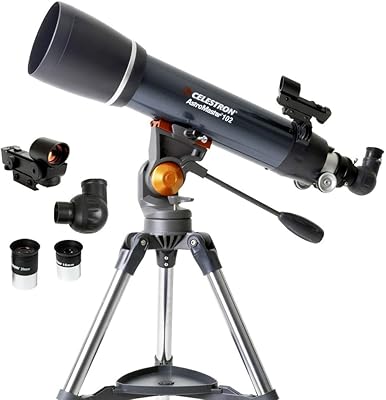
Celestron PowerSeeker 80EQ Refractor Telescope


Overview
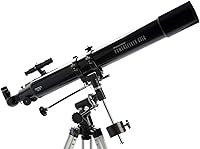
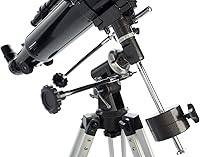
The Celestron PowerSeeker 80EQ Refractor Telescope is one of those rare entry-level instruments that has earned its place on the market through actual optical performance rather than clever packaging. Celestron has been making optics since 1960, and this scope reflects that heritage — it punches above its price class in ways that matter to a new stargazer. What sets it apart from simpler beginner scopes is the German equatorial mount, which tracks celestial objects as they drift across the sky rather than forcing constant manual correction. That said, this is a casual observing tool, not a platform for serious astrophotography. Its staying power — still selling strong well over a decade after launch — says plenty.
Features & Benefits
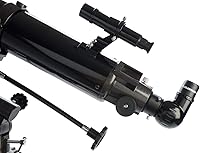
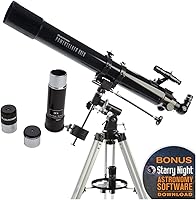
The 80mm aperture is the number that matters most here. It is wide enough to pull in sufficient light for clear views of the Moon's craters, Saturn's rings, and Jupiter's cloud bands — things that genuinely wow first-time observers. The 900mm focal length produces a narrow, high-contrast field that suits planetary work beautifully. Tracking objects is handled by a slow-motion altitude rod on the equatorial mount; once you learn to align it, keeping a planet centered becomes surprisingly intuitive. The included 20mm and 4mm eyepieces, combined with the 3x Barlow lens, give you a workable magnification range. A 5x24 finderscope and a bundled astronomy software download round out a genuinely complete starter kit.
Best For
This 80mm refractor is an ideal match for a specific type of buyer. If you are purchasing your first telescope and want something that delivers real views of the night sky without requiring an engineering degree to operate, this fits. It is also a natural pick for families with curious kids — the compact, 16-pound build makes it easy for young observers to handle, and the experience of seeing Saturn together for the first time is hard to overstate. Campers and travelers will appreciate how easily it packs into a car. It is less suited to wide-field deep-sky viewing or any form of astrophotography. Think of it as a dedicated planet scope — one that does exactly that job well.
User Feedback
With over 2,260 ratings averaging 4.3 out of 5, the PowerSeeker 80EQ has a clearly positive track record. Buyers consistently praise the crisp lunar detail and how well the scope holds up relative to its price. Portability gets frequent mentions too — people genuinely appreciate that it travels. The criticisms are worth noting honestly. A fair number of users found the equatorial mount confusing at first; it does require a short learning period, but most report getting comfortable after a session or two. The 4mm eyepiece draws mixed reviews — at maximum magnification, atmospheric turbulence often degrades the image, which is a physics limitation, not a product flaw. A handful of buyers also flagged unclear tripod assembly instructions, so watching a setup video beforehand is a genuinely smart move.
Pros
- Saturn's rings and Jupiter's cloud bands are clearly visible on a calm night — genuinely impressive for a first scope.
- The German equatorial mount tracks celestial objects smoothly once aligned, a real upgrade over basic alt-azimuth designs.
- At just over 16 pounds, the PowerSeeker 80EQ is easy to carry to a backyard, campsite, or dark-sky location.
- The bundled accessory kit — two eyepieces, a 3x Barlow lens, and a finderscope — is more complete than most rivals at this price.
- Celestron's two-year US warranty and knowledgeable support team provide genuine peace of mind for new buyers.
- The included astronomy software adds real educational value, helping beginners plan sessions and learn the night sky.
- Lunar detail through this 80mm refractor is outstanding — craters, mountain ranges, and shadow play are all on full display.
- Over a decade on the market with 2,260-plus ratings averaging 4.3 out of 5 signals consistent, proven buyer satisfaction.
- Families report it as one of the better shared activities for parents and kids with a genuine interest in science.
Cons
- The tripod assembly instructions are widely criticized as unclear — budget extra time and find a setup video before your first night out.
- The equatorial mount has a real learning curve; first-session frustration is common among total beginners.
- Chromatic aberration (color fringing) is visible around bright objects at higher magnifications, a known trait of budget refractors.
- The tripod vibrates noticeably when touched at high magnification, and settling takes several seconds on hard surfaces.
- The 5x24 finderscope is dim and limited — many owners replace it with a red-dot finder fairly quickly.
- Deep-sky objects like galaxies and star clusters appear as vague smudges rather than detailed structures.
- The included eyepieces have narrow apparent fields of view, making sky orientation harder than with aftermarket alternatives.
- Growing hobbyists often outgrow the mount and accessories within 12 to 18 months as their skills and ambitions develop.
- International buyers do not benefit from the same warranty coverage as US customers, which is a meaningful gap in protection.
Ratings
The scores below reflect our AI-driven analysis of thousands of verified global purchases of the Celestron PowerSeeker 80EQ Refractor Telescope, with spam, bot-generated, and incentivized reviews actively filtered out before any scoring was applied. Every category captures what real buyers experienced across beginner stargazing sessions, backyard setups, camping trips, and family use — not what the product claims to deliver. Both the standout strengths and the friction points are transparently represented so you can make a genuinely informed decision.
Optical Clarity
Mount Usability
Portability
Value for Money
Build Quality
Ease of Assembly
Finderscope Usefulness
Eyepiece Quality
Planetary Performance
Stability During Observation
Software & Educational Value
Suitability for Kids
Warranty & Brand Support
Long-Term Satisfaction
Suitable for:
The Celestron PowerSeeker 80EQ Refractor Telescope is a strong match for anyone taking their first serious steps into amateur astronomy without wanting to spend serious money doing it. If your primary targets are the Moon, Saturn, Jupiter, and Mars — the objects that make beginners fall in love with the night sky — this scope delivers real, memorable views of all of them. Families with curious kids aged eight and up will find it particularly rewarding: it is light enough to carry outside together, simple enough to use after a short learning period, and the payoff of seeing Saturn's rings for the first time as a family is genuinely hard to put a price on. Campers and travelers also benefit from the portable form factor; it packs easily into a car and sets up in minutes at a dark campsite. Gift buyers looking for a credible, reputable instrument from a brand with decades of optics history will find this a safe and well-regarded choice.
Not suitable for:
If you are already past the beginner stage or have any interest in astrophotography, the Celestron PowerSeeker 80EQ Refractor Telescope is probably not the right tool for you. The manual German equatorial mount has no motorized tracking, which makes long-exposure photography essentially impractical, and the optical design is better suited to high-contrast planetary views than to the wide, dim fields needed for deep-sky imaging. Experienced observers who want to hunt galaxies, resolve globular clusters, or observe faint nebulae will quickly feel limited by the 80mm aperture — a larger instrument collects significantly more light and opens up a much richer catalog of targets. Anyone expecting to simply point this scope at the sky and immediately see things clearly will also face a short but real frustration period; the equatorial mount requires a basic understanding of alignment before it feels natural. And if you are hoping the included 4mm eyepiece will regularly deliver crisp 225x views, atmospheric turbulence will frequently disappoint you — that is true of any telescope at this price, but it is worth being clear-eyed about before purchasing.
Specifications
- Optical Design: This telescope uses a refractor design, meaning it gathers and focuses light through a glass objective lens rather than mirrors.
- Aperture: The objective lens measures 80mm (3.15″) in diameter, determining how much light the telescope collects from distant objects.
- Focal Length: The optical tube has a focal length of 900mm, producing a narrow, high-contrast field well-suited to planetary and lunar observation.
- Focal Ratio: The focal ratio is f/11, indicating a relatively slow optical system that prioritizes contrast and sharpness over wide-field views.
- Magnification Range: Using the included eyepieces and Barlow lens, achievable magnification spans from 45x up to a theoretical maximum of 225x.
- Limiting Magnitude: Under dark skies, the 80mm aperture can reveal stars and objects as faint as magnitude 12, which is well beyond what the naked eye can detect.
- Mount Type: The scope ships with a manual German equatorial mount featuring a slow-motion altitude rod for smooth, controlled sky tracking.
- Included Eyepieces: Two eyepieces are included: a 20mm for wider, lower-power views at 45x, and a 4mm for close-up planetary detail at 225x.
- Barlow Lens: A 3x Barlow lens is included, effectively tripling the magnifying power of each eyepiece without requiring additional purchases.
- Finderscope: A 5x24 finderscope is mounted on the tube to help users locate and center objects before looking through the main eyepiece.
- Tube Length: The optical tube measures 21 inches in length, keeping the overall assembled footprint compact enough for indoor storage and car transport.
- Assembled Weight: The fully assembled scope, mount, and tripod weigh approximately 16.4 lbs (7.4 kg), making it portable for most adults and older children.
- Focus Type: Focusing is performed manually via a rack-and-pinion focuser, with no motorized or electric focus assist included.
- Power Source: The telescope and mount require no batteries or external power; all tracking and adjustment is performed by hand using the slow-motion controls.
- Warranty: Celestron provides a 2-year limited warranty covering manufacturing defects, backed by a US-based customer support team.
- Bonus Software: Purchase includes a free download code for a third-party astronomy software package to help users plan observing sessions and learn the night sky.
- Assembled Dimensions: When fully set up, the telescope occupies a footprint of approximately 40″ x 40″ and stands up to 56″ tall depending on tripod extension.
- Manufacturer: Designed and sold by Celestron, a California-based optics company that has been producing telescopes and optical instruments since 1960.
Related Reviews
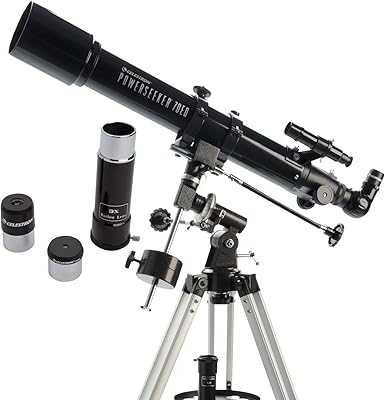
Celestron PowerSeeker 70EQ Refractor Telescope
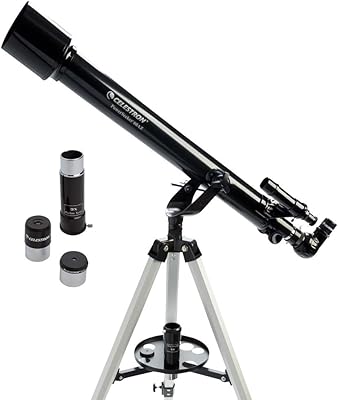
Celestron PowerSeeker 60AZ Refractor Telescope
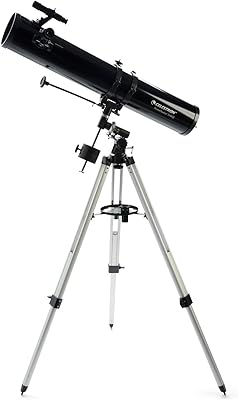
Celestron PowerSeeker 114EQ Reflector Telescope
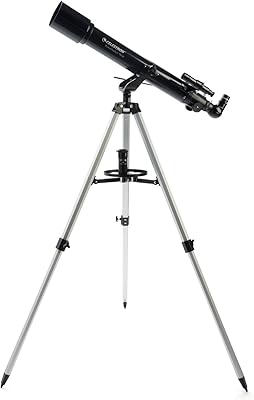
Celestron PowerSeeker 70AZ Refractor Telescope
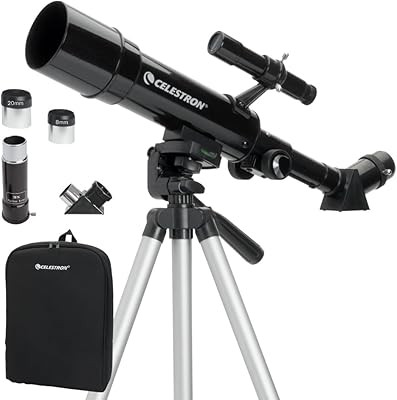
Celestron Travel Scope 50 Refractor Telescope
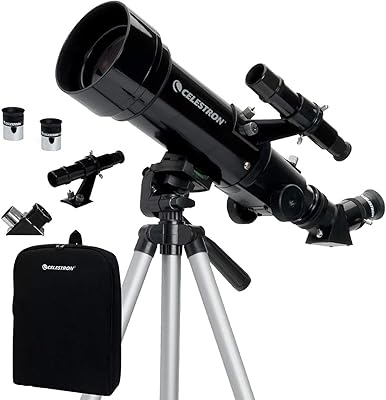
Celestron Travel Scope 70
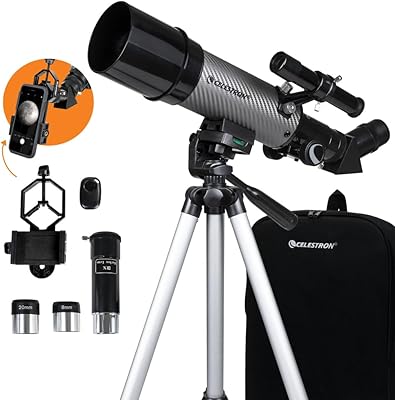
Celestron Travel Scope 60DX Portable Refractor Telescope
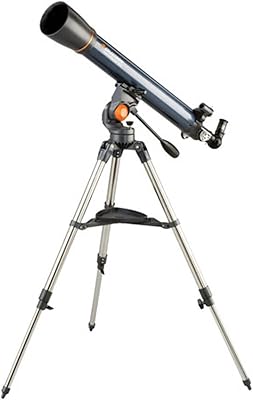
Celestron AstroMaster 90AZ Refractor Telescope
Celestron NexStar 90SLT Computerized Telescope