Overview

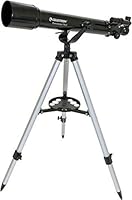
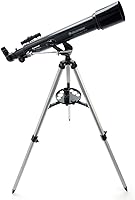
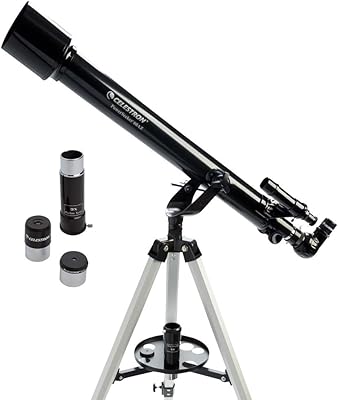
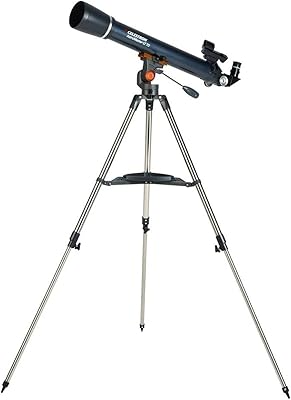
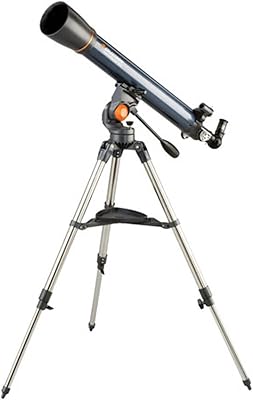
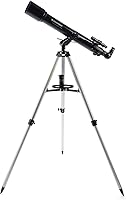
The Celestron PowerSeeker 70AZ Refractor Telescope has been a staple beginner scope since it first appeared in 2010 — and its continued presence on store shelves says something real about its staying power. This isn't a telescope for the serious hobbyist chasing faint nebulae; it's built for the curious adult, the excited kid, and the gift-buyer who wants something meaningful without a steep learning curve. Celestron, a California-based brand with over six decades in optics, lends this entry-level telescope a credibility that cheaper off-brand alternatives simply can't match. The alt-azimuth mount is a smart choice here — point it up, swing it sideways, done. No polar alignment headaches, no confusing setup jargon.
Features & Benefits

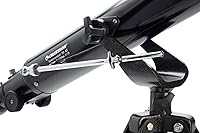
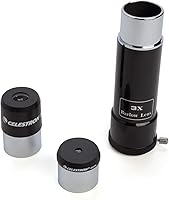
At 70mm across, the objective lens gathers enough light to reveal crisp lunar craters, Saturn's rings, and Jupiter's cloud bands on a clear night. The scope ships with two eyepieces — the 20mm is your go-to for wide, stable views, while the 4mm pushes magnification higher. Pair either with the included 3x Barlow lens and you can stretch that range considerably, though the practical sweet spot sits well below the theoretical maximum. The slow-motion altitude rod on the yoke mount lets you nudge the tube smoothly as objects drift across the field — no grabbing, no overshooting. The erect-image diagonal also makes this beginner refractor handy for daytime bird-watching, which is a genuine everyday bonus.

Best For

This entry-level telescope earns its place as the ideal first scope for kids, teenagers, and adults who are curious about the night sky but not ready to invest heavily in the hobby. It works especially well as a holiday or birthday gift — setup is quick enough that you're actually observing the same night you unbox it. Casual observers focused on the Moon and the brighter planets will get plenty of satisfaction. It's also light enough to toss in a car for a camping trip or carry to a dark backyard without fuss. Parents who want a shared experience — something both adult and child can enjoy together — will find the PowerSeeker 70AZ perfectly sized for that role.

User Feedback

Across more than a thousand ratings, the pattern is fairly consistent. Most buyers are pleasantly surprised by the Moon views right out of the box, and assembly earns high marks for its simplicity. Portability gets repeated praise, especially from campers and backyard observers. That said, a few frustrations surface regularly — the 4mm eyepiece at full magnification tends to produce shaky, hard-to-hold images, and most experienced users suggest skipping it in favor of a mid-range alternative. Tripod stability is another recurring concern, with some owners eventually upgrading to a sturdier mount. A handful of buyers also report difficulty redeeming the bundled software download. The 2-year warranty and US-based support team do offer genuine reassurance if anything goes sideways.

Pros

  • Moon views are genuinely impressive right out of the box — craters and surface detail are clearly visible.
  • Assembly is straightforward enough that most buyers are observing the same evening they unbox it.
  • The alt-azimuth mount is intuitive to use; no complicated alignment process required.
  • At under 9 pounds assembled, the PowerSeeker 70AZ is light enough to carry to a campsite or dark field without hassle.
  • The slow-motion altitude rod lets you track objects smoothly without constant overcorrection.
  • Saturn's rings and Jupiter's cloud bands are visible under decent skies — genuinely exciting for a first-time observer.
  • The erect-image diagonal makes this beginner refractor useful for daytime terrestrial viewing too.
  • Celestron backs it with a 2-year warranty and real US-based technical support, not just an email address.
  • The included 3x Barlow lens meaningfully extends the magnification range without extra cost.
  • A well-established product with over a decade on the market and thousands of real buyer reviews to consult.

Cons

  • The 4mm eyepiece at maximum magnification produces shaky, difficult-to-use images in most real-world conditions.
  • Tripod stability is mediocre — noticeable vibration at higher magnifications frustrates many users.
  • The bundled astronomy software download link is reportedly outdated and difficult for some buyers to redeem.
  • No motorized tracking means objects drift out of view quickly, requiring constant manual adjustment.
  • Deep-sky objects like nebulae and galaxies are essentially out of reach with the 70mm aperture.
  • The finderscope requires careful alignment before it becomes reliably useful for locating targets.
  • Casual buyers expecting TV-quality images may feel let down without proper expectation-setting.
  • No smartphone mount or camera adapter is included, so sharing views digitally requires third-party accessories.

Ratings

Our AI rating system analyzed thousands of verified global reviews for the Celestron PowerSeeker 70AZ Refractor Telescope, actively filtering out incentivized, duplicate, and bot-generated feedback to surface what real buyers genuinely experienced. The scores below reflect an honest, balanced picture — strong points and frustrations alike — so you can make a confident, well-informed decision before purchasing.

Optical Clarity
78%
22%
For a scope in this price tier, lunar detail is a consistent highlight — craters, mountain ridges, and terminator shadow lines come through with satisfying sharpness using the 20mm eyepiece. Saturn's rings and Jupiter's equatorial bands are clearly distinguishable on steady nights, which genuinely surprises first-time observers.
Chromatic aberration — a faint color fringing around bright objects — is noticeable at higher magnifications, a known limitation of entry-level refractor designs. Stars at the edge of the field can appear slightly soft, which bothers more discerning eyes even if casual observers rarely notice.
Ease of Setup
88%
Assembly consistently takes under 30 minutes with no tools required, and the instructions are clear enough for a first-timer or an older child to follow without adult help. Reviewers frequently mention the satisfaction of being outside and observing on the same evening they received the package.
Aligning the finderscope with the main optical tube requires a bit of trial and error during initial setup, and the instructions for this step are less intuitive than the rest. Without proper finderscope alignment, locating targets becomes frustrating, especially for beginners who don't yet know the sky.
Mount Usability
82%
18%
The alt-azimuth yoke mount is genuinely beginner-friendly — no polar alignment, no jargon, just two axes of movement that feel natural to anyone who has never used a telescope before. The slow-motion altitude rod is a practical addition that lets you nudge the scope smoothly rather than grabbing the tube and overshooting your target.
The mount has no azimuth slow-motion control, so horizontal tracking still requires grabbing the tube by hand, which can introduce vibration. As targets move across the sky, the lack of dual-axis fine control becomes more noticeable, particularly at higher magnifications.
Tripod Stability
61%
39%
At lower magnifications the tripod holds steady enough for relaxed viewing, and its lightweight aluminum construction makes the whole system easy to carry out to the backyard or a campsite without strain. Casual lunar sessions at 35x to 70x rarely expose any stability issues.
At higher magnifications, any touch to the scope or a mild gust of wind sends vibrations rippling through the view, with several seconds needed for the image to settle. A meaningful share of reviewers recommend investing in a sturdier aftermarket tripod once they realize how limiting the stock one becomes above 100x.
Value for Money
83%
The bundled accessory set — two eyepieces, a 3x Barlow lens, an erect-image diagonal, a finderscope, and a software download — represents a genuinely complete starter kit that would cost more to assemble separately. Celestron's 2-year warranty and US-based support add real peace of mind that cheaper no-name alternatives simply cannot offer.
The included 4mm eyepiece, while adding to the accessory count on paper, delivers inconsistent results that leave many buyers feeling shortchanged on that specific item. A better-quality mid-range eyepiece in the 6mm to 9mm range would have been a more honest and practical inclusion.
Portability
91%
Weighing under 9 lbs assembled and fitting neatly into a car trunk, the PowerSeeker 70AZ is one of the more travel-friendly options in its class. Campers and road-trippers specifically praise how easy it is to set up at a dark-sky site with minimal effort after a long drive.
There is no dedicated carry bag or case included, so transporting the scope requires improvising with a duffel bag or purchasing a separate case. The optical tube can feel awkward to transport without something to protect the objective lens from dust and accidental contact.
Eyepiece Quality
57%
43%
The 20mm eyepiece performs reliably well for its class, delivering a comfortable eye relief and a field of view that works nicely for scanning the Moon or locating a planetary target. Paired with the 3x Barlow, it covers a useful mid-range magnification that most beginners will use the majority of the time.
The 4mm eyepiece is the most commonly criticized component in the entire package — at full stretch it pushes beyond what the optics and the tripod can support, resulting in dim, wobbly images that frustrate more than they impress. Many reviewers end up leaving it in the box and upgrading to a quality aftermarket eyepiece fairly quickly.
Magnification Range
73%
27%
The practical low-end of 35x is a comfortable starting point for wide lunar views and finding planets, while the usable upper range of around 140x to 165x covers most targets a beginner will realistically pursue. The 3x Barlow makes the two included eyepieces feel like four, which is a smart way to extend versatility without added cost.
The advertised 175x maximum magnification is technically achievable but optically counterproductive — images become dim and shaky before that ceiling is reached. Beginners chasing the highest number on the box often feel misled when the reality of atmospheric limits and mount wobble kicks in.
Daytime Versatility
79%
21%
The erect-image diagonal corrects the orientation for terrestrial use, making this entry-level telescope genuinely useful for birdwatching, wildlife spotting, or observing distant landscapes during the day. Several reviewers mention using it regularly for daytime activities, which meaningfully extends the product's overall value.
The narrow field of view at anything above 35x makes tracking fast-moving birds or animals more difficult than a dedicated spotting scope would allow. It works best for stationary or slow-moving distant subjects rather than dynamic daytime wildlife scenarios.
Build Quality
68%
32%
The optical tube itself feels reasonably solid, and the focuser rack-and-pinion mechanism operates smoothly without excessive play — a detail that matters during the focusing process, especially at higher magnifications. Celestron's quality control at this price point is generally more consistent than comparable no-name alternatives.
Some plastic components on the mount and accessory tray feel noticeably lightweight, and a few reviewers report minor wobble in the yoke connection point after extended use. It is clearly built to a price, and buyers treating it roughly or assembling it carelessly may encounter premature wear.
Finderscope Usefulness
66%
34%
The included reflex finderscope is a practical tool for pointing the scope at a general region of sky before switching to the main eyepiece for a detailed look. Beginners who take the time to properly align it on a distant landmark during daylight find it genuinely speeds up target acquisition.
Alignment drifts over time and often needs to be rechecked between sessions, which becomes tedious. Some buyers find the reflex dot sight difficult to use in very bright twilight conditions, and the mounting bracket lacks the fine-tuning screws found on higher-quality finder brackets.
Software Bundle
52%
48%
When the software download works as intended, it provides a solid introduction to star charts, planetary positions, and sky-planning tools that complement the hands-on experience of observing. For a complete beginner, having a guided digital companion alongside the physical scope is a thoughtful pairing.
A recurring complaint across reviews is that the download link or redemption code included in the box is either outdated, broken, or leads to a confusing page. This is a frustrating experience for buyers who expected the software to be a ready-to-use bonus on day one.
After-Sales Support
84%
Celestron's 2-year warranty is a genuine differentiator at this price point, and their US-based support team is consistently described as knowledgeable and responsive in buyer feedback. For a first-time telescope owner who may have setup questions or encounter an issue, having real humans to call is more reassuring than it might seem.
Response times during peak holiday seasons can stretch longer than buyers would like, and warranty claims involving shipping can be slow. A small number of reviewers note that support interactions around the software download were less helpful than expected.
Beginner Suitability
86%
Almost everything about this scope — the intuitive mount, the quick setup, the forgiving low-power eyepiece, the compact size — is calibrated for someone who has never used a telescope before. Parents report that kids as young as eight or nine can navigate the basics independently after one guided session.
The lack of any printed sky map or observing guide in the box leaves total beginners slightly on their own when it comes to knowing what to look at and when. A simple starter observing plan included in the packaging would have meaningfully improved the out-of-box experience for the target audience.

Suitable for:

The Celestron PowerSeeker 70AZ Refractor Telescope was built with a very specific buyer in mind, and when it lands in the right hands, it genuinely delivers. It's an ideal pick for parents wanting to spark a child's interest in science and the night sky without committing to a complex, expensive instrument. Teenagers and curious adults who have always wondered what Saturn actually looks like through a real telescope — not just a photo — will find this beginner refractor rewarding on that front. It also works well as a dual-purpose scope: the erect-image diagonal means you can use it for birdwatching or landscape viewing during the day, making it more versatile than a pure astronomy tool. Campers, travelers, and backyard observers who want something light enough to carry without a second thought will appreciate how easy it is to take anywhere. If your goal is to explore the Moon, catch Jupiter's moons, or spot Saturn's rings on a clear night, this entry-level telescope is more than capable.
Not suitable for:

The Celestron PowerSeeker 70AZ Refractor Telescope is not the right tool for anyone who has already spent time with a telescope and is looking to step up their game. Hobbyists interested in deep-sky objects — think faint galaxies, nebulae, or star clusters — will quickly hit a ceiling; the 70mm aperture simply cannot gather enough light for that kind of observing. Astrophotography is off the table entirely: this is a purely visual instrument with no provision for camera attachment or motorized tracking. Buyers who prioritize rock-solid mechanical stability may also find the included tripod underwhelming, particularly at higher magnifications where any wobble becomes amplified. The 4mm eyepiece bundled in the box sounds appealing on paper, but in practice it pushes the scope beyond what the optics and mount can comfortably handle, leaving experienced users frustrated. If you already know what you want in a telescope and are shopping with specific technical requirements, this is not the scope to grow into.
Specifications

  • Optical Design: This telescope uses a refractor design, meaning it gathers and focuses light through a glass lens rather than mirrors, producing sharp, high-contrast views with minimal maintenance.
  • Aperture: The objective lens measures 70mm (2.76″) in diameter, which is sufficient to resolve lunar craters, Saturn's rings, and Jupiter's main moons under reasonably dark skies.
  • Focal Length: The optical tube has a focal length of 700mm (28″), giving the scope a focal ratio of f/10, which is well-suited to planetary and lunar observation.
  • Magnification: Using the supplied eyepieces and Barlow lens, the scope delivers a practical range of 35x to 165x, with a theoretical ceiling of 175x that exceeds what the optics can cleanly support.
  • Included Eyepieces: Two eyepieces are included — a 20mm for wide, stable views at lower power, and a 4mm for higher magnification, though the 4mm is best used selectively on steady nights.
  • Barlow Lens: A 3x Barlow lens is included, which triples the effective magnification of each eyepiece and extends the usable range without requiring additional accessory purchases.
  • Mount Type: The scope sits on a manual alt-azimuth yoke mount, allowing simple up-down and left-right movement without the need for polar alignment or any electronic components.
  • Altitude Control: A slow-motion altitude rod on the yoke mount enables smooth, incremental vertical adjustments, making it easier to track celestial objects as they drift across the field of view.
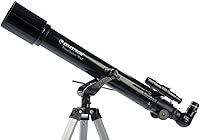
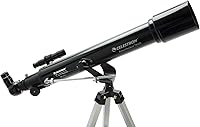
  • Finderscope: A reflex-style finderscope is included to help users locate and center objects in the sky before switching to the main eyepiece for a closer look.
  • Diagonal: An erect-image diagonal is included, which flips the image to the correct orientation — useful for both nighttime stargazing and daytime terrestrial viewing such as birdwatching.
  • Limiting Magnitude: The scope has a limiting stellar magnitude of 11.7, meaning it can theoretically detect stars and objects more than 1,000 times fainter than what is visible to the naked eye under ideal conditions.
  • Tube Length: The optical tube measures 13.5 inches in length, keeping the overall footprint compact and manageable for storage and transport.
  • Assembled Weight: The fully assembled telescope, including mount and tripod, weighs approximately 8 lbs (3.62 kg), light enough for one person to carry comfortably.
  • Dimensions: Packaged dimensions measure 38″ x 13″ x 10″, making the unit easy to fit in a car trunk or store in a closet when not in use.
  • Focus Type: Focusing is achieved manually by rotating the focuser drawtube — there is no motorized or electronic focusing mechanism included.
  • Software Bundle: A free download of a consumer astronomy software program is included with purchase, offering star charts and sky-planning tools suited to beginners.
  • Warranty: Celestron provides a 2-year limited warranty on this telescope, backed by a US-based customer support team available for technical assistance.
  • Brand Origin: Celestron has been designing and manufacturing optical equipment from its base in California, USA since 1960, and is widely regarded as one of the leading telescope brands globally.

Related Reviews
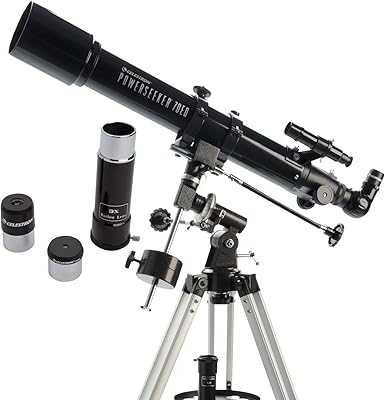
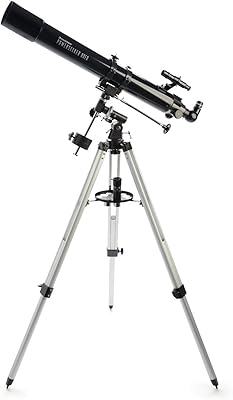
Celestron PowerSeeker 60AZ Refractor Telescope
71%
78%
Optical Clarity
62%
Mount & Tracking
54%
Tripod Stability
67%
Eyepiece Quality
83%
Value for Money
More
Celestron PowerSeeker 80EQ Refractor Telescope
75%
83%
Optical Clarity
67%
Mount Usability
88%
Portability
84%
Value for Money
72%
Build Quality
More
Celestron PowerSeeker 114EQ Reflector Telescope
73%
83%
Optical Performance
61%
Mount Quality
57%
Ease of Setup
74%
Included Accessories
81%
Value for Money
More
Celestron PowerSeeker 70EQ Refractor Telescope
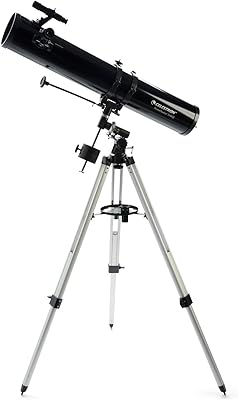
71%
78%
Optical Clarity
83%
Mount Quality & Stability
61%
Ease of Assembly
74%
Accessory Bundle Value
86%
Portability
More
Celestron AstroMaster LT 70AZ Telescope
84%
91%
Ease of Use
88%
Optical Quality
92%
Setup and Installation
85%
Portability
80%
Build Quality
More
Celestron Travel Scope 50 Refractor Telescope
75%
74%
Optical Clarity
91%
Portability & Weight
88%
Ease of Setup
58%
Build Quality & Materials
53%
Tripod Stability
More
Celestron Travel Scope 70
79%
83%
Optical Clarity
91%
Portability & Weight
67%
Build Quality
93%
Ease of Setup
54%
Tripod Stability
More
Celestron Travel Scope 60DX Portable Refractor Telescope
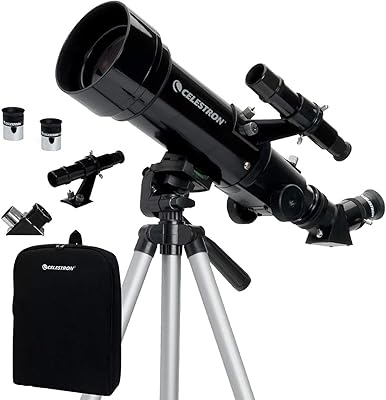
76%
76%
Optical Performance
63%
Build Quality
91%
Portability
89%
Ease of Setup
54%
Tripod Stability
More
Celestron NexStar 6SE Computerized Telescope
72%
88%
Optical Performance
83%
GoTo Mount Accuracy
86%
SkyAlign Ease of Use
61%
Mount Stability
81%
Portability & Setup Time
More
Celestron AstroMaster 114EQ Reflector Telescope
70%
83%
Optical Performance
78%
Mirror & Coating Quality
81%
Equatorial Mount
51%
Collimation Consistency
58%
Included Eyepieces
More

FAQ

Setup is genuinely straightforward. Most buyers report having the scope assembled and pointed at the Moon within 20 to 30 minutes of opening the box, without needing any special tools or technical knowledge. The instructions are clear enough for a teenager to follow independently.

Yes, and it's one of the genuine highlights of owning the PowerSeeker 70AZ. On a clear night with steady air, Saturn's rings are distinctly visible even at moderate magnification. You won't see the Cassini division or fine ring structure, but the view is more than enough to be genuinely exciting for a first-time observer.

Honest answer: it's hit or miss. On nights with steady atmospheric conditions, the 4mm can deliver sharp views, but those nights are rarer than you'd hope. Most experienced users recommend relying on the 20mm eyepiece with the 3x Barlow for a better balance of power and stability. The 4mm is worth trying, but don't expect it to be your go-to.

Absolutely. The included erect-image diagonal corrects the orientation so objects appear right-side up, which is exactly what you want for daytime use. It works well for distant wildlife, landscapes, or even spotting ships on the water. Just avoid pointing it near the Sun — that requires a dedicated solar filter.

This is a known weak spot. At lower magnifications the tripod is perfectly adequate, but as you push toward the upper range, vibrations from touch or wind become more noticeable and take a few seconds to settle. It won't ruin the experience for a casual observer, but if stability is a priority, a heavier aftermarket tripod is a worthwhile upgrade down the line.

With a bit of initial guidance, yes. The alt-azimuth mount is intuitive enough for kids to grasp quickly — point it, look through it, adjust as needed. The main learning curve is using the finderscope to locate objects first, which takes a little practice. Most kids figure it out within a couple of sessions.

Not with anything included in the box — there's no smartphone adapter bundled in. However, inexpensive universal phone-to-eyepiece adapters are widely available online and work reasonably well for Moon shots. Just keep expectations realistic; this scope isn't designed for astrophotography, so results will vary depending on your phone and the conditions.

A download link or code is typically included in the packaging. That said, a number of buyers have noted that the link can feel outdated or the redemption process is unclear. If you run into trouble, Celestron's US-based support team is your best bet — they can point you to the current download path directly.

Light pollution does limit what you can see, but the Moon and the brighter planets — Saturn, Jupiter, Mars when close — are largely unaffected. From a typical suburban backyard you'll still get satisfying views of those targets. For fainter objects like star clusters or galaxies, getting away from city lights makes a noticeable difference, though the 70mm aperture sets its own limits regardless of location.

An equatorial mount is designed to compensate for Earth's rotation by aligning one axis with the celestial pole, which makes tracking objects more precise but also adds setup complexity. The alt-azimuth mount on this entry-level telescope just moves up-down and left-right — much simpler to learn and use, though you'll need to adjust in both directions to keep an object centered. For a beginner, the alt-azimuth approach is almost always the better starting point.