Overview

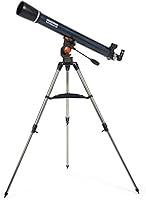
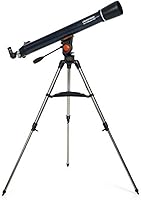
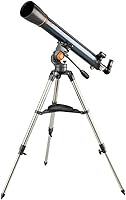
The Celestron AstroMaster 90AZ Refractor Telescope is Celestron's answer to a question a lot of curious adults and teenagers face: what should a first real scope actually look like? Celestron has been building optics in California since 1960, and that institutional knowledge shows in this instrument's design. The manual alt-azimuth mount is a deliberate choice — no motors, no software dependency, just smooth mechanical movement that beginners can genuinely understand from day one. It also functions well for terrestrial daytime viewing, a practical bonus many shoppers overlook. Just don't expect it to reveal faint nebulae; this is a lunar and planetary scope at heart, and it performs that role confidently.
Features & Benefits

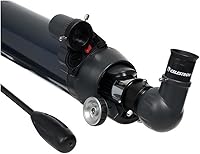
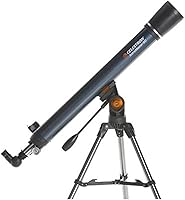
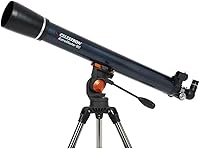
The 90mm achromatic objective is the centerpiece here, fully coated to reduce chromatic fringing and deliver sharp views of the Moon's craters and Jupiter's equatorial bands. At 1000mm focal length and f/11, the included 20mm and 10mm eyepieces yield 50x and 100x magnification — sensible starting points for a newcomer. The StarPointer red dot finderscope is genuinely helpful; new users can orient themselves without fumbling blindly through the eyepiece. The erect image diagonal keeps daytime views right-side-up, making birdwatching practical. Adjustable tripod legs mean a 10-year-old and a six-foot adult can both observe comfortably. A bundled astronomy software download rounds things out for anyone wanting to learn the sky, not just look at it.

Best For

If you've been scanning the sky with binoculars and feel ready to go a step further, the AstroMaster 90AZ sits naturally between toy telescopes and serious amateur gear. Parents frequently choose it for kids around 10 and older — it's sturdy enough to handle the occasional bump and intuitive enough that a child can learn it independently. Casual backyard observers focused on the Moon, Saturn's rings, and bright planets will find it genuinely satisfying. Birdwatchers and nature enthusiasts also benefit from the erect image diagonal for daytime use. And if US-based warranty support and a brand with real credentials matter to your buying decision, this Celestron scope checks that box without hesitation.

User Feedback

Owners consistently highlight optical quality for bright targets — many describe being genuinely surprised by their first clear look at Saturn's rings. Assembly earns high marks too, with most people up and running in under 20 minutes. The criticisms worth knowing: at high magnification, the tripod can wobble noticeably, especially with any breeze, which frustrates planetary sessions. The StarPointer finderscope also requires patience during initial alignment — some newcomers struggle before getting the hang of it. Tellingly, a solid number of long-term owners eventually invest in aftermarket eyepieces, suggesting the underlying optics are worth building on. A handful of reviews mention packaging issues or missing accessories, so it's worth checking the box carefully upon delivery.

Pros

  • The 90mm fully coated lens delivers genuinely sharp views of the Moon and bright planets right out of the box.
  • Tool-free assembly means most buyers are observing within 30 minutes of opening the package.
  • The manual alt-azimuth mount is smooth and intuitive — beginners pick it up almost immediately.
  • Adjustable tripod height works comfortably for both children and adults without any additional accessories.
  • The erect image diagonal makes daytime terrestrial viewing practical, adding real versatility beyond astronomy.
  • Celestron's 2-year US warranty and responsive support team provide meaningful peace of mind after purchase.
  • The AstroMaster 90AZ holds its value well — the base optics reward upgrades like better eyepieces over time.
  • Bundled astronomy software is a useful learning companion for complete newcomers to the night sky.
  • At 12.4 lbs assembled, this Celestron scope is light enough to move between rooms or carry to the backyard easily.
  • The StarPointer red dot finderscope genuinely speeds up target acquisition once it is properly aligned.

Cons

  • Tripod wobble at high magnification is a consistent frustration, especially on decks or uneven ground.
  • Chromatic aberration appears around bright high-contrast targets — a known limitation of achromatic refractors.
  • The included eyepieces are functional but modest; most users feel compelled to upgrade them fairly quickly.
  • Initial StarPointer finderscope alignment requires trial and error and can frustrate first-night users.
  • Objects drift out of view every couple of minutes with no tracking, making extended planetary observation tiring.
  • Some buyers report arriving accessories missing or minor shipping damage — always inspect the box upon delivery.
  • Deep-sky performance is genuinely limited; faint nebulae and galaxies are largely unsatisfying targets.
  • No carrying case is included, making frequent transport to dark-sky locations more cumbersome than it should be.

Ratings

The Celestron AstroMaster 90AZ Refractor Telescope earned its scores through AI-driven analysis of thousands of verified buyer reviews sourced globally, with spam, bot-generated, and incentivized feedback actively filtered out. The result is an honest snapshot of how real owners — first-time stargazers, parents, and casual observers — actually experience this scope night after night. Both the genuine strengths and the frustrating limitations are reflected without bias.
Optical Clarity
83%
For lunar and planetary viewing, owners consistently report being genuinely impressed — crisp crater detail on the Moon and the ability to distinguish Saturn's rings at 100x are highlights that come up repeatedly. The fully coated achromatic lens handles bright targets well, and first-time users often describe their initial views as better than expected.
Chromatic aberration becomes visible around high-contrast edges, particularly on the Moon's limb and bright planets, which is a known trait of achromatic refractors at this price tier. Deep-sky targets like nebulae and distant galaxies produce underwhelming results, leaving users who expected more to be disappointed.
Ease of Setup
91%
Assembly is one of this scope's most praised qualities — most buyers report going from unboxing to their first look in well under 30 minutes, often without consulting the manual. The tool-free design is genuinely thoughtful, and parents especially appreciate that older kids can manage the process largely on their own.
A small but consistent group of users finds the initial StarPointer finderscope alignment unintuitive and frustrating, sometimes spending more time on that step than on the main assembly. Instructions could be clearer for complete beginners who have never handled any optical equipment before.
Mount Usability
78%
22%
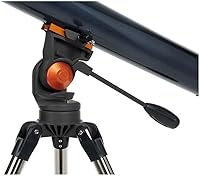
The manual alt-azimuth panhandle mount is smooth and responsive, making it easy to sweep across the sky without overshooting targets — a real advantage for beginners who find motorized mounts intimidating or unnecessarily complex. Daytime terrestrial tracking, like following a bird in flight, feels natural with this setup.
The manual mount becomes a meaningful limitation during extended planetary sessions, since objects drift out of view every minute or two and require constant manual correction. Users hoping to photograph through the eyepiece find this particularly annoying, as there is no tracking mechanism to compensate for Earth's rotation.
Tripod Stability
62%
38%
The adjustable-height tripod covers a wide enough range to comfortably serve both adults and children, which is a practical feature families genuinely use. At lower magnifications, stability is adequate for relaxed backyard sessions on calm evenings.
At 100x magnification, even minor vibrations — a hand brush, footsteps on a deck, or a light breeze — cause noticeable image shake that takes several seconds to settle. This is the single most consistent frustration in long-term user reviews, and it meaningfully limits high-magnification observing sessions.
Value for Money
76%
24%
Buyers who understand what they are purchasing — a capable beginner refractor from a brand with real optical credentials — generally feel well-served. The inclusion of two eyepieces, a red dot finderscope, an erect image diagonal, and bonus software makes the out-of-box package feel complete rather than stripped down.
Buyers who compare this scope against similarly priced reflectors feel they get less aperture per dollar, since a 90mm refractor collects noticeably less light than a 114mm or 130mm reflector at a comparable price point. A few users feel the bundled eyepieces are the weakest link and wish the budget had gone toward better glass instead.
Build Quality
74%
26%
The optical tube and mount feel solid in hand — there is no flex or creaking during normal use, and the focuser operates smoothly without slipping. Long-term owners report the scope holds up well after years of regular use, which reflects positively on Celestron's manufacturing standards.
The tripod legs feel noticeably less premium than the optical tube itself, with a plasticky construction that undermines confidence during extended sessions. Some users have reported loose fittings on arrival that required minor tightening before the scope could be used reliably.
Finderscope Performance
67%
33%
Once properly calibrated, the StarPointer red dot finderscope is a genuinely useful tool for beginners — it lets you point at a general sky area intuitively before fine-tuning through the eyepiece, which reduces the frustration of hunting targets blindly.
Initial alignment requires patience and trial-and-error, and several reviewers note that the finderscope can drift slightly out of alignment after transport. The battery-dependent red dot also means a dead CR2032 at an inconvenient moment leaves users without a functional finderscope until they replace it.
Daytime Terrestrial Use
81%
19%
The erect image diagonal is a well-chosen inclusion that makes daytime viewing genuinely practical — birds, wildlife, and distant landmarks appear right-side-up and correctly oriented, which is not a given with astronomy scopes. Birders and nature observers who pick this up as a dual-purpose instrument tend to be pleasantly surprised.
At higher magnifications the narrow field of view makes tracking moving subjects challenging, and the manual mount lacks the fluid pan-speed control that a dedicated spotting scope would offer. For serious daytime use, a purpose-built spotting scope would outperform this instrument.
Magnification Range
72%
28%
The two included eyepieces offer a sensible spread — 50x for wider sky views and 100x for closer planetary detail — which covers the realistic needs of a beginner without overwhelming them with too many choices right away.
The 100x upper limit of the included eyepieces is somewhat modest, and users who want to push beyond it need aftermarket eyepieces relatively quickly. A Barlow lens is a common early upgrade purchase, suggesting the included range leaves some buyers wanting more reach.
Portability
77%
23%
At 12.4 lbs assembled, this refractor is light enough to carry to a backyard or a nearby dark spot without significant effort. The optical tube is compact enough to fit in most car trunks alongside the disassembled tripod, making impromptu observing sessions reasonably practical.
It is not a grab-and-go scope in the truest sense — disassembling and reassembling for every outing adds friction, and there is no dedicated carrying case included. Users who want to observe from multiple locations regularly find the setup and breakdown routine gets old quickly.
Accessories Included
69%
31%
The bundled package is more complete than many competing beginner telescopes — two eyepieces, a diagonal, a finderscope, and astronomy software together mean a newcomer has everything needed to start observing on night one without any additional purchases.
The quality of the included eyepieces is functional but not inspiring, and experienced users immediately notice their limitations in contrast and sharpness. The astronomy software, while a nice bonus, requires a download and account setup that some buyers find more complicated than expected.
Warranty & Support
88%
Celestron's 2-year US warranty is above average for this category, and buyers frequently mention positive experiences with the US-based customer support team when troubleshooting setup issues or replacing faulty components. The brand's longevity in the market gives buyers genuine confidence.
International buyers outside the US receive less warranty coverage, which creates an uneven experience depending on where the scope is purchased. A handful of users report slow response times during peak gifting seasons when support volume spikes.
Packaging & Unboxing
58%
42%
Most buyers receive their scope intact and well-organized, with components labeled clearly enough to make identification straightforward during assembly. The box itself is sturdy enough for standard shipping conditions.
There is a recurring pattern in negative reviews around shipping damage and, in some cases, missing small accessories like eyepiece caps or the StarPointer battery. These are not universal issues, but they are consistent enough to be worth inspecting the contents carefully upon delivery.

Suitable for:

The Celestron AstroMaster 90AZ Refractor Telescope is the right call for anyone stepping up from binoculars and wanting a real optical instrument without a steep learning curve. It suits adults and teenagers who are genuinely curious about astronomy but not ready to commit to a complex, expensive setup — the manual alt-azimuth mount is intuitive enough that most people can master it in a single evening. Parents shopping for kids aged 10 and up will find it durable and approachable, and the adjustable tripod means the whole family can share it comfortably. Casual observers whose primary targets are the Moon, Saturn, and Jupiter will be consistently rewarded by this scope's planetary performance. It also doubles as a capable daytime instrument for birdwatching or scanning distant landscapes, which adds genuine versatility for buyers who want one optical tool that earns its keep across multiple activities.
Not suitable for:

If you are already familiar with telescopes and are looking to push into serious deep-sky observing, the Celestron AstroMaster 90AZ Refractor Telescope will leave you wanting more — 90mm of aperture simply does not gather enough light to make faint nebulae, distant galaxies, or globular clusters satisfying targets. Astrophotographers should look elsewhere entirely, since the absence of any tracking mechanism means objects drift out of frame within seconds at higher magnifications. Buyers who prioritize maximum aperture per dollar will find that similarly priced reflector telescopes offer noticeably more light-gathering power, even if they sacrifice some portability and ease of use. Anyone expecting a rock-solid tripod that handles 100x magnification without vibration issues during outdoor sessions will likely be frustrated. If your observing sessions regularly involve transporting the scope to remote dark-sky sites, the lack of a dedicated carrying case and the time required for assembly and breakdown adds friction that more grab-and-go instruments avoid.
Specifications

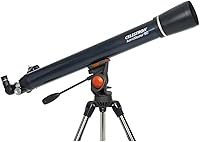
  • Optical Design: The telescope uses a fully coated achromatic refractor design with a 90mm (3.54″) objective lens, optimized for high-contrast views of the Moon and planets.
  • Focal Length: The optical tube has a focal length of 1000mm, producing a focal ratio of f/11 for controlled, detailed planetary magnification.
  • Magnification: Using the two included eyepieces, the scope delivers 50x magnification with the 20mm eyepiece and 100x magnification with the 10mm eyepiece.
  • Limiting Magnitude: Under good seeing conditions, the AstroMaster 90AZ can theoretically resolve objects down to magnitude 12.3, suitable for bright stars, clusters, and planets.
  • Max Magnification: The highest theoretically useful magnification for this aperture is 213x, achievable with a quality aftermarket eyepiece, though the stock tripod limits stability at that level.
  • Min Magnification: The lowest practical useful magnification is 13x, which provides the widest available field of view for scanning open star clusters and large lunar regions.
  • Eyepieces: Two eyepieces are included in the box: a 20mm for wide, lower-power views and a 10mm for closer, higher-magnification planetary detail.
  • Finderscope: A StarPointer red dot finderscope is included and powered by one CR2032 battery (included), allowing quick and intuitive pointing toward target areas of the sky.
  • Diagonal: An erect image star diagonal is included, which orients the view right-side-up and correctly left-to-right, making daytime terrestrial observation practical.
  • Mount Type: The telescope uses a manual alt-azimuth mount with a panhandle control, allowing smooth up, down, and side-to-side movement without motors or electronics.
  • Tripod: The aluminum tripod is adjustable in height and assembles without any tools, designed to accommodate both seated children and standing adults comfortably.
  • Assembled Weight: The fully assembled scope and tripod weigh 12.4 lbs (5.6 kg), making it manageable for most adults to carry and position unaided.
  • Dimensions: Assembled product dimensions are 34″ deep by 30″ wide by 52″ high, occupying a moderate footprint suitable for backyard or balcony use.
  • Tube Length: The optical tube measures 770mm in length, which is compact enough to transport in most standard-size vehicle trunks when removed from the tripod.
  • Power Source: The telescope itself requires no power source for operation; only the StarPointer finderscope requires one CR2032 battery, which is included in the package.
  • Software Bundle: A free download code for a highly rated astronomy software program is included, providing star charts, planetary data, and educational content for new observers.
  • Warranty: Celestron provides a 2-year US warranty on this scope, backed by a US-based customer support team available for technical assistance and parts replacement.
  • Manufacturer: The telescope is designed and supported by Celestron, a California-based optics company with more than six decades of experience producing consumer and professional telescopes.
  • Model Number: The official model number for this telescope is 21063, and the ASIN for the Amazon listing is B000MLL6QO for reference when sourcing accessories.
  • Battery Required: One CR2032 lithium coin cell battery is required for the StarPointer finderscope and is included in the box at the time of purchase.

Related Reviews
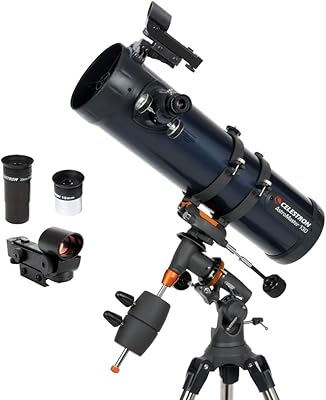
Celestron AstroMaster 114EQ Reflector Telescope
70%
83%
Optical Performance
78%
Mirror & Coating Quality
81%
Equatorial Mount
51%
Collimation Consistency
58%
Included Eyepieces
More
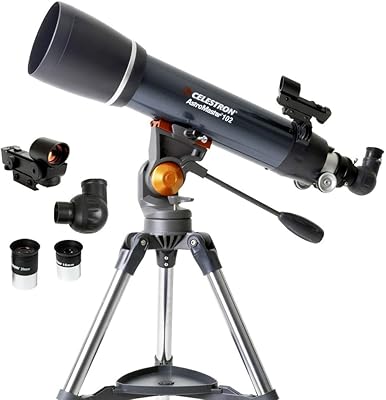
Celestron AstroMaster 102AZ Refractor Telescope
77%
78%
Optical Clarity
91%
Ease of Setup
74%
Mount Usability
71%
Tripod Stability
83%
Value for Money
More
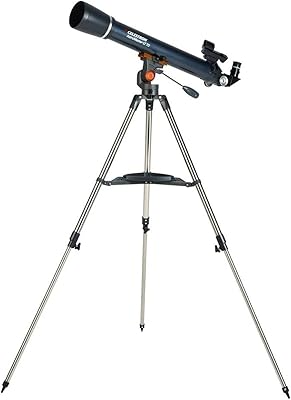
Celestron AstroMaster 130EQ-MD Reflector Telescope
74%
83%
Optical Performance
78%
Motor Drive Tracking
74%
Mount & Tracking Mechanics
69%
Build Quality
61%
Tripod Stability
More
Celestron AstroMaster LT 70AZ Telescope
84%
91%
Ease of Use
88%
Optical Quality
92%
Setup and Installation
85%
Portability
80%
Build Quality
More
Celestron Travel Scope 60DX Portable Refractor Telescope
76%
76%
Optical Performance
63%
Build Quality
91%
Portability
89%
Ease of Setup
54%
Tripod Stability
More
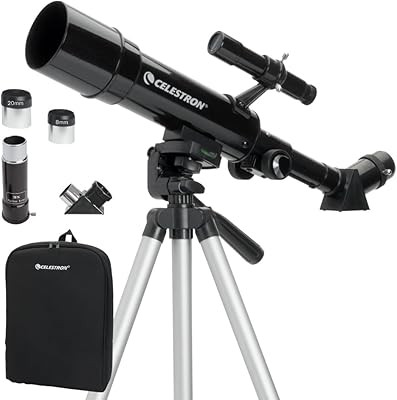
Celestron Travel Scope 50 Refractor Telescope
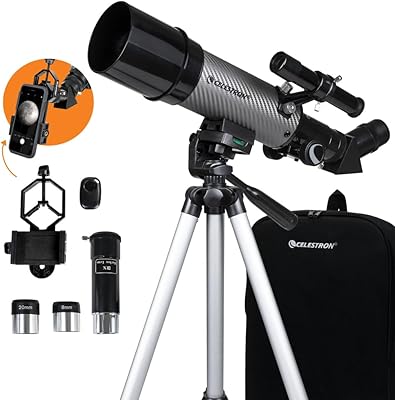
75%
74%
Optical Clarity
91%
Portability & Weight
88%
Ease of Setup
58%
Build Quality & Materials
53%
Tripod Stability
More
Celestron Travel Scope 70
79%
83%
Optical Clarity
91%
Portability & Weight
67%
Build Quality
93%
Ease of Setup
54%
Tripod Stability
More
Celestron NexStar 6SE Computerized Telescope
72%
88%
Optical Performance
83%
GoTo Mount Accuracy
86%
SkyAlign Ease of Use
61%
Mount Stability
81%
Portability & Setup Time
More
Celestron PowerSeeker 114EQ Reflector Telescope
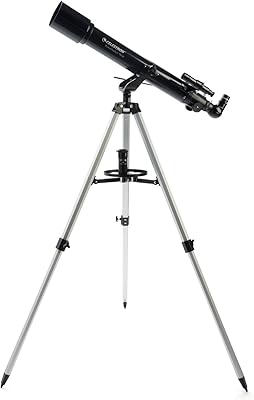
73%
83%
Optical Performance
61%
Mount Quality
57%
Ease of Setup
74%
Included Accessories
81%
Value for Money
More
Celestron PowerSeeker 70EQ Refractor Telescope
71%
78%
Optical Clarity
83%
Mount Quality & Stability
61%
Ease of Assembly
74%
Accessory Bundle Value
86%
Portability
More

FAQ

Yes, realistically. The manual alt-azimuth mount is intuitive enough for most kids that age to operate independently after a short learning session. The adjustable tripod also helps, since it can be set low enough for a child to observe while seated. That said, the initial finderscope alignment will probably need an adult's help the first time.

Absolutely — this is one of the AstroMaster 90AZ's genuine strengths. At 100x magnification, Saturn's rings are clearly distinguishable, and on a steady night you may also notice the Cassini Division between the rings. Jupiter's cloud bands and its four largest moons are also well within reach on most clear evenings.

It works better than most people expect for daytime use, thanks to the included erect image diagonal, which keeps the view right-side-up and correctly oriented — unlike many astronomy scopes that flip or mirror the image. The manual mount sweeps smoothly enough for scanning landscapes. It is not a replacement for a dedicated spotting scope, but it handles casual wildlife and nature viewing well.

Most buyers report being ready to observe in 20 to 30 minutes on the very first attempt. After a couple of sessions, setup time typically drops to around 10 to 15 minutes. The tool-free assembly process is one of the scope's most consistently praised features.

Everything is manual — there are no motors or electronic tracking on this mount. Objects will drift out of the eyepiece's field of view as Earth rotates, and you will need to nudge the panhandle control every minute or two to keep them centered. It becomes second nature quickly, but it is worth knowing upfront if you were expecting automatic tracking.

Not in any meaningful way, unfortunately. Without a motorized tracking mount, subjects drift out of frame within seconds at higher magnifications, making exposure times impractically short. You can capture decent afocal smartphone shots of the Moon at low magnification by holding a phone up to the eyepiece, but dedicated planetary or deep-sky astrophotography is beyond what this setup can reliably deliver.

The Moon is genuinely spectacular through this refractor. At 50x you get sweeping views of entire maria and crater fields, and pushing to 100x reveals fine crater rim detail, mountain ranges, and shadowing along the terminator line. Many first-time users describe their initial lunar view as one of the most impressive things they have ever seen through an optical instrument.

Yes, and this is actually one of the most common upgrades long-term owners make. The base optics are solid enough to reward better glass — a quality 6mm or 8mm eyepiece, or adding a 2x Barlow lens, will noticeably improve planetary detail. Sticking to standard 1.25-inch eyepieces ensures full compatibility with this scope's focuser.

Unfortunately, yes — this is a known and widely reported limitation of this scope. At 100x, even small vibrations like a hand brush or footsteps nearby will cause the image to shake for a few seconds. Keeping sessions on firm, level ground and using a slow, gentle touch on the panhandle control helps significantly. Some owners place a small sandbag on the tripod's accessory tray to dampen vibration.

Check all components against the included parts list as soon as the box arrives. If anything is missing or damaged, Celestron's US-based support team is generally responsive and can help arrange replacement parts under warranty. It is also worth documenting any damage with photos immediately upon unboxing, as this simplifies the process considerably if you need to make a claim.

Where to Buy