Overview

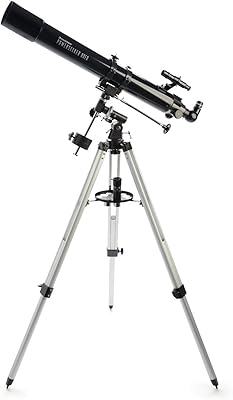
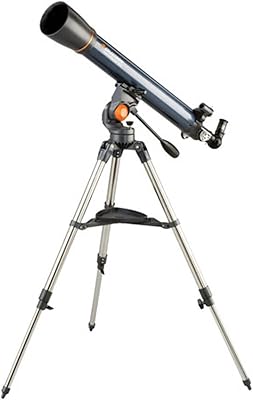
The Celestron PowerSeeker 60AZ Refractor Telescope has been a staple entry point for new stargazers since it first appeared in 2007, and Celestron's decades-long reputation in optics gives it a credibility that cheaper no-name alternatives simply can't match. Built around a 60mm aperture refractor with a 700mm focal length at f/12, it delivers clear views of the Moon and brighter planets without overwhelming a newcomer with complexity. At its accessible price, you're not getting premium glass or a rock-solid mount — and that's fine, because this scope was never designed to be those things. Think of it as a genuine first step into astronomy, not a forever instrument.
Features & Benefits

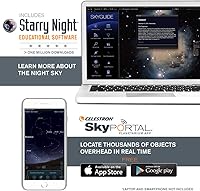
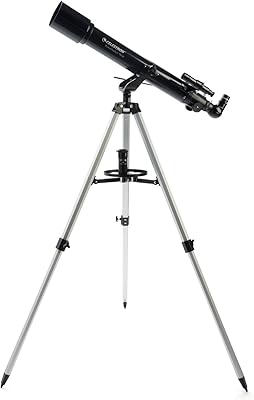
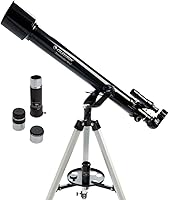
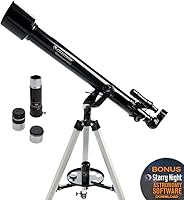
The PowerSeeker 60AZ ships with a surprisingly generous accessory kit for an entry-level scope. Its manual alt-azimuth yoke mount includes a slow-motion altitude rod that lets you nudge the telescope gently without sending your target flying out of view — a small detail that makes a real difference when you're still learning the sky. Two eyepieces cover a comfortable range from wide-field to higher magnification, and the bundled 3x Barlow lens triples your options without extra cost. An erect image diagonal simplifies daytime use, a finderscope helps you locate objects before switching to the main eyepiece, and a free astronomy software download adds genuine learning value for beginners.

Best For

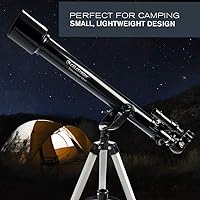
This beginner refractor is a natural fit for kids and teens receiving their first real telescope, and works equally well for curious adults who want to explore the night sky before committing to a pricier setup. The Moon is where this entry-level telescope shines brightest — crater detail at this aperture is genuinely impressive and hooks new observers fast. Bright planets like Saturn and Jupiter are also within reach, though deep-sky objects like galaxies will remain faint smudges at 60mm. Its compact, lightweight build makes it easy to pack for camping or a backyard session. Astrophotographers and advanced observers should look at larger, sturdier instruments instead.

User Feedback

Across nearly 6,000 ratings and a 4.2-star average, the overall sentiment leans positive — particularly among first-time buyers who were genuinely impressed by their initial lunar views. The 20mm eyepiece earns consistent praise, but the 4mm at full magnification tells a different story: images turn dim and shaky quickly, largely because the included tripod introduces noticeable wobble at high power. Assembly instructions have also drawn complaints for being unclear, so budget some patience for setup night. That said, most buyers feel this scope delivers solid value for the price and repeatedly describe it as a thoughtful, well-received gift for young or first-time astronomers.

Pros

  • Lunar views are genuinely impressive for the price — crater detail on a clear night will hook most first-timers immediately.
  • The complete accessory kit, including two eyepieces, a 3x Barlow lens, and a finderscope, adds real value out of the box.
  • Celestron's brand reputation and two-year warranty provide more purchase confidence than most budget competitors can offer.
  • The slow-motion altitude rod makes tracking objects noticeably smoother than the loose pan-tilt mounts found on cheaper scopes.
  • At roughly 7 lbs assembled, this entry-level telescope is easy to carry to a dark backyard, campsite, or rooftop.
  • Saturn's rings and Jupiter's moons are visible — enough to create a genuinely memorable first observing experience.
  • The bundled astronomy software gives beginners a head start on learning the night sky before they even step outside.
  • Nearly 6,000 global ratings averaging 4.2 stars suggests consistent satisfaction among buyers with realistic expectations.
  • The erect image diagonal makes casual daytime use and terrestrial viewing straightforward for new users.

Cons

  • The tripod wobbles noticeably at higher magnifications — even a light touch to the focuser can send images bouncing for seconds.
  • Assembly instructions are widely criticized for being vague and poorly illustrated, making first-night setup harder than it should be.
  • The 4mm eyepiece at maximum magnification produces dim, shaky images that most users end up avoiding after initial attempts.
  • No carrying case is included, so transporting the scope and its accessories requires improvised packing every time.
  • Chromatic aberration — colored fringing around bright objects like the Moon — is visible and cannot be corrected at this price point.
  • Deep-sky objects like galaxies are essentially disappointing smudges at 60mm, especially from light-polluted suburban locations.
  • The slow-motion control operates on only one axis, making it harder to track objects that drift across the field of view.
  • The finderscope bracket is plastic and can shift during transport, requiring realignment before each session.
  • No lunar filter is included, and full Moon sessions can be uncomfortably bright without one.

Ratings

Our AI rating system analyzed thousands of verified global reviews for the Celestron PowerSeeker 60AZ Refractor Telescope, actively filtering out incentivized, duplicate, and bot-generated feedback to surface what real buyers actually experience. The scores below reflect a transparent picture of where this beginner refractor earns genuine praise and where it falls noticeably short. Both strengths and recurring frustrations are weighted equally so you can make an informed decision.

Optical Clarity
78%
22%
For a scope at this price tier, the views of the Moon genuinely surprise first-time users — crater rims and mountain ridges come through with satisfying sharpness using the 20mm eyepiece on a steady night. Jupiter's cloud bands and Saturn's rings are also visible, which is enough to hook most beginners completely.
Chromatic aberration — that faint purple or green fringe around bright objects — is noticeable and expected at this aperture and price. Deep-sky targets like nebulae or galaxies produce little more than dim, featureless patches, which can disappoint users who expected more.
Mount & Tracking
62%
38%
The alt-azimuth yoke mount with its slow-motion altitude rod is a genuine step up from the loose pan-tilt heads found on cheaper beginner scopes. New users appreciate being able to nudge the telescope gradually rather than constantly losing their target with every small adjustment.
At higher magnifications the mount's limitations become obvious — any vibration in the tripod gets amplified significantly, turning what should be a sharp planetary view into a shaky blur. The slow-motion control only works on one axis, which means keeping a moving celestial object centered still takes practice and patience.
Tripod Stability
54%
46%
The tripod gets the job done for low-magnification viewing on flat, firm surfaces like a backyard patio or a campsite picnic table. For casual lunar sessions where you are not pushing magnification past 70x or so, wobble is manageable enough to enjoy the experience.
This is arguably the most consistent complaint across user reviews. At the higher magnifications the 4mm eyepiece and Barlow lens make possible, even a gentle breeze or a slight touch to the focuser sends the image bouncing for several seconds. Observers on soft grass or uneven ground will find this especially frustrating.
Eyepiece Quality
67%
33%
The 20mm eyepiece delivers a comfortable, reasonably wide field of view that works well for finding and framing targets like the full Moon or star clusters. It is the eyepiece most users end up relying on the most, and it earns positive mentions consistently in buyer feedback.
The 4mm eyepiece is where this kit runs into trouble. At its rated magnification the image gets dim, contrast drops, and any atmospheric turbulence or tripod movement is brutally exaggerated. Many users end up setting it aside after a few attempts rather than struggling with it regularly.
Value for Money
83%
Considering what is included in the box — two eyepieces, a Barlow lens, finderscope, erect image diagonal, and astronomy software — the overall package feels generous for the asking price. As a gift for a child or a first telescope for a curious adult, the perceived value is genuinely high.
Buyers who come in expecting performance comparable to mid-range scopes costing two or three times as much will feel let down. The value proposition holds firmly only when expectations are calibrated to what a budget beginner refractor can realistically deliver.
Ease of Setup
58%
42%
Once assembled, the physical setup is straightforward enough — attaching the optical tube to the mount and extending the tripod legs does not require tools or technical knowledge. Most adults can get it observing-ready within 20 to 30 minutes on a first attempt.
The included instruction manual has drawn repeated criticism for being vague and poorly illustrated, particularly around aligning the finderscope and attaching accessories correctly. A fair number of buyers report spending considerably longer than expected on first-night setup, which dampens what should be an exciting experience.
Portability
87%
At roughly 7 lbs assembled and with a tube just over 20 inches long, the PowerSeeker 60AZ is easy to move from room to room, load into a car trunk, or carry to a dark backyard. Campers and travelers who want a lightweight stargazing option find it especially convenient compared to larger beginner scopes.
There is no dedicated carrying case included, and the tripod, tube, and accessories need to be transported separately or packed carefully to avoid damage. Buyers who travel frequently may want to invest in a padded bag to protect the optics and prevent eyepiece loss.
Build Quality
61%
39%
The optical tube itself feels reasonably solid and the focuser draws in and out smoothly enough for a budget instrument. Celestron's quality control at this price point is generally consistent, and the scope rarely arrives with obvious defects based on reviewer feedback.
The plastic components on the mount and tripod feel noticeably lightweight and less confidence-inspiring than the optical tube itself. A few buyers have reported that fittings loosen over time with repeated use, and the overall tactile experience signals clearly that this is a budget product.
Finderscope Usability
71%
29%
Having a finderscope at all is a meaningful advantage for absolute beginners who need help pointing the telescope in the right direction before looking through the main eyepiece. Once aligned, it meaningfully reduces the frustration of hunting for targets blind.
Aligning the finderscope with the main tube is a step the manual handles poorly, and users who skip this step — or do it incorrectly — often report that the scope feels impossible to aim accurately. The finderscope bracket is also plastic and can shift slightly during transport, requiring realignment.
Lunar Performance
86%
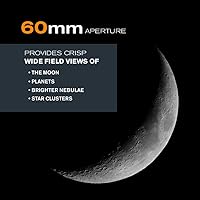
The Moon is unquestionably where this entry-level telescope earns its strongest reviews. Even on moderately hazy nights, the detail visible across the lunar surface — craters, ridges, the terminator line — is sharp enough to genuinely excite new observers and keep them coming back.
Full Moon sessions can feel slightly overwhelming in brightness without a lunar filter, which is not included in the kit. Some users also note that glare during full Moon observations washes out finer surface detail that would otherwise be visible during crescent or quarter phases.
Planetary Performance
69%
31%
Saturn's rings are detectable and recognizable, and Jupiter shows visible banding and its four Galilean moons as tiny points of light. For a beginner seeing these objects for the first time, the experience is genuinely rewarding and often described as a memorable moment.
Planetary detail is limited by the 60mm aperture and the atmospheric sensitivity at higher magnifications. Mars shows as a small orange disk with no reliable surface detail, and Neptune and Uranus are essentially just slightly colored dots — not much to hold a viewer's attention long-term.
Deep-Sky Capability
41%
59%
A handful of showpiece deep-sky objects — the Orion Nebula, the Pleiades, the Beehive Cluster — are visible and can look appealing under dark skies, giving curious beginners a taste of what lies beyond the solar system.
At 60mm aperture with a limiting magnitude of 11.4, this scope is fundamentally ill-suited for serious deep-sky work. Galaxies appear as faint, shapeless smears, and fainter nebulae are essentially invisible from suburban locations. Buyers whose main interest is deep-sky observing should consider a larger aperture from the start.
Included Software
74%
26%
The bundled astronomy software download is a legitimately useful bonus that helps beginners learn the night sky, plan observing sessions, and understand what they are looking at. For a new user, having a star chart tool available on day one adds real educational value to the overall package.
The software requires a download and registration process that some buyers find clunky, and it is not a substitute for a dedicated modern planetarium app. Users who already rely on free mobile apps like Stellarium may find the bundled software redundant or dated by comparison.
Suitability as a Gift
88%
As a holiday or birthday gift for a curious child or a space-interested adult, the PowerSeeker 60AZ is hard to beat at its price point. The complete out-of-box package looks impressive, and the first lunar session almost always produces genuine excitement from recipients of any age.
Gift-givers should be aware that assembly on first use can be a frustrating experience without clearer instructions. If the recipient is young, an adult will likely need to assist with setup and finderscope alignment to make sure the first night goes smoothly.
Warranty & Support
79%
21%
Celestron backs the PowerSeeker 60AZ with a two-year warranty and offers US-based technical support, which is meaningfully reassuring for buyers who encounter issues. The brand's long track record since 1960 adds a layer of confidence that smaller or newer telescope brands cannot offer.
Some users report that support response times can be slower than expected during peak gifting seasons. Warranty coverage is helpful, but the process of shipping and returning a telescope for service is cumbersome enough that minor issues often go unresolved by buyers who find it easier to work around problems.

Suitable for:

The Celestron PowerSeeker 60AZ Refractor Telescope was built with a very specific buyer in mind, and for that buyer it genuinely delivers. Kids and teenagers receiving their first real telescope as a birthday or holiday gift are the most natural fit — the scope is simple enough to learn on without being so underpowered that it kills curiosity on the first night. Adults who have always been vaguely interested in stargazing but have never committed to the hobby will also find it a low-risk starting point; if the interest fades after a few months, the investment is modest enough that it does not sting. Parents who want a shared outdoor activity that gets the family away from screens and looking up at the sky will find the Moon sessions alone worth the purchase. Campers and casual travelers benefit from its lightweight, compact form, which slides into a car trunk without any real planning. If your goal is to see the Moon in detail, catch Saturn's rings for the first time, or simply understand whether astronomy is a hobby worth pursuing further, this beginner refractor is a genuinely sensible choice.

Not suitable for:

The Celestron PowerSeeker 60AZ Refractor Telescope has real limitations that make it the wrong tool for a meaningful share of buyers, and it is worth being honest about that upfront. Anyone seriously interested in deep-sky observing — galaxies, nebulae, star clusters beyond the brightest showpieces — will run headlong into the hard ceiling of a 60mm aperture, and the frustration of faint, shapeless smudges where they expected dramatic images is a common story in the reviews. Astrophotographers should not even consider this scope; the mount has no motorized tracking, and the tripod wobble that plagues higher magnifications makes any attempt at long-exposure imaging impractical. Experienced observers upgrading from a previous scope will find the optical and mechanical quality a step down from what they are used to. Buyers who need plug-and-play simplicity should also be cautious — the assembly instructions have a well-documented reputation for being unclear, and first-night setup can be a frustrating experience without patience or some prior research. If your interests are serious or your expectations are high, the modest price does not compensate for the limitations, and a larger aperture scope on a sturdier mount will serve you far better.
Specifications

  • Optical Design: This telescope uses a refractor design, meaning it gathers and focuses light through a series of glass lenses rather than mirrors.
  • Aperture: The objective lens measures 60mm (2.36″) in diameter, which determines how much light the telescope can collect.
  • Focal Length: The optical tube has a focal length of 700mm (28″), which influences the magnification produced when paired with each eyepiece.
  • Focal Ratio: The telescope operates at f/12, indicating a relatively narrow, long focal ratio suited to higher-contrast lunar and planetary views.
  • Included Eyepieces: Two eyepieces are included: a 20mm for lower-magnification wide-field views and a 4mm for higher-magnification close-up observation.
  • Barlow Lens: A 3x Barlow lens is included and, when inserted before an eyepiece, triples its effective magnification without requiring additional eyepiece purchases.
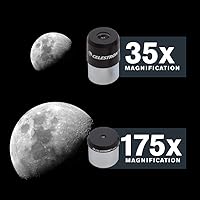
  • Magnification Range: Using the included eyepieces and Barlow lens, the scope delivers magnification options of approximately 35x, 105x, 175x, and effectively up to 142x usably.
  • Limiting Magnitude: The scope has a limiting stellar magnitude of 11.4, meaning it can detect stars and objects down to that brightness threshold under good conditions.
  • Mount Type: The telescope uses a manual alt-azimuth yoke mount, which allows movement along two axes — up and down, and left and right — without motorized assistance.
  • Altitude Control: A slow-motion altitude rod is built into the mount, enabling finer vertical adjustments for more controlled and precise sky tracking by hand.
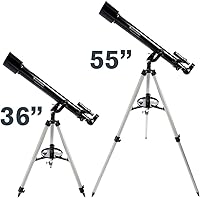
  • Tube Length: The optical tube measures 20.6 inches in length, contributing to the telescope's compact and manageable overall footprint.
  • Assembled Weight: Fully assembled with the tripod and mount, the telescope weighs approximately 7 lbs (3.17 kg), making it light enough for one person to carry easily.
  • Finderscope: A finderscope is mounted on the optical tube to help users locate and center targets in the sky before switching to the main eyepiece for close-up viewing.
  • Image Diagonal: An erect image diagonal is included, which corrects the image orientation to appear right-side-up — particularly useful for daytime terrestrial observations.
  • Included Software: A free download code for a consumer-rated astronomy software application is included, providing star charts, planetary data, and guided sky tours for beginners.
  • Power Source: The telescope is entirely manually operated with no batteries, motors, or power source required for standard visual observations.
  • Warranty: Celestron provides a 2-year limited warranty on this telescope, backed by US-based technical support available to buyers after purchase.
  • Manufacturer: The telescope is manufactured by Celestron Acquisition LLC, a California-based optics company that has been producing telescopes and optical equipment since 1960.

Related Reviews

Celestron PowerSeeker 114EQ Reflector Telescope
73%
83%
Optical Performance
61%
Mount Quality
57%
Ease of Setup
74%
Included Accessories
81%
Value for Money
More
Celestron PowerSeeker 70EQ Refractor Telescope
71%
78%
Optical Clarity
83%
Mount Quality & Stability
61%
Ease of Assembly
74%
Accessory Bundle Value
86%
Portability
More
Celestron PowerSeeker 80EQ Refractor Telescope
75%
83%
Optical Clarity
67%
Mount Usability
88%
Portability
84%
Value for Money
72%
Build Quality
More
Celestron PowerSeeker 70AZ Refractor Telescope
75%
78%
Optical Clarity
88%
Ease of Setup
82%
Mount Usability
61%
Tripod Stability
83%
Value for Money
More
Celestron Travel Scope 60DX Portable Refractor Telescope
76%
76%
Optical Performance
63%
Build Quality
91%
Portability
89%
Ease of Setup
54%
Tripod Stability
More
Celestron Travel Scope 70
79%
83%
Optical Clarity
91%
Portability & Weight
67%
Build Quality
93%
Ease of Setup
54%
Tripod Stability
More
Celestron Travel Scope 50 Refractor Telescope
75%
74%
Optical Clarity
91%
Portability & Weight
88%
Ease of Setup
58%
Build Quality & Materials
53%
Tripod Stability
More
Celestron AstroMaster 102AZ Refractor Telescope
77%
78%
Optical Clarity
91%
Ease of Setup
74%
Mount Usability
71%
Tripod Stability
83%
Value for Money
More
Celestron NexStar 90SLT Computerized Telescope
73%
78%
Optical Performance
83%
GoTo Accuracy
81%
Ease of Setup
86%
Portability
67%
Build Quality
More
Celestron AstroMaster 114EQ Reflector Telescope
70%
83%
Optical Performance
78%
Mirror & Coating Quality
81%
Equatorial Mount
51%
Collimation Consistency
58%
Included Eyepieces
More

FAQ

Yes, the Celestron PowerSeeker 60AZ Refractor Telescope is specifically designed for first-time users. The alt-azimuth mount moves in simple up-down and left-right directions without any complicated polar alignment, and the included finderscope helps you get pointed at targets before looking through the main eyepiece. Just be prepared to spend a little time with setup on the first night — the instructions are not the clearest, so watching a setup video online beforehand is genuinely worth it.
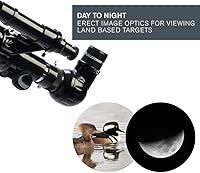
The Moon is by far the most rewarding target — crater detail and surface texture look impressive and will genuinely surprise most first-time observers. Saturn's rings are visible as a distinct shape, and Jupiter shows its four main moons as tiny dots along with some cloud banding on a steady night. Deep-sky objects like galaxies and nebulae are mostly a disappointment at 60mm aperture; you might glimpse the Orion Nebula or the Pleiades cluster, but do not expect dramatic images of distant galaxies.

It is a fair concern and one that comes up regularly in buyer reviews. At lower magnifications using the 20mm eyepiece, the wobble is manageable and the experience is fine. The problem becomes obvious when you push to high magnification with the 4mm eyepiece or the Barlow lens — even brushing the focuser can send the image bouncing for a few seconds. Setting up on a hard, flat surface and avoiding the highest magnification settings helps significantly.

For an adult following the instructions, assembly typically takes 20 to 40 minutes on the first attempt. The included manual has received a lot of criticism for being vague, particularly around attaching the optical tube and aligning the finderscope. Younger children will need adult help with setup — once it is assembled and aligned, kids can use it fairly independently for basic observing.

In theory the 4mm eyepiece pushes the scope near its maximum useful magnification, but in practice it rarely delivers satisfying results with this particular setup. The image gets noticeably dim, and any atmospheric turbulence or tripod vibration is greatly exaggerated at that power. Most experienced owners of this scope end up using the 20mm eyepiece or the 20mm with the Barlow lens at 3x, which hits a better balance between magnification and image stability.

It is a popular gift choice for that exact age group and generally lands well. The Moon views are engaging enough to hold a child's attention, and it teaches basic concepts about optics and sky navigation in a hands-on way. Adult supervision during setup is a good idea, and helping them align the finderscope correctly on the first night will make a big difference in how enjoyable the experience is.

Yes, and the included erect image diagonal makes this more practical than it sounds. Without the diagonal, refractors typically show an upside-down image — which is fine for astronomy but confusing for terrestrial use. With the diagonal installed, the image appears right-side-up, making it reasonably usable for birdwatching or scenic viewing. It is not a substitute for a dedicated spotting scope, but it works in a pinch.

Not immediately — the kit that comes in the box covers the basics well enough for a first season of observing. If you plan to spend significant time on the Moon, a cheap lunar filter (usually a few dollars) will make full Moon sessions much more comfortable by cutting down the glare. Down the line, a better-quality eyepiece in the 10mm to 15mm range is a worthwhile upgrade that noticeably improves image quality compared to the stock options.

The scope comes with a download code for a desktop astronomy application that provides interactive star maps, information on planets and deep-sky objects, and guided tours of the night sky. It is a solid learning resource for beginners trying to understand what they are looking at. That said, if you already use a free mobile app like Stellarium or SkySafari on your phone, you may find those just as useful and more convenient to take outside.

Celestron's two-year warranty is a genuine reassurance, and their US-based support team is reachable by phone and email. The process of shipping a telescope back for service is admittedly inconvenient — it is a bulky item — so minor issues like a loose fitting or a misaligned finderscope are usually easier to fix at home with a quick call to support. For more serious optical or mechanical defects, the warranty coverage is worth having.

Where to Buy