Overview

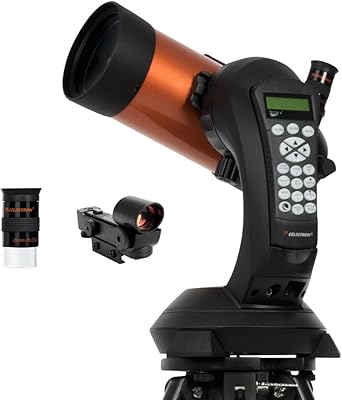
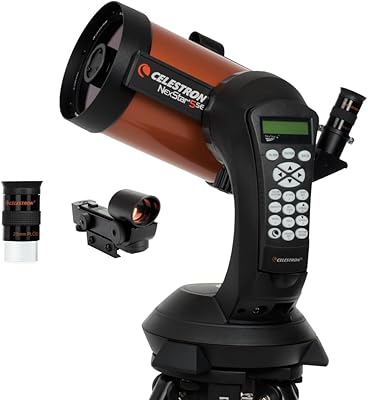
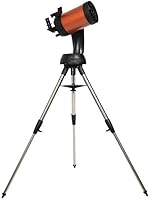
The Celestron NexStar 6SE Computerized Telescope occupies an interesting spot in the amateur astronomy market — capable enough to satisfy serious hobbyists, yet accessible enough that a first-time buyer won't feel completely lost. That recognizable orange tube has been a Celestron signature for decades, and pairing it with a fully computerized GoTo mount brings it firmly into the modern era. The optical design is Schmidt-Cassegrain, which folds a long focal path into a surprisingly compact body — a real advantage over bulkier Newtonian reflectors of similar aperture. It rewards patience; alignment takes practice before it clicks. Celestron's California roots and US-based support add a layer of reassurance that genuinely matters at this investment level.
Features & Benefits

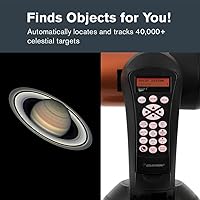
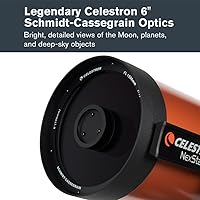
The six-inch aperture is the headline here. It gathers enough light to show Jupiter's cloud bands with satisfying clarity, reveal the Orion Nebula's structure, and hint at distant galaxies on a dark night. That 1500mm focal length, folded neatly into a tube you can carry with one arm, is the Schmidt-Cassegrain's core advantage. The GoTo database of over 40,000 objects sounds like a marketing figure until you're actually in the field, punch in a target, and watch the scope slew there in seconds. SkyAlign is genuinely fast — center three bright objects, confirm, and you're observing within minutes. The hand controller is logically laid out and easy to navigate without memorizing button sequences.

Best For

This GoTo scope fits people who want to skip manual star-hopping entirely and jump straight into guided observing. If your clear nights are short — an hour or two squeezed between clouds — fast alignment means you're not burning half your session just setting up. It's also a natural upgrade path for anyone who started with a small refractor and felt limited by its optics. Planetary observers in particular will appreciate what the glass can do at higher magnifications. That said, if long-exposure astrophotography is your primary goal, the single fork arm alt-azimuth mount will hold you back — this scope truly shines as a visual observing instrument.

User Feedback

Across thousands of owner reviews, a clear pattern emerges. People genuinely appreciate how quickly they get observing — the alignment process becomes second nature after a few outings, and the tracking keeps targets centered without constant manual nudging. Where opinions divide is the mount stability: at high magnifications, vibrations take a few seconds to damp out after touching the scope, which some find mildly frustrating. The included eyepiece is a workable starting point, but most owners recommend budgeting for at least one quality upgrade. The bigger catch for new buyers is the power situation — no batteries or adapter are included, so plan accordingly before your first night out. Long-term owners consistently highlight build durability and ongoing firmware support.

Pros

  • The six-inch aperture delivers genuinely impressive planetary detail — Jupiter, Saturn, and the Moon all reward serious study.
  • SkyAlign gets you observing in minutes without needing to identify a single constellation by name.
  • The Schmidt-Cassegrain design packs a long focal length into a compact, car-friendly tube.
  • GoTo tracking keeps targets centered automatically, freeing you to actually look rather than constantly nudge.
  • A catalog of over 40,000 objects means you will not run out of targets for years.
  • Celestron's long track record translates into reliable firmware support and a wide accessories ecosystem.
  • The assembled weight is manageable enough for solo backyard setup without assistance.
  • Two-year warranty and US-based technical support provide real peace of mind at this investment level.
  • Long-term owners consistently report the optics hold up well and collimation stays stable with reasonable care.

Cons

  • No power source is included — budget for a power tank or AC adapter before your first night out.
  • The single fork arm mount vibrates noticeably at high magnifications, disrupting critical focusing.
  • The included 25mm eyepiece is a starting point only; a quality upgrade is a near-immediate necessity.
  • Built-in wireless control is absent — Bluetooth and WiFi require separate accessory purchases.
  • Alt-azimuth mounting makes long-exposure deep-sky astrophotography impractical without an additional equatorial wedge.
  • SkyAlign accuracy suffers in light-polluted skies where finding three well-separated bright stars is harder than advertised.
  • The tripod feels less refined than the optical tube it supports, with noticeable flex under load.
  • Battery drain on cold nights is faster than many owners expect, making AA power unreliable for longer sessions.
  • The hand controller interface feels dated compared to app-driven competitors entering the same price bracket.

Ratings

The Celestron NexStar 6SE Computerized Telescope has been scored by our AI system after parsing thousands of verified global owner reviews, with spam, incentivized submissions, and bot activity actively filtered out before analysis. Scores reflect the full picture — where this GoTo scope genuinely excels and where real buyers have run into friction. Both sides are weighted honestly so you can make a confident, informed decision.

Optical Performance
88%
The six-inch Schmidt-Cassegrain optics consistently impress owners when pointed at the Moon or planets — Jupiter's equatorial bands, Saturn's rings, and lunar craters come through with crisp, high-contrast detail. Deep-sky targets like the Orion Nebula and brighter globular clusters are well within reach on clear, dark nights.
At the upper end of its magnification range, atmospheric turbulence becomes the limiting factor more often than the optics themselves, which can frustrate users chasing fine planetary detail. Some owners also note that collimation can drift over time and requires periodic adjustment to maintain peak sharpness.
GoTo Mount Accuracy
83%
Once properly aligned, the automated slewing is genuinely reliable — users report the scope landing targets within the eyepiece field of view the vast majority of the time. For casual visual observing sessions, this removes the steep learning curve of manual star-hopping entirely.
Accuracy degrades noticeably if the initial SkyAlign step is rushed or performed with imprecise star centering. A small number of owners experience periodic pointing drift over long sessions, which requires a re-alignment to correct — mildly disruptive on a short clear night.
SkyAlign Ease of Use
86%
The three-star alignment method is genuinely approachable — you do not need to know star names or constellations in advance, which is a real confidence booster for new astronomers. Most owners are observing within ten minutes of setup on a typical clear night.
In light-polluted urban areas where only a handful of stars are visible, picking three sufficiently separated alignment stars can be trickier than the marketing suggests. First-time users often need two or three practice sessions before the alignment routine feels truly intuitive.
Mount Stability
61%
39%
For low-to-moderate magnification work, the single fork arm alt-azimuth mount is stable enough and keeps the overall assembled weight manageable at around 30 lbs. Casual observers who stay below 150x will rarely feel limited by the mount mechanics.
At higher magnifications, vibrations introduced by touching the focuser or hand controller take several seconds to fully settle, which interrupts the observing flow and makes critical focusing more tedious. This is the most consistently cited mechanical frustration across long-term owner reviews, particularly for planetary observers pushing the scope to its limits.
Portability & Setup Time
81%
19%
The Schmidt-Cassegrain form factor packs a long focal length into a tube short enough to transport in a mid-size car without disassembly. Most owners can go from car to observing-ready in under 15 minutes once they have a few sessions of practice under their belt.
At around 30 lbs assembled, this is not a scope you will casually carry on hiking trails or to remote dark-sky sites without a vehicle. The tripod in particular feels somewhat cumbersome to transport and set up solo in the dark.
Hand Controller & Interface
79%
21%
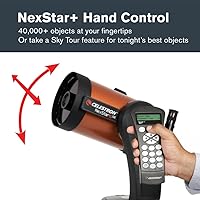
The NexStar+ hand controller is logically organized and the button layout becomes second nature quickly. The ability to browse the object catalog by category — planets, Messier objects, NGC objects — makes it easy to plan an evening's observing on the fly without a phone or laptop.
The controller's screen is small and can be difficult to read under red-light-only conditions. A subset of users finds the firmware menu structure somewhat dated compared to app-based competitors, and Bluetooth connectivity requires a separate accessory purchase rather than being built in.
Included Accessories
54%
46%
The included 25mm eyepiece is a functional starting point that delivers a usable wide-field view for initial orientation and low-power deep-sky browsing. The StarPointer red dot finderscope is a sensible addition for quick target acquisition before handing off to the GoTo system.
The accessory package feels thin relative to the investment level. No power source is included — no batteries, no AC adapter, no external power tank — which catches many first-time buyers off guard on their very first night out. Budgeting for at least one quality eyepiece upgrade is essentially mandatory.
Power & Battery Management
47%
53%
The flexibility to run on standard AA batteries, a 12V AC adapter, or an external power tank means you can adapt to backyard or field use without being locked into proprietary power. In a pinch, AA batteries are available anywhere.
Nothing is included in the box, which is a genuine frustration at this price tier — discovering this the night of first use is a common and avoidable disappointment documented repeatedly in reviews. Eight AA batteries drain faster than many owners expect during cold-night sessions, making an external power tank a near-essential add-on purchase.
Build Quality & Durability
84%
The optical tube feels solid and well-finished, with the iconic orange enamel holding up well over years of use based on long-term owner reports. The mount mechanism shows minimal wear even after hundreds of observing sessions when properly maintained.
The tripod legs feel less premium than the optical tube they support, with some flex noticeable under load. A few owners report that mount motors can develop occasional sticking or skip behavior after extended use, though these cases appear to be a minority.
Astrophotography Capability
38%
62%
The GoTo tracking does a reasonable job of keeping bright targets centered for short-exposure planetary snapshots taken through a smartphone adapter or basic camera. Casual lunar photography in particular is very accessible with this setup.
The alt-azimuth single fork arm mount introduces field rotation over longer exposures, making it fundamentally unsuitable for deep-sky astrophotography without an equatorial wedge accessory. Serious imagers will quickly outgrow this mount, and the f/10 focal ratio demands precise tracking that the platform simply cannot deliver consistently.
Software & Firmware Support
77%
23%
Celestron has maintained firmware updates for the NexStar line over many years, which speaks well to their long-term product commitment. Integration with the Celestron app via an optional accessory gives more modern control options for users who prefer their smartphone over the hand controller.
Wireless connectivity is not native and requires purchasing the SkyPortal WiFi module separately, which feels like an oversight for a scope at this level. The desktop planetarium software bundled via download feels dated in its interface compared to free modern alternatives.
Value for Investment
72%
28%
For what you get optically — a genuine six-inch Schmidt-Cassegrain with a proven GoTo system and Celestron's track record behind it — the pricing sits in a defensible range for a serious visual observing instrument. Long-term owners frequently say they would buy it again.
Competitors at similar price points are beginning to offer built-in wireless, included power solutions, and equatorial tracking, which makes the out-of-box experience feel comparatively dated. Factoring in the near-mandatory accessory purchases needed to fill the gaps, the total cost of entry climbs noticeably above the listed price.
Warranty & Customer Support
82%
18%
The two-year manufacturer warranty and access to US-based technical support is a meaningful differentiator in a category where many competitors offer minimal after-sale assistance. Owners report responsive and knowledgeable support interactions when issues arise.
Warranty service can involve shipping a substantial and fragile piece of equipment, which is logistically inconvenient. A minority of users report longer-than-expected turnaround times during peak demand periods, though this appears to be exception rather than norm.

Suitable for:

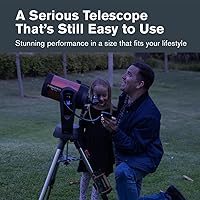
The Celestron NexStar 6SE Computerized Telescope is a strong fit for anyone who wants to move past the frustrating early stages of astronomy and actually spend their clear nights observing rather than fumbling with star charts. It suits beginners who are serious enough to invest in a capable instrument but want the automation to compensate for limited celestial knowledge — the GoTo system handles the heavy lifting while they focus on learning the sky at their own pace. Intermediate hobbyists upgrading from a small refractor or basic Dobsonian will find the six-inch aperture a meaningful step up, particularly for planetary detail and brighter deep-sky objects. If your observing window is typically short — a couple of hours squeezed into a busy week — the fast SkyAlign process means you are not burning half your session on setup. It also suits astronomers who value buying into a mature, well-supported ecosystem, knowing that accessories, firmware updates, and knowledgeable technical support are all readily available for the long haul.
Not suitable for:

The Celestron NexStar 6SE Computerized Telescope is not the right choice for buyers whose primary goal is long-exposure deep-sky astrophotography. The single fork arm alt-azimuth mount introduces field rotation during extended exposures, a fundamental limitation that no firmware update or accessory can fully overcome without adding an equatorial wedge — itself an extra investment that pushes the total cost considerably higher. Buyers on a tight budget should also think carefully before purchasing: the box contains no power source whatsoever, and a quality second eyepiece is essentially mandatory, meaning the true out-of-pocket cost is higher than the listed price alone suggests. Observers who want to take their gear to remote dark-sky sites on foot will find the assembled weight and tripod bulk impractical for anything beyond car-based trips. Those who prefer a fully hands-on, learn-the-sky-manually approach may also find the GoTo automation more of a crutch than an asset, and would likely be better served by a quality manual Dobsonian at a lower price point.
Specifications

  • Optical Design: The telescope uses a Schmidt-Cassegrain optical system, which folds the light path internally to achieve a long focal length in a compact tube.
  • Aperture: The primary mirror has a diameter of 150mm (5.91″), providing substantial light-gathering capability for both planetary and deep-sky observing.
  • Focal Length: The optical tube delivers a focal length of 1500mm, enabling high-magnification planetary views without requiring an excessively long physical tube.
  • Focal Ratio: The scope operates at f/10, making it well-suited for high-contrast planetary and lunar observation as well as brighter deep-sky targets.
  • Magnification Range: Practical magnification spans from approximately 21x at the low end up to a theoretical maximum of 354x under ideal atmospheric conditions.
  • Limiting Magnitude: Under good dark-sky conditions, the scope can reach objects as faint as magnitude 13.4, revealing a wide range of galaxies, nebulae, and star clusters.
  • Mount Type: The GoTo mount uses a computerized altitude-azimuth design with a single fork arm, driven by internal motors that automatically slew and track celestial objects.
  • Object Database: The NexStar+ hand controller stores a catalog of over 40,000 celestial objects, organized by category for easy browsing in the field.
  • Alignment System: SkyAlign requires the user to center any three bright stars or planets in the eyepiece, after which the mount calculates its orientation and is ready to track automatically.
  • Included Eyepiece: A single 25mm eyepiece is included in the box, providing a wide field of view suitable for initial orientation and low-power browsing.
  • Finderscope: A StarPointer red dot finderscope is included and powered by a CR2032 battery, assisting with rough target acquisition before the GoTo system takes over.
  • Tube Dimensions: The optical tube measures 406mm in length, keeping the overall footprint compact relative to other telescope designs with equivalent focal length.
  • Assembled Weight: The fully assembled system, including the optical tube, fork arm mount, and tripod, weighs approximately 30 lbs.
  • Power Options: The mount accepts power from eight AA batteries, a 12V DC vehicle adapter, or Celestron-compatible external power tanks — none of which are included in the box.
  • Warranty: Celestron provides a two-year manufacturer warranty on the telescope, backed by unlimited access to US-based technical support.
  • Connectivity: Native wireless connectivity is not built in; optional Bluetooth or WiFi control requires purchasing Celestron's SkyPortal WiFi module separately.
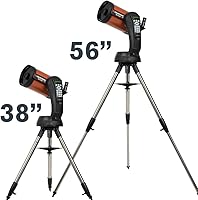
  • Tripod: The scope ships with a steel tripod and an accessory tray, providing a stable base for backyard use under typical observing conditions.
  • Controller Interface: The NexStar+ hand controller features a multi-button keypad and a small backlit LCD screen for navigating the object catalog and mount settings.

Related Reviews
Celestron NexStar 4SE Computerized Telescope
73%
88%
GoTo Accuracy
84%
Optical Clarity
86%
Ease of Setup
81%
Portability
73%
Build Quality
More
Celestron NexStar 127SLT Computerized Telescope
75%
88%
Optical Performance
83%
GoTo Accuracy
81%
Ease of Setup
61%
Mount Stability
86%
Portability
More
Celestron NexStar 130SLT
75%
88%
Ease of Setup
83%
GoTo Accuracy
81%
Optical Performance
74%
Build Quality & Durability
86%
Portability
More
Celestron NexStar 5SE Computerized Telescope
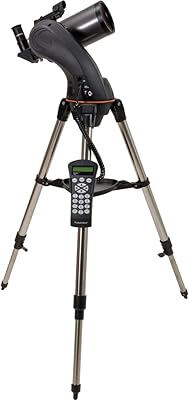
75%
88%
Optical Performance
82%
GoTo Accuracy
84%
Ease of Setup
79%
Build Quality
83%
Portability
More
Celestron NexStar 90SLT Computerized Telescope
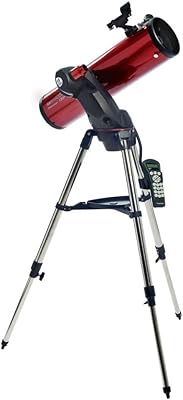
73%
78%
Optical Performance
83%
GoTo Accuracy
81%
Ease of Setup
86%
Portability
67%
Build Quality
More
Celestron SkyProdigy 130 Computerized Telescope
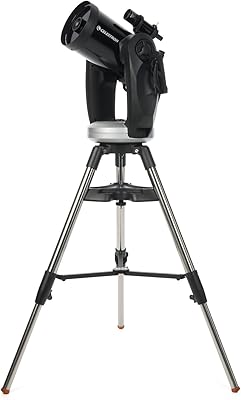
85%
92%
Ease of Setup
89%
Automatic Alignment Technology
82%
Image Quality
88%
Build Quality
85%
Battery Life
More
Celestron CPC 800 XLT Computerized Telescope
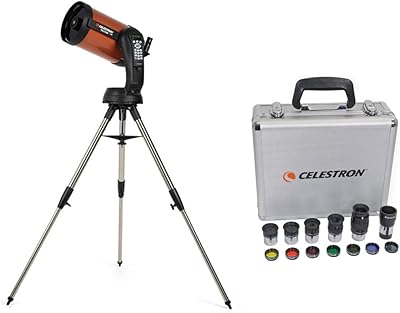
76%
93%
Optical Clarity
84%
GoTo Accuracy
88%
GPS Alignment System
86%
Build Quality
38%
Portability
More
Celestron NexStar 8 SE Computerized Telescope
70%
93%
Optical Clarity
78%
GoTo Accuracy
71%
Build Quality
67%
Setup Experience
62%
Portability
More
Celestron PowerSeeker 114EQ Reflector Telescope
73%
83%
Optical Performance
61%
Mount Quality
57%
Ease of Setup
74%
Included Accessories
81%
Value for Money
More
Celestron PowerSeeker 60AZ Refractor Telescope
71%
78%
Optical Clarity
62%
Mount & Tracking
54%
Tripod Stability
67%
Eyepiece Quality
83%
Value for Money
More

FAQ

Not really. The SkyAlign system is specifically designed so you do not need to know star names or constellation patterns. You simply center any three bright objects in the eyepiece, confirm each one, and the mount figures out where it is pointed. Most beginners are tracking their first target within ten to fifteen minutes of setup.

An external power tank — sometimes called a PowerTank — is the most convenient option for backyard sessions. It lasts significantly longer than AA batteries, especially on cold nights when battery drain accelerates, and it eliminates the hassle of swapping cells mid-session. Just remember that nothing is included in the box, so plan for this purchase before your first night out.

For casual lunar and bright planetary snapshots, yes — a smartphone adapter works reasonably well at the eyepiece. However, if long-exposure deep-sky imaging is your goal, the alt-azimuth mount introduces field rotation over time, which ruins extended exposures. An equatorial wedge accessory can partially address this, but it adds cost and complexity, and the single fork arm still has limitations for serious imaging rigs.

On a clear night with good star visibility, most users complete alignment in five to ten minutes once they are familiar with the process. The first couple of sessions typically take longer as you get comfortable identifying bright targets and using the hand controller, but the learning curve flattens quickly.

It is genuinely suitable for motivated beginners, but it is not a toy scope — there is a setup routine to learn and some patience required in the early sessions. If someone is casually curious about astronomy, a simpler and less expensive scope might be a better fit. But if someone is seriously interested and willing to spend a few evenings learning the system, this telescope will serve them well for years.

It is adequate but not exceptional. At moderate magnifications — say below 150x — vibrations from touching the focuser settle quickly and observing is comfortable. Push into the higher magnification range and the single fork arm shows its limitations; taps and nudges take a few seconds to damp out, which can be frustrating during detailed planetary sessions.

The included 25mm eyepiece is a reasonable starting point, but most owners add at least a medium-range eyepiece fairly quickly — something in the 10mm to 15mm range for planetary work. A quality 2x Barlow lens is also a cost-effective way to double your magnification options without buying multiple eyepieces. Avoid very cheap eyepieces, as the optics quality difference becomes obvious at the longer focal length this scope uses.

Yes, with realistic expectations. Planetary targets, the Moon, and double stars are largely unaffected by light pollution and will look excellent. Faint deep-sky objects like distant galaxies will appear washed out compared to a dark-sky site, but brighter Messier objects — the Orion Nebula, the Pleiades, prominent globular clusters — are still very satisfying to observe from the suburbs.

After a successful SkyAlign, the mount tracks targets automatically for the entire session without needing re-alignment. You may occasionally notice slight drift over a very long session or if the tripod is bumped, in which case a quick re-centering of a known star using the hand controller corrects the pointing.

The eight-inch model offers meaningfully more aperture, which translates to brighter, more detailed views of faint deep-sky objects and slightly more planetary resolution. However, it is also heavier and larger, which affects portability, and it comes at a higher price. The six-inch version hits a practical sweet spot — enough aperture to be genuinely impressive while remaining manageable for solo setup and transport.

Where to Buy