Overview

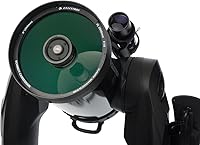
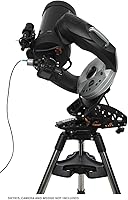
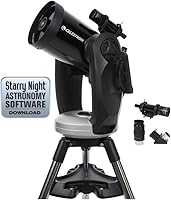
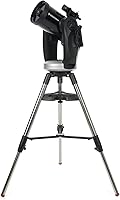
The Celestron CPC 800 XLT Computerized Telescope has been a fixture in serious amateur astronomy circles since 2005, and it has earned that staying power. At its core is an 8-inch Schmidt-Cassegrain optical design — a format that balances substantial light-gathering capability with a relatively compact tube. This is not a beginner's scope, nor is it priced like one. The investment is considerable, and the system weighs close to 70 pounds fully assembled, so portability is genuinely limited. What you get in return is a GPS-enabled computerized platform that can grow with you for years, provided you have a dedicated backyard setup and the patience to learn it properly.
Features & Benefits

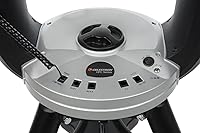
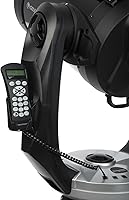
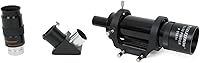
The SkyAlign GPS alignment system is where this computerized SCT distinguishes itself from manually operated scopes. Point at any three bright objects — stars, the moon, a planet — confirm them via the hand controller, and the mount locks onto your sky. From there, GoTo tracking can slew to tens of thousands of catalog objects automatically. The 8-inch aperture at f/10 delivers a 2032mm focal length, translating to sharp, high-contrast planetary views and tight globular clusters. Starbright XLT coatings push light transmission noticeably beyond uncoated optics. The 9x50 finderscope handles initial acquisition reliably, and the hand control holder is a small but practical touch for keeping reference data visible mid-session.

Best For

The CPC 800 XLT genuinely shines in the hands of someone who has outgrown entry-level equipment and wants a serious optical upgrade. Planetary observers benefit greatly here — Saturn's rings, Jupiter's cloud bands, and lunar craters all reward the long focal length and clean optics. It also performs well on brighter deep-sky targets like globular clusters, though very faint nebulae are not its strongest suit given the f/10 ratio. Dedicated backyard observing is where this scope belongs. Hauling it solo to a dark-sky site every weekend will wear on you fast, but as a semi-permanent home instrument, it fits its role well.

User Feedback

Owner reviews paint a consistent picture over many years. The optics draw near-universal praise — people who have used this Celestron fork-mount telescope long-term frequently note that the views hold up well after purchase, which reflects solid build quality. The GPS alignment also earns high marks for reducing friction on clear nights. On the other side, weight and portability come up repeatedly; at nearly 70 pounds, moving it is realistically a two-person task. First-time users often hit a learning curve with the hand controller. A recurring practical note from owners: always allow adequate cool-down time — around 30 to 60 minutes — before expecting the optics to settle for serious viewing.

Pros

  • The 8-inch aperture delivers noticeably sharp, high-contrast views of planets and the Moon that smaller scopes simply cannot match.
  • GPS SkyAlign alignment is fast and reliable, getting you observing within minutes of setup on a clear night.
  • GoTo tracking automatically locates and follows tens of thousands of catalog objects with minimal manual effort.
  • Starbright XLT optical coatings provide meaningfully improved light transmission compared to standard uncoated optics.
  • Long-term owners consistently report that optical quality holds up well over years of regular use.
  • The 9x50 finderscope is a genuinely useful tool for initial target acquisition before switching to the main eyepiece.
  • Magnification range from 29x up to 480x gives real flexibility across different observing targets and conditions.
  • The hand control holder is a practical, low-key feature that makes extended sessions noticeably more comfortable.
  • Build quality on the aluminum optical tube and fork mount is solid enough to justify the long-term investment.
  • Globular clusters and brighter deep-sky objects look excellent through this computerized SCT at higher magnifications.

Cons

  • At close to 70 pounds fully assembled, solo transport is genuinely difficult and sometimes impossible without help.
  • The hand controller software has a real learning curve that can frustrate users during their first several sessions.
  • The optical tube requires 30 to 60 minutes of cool-down time before views stabilize, which eats into usable observing time.
  • An f/10 focal ratio limits performance on faint, extended nebulae compared to faster wide-field optical designs.
  • The scope runs on DC power, meaning you need a reliable external power source in the field — another thing to plan around.
  • Units occasionally arrive needing collimation adjustment, which adds an unwanted task before first light.
  • The overall footprint of 36 by 36 by 66 inches means dedicated storage space is a real consideration.
  • The CPC 800 XLT is a significant financial commitment that is hard to justify for anyone still testing their interest in the hobby.
  • Customer service experiences when resolving out-of-box issues have been inconsistent, based on long-term owner reports.
  • There is no built-in equatorial wedge, which limits serious long-exposure astrophotography without additional accessories.

Ratings

The scores below reflect AI-driven analysis of verified owner reviews for the Celestron CPC 800 XLT Computerized Telescope, gathered from buyers worldwide — with spam, bot submissions, and incentivized feedback actively filtered out. Each category is scored on real-world performance as reported by long-term users, not manufacturer claims. Both the genuine strengths and the frustrations that surface repeatedly in honest owner accounts are transparently represented here.

Optical Clarity
93%
Owners consistently single out the quality of planetary views as the standout experience — Saturn's ring structure, Jupiter's equatorial bands, and lunar crater detail are described as crisp and high-contrast even at elevated magnifications. The Starbright XLT coatings clearly contribute to a brightness and sharpness that long-term users say holds up well over years of regular use.
A small but consistent group notes that views during the first 30 to 60 minutes of an observing session are noticeably softer before the tube fully cools to ambient temperature, which can be frustrating on shorter nights. Users in high-humidity environments also report that moisture management around the corrector plate requires ongoing attention.
GoTo Accuracy
84%
When the SkyAlign routine is performed carefully with well-centered stars, the GoTo system reliably lands targets within the field of view of a moderate eyepiece, which owners describe as genuinely satisfying after the first few successful sessions. The database depth means most observers can spend entire nights on guided tours without running out of objects to find.
Accuracy degrades noticeably when alignment stars are selected or centered hastily, and some users report that the system occasionally needs a full re-alignment mid-session if the mount is bumped. A subset of owners also notes that GoTo precision on objects near the horizon is less reliable than at higher altitudes.
GPS Alignment System
88%
The GPS receiver locks quickly under open sky, and SkyAlign's three-star approach removes most of the manual calculation burden that traditionally trips up new computerized scope users. Owners who observe from a consistent backyard location praise how repeatable and low-effort the alignment process becomes after a few sessions.
Occasionally the GPS struggles to acquire a signal under partial tree cover or near structures, requiring a manual location entry as a fallback. A few users note that the alignment process is still not truly plug-and-play for first-timers without reading the manual carefully, which can deflate expectations on the first night out.
Build Quality
86%
The aluminum optical tube and dual-arm fork mount feel appropriately robust for the investment, and long-term owners regularly describe the mechanical components as holding up well through years of backyard use without meaningful play or degradation in the drives. The overall fit and finish matches what buyers at this price tier reasonably expect.
A recurring complaint involves units arriving with collimation slightly off, suggesting some variability in pre-shipment quality control that adds an unwanted first task for new owners. The tripod, while functional, is occasionally described as the least confidence-inspiring part of the overall assembly.
Portability
38%
62%
The folded Schmidt-Cassegrain light path does keep the tube itself impressively compact relative to the focal length, and the integrated fork mount means there are fewer separate components to track compared to a tube-and-separate-mount setup. For a permanent backyard location, moving the scope a short distance is manageable with preparation.
At nearly 70 pounds fully assembled, this is genuinely a two-person job for any real transport, and solo owners who expected to carry it to dark-sky sites regularly report that the reality changes their observing habits significantly. The size and weight are the single most cited source of buyer disappointment across long-term ownership reviews.
Ease of Setup
67%
33%
Owners who have worked through the initial learning curve describe the setup routine as becoming second nature within a handful of sessions, and the hand controller holder is a useful practical detail that reduces fumbling during alignment. The included documentation covers the key steps adequately for patient readers.
First-time sessions are widely described as time-consuming and occasionally frustrating, with the hand controller interface presenting a genuine learning curve before the system clicks. The cool-down requirement, power supply planning, and collimation check all add layers that can make early sessions feel more like troubleshooting than observing.
Hand Controller
71%
29%
The controller provides access to a deep catalog and includes practical features like the object information display, which experienced users appreciate for identifying and logging what they are viewing without reaching for a separate reference. Button layout becomes intuitive after repeated use.
New users frequently describe the interface as dated and dense, requiring repeated menu navigation to reach commonly used functions. Some owners note that firmware updates have addressed a few quirks over the years, but the fundamental interface design has not changed significantly since the scope's original release.
Deep-Sky Performance
63%
37%
Brighter deep-sky targets — globular clusters like M13, open clusters, and larger planetary nebulae — look genuinely impressive through this computerized SCT, with the 8-inch aperture pulling in enough light to show structural detail that smaller scopes cannot resolve. Owners who focus on this category of objects report consistent satisfaction.
The f/10 focal ratio is a real limitation for faint, extended nebulae and large galaxies, where a faster optical design would gather the same light in a fraction of the exposure time. Users who came to the CPC 800 XLT hoping to image faint targets or view them visually with wide-field eyepieces often describe this as the scope's most significant optical constraint.
Planetary Performance
94%
This is where the CPC 800 XLT earns its strongest praise without reservation — the long focal length and high-contrast SCT design are nearly ideal for planetary work, and owners describe views of Saturn, Mars at opposition, and Jupiter as among the best they have experienced at the amateur level. The magnification ceiling of 480x is practically usable on steady nights.
Atmospheric seeing becomes the binding constraint at high magnifications, and owners in turbulent or urban atmospheres report that the optical capability regularly outpaces what the sky will allow. This is not a flaw in the scope, but it does mean the full planetary performance is weather-dependent in a way that lower-magnification instruments are not.
Value for Money
72%
28%
Owners who are fully committed to the hobby and use the scope regularly over multiple years tend to view the investment as justified, citing optical longevity and the breadth of the GoTo catalog as ongoing returns on the upfront cost. The scope does not become obsolete quickly, and the platform supports accessory upgrades over time.
For buyers who use it less frequently than anticipated — a common outcome given the setup overhead and portability constraints — the cost-per-observing-session ratio becomes harder to defend. Several reviews mention that the total cost of ownership, once a power supply, additional eyepieces, and transport cases are factored in, exceeds the sticker price meaningfully.
Motor & Tracking
82%
18%
The dual-arm fork mount tracks objects smoothly during visual observing sessions, and owners report that targets stay centered comfortably for extended eyepiece sessions without constant manual correction. The drive performance is consistently described as quiet and reliable under normal backyard conditions.
Field rotation inherent to the altazimuth design becomes a limiting factor for longer photographic exposures without an equatorial wedge, and some users note that the motors are sensitive to power supply quality — using an underpowered or fluctuating source can introduce tracking irregularities.
Included Accessories
61%
39%
The 9x50 finderscope is a practical inclusion that performs noticeably better than the red-dot finders bundled with lower-tier scopes, and the hand control holder is a thoughtful addition that most owners end up using consistently during sessions.
The included Plossl eyepiece is functional but widely considered the weakest link in the package, and most serious observers replace or supplement it quickly. Given the price tier of the overall system, a more complete eyepiece starter set would be a reasonable expectation that the current bundle does not meet.
Long-Term Durability
89%
Multi-year owners are among the most positive voices in the review pool, with many describing optical and mechanical performance that has remained consistent across five or more years of regular use — a meaningful signal given the investment involved. The aluminum tube and quality coatings appear to age well under normal storage and care conditions.
Drive motor longevity is occasionally flagged as a concern after extended heavy use, particularly when the scope is transported frequently or stored in temperature-variable environments. Replacement parts and service availability, while not impossible, are not as straightforward as the initial purchase experience.

Suitable for:

The Celestron CPC 800 XLT Computerized Telescope is built for the amateur astronomer who has moved past the curiosity phase and is ready to commit to the hobby seriously. If you already understand basic sky navigation and want optics that will reward that knowledge with genuinely sharp planetary views, this scope delivers. It is particularly well-suited to backyard observers with a dedicated outdoor space, since the altazimuth fork mount and nearly 70-pound total weight make it far more practical as a semi-permanent setup than a grab-and-go instrument. The GPS SkyAlign system is a real advantage for people who want to spend their clear nights actually observing rather than wrestling with polar alignment, and the GoTo tracking opens up the catalog to users who prefer guided exploration over manual star-hopping. Long-term hobbyists who want a platform they can grow into — adding eyepieces, filters, or a camera over time — will find the CPC 800 XLT a capable and durable foundation.
Not suitable for:

The Celestron CPC 800 XLT Computerized Telescope is the wrong choice for several types of buyers, and being honest about that saves a lot of frustration. Complete beginners who are still learning basic constellation recognition will likely feel overwhelmed by the hand controller interface and the setup demands before they have built enough sky familiarity to get value from the GoTo system. Anyone hoping to transport the scope solo to dark-sky sites regularly should think twice — nearly 70 pounds of equipment across multiple cases is a logistical challenge that wears thin quickly. Astrophotographers focused on faint nebulae and wide deep-sky targets may also find the f/10 focal ratio limiting compared to faster optical designs better matched to that work. And if budget is a serious consideration, the financial commitment here is substantial enough that buyers who are unsure about their long-term interest in astronomy would be better served starting smaller.
Specifications

  • Optical Design: The telescope uses a Schmidt-Cassegrain optical design, combining a spherical primary mirror with a corrector plate for compact tube length and versatile performance.
  • Aperture: The primary mirror measures 203.2mm (8″) in diameter, providing substantial light-gathering capability for planetary and deep-sky observation.
  • Focal Length: The optical system delivers a 2032mm focal length, enabling high-magnification views well-suited to planetary detail and lunar surface study.
  • Focal Ratio: The scope operates at f/10, a relatively slow focal ratio that favors high-contrast planetary views but is less optimized for wide-field deep-sky imaging.
  • Magnification Range: Using standard eyepieces, usable magnification spans from 29x at the low end up to 480x at maximum, covering a wide range of observing targets.
  • Limiting Magnitude: Under good conditions, the 8″ aperture reaches a limiting stellar magnitude of approximately 14, making faint deep-sky objects accessible to experienced observers.
  • Mount Type: The scope is mounted on a computerized altazimuth dual-arm fork mount with integrated GoTo drive motors for automated object location and tracking.
  • Alignment System: GPS SkyAlign technology uses an onboard GPS receiver and hand controller input to align the mount automatically after identifying three user-selected bright objects.
  • Optical Coatings: Starbright XLT multi-layer coatings are applied to all optical surfaces to maximize light transmission and improve contrast compared to standard coatings.
  • Finderscope: A 9x50 right-angle finderscope is included to assist with initial target acquisition before transitioning to the main optical tube.
  • Eyepiece Type: The included eyepiece is a Plossl design, a widely respected optical formula that provides good edge sharpness and eye relief for general observing.
  • Tube Construction: The optical tube is constructed from aluminum, balancing structural rigidity with weight management across the overall system.
  • Tube Length: The optical tube measures 432mm in length, a notably compact figure given the 2032mm focal length achieved through the folded SCT light path.
  • Total System Weight: The fully assembled system weighs approximately 69 lbs, which has direct implications for transport, setup, and the need for a stable observing surface.
  • Product Dimensions: The assembled scope measures 36″ deep by 36″ wide by 66″ tall, requiring meaningful dedicated space for both storage and use.
  • Power Source: The mount requires a DC power supply for operation; an external 12V power source or dedicated astronomy battery is needed for field use.
  • Included Battery: One lithium metal battery is included for the GPS and hand controller functions, separate from the main DC drive power requirement.
  • Model Number: The official model number for this configuration is 11073-XLT, which corresponds to the 8″ CPC GPS XLT variant with Starbright coatings.

Related Reviews
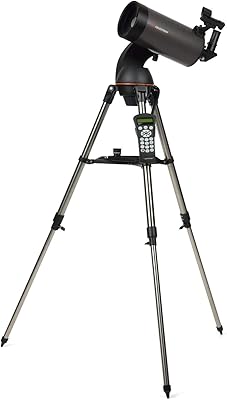
Celestron SkyProdigy 130 Computerized Telescope
85%
92%
Ease of Setup
89%
Automatic Alignment Technology
82%
Image Quality
88%
Build Quality
85%
Battery Life
More
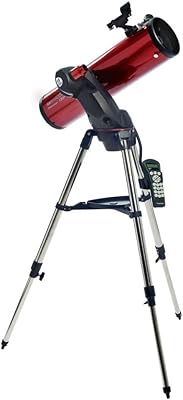
Celestron NexStar 127SLT Computerized Telescope
75%
88%
Optical Performance
83%
GoTo Accuracy
81%
Ease of Setup
61%
Mount Stability
86%
Portability
More
Celestron NexStar 5SE Computerized Telescope
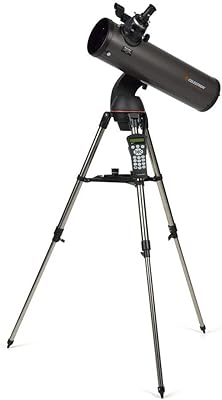
75%
88%
Optical Performance
82%
GoTo Accuracy
84%
Ease of Setup
79%
Build Quality
83%
Portability
More
Celestron NexStar 4SE Computerized Telescope
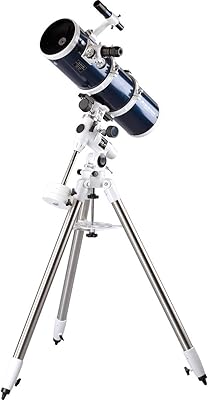
73%
88%
GoTo Accuracy
84%
Optical Clarity
86%
Ease of Setup
81%
Portability
73%
Build Quality
More
Celestron NexStar 130SLT
75%
88%
Ease of Setup
83%
GoTo Accuracy
81%
Optical Performance
74%
Build Quality & Durability
86%
Portability
More
Celestron Omni XLT 150 Reflector Telescope
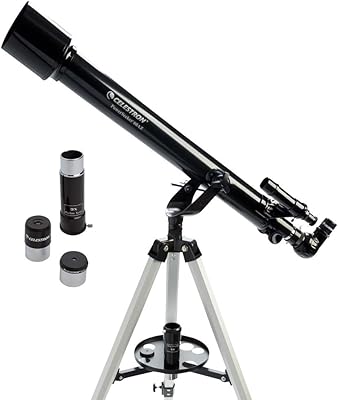
84%
91%
Optical Clarity
89%
Ease of Setup
85%
Mount Precision
88%
Build Quality
84%
Included Accessories
More
Celestron PowerSeeker 80EQ Refractor Telescope
75%
83%
Optical Clarity
67%
Mount Usability
88%
Portability
84%
Value for Money
72%
Build Quality
More
Celestron NexStar 90SLT Computerized Telescope
73%
78%
Optical Performance
83%
GoTo Accuracy
81%
Ease of Setup
86%
Portability
67%
Build Quality
More
Celestron AstroMaster 102AZ Refractor Telescope
77%
78%
Optical Clarity
91%
Ease of Setup
74%
Mount Usability
71%
Tripod Stability
83%
Value for Money
More
Celestron PowerSeeker 114EQ Reflector Telescope
73%
83%
Optical Performance
61%
Mount Quality
57%
Ease of Setup
74%
Included Accessories
81%
Value for Money
More

FAQ

Honestly, prior experience helps a lot here. The SkyAlign system does simplify alignment considerably, but navigating the hand controller database, understanding eyepiece selection, and managing expectations around cool-down time and collimation all go more smoothly if you already have some telescope background. If this would be your first scope, plan to spend several sessions just learning the system before the observing itself becomes fluid.

Physical setup — assembling the tripod, mounting the optical tube, and powering on — takes roughly 20 to 30 minutes once you know the process. Add to that a GPS acquisition period of a few minutes and the SkyAlign routine itself. But the step most people underestimate is thermal cool-down: the optical tube needs 30 to 60 minutes outside before the views settle enough for serious planetary work. Budget for that, especially on nights with a large temperature swing from indoors to outside.

It depends on what kind of imaging you have in mind. The CPC 800 XLT works reasonably well for lunar and planetary photography, where the long focal length is actually an advantage. For deep-sky imaging of faint nebulae and galaxies, the f/10 ratio means long exposures, and the altazimuth mount without an equatorial wedge introduces field rotation in tracked shots over time. Serious deep-sky imagers typically add an equatorial wedge accessory or choose a different mount type altogether.

It is genuinely challenging for one person. The complete system weighs close to 70 lbs and does not break down into small, light components. Most owners use a dedicated transport case and treat it as a two-person lift. If dark-sky site travel is central to your observing plans, factor that into your decision — this scope rewards a stable backyard setup far more than a mobile lifestyle.

The views are excellent under good seeing conditions. Saturn's rings and the Cassini Division, Jupiter's cloud bands and the Galilean moons — these are all clearly resolved with a quality eyepiece at appropriate magnification. The 8-inch aperture and long focal length are well matched to planetary work. Atmospheric seeing (the steadiness of the air above you) will be the main variable limiting how sharp those views get on any given night.

It should arrive reasonably collimated from the factory, but some units require adjustment before first use — this comes up often enough in owner reports that it is worth checking early on. Collimating an SCT is not especially difficult once you understand the process, and there are good guides available, but it is an added step that can catch new owners off guard if they are not expecting it.

The mount runs on 12V DC, so you will need either a dedicated astronomy power tank, a car battery with the appropriate adapter, or a portable lithium power station. The scope does not run effectively on standard AA batteries for extended sessions. Picking up a reliable 12V field power supply before your first outing is worth doing — it removes one potential frustration from the experience.

After SkyAlign finishes, you simply scroll through the hand controller database — which contains tens of thousands of stars, planets, nebulae, clusters, and galaxies — select your target, and the mount slews to it automatically. It then tracks the object to compensate for Earth's rotation. Accuracy depends on how carefully the initial alignment was done; three well-centered alignment stars will get you noticeably tighter GoTo performance than rushed selections.

Yes. The focuser accepts standard 1.25-inch and 2-inch eyepieces, so any eyepiece you already own in those sizes will work. The included Plossl is a decent starting point, but most observers eventually add a few additional eyepieces to cover different magnification ranges. A low-power wide-field eyepiece in particular pairs nicely with the long focal length for getting initial context on fainter targets.

Based on long-term owner feedback, it holds up well. The aluminum tube and fork mount are built to a standard that matches the price tier, and owners who have used this Celestron fork-mount telescope for five or more years generally report that the optics remain in good condition with normal care. Keeping the corrector plate free of dust and moisture, storing it covered, and avoiding rough handling of the mount motors are the main maintenance considerations.

Where to Buy