Overview

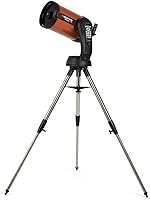
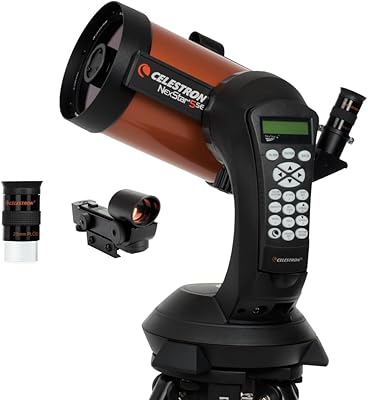
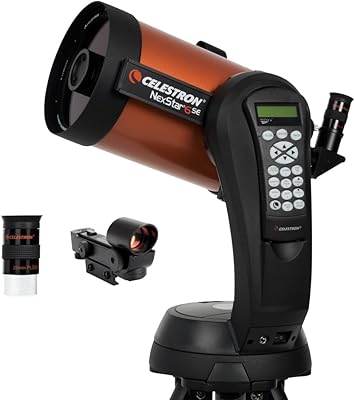
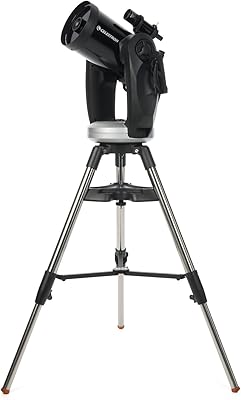
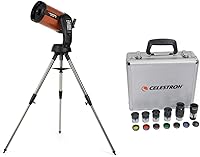
The Celestron NexStar 8 SE Computerized Telescope sits at a serious crossroads between portability and real optical muscle — it is not an entry-level scope dressed up in fancy packaging. The Schmidt-Cassegrain design folds a long optical path into a compact tube, giving you genuine 8-inch light-gathering capability without hauling something the size of a stepladder. The GoTo automated mount is what truly distinguishes it from manual alternatives; align on a couple of bright stars and the scope will hunt down tens of thousands of celestial objects on its own. That said, expect a real learning curve. This computerized telescope rewards patience, not impulse buying, and the included accessories give you enough to start observing the same night it arrives.
Features & Benefits

The 8-inch aperture with StarBright XLT coatings pulls in noticeably more light than a 6-inch or smaller scope, and on a steady night Saturn's rings and Jupiter's cloud bands snap into focus with genuine clarity. The GoTo mount's database of over 40,000 objects sounds impressive on paper, and in practice it actually delivers — once you complete the two or three-star alignment procedure, tracking stays smooth and reliable. The NexStar+ hand controller handles everything without a laptop, but connecting via USB to the CPWI software unlocks a cleaner interface for longer sessions. The single fork arm tripod sets up quickly, though at nearly 65 pounds portability has limits. Batteries drain faster than you expect; an external power tank is a near-essential addition.

Best For

This GoTo scope is an ideal match for intermediate hobbyists who are done spending ten frustrating minutes hunting Messier objects by hand. Planetary observers will particularly appreciate it — the long focal ratio produces high-contrast views of solar system targets, making it a strong choice for anyone focused on planetary detail work. It also suits early-stage astrophotographers who want to visually confirm targets before committing to a full imaging rig. If you regularly drive to dark-sky sites, the NexStar 8 SE offers a workable balance of aperture and packability, though you will want a second pair of hands for the tripod. Those upgrading from a small refractor will notice the jump in capability immediately.

User Feedback

Owners consistently highlight optical clarity on planets as the standout strength — Saturn and Jupiter draw enthusiastic reactions from people who had only ever seen those targets through smaller scopes. The recurring frustration, though, is the alignment process; first-timers often need two or three sessions before it feels intuitive rather than tedious. Several buyers have flagged the single fork arm as a structural weak point compared to dual-arm alternatives, noting occasional flex at high magnification. Battery life is a genuine complaint, and the community consensus leans hard toward grabbing a power tank right away. Long-term sentiment is broadly positive — those who push through the early setup complexity tend to keep this computerized telescope for years.

Pros

  • The 8-inch aperture gathers enough light to show clear planetary detail and resolve globular clusters that smaller scopes smear into blobs.
  • StarBright XLT coatings noticeably improve image brightness and contrast compared to uncoated or standard-coated alternatives.
  • The GoTo mount reliably locates and tracks objects once alignment is done — no more manual star-hopping on a cold night.
  • A database of over 40,000 objects means you will not run out of targets, from bright showpieces to obscure deep-sky objects.
  • The NexStar+ hand controller works independently from a laptop, keeping the setup simple for field sessions.
  • CPWI software integration adds a polished PC-based control option for longer planned observation evenings.
  • The quick-release fork arm and tripod genuinely cut setup time compared to more complex equatorial rigs.
  • Long-term owners consistently report that satisfaction holds up well after months of regular use.
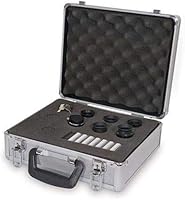
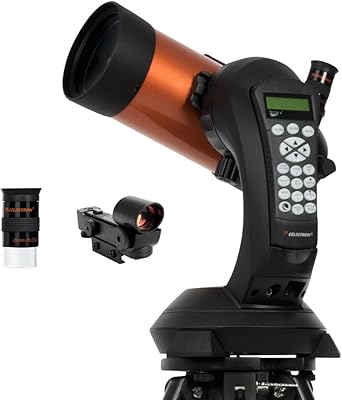
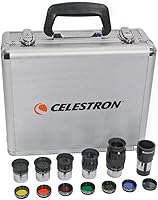
  • The included accessory kit — eyepiece, filters, star diagonal, and finderscope — provides a functional starting point without immediate extra spending.
  • The Schmidt-Cassegrain design keeps the optical tube short and manageable relative to the aperture size it delivers.

Cons

  • The two or three-star alignment procedure trips up first-timers repeatedly and requires real practice before it feels natural.
  • At nearly 65 pounds, moving this GoTo scope solo is awkward and borderline unsafe on uneven ground.
  • The single fork arm mount introduces noticeable flex at higher magnifications, which more rigid dual-arm designs avoid.
  • Battery life under real observing conditions is shorter than most buyers anticipate — an external power tank is practically mandatory.
  • The included 25mm eyepiece is a usable starting point, but most observers will want to invest in better glass fairly quickly.
  • The optional WiFi module for smartphone control is not included, making wireless operation an additional expense.
  • Thermal acclimation of the optical tube takes time on cold nights, which delays the start of productive viewing sessions.
  • Customer support and firmware update experiences have drawn inconsistent feedback, with some users reporting slow resolution times.
  • The altazimuth GoTo mount limits long-exposure astrophotography compared to a proper equatorial tracking setup.
  • Urban or suburban observers will find light pollution a genuine ceiling on what this scope can reveal, despite its optical quality.

Ratings

The scores below for the Celestron NexStar 8 SE Computerized Telescope were generated by our AI after analyzing verified owner reviews from astronomy communities and retail platforms worldwide, with spam, incentivized, and bot-flagged submissions actively filtered out. The results reflect a balanced synthesis of genuine long-term ownership experiences — both the standout strengths that keep buyers loyal and the recurring frustrations that no amount of enthusiasm can paper over.

Optical Clarity
93%
Owners consistently describe views of Saturn's rings and Jupiter's cloud bands as the clearest they have seen through any personal scope at this aperture level. The StarBright XLT coatings make a tangible difference on nights with good seeing, producing bright, high-contrast images that validate the investment for planetary observers.
At high magnification, atmospheric turbulence becomes a limiting factor that the optics cannot overcome — a reality some buyers underestimate when evaluating the scope indoors. A small number of users received units with collimation slightly off from the factory, requiring adjustment before the optics reached their full potential.
GoTo Accuracy
78%
22%
Once the two or three-star alignment is dialed in, the mount reliably slews to and centers targets across the sky with impressive consistency, including objects users could never have located manually. Regular observers report that accuracy improves meaningfully as they develop a routine for the alignment process over multiple sessions.
First-time GoTo users frequently report landing the first few nights with the mount pointing well off-target, which is almost always a user error during alignment but still a frustrating experience out of the gate. Objects near the database edges or at very low altitude can land noticeably off-center even after a clean alignment.
Build Quality
71%
29%
The optical tube itself feels solid and well-machined, and the overall construction gives the impression of a product that will last years with reasonable care. The fork arm and tripod assembly is stable enough at lower magnifications for a comfortable observing experience.
The single fork arm draws consistent criticism from users who have compared it to dual-arm alternatives — at higher magnifications, vibration damping is noticeably inferior and any nudge to the focuser causes image bounce that takes several seconds to settle. The hand controller cable feels like the weakest physical link in the system over extended use.
Setup Experience
67%
33%
The quick-release tripod and tube assembly genuinely reduce the time from car to first star compared to more complex equatorial setups, and experienced users report getting the scope aligned and observing within 20 minutes once the process is familiar. The included setup documentation covers the basics clearly enough for most buyers.
The learning curve for the GoTo alignment is steeper than the marketing implies, and multiple reviewers describe their first two or three sessions as more educational than enjoyable. Users who skip the manual and try to intuit the alignment process tend to have a much worse early experience.
Portability
62%
38%
Breaking the system down into its three main components — tube, fork arm, and tripod — makes it feasible to transport in most mid-size vehicles, and plenty of owners regularly drive it to rural dark-sky sites for monthly sessions. The compact Schmidt-Cassegrain tube is a genuine advantage over Newtonian reflectors of equivalent aperture.
At nearly 65 pounds combined and with no carrying handles on the tripod, moving this GoTo scope solo from a car park to an observing spot is awkward and physically demanding. Anyone expecting to carry it solo down a trail or up a flight of stairs will quickly find the weight a hard constraint.
Battery Performance
49%
51%
The battery compartment accepts standard AA cells that are available anywhere, which at least means you are never stranded looking for a proprietary charger or a specific battery type. Cold-weather observers appreciate that swapping in fresh batteries mid-session takes under two minutes.
Real-world battery life under typical observing conditions runs well short of what most buyers expect, often two to three hours with a fresh set of alkalines in mild weather and considerably less in winter. The community consensus is essentially unanimous that an external 12V power tank is a mandatory accessory, which represents an unacknowledged additional cost.
Value for Money
74%
26%
Compared to assembling an equivalent optical and electronic tracking system from separate components, the NexStar 8 SE represents reasonable consolidated value at its price tier, especially when the software bundle is factored in. Long-term owners who use it regularly tend to feel the investment was justified once they are past the learning phase.
Buyers who factor in the near-essential additions — a power tank, upgraded eyepieces, and potentially a WiFi module — find the true cost of ownership noticeably higher than the sticker price suggests. Occasional users who observe fewer than a dozen times a year are unlikely to extract enough value to feel the purchase was fully justified.
Software & Control
81%
19%
The CPWI software integration is genuinely well-designed for users who prefer a laptop-based workflow, offering a clean interface for planning sessions and running the mount without wrestling with the hand controller keypad. Starry Night SE provides a useful companion for sky planning even beyond its role as a scope control tool.
The optional WiFi module for smartphone control is an omission that feels increasingly conspicuous compared to competitors that include wireless connectivity in the box at similar price points. Some users report that CPWI has a steeper software learning curve than expected, particularly on non-standard Windows configurations.
Tracking Performance
83%
Once aligned, the motorized dual-axis drive keeps objects centered in the eyepiece for extended visual sessions without manual correction, which is a significant quality-of-life improvement over any untracked scope. Planetary observers doing short-video capture particularly benefit from the consistent tracking during imaging runs.
The altazimuth tracking introduces field rotation over time, which becomes a hard ceiling for deep-sky astrophotography beyond very short exposures. Users who later develop an interest in long-exposure imaging frequently find themselves needing to purchase a separate equatorial mount, making the tracking system feel like a compromise in hindsight.
Included Accessories
66%
34%
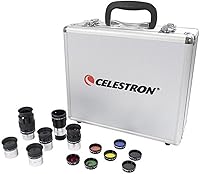
The eyepiece and filter kit bundled with the scope provides enough variety to get started without an immediate additional purchase, and the star diagonal and StarPointer finderscope are functional tools rather than obvious cost-cutting placeholders. New owners appreciate having something useful in every slot on the accessory tray on night one.
The 25mm starter eyepiece covers only one point on the magnification range, and most owners add a shorter focal length eyepiece within the first few months for planetary work. The filter kit is a nice inclusion but the optical quality of the bundled filters is noticeably below what dedicated planetary filters offer.
Long-Term Reliability
79%
21%
Owners who have used the NexStar 8 SE regularly over multiple years report that the optics and motors hold up well with basic maintenance, and Celestron's continued production means parts and firmware support remain available. The telescope has built a strong reputation for durability within the amateur astronomy community since its introduction in 2015.
A subset of users report inconsistent experiences with customer support when hardware faults occur outside the standard warranty window, with resolution times varying widely. Hand controller cable wear is the most commonly reported physical failure point over extended ownership.
Ease of Alignment
58%
42%
The guided alignment prompts on the hand controller walk users through the process step by step, and the auto-alignment option using GPS accessories can reduce the manual burden significantly for those who invest in the add-on. Experienced users who develop a consistent alignment routine find the process takes under ten minutes.
For new GoTo users, the alignment process is the single biggest source of frustration and negative reviews — the gap between the guided instructions and successful real-world execution is wide enough to discourage a meaningful number of buyers in their first month. Level ground, a well-set clock, and accurate location data are all required for reliable results, conditions that beginners often underestimate.
Astrophotography Capability
55%
45%
The tracking and optics are well-suited to planetary video capture and lunar photography, where short exposures sidestep the field rotation limitation of the altazimuth mount entirely. A number of owners use it productively for planets using cameras attached via a standard 1.25-inch adapter.
Anyone with serious deep-sky imaging ambitions will run into the altazimuth mount's field rotation ceiling very quickly, making long-exposure nebula or galaxy photography impractical without additional hardware. The manual focuser also introduces vibration during camera attachment adjustments, which interrupts imaging sessions more than a motorized focuser would.
Customer Support
61%
39%
Celestron has an established support infrastructure with online resources, firmware update tools, and an active user community that often solves problems faster than official channels. The product's longevity means a wide base of online documentation, tutorials, and forum threads are available for nearly every issue a new owner encounters.
Direct customer support quality is reported inconsistently, with some users receiving prompt and knowledgeable assistance while others describe protracted back-and-forth with limited resolution. Firmware update availability has improved over the product's lifespan but the update process itself remains more technically involved than it should be for a consumer product.

Suitable for:

The Celestron NexStar 8 SE Computerized Telescope is built for amateur astronomers who have outgrown their starter scope and are ready to commit real time to the hobby. If you regularly observe planets and want the kind of high-contrast, high-magnification views that reveal Saturn's Cassini Division or Jupiter's Great Red Spot with satisfying clarity, the 8-inch Schmidt-Cassegrain optical design delivers that in a package you can actually transport. The GoTo mount is a genuine asset for anyone who has spent too many nights star-hopping unsuccessfully — once alignment clicks, finding and tracking objects becomes almost effortless. It also suits hobbyists who drive out to dark-sky sites a few times a month, since the quick-release tripod and compact tube make car transport realistic, even if not exactly lightweight. Early-stage astrophotographers who want to visually confirm targets before investing in a full imaging setup will also find this GoTo scope a practical and capable tool.
Not suitable for:

The Celestron NexStar 8 SE Computerized Telescope is a poor fit for anyone expecting to unbox it, point it at the sky, and immediately see stunning views with zero effort. The GoTo alignment process has a real learning curve, and first-time users who skip reading the manual will spend more time troubleshooting than observing. At nearly 65 pounds fully assembled, this is not a scope you comfortably carry solo down a trail or haul up a flight of stairs on a whim — if physical portability is a top priority, a smaller instrument makes far more sense. Casual or occasional stargazers who only observe a handful of times per year are unlikely to recoup the investment in skill and setup time this instrument demands. Those on a tight budget should also factor in likely additional purchases: an external power tank, upgraded eyepieces, and potentially a WiFi adapter all add to the total cost of ownership.
Specifications

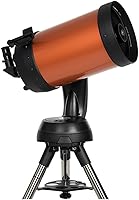
  • Optical Design: Uses a Schmidt-Cassegrain configuration that folds the optical path for a compact tube while delivering the light-gathering power of an 8-inch aperture.
  • Aperture: 203.2mm (8-inch) primary mirror collects significantly more light than 5-inch or 6-inch alternatives, enabling sharper planetary detail and better resolution of faint deep-sky objects.
  • Focal Length: The long effective focal length produces high magnification at standard eyepiece sizes, making this scope particularly well-suited to planetary and lunar observation.
  • Optical Coating: StarBright XLT multi-layer coatings are applied to all optical surfaces to maximize light transmission and improve contrast across the visible spectrum.
  • Mount Type: Single fork arm altazimuth GoTo mount with motorized dual-axis drive handles automated object location and continuous tracking once alignment is complete.
  • Object Database: The NexStar+ hand controller contains a built-in catalog of over 40,000 celestial objects including planets, Messier objects, NGC entries, and named stars.
  • Hand Controller: The NexStar+ hand controller provides standalone operation with a backlit keypad, guided alignment prompts, and direct object-search functionality without requiring a connected computer.
  • PC Software: Includes CPWI (Celestron PWI) telescope control software for Windows-based operation via USB, enabling planned observation sessions and mount calibration from a laptop.
  • Connectivity: USB port allows direct connection to a PC; an optional Celestron SkyFi WiFi module (sold separately) enables wireless control via smartphone or tablet apps.
  • Included Eyepiece: A 25mm 1.25-inch eyepiece is included as the primary starting optic, providing a moderate field of view appropriate for initial alignment and general observation.
  • Accessory Bundle: Package includes a star diagonal, StarPointer reflex finderscope, accessory tray, and an eyepiece and filter kit to support immediate use out of the box.
  • Software Bundle: Starry Night SE planetarium software is included as a downloadable license, providing sky simulation and planning tools to complement the physical scope.
  • Power Source: Operates on 8 AA batteries housed in the mount base; Celestron and third-party 12V DC power tanks are strongly recommended for extended observing sessions.
  • Focus Type: Manual focuser requiring direct hand adjustment; no motorized focus is included in the standard configuration, though aftermarket electric focusers are compatible.
  • Item Weight: The fully assembled system weighs approximately 64.9 pounds, which includes the optical tube, fork arm mount, and tripod combined.
  • Dimensions: Assembled footprint measures approximately 42 x 24.75 x 13 inches, with the optical tube being compact relative to its aperture thanks to the folded Schmidt-Cassegrain path.
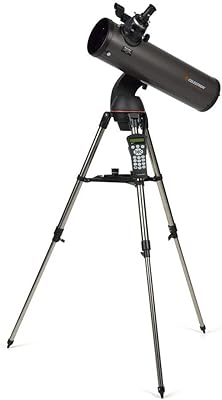
  • Tripod: Single-arm quick-release aluminum tripod allows the optical tube and fork mount to detach rapidly for transport and reassembly in the field.
  • Finderscope: StarPointer reflex finderscope projects a red dot onto a viewing window for initial rough pointing, compatible with standard StarPointer mounting brackets.
  • Availability: Originally introduced in July 2015 and has not been discontinued, indicating ongoing manufacturer support and continued availability of firmware updates and replacement parts.
  • Telescope Mount: Altazimuth configuration moves on two axes (up-down and left-right) rather than a polar-aligned equatorial axis, which simplifies setup but limits unguided long-exposure astrophotography.

Related Reviews

Celestron NexStar 4SE Computerized Telescope
73%
88%
GoTo Accuracy
84%
Optical Clarity
86%
Ease of Setup
81%
Portability
73%
Build Quality
More
Celestron NexStar 5SE Computerized Telescope
75%
88%
Optical Performance
82%
GoTo Accuracy
84%
Ease of Setup
79%
Build Quality
83%
Portability
More
Celestron NexStar 127SLT Computerized Telescope
75%
88%
Optical Performance
83%
GoTo Accuracy
81%
Ease of Setup
61%
Mount Stability
86%
Portability
More
Celestron NexStar 130SLT
75%
88%
Ease of Setup
83%
GoTo Accuracy
81%
Optical Performance
74%
Build Quality & Durability
86%
Portability
More
Celestron NexStar 90SLT Computerized Telescope
73%
78%
Optical Performance
83%
GoTo Accuracy
81%
Ease of Setup
86%
Portability
67%
Build Quality
More
Celestron NexStar 6SE Computerized Telescope
72%
88%
Optical Performance
83%
GoTo Mount Accuracy
86%
SkyAlign Ease of Use
61%
Mount Stability
81%
Portability & Setup Time
More
Celestron SkyProdigy 130 Computerized Telescope
85%
92%
Ease of Setup
89%
Automatic Alignment Technology
82%
Image Quality
88%
Build Quality
85%
Battery Life
More
Celestron CPC 800 XLT Computerized Telescope
76%
93%
Optical Clarity
84%
GoTo Accuracy
88%
GPS Alignment System
86%
Build Quality
38%
Portability
More
Celestron StarSense Explorer 8″ Dobsonian Telescope
79%
91%
Optical Performance
88%
App Navigation Accuracy
86%
Ease of Use
84%
Build Quality
79%
Value for Money
More
Celestron PowerSeeker 114EQ Reflector Telescope
73%
83%
Optical Performance
61%
Mount Quality
57%
Ease of Setup
74%
Included Accessories
81%
Value for Money
More

FAQ

It takes most first-timers between 30 and 60 minutes for the initial unboxing and assembly. The tripod and fork arm connect without tools, but the GoTo alignment — where you center two or three bright stars to calibrate the mount — is where people run into trouble early on. Plan to spend your first night just practicing the alignment process rather than expecting a full observing session.

The hand controller handles everything independently — you do not need a laptop in the field at all. The NexStar+ controller lets you align, search the object database, and control slewing without any additional device. The CPWI software is an optional add-on for users who prefer a screen-based interface or want to run automated observation plans from a computer.

Once alignment is done properly, yes — the mount reliably centers most objects within the eyepiece field of view. Accuracy tends to improve with a careful three-star alignment versus the quicker two-star option. Objects near the edges of the database or very faint targets may land slightly off-center, but a small nudge with the hand controller usually brings them in.

Realistically, a set of eight AA alkaline batteries will last roughly two to four hours depending on temperature and how frequently the motors slew. Cold weather shortens battery life noticeably. Most regular users skip batteries entirely and connect a 12V DC power tank instead — it is a small investment that eliminates the frustration of a mount dying mid-session.

The Celestron NexStar 8 SE Computerized Telescope can handle basic planetary imaging and lunar photography reasonably well when paired with a camera adapter. For deep-sky long-exposure photography, the altazimuth GoTo mount has real limitations — field rotation becomes a problem during longer exposures. Serious astrophotographers typically look at equatorial mounts for that kind of work, but for visual confirmation of targets or short planetary video capture, this scope is capable.
It is transportable rather than truly portable. Breaking it down into the optical tube, fork arm, and tripod makes car transport manageable, but you will need at least two trips from the car to your observing spot. Carrying it assembled is not realistic for most people. If your goal is hiking to a remote dark-sky location, this is probably not the right choice — but for driving to a field and setting up, it works fine.

At lower magnifications, stability is generally fine. At higher magnifications — say 200x and above — the single arm does introduce more sensitivity to vibration than a dual-arm mount would. Touching the focuser can cause the image to wobble for a few seconds. It is manageable, but users coming from more rigid setups may notice it.

The included 25mm eyepiece gets you started, but most owners fairly quickly add a medium-power option around 10–12mm for planetary work and a wide-field eyepiece for open clusters. A quality 2x Barlow lens is also a cost-effective way to double your magnification range. You do not need to spend a fortune immediately, but budget for at least one good mid-range eyepiece within the first few months.

Technically yes, but it is not ideal. The Schmidt-Cassegrain design produces an inverted image, and while a diagonal corrects some of this, the image orientation is not natural for terrestrial subjects. The long focal length also makes it difficult to track moving subjects. This GoTo scope is purpose-built for astronomical use.

Long-term ownership sentiment is generally positive among regular users who push through the early learning phase. The optics hold up well and the motors remain reliable with normal care. The main wear areas tend to be the hand controller cable and the battery contacts, both of which are replaceable. Keeping the optical tube capped and stored in a dry environment goes a long way toward preserving performance over the years.