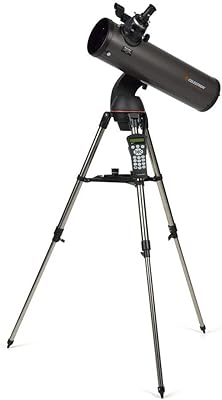
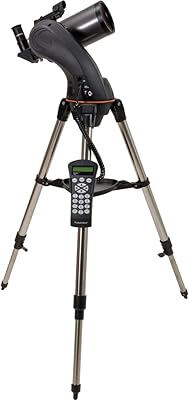
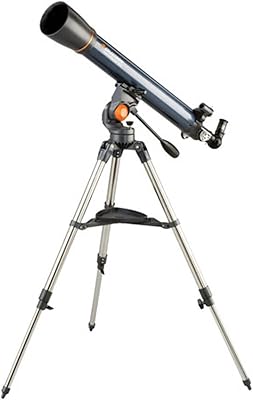
Celestron NexStar 127SLT Computerized Telescope
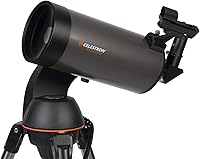
Celestron NexStar 127SLT Computerized Telescope — image 1
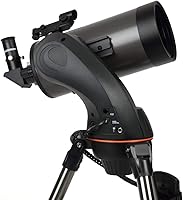
Celestron NexStar 127SLT Computerized Telescope — image 2
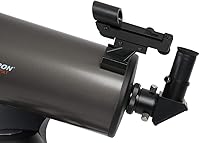
Celestron NexStar 127SLT Computerized Telescope — image 3
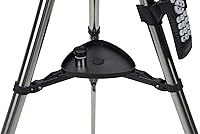
Celestron NexStar 127SLT Computerized Telescope — image 4
Celestron NexStar 127SLT Computerized Telescope — image 5
Celestron NexStar 127SLT Computerized Telescope — image 6
Celestron NexStar 127SLT Computerized Telescope — image 7
75%
25%

Overview

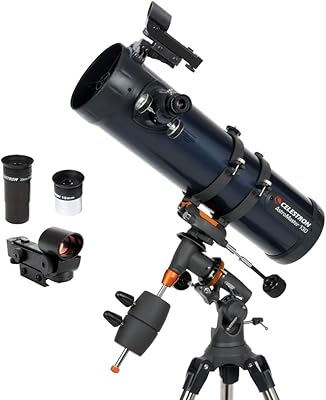
The Celestron NexStar 127SLT Computerized Telescope sits at an interesting crossroads — capable enough to genuinely impress, yet approachable enough that you don't need an astronomy degree to get started. Its Maksutov-Cassegrain design is a meaningful upgrade over the refractors and basic reflectors that dominate the beginner market; the long focal length produces sharp, high-contrast images that really shine on planetary targets. The GoTo motorized mount handles the heavy lifting of object location, so you spend your time actually observing rather than hunting. It's also notably compact for what it offers — easy to carry to a dark field or a campsite without much fuss.

Features & Benefits

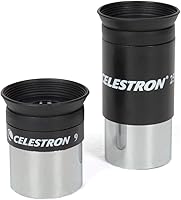
The 127mm aperture is where this computerized scope separates itself from cheaper alternatives — it pulls in enough light to resolve Saturn's ring divisions and Jupiter's equatorial bands with a clarity that will surprise anyone used to a 70mm refractor. The included 20mm and 9mm eyepieces give a practical starting range without immediate extra investment. Alignment via SkyAlign takes just a few minutes: center three bright objects, confirm them, and the mount knows where it is. Battery power means you're not tethered to an outlet, and the bundled Starry Night software is a genuinely useful tool for planning sessions before you head outside.

Best For

This GoTo telescope makes the most sense for people who want to skip the frustrating early phase of learning the sky and jump straight to actual viewing. Families are a natural fit — the automated pointing keeps kids engaged where a manual scope might lose them quickly. Travelers and campers appreciate the modest footprint; at under 20 pounds, it's easy to bring along. If your main targets are planets and the Moon, this scope rewards that interest well. Where it starts to show limits is on faint deep-sky objects — large, dim nebulae need more aperture and darker skies than most owners will have access to.

User Feedback

Across a broad range of buyer reviews, planetary views are the consistent highlight — Saturn and Jupiter almost always generate a strong reaction from first-time owners, which is a reliable sign the optics are performing well. SkyAlign alignment gets credit for being quicker and less fussy than many expect going in. On the downside, the single-arm fork mount draws complaints about stability at high magnification, particularly on breezy nights. Battery drain during long sessions is a practical issue that owners commonly solve with external power packs. A portion of buyers also find the hand controller menus require a learning curve before navigation feels natural.

Pros

  • The 127mm aperture delivers noticeably sharper planetary detail than typical entry-level scopes, especially on Saturn and Jupiter.
  • GoTo pointing with a 40,000-object database means you spend less time searching and more time actually observing.
  • SkyAlign setup is fast and forgiving — most first-timers are aligned and viewing within 10 minutes.
  • The Maksutov-Cassegrain optical design produces high-contrast, crisp images well-suited to planetary and lunar targets.
  • At under 20 pounds, this GoTo telescope is genuinely portable compared to larger computerized alternatives.
  • Battery-powered operation gives you real freedom to observe away from power outlets in the field.
  • Bundled Starry Night software is a practical companion for planning sessions and learning the sky before heading outside.
  • Celestron's two-year warranty and US-based support team provide a reliable safety net for new owners.
  • Two included eyepieces cover a useful magnification range right out of the box, reducing immediate accessory costs.

Cons

  • The single-arm fork mount can wobble noticeably at high magnifications, particularly in any breeze.
  • Battery life during long sessions is a real concern; carrying a backup power pack becomes a practical necessity.
  • The hand controller menu system has a learning curve that can frustrate users during their first few outings.
  • Deep-sky performance is modest — faint nebulae and distant galaxies require more aperture than this computerized scope provides.
  • The alt-azimuth mount is not suitable for astrophotography beyond simple lunar or planetary snapshots.
  • No rechargeable internal battery means ongoing dependence on replaceable or external power sources.
  • At f/11.8, the focal ratio limits wide-field viewing options even with additional eyepiece investments.
  • The included eyepiece quality is functional but not exceptional; most owners eventually upgrade for better eye relief and sharpness.

Ratings

Our AI rating system analyzed thousands of verified global reviews for the Celestron NexStar 127SLT Computerized Telescope, actively filtering out incentivized submissions and bot activity to surface what real owners genuinely think. The scores below reflect an honest cross-section of buyer experiences — the genuine strengths that keep this scope highly regarded, and the real friction points that affect day-to-day use.

Optical Performance
88%
Planetary views are where this scope earns its reputation — owners consistently describe Saturn's rings and Jupiter's cloud bands as sharper and more detailed than they expected at this price tier. The Maksutov-Cassegrain design delivers high-contrast images that hold up well at moderate-to-high magnifications on steady nights.
Deep-sky performance is noticeably limited; faint nebulae and distant galaxies lack the brightness and detail that larger-aperture scopes produce. Users chasing wide-field views of star clusters or the Milky Way core often find the narrow true field of view at f/11.8 frustrating.
GoTo Accuracy
83%
Once aligned correctly, the GoTo system reliably centers targets in or very near the eyepiece field, which owners describe as genuinely impressive for a scope at this level. The 40,000-object database means there is always something interesting to point at, and the motor tracking keeps objects centered during viewing without constant manual adjustment.
Pointing accuracy degrades if the initial alignment is rushed or if the tripod is not leveled carefully, leading to targets landing outside the eyepiece field entirely. A small but consistent group of users reports that the GoTo performance drifts noticeably during long sessions as temperatures change.
Ease of Setup
81%
19%
SkyAlign is widely praised as one of the more approachable alignment systems available, requiring no prior knowledge of star names or constellation patterns to execute successfully. Most owners describe getting from unboxing to first successful GoTo slew in under an hour, which is a realistic and encouraging bar for a first-night experience.
The hand controller menu system has a learning curve that catches new users off guard, and the instruction manual does not always explain the workflow as clearly as it could. A subset of buyers report spending their first night mostly navigating menus rather than observing.
Mount Stability
61%
39%
For casual visual use at moderate magnifications on calm nights, the single-arm fork mount performs adequately and keeps targets reasonably stable during normal operation. On a flat, firm surface with no wind, vibrations from focusing settle within a couple of seconds.
At higher magnifications or in any meaningful breeze, the single-arm fork introduces noticeable wobble that disrupts planetary views at the moments of best atmospheric seeing. This is the most commonly cited frustration among experienced users who push the scope to its optical limits.
Portability
86%
At 18.1 pounds and with a tube that collapses into a manageable footprint, this GoTo telescope is genuinely transportable in a way that larger computerized scopes are not. Owners regularly describe loading it into a car for dark-sky trips or hiking it a short distance to a backyard observing spot without difficulty.
The tripod, while adequate, is not the most compact component of the package, and fitting everything into a single bag for airline or backpack travel is not realistic. Buyers expecting something truly grab-and-go compact may be surprised by how much space the assembled tripod takes up.
Value for Money
77%
23%
For a computerized scope that includes a capable optical tube, GoTo mount, two eyepieces, a finderscope, and bundled software, the overall package represents solid value compared to purchasing those components separately. First-time buyers upgrading from a cheap department-store scope consistently feel the jump in quality is substantial and justified.
Seasoned observers point out that the same budget spent on a manual Dobsonian would deliver significantly more aperture and stability, making the value equation depend entirely on how much the automation is worth to the buyer. The included eyepieces, while functional, are entry-level and most owners find themselves budgeting for upgrades fairly quickly.
Battery & Power
58%
42%
Battery-powered operation means the scope is genuinely field-ready without hunting for an AC outlet, which matters a lot on camping trips and remote dark-sky sites. The included battery gets new users through their first few sessions without any additional purchases.
Battery consumption during long observing sessions is a recurring frustration — owners planning a full night of observing frequently find themselves mid-session when power runs out. The lack of a built-in rechargeable battery or a bundled DC power adapter is a widely noted oversight given the scope's intended portable use case.
Hand Controller
64%
36%
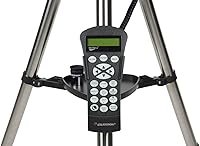
The hand controller provides access to a genuinely extensive object catalog and the menu-driven interface becomes intuitive once users invest time in learning it. Owners who take the time to read through the manual report that the controller is capable and well-featured for its class.
The physical buttons feel somewhat cheap and the menu hierarchy is not logically organized for quick, cold-handed use in the dark. Multiple reviewers describe the learning curve as steep enough to detract from early observing enjoyment, particularly for buyers who expected a more modern touchscreen-style interface.
Optical Accessories
67%
33%
The two included eyepieces cover a practical magnification spread for planetary work, and the StarPointer red dot finderscope is genuinely useful for initially orienting the scope before GoTo takes over. Having both items in the box avoids the immediate need for extra spending on basic accessories.
The eyepiece barrel coatings and eye relief are serviceable but not impressive, and owners who have used higher-quality eyepieces quickly notice the difference in sharpness and comfort, especially with the 9mm at higher magnification. The StarPointer battery life is also a minor but recurring complaint.
Software Bundle
72%
28%
Starry Night Special Edition is a capable, full-featured planetarium application that genuinely helps new astronomers plan sessions, learn the sky, and understand what they are looking at through the eyepiece. It adds real value as a learning and planning companion, particularly for complete beginners.
The software feels slightly dated in its interface compared to modern free alternatives like Stellarium, and some users find the download and activation process unnecessarily cumbersome. Mac users on recent operating system versions have occasionally reported compatibility hiccups that require a patch or workaround.
Build Quality
73%
27%
The optical tube itself feels solid and the mirror cell holds collimation well over time, which matters for a telescope that gets transported regularly. The overall construction inspires reasonable confidence for a mid-range product in daily handling.
The tripod leg locks and the fork arm feel noticeably plasticky compared to the optical tube, and some owners report the tripod developing minor wobble after extended use as the plastic hardware loosens slightly. It does not feel like a premium build at the connection points.
Warranty & Support
84%
Celestron's two-year warranty and US-based support team earn consistent praise from long-term owners, particularly those who encounter alignment or motor issues and find Celestron responsive and genuinely helpful in resolving them. The brand's 60-plus years of presence in the telescope market gives buyers a credible long-term support backstop.
International buyers outside the US note that the warranty terms and support accessibility are less straightforward for them, which is a meaningful caveat for a product sold globally. Warranty claim processing times have drawn occasional criticism during high-demand periods.
Tracking Performance
78%
22%
The motorized tracking does a solid job of keeping a centered object in the eyepiece as Earth rotates, which is especially appreciated during planetary observation sessions where staying on a slowly drifting target manually can be tiring. Most users describe the tracking as smooth and consistent at standard magnifications.
At high magnifications, minor periodic error in the motors becomes visible as a slow drift that requires occasional correction via the hand controller. Alt-azimuth tracking also introduces field rotation during long sessions, which is a known limitation of this mount type rather than a defect.

Suitable for:

The Celestron NexStar 127SLT Computerized Telescope is a strong match for anyone who wants a meaningful upgrade from a department-store starter scope without diving into the complexity of a manual equatorial setup. It's particularly well-suited to beginners who would rather spend their nights observing than fumbling with star charts, since the GoTo system handles object location automatically after a quick alignment. Families with school-age kids will find the fast setup and automated pointing keeps everyone engaged — Saturn's rings on a clear night is the kind of view that turns casual curiosity into a lasting hobby. Adults with busy schedules who can only get outside for an hour or two at a time will appreciate that the scope is ready to observe in minutes rather than requiring a long calibration ritual. Campers and travelers also benefit from the relatively compact, lightweight build, which makes it easy to bring along without dedicating a vehicle to the cause.

Not suitable for:

The Celestron NexStar 127SLT Computerized Telescope is not the right tool for observers whose primary interest is faint deep-sky targets like large emission nebulae, distant galaxies, or star-forming regions — the 127mm aperture simply cannot gather enough light for satisfying views of those objects, and the relatively high focal ratio is not optimized for wide-field sweeping. Experienced amateur astronomers who already know the sky well, own an equatorial mount, or want to do astrophotography beyond basic lunar snapshots will find this scope limiting in short order. The single-arm alt-azimuth fork mount, while fine for casual visual use, is not rigid enough for long-exposure imaging and can introduce vibration at higher magnifications, especially outdoors on uneven ground or in any wind. Those planning extended observing sessions in remote locations should also factor in the battery dependency — there is no built-in rechargeable power source, which can become a logistical inconvenience. If you are already past the beginner stage and looking for a serious observing platform, the money is better directed toward a scope with a sturdier equatorial mount and larger aperture.

Specifications

  • Optical Design: The telescope uses a Maksutov-Cassegrain optical system, which folds a long focal path into a compact tube for high-contrast, sharp views.
  • Aperture: The primary mirror measures 127mm in diameter, providing meaningful light-gathering capability for planetary and lunar observation.
  • Focal Length: The optical system has a focal length of 1500mm, well-suited to high-magnification viewing of planets and the Moon.
  • Focal Ratio: The scope operates at f/11.8, a relatively slow focal ratio that favors high-contrast planetary detail over wide-field deep-sky sweeping.
  • Included Eyepieces: Two eyepieces are included in the box: a 20mm for lower-magnification framing and a 9mm for closer planetary work.
  • Mount Type: The NexStar 127SLT rides on a computerized altitude-azimuth single fork arm mount with motorized GoTo pointing on both axes.
  • Object Database: The hand controller stores a database of more than 40,000 celestial objects, including planets, stars, nebulae, and galaxies.
  • Alignment System: SkyAlign alignment requires the user to center any three bright objects in the eyepiece; the mount then calculates its orientation automatically.
  • Finderscope: A StarPointer red dot finderscope is included to help users aim the telescope quickly at a general area of the sky before GoTo takes over.
  • Power Source: The mount is powered by a single Lithium Metal battery (included), with no built-in rechargeable cell or AC adapter in the standard package.
  • Tube Length: The optical tube measures 27 inches in length, keeping the overall package notably shorter than a Newtonian reflector of equivalent focal length.
  • Product Dimensions: The assembled telescope measures approximately 34″ deep by 30″ wide by 50″ tall when set up on its tripod.
  • Weight: The complete system weighs 18.1 pounds, making it portable enough for solo transport to a dark-sky site or campsite.
  • Bundled Software: A download code for Starry Night Special Edition astronomy software is included, compatible with Windows and macOS for session planning and sky simulation.
  • Warranty: Celestron covers this telescope with a two-year US warranty and provides support through a US-based team for the life of the product.
  • Manufacturer: Celestron is a California-based optics brand with continuous telescope manufacturing experience stretching back to 1960.

Related Reviews
Celestron NexStar 4SE Computerized Telescope
73%
88%
GoTo Accuracy
84%
Optical Clarity
86%
Ease of Setup
81%
Portability
73%
Build Quality
More
Celestron NexStar 5SE Computerized Telescope
75%
88%
Optical Performance
82%
GoTo Accuracy
84%
Ease of Setup
79%
Build Quality
83%
Portability
More
Celestron NexStar 130SLT
75%
88%
Ease of Setup
83%
GoTo Accuracy
81%
Optical Performance
74%
Build Quality & Durability
86%
Portability
More
Celestron NexStar 90SLT Computerized Telescope
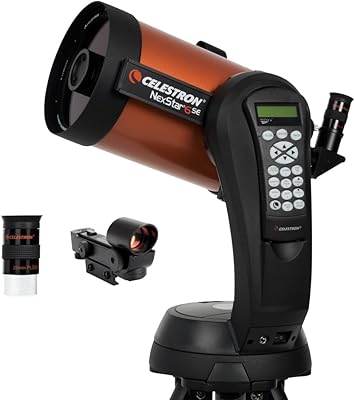
73%
78%
Optical Performance
83%
GoTo Accuracy
81%
Ease of Setup
86%
Portability
67%
Build Quality
More
Celestron NexStar 6SE Computerized Telescope
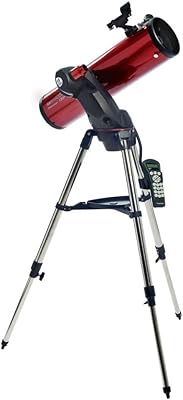
72%
88%
Optical Performance
83%
GoTo Mount Accuracy
86%
SkyAlign Ease of Use
61%
Mount Stability
81%
Portability & Setup Time
More
Celestron SkyProdigy 130 Computerized Telescope
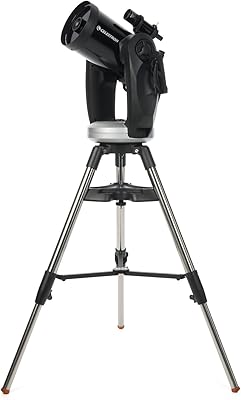
85%
92%
Ease of Setup
89%
Automatic Alignment Technology
82%
Image Quality
88%
Build Quality
85%
Battery Life
More
Celestron CPC 800 XLT Computerized Telescope
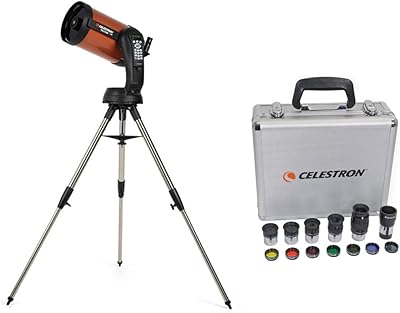
76%
93%
Optical Clarity
84%
GoTo Accuracy
88%
GPS Alignment System
86%
Build Quality
38%
Portability
More
Celestron NexStar 8 SE Computerized Telescope
70%
93%
Optical Clarity
78%
GoTo Accuracy
71%
Build Quality
67%
Setup Experience
62%
Portability
More
Celestron PowerSeeker 70EQ Refractor Telescope
71%
78%
Optical Clarity
83%
Mount Quality & Stability
61%
Ease of Assembly
74%
Accessory Bundle Value
86%
Portability
More
Celestron PowerSeeker 60AZ Refractor Telescope
71%
78%
Optical Clarity
62%
Mount & Tracking
54%
Tripod Stability
67%
Eyepiece Quality
83%
Value for Money
More

FAQ

Most first-time users get through assembly and SkyAlign alignment in about 20 to 30 minutes on the very first night, and that drops to 10 minutes or less once you know the process. The main thing to budget time for is leveling the tripod and identifying three bright objects to align on — Venus, Jupiter, and a bright star work well. After that, the mount knows where it is and GoTo takes care of the rest.

Yes, planets are genuinely where this scope performs best. At 127mm aperture and 1500mm focal length, you can clearly resolve Saturn's rings and the Cassini Division on a steady night, and Jupiter's equatorial cloud bands and the four Galilean moons are easy targets. The views will not disappoint a first-time observer.

Basic lunar and bright planetary snapshots are achievable by holding a smartphone camera up to the eyepiece, a technique called afocal photography. However, the alt-azimuth mount is not suitable for long-exposure deep-sky imaging because it cannot compensate for field rotation the way an equatorial mount can. If photography is your main goal, a different mount type would serve you better.

When the batteries die, the computerized mount stops functioning until power is restored. A practical and popular solution is a portable DC power pack with a cigarette-lighter style output, which plugs directly into the mount's 12V port and can run the scope for many hours. Picking one up before your first dark-sky outing is worth considering.

SkyAlign is more forgiving than a two-star alignment because you do not need to identify the alignment stars by name — you just center any three bright objects, and the software figures out what they are. This is a real advantage for beginners who are still learning the sky and cannot confidently identify specific stars on demand.

Yes, the mount can be configured for your current location using the hand controller, where you enter your latitude, longitude, date, and time. As long as you update that information when traveling, the GoTo system will work accurately regardless of where you observe from.

At moderate magnifications below roughly 150x, the mount is adequately steady for visual use. Push beyond that, especially on a breezy night or uneven ground, and vibrations from touching the scope become more noticeable. Letting the scope settle for a few seconds after adjusting focus helps, and observing on firm, level ground makes a meaningful difference.

A general rule for any telescope is that maximum useful magnification is roughly twice the aperture in millimeters, which puts the practical ceiling for this scope at around 250x to 300x. In practice, atmospheric turbulence on most nights will limit you to 150x to 200x for sharp views, and planetary detail at those ranges is genuinely impressive.

Starry Night Special Edition is a capable planetarium program that lets you simulate the sky from any location and date, plan your observing list, and learn the names and positions of objects before heading outside. It is a legitimate companion tool, not just marketing padding. That said, free apps like Stellarium cover similar ground if you prefer not to install desktop software.

Younger children will definitely need adult help for the initial setup, alignment, and navigating the hand controller menus — the workflow has enough steps that it is not self-explanatory for a child. Once it is aligned and pointed at a target, though, kids can look through the eyepiece and enjoy the views on their own. For a supervised family activity, it works very well.

Where to Buy