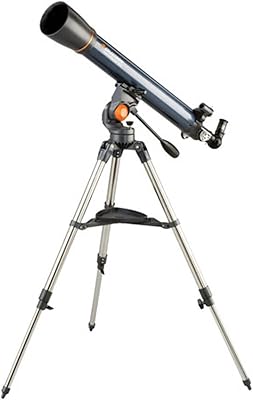
Celestron NexStar 4SE Computerized Telescope




Overview
The Celestron NexStar 4SE Computerized Telescope has been a fixture in the mid-range astronomy market since 2003, and it has aged surprisingly well. That distinctive orange tube on a single-fork arm is instantly recognizable to anyone who has spent time around amateur astronomers. What separates this computerized scope from a basic manual instrument is the fully automated GoTo mount — complete a quick alignment, and let it do the hunting for you. It excels at planetary and lunar work, but go in with clear expectations: deep-sky performance is genuinely constrained by the 4-inch aperture, and no amount of technology changes that optical reality.
Features & Benefits
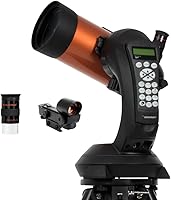
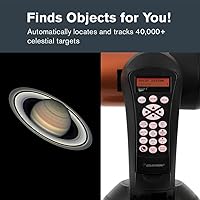
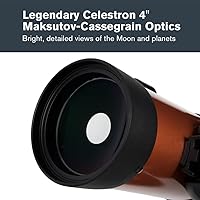
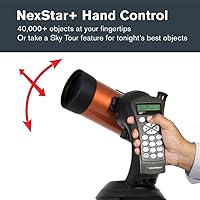
At the heart of the NexStar 4SE is a Maksutov-Cassegrain optical tube — a design known for high contrast and a long focal length of 1325mm packed into a remarkably short body. That translates to sharp, detailed views of the Moon's craters and Saturn's rings on a clear night, a genuinely rewarding experience. The NexStar+ hand controller taps a database of over 40,000 objects, and SkyAlign technology means you just center any three bright points of light to align — no star charts required. A built-in wedge allows polar alignment for astrophotography, though be realistic: this is entry-level imaging territory, not serious deep-sky work.
Best For
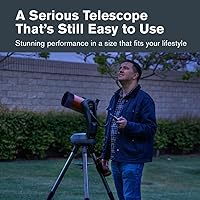
This GoTo telescope makes the most sense for beginner and intermediate observers who want the sky handed to them rather than spending months mastering manual navigation. It is compact enough for balcony sessions or travel, which matters a lot for city dwellers who grab views between buildings. Planetary observers will find it genuinely rewarding — Jupiter's cloud bands and Saturn's rings snap into focus with satisfying clarity. Those curious about astrophotography can experiment with long-exposure tracking using the polar wedge, though patience and modest expectations are essential. It also works well as a meaningful step up from a frustrating entry-level refractor.
User Feedback
Owners of the NexStar 4SE tend to split into two camps. Long-term users frequently praise the GoTo accuracy, how fast it sets up for an impromptu session, and Celestron's responsive US-based support — the 2-year warranty has reportedly been honored without fuss. The frustrations are equally consistent: the power source is not included, and discovering you need eight AA batteries or a separate adapter on your first night out is a genuinely annoying surprise. A few experienced observers also note that the single-fork arm shows wobble at higher magnifications, and the 4-inch aperture leaves limited room to grow for anyone deeply bitten by the astronomy bug.
Pros
- SkyAlign makes first-night alignment fast and approachable, even with zero prior astronomy experience.
- The GoTo mount reliably slews to targets with impressive accuracy once aligned.
- Compact enough to set up on a balcony or toss in a car without a dedicated vehicle.
- High-contrast Maksutov-Cassegrain optics deliver genuinely sharp views of the Moon and planets.
- The NexStar+ hand controller puts a 40,000-object database in your hand without needing a smartphone.
- Built-in wedge opens the door to polar alignment and basic tracked astrophotography.
- The 25mm eyepiece included in the box is a decent starter optic for general observing.
- Celestron's US-based technical support and 2-year warranty provide solid long-term peace of mind.
- The scope sets up quickly enough for spontaneous sessions on clear nights.
- A well-established product with a large owner community and widely available accessories.
Cons
- No power source is included — you will need eight AA batteries or a separate adapter from day one.
- The single-fork arm can introduce noticeable vibration at higher magnifications during planetary viewing.
- A 4-inch aperture puts a hard ceiling on what you can resolve in faint deep-sky objects.
- The included 25mm eyepiece is just a starting point; most users will want to buy additional eyepieces soon.
- Battery consumption is significant during long sessions, making an external power tank a near-necessity.
- The hand controller interface feels dated compared to modern app-based telescope control systems.
- Polar alignment via the built-in wedge works, but the process has a learning curve for true beginners.
- No carrying case is included, which is a notable omission for a scope marketed on portability.
Ratings
The Celestron NexStar 4SE Computerized Telescope scores here reflect AI-synthesized analysis of thousands of verified global user reviews, with spam, bot activity, and incentivized feedback actively filtered out. Every category score is calibrated to surface both what this GoTo telescope genuinely does well and where real buyers have run into frustration. The result is an honest, transparent picture designed to help you decide whether this scope fits your specific needs.
GoTo Accuracy
Optical Clarity
Ease of Setup
Portability
Build Quality
Value for Money
Astrophotography Capability
Hand Controller
Deep-Sky Performance
Mount Stability
Power Flexibility
Included Accessories
Long-Term Support
Suitable for:
The Celestron NexStar 4SE Computerized Telescope is a strong match for anyone who wants to get serious about stargazing without spending years learning to navigate the sky manually. It is particularly well-suited to beginners and intermediate hobbyists who want results on their first night out — the SkyAlign system genuinely delivers on that promise. City and suburban observers will appreciate how compact and portable it is; this is the kind of scope you can carry to a rooftop or a dark-sky site without dreading the logistics. Planetary enthusiasts will feel right at home, since the high-contrast Maksutov-Cassegrain optics are purpose-built for the Moon, Saturn, Jupiter, and Mars. Those curious about astrophotography also have a reasonable entry point here, thanks to the built-in polar wedge — just keep expectations calibrated to what a 4-inch aperture can realistically capture.
Not suitable for:
The Celestron NexStar 4SE Computerized Telescope is not the right tool for observers who are primarily drawn to faint deep-sky targets like nebulae and distant galaxies, where a larger aperture makes a far more meaningful difference. Advanced amateur astronomers who have already outgrown the 4-inch class will likely find the optical ceiling frustrating within a year or two. Serious astrophotographers who need a robust, heavy-duty equatorial mount for long imaging sessions should look elsewhere — the single-fork arm and alt-azimuth base are entry-level imaging tools at best. Buyers on a tight budget should also account for the additional cost of a reliable power source, since batteries or an AC adapter are not in the box. Anyone hoping to teach themselves traditional star-hopping and develop manual sky navigation skills would also be better served by a simpler, non-computerized setup.
Specifications
- Optical Design: The telescope uses a Maksutov-Cassegrain optical system, which folds a long focal path into a compact tube for high contrast and sharpness.
- Aperture: The primary mirror measures 102mm (4-inch) in diameter, setting the practical limit for light-gathering and resolving fine detail.
- Focal Length: The optical tube has a focal length of 1325mm, producing high magnification views well suited to planetary and lunar observation.
- Focal Ratio: The scope operates at f/13, a slow focal ratio that enhances contrast on bright subjects but requires longer exposures in astrophotography.
- Included Eyepiece: A single 25mm eyepiece is included in the box, yielding a base magnification of approximately 53x on the included optical tube.
- Mount Type: The mount is a computerized single-fork arm alt-azimuth design with a built-in wedge for optional equatorial (polar-aligned) operation.
- Object Database: The NexStar+ hand controller provides access to a database of over 40,000 celestial objects, including planets, stars, clusters, nebulae, and galaxies.
- Alignment System: SkyAlign technology allows the mount to align using any three bright objects in the sky, requiring no prior knowledge of star names or positions.
- Tube Length: The optical tube measures 343mm in length, keeping the overall assembled footprint compact and manageable for storage and transport.
- Assembled Weight: The fully assembled telescope weighs approximately 22.9 pounds, making it portable enough for solo transport with reasonable effort.
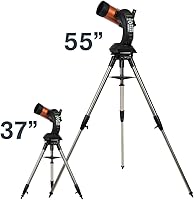
- Assembled Dimensions: When fully set up, the telescope measures approximately 32 x 34 x 52 inches, requiring a modest footprint for indoor storage or balcony use.
- Power Requirements: The mount is powered by 8 AA batteries or a 12V DC adapter; neither batteries nor the adapter are included in the box.
- Finderscope: A StarPointer red dot finderscope is included and uses a CR2032 battery (included) to project a red dot for quick target acquisition.
- Polar Wedge: An integrated equatorial wedge is built into the fork arm base, enabling polar alignment for tracked astrophotography without purchasing a separate accessory.
- Warranty: Celestron covers the telescope with a 2-year limited warranty and provides unlimited access to US-based technical support for the product's lifetime.
- Manufacturer: Celestron has been designing and manufacturing telescopes in California since 1960 and continues to support this product line with active updates and accessories.
- Model Number: The official Celestron model number for this telescope is 11049, useful when ordering replacement parts or compatible accessories.
- First Available: This product line was first made available in June 2003, and the current version remains in active production with no discontinuation announced.
Related Reviews
Celestron NexStar 5SE Computerized Telescope
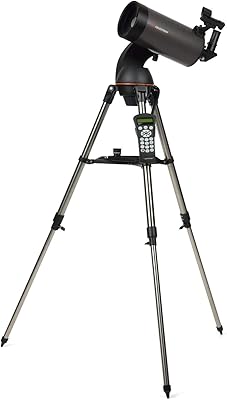
Celestron NexStar 127SLT Computerized Telescope
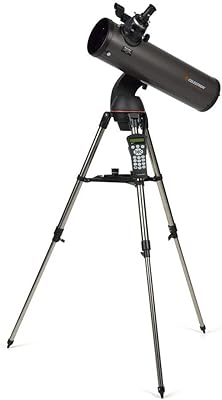
Celestron NexStar 130SLT
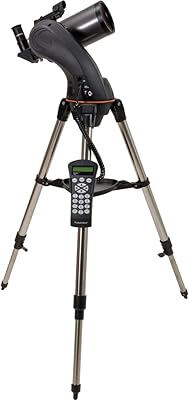
Celestron NexStar 90SLT Computerized Telescope
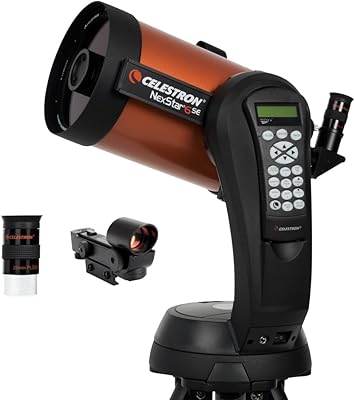
Celestron NexStar 6SE Computerized Telescope
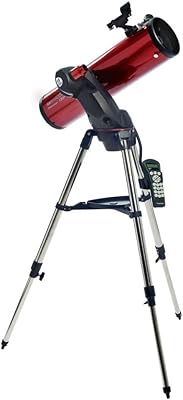
Celestron SkyProdigy 130 Computerized Telescope
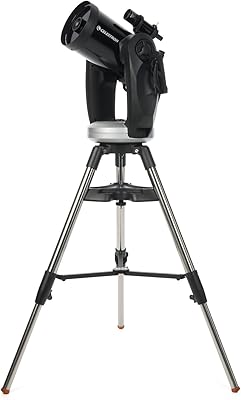
Celestron CPC 800 XLT Computerized Telescope
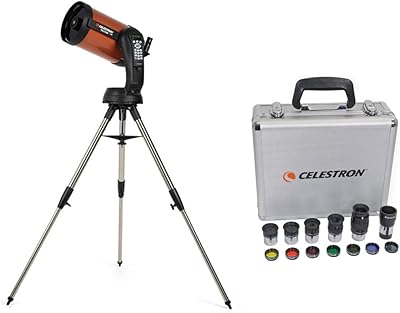
Celestron NexStar 8 SE Computerized Telescope
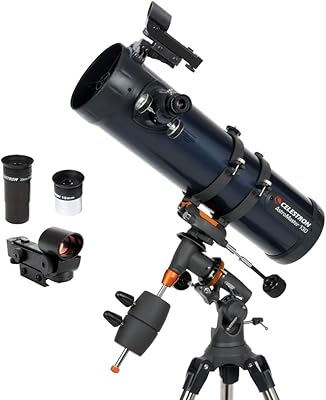
Celestron AstroMaster 114EQ Reflector Telescope