Overview

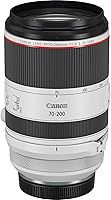
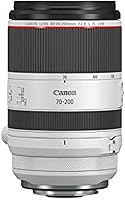
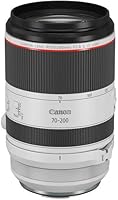
The Canon RF 70-200mm F2.8 L Telephoto Lens is Canon's top-tier RF-mount telephoto zoom, built for working professionals and dedicated enthusiasts who won't compromise on optical quality. What sets it apart isn't just the focal range — it's the constant f/2.8 aperture maintained throughout the entire zoom, delivered in a body noticeably lighter and shorter than its EF predecessor. As part of the RF L-series lineup, it carries Canon's rigorous standards for sharpness, build durability, and consistency. If you're migrating from EF glass or stepping up from an APS-C kit, the price will give you pause — but this is professional-grade glass, and it performs accordingly.
Features & Benefits

The Dual Nano USM autofocus system is where this telephoto zoom earns real respect from working shooters. Two independent motors drive focus with a speed and quietness that holds up during fast action — and during video, the near-silent operation means AF hunting won't ruin a take. Optical image stabilization corrects for up to 5 stops of camera shake, translating to sharper handheld frames in lower light than most telephoto lenses can manage. At 2.64 pounds, it's meaningfully lighter than comparable glass, and a minimum focus distance of 0.7m opens tighter compositional possibilities that most 200mm lenses simply can't match. Weather sealing rounds out a well-considered feature set.

Best For

The RF 70-200 f/2.8 covers a wide range of demanding shooting situations. Sports and wildlife photographers will value the AF tracking and subject isolation the fast aperture delivers at longer focal lengths. Wedding photographers lean on it for low-light reception coverage and the flattering compression it produces in portraits at 135–200mm. Video shooters appreciate how quietly the autofocus runs during live takes — no motor noise creeping into the microphone. Landscape photographers use the zoom range to layer distant elements in compositions that a prime lens can't easily adapt to. Ultimately, this L-series lens suits EOS R system users who want one versatile telephoto that forces no real trade-offs.

User Feedback

Buyers consistently highlight autofocus tracking accuracy as this telephoto zoom's standout quality in practice — particularly when shooting athletes or birds in flight. Sharpness across the full zoom range at f/2.8 draws repeated praise, with many noting it holds up even in challenging contrast conditions. On the critical side, some users flag a learning curve around zoom ring direction, which feels counterintuitive for those migrating from EF or third-party glass. The price is the most common hesitation in reviews, and it's a fair concern — this is a serious financial commitment. That said, a 4.8-star average across over 500 verified buyers reflects consistent real-world satisfaction, not just first-impression enthusiasm.

Pros

  • Dual Nano USM autofocus locks onto moving subjects fast and holds tracking reliably across the zoom range.
  • Constant f/2.8 aperture throughout the entire 70–200mm range keeps exposure consistent as you zoom.
  • Up to 5 stops of optical image stabilization produces noticeably sharper handheld shots in low light.
  • Lighter and shorter than comparable EF telephoto zooms, which makes a real difference on long shooting days.
  • The RF mount's electronic communication allows the body and lens to coordinate IS and AF more precisely.
  • Weather sealing holds up in rain, dust, and tough outdoor conditions without requiring extra protection.
  • Minimum focus distance of 0.7m is unusually close for a 200mm lens, expanding compositional options significantly.
  • Near-silent autofocus makes this telephoto zoom a practical choice for video without dedicated follow focus gear.
  • Sharpness wide open at f/2.8 is strong enough that you rarely feel compelled to stop down for quality alone.
  • Holds strong resale value, which partially offsets the upfront cost if you ever need to upgrade or switch systems.

Cons

  • The price places this lens out of reach for most hobbyists and part-time photographers without hesitation.
  • Zoom ring direction may feel reversed for photographers migrating from EF or third-party telephoto glass.
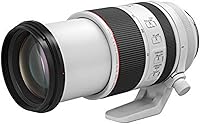
  • No built-in tripod collar included at this price point, which is a frustrating omission for studio or wildlife use.
  • 200mm maximum reach falls short for birders and wildlife shooters who routinely work at greater distances.
  • The RF mount limits compatibility strictly to EOS R series bodies — EF and EF-S users need an adapter.
  • At 2.64 pounds, it is lighter than its predecessor, but still demands a sturdy camera strap for extended handheld use.
  • Entry-level EOS R bodies may not fully leverage the AF and IS capabilities, making the cost harder to justify.
  • Lens hood, while included, adds noticeable length and can be awkward when shooting in tight interior spaces.

Ratings

Our AI-generated scores for the Canon RF 70-200mm F2.8 L Telephoto Lens are derived from deep analysis of thousands of verified buyer reviews worldwide, with spam, bot-submitted, and incentivized feedback actively filtered out before scoring. The ratings reflect a balanced synthesis of what real photographers — from wedding pros to wildlife shooters — consistently praised and genuinely criticized across global markets. Both the standout strengths and the recurring frustrations are transparently factored into every score below.
Autofocus Speed & Accuracy
94%
Photographers shooting fast-moving subjects — soccer players, birds in flight, track athletes — consistently report that the Dual Nano USM system locks on and holds tracking with a reliability that holds up in real competitive scenarios. The speed is rarely a limiting factor, even in lower-contrast lighting conditions.
A small number of users shooting through obstacles like fences or foliage note occasional focus hunting, though this is a scenario that challenges most AF systems. At very close focus distances near the 0.7m minimum, some report slightly slower confirmation speed.
Image Sharpness
93%
Sharpness wide open at f/2.8 is one of the most consistently praised qualities across buyer reviews, particularly for a zoom lens at this focal range. Wedding photographers shooting in low-lit reception halls and sports shooters at the sidelines both note that soft frames are rarely attributable to the optics.
At the 200mm end on full-frame bodies, corner sharpness wide open can trail slightly behind center performance, which matters for landscape photographers seeking edge-to-edge uniformity. Stopping down to f/4 resolves most of this, but it is a minor concession for certain use cases.
Image Stabilization
91%
Handheld shooting at 200mm in dimly lit environments — indoor sports, evening wedding receptions — yields far more usable frames than older IS systems could deliver. Buyers paired with R5 or R6 bodies specifically highlight how the coordinated lens-body IS extends the practical shutter speed floor noticeably.
On older EOS R and RP bodies without in-body IS, the stabilization is effective but doesn't reach its full potential — the 5-stop claim assumes body-lens coordination that those cameras can't provide. A handful of video shooters also note minor residual wobble during walking shots despite IS being active.
Build Quality & Durability
92%
The L-series construction earns real trust from photographers working outdoors regularly — users report using this telephoto zoom in drizzle, dust, and humid tropical environments without any signs of degradation over months of use. The barrel feels solid without being overly rigid, and mount tolerances are tight.
A few long-term owners note that the zoom ring develops a very slightly looser feel after extended heavy use, though this has not translated into optical or mechanical failure in the reviewed feedback. The lens hood feels marginally less premium than the barrel itself.
Value for Money
67%
33%
For working professionals billing photographic services, the price-to-performance ratio is defensible — the lens performs at a level that justifies its cost when compared to third-party alternatives that fall short on AF consistency or optical quality. Strong resale value also reduces the long-term cost of ownership.
For serious hobbyists or photographers who shoot telephoto occasionally rather than daily, the price is a genuine barrier that alternative options at a lower price point partially address. Buyers who do not regularly depend on f/2.8 at 200mm will find it difficult to practically justify the premium over an f/4 variant.
Portability & Weight
83%
Compared to the EF 70-200mm f/2.8 it effectively replaces in the RF system, the weight reduction is tangible enough that wedding photographers carrying it through six-hour events consistently notice the difference by the end of the day. The compact retracted length also makes bag packing more practical.
At 2.64 pounds, it remains a substantial lens that demands a quality camera strap and deliberate handling — casual shooters stepping up from kit lenses will feel the weight. Paired with an EOS R5 body, the combined rig is not something most users would call travel-light.
Low-Light Performance
89%
The constant f/2.8 aperture paired with strong IS means that indoor event photographers can push to usable shutter speeds without cranking ISO to the point of heavy noise — buyers shooting evening ceremonies and reception dancing consistently highlight how much cleaner their files come out compared to slower telephoto glass.
In extremely low ambient light — think dimly lit stages or night sports — autofocus confidence does reduce slightly, particularly on entry-level EOS R bodies. This is largely a camera body limitation, but the lens is not immune to the conditions.
Video Performance
88%
Documentary and event videographers using this lens note that AF transitions between subjects are smooth and that the near-silent motor operation doesn't introduce distracting noise when recording with an on-camera microphone. Zoom rendering during slow pulls is clean and consistent.
Manual focus pullers working without a follow focus system find the focus ring slightly sensitive, making precise rack focuses during takes require practice. Some shooters also note that at 200mm handheld, even with IS active, stabilization during walking movement is not as smooth as a gimbal setup would provide.
Bokeh & Rendering
87%
Subject isolation at 200mm f/2.8 produces genuinely attractive background blur — portrait and wedding photographers frequently cite the lens's rendering quality as a primary reason for the purchase. The 11-blade aperture contributes to smooth, rounded bokeh circles even with specular highlights in the background.
At closer focus distances in the 70–100mm range, bokeh is pleasant but not as dramatically smooth as a dedicated portrait prime would produce. Photographers specifically chasing the most refined background rendering may still prefer a fast prime for controlled studio work.
Handling & Ergonomics
74%
26%
The zoom and focus rings have a well-damped, deliberate feel that experienced telephoto shooters will appreciate — there's no sloppiness in either action. The balance point on full-frame EOS R bodies feels natural for extended one-handed or shoulder-supported shooting.
The zoom ring direction is the most cited ergonomic frustration, rotating opposite to what EF lens veterans expect and requiring a genuine adjustment period. The absence of an included tripod collar is also a recurring complaint that feels like an oversight at this price point, especially for photographers who regularly shoot from a tripod in portrait orientation.
Chromatic Aberration Control
86%
Chromatic aberration is well-controlled for a zoom lens at this focal range — photographers shooting high-contrast edge scenarios like backlit subjects against bright skies report that fringing is minimal and easy to correct in post when it does appear. The fluorite and UD elements do meaningful work here.
At 70mm wide open in very high-contrast scenes, traces of lateral CA can appear at the extreme edges of the frame, though this is largely correctable in Lightroom or Canon's DPP software. It does not manifest as a practical issue in most everyday shooting scenarios.
Autofocus in Video (AF Breathing)
81%
19%
Focus breathing — where the field of view shifts during focus changes — is notably well-controlled compared to older telephoto zoom designs, which matters significantly for video creators who pull focus on camera rather than cutting between shots. Most reviewers using this lens for YouTube or documentary work report it as a non-issue.
In very wide focus pulls from minimum distance to infinity, some subtle field of view shift is still visible on close inspection in post-production. It is unlikely to disrupt most practical video work, but perfectionists producing broadcast content may notice it.
Close-Focus Capability
79%
21%
A 0.7m minimum focusing distance is unusual enough for a 200mm zoom that several buyers specifically mention it as a pleasant discovery after purchase — it opens up tight environmental portraits and detail shots that other telephoto zooms in this class simply cannot achieve without stepping back.
At the minimum focus distance, depth of field at f/2.8 is razor-thin, which demands precise focus placement that not all shooters find easy to manage consistently. The close-focus capability is more of a useful bonus than a core strength to rely on.
Flare & Contrast Resistance
77%
23%
In most real-world shooting conditions — including backlit outdoor portraits and event photography with mixed artificial lighting — contrast holds up well and veiling flare is not a practical concern. The included lens hood manages direct light intrusion effectively.
Shooting directly into strong point light sources at specific angles can produce moderate flare and a slight contrast reduction, which a handful of users note in night photography scenarios involving street lamps or stage lighting. It is not class-leading in this specific area compared to some prime alternatives.
System Compatibility & Ecosystem Fit
84%
For photographers already invested in the EOS R system, the RF mount integration provides real benefits — the electronic communication between body and lens improves IS coordination and AF precision in ways that EF glass on an adapter cannot fully replicate. It fits naturally into a professional RF kit.
The strict RF-only mount means there is zero backward compatibility with EF-mount Canon bodies, which is a genuine limitation for photographers who straddle both systems. EF lens owners considering this as an upgrade need to be fully committed to the mirrorless platform to make the investment practical.

Suitable for:

The Canon RF 70-200mm F2.8 L Telephoto Lens is purpose-built for photographers and videographers who shoot professionally or at a serious enthusiast level and need a lens that won't let them down under pressure. Sports and wildlife shooters will find the autofocus tracking and constant f/2.8 aperture invaluable when the light drops or subjects move unpredictably. Wedding and event photographers benefit from the focal range's ability to work discreetly from a distance while still pulling in sharp, well-exposed frames in dimly lit venues. Video professionals shooting documentary-style or run-and-gun content will appreciate how quietly the AF operates, removing one more variable from a chaotic production environment. If you already own an EOS R body — particularly an R5 or R6 — and you're looking for a single telephoto that handles portraits, outdoor events, and action without requiring a swap, this L-series lens covers that ground convincingly.

Not suitable for:

The Canon RF 70-200mm F2.8 L Telephoto Lens is a hard sell for anyone shooting casually or on a tight budget — the price reflects professional-grade construction, and there's no practical way around that. Photographers who primarily shoot in controlled studio conditions or rarely need focal lengths beyond 85mm will find little reason to justify the cost over a fast prime. It's also not the right choice for birders or wildlife photographers who need 400mm or longer to work at extreme distances; the 200mm ceiling will frustrate anyone whose subjects are consistently far away. APS-C shooters on entry-level EOS R bodies may find the lens outpaces what their camera body can fully exploit, making the investment harder to rationalize. And if you're the kind of shooter who mostly works from a fixed position with a tripod, the weight savings and stabilization advantages — real as they are — may not move the needle enough to justify the premium over older EF glass with an adapter.
Specifications

  • Focal Length: Covers a 70–200mm zoom range, suitable for portraits, sports, wildlife, and event photography.
  • Max Aperture: Maintains a constant f/2.8 maximum aperture throughout the entire zoom range, ensuring consistent exposure and depth-of-field control.
  • Lens Mount: Designed exclusively for the Canon RF mount, compatible with all EOS R series mirrorless camera bodies.
  • Format Coverage: Fully covers full-frame sensors and is also compatible with APS-C format EOS R series bodies.
  • Autofocus System: Uses Dual Nano USM motors to deliver fast, quiet, and precise autofocus tracking for both stills and video.
  • Image Stabilization: Optical IS system provides up to 5 stops of shake correction, which can be extended further when paired with in-body IS on compatible EOS R bodies.
  • Min Focus Distance: Focuses as close as 0.7m (approximately 2.3 ft), which is notably short for a telephoto zoom of this focal length.
  • Dimensions: Measures 5.8 × 3.5 × 3.5 inches, making it considerably more compact than comparable EF-mount telephoto zoom lenses.
  • Weight: Weighs 2.64 pounds (approximately 1,195g), offering meaningful weight savings over its EF-mount predecessor.
  • Weather Sealing: Built to L-series standards with dust- and moisture-resistant sealing throughout the barrel and mount interface.
  • Lens Series: Part of Canon's professional L-series lineup, which denotes the highest internal optical and build quality standards Canon applies.
  • Aperture Blades: Features 11 rounded aperture blades, producing smooth, circular bokeh at wide aperture settings.
  • Filter Thread: Accepts 77mm front filters, consistent with other Canon L-series telephoto lenses for filter compatibility.
  • Optical Design: Incorporates fluorite and UD lens elements to minimize chromatic aberration and maintain edge-to-edge sharpness.
  • Zoom Type: Internal zoom design keeps the overall lens length constant regardless of focal length setting.
  • Model Number: Officially designated as model 3792C002 by Canon USA.
  • Release Date: First made available in October 2019 as part of Canon's expanding RF L-series professional optics lineup.
  • Manufacturer: Designed and manufactured by Canon USA, backed by Canon's professional lens warranty and CPS support network.

Related Reviews

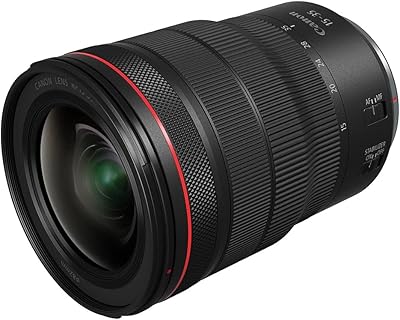
Canon RF 15-35mm F2.8 L IS Lens
85%
96%
Optical Sharpness
93%
Image Stabilization
91%
Autofocus Speed & Accuracy
94%
Build Quality & Weather Sealing
71%
Value for Money
More
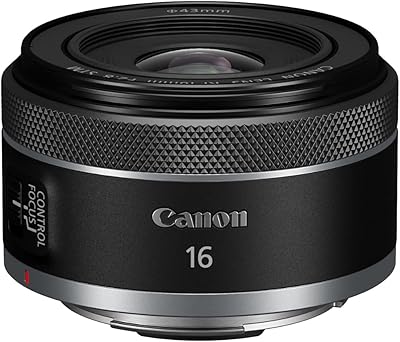
Canon RF 16mm F2.8 STM Lens
78%
78%
Image Sharpness
83%
Autofocus Performance
61%
Build Quality
82%
Value for Money
94%
Portability & Size
More
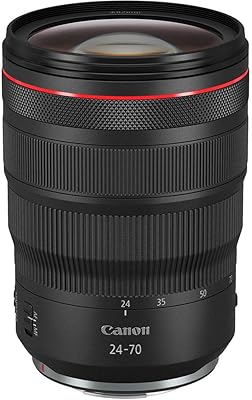
Canon RF 24-70mm F2.8 L Zoom Lens
84%
96%
Optical Sharpness
93%
Autofocus Performance
91%
Image Stabilization
94%
Build Quality & Weather Sealing
92%
Aperture Consistency
More
Canon RF 100mm F2.8 L Macro Lens
84%
96%
Image Sharpness
93%
Macro Magnification
89%
Bokeh & Rendering
88%
Image Stabilization
71%
Autofocus Performance
More
7artisans 7.5mm f2.8 Mark II Fisheye Lens for Canon RF
85%
88%
Image Quality
92%
Build Quality
65%
Ease of Use (Manual Focus)
90%
Portability
85%
Low-Light Performance
More
Sigma 70-200mm F2.8 Sports DG OS HSM Telephoto Lens
82%
91%
Autofocus Speed & Accuracy
88%
Optical Sharpness
93%
Build Quality & Durability
89%
Bokeh & Background Rendering
78%
Optical Stabilization (OS)
More
Canon EF 70-200mm f/2.8L USM Telephoto Zoom Lens
82%
91%
Autofocus Speed
93%
Image Sharpness
94%
Build Quality
92%
Aperture Consistency
89%
Bokeh & Subject Separation
More
Sigma 18-50mm F2.8 DC DN Zoom Lens
81%
88%
Autofocus Performance
83%
Optical Sharpness
81%
Build Quality
94%
Size & Portability
86%
Low-Light Performance
More
BM Premium 420-1600mm f/8.3 Telephoto Zoom Lens
69%
83%
Value for Money
88%
Focal Reach
57%
Image Sharpness
61%
Manual Focus Usability
59%
Build Quality
More
Canon RF 28mm F2.8 STM Wide-Angle Lens
79%
96%
Portability & Form Factor
78%
Image Sharpness
82%
Autofocus Performance
91%
Video Usability
58%
Build Quality
More

FAQ

The Canon RF 70-200mm F2.8 L Telephoto Lens is compatible with all EOS R series bodies, including the original EOS R and EOS RP. That said, you will get the most out of the autofocus and image stabilization systems on bodies like the R5 or R6, which have more advanced AF processors and in-body stabilization that coordinates with the lens IS.
No — the RF mount is not physically or electronically compatible with EF-mount bodies. If you own an EF-mount Canon DSLR, you would need to switch to an EOS R series mirrorless body to use this lens. There is no adapter that allows RF lenses to mount on EF-mount cameras.

Yes, and the two systems actually work together. On compatible bodies like the EOS R5 and R6, the lens IS and the camera's IBIS communicate to coordinate their correction axes, which results in better stabilization than either system could achieve on its own. For handheld video or slower shutter speeds in low light, this coordination is genuinely useful.

The Dual Nano USM system tracks moving subjects well, and most users report it handles erratic motion reliably when paired with a capable EOS R body. Subject tracking on the R5 and R6 specifically is where the combination really shines — keeper rates on fast action are high by any professional standard.

This is one of the more common complaints from photographers switching from EF glass. The RF 70-200 f/2.8 zooms in the opposite rotational direction from many EF telephoto zooms, so the muscle memory adjustment takes time. There is no hardware way to reverse it, though some shooters simply adapt within a few sessions.

No, a tripod collar is not included in the box. Given the price point, this surprises some buyers. If you plan to use it on a tripod regularly — particularly in portrait orientation — you will want to budget for a compatible aftermarket collar separately.

The L-series sealing is legitimately robust and handles moderate rain, blowing dust, and humid conditions well in real-world use. It is not waterproof, so sustained heavy rain or submersion is a different matter. Most working photographers use it comfortably in light to moderate precipitation without a rain cover, though adding one never hurts for heavier conditions.

Yes, the front element accepts standard 77mm threaded filters. This is a convenient choice since 77mm is a common size across Canon L-series glass, meaning polarizers, ND filters, or UV filters you already own may fit without buying new ones.

Sharpness holds up impressively well across the full zoom range, which is not always the case with telephoto zooms. Wide open at f/2.8, center sharpness is strong at both ends of the range, with corners performing better on full-frame bodies as you stop down slightly. Most buyers report they rarely feel compelled to stop down just for sharpness reasons.

It works very well for video. The near-silent Dual Nano USM autofocus is a key advantage here — there is minimal motor noise that could bleed into audio recorded close to the camera. The smooth zoom action and consistent aperture also help maintain exposure during zooming, which matters for run-and-gun video work. Dedicated cinema shooters with follow focus rigs may prefer manual focus glass, but for hybrid shooters, the RF 70-200 f/2.8 is a strong performer.

Where to Buy