Overview

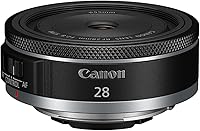
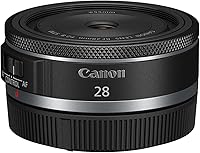
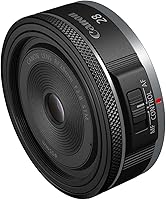
The Canon RF 28mm F2.8 STM Wide-Angle Lens is Canon's answer to a question a lot of EOS R shooters ask eventually: why does carrying a full-frame camera have to feel so deliberate? This pancake wide-angle is barely an inch deep and weighs almost nothing — slip it on and the whole kit fits in a jacket pocket. The 28mm focal length covers everyday situations naturally, from tight street scenes to casual travel shots, and on APS-C bodies it behaves closer to a familiar 45mm equivalent. It is not built to impress on a spec sheet. It is built to stay on your camera.

Features & Benefits

The F2.8 aperture is useful rather than spectacular on a wide lens — it handles dim indoor spaces and evening shooting without forcing you to push ISO into uncomfortable territory, but do not expect dramatic subject separation. Three aspheric elements keep distortion well-controlled, and Canon's SSC coating handles backlit scenes better than the price point suggests, with flare staying largely in check. The STM autofocus is the real highlight for video work: it shifts focus quietly and smoothly, rarely disturbing on-camera audio. At around nine inches, the minimum focus distance lets you get meaningfully close to small subjects — a capability that opens up more shooting options than most wide-angles at this level offer.

Best For

This compact prime suits travel and street photographers who want full-frame quality without a conspicuous, heavy setup — it is small enough that people around you rarely notice the camera, which genuinely changes how candid shooting feels. Video creators doing run-and-gun work will appreciate AF tracking that stays silent in recordings. It also makes a strong secondary lens for EOS R owners who already carry a zoom; leave the zoom in the bag for walking around. New mirrorless shooters looking for an affordable first prime to develop fundamentals with will find it accessible and rewarding. If standard kit lenses feel like a burden for everyday carry, the RF 28mm F2.8 is worth serious consideration.

User Feedback

Buyers consistently praise center-frame sharpness and how naturally the RF 28mm F2.8 balances on compact EOS R bodies — pairing it with something like an R8 feels considered, not accidental. Feedback on video AF is notably positive, with users calling the STM motor genuinely inaudible during real recordings. The criticism is real, though: corner softness at F2.8 is noticeable, which matters for architecture and landscape work where edge detail counts. The plastic build disappoints buyers expecting a more substantial feel, and the lack of image stabilization is a practical limitation when shooting handheld in low light. Compared to the older EF 28mm, most users consider this a genuine optical improvement, though a few note the trade-off feels like paying mainly for RF mount convenience.

Pros

  • Fits in a jacket pocket — genuinely one of the most portable full-frame lens options in the Canon RF lineup.
  • Center sharpness is strong and reliable across a wide range of shooting conditions.
  • STM autofocus is near-silent, making it a practical choice for video work where motor noise ruins audio.
  • The 28mm focal length covers travel, street, and casual everyday shooting without feeling cramped or too wide.
  • Flare and ghosting are well-managed in backlit scenes, better than expected for this price tier.
  • Balances naturally on smaller EOS R bodies, making the overall kit feel comfortable for all-day carry.
  • The close minimum focus distance adds flexibility for detail and near-macro style shots.
  • On APS-C EOS R bodies, the roughly 45mm equivalent makes it a natural, versatile everyday focal length.
  • Priced accessibly enough to serve as a genuine entry point into RF prime shooting without a steep commitment.

Cons

  • Corner sharpness degrades noticeably when shooting wide open, which matters for landscapes and architecture.
  • No image stabilization is a real limitation when shooting handheld in dim environments on bodies without IBIS.
  • The plastic build feels entry-level and does not inspire confidence during heavier use or outdoor shooting.
  • No weather sealing makes it a risky choice for shooting in rain, dust, or harsh field conditions.
  • F2.8 on a wide-angle provides limited background blur — buyers expecting visible subject separation may be disappointed.
  • The lens hood is sold separately, which is an annoying omission given how prone wide-angles are to stray light.
  • Low-light performance is useful but not exceptional — high-ISO shooting on the body still carries most of the burden.
  • Buyers upgrading from a fast standard prime may find the field of view adjustment to 28mm takes meaningful time to get used to.

Ratings

The scores below reflect an AI-driven analysis of verified buyer reviews for the Canon RF 28mm F2.8 STM Wide-Angle Lens, sourced globally and filtered to remove incentivized, duplicate, and bot-generated submissions. Each category is scored independently to give you an honest picture of where this compact prime genuinely delivers — and where real buyers have run into friction.

Portability & Form Factor
96%
This is where the RF 28mm F2.8 earns its strongest praise without reservation. Buyers who switch from a kit zoom describe the experience of pairing it with an EOS R body as feeling like a completely different, lighter camera — one that actually fits in a coat pocket or a small everyday bag without reorganizing everything around it.
A small number of users note that the pancake profile makes the lens slightly awkward to grip when removing it from the mount one-handed, and the minimal depth means there is little to hold onto. It is a minor ergonomic quirk, not a deal-breaker, but worth knowing.
Image Sharpness
78%
22%
Center sharpness is consistently strong from F2.8 onward, with buyers reporting clean, detailed results on travel shots, street portraits, and close-up subjects. Stopped down to F5.6 or F8, the overall image quality across the frame is genuinely impressive for a lens at this price point.
Corner softness at F2.8 is a recurring complaint and one that matters for architecture, landscapes, and group shots where edge detail is expected to hold. It is not a defect — it is a characteristic of the optical design at this aperture — but it does limit versatility for technically demanding genres.
Autofocus Performance
82%
18%
For the everyday and video shooting scenarios this compact prime is built for, the STM motor is a reliable, near-silent partner. Street photographers report consistently accurate subject acquisition, and video creators consistently call out the smooth, noise-free focus pulls as one of the main reasons they chose this lens over alternatives.
Tracking fast or erratically moving subjects reveals the STM system's limitations — it is not designed for speed. Buyers coming from lenses with USM motors notice the slower acquisition in challenging conditions, and burst shooting with moving subjects produces a higher rate of soft frames than most would accept for critical work.
Video Usability
91%
Among buyers who use their EOS R cameras for video, this pancake wide-angle earns exceptionally high marks. The motor stays inaudible during recording even on sensitive on-camera microphones, and the combination of a light body, wide field of view, and smooth continuous AF makes it a practical choice for vlogging, documentary-style clips, and solo shooting setups.
The absence of image stabilization is felt more acutely in video than in stills — handheld footage without IBIS on the body can show visible shake, especially while walking. Users with older EOS R bodies that lack effective stabilization report needing a gimbal or stabilizing rig to get usable handheld video results.
Build Quality
58%
42%
The lens feels solidly assembled for its category and has not generated significant reports of early failure or mechanical issues. For buyers using it as a lightweight everyday carry lens, the construction holds up well under normal handling, and the mount connection to camera bodies feels secure.
The plastic barrel is the single most common point of disappointment in buyer feedback. Photographers accustomed to Canon's L-series or even mid-range RF primes find the tactile quality noticeably step-down, and there is zero weather sealing — a real limitation for travel photographers who encounter unexpected rain or dusty environments.
Low-Light Capability
69%
31%
F2.8 on a wide-angle handles reasonably lit indoor spaces, evening street scenes, and restaurant environments without needing to push ISO to uncomfortable levels. Buyers who shoot casual events or travel at dusk report that it covers the majority of real-world low-light situations they encounter day-to-day.
In genuinely dark environments — concerts, dimly lit interiors, nighttime shooting — the aperture limitation becomes apparent and the camera body ends up doing most of the heavy lifting via ISO. Without stabilization, shutter speed also becomes a concern when light drops significantly, narrowing the usable range for handheld night work.
Distortion Control
74%
26%
For a wide-angle lens at this focal length, distortion is kept reasonably well in check, particularly when shooting subjects in the center of the frame. Travel and street photographers report that standard shooting — buildings, people, market scenes — rarely requires post-processing correction to look natural.
Barrel distortion becomes more noticeable at close focus distances and toward the edges of the frame, which affects subjects like interior architecture or any shot where straight lines run near the periphery. Software correction in Canon's ecosystem handles it well, but it is an extra step that some buyers did not anticipate needing regularly.
Flare & Ghosting Resistance
83%
The Super Spectra Coating performs noticeably well in backlit scenes — buyers shooting into sunlight or near strong artificial sources report far less ghosting than they expected at this price point. For street and travel photography where you cannot always control the light direction, this is a meaningful practical advantage.
Strong direct light sources at the edge of the frame can still produce visible flare, particularly without a hood attached. Since the hood is sold separately and some buyers never purchase one, a portion of user complaints about flare are likely avoidable with an accessory Canon arguably should have included in the box.
Value for Money
88%
For EOS R shooters who want a capable, genuinely portable prime without spending on a premium RF option, the RF 28mm F2.8 hits a sweet spot that is hard to argue with. The optical quality, silent AF, and portability together represent a package that buyers consistently describe as earning its place in their bag.
A handful of buyers feel the price is slightly ambitious given the plastic build and lack of weather sealing — comparable lenses in other systems offer more robust construction at similar costs. If you factor in a separately purchased hood, the value proposition tightens a little more.
Compatibility & Versatility
79%
21%
The RF mount covers the full EOS R ecosystem, and the lens behaves usefully across both full-frame and APS-C bodies, which gives it flexibility as a buyer's camera collection evolves. The 28mm focal length covers travel, environmental portraits, street work, and casual video — a broad range for a single fixed lens.
It is strictly an RF-mount lens with no adapter compatibility in the reverse direction, so it cannot serve as a crossover option for photographers maintaining both DSLR and mirrorless kits. The fixed focal length also demands compositional discipline that not all shooters are comfortable with, limiting its appeal to those used to zooms.
Ease of Use
92%
Buyers new to prime lenses and even to full-frame mirrorless systems consistently describe this compact prime as approachable and forgiving. The automatic in-camera distortion correction, reliable center AF, and intuitive focal length make it a lens you can pick up and shoot confidently without a steep learning curve.
Shooters who rely on manual focus control find the focus ring implementation via the STM system less precise than dedicated manual lenses — it lacks the tactile, mechanical feel that fine control work demands. For critical manual focus tasks like focus peaking in video, some users find it less responsive than expected.
Close-Focus Performance
73%
27%
The ability to focus at roughly nine inches opens up a range of detail shots — food, small objects, product-style photography — that most wide-angle lenses at this focal length simply cannot manage. Buyers who discovered this capability after purchase frequently mention it as a pleasant surprise that broadens how they use the lens.
It is not a macro lens and should not be treated as one — buyers expecting insect-level magnification will be disappointed. At minimum focus distance, vignetting and softness increase at wider apertures, so close-up work generally requires stopping down to get truly clean results.
Balance on Camera Body
87%
On compact EOS R bodies like the R8 and R50, the lens creates a balanced, natural-feeling combination that buyers consistently praise. The low weight means the camera does not feel front-heavy, and the slim profile keeps the overall footprint of the kit small enough that carrying it all day feels effortless.
On larger EOS R bodies with a deeper grip, the pancake depth can feel slightly mismatched visually and makes the camera harder to set down flat on a surface without the camera rocking. It is a cosmetic and ergonomic observation rather than a functional problem, but it comes up often enough in feedback to note.
Packaging & Accessories
54%
46%
The lens ships in Canon's standard retail packaging and arrives well-protected. Buyers purchasing for gifts or first-time use describe the unboxing experience as clean and professional, and the included lens caps are the same quality caps found across Canon's lineup.
The lack of an included lens hood at this price point is a consistent frustration — buyers feel it should be standard, not optional, for a lens this exposed to flare. There is also no lens pouch or carrying case included, which feels like a small but avoidable omission for a lens marketed partly at travel photographers.

Suitable for:

The Canon RF 28mm F2.8 STM Wide-Angle Lens was clearly designed with a specific kind of shooter in mind, and for that shooter it is a near-perfect fit. Travel photographers who want full-frame image quality without lugging a conspicuous, heavy kit will find this pancake wide-angle transformative — it makes an EOS R body genuinely pocketable in a way that no zoom can. Street photographers benefit equally, since the slim, unassuming profile draws far less attention than a protruding lens barrel. Video creators doing solo or run-and-gun work will appreciate that the STM motor stays silent during recording, which is a practical requirement rather than a luxury at this level. It also earns its place as a capable everyday walk-around lens for EOS R owners who already own a zoom but want something lighter for casual days out, and as a first prime for beginners learning to compose with a fixed focal length.
Not suitable for:

The Canon RF 28mm F2.8 STM Wide-Angle Lens has real limitations that make it a poor match for certain buyers, and it is worth being direct about them. Photographers who shoot architecture, landscapes, or group shots and need sharp, consistent detail from edge to edge will find the corner softness at F2.8 frustrating — stopping down helps, but it is a trade-off worth knowing before buying. Anyone working handheld in low light for extended periods will miss the absence of image stabilization, especially on bodies that lack in-body IS. Professional or prosumer shooters expecting a metal build and weather sealing will be let down by the plastic construction, which feels functional but not premium. If you are primarily a portrait shooter, the 28mm field of view is rarely flattering at close distances. And if your shooting style demands a very wide maximum aperture — F1.4 or F1.8 — this compact prime simply does not deliver that kind of light-gathering or subject isolation.
Specifications

  • Focal Length: Fixed 28mm focal length, offering a natural wide-angle field of view on full-frame EOS R bodies.
  • Max Aperture: F2.8 maximum aperture provides useful light-gathering capability for indoor and low-light shooting.
  • Lens Mount: Canon RF mount, compatible exclusively with Canon EOS R series mirrorless cameras.
  • Sensor Coverage: Designed for full-frame sensors, but also usable on APS-C EOS R bodies where it produces an equivalent focal length of approximately 45mm.
  • Optical Design: Includes three aspheric elements to reduce distortion and maintain center sharpness across the frame.
  • Lens Coating: Canon Super Spectra Coating (SSC) is applied to minimize ghosting and flare when shooting into or near strong light sources.
  • Autofocus: Leadscrew-type STM (stepping motor) drive delivers smooth, near-silent autofocus well-suited to continuous video recording.
  • Min Focus Distance: Minimum focusing distance of approximately 9 inches (0.23m) allows close-up detail shots without an extension tube.
  • Max Magnification: Maximum magnification of 0.17x, suitable for close detail work but not true macro photography.
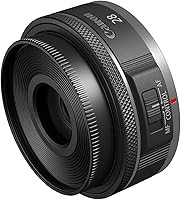
  • Dimensions: The lens measures 2.7″ in diameter and just 0.97″ in depth, making it one of the slimmest options in the RF lineup.
  • Weight: Weighs approximately 2.08 oz, adding negligible bulk to any EOS R camera body.
  • Build Material: Plastic barrel construction keeps weight minimal but does not offer weather or dust sealing.
  • Image Stabilization: No optical image stabilization is built into the lens; stabilization relies entirely on any IBIS available in the camera body.
  • Filter Thread: Accepts standard Canon RF-compatible front filters; filter thread size should be confirmed against the specific body pairing.
  • Manufacturer: Designed and manufactured by Canon USA, with the lens first made available in May 2023.
  • Model Number: Official Canon model number is 6128C002, useful when cross-referencing accessories or warranty documentation.

Related Reviews
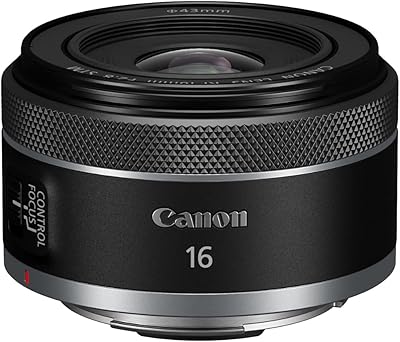
Canon RF 16mm F2.8 STM Lens
78%
78%
Image Sharpness
83%
Autofocus Performance
61%
Build Quality
82%
Value for Money
94%
Portability & Size
More
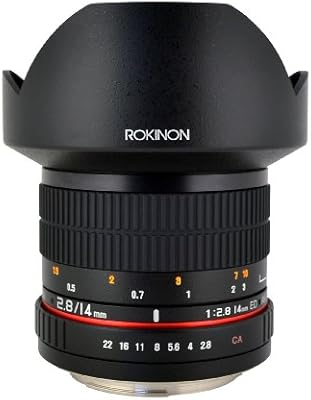
Rokinon 14mm F2.8 Wide Angle Lens
71%
83%
Optical Sharpness (Center Frame)
58%
Edge & Corner Sharpness
52%
Vignetting Control
61%
Chromatic Aberration
74%
Flare & Ghosting Resistance
More
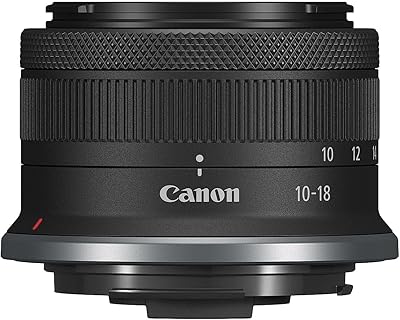
Canon RF-S10-18mm F4.5-6.3 IS STM Zoom Lens
83%
91%
Image Sharpness
84%
Autofocus Performance
88%
Image Stabilization
76%
Build Quality & Handling
93%
Vlogging Usability
More
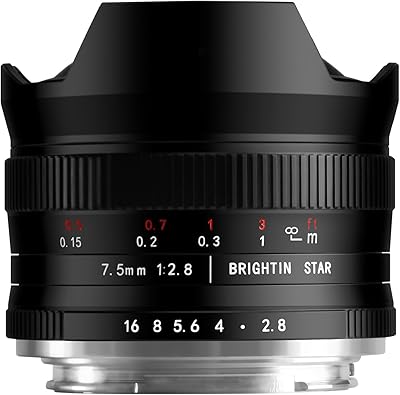
Brightin Star 7.5mm F2.8 III Fisheye Lens
75%
78%
Image Sharpness
88%
Value for Money
71%
Low-Light & Astrophotography Performance
82%
Build Quality & Construction
61%
Manual Focus Usability
More
Canon RF 50mm F1.8 STM Lens
74%
83%
Image Sharpness
78%
Bokeh Quality
76%
Autofocus Speed & Accuracy
81%
Low-Light Performance
61%
Build Quality & Durability
More
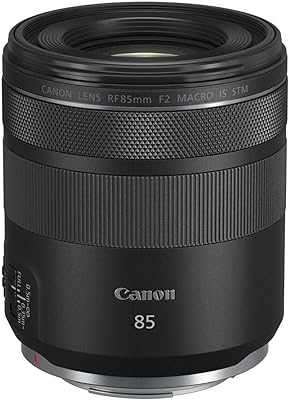
Canon RF 85mm F2 Macro Lens
82%
93%
Image Sharpness
89%
Bokeh Quality
61%
Autofocus Speed
91%
Image Stabilization
74%
Macro Capability
More
Canon RF 28-70mm F2.8 IS STM Lens
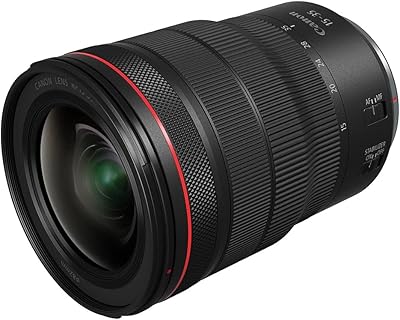
81%
91%
Image Sharpness
67%
Autofocus Performance
88%
Build Quality & Durability
76%
Image Stabilization
94%
Size & Portability
More
Canon RF 15-35mm F2.8 L IS Lens
85%
96%
Optical Sharpness
93%
Image Stabilization
91%
Autofocus Speed & Accuracy
94%
Build Quality & Weather Sealing
71%
Value for Money
More
7artisans 7.5mm f2.8 Mark II Fisheye Lens for Canon RF
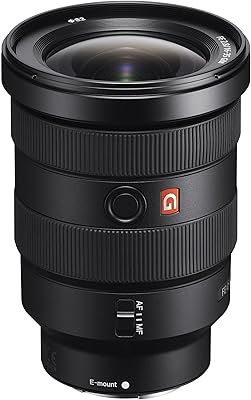
85%
88%
Image Quality
92%
Build Quality
65%
Ease of Use (Manual Focus)
90%
Portability
85%
Low-Light Performance
More
Sony FE 16-35mm F2.8 GM Zoom Lens
82%
94%
Optical Sharpness
91%
Aperture Consistency
89%
Autofocus Performance
88%
Build Quality & Weather Sealing
86%
Distortion Control
More

FAQ

It works on both. The RF mount is the same across Canon's full mirrorless lineup, so APS-C bodies like the R50 and R10 are fully compatible. On those cameras, the field of view narrows to a roughly 45mm equivalent, which actually makes it feel more like a classic everyday focal length than a wide-angle.

The STM motor is designed for smooth, continuous focusing rather than rapid burst tracking. For walking subjects, street scenes, and video, it performs reliably. For fast-moving sports or wildlife, you would be better served by a lens with a USM motor — this compact prime is not optimized for that kind of work.

No, a lens hood is not included and must be purchased separately. Given that wide-angle lenses are particularly vulnerable to stray light hitting the front element, picking up a compatible hood is worth considering, especially if you shoot outdoors regularly.

F2.8 is a reasonable aperture for indoor shooting in decent ambient light, but it is not exceptional. You will likely need to push your ISO in darker environments, and the lack of image stabilization means you need to be mindful of your shutter speed when shooting handheld. It handles well-lit interiors, restaurants, and evening street scenes, but very dim venues will push its limits.

There is no weather sealing on this lens, which is a genuine consideration for outdoor use. Light drizzle may be fine in practice, but Canon makes no weather-resistance claims for it. If you regularly shoot in wet or dusty conditions, you should look at sealed alternatives or take protective measures.

That is entirely normal. Canon kept the build lightweight and affordable by using a plastic barrel construction, and many buyers notice this immediately coming from metal-built lenses. It is not a sign of a defective unit — it is a deliberate design trade-off to achieve the slim, lightweight profile. Functionally it holds up fine for everyday use.

At F2.8 the corners soften noticeably, which can be a real issue for architecture where straight lines and edge detail matter. Stopping down to F5.6 or F8 improves corner performance meaningfully. If architectural work is your primary use case, this trade-off is worth factoring in seriously before buying.

The RF 28mm F2.8 is generally considered an optical step forward from the older EF version, with better coating and more modern element design. Using a native RF lens also means you avoid any potential autofocus speed or communication limitations that can come with adapted glass. The pancake form factor is also a major practical advantage over an adapted EF lens, which adds noticeable depth to the overall kit.

Yes, and it is actually a strong pairing for that setup. The STM motor is quiet enough that it will not bleed into on-camera microphone recordings during autofocus pulls, which is a common problem with noisier focus systems. Many video creators use this compact prime specifically because it keeps the rig light while delivering smooth, usable AF.

28mm sits in a sweet spot that many street photographers genuinely love. It is wide enough to capture context and environment, but not so extreme that it distorts faces noticeably if you get close to your subject. Photographers familiar with 35mm may need a short adjustment period, but many find 28mm on a full-frame body feels natural and versatile for urban shooting.

Where to Buy