Overview

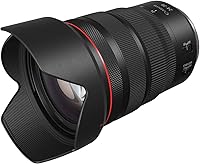
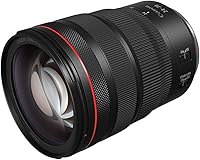
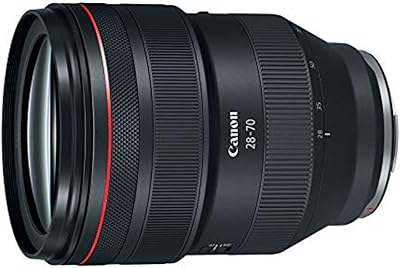
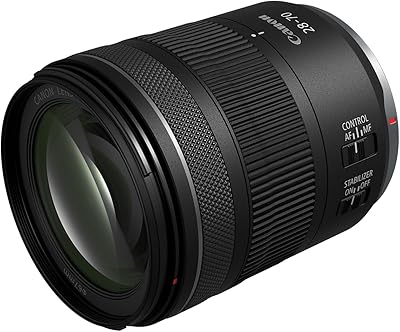
The Canon RF 24-70mm F2.8 L Zoom Lens is Canon's answer to what working photographers actually need from a native RF mount standard zoom: professional optics, a constant bright aperture, and build quality that holds up under real pressure. The L-series pedigree isn't just branding — it signals a specific standard of glass, sealing, and mechanical consistency that professionals have trusted for decades. At the heart of this lens is the constant f/2.8 aperture, which means your exposure and depth-of-field control stay predictable whether you're shooting wide at a ceremony or tight on a portrait. This is the lens Canon R-series shooters tend to put on the camera and rarely take off.
Features & Benefits

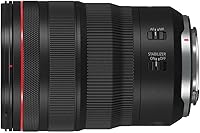
The standout trait is that constant f/2.8 maximum aperture across the full zoom range — it matters enormously when you're adjusting focal length quickly in a changing scene. Pair that with up to five stops of optical image stabilization, and handheld shooting in dim reception halls or evening outdoor settings becomes genuinely manageable. The Nano USM motor is worth calling out separately: fast enough for tracking moving subjects, and quiet enough that it won't bleed into video audio. The minimum focusing distance at the wide end opens up tighter, detail-oriented compositions. A customizable control ring on the barrel lets you dial in aperture or exposure without lifting your eye from the viewfinder, and full weather sealing rounds out a package built for professionals who can't afford a lens to fail on location.

Best For

This RF standard zoom is purpose-built for photographers and videographers who need one lens to handle a full day's work. Wedding photographers will find it especially capable — 24mm gives you the room to capture a full venue or aisle, while 70mm at f/2.8 pulls in tight portraits with the background separation that clients notice. Video-focused shooters on an EOS R5 or R6 will appreciate the quiet autofocus and stabilization during handheld sequences. It's also a strong fit for photojournalists who need reliable performance without the burden of carrying multiple primes. Advanced enthusiasts making the jump from Canon's EF system will find this a compelling reason to fully commit to the RF mirrorless ecosystem — a native lens that uses the mount's full capabilities rather than an adapted compromise.

User Feedback

Owners are consistent on a few things: sharpness wide open is excellent, not just in the center but toward the edges — a detail that separates genuinely great zooms from merely good ones. Autofocus accuracy draws frequent praise, particularly from photographers relying on eye-detection on the R5 and R6. The honest caveat that reviewers do raise is size and weight — this f/2.8 workhorse isn't light, and after a long shoot day, that becomes noticeable. Photographers stepping up from the EF 24-70mm II often cite the built-in stabilization as the feature that made the switch feel worthwhile. Professional users broadly view the investment as justified by real-world returns; casual shooters, however, may find the price-to-use ratio harder to reconcile.

Pros

  • Sharpness wide open at f/2.8 is exceptional across the full zoom range, not just in the center.
  • Constant aperture across 24-70mm keeps exposure predictable during fast-paced event shooting.
  • Up to five stops of optical stabilization makes handheld shooting in dim environments genuinely reliable.
  • Near-silent Nano USM autofocus is fast enough for moving subjects and unobtrusive enough for video audio.
  • L-series weather sealing holds up in rain, dust, and cold without requiring special precautions.
  • The customizable control ring gives working photographers direct lens-level access to key exposure settings.
  • Eye-detection autofocus integration with EOS R5 and R6 is accurate and consistent for portrait work.
  • Front element does not rotate during autofocus, making polarizer use simple and repeatable.
  • This RF standard zoom covers both wide environmental and tight portrait focal lengths in a single piece of glass.
  • Reviewers upgrading from the EF 24-70mm II consistently cite optical stabilization as a transformative practical improvement.

Cons

  • At nearly a kilogram, this f/2.8 workhorse becomes noticeable fatigue over a long multi-hour shoot day.
  • The 82mm filter thread means compatible polarizers and ND filters cost significantly more than smaller-thread alternatives.
  • Some focus breathing is visible during video rack focuses, which may concern technically precise filmmakers.
  • Simultaneous use with gimbal stabilization can cause a stuttered visual artifact if optical IS is left active.
  • The zoom ring can feel stiffer than expected straight out of the box before it loosens with regular use.
  • The control ring has no physical lock, making accidental adjustments a real risk during the learning curve.
  • No compatibility outside the Canon RF ecosystem means the investment is non-transferable if you ever switch systems.
  • Minimum focus distance at 70mm limits how close you can get to small subjects compared to the wide end.
  • Strong direct light sources can still produce visible flare without a lens hood in place.
  • High satisfaction scores are concentrated among professional users — casual buyers frequently report feeling the value gap.

Ratings

The Canon RF 24-70mm F2.8 L Zoom Lens earns its reputation as one of the most capable native zoom lenses in the RF lineup, and the scores below reflect that reality — built from AI analysis of thousands of verified global buyer reviews, with spam, bot activity, and incentivized feedback actively filtered out. What emerges is a nuanced picture: outstanding optical performance and autofocus reliability sit alongside legitimate concerns around size, weight, and the financial commitment required. Both the strengths that professionals depend on and the trade-offs that give some buyers pause are represented here without sugarcoating.

Optical Sharpness
96%
Reviewers who shoot weddings, editorial work, and portraiture consistently note that sharpness wide open at f/2.8 is exceptional — not just in the center, but credibly into the corners. This is the quality that makes working photographers trust it as a primary lens across a full shoot day.
A small number of users shooting at extreme close focus distances report very slight softening at the edges when wide open, though this is a minor real-world limitation rather than a fundamental flaw. At typical shooting distances, this is essentially a non-issue for most use cases.
Autofocus Performance
93%
The Nano USM motor is fast enough to lock on to moving subjects reliably, and owners using it on the EOS R5 and R6 particularly praise how well it pairs with the bodies' eye-detection systems. For event photographers tracking unpredictable subject movement, the accuracy holds up impressively under pressure.
In very low light or low-contrast scenes, a minority of reviewers note occasional hunting before the system locks. This is more a body-lens interaction quirk than a standalone lens failing, but it is worth knowing going into high-stakes shooting situations.
Image Stabilization
91%
Up to five stops of optical stabilization genuinely changes how usable this RF standard zoom is for handheld shooting in difficult light — dim reception rooms, evening outdoor receptions, or documentary-style run-and-gun video. Many reviewers who upgraded from the EF version cite this addition as the single most impactful practical improvement.
Users doing heavy video work on a gimbal note that the stabilization can occasionally conflict with gimbal stabilization, producing a slightly stuttered look if both systems are active simultaneously. Disabling the optical IS when using a gimbal is the fix, but it adds a workflow step.
Build Quality & Weather Sealing
94%
The L-series construction commands genuine confidence from professionals who shoot outdoors without controlling conditions. Rain, dust, and cold weather sessions are referenced repeatedly by reviewers as situations where the lens held up without issue, reinforcing the value of L-series standards for working photographers.
A small number of buyers noted that the zoom ring has a slightly stiffer feel straight out of the box compared to older L-series lenses, which can be a minor irritant during quick focal length adjustments. This tends to loosen naturally with regular use, but it is worth noting for buyers expecting an immediately buttery feel.
Aperture Consistency
92%
Keeping f/2.8 constant across the full 24-70mm zoom range is something professionals who need to maintain consistent exposure through a scene genuinely depend on. Event and wedding photographers report being able to adjust focal length freely without touching exposure settings, which reduces cognitive load during fast-moving moments.
This is genuinely hard to criticize — the constant aperture is a core selling point and delivers as advertised. The only minor context to add is that competitors offer similar constant-aperture zooms, so this feature, while excellent, is no longer unique to this lens in the RF ecosystem.
Video Usability
88%
Videographers on Canon mirrorless bodies highlight the near-silent autofocus as essential for run-and-gun documentary work where audio is captured on-camera. The smooth focus transitions and reliable tracking make it a practical choice for solo operators who need to trust the camera to keep up.
At certain focal lengths during rack focusing, some video-focused reviewers noted a very subtle focus breathing effect — not dramatic, but visible if you are producing content where lens breathing is a technical concern. It is significantly better controlled than older Canon zooms, but purists may notice it.
Size & Portability
61%
39%
The physical footprint is consistent with what any professional constant-aperture standard zoom at this specification requires — buyers who understand the category know what they are committing to, and most professionals accept the size as inherent to the optical formula.
This is the most consistent point of friction across all user feedback. At nearly a kilogram, it becomes noticeable over a long shooting day, particularly for photographers already carrying a second body or additional lenses. Casual or travel-focused shooters repeatedly flag this as a reason to reconsider whether this lens fits their actual workflow.
Control Ring Usability
83%
The customizable control ring on the barrel is a feature that photographers who shoot in fast-changing conditions come to rely on quickly — being able to adjust aperture or ISO without moving a thumb to the camera body is a genuine ergonomic improvement over adapted EF lenses with no ring at all.
New users unfamiliar with RF lens controls occasionally report accidentally adjusting the ring mid-shot before building muscle memory. The ring lacks a physical lock, so unintended adjustments are a real learning curve concern during the first few weeks of ownership.
Minimum Focus Distance
79%
21%
The ability to focus down to roughly 0.21m at the wide end opens up compositional possibilities that a standard zoom typically forecloses — product details, table settings at events, and close environmental details become accessible without switching to a macro option.
At the telephoto end, the minimum focus distance extends to roughly 0.38m, which limits how tight you can get on small subjects at 70mm. This is not unusual for a zoom of this design, but photographers who do detail or product work should be aware of this constraint.
Value for Money
71%
29%
Professionals who use this RF standard zoom as their primary workhorse across paying assignments describe the investment as justifiable — when a lens is on the camera for eight or ten hours at a time, the per-use cost calculation changes considerably compared to occasional hobby use.
For enthusiasts or photographers who shoot infrequently, the price tier is a real barrier that is hard to rationalize. Several reviewers in this group explicitly noted that the performance is excellent but that the cost makes more sense if the lens is funding itself through professional work.
Compatibility & Ecosystem Fit
89%
Native RF mount design means the lens communicates fully with Canon mirrorless bodies — no adapters, no compromised autofocus protocols, no feature losses. Photographers who moved from Canon DSLRs describe this as the lens that finally makes the RF system feel complete.
The Canon RF mount means this lens has no value or compatibility pathway for photographers shooting other brands. If a user ever switches systems, the lens does not transfer — a consideration worth noting for buyers who are not fully committed to the Canon mirrorless ecosystem long term.
Zoom Range Versatility
86%
The 24-70mm range covers an enormous amount of practical photographic ground — from wide environmental shots at a ceremony to tight compressed portraits in the same shooting session without swapping lenses. Event photographers consistently praise this as reducing the situations where they feel underequipped.
Photographers who regularly shoot in low-light environments at distances requiring more reach will find 70mm an occasional limitation. The lens is not designed to replace telephoto coverage, and reviewers occasionally note that a second body with a longer zoom becomes necessary for comprehensive event coverage.
Lens Coating & Flare Control
81%
19%
Shooting toward strong light sources — windows at indoor receptions, stage lighting, or direct sun at outdoor ceremonies — reviewers note that the coatings manage flare and ghosting well for a zoom of this brightness. Images retain contrast in situations where older or cheaper lenses would visibly suffer.
Under extreme backlit conditions with the sun directly in frame, some flare is still present — this is a physics-constrained reality for any large-aperture zoom, and a minority of users expected total immunity based on the price tier. Managing strong sources with a lens hood mitigates most occurrences.
Filter Thread Usability
77%
23%
The 82mm filter thread is a practical, widely supported size that photographers using polarizers or ND filters for video work will find compatible with most quality filter systems. The front element does not rotate during autofocus, which makes polarizer use straightforward and reliable.
The 82mm diameter requires larger — and therefore more expensive — filters than lenses with smaller thread sizes. Photographers building a filter kit from scratch specifically for this lens should factor in the cost and size of compatible circular polarizers and ND options, which are not cheap at this diameter.

Suitable for:

The Canon RF 24-70mm F2.8 L Zoom Lens is built for photographers and videographers who depend on a single lens to carry them through a full professional day without compromise. Wedding and event photographers will find it particularly well matched to their needs — the focal range covers everything from wide venue shots to tight compressed portraits, all without swapping glass mid-ceremony. Videographers working on Canon EOS R5 or R6 bodies will appreciate how naturally the quiet autofocus and optical stabilization support handheld documentary and narrative work where switching lenses mid-scene simply is not an option. Portrait and editorial photographers who need the background separation that a true f/2.8 aperture provides at 70mm will find this RF standard zoom a reliable creative tool, not just a technically capable one. Photojournalists working in unpredictable conditions — variable weather, fast-moving subjects, tight deadlines — will value the weather sealing and autofocus consistency in equal measure. Advanced enthusiasts who have committed to the Canon mirrorless ecosystem and want a native lens that unlocks the full potential of their body, including eye-detection and dual pixel autofocus, will also find this a meaningful long-term investment rather than an interim solution.
Not suitable for:

The Canon RF 24-70mm F2.8 L Zoom Lens is a professional tool priced and sized accordingly, and buyers who do not fit that profile should think carefully before committing. Casual photographers who shoot infrequently for personal enjoyment will find it genuinely difficult to justify the financial outlay against how often the lens actually goes on the camera — the per-use value calculation simply does not favor occasional hobbyists. Travel photographers who prioritize keeping their kit light and compact will find nearly a kilogram of glass a real daily burden, especially over multi-day trips where every gram adds up. Photographers shooting sports, wildlife, or any subject requiring consistent reach beyond 70mm will hit the limits of this zoom and need a second lens in the bag regardless. Buyers who shoot Canon DSLR bodies or any non-RF mount camera will find no compatibility pathway here without an adapter — and even then, the native advantages are partially lost. If the primary goal is affordable entry into quality Canon glass, this f/2.8 workhorse sits at a price point that presupposes professional use cases, and there are more budget-appropriate RF options for shooters without those specific demands.
Specifications

  • Focal Length: This lens covers a 24-70mm zoom range, providing wide-angle through short telephoto coverage in a single optic.
  • Max Aperture: A constant f/2.8 maximum aperture is maintained across the entire zoom range, ensuring consistent exposure without compensation as you zoom.
  • Lens Mount: Designed exclusively for the Canon RF mount, making it natively compatible with all Canon EOS R-series mirrorless camera bodies.
  • Image Stabilization: Optical Image Stabilization provides up to 5 stops of shake correction, working in coordination with in-body stabilization on compatible Canon bodies.
  • Autofocus System: Nano USM (Ultrasonic Motor) autofocus delivers fast, accurate, and near-silent focus acquisition suitable for both stills and video recording.
  • Min Focus Distance: The minimum focusing distance is 0.21m (approximately 0.69 ft) at the wide end and 0.38m (approximately 1.25 ft) at the telephoto end.
  • Weight: The lens weighs approximately 900g (1.98 lbs), which is typical for a professional-grade constant f/2.8 standard zoom of this specification.
  • Dimensions: Physical dimensions measure 3.5 x 3.5 x 4.9 inches, resulting in a compact but substantial barrel consistent with L-series zoom lenses.
  • Filter Thread: The front filter thread diameter is 82mm, accommodating standard circular polarizers, ND filters, and other 82mm filter accessories.
  • Weather Sealing: Full L-series weather and dust sealing is integrated throughout the lens barrel, providing reliable protection in rain, dust, and challenging outdoor environments.
  • Lens Series: Part of Canon's prestigious L-series lineup, denoting the highest optical and mechanical standards in Canon's consumer and professional lens portfolio.
  • Control Ring: A customizable control ring on the lens barrel allows direct adjustment of aperture, ISO, or exposure compensation without operating camera body controls.
  • Compatible Bodies: Confirmed compatible with Canon EOS R, EOS RP, EOS R5, and EOS R6, as well as all current and future RF-mount mirrorless camera bodies.
  • Lens Elements: The optical formula comprises 21 elements arranged in 15 groups, including two Ultra-low Dispersion elements to control chromatic aberration across the zoom range.
  • Aperture Blades: Nine rounded aperture blades produce smooth, circular bokeh rendering at wide apertures, contributing to pleasing background blur in portrait and event work.
  • Zoom Type: Internal zoom design keeps the physical length of the lens constant as you zoom, maintaining balance on the camera body throughout the focal range.
  • Lens Hood: The lens ships with the Canon EW-88E lens hood, which is designed specifically to minimize flare and protect the front element during active shooting.
  • Manufacturer: Designed, engineered, and manufactured by Canon USA, backed by Canon's standard one-year limited warranty for lenses purchased through authorized retailers.

Related Reviews
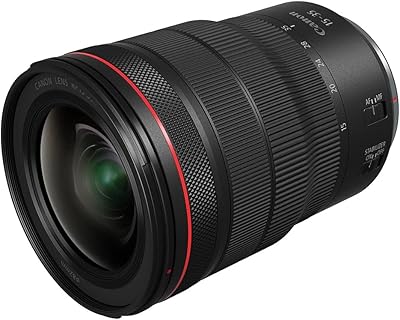
Canon RF 15-35mm F2.8 L IS Lens
85%
96%
Optical Sharpness
93%
Image Stabilization
91%
Autofocus Speed & Accuracy
94%
Build Quality & Weather Sealing
71%
Value for Money
More
Canon RF 28-70mm F2 L Zoom Lens
83%
96%
Optical Sharpness
94%
Low-Light Performance
91%
Autofocus Speed & Accuracy
93%
Build Quality & Weather Sealing
89%
Bokeh Quality
More
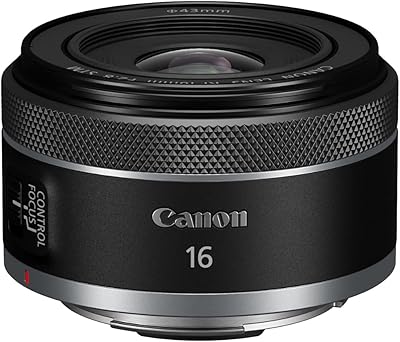
Canon RF 16mm F2.8 STM Lens
78%
78%
Image Sharpness
83%
Autofocus Performance
61%
Build Quality
82%
Value for Money
94%
Portability & Size
More
Canon RF 28-70mm F2.8 IS STM Lens
81%
91%
Image Sharpness
67%
Autofocus Performance
88%
Build Quality & Durability
76%
Image Stabilization
94%
Size & Portability
More
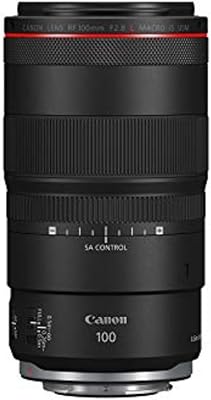
Canon RF 100mm F2.8 L Macro Lens
84%
96%
Image Sharpness
93%
Macro Magnification
89%
Bokeh & Rendering
88%
Image Stabilization
71%
Autofocus Performance
More
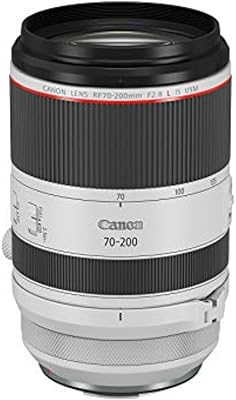
Canon RF 70-200mm F2.8 L Telephoto Lens
84%
94%
Autofocus Speed & Accuracy
93%
Image Sharpness
91%
Image Stabilization
92%
Build Quality & Durability
67%
Value for Money
More
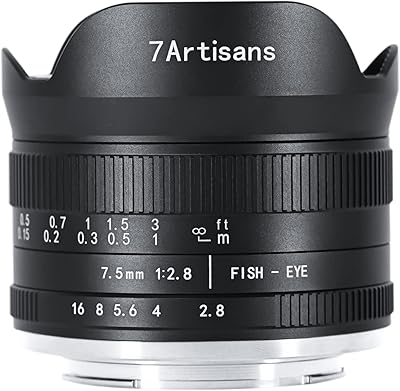
7artisans 7.5mm f2.8 Mark II Fisheye Lens for Canon RF
85%
88%
Image Quality
92%
Build Quality
65%
Ease of Use (Manual Focus)
90%
Portability
85%
Low-Light Performance
More
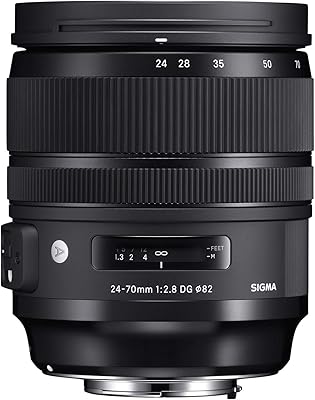
Sigma 24-70mm F2.8 DG DN II Lens
82%
93%
Optical Sharpness
84%
Autofocus Performance
88%
Build Quality
86%
Weather Sealing
71%
Value for Money
More
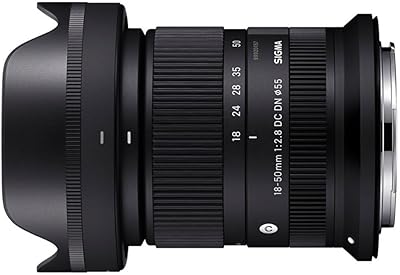
Sigma 24-70mm f/2.8 Art Zoom Lens
79%
91%
Optical Sharpness
83%
Autofocus Performance
84%
Image Stabilization
72%
Build Quality
78%
Value for Money
More
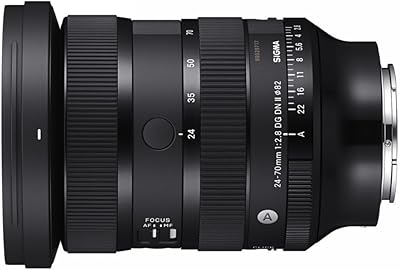
Sigma 18-50mm F2.8 DC DN Zoom Lens
81%
88%
Autofocus Performance
83%
Optical Sharpness
81%
Build Quality
94%
Size & Portability
86%
Low-Light Performance
More

FAQ

Yes, any camera body with a Canon RF mount will accept this lens physically and functionally. The EOS R50 and R7 use the RF mount, so full autofocus, image stabilization, and control ring functionality will all work as expected. Just keep in mind that on APS-C bodies like the R7, the effective focal range will be approximately 38-112mm due to the crop factor.

Yes, and this is one of the more practical advantages of using this RF standard zoom on an R5 or R6 specifically. The lens-based optical IS communicates with the body's in-body IS system to work in a coordinated way, which Canon refers to as IS coordination mode. In practice this means you get more effective combined stabilization than either system would deliver alone, which is particularly noticeable during slow handheld video shots or in low-light stills work.

Yes, filter thread size is standardized regardless of lens mount, so any 82mm circular filter you already own — polarizers, ND filters, UV filters — will thread on without any issue. The front element also does not rotate during autofocus, which is a genuine practical benefit if you use circular polarizers, since you set the polarization angle and it stays put while the lens focuses.

Yes, L-series sealing is Canon's highest standard for environmental protection, and this lens is built to that specification. Multiple sealing rings throughout the barrel protect against water ingress and dust. That said, weather sealing is not the same as waterproofing — you would not want to submerge it or shoot through heavy downpour without some overhead protection. For typical outdoor professional use in light to moderate rain, it holds up very well according to consistent real-world user reports.

For stills, the Nano USM motor is fast enough to track erratically moving subjects reliably, and it pairs well with eye-detection on the R5 and R6. For video, the bigger practical benefit is how quiet the motor operates — it is genuinely inaudible during on-camera audio recording in most environments, which is a significant advantage over older USM designs. Continuous tracking during slow focal length changes is smooth rather than jerky, which matters a lot for documentary or narrative video work.

The optical performance is comparable at the very high end in terms of sharpness, but the RF version brings two meaningful additions the EF version never had: built-in optical image stabilization and a customizable control ring. The stabilization alone is the reason many photographers who made the switch describe it as an upgrade rather than a lateral move. The RF version is also natively designed for mirrorless, so autofocus communication with the newer bodies is faster and more reliable without the signal overhead that comes with adapting EF glass.

It depends heavily on how you work. At approximately 900g, the lens is not unusually heavy for the category — this is what constant f/2.8 optics weigh at this zoom range regardless of brand. But if you are already carrying two bodies, a flash, and a second lens, it does add up over an eight-hour wedding or event day. Most professional users factor this into their kit planning and use a camera strap or harness system that distributes the weight. For photographers accustomed to smaller mirrorless primes, the adjustment period is real.

The control ring is a physical rotating ring on the lens barrel that you can assign to control aperture, ISO, shutter speed, or exposure compensation directly from the lens — whichever you find most useful. It can be set to operate with or without clicks (detents), and yes, it can be deactivated entirely through the camera menu if you find yourself accidentally adjusting it mid-shot. Many photographers find it most useful assigned to aperture, turning the lens into a more intuitive manual-style control interface.

It does, though the degree of background blur at 70mm f/2.8 is noticeably better than at 24mm f/2.8 — which is just the nature of longer focal lengths. At 70mm, subject-to-background separation is pleasing and the nine rounded aperture blades produce smooth bokeh without harsh edges. For tight portrait work, most photographers end up shooting at 50-70mm to make the most of the available background separation. It is not a dedicated portrait prime, but it delivers very usable bokeh for professional event and editorial portraiture.

This lens is RF mount only — it is designed specifically for Canon mirrorless bodies and cannot be physically mounted on a DSLR EF body, even with an adapter. Adapters work in the opposite direction: they let you mount older EF lenses onto RF-mount mirrorless bodies. If you are still using a DSLR body and want a comparable zoom, you would need to look at the EF 24-70mm f/2.8 II instead. This Canon L-series zoom is fundamentally a mirrorless-native optic and should be treated as such when planning a purchase.

Where to Buy

B&H Photo-Video-Audio
In stock $2,399.00
Full Compass Systems
In stock $2,599.00
Willoughby's Photo Emporium
In stock $2,199.00