Overview

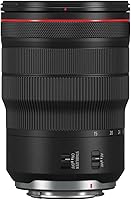
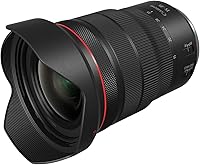
The Canon RF 15-35mm F2.8 L IS Lens is Canon's most capable wide-angle zoom built specifically for the RF mirrorless system, sitting firmly at the top of the L-series hierarchy. Since arriving in late 2019, it has become the default choice for RF shooters who refuse to compromise on optical quality. The glass formula — 16 elements across 12 groups — reflects the kind of engineering investment you expect at this price point. This isn't a lens you buy casually; it's a deliberate, long-term commitment to a system. Those who make that commitment consistently report it pays off in image quality that holds up under hard scrutiny.
Features & Benefits

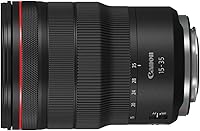
A constant f/2.8 aperture across the entire zoom range is the headline feature — it means you're not losing light when you pull back from 15mm to 35mm, which matters enormously in dimly lit venues or under fading golden-hour skies. The optical stabilization is genuinely impressive in practice; handheld wide-angle video stays controlled in ways that would otherwise require a gimbal. Nano USM autofocus locks on quietly and quickly, making this wide-angle zoom a real option for run-and-gun video work. The customizable control ring lets you dial in exposure adjustments on the fly, and the weather sealing means you're not reaching for a rain cover every time clouds roll in.

Best For

Landscape and architectural photographers will find the wide end genuinely useful — 15mm captures sweeping scenes without the extreme distortion you get from ultra-wide primes. Wedding and event videographers benefit from the quiet autofocus and stabilization combination, which keeps footage usable even during chaotic, fast-moving receptions. Documentary and photojournalist shooters working in low light will appreciate the bright aperture without needing to push ISO into uncomfortable territory. If you shoot real estate or interiors professionally, the focal range covers almost everything a single job demands. Canon EOS R users migrating from DSLR bodies will also find the RF 15-35mm a compelling reason to fully commit to the system.

User Feedback

Owners are largely satisfied, with corner sharpness at f/2.8 drawing consistent praise — a detail that separates genuinely good wide-angle lenses from mediocre ones. Handheld video footage is another area where real-world results win people over; reviewers upgrading from the EF 16-35mm frequently note the improved autofocus speed as a tangible, immediate difference. That said, this L-series lens is not light. At just under two pounds, it adds noticeable heft to an EOS R body, and frequent travelers have flagged this as a genuine consideration. A small number of buyers also cite the premium price point as a barrier, though the consensus is that optical performance justifies the investment for working photographers.

Pros

  • Optical sharpness across the frame holds up even wide open, which is rare for a zoom at this focal range.
  • The stabilization system makes handheld wide video genuinely usable without a gimbal in many real-world situations.
  • Nano USM autofocus is fast, accurate, and quiet enough for ceremony and live event work.
  • Weather sealing gives outdoor and field photographers confidence in conditions where unprotected glass would be a liability.
  • The constant f/2.8 aperture means light intake stays consistent as you zoom, which matters when exposure is time-sensitive.
  • A minimum focus distance under a foot opens up foreground compositional options most wide zooms cannot offer.
  • The customizable control ring speeds up exposure adjustments without interrupting the shooting position.
  • Photographers upgrading from Canon EF glass report a noticeable and immediate improvement in autofocus response.
  • The RF 15-35mm covers enough focal range to handle most wide-angle professional assignments without a second lens.
  • Flare resistance under strong backlit conditions is solid, keeping contrast intact in high-contrast natural light scenes.

Cons

  • At just under two pounds, the lens adds significant weight that accumulates quickly on long outdoor or travel shoots.
  • The focal range tops out at 35mm, requiring a second lens for any standard or portrait coverage.
  • Barrel distortion at the wide end requires post-processing correction when shooting raw without a lens profile applied.
  • The control ring is easy to bump accidentally during handling, which can lead to unintended setting changes mid-shoot.
  • Upgrading to this lens often requires a simultaneous investment in a compatible EOS R body, compounding the total cost.
  • Large physical dimensions make low-profile street or documentary work more conspicuous than smaller alternatives.
  • Vignetting wide open at 15mm is visible in raw files and needs correction before delivery in exacting commercial work.
  • Cold-weather shooters have reported occasional stabilization inconsistency during the first moments of operation.
  • The price tier makes this a difficult purchase to justify for photographers whose wide-angle needs are infrequent or casual.
  • Minor rolling shutter artifacts can appear during aggressive handheld panning in high-resolution video modes.

Ratings

The Canon RF 15-35mm F2.8 L IS Lens earns its reputation as one of the sharpest, most capable wide-angle zooms available for the EOS R system — and the scores below reflect exactly that, strengths and frustrations alike. These ratings were generated by AI after analyzing verified global buyer reviews, with spam, bot-generated, and incentivized submissions actively filtered out. The result is an honest picture of what working photographers and videographers actually experience with this L-series glass day in and day out.
Optical Sharpness
96%
Buyers are consistently impressed by how sharp this wide-angle zoom performs across the entire frame, even at the widest aperture. Landscape photographers in particular note that edge and corner detail holds up in ways that cheaper wide zooms simply cannot match, making large prints and high-resolution crops look clean and detailed.
A small number of users shooting extreme wide-angle architecture have detected very slight softness at the absolute corners when shooting fully open, though stopping down even a little resolves it almost entirely. This is a minor optical trade-off that most real-world photographers would never notice in practice.
Image Stabilization
93%
The stabilization system earns genuine praise from videographers and travel photographers who shoot handheld in challenging conditions. Users report being able to capture smooth, usable wide-angle footage without a gimbal, which significantly reduces the gear load for run-and-gun documentary and event work.
A handful of users working in very cold environments have noted occasional inconsistency in stabilization behavior during the first few seconds of operation. It is not a widespread complaint, but shooters in extreme climates may want to account for a short warm-up period before critical handheld shots.
Autofocus Speed & Accuracy
91%
The Nano USM motor consistently draws praise for locking onto subjects quickly and with minimal hunting, even in low-contrast or dimly lit scenes. Wedding photographers in particular highlight how the near-silent operation keeps focus pulls unobtrusive during ceremonies, where any mechanical noise would be disruptive.
In very low-light environments with subjects moving unpredictably, a small number of users report occasional hesitation before the lens confirms focus. This is not a chronic issue, but it is worth noting for photographers who routinely shoot fast-moving subjects in near-darkness without supplemental lighting.
Build Quality & Weather Sealing
94%
The L-series construction inspires confidence the moment you attach it to a body. Photographers shooting outdoors in rain, dust, and harsh field conditions consistently report that the sealing holds up without issues, and the overall barrel feel is solid without any flex or loose tolerances that cheaper glass sometimes exhibits.
The physical size of the lens means it draws attention in street or documentary contexts where a smaller profile would be preferred. While the build is undeniably premium, a few buyers note that the finish scuffs more visibly than expected after months of regular professional use.
Value for Money
71%
29%
For photographers who depend on wide-angle work as a core part of their business — architecture, landscape, weddings — the RF 15-35mm justifies its price tier through sheer optical performance and the elimination of the need for a second wide prime. Buying one excellent zoom instead of multiple lenses is a compelling argument at this level.
The asking price is a genuine barrier for part-time photographers or those just entering the Canon RF ecosystem. Several reviewers acknowledge the quality but note that the investment only makes practical sense if wide-angle shooting is a significant and recurring part of their workflow, not an occasional requirement.
Focal Range Versatility
88%
The 15–35mm range covers a meaningful spread of wide-angle territory, handling everything from sweeping environmental portraits at the longer end to dramatic ultra-wide interiors at 15mm. Real estate and interior photographers find they can complete most shoots without swapping lenses, which speeds up workflow considerably.
Photographers who also need a standard or short telephoto range will still need a second lens, as 35mm is the absolute limit of this zoom. It is a wide-angle specialist, not a walk-around lens, and buyers who overlook that distinction sometimes feel the range is restrictive in mixed-use scenarios.
Weight & Portability
62%
38%
The heft of this L-series lens reflects the amount of glass packed inside it, and photographers who keep it mounted on a dedicated body for professional assignments rarely complain about the weight in context. It balances well on larger EOS R bodies and does not cause noticeable front-heaviness during extended shoots.
For travel photographers packing light or hikers who count every gram, the weight is a real concern. Multiple reviewers specifically mention that carrying this wide-angle zoom on multi-day outdoor trips becomes fatiguing, and a few have switched to lighter alternatives precisely because of how it compounds body weight over long days.
Low-Light Performance
92%
The constant f/2.8 aperture means photographers do not lose a stop of light at longer focal lengths, which is a practical advantage when shooting under artificial or low ambient light. Event photographers working in dim reception halls consistently note being able to keep ISO lower than they could with slower zoom alternatives.
While the aperture performance is strong, some users note that wide open at 15mm in very high-contrast scenes, a small amount of vignetting becomes visible. It is correctable in post-processing and largely a non-issue for JPEG shooters with in-camera corrections enabled, but raw shooters should be aware of it.
Minimum Focus Distance
84%
The ability to focus at under a foot away from a subject opens up compositional options that typical wide-angle zooms cannot offer. Photographers shooting environmental still life, food in context, or close foreground elements in landscape compositions find this genuinely expands what the lens can do creatively.
While the minimum focus distance is impressive for a wide zoom, it does not replace a true macro lens for detail work. A handful of users purchased expecting near-macro performance and found the magnification falls short of what they needed for product or botanical photography.
Control Ring Usability
81%
19%
The customizable control ring is a practical addition that experienced RF system users appreciate for the ability to adjust exposure parameters without pulling the camera away from the eye. Videographers especially value smooth, clickless ring options for pulling focus or adjusting aperture during a live take.
New RF system users sometimes find the control ring easy to bump accidentally during handling, leading to unintended setting changes mid-shoot. It takes a short adaptation period to internalize how to grip the lens without inadvertently moving the ring, which a few reviewers flagged as a minor early frustration.
Distortion Control
83%
For an ultra-wide zoom starting at 15mm, geometric distortion is well controlled, and architectural photographers report needing only minor correction for straight-line subjects in post. With in-camera lens correction profiles active, the output is impressively clean straight out of the camera for wide interior shots.
Without applying a correction profile, barrel distortion at 15mm is noticeable and will require post-processing attention, especially for architecture where perfectly straight lines matter. Photographers shooting exclusively in JPEG with correction disabled may find the results less polished than expected at the wide end.
Video Performance
90%
Beyond the silent autofocus, this wide-angle zoom impresses videographers with smooth focus transitions and minimal breathing — the slight change in framing as focus shifts that plagues some lenses when pulling focus during a continuous shot. This makes it a natural fit for documentary and interview-style work.
At the absolute wide end, some users have detected minor rolling shutter artifacts when panning quickly with high-resolution video modes. It is a sensor-related behavior rather than a lens flaw, but it is worth flagging for videographers who favor aggressive wide handheld movement as part of their visual style.
Upgrade Experience from EF Glass
87%
Photographers migrating from the EF 16-35mm f/2.8 consistently describe the RF 15-35mm as a meaningful step forward rather than a lateral move. Autofocus response and stabilization improvements are noticeable immediately, and the extra millimeter at the wide end, while small on paper, makes a real compositional difference in tight interiors.
The transition requires either using an EF-to-RF adapter for existing bodies during the switch or committing to the upgrade cost of both a new body and this lens simultaneously. A few buyers felt the combined system investment was steeper than anticipated when upgrading from a mature DSLR kit.
Flare & Contrast Resistance
79%
21%
Shooting toward strong light sources — sunsets, stage lighting, large windows — the lens handles flare with composure that reflects the quality of the lens coatings. Photographers who frequently work with backlit subjects or dramatic natural light appreciate that contrast does not collapse in the way it can with older or budget glass.
Under very direct and intense artificial lighting at specific angles, some users have documented noticeable flare artifacts that required compositional adjustments to avoid. A lens hood helps significantly, but it is not always practical in tight shooting environments where the hood increases the physical profile further.

Suitable for:

The Canon RF 15-35mm F2.8 L IS Lens was built for photographers and videographers who depend on wide-angle work as a core part of their professional output, not as an occasional creative exercise. Landscape photographers who need edge-to-edge sharpness for large-format prints will find this wide-angle zoom delivers results that hold up under serious scrutiny. Wedding and event videographers benefit particularly from the combination of silent autofocus and effective stabilization, which together make handheld wide footage usable in real ceremony conditions without drawing attention or requiring additional stabilization gear. Architectural and interior photographers will appreciate how the focal range covers most of what a typical commercial shoot demands, reducing the need to carry additional glass. Photojournalists and documentary shooters who frequently work in mixed or unpredictable lighting will find the bright constant aperture a practical advantage that directly affects how they expose scenes rather than just a specification on paper. Canon EOS R system users who previously relied on the EF 16-35mm and are ready to fully commit to mirrorless will find this L-series lens a meaningful upgrade rather than a simple lateral swap.
Not suitable for:

The Canon RF 15-35mm F2.8 L IS Lens is a poor fit for buyers who need a versatile all-day walkaround lens, since the focal range caps at 35mm and leaves a significant gap before standard and portrait focal lengths begin. Photographers who travel light — backpackers, hiking photographers, and those covering long distances on foot — will feel the weight accumulate over time in a way that smaller primes or slower zoom alternatives simply do not. Buyers who only occasionally shoot wide-angle subjects will find it difficult to justify the investment when the lens sits idle for most of their work. This L-series lens also demands a Canon EOS R mount body exclusively, so photographers still shooting DSLR or considering a switch to another mirrorless system should look elsewhere entirely. Budget-conscious shooters entering wide-angle photography for the first time would be better served starting with a more accessible option and upgrading once their workflow genuinely demands what this lens specifically offers.
Specifications

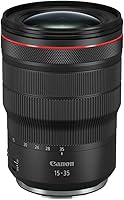
  • Focal Length: This lens covers a 15–35mm zoom range, offering wide-angle to mild wide coverage suitable for landscapes, interiors, and environmental work.
  • Maximum Aperture: The aperture is a constant f/2.8 throughout the entire zoom range, maintaining consistent light intake regardless of focal length used.
  • Optical Formula: The lens uses 16 elements arranged in 12 groups, incorporating L-series glass elements designed to control aberration and maximize edge-to-edge resolution.
  • Image Stabilization: Optical image stabilization provides up to 5 stops of shake compensation, reducing motion blur during handheld shooting in low-light or slow-shutter scenarios.
  • Autofocus System: Nano USM (Ultrasonic Motor) technology drives autofocus, delivering fast and near-silent focus acquisition suitable for both still photography and video recording.
  • Min. Focus Distance: The minimum focusing distance is 0.28m (approximately 0.92 ft), allowing photographers to move close to foreground subjects while retaining the wide-angle field of view.
  • Lens Mount: The lens uses the Canon RF mount and is exclusively compatible with Canon EOS R series mirrorless camera bodies.
  • Control Ring: A customizable control ring on the lens barrel allows direct assignment of exposure parameters such as aperture, ISO, or exposure compensation for quick in-shooting adjustments.
  • Weather Sealing: The lens barrel features dust- and moisture-resistant sealing consistent with Canon L-series construction standards, suitable for professional use in outdoor and demanding environments.
  • Weight: The lens weighs approximately 1.85 pounds (around 840g), which is notably substantial and should be factored into kit planning for travel or handheld-intensive shoots.
  • Dimensions: Physical dimensions measure 3.5 × 3.5 × 5 inches, making it a full-sized professional zoom that pairs best with mid-to-large EOS R system bodies.
  • Filter Thread: The lens accepts 82mm front filters, a common professional size that is compatible with a wide range of circular polarizers, ND filters, and protective glass options.
  • Lens Series: This optic belongs to Canon's L-series lineup, Canon's designation for professional-grade lenses engineered to meet rigorous optical and mechanical performance standards.
  • Aperture Blades: The lens features 9 rounded aperture blades, which contribute to smooth, circular out-of-focus highlights (bokeh) when shooting at wide apertures.
  • Manufacturer: Designed and manufactured by Canon USA, with the product first made available to the market in August 2019.
  • Model Number: The official Canon model number for this lens is 3682C002, used for warranty registration, service requests, and parts identification.
  • Zoom Type: This is an internal zoom design, meaning the physical barrel length does not extend outward during focal length adjustments, contributing to weather sealing integrity.
  • Market Ranking: The lens holds a Best Sellers Rank of #73 in the SLR Camera Lenses category on Amazon, reflecting sustained commercial demand since its launch.

Related Reviews
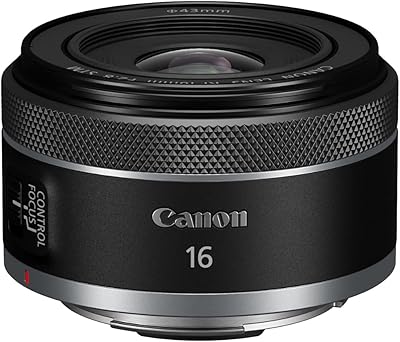
Canon RF 16mm F2.8 STM Lens
78%
78%
Image Sharpness
83%
Autofocus Performance
61%
Build Quality
82%
Value for Money
94%
Portability & Size
More
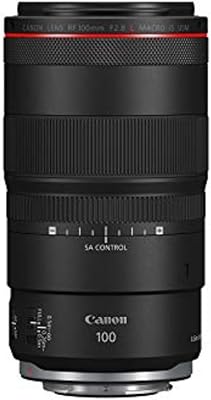
Canon RF 100mm F2.8 L Macro Lens
84%
96%
Image Sharpness
93%
Macro Magnification
89%
Bokeh & Rendering
88%
Image Stabilization
71%
Autofocus Performance
More
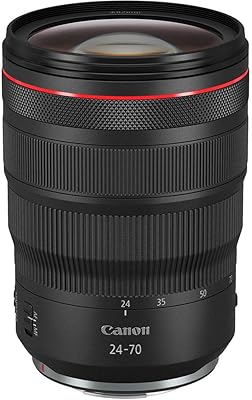
Canon RF 24-70mm F2.8 L Zoom Lens
84%
96%
Optical Sharpness
93%
Autofocus Performance
91%
Image Stabilization
94%
Build Quality & Weather Sealing
92%
Aperture Consistency
More
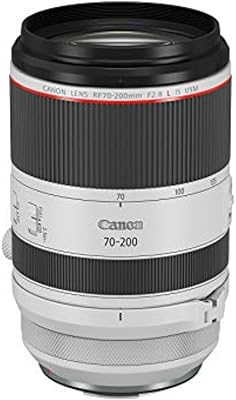
Canon RF 70-200mm F2.8 L Telephoto Lens
84%
94%
Autofocus Speed & Accuracy
93%
Image Sharpness
91%
Image Stabilization
92%
Build Quality & Durability
67%
Value for Money
More
7artisans 7.5mm f2.8 Mark II Fisheye Lens for Canon RF
85%
88%
Image Quality
92%
Build Quality
65%
Ease of Use (Manual Focus)
90%
Portability
85%
Low-Light Performance
More
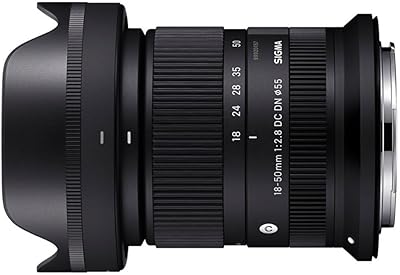
Sigma 18-50mm F2.8 DC DN Zoom Lens
81%
88%
Autofocus Performance
83%
Optical Sharpness
81%
Build Quality
94%
Size & Portability
86%
Low-Light Performance
More
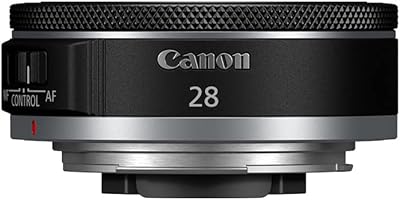
Canon RF 28mm F2.8 STM Wide-Angle Lens
79%
96%
Portability & Form Factor
78%
Image Sharpness
82%
Autofocus Performance
91%
Video Usability
58%
Build Quality
More
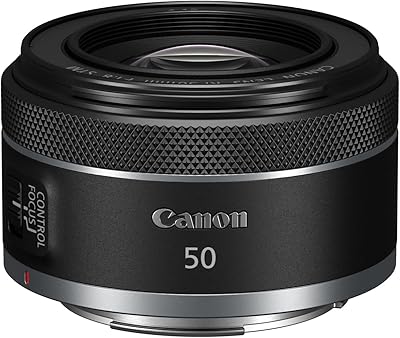
Canon RF 50mm F1.8 STM Lens
74%
83%
Image Sharpness
78%
Bokeh Quality
76%
Autofocus Speed & Accuracy
81%
Low-Light Performance
61%
Build Quality & Durability
More
Canon RF 14-35mm F4 L IS Lens
82%
93%
Optical Sharpness
91%
Autofocus Performance
89%
Build Quality
86%
Image Stabilization
67%
Distortion Control
More
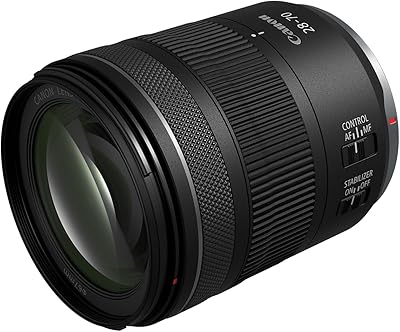
Canon RF 28-70mm F2.8 IS STM Lens
81%
91%
Image Sharpness
67%
Autofocus Performance
88%
Build Quality & Durability
76%
Image Stabilization
94%
Size & Portability
More

FAQ

Yes, the RF mount is consistent across the EOS R lineup, so it fits the R5, R6, R3, R7, R10, and other EOS R series bodies without any adapter. You get full electronic communication including autofocus, stabilization, and control ring functionality on all compatible bodies.

No — this lens uses the RF mount and cannot be adapted to fit EF or EF-S mount DSLR bodies. Adapters only work in the other direction: EF lenses can be mounted on RF bodies using Canon's EF-EOS R adapter, not the reverse.

It performs very well in practice. Most videographers using this wide-angle zoom handheld for documentary or event work report smooth, usable footage without needing a gimbal for moderate movement. That said, for very active or fast-moving handheld work, a gimbal still helps — the stabilization is not a substitute for deliberate movement control.

That depends on how you travel. At just under two pounds, it is not a light lens by any measure, and paired with an EOS R body you are carrying a fairly substantial kit. Photographers doing city trips or car-based travel rarely complain about it, but those hiking multi-day routes or minimizing bag weight consistently flag the weight as a real consideration worth thinking through before purchasing.

Noticeably faster and quieter. The Nano USM motor in the RF version responds more quickly in low-contrast scenes and produces far less noise during operation, which matters if you are shooting video or working in quiet environments like ceremonies. Photographers who have used both consistently describe the RF autofocus as a meaningful real-world improvement, not just a marginal one.

Yes, the front element accepts 82mm threaded filters, so circular polarizers, neutral density filters, and protective glass all mount directly without any adapter. Just make sure you are buying 82mm specifically — it is a common professional size but not universal across all wide-angle lenses.

There is some barrel distortion at the wide end, which is expected at 15mm for any rectilinear zoom. With Canon's lens correction profile applied — either in-camera for JPEGs or through software like Lightroom for raw files — the distortion corrects cleanly. Architectural photographers shooting raw should make sure to apply the profile before delivering work where straight lines are critical.

The control ring is a physical ring on the lens barrel that you can assign to control a specific camera function — aperture, ISO, exposure compensation, and others depending on the body. Whether it is useful really depends on your shooting style. Videographers and photographers who like making quick adjustments without reaching for body controls tend to find it genuinely practical once it becomes muscle memory. Others barely touch it.

Better than most wide-angle zooms at this price tier. The lens coatings do a solid job of maintaining contrast and suppressing flare under strong backlit conditions like sunsets or large windows. That said, at very specific angles with the sun near the corner of the frame, you can get flare artifacts. A lens hood helps reduce this significantly in most practical situations.

It is one of the better options available for EOS R shooters doing astrophotography. The f/2.8 aperture lets in a substantial amount of light, and the 15mm end gives you a wide enough field of view to capture large sections of the night sky in a single frame. Some photographers note slight coma on stars in the extreme corners wide open, which is fairly typical for ultra-wide zooms — stopping down marginally improves it if pinpoint star rendering across the full frame is a priority.

Where to Buy

Newegg.com
In stock $2,069.95
B&H Photo-Video-Audio
In stock $2,299.00
Full Compass Systems
In stock $2,599.00
Willoughby's Photo Emporium
In stock $1,895.00
Camera Wholesalers
In stock $2,299.00