Overview

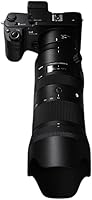
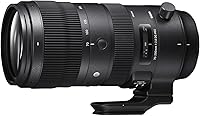
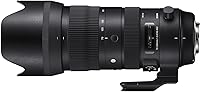
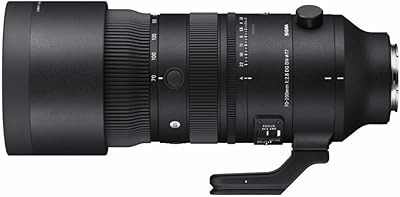
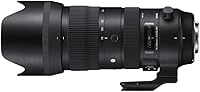
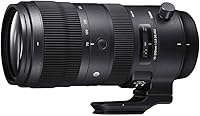
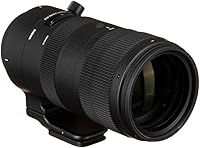
The Sigma 70-200mm F2.8 Sports DG OS HSM Telephoto Lens sits firmly in the professional tier of third-party telephoto zooms, offering Canon shooters a compelling alternative to brand-name options without the eye-watering price premium. Sigma's Sports line has a well-earned reputation for being built to handle real working conditions — not just studio sessions. The magnesium alloy barrel feels reassuringly solid in hand, and the dust- and splash-proof sealing means you're not reaching for a rain cover every time clouds roll in. At just under four pounds, it is not a lightweight choice, but it sits broadly in line with rivals at this performance level.
Features & Benefits

What separates the 70-200 Sports optically is its combination of nine FLD and one SLD low-dispersion glass elements — a configuration that keeps chromatic aberration tightly controlled even wide open. In practice, this means sharp, high-contrast images across the entire frame at F2.8, not just in the center. The optical stabilization handles handheld shooting confidently at longer focal lengths, and the HSM autofocus is quiet and fast enough to track athletes or birds in flight without hesitation. The 11-blade diaphragm produces smooth background blur that portrait photographers will genuinely appreciate, while the Arca Swiss-compatible tripod collar saves you from sourcing a separate adapter.

Best For

This fast zoom lens is best suited to photographers who need consistent performance in unpredictable, fast-moving situations. Sports and wildlife shooters will find the autofocus responsive enough to stay locked on erratic subjects, while the weather sealing provides real peace of mind outdoors. Portrait and event photographers benefit from the wide aperture and clean background rendering. Canon DSLR users who have been eyeing an L-series telephoto but cannot justify the cost will find this Sigma telephoto a serious contender — both optically and mechanically. It is also a natural match for anyone who regularly shoots from a tripod or monopod, thanks to the well-designed collar included in the box.

User Feedback

Owners of the 70-200 Sports consistently highlight autofocus reliability as the standout strength, particularly in continuous shooting mode where keepers-per-burst rates are notably high. Image sharpness wide open at F2.8 earns frequent praise, though some users note a modest gain when stopping down to F4. The most common criticism centers on weight and bulk — after a full day shooting handheld, fatigue becomes a real consideration. A handful of owners report that stabilization works well for stationary subjects but can feel less confident when panning fast action. Across the board, comparisons to the Canon L-series equivalent land firmly in this Sigma telephoto's favor on value for money, and the built-in Arca Swiss clamp gets repeated mentions as a genuinely practical detail.

Pros

  • Autofocus tracks fast, erratic subjects reliably — a genuine strength in real burst shooting conditions.
  • Weather sealing holds up in rain, dust, and humidity without any compromise to image quality.
  • Optical sharpness wide open at F2.8 is exceptional at the center and strong across the frame.
  • The 11-blade diaphragm produces smooth, natural bokeh that portrait photographers will actually notice in finished images.
  • Magnesium alloy construction feels durable and professional without the hollow flex of cheaper telephoto alternatives.
  • The built-in Arca Swiss-compatible tripod collar removes the need for a separate mounting plate entirely.
  • For Canon DSLR users, the value-to-performance ratio over comparable first-party glass is hard to ignore.
  • Chromatic aberration is well-controlled in typical shooting conditions, requiring minimal correction in post.
  • The HSM motor is quiet enough to use at ceremonies, wildlife encounters, and other noise-sensitive environments.

Cons

  • At nearly four pounds, handheld fatigue becomes a real issue during full-day shoots or long field sessions.
  • Optical stabilization underperforms when panning fast action, occasionally adding blur rather than reducing it.
  • Corner sharpness at F2.8 noticeably improves only after stopping down, which matters for technical shooting disciplines.
  • The USB dock needed for firmware updates is sold separately, leaving some buyers on outdated autofocus behavior out of the box.
  • Flare and ghosting control lags behind top-tier first-party options when shooting directly into or near bright light sources.
  • Autofocus noise is audible through on-camera microphones, limiting usefulness for hybrid photo-video shooters.
  • Minimum focus distance restricts versatility for tighter detail work or smaller wildlife subjects.
  • Some users reported mild onion-ring bokeh artifacts in specular highlights under specific background conditions.
  • Size and bulk demand additional investment in support gear — quality straps, monopods, or bags — to use comfortably.
  • Occasional autofocus inconsistencies on certain Canon bodies were reported before firmware updates were applied.

Ratings

The scores below were generated by AI after analyzing thousands of verified owner reviews for the Sigma 70-200mm F2.8 Sports DG OS HSM Telephoto Lens from global sources, with spam, bot activity, and incentivized feedback actively filtered out. This fast zoom lens draws a passionate and experienced user base, which means the feedback is detailed, technically grounded, and refreshingly direct. Both the genuine strengths and the real-world frustrations are reflected transparently in every category score.
Autofocus Speed & Accuracy
91%
Photographers shooting sideline sports or wildlife in the field consistently report that the HSM motor locks on fast and rarely hunts, even in moderate contrast conditions. Burst sequences of athletes mid-stride or birds banking in flight yield an impressive hit rate that rivals what many expected only from first-party lenses.
A small segment of users noted occasional hesitation when transitioning from very close to very distant subjects in a single shot. In low-contrast or low-light scenes — dim indoor gymnasiums, for example — the system slows perceptibly compared to ideal outdoor conditions.
Optical Sharpness
88%
The combination of FLD and SLD glass pays off visibly: center sharpness wide open at F2.8 is exceptional, and corner performance holds up far better than many expect from a third-party telephoto at this aperture. Portrait shooters love how the subject snaps cleanly against a soft background.
Some technically minded users who pixel-peep full-resolution files note the corners are not quite on par with the center until the lens is stopped down to around F4 or F5.6. This is unlikely to matter in most real-world use cases, but for landscape or architecture shooters it is a fair caveat.
Build Quality & Durability
93%
The magnesium alloy barrel feels immediately premium — this is not a lens that rattles or flexes when mounted on a heavy body. Owners who have taken it through rain, dust storms at outdoor events, and humid coastal shoots report zero weather-related issues even after extended use.
At nearly four pounds, the physical robustness comes at a cost in portability. A few users also noted that the focus distance window and some external markings showed wear after heavy field use, which is a minor cosmetic concern for a lens at this price tier.
Bokeh & Background Rendering
89%
The 11-blade rounded diaphragm is one of the standout features for portrait and event photographers. Background elements dissolve into smooth, circular blobs rather than harsh geometric shapes, and the transition from sharp subject to out-of-focus background is gradual and natural-looking.
A handful of portrait specialists observed mild onion-ring bokeh in certain specular highlight situations — bright lights or reflective surfaces in the background. It is not common, but it surfaces in controlled tests and is worth knowing about if perfectly smooth bokeh under all conditions is a priority.
Optical Stabilization (OS)
78%
22%
For static or slowly moving subjects, the OS system delivers reliably sharp handheld frames at focal lengths where camera shake would normally be a problem. Travel and event photographers who often cannot use a tripod appreciate the added confidence when shooting in dim reception halls or late-afternoon outdoor settings.
Several users found OS performance less convincing when panning fast-moving subjects, reporting that the system occasionally introduced subtle blur rather than compensating for it. A minority of owners also noted that the OS produces a faint mechanical hum that is occasionally audible when shooting video.
Value for Money
86%
Across the board, owners who compared this Sigma telephoto directly to its Canon L-series counterpart concluded that the optical and build quality gap simply does not justify paying considerably more for the first-party option. For professionals or serious enthusiasts who need pro-level results without a pro-level budget, the math is hard to argue with.
At its price point, this is still a significant investment, and some buyers on a tighter budget expressed mild disappointment that the overall package — especially the size and weight — demands additional accessories like a quality strap or support system to use comfortably over a full shoot day.
Weight & Handling
63%
37%
Users who regularly shoot from a monopod or tripod report that the balance feels natural and the controls are well-positioned for quick adjustments. The physical heft also contributes to a perception of stability when shooting from a supported position, reducing vibration at long focal lengths.
Handheld use over a full event or wildlife session is the most common complaint across all reviews. At just under four pounds, fatigue sets in after an hour or two of continuous handheld shooting, and users without a strong supporting hand technique reported more missed shots late in the day than early on.
Tripod Collar & Mounting
84%
The built-in Arca Swiss compatible clamp is one of those practical details that existing owners rave about after the fact. Being able to drop the lens directly onto an Arca-style ball head without a separate adapter plate is a small but genuinely appreciated convenience, especially when switching between handheld and supported shooting frequently.
Some users who prefer non-Arca plate systems found the integrated clamp less useful and noted the collar rotation can feel slightly stiff when first broken in. The 90-degree click stops work well for most orientations, but photographers who prefer finer incremental rotation occasionally found themselves between positions.
Chromatic Aberration Control
82%
18%
In practical shooting conditions — backlit subjects, high-contrast edges, bright skies behind foliage — chromatic aberration is well controlled and rarely visible without pixel-level inspection. The FLD glass earns its place in the optical formula, and most users processing raw files need minimal CA correction in post.
At the extreme edges of the frame in high-contrast scenes, some residual lateral chromatic aberration is present and occasionally requires a quick correction pass in Lightroom or Capture One. It is not a dealbreaker, but photographers shooting high-contrast architectural or landscape work under harsh light will notice it.
Autofocus Noise
87%
The HSM motor is genuinely quiet during still photography, which matters when shooting wildlife without spooking subjects or working near audio-sensitive environments like wedding ceremonies or theater performances. Most users described the autofocus sound as a faint mechanical whisper rather than a noticeable mechanical grind.
When shooting video, the AF noise is more apparent through on-camera microphones than many videographers would prefer. This is a lens built primarily for stills, and users who pressed it into hybrid photo-video roles on Canon DSLRs often felt the audible motor activity was a limiting factor.
Flare & Ghosting Resistance
74%
26%
Under typical shooting conditions — including backlit portraits and outdoor sports with the sun partially in frame — flare is reasonably well managed. The lens coating handles most common scenarios without the type of dramatic contrast loss that plagued older Sigma telephoto designs.
Shooting directly into or near a bright light source reveals that flare resistance is not quite at the level of Canon or Nikon's top-tier telephoto coatings. Some users reported noticeable ghosting artifacts when the sun was within or just outside the frame, which required either reframing or removal in post-processing.
Compatibility & Firmware Updates
77%
23%
Canon EF and EF-S mount compatibility is broad and reliable across Canon DSLR bodies tested by owners. Users who updated the lens firmware via Sigma's USB dock reported noticeable autofocus improvements, and the dock itself is praised as a genuinely useful add-on for fine-tuning focus calibration per body.
The USB dock is sold separately, which means out-of-the-box firmware may not reflect the latest autofocus improvements on some bodies. A subset of users — particularly those on older or less common Canon bodies — noted minor autofocus inconsistencies that were resolved only after a firmware update they were initially unaware of.
Minimum Focus Distance & Versatility
71%
29%
The 70-200mm range covers a practical span of shooting scenarios, from compressed environmental portraits at the wide end to tight wildlife isolations at 200mm. Users who shoot a wide variety of subjects — from sports to weddings to nature — appreciated not needing to switch lenses for very different subject distances.
The minimum focus distance is not particularly close for a lens in this class, which limits its usefulness for subjects like smaller wildlife or detail shots that require working in tight. Photographers who expected macro-adjacent capability at the 70mm end were occasionally disappointed when the lens could not get close enough.
Weather Sealing in Practice
88%
Real-world accounts from photographers working in Pacific Northwest rain, humid tropical environments, and dusty motorsport events consistently report that the sealing holds up without any degradation in performance or image quality. The lens inspires confidence in conditions where an unsealed alternative would have been left in the bag.
A small number of users pointed out that the sealing, while effective, requires a weather-sealed camera body to be fully effective — an obvious but sometimes overlooked point. There were isolated reports of dust ingress near the zoom ring after extended use in extremely dry, fine-particle environments.

Suitable for:

The Sigma 70-200mm F2.8 Sports DG OS HSM Telephoto Lens is built for photographers who put their gear through real demands and need reliable results every time. Sports and wildlife shooters who chase fast, unpredictable subjects will find the autofocus system responsive enough to keep up with athletes on a field or birds mid-flight. Outdoor and event professionals who frequently work in rain, humidity, or dusty conditions will appreciate the weather sealing as a genuine operational advantage rather than a marketing checkbox. Portrait photographers looking for smooth, naturally rendered background separation will get consistent results wide open at F2.8 without heavy post-processing work. Canon DSLR users who have weighed the cost of first-party L-series glass and found it hard to justify will find this fast zoom lens closes the performance gap significantly. Those who regularly work from a tripod or monopod will also benefit from the integrated Arca Swiss-compatible collar, which removes the friction of swapping mounting hardware between sessions.
Not suitable for:

The Sigma 70-200mm F2.8 Sports DG OS HSM Telephoto Lens is not the right choice for every photographer, and being honest about that matters. Anyone who prioritizes traveling light — hiking, backpacking, or navigating crowded events on foot — will find nearly four pounds of glass and metal a genuine physical burden over long periods. Casual or hobbyist shooters who do not regularly need F2.8 aperture performance or weather sealing may find the investment difficult to justify when smaller, lighter alternatives exist at a lower price point. Videographers who want a primary hybrid lens for DSLR video work should be aware that autofocus noise and the limitations of DSLR phase-detect video AF make this a less natural fit for that workflow. Photographers shooting primarily mirrorless systems will also need to factor in adapter compatibility and any autofocus performance trade-offs that come with it, as this lens was designed around native Canon EF mount operation. And if close-up work or detail shots of small subjects are a frequent requirement, the minimum focus distance will occasionally leave you unable to get as tight as the shot demands.
Specifications

  • Focal Length: This lens covers a 70–200mm zoom range, making it suitable for sports, wildlife, portraits, and event photography from a distance.
  • Maximum Aperture: A constant F2.8 maximum aperture is maintained throughout the entire zoom range, enabling consistent exposure and background separation at all focal lengths.
  • Lens Mount: Designed for Canon EF and EF-S mounts, providing broad compatibility across Canon's full-frame and APS-C DSLR camera lineup.
  • Optical Formula: The lens incorporates 9 FLD (F Low Dispersion) and 1 SLD (Special Low Dispersion) glass elements to reduce chromatic aberration and improve color accuracy.
  • Diaphragm: An 11-blade rounded diaphragm delivers smooth, circular bokeh in out-of-focus areas, particularly noticeable in portrait and isolating shots.
  • Autofocus System: Sigma's HSM (Hyper Sonic Motor) drives autofocus operation, offering fast and near-silent focus acquisition well suited to shooting moving subjects.
  • Image Stabilization: An optical stabilization (OS) system is built into the lens to help reduce the effects of camera shake during handheld shooting at longer focal lengths.
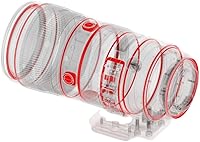
  • Weather Sealing: Dust- and splash-proof sealing is applied throughout the barrel construction, providing protection during outdoor use in rain or dusty environments.
  • Barrel Material: The outer barrel is constructed from magnesium alloy, contributing to a solid, professional feel while keeping weight within a competitive range for this lens class.
  • Dimensions: The lens measures 7.99 x 3.71 x 3.71 inches (approximately 203 x 94 x 94mm), making it a full-sized professional telephoto zoom.
  • Weight: The lens weighs 3.98 pounds (approximately 1,805g), which is broadly comparable to other F2.8 telephoto zooms in the professional category.
  • Tripod Collar: An integrated tripod collar features 90-degree click stops and an Arca Swiss-type clamp, allowing direct mounting to compatible ball heads without an additional plate.
  • Lens Type: This is a telephoto zoom lens designed primarily for still photography on Canon DSLR systems, covering subjects at medium to long distances.
  • Product Line: This lens belongs to Sigma's Sports line, which is engineered specifically for demanding professional use in challenging and variable environmental conditions.
  • Release Date: The lens was first made available in November 2018, and Sigma has confirmed it has not been discontinued as of the time of this review.
  • Filter Thread: The filter thread size is not officially specified in the standard product listing and should be confirmed directly with Sigma or the retailer before purchasing filters.
  • Firmware Updates: Lens firmware can be updated using Sigma's USB Dock accessory (sold separately), which also allows per-body autofocus fine-tuning and other customization options.
  • BSR Ranking: The lens holds a Best Sellers Rank of approximately #985 in the SLR Camera Lenses category, reflecting consistent and sustained demand among professionals and enthusiasts.

Related Reviews

Sigma 70-200mm F2.8 DG DN OS Lens
84%
88%
Autofocus Speed
92%
Optical Image Quality
91%
Build Quality
87%
Weather Sealing
89%
Autofocus Noise
More
Sigma 105mm F2.8 EX DG OS HSM Macro Lens for Canon
85%
88%
Autofocus Performance
92%
Sharpness and Image Quality
89%
Optical Stabilization (OS)
87%
Build Quality
85%
Ease of Use
More
Sigma 24-70mm f/2.8 Art Zoom Lens
79%
91%
Optical Sharpness
83%
Autofocus Performance
84%
Image Stabilization
72%
Build Quality
78%
Value for Money
More
Sigma 16-28mm F2.8 DG DN Wide-Angle Lens
81%
91%
Optical Sharpness
74%
Distortion Control
88%
Autofocus Performance
86%
Build Quality & Weather Resistance
89%
Size & Portability
More
Sigma 150-600mm Contemporary Telephoto Zoom Lens
76%
83%
Autofocus Speed
76%
Image Sharpness
81%
Build Quality
74%
Weather Sealing
82%
Optical Stabilization
More
Sigma 24-70mm F2.8 DG DN II Lens
82%
93%
Optical Sharpness
84%
Autofocus Performance
88%
Build Quality
86%
Weather Sealing
71%
Value for Money
More
Canon RF 70-200mm F2.8 L Telephoto Lens
84%
94%
Autofocus Speed & Accuracy
93%
Image Sharpness
91%
Image Stabilization
92%
Build Quality & Durability
67%
Value for Money
More
Sigma 28-70mm F2.8 DG DN Zoom Lens
83%
83%
Optical Sharpness
79%
Autofocus Performance
88%
Build Quality
93%
Weight & Portability
91%
Value for Money
More
Sigma 18-35mm F1.8 Art DC HSM Lens for Canon
87%
94%
Sharpness & Image Quality
85%
Autofocus Speed & Accuracy
91%
Low-Light Performance
88%
Bokeh Quality
90%
Build Quality & Durability
More
Nikon NIKKOR Z 70-200mm f/2.8 S Telephoto Zoom Lens
84%
96%
Optical Sharpness
93%
Autofocus Performance
91%
Image Stabilization
94%
Build Quality
89%
AF Motor Noise
More

FAQ

It works on both. The Canon EF mount is compatible with all Canon DSLR bodies, full-frame and APS-C alike. On a crop sensor body, you will get the equivalent field of view of roughly 112–320mm due to the 1.6x crop factor, which actually makes it even more reach-heavy for wildlife or sports shooting.

Generally very well. The HSM motor is quick to acquire focus and handles continuous tracking in good light confidently. Most owners report a high keeper rate during burst shooting of sports and wildlife. Performance does soften a little in low contrast or low light conditions, but under typical outdoor shooting circumstances it competes strongly with first-party alternatives.

Yes, for static or slower-moving subjects it makes a real difference, letting you handhold at shutter speeds where you would otherwise see blur. That said, several users found it less effective when panning fast action — in those scenarios it can occasionally work against you, so switching OS off during active panning is a habit worth developing.

The Sigma 70-200mm F2.8 Sports DG OS HSM Telephoto Lens holds up extremely well in direct comparisons to Canon's L-series equivalent. Image sharpness, autofocus performance, and build quality are all competitive, and the majority of owners who have used both conclude that the optical difference is marginal enough that the price gap becomes the more compelling factor.
This is one of the most frequently raised concerns, and it deserves an honest answer: yes, nearly four pounds will cause fatigue during a long handheld session. Photographers who shoot multi-hour events like weddings or all-day sports coverage regularly recommend pairing it with a quality strap or monopod to take the load off your wrist and arm over time.

It is entirely optional for day-to-day shooting — the lens works straight out of the box without it. However, the dock is worth considering because it allows you to update the firmware (which has improved autofocus on some Canon bodies) and fine-tune focus calibration per camera body, which can sharpen up real-world performance meaningfully.

Owners who have put it through genuine rain, coastal humidity, and dusty motorsport environments consistently report that the sealing holds up without issues. The one important caveat is that the sealing works best when paired with a weather-sealed camera body — using it on an unprotected body leaves the system's weak point at the lens-to-body connection rather than the lens itself.

The integrated clamp on the collar is Arca Swiss compatible, so if your ball head accepts Arca-style plates, the lens drops straight onto it without any extra hardware. If your ball head uses a different plate system, you would either need an adapter or would skip the clamp and mount via a standard quick-release plate attached to the collar's base.

It can be used for video, but with some important caveats. The autofocus motor produces audible noise that on-camera microphones will pick up, and DSLR video autofocus on Canon EF mount is slower and less smooth than what you would get from a native mirrorless system. For occasional video use it is manageable, but it is not the ideal choice if video is a primary workflow.

The zoom ring has enough resistance that it does not freely creep under the weight of the glass during normal use. This is something Sigma addressed in the Sports line specifically, and most users report that the zoom stays where you put it without needing to lock it between shots, though individual unit variations mean it is worth confirming with your copy on arrival.

Where to Buy