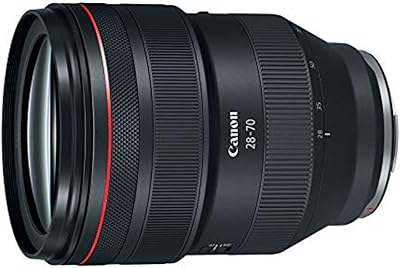
Canon RF 100mm F2.8 L Macro Lens
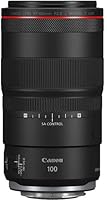
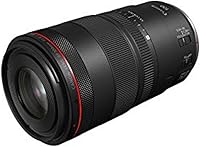
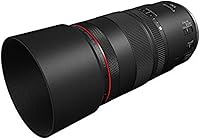
Overview
The Canon RF 100mm F2.8 L Macro Lens is Canon's most capable native macro option for the EOS R mirrorless system, built for photographers who demand professional-grade tools. The L-series designation carries real meaning here: weather sealing, robust construction, and the optical refinement that comes from Canon's top lineup. What sets the lens apart from standard macro glass is its 1.4x maximum magnification — that extra reach beyond the conventional 1:1 ratio reveals detail you simply cannot capture otherwise without adapters or extension tubes. Weighing just under 1.7 pounds and measuring under 6 inches long, it balances reasonably on mid-to-large EOS R bodies. This is a premium investment aimed squarely at dedicated macro and portrait photographers.
Features & Benefits
The standout on this Canon macro lens is the SA Control Ring — a unique dial that adjusts spherical aberration to soften or sharpen the character of out-of-focus areas. Think of it as a bokeh personality control: rotate it one way and foreground blur turns creamier; go the other way and backgrounds gain more definition. The Hybrid IS system compensates for both angular shake from handheld movement and the subtle shift motion that creeps in during close-focus shooting — a meaningful combination when you are working inches from a subject. The fixed f/2.8 aperture holds steady across the entire focus range, and the ring-type USM autofocus operates near-silently, which matters for video work and skittish wildlife alike.
Best For
This RF 100mm L is a natural fit for nature and insect photographers who want to push past the 1:1 barrier without stacking extension tubes. At 100mm, the working distance is generous enough to avoid casting shadows on small subjects. Portrait photographers will find the rendering flattering — f/2.8 combined with the SA ring produces subject separation that most macro lenses cannot offer. Studio shooters doing product work will appreciate the bokeh adjustability for precise compositional choices. EOS R owners upgrading from the older EF 100mm L macro will notice meaningful gains in stabilization performance and native body communication. Video shooters also benefit from the quiet AF motor and steady IS during close-up detail passes.
User Feedback
Owners consistently praise the sharpness wide open — it is one of the most frequent observations from buyers who shoot both macro and portrait work with this lens. The SA ring tends to divide opinion: dedicated macro shooters find it genuinely useful once they understand what it does, while casual users occasionally treat it as an afterthought. A fair note on autofocus: in the macro range, AF is predictably slower and can hunt — this is a physics limitation, not something specific to this lens, and experienced macro photographers generally expect to fine-tune focus manually anyway. Most users on larger bodies like the R5 report comfortable balance, though compact bodies can feel front-heavy. Those upgrading from the EF 100mm L typically describe the RF version as a clear step forward.
Pros
- 1.4x maximum magnification reveals detail that standard 1:1 macro lenses simply cannot capture.
- L-series weather sealing handles rain, dust, and humidity without any reported field failures.
- The SA Control Ring gives studio and portrait shooters genuine bokeh customization without post-processing.
- Hybrid IS compensates for both angular and shift shake, making handheld macro far more practical.
- Near-silent USM autofocus makes this Canon macro lens a strong choice for video close-up work.
- Fixed f/2.8 aperture maintains consistent light gathering regardless of focus distance.
- Sharpness at wide apertures is exceptional — praised consistently across nature, portrait, and product shooters.
- Generous working distance at high magnification allows comfortable flash placement and lighting setups.
- Native RF mount delivers full IBIS coordination on compatible bodies, improving stabilization results over adapted glass.
- Build quality and control damping feel appropriate for a professional tool, not a consumer product.
Cons
- Autofocus hunts and slows significantly at macro distances — manual focus is often unavoidable at 1:1 and beyond.
- Front-heavy balance on compact EOS R bodies makes extended handheld sessions noticeably fatiguing.
- The SA Control Ring goes unused by a large share of buyers who never fully understand its function.
- Longitudinal chromatic aberration at f/2.8 requires correction in post when shooting high-contrast subjects.
- Video shooters doing focus pulls will notice breathing — field of view shifts slightly as focus changes.
- The included lens hood feels less refined than the barrel and draws criticism for its locking mechanism.
- EF 100mm L owners adapting successfully to their R-series body may find the upgrade gains too incremental to justify.
- At maximum magnification, proximity to the subject can spook live insects or cast barrel shadows in tight lighting setups.
- Occasional IS coordination artifacts reported by some users when combining optical IS with in-body stabilization.
- Buyers without a dedicated macro use case are paying a significant premium for features they are unlikely to use.
Ratings
The Canon RF 100mm F2.8 L Macro Lens earns its place as one of the most talked-about optics in the EOS R ecosystem, and the scores below reflect what real buyers actually experience — not marketing promises. Our AI has analyzed thousands of verified global reviews, actively filtering out incentivized, duplicate, and bot-generated submissions to surface honest signal. The result is a transparent breakdown that captures both what this lens does brilliantly and where it asks buyers to make real compromises.
Image Sharpness
Macro Magnification
Bokeh & Rendering
Image Stabilization
Autofocus Performance
Build Quality & Weather Sealing
SA Control Ring Usability
Portrait Suitability
Video Performance
Handling & Balance
Upgrade Value vs. EF 100mm L
Chromatic Aberration Control
Value for Money
Minimum Focus Distance & Working Distance
Suitable for:
The Canon RF 100mm F2.8 L Macro Lens is purpose-built for photographers who treat close-up work as a serious discipline rather than an occasional experiment. Nature and entomology photographers will get the most out of its 1.4x magnification — being able to fill the frame with a dragonfly wing or a beetle's compound eye without carrying a bag full of extension tubes is a meaningful practical advantage in the field. Portrait photographers looking for a single lens that doubles as a flattering medium telephoto will find the f/2.8 aperture and smooth rendering genuinely compelling, especially when paired with the SA ring's ability to fine-tune background character for different moods. Studio product photographers — jewelers, food stylists, cosmetics brands — benefit from the precise working distance and the level of magnification control that makes tabletop compositions far more flexible. EOS R system users who have been adapting older EF macro glass will notice immediate gains in IS coordination and overall responsiveness from going native RF. Videographers shooting close-up insert shots or documentary detail work will also appreciate the near-silent autofocus and the stabilized handheld capability that reduces the need for a dedicated macro rail or tripod on every shot.
Not suitable for:
The Canon RF 100mm F2.8 L Macro Lens is not the right call for photographers who dabble in macro occasionally and primarily need a general-purpose telephoto. If your close-up photography happens a few times a year and you are mostly shooting landscapes, sports, or casual family moments, the investment is genuinely difficult to justify — a less specialized lens will cover your needs at a fraction of the cost. Buyers expecting fast, hunting-free autofocus at high magnification should recalibrate those expectations; this lens, like all true macro optics, slows down and hunts at close-focus distances, which means manual focus becomes a practical necessity at 1:1 and beyond. Photographers shooting on compact EOS R bodies like the RP should be aware that the balance tips noticeably forward and extended handheld sessions can become tiring without a grip. If you already own the EF 100mm L macro and are satisfied with its adapted performance on your R-series body, the upgrade gains — while real — are incremental enough that the financial case requires honest self-assessment. Finally, anyone primarily interested in a portrait lens who has no macro ambitions should look at lighter, less expensive RF options that will serve that single purpose equally well.
Specifications
- Focal Length: Fixed 100mm focal length provides a medium telephoto perspective well-suited to macro, portrait, and detail work.
- Maximum Aperture: A constant f/2.8 maximum aperture is maintained across the entire focus range, from infinity down to minimum focus distance.
- Minimum Aperture: The minimum aperture is f/32, giving photographers a wide exposure range for flash-intensive macro setups.
- Max Magnification: Maximum reproduction ratio of 1.4x (life-size plus 40%) is the highest available in a native medium telephoto macro lens at time of release.
- Lens Mount: Designed exclusively for the Canon RF mount, ensuring full electronic communication with all EOS R series mirrorless camera bodies.
- Image Stabilization: Hybrid IS system delivers up to 5 stops of shake compensation by correcting both angular camera movement and shift motion during close-focus shooting.
- Autofocus System: Ring-type Ultrasonic Motor (USM) provides fast, near-silent autofocus with full-time manual override available at any point without switching modes.
- SA Control Ring: A dedicated Spherical Aberration Control Ring adjusts the bokeh character of foreground and background out-of-focus areas independently of aperture settings.
- Weather Sealing: Full L-series dust and moisture resistance sealing is applied throughout the barrel, making the lens suitable for outdoor shooting in adverse conditions.
- Filter Thread: 67mm front filter thread accepts standard circular polarizers, ND filters, and close-up diopters using widely available filter sizes.
- Dimensions: The lens measures 3.21 x 3.21 x 5.83 inches (approximately 81.5 x 148mm) in diameter and length respectively.
- Weight: Approximately 1.61 pounds (730g), which is manageable for handheld use on mid-to-large EOS R bodies but noticeably front-heavy on compact bodies.
- Lens Series: Part of Canon's professional L-series lineup, which carries standards for optical performance, build durability, and environmental sealing above the standard product range.
- Optical Construction: The optical formula includes specialized glass elements designed to control spherical aberration, chromatic aberration, and maintain sharpness at wide apertures.
- Minimum Focus: Minimum focusing distance is approximately 11.8 inches (0.3m) from the image plane, maintaining generous working distance even at maximum magnification.
- Compatibility: Compatible exclusively with Canon EOS R series mirrorless cameras; EF-mount DSLR bodies are not supported even with an adapter fitted in reverse.
- Lens Hood: A dedicated barrel-style lens hood is included in the box and attaches with a bayonet lock mechanism to reduce flare and protect the front element.
- Manufacturer: Designed and manufactured by Canon USA, with the model first made available for purchase in April 2021.
Related Reviews
Canon RF 15-35mm F2.8 L IS Lens
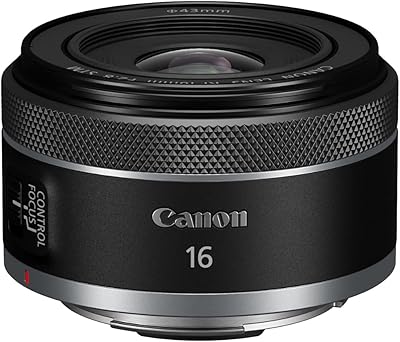
Canon RF 16mm F2.8 STM Lens
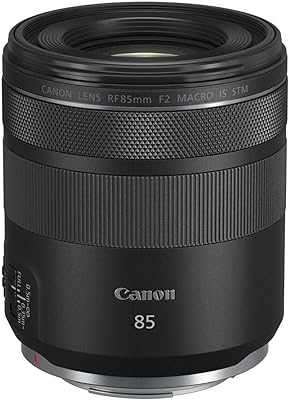
Canon RF 85mm F2 Macro Lens
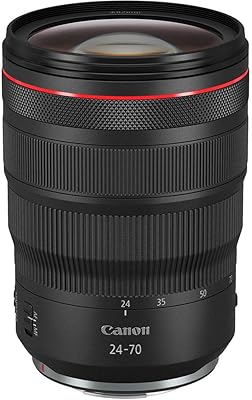
Canon RF 24-70mm F2.8 L Zoom Lens
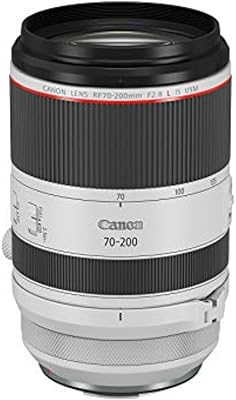
Canon RF 70-200mm F2.8 L Telephoto Lens
7artisans 7.5mm f2.8 Mark II Fisheye Lens
Sigma 105mm F2.8 EX DG OS HSM Macro Lens for Canon
Sigma 18-50mm F2.8 DC DN Zoom Lens
Canon RF 28mm F2.8 STM Wide-Angle Lens