
Overview

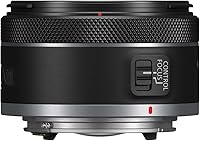
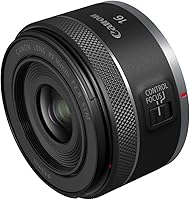
The Canon RF 16mm F2.8 STM Lens arrived as a welcome addition to Canon's RF lineup, addressing a gap that EOS R shooters had felt for a while — an affordable, native ultra-wide prime. At just 5.7 ounces and barely bigger than a hockey puck, it is remarkably small for a full-frame 16mm optic; comparable third-party options are noticeably bulkier. The fixed f/2.8 aperture is a genuine step up from what a kit zoom offers at the wide end, giving you more flexibility in dim environments. Whether you are a stills shooter chasing sweeping landscapes or a video creator wanting cinematic wide coverage without hauling extra gear, this ultra-wide prime covers a surprising amount of ground.

Features & Benefits

The gear-type STM motor is what really sets this wide-angle lens apart for video shooters — it focuses quietly enough that built-in microphones rarely pick it up, which matters when recording without an external audio setup. Getting the lens within about five inches of a subject opens up perspective-driven compositions that most wide primes simply cannot pull off at this focal length. The customizable control ring adds a tactile layer of control, letting you assign aperture, ISO, or manual focus depending on how you work. And at under six ounces, it sits comfortably on a gimbal or small mirrorless body without throwing off the balance.

Best For

This wide-angle lens makes the most sense for people who create content on the move. Vloggers shooting with an R6 or R5 will appreciate the quiet focusing and wide coverage that keeps them in frame even in tight spaces. Travel and landscape photographers benefit from the compact, lightweight build — it barely registers in a bag alongside other primes. Street photographers will find the small footprint helps them blend in. Filmmakers on EOS R bodies get a credible cinematic wide option without needing a full rig. Even beginners stepping up from a kit zoom will notice an immediate difference in perspective and low-light capability.

User Feedback

Most owners are quick to mention portability and size as the biggest wins — it is rare to hear complaints about a full-frame prime being too small. Autofocus earns generally positive marks, particularly for face-tracking while walking and talking to camera, though it is not the fastest option for sports or unpredictable motion. A recurring criticism involves the plastic build quality, which feels modest compared to Canon's pricier RF glass; for some that is an acceptable tradeoff, while others find it underwhelming. Edge distortion at 16mm is real but largely correctable in-camera or in post. Vignetting wide open is noticeable, though most users adapt quickly.

Pros

  • Near-silent STM autofocus makes it one of the better native RF options for vlogging and video work.
  • Weighing under six ounces, the RF 16mm is remarkably easy to carry on long shooting days or travel.
  • The f/2.8 aperture gives a meaningful low-light advantage over kit zooms in the same focal range.
  • A minimum focus distance of just over five inches allows creative close-up compositions unusual for a 16mm lens.
  • The customizable control ring lets you assign aperture or focus adjustments directly on the barrel.
  • Full-frame coverage at 16mm delivers a genuinely dramatic, immersive perspective for landscapes and interiors.
  • Its compact footprint balances well on gimbals and small mirrorless bodies without adding awkward weight.
  • At its price point, this wide-angle lens offers native RF mount performance without the cost of Canon L-series glass.
  • Face-tracking autofocus performs reliably during walking or handheld video, a key feature for solo content creators.

Cons

  • Edge and corner distortion at 16mm is noticeable and requires correction in post or reliance on in-camera profiles.
  • The plastic-heavy build feels noticeably budget in hand compared to other lenses at a similar price from rival brands.
  • No weather sealing limits its usability in rain or dusty outdoor conditions.
  • Vignetting wide open is visible enough to require correction in some shooting situations.
  • No optical image stabilization means you are fully dependent on body-based IBIS, which not all EOS R bodies offer.
  • Autofocus tracking can struggle with erratic or fast-moving subjects, making it a poor fit for action photography.
  • Some users report chromatic aberration in high-contrast scenes near the frame edges.
  • The 43mm filter thread is a less common size, meaning you may need step-up rings to share filters with other lenses.

Ratings

The scores below for the Canon RF 16mm F2.8 STM Lens were generated by our AI system after analyzing thousands of verified purchase reviews from buyers worldwide, with spam, bot-submitted, and incentivized feedback actively filtered out. The ratings reflect the full picture — what real owners consistently praise and where genuine frustrations surface — so you can make a confident, well-informed decision.

Image Sharpness
78%
22%
Center sharpness at f/2.8 earns consistent praise from landscape and street photographers who find it more than adequate for large prints and detailed crops. Stop down to f/5.6 and the performance across the frame improves noticeably, satisfying most travel and architecture shooters.
Corner sharpness wide open draws the most criticism, with some users noting visible softness toward the edges that requires stopping down to address. Shooters doing pixel-level architectural work report that corner performance lags behind pricier competitors at equivalent apertures.
Autofocus Performance
83%
For video creators and vloggers, the STM motor delivers reliably smooth and quiet focus pulls that rarely intrude on audio recordings. Face and eye tracking on compatible EOS R bodies works well during walking shots, which is exactly the scenario most buyers purchase this lens for.
Users shooting fast-moving subjects — sports, pets, active children — report occasional hunting and a lack of the snap speed found in Canon's more expensive RF primes. In lower-contrast or dim environments, the gear-type STM can take a noticeable moment to lock on confidently.
Build Quality
61%
39%
The compact plastic construction does keep weight impressively low, which travel photographers and gimbal users genuinely appreciate on long shooting days. For its price bracket, the fit and finish is functional and the lens feels solid enough for careful everyday use.
A recurring theme in user feedback is disappointment with the predominantly plastic feel, especially coming from users who expected something more substantial given Canon's reputation. The absence of any weather sealing is a meaningful gap for those who shoot outdoors regularly in unpredictable conditions.
Value for Money
82%
18%
As the most affordable native ultra-wide prime in the RF lineup, this wide-angle lens fills a real gap for EOS R shooters who cannot justify the cost of Canon's L-series glass. Buyers upgrading from kit zooms consistently describe it as a worthwhile investment given the immediate gains in perspective and low-light flexibility.
A handful of reviewers feel the pricing is slightly ambitious given the plastic build and lack of weather sealing, pointing to third-party alternatives that offer comparable optics with more robust construction. Those who later upgrade to premium RF glass sometimes look back and wish they had saved toward the higher-tier option from the start.
Portability & Size
94%
Owners regularly describe this as the lens they reach for precisely because it barely registers in a bag — at 5.7 ounces it travels with almost no penalty. Gimbal users in particular appreciate how easy it is to balance compared to larger ultra-wides, and it pairs naturally with compact EOS R bodies like the R8 or R50.
A small number of users feel the diminutive size makes it slightly awkward to grip on larger bodies like the R5, where the lens-to-body ratio feels visually and physically mismatched. The short barrel also means the control ring sits quite close to the mount, which some find slightly cramped to operate with larger hands.
Video Capability
86%
The near-silent STM focusing is the defining feature for video users, making this one of the cleaner-performing lenses for run-and-gun shooting where built-in microphones are in use. The wide field of view and close minimum focus distance let solo content creators frame themselves effectively without a dedicated camera operator.
The lack of optical image stabilization means handheld video can look shaky on bodies without strong IBIS, which is worth factoring in if you shoot on older or entry-level EOS R cameras. Some videographers also note that autofocus occasionally breathing is visible in critical close-up video work.
Distortion Control
67%
33%
In-camera JPEG and video correction profiles handle most of the barrel distortion automatically, making straight-out-of-camera results look clean for the vast majority of shooting situations. Vloggers and casual travel shooters rarely need to think about distortion at all when shooting with automatic correction enabled.
RAW shooters working on architecture or interiors find that uncorrected distortion is quite pronounced and requires deliberate correction in post before the image looks usable. Even with correction applied, some users notice mild residual curvature on straight horizontal lines near frame edges in demanding compositions.
Low-Light Performance
81%
19%
The f/2.8 maximum aperture delivers a real-world advantage over kit zoom equivalents in dim indoor settings, evening street scenes, and poorly lit event spaces. Paired with a body that handles high ISO well, owners report confidently usable shots in conditions where a slower lens would struggle.
Vignetting wide open in low light can be visually distracting in evenly lit scenes like overcast skies or blank walls, requiring either stopping down slightly or applying post-processing correction. The lens has no optical stabilization, so in very low light with slower shutter speeds, camera shake becomes the limiting factor rather than aperture.
Vignetting
63%
37%
Most users find the vignetting at f/2.8 manageable once they know to expect it, and at f/4 it reduces significantly for those who prefer cleaner corners without post-processing. Video shooters benefit from Canon's automatic vignetting correction profile, which addresses the worst of it transparently in most recording modes.
Wide open, corner darkening is one of the most frequently mentioned optical complaints, particularly from photographers shooting flat-toned subjects like skies, snow, or white walls where fall-off is immediately visible. Some users feel the degree of vignetting is above average for a lens at this price and focal length.
Chromatic Aberration
72%
28%
In typical shooting conditions — street scenes, travel, general video — chromatic aberration is not a meaningful concern, and most users never notice it in finished images or footage. Canon's in-camera corrections address a portion of it for JPEG shooters without any additional workflow steps.
High-contrast edges, particularly branches against bright skies or backlit architectural details, can show color fringing in RAW files that requires manual correction in post. Architecture photographers and pixel-peepers report this more frequently than casual users, and it is noticeable enough in those specific scenarios to warrant mentioning.
Close-Focus Capability
79%
21%
The 5.11-inch minimum focusing distance is a genuine creative asset that regularly surprises new owners, enabling foreground-led compositions and environmental close-ups that add storytelling depth to travel and landscape images. At 0.26x magnification, the RF 16mm can get meaningfully close to objects in a way most ultra-wide primes cannot.
The close-focus performance, while impressive for the focal length, is far from true macro territory, so users expecting significant subject isolation or fine detail reproduction at close range will find it falls short. The wide angle also means perspective distortion becomes pronounced at minimum focus distance, which is not always desirable.
Lens Flare & Ghosting
69%
31%
For a compact ultra-wide prime, flare resistance is adequate in most everyday shooting situations and well-controlled backlit landscape photography where the sun is kept outside the frame. Many users report pleasing, manageable flare characteristics that some even use creatively in golden-hour or street shooting.
Shooting directly into strong light sources — sunsets, street lamps, studio lights — reveals ghosting and flare artifacts that some users find distracting and difficult to remove cleanly in post. The lens lacks a deep hood design that might otherwise help shield the front element in challenging lighting angles.
Ease of Use
88%
The customizable control ring is consistently highlighted as a practical feature, letting users dial in aperture or exposure compensation directly on the barrel without taking their eye from the viewfinder. The lens integrates cleanly with EOS R camera menus and autofocus systems, requiring almost no learning curve for existing Canon users.
The 43mm filter size can create minor friction for photographers who own an established set of larger filters, requiring step-up rings that add a small amount of bulk and potential vignetting risk. New users occasionally report confusion about the control ring function until they locate the relevant camera menu setting.
Compatibility
91%
Native RF mount integration means full electronic communication with all EOS R series bodies, including reliable access to dual pixel autofocus, lens correction profiles, and firmware updates. It works correctly across the full range of Canon mirrorless bodies from entry-level to professional, with no known compatibility gaps.
Strict RF-mount-only design means there is no adapter path to use this lens on Canon EF-mount DSLRs, which can be a consideration for users who split shooting time between older and newer Canon systems. On APS-C EOS R bodies the field of view narrows to roughly 25.6mm equivalent, losing much of the ultra-wide character that defines the lens.

Suitable for:

The Canon RF 16mm F2.8 STM Lens is a strong match for EOS R system users who want a capable ultra-wide without committing to a heavy, expensive optic. Content creators and vloggers will find it particularly well-suited to self-filming situations, where the wide field of view keeps you in frame and the near-silent STM motor avoids intruding on recorded audio. Travel and landscape photographers benefit most from the unusually compact build — at under six ounces, it adds almost no burden to a travel kit and pairs naturally with smaller R-series bodies. Street photographers who prefer to work discreetly will also appreciate how unassuming it looks compared to a large zoom. Beginners making their first move into prime lenses will get a dramatic shift in perspective and a tangible low-light improvement over a standard kit zoom, making it a rewarding step up.

Not suitable for:

Photographers who demand the absolute sharpest corner-to-corner rendering from their wide-angle glass may find the RF 16mm falls short of expectations, particularly when shooting architecture or landscapes where edge detail matters. Those who shoot fast-moving subjects — sports, wildlife, children mid-activity — will likely run into the limits of the STM focusing system, which is optimized for smooth and quiet operation rather than raw tracking speed. If build quality and weather sealing are priorities, this lens does not deliver; the mostly plastic construction feels noticeably less premium than Canon's higher-tier RF options, and there is no weather-resistant sealing. Shooters who already own or plan to own the RF 14-35mm f/4L will find significant overlap at the wide end, making this ultra-wide prime a harder sell. It is also not the right tool for anyone wanting true macro capability or optical image stabilization independent of the camera body.

Specifications

  • Focal Length: Fixed 16mm focal length provides an ultra-wide field of view suited to landscapes, interiors, and immersive video framing.
  • Maximum Aperture: A constant f/2.8 maximum aperture allows for usable low-light performance and a degree of background separation when shooting close subjects.
  • Lens Mount: Designed exclusively for the Canon RF mount, making it compatible with all current EOS R series mirrorless camera bodies.
  • Autofocus System: A gear-type Stepping Motor (STM) drives autofocus, prioritizing smooth and near-silent operation over raw focusing speed.
  • Min. Focus Distance: The minimum focusing distance is 5.11 inches (approximately 13 cm), enabling close-perspective compositions uncommon for a full-frame ultra-wide prime.
  • Max Magnification: Maximum magnification reaches 0.26x, offering more close-up capability than most lenses in this focal length category.
  • Dimensions: The lens measures 2.7 x 2.7 x 1.6 inches (68.4 x 40.3 mm), making it one of the most compact full-frame ultra-wide primes available.
  • Weight: At 5.7 ounces (162 g), this wide-angle lens is light enough to carry all day without fatigue, even on a small mirrorless body.
  • Filter Thread: The front element accepts 43mm screw-in filters, a less common size that may require step-up rings to match existing filter sets.
  • Control Ring: A customizable control ring on the lens barrel can be assigned to adjust aperture, ISO, exposure compensation, or manual focus.
  • Image Stabilization: The lens has no built-in optical image stabilization and relies on the camera body's in-body image stabilization (IBIS) system when available.
  • Full-Frame Coverage: Designed to fully cover a 35mm full-frame sensor with no crop, though it can also be used on APS-C EOS R bodies at an equivalent of roughly 25.6mm.
  • Lens Construction: The optical design consists of 13 elements arranged in 11 groups, including an aspherical element to manage distortion and aberration.
  • Aperture Blades: The lens features 7 rounded aperture blades, contributing to a smoother bokeh rendering at close focusing distances.
  • Weather Sealing: This lens does not include weather or dust sealing, limiting its use in harsh outdoor or wet conditions compared to Canon's L-series optics.
  • Release Year: The lens was first made available in September 2021 as Canon's inaugural ultra-wide fixed focal length RF prime.
  • Manufacturer: Designed and manufactured by Canon USA under model number 5051C002.

Related Reviews
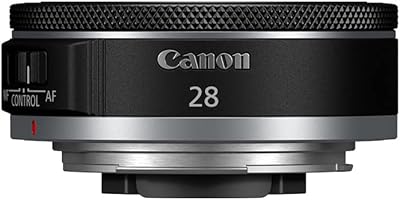
Canon RF 28mm F2.8 STM Wide-Angle Lens
79%
96%
Portability & Form Factor
78%
Image Sharpness
82%
Autofocus Performance
91%
Video Usability
58%
Build Quality
More
Canon RF 85mm F2 Macro Lens
82%
93%
Image Sharpness
89%
Bokeh Quality
61%
Autofocus Speed
91%
Image Stabilization
74%
Macro Capability
More
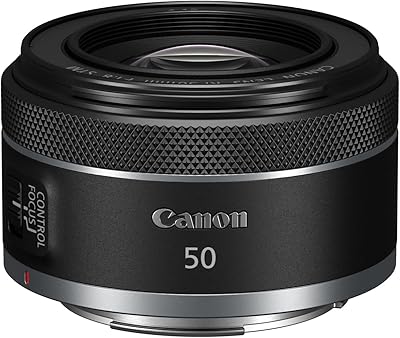
Canon RF 50mm F1.8 STM Lens
74%
83%
Image Sharpness
78%
Bokeh Quality
76%
Autofocus Speed & Accuracy
81%
Low-Light Performance
61%
Build Quality & Durability
More
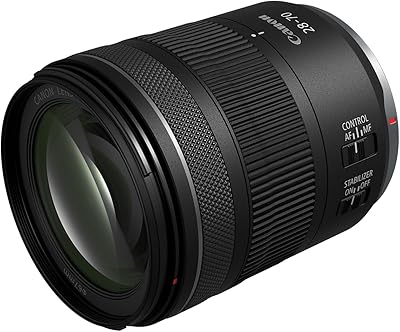
Canon RF 28-70mm F2.8 IS STM Lens
81%
91%
Image Sharpness
67%
Autofocus Performance
88%
Build Quality & Durability
76%
Image Stabilization
94%
Size & Portability
More
Canon RF 15-35mm F2.8 L IS Lens
85%
96%
Optical Sharpness
93%
Image Stabilization
91%
Autofocus Speed & Accuracy
94%
Build Quality & Weather Sealing
71%
Value for Money
More
7artisans 7.5mm f2.8 Mark II Fisheye Lens for Canon RF
85%
88%
Image Quality
92%
Build Quality
65%
Ease of Use (Manual Focus)
90%
Portability
85%
Low-Light Performance
More
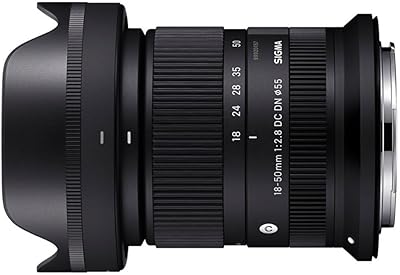
Sigma 18-50mm F2.8 DC DN Zoom Lens
81%
88%
Autofocus Performance
83%
Optical Sharpness
81%
Build Quality
94%
Size & Portability
86%
Low-Light Performance
More
Canon RF 24mm F1.8 Macro Lens
80%
91%
Image Sharpness
88%
Low-Light Performance
76%
Autofocus Speed & Accuracy
84%
Image Stabilization
72%
Macro Capability
More
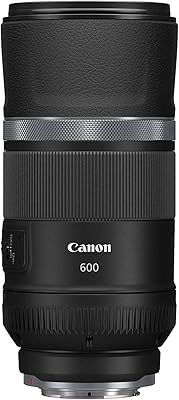
Canon RF 600mm f/11 IS STM Lens
71%
93%
Portability
91%
Value for Focal Length
82%
Image Sharpness
74%
Autofocus Performance
88%
Image Stabilization
More
Canon RF 100mm F2.8 L Macro Lens
84%
96%
Image Sharpness
93%
Macro Magnification
89%
Bokeh & Rendering
88%
Image Stabilization
71%
Autofocus Performance
More

FAQ

Yes, it mounts and functions on any EOS R body regardless of sensor size. On an APS-C camera the effective field of view narrows to roughly 25.6mm equivalent, which is still fairly wide but loses some of that dramatic ultra-wide character you get on a full-frame body.

It handles everyday moving subjects reasonably well, especially with face and eye tracking enabled on a modern EOS R body. That said, the STM motor is tuned for smooth, quiet operation rather than speed, so if you regularly shoot fast or unpredictable action, you may find it hunts occasionally in challenging conditions.

At 16mm, some barrel distortion is expected and this lens is no exception. The good news is that Canon EOS R cameras apply automatic lens correction profiles in-camera, so JPEGs and video footage look clean straight out of the camera. If you shoot RAW, you will want to apply the correction profile in Lightroom or your preferred editor, which takes just one click.

Not directly — the filter thread is 43mm, which is smaller than most photographers' existing filter sets. You can use a 43-to-77mm step-up ring to attach larger filters, but keep in mind that a thick step-up ring combined with a wide-angle lens can introduce vignetting at the corners.

The lens is functional outdoors in normal conditions, but it has no weather sealing, so shooting in rain or dusty environments carries some risk. The mostly plastic construction keeps weight down but does feel less substantial than Canon's pricier glass — it is worth being mindful of that in rough conditions.

It is genuinely one of the better options for this use case. The field of view is wide enough to keep you in frame at arm's length or on a small desktop tripod, and the STM motor is quiet enough that most built-in microphones will not pick up focusing noise during a take.

The f/2.8 aperture is a meaningful advantage over a typical kit zoom at the wide end, particularly in indoor or evening shooting. Combined with a body that has strong high-ISO performance, like an R6 Mark II, you can shoot in quite dim conditions without needing to push shutter speeds dangerously low.

There is noticeable darkening toward the corners when shooting wide open, which is common for ultra-wide primes at maximum aperture. For most photography it is correctable in post with a single adjustment. For video, the in-camera correction profile handles much of it automatically, though some videographers prefer to stop down slightly to f/4 for cleaner corners.

Yes, it is one of the better ultra-wide primes for gimbal use precisely because of how light and compact it is. The low weight makes balancing straightforward on most 3-axis gimbals, and the quiet STM motor means focus pulls during a shot stay inaudible on the audio track.

Getting within about five inches of a subject and shooting at the closest focus distance gives you a maximum magnification of 0.26x, which is genuinely useful for environmental detail shots or adding context to a scene. It is not a true macro lens, but for a 16mm prime the close-focus capability is a pleasant bonus that opens up some creative options.

Where to Buy

B&H Photo-Video-Audio
In stock $259.00
Sweetwater
In stock $259.00
Newegg.com
In stock $259.00
Willoughby's Photo Emporium
In stock $249.00
K&M Camera
In stock $259.00
Biggs Camera
In stock $259.00