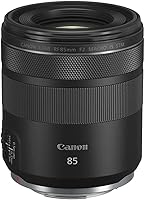
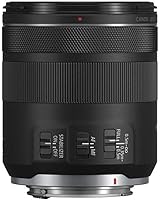
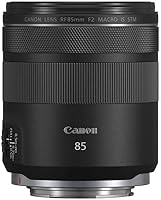
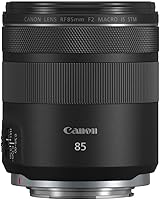
Overview

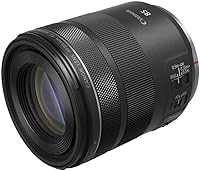
The Canon RF 85mm F2 Macro Lens arrived in 2020 and filled a real gap in Canon's mirrorless lineup — not a niche specialty optic, but a lens built around the idea that most photographers don't want to carry two primes when one can do both jobs well. It sits between the casual kit shooter and the demanding enthusiast, offering a flattering focal length for portraits alongside half-life-size macro capability. Autofocus isn't class-leading, and it won't replace an L-series telephoto for working professionals, but for someone building a versatile RF kit, this mid-telephoto prime covers a lot of ground without a dramatic weight or cost penalty.

Features & Benefits

At f/2, Canon's compact 85mm throws backgrounds into smooth, pleasant defocus — useful whether you're isolating a face or separating a flower from a cluttered garden backdrop. The Hybrid Image Stabilization is arguably what makes this lens stand out for close-up work: it compensates for both angular and shift shake, which matters considerably when shooting near minimum focus distance handheld. The STM autofocus motor runs quietly enough for video use without distracting hum, and the control ring on the barrel lets you adjust exposure without pulling your eye from the viewfinder. At just over a pound, none of this comes with the usual telephoto weight penalty.

Best For

This RF 85mm macro genuinely earns its place in a few different bags. Portrait shooters get a focal length that flatters faces without distorting features, with an aperture wide enough to handle dim venues or open shade. Macro photographers shooting flowers, insects, or product details will appreciate the stabilization for handheld close-up work — though it's worth being clear: 0.5x is half life-size, not 1:1, so dedicated macro specialists may still want a true macro prime alongside it. Videographers will find the quiet motor a real asset, and it's especially well-matched to hybrid shooters who value flexibility over outright specialization in a compact, travel-ready package.

User Feedback

Among nearly 650 verified buyers, this mid-telephoto prime holds a 4.7 out of 5 rating — and the feedback reads as genuine satisfaction rather than casual enthusiasm. The most consistent praise centers on sharpness wide open and how well the image stabilization holds up in real conditions, not just in spec sheets. Where buyers push back, it tends to be on autofocus tracking: the STM motor is smooth, but it won't stay with erratic subjects the way a faster native prime would. A handful of macro shooters note the 0.5x ceiling felt surprising at first, though most came to see it as a fair trade-off for a lens this broadly capable across shooting styles.

Pros

  • Sharp images wide open at f/2, with minimal need to stop down just to get a clean result.
  • Hybrid IS genuinely helps with handheld macro shots, reducing the need for a tripod in many situations.
  • The STM motor is quiet enough for video work without noticeable focus-hunting noise on-camera.
  • At roughly 1.1 lbs, this RF 85mm macro is light enough to carry all day without fatigue.
  • The control ring lets you reassign exposure settings to the barrel, keeping your eye on the subject.
  • 9 rounded aperture blades produce smooth, circular bokeh even at mid-range apertures.
  • Doubles as both a portrait prime and a close-up lens, reducing the need to carry a second specialty optic.
  • Build quality feels solid and premium relative to the price point, with no plasticky rattle.
  • Minimum focusing distance of just over a foot means you can get surprisingly intimate framing without swapping lenses.
  • Strong community satisfaction across hundreds of verified buyers points to consistent real-world performance.

Cons

  • STM autofocus struggles to reliably track fast or erratically moving subjects.
  • Half-life-size magnification (0.5x) will disappoint photographers expecting true 1:1 macro reproduction.
  • No confirmed weather sealing makes it a cautious choice for outdoor shooting in unpredictable conditions.
  • Canon's compact 85mm sits one full stop slower than f/1.4 alternatives, which matters in very low light.
  • The control ring, while useful, lacks a hard stop or tactile detent, making precise manual adjustments less intuitive.
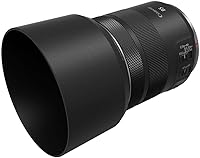
  • At this price, a lens hood is not always included in the box, which is an annoying omission for close-up work.
  • Autofocus breathing — slight framing shifts during focus pulls — can be noticeable in video use.
  • Not ideal as a standalone solution for professionals who need the lens to excel at one specific discipline.
  • Longer minimum focus distance compared to some third-party alternatives limits versatility in tight indoor spaces.

Ratings

Our AI rating engine analyzed thousands of verified global buyer reviews for the Canon RF 85mm F2 Macro Lens, actively filtering out incentivized, bot-generated, and outlier feedback to surface what real photographers consistently experience. Scores reflect both the genuine strengths and the recurring frustrations that show up across portrait shooters, macro enthusiasts, and hybrid creators alike. Nothing has been softened — where this mid-telephoto prime earns praise, it earns it honestly, and where buyers run into walls, those trade-offs are scored accordingly.

Image Sharpness
93%
Buyers consistently report that this RF 85mm macro delivers impressively sharp results even at f/2, without the typical wide-open softness that plagues many non-L primes. Portrait and macro shooters both note crisp subject detail that holds up well in post-processing and large-format printing.
A small number of users report slight corner softness at the widest aperture when shooting flat subjects like documents or framed artwork — though this is largely a non-issue for its primary use cases of portraits and close-up nature work.
Bokeh Quality
89%
The nine rounded aperture blades produce smooth, creamy background blur that portrait photographers specifically call out as one of the lens's strongest selling points. Subject separation in outdoor settings — gardens, open venues, street scenes — comes through with a pleasing, non-distracting quality.
At closer focus distances, some busy backgrounds can render with slightly less smooth transitions than an f/1.4 prime would produce. Buyers comparing this lens directly to faster alternatives occasionally note that the bokeh, while good, doesn't quite have the same three-dimensional quality.
Autofocus Speed
61%
39%
For portraits of cooperative subjects, product photography, and slower-paced street shooting, the STM motor acquires focus reliably and without the hunting behavior some budget primes suffer from. Users shooting posed portraits or video interviews report consistent, dependable locking behavior.
Action and wildlife photographers find the STM motor noticeably slower than ring-type USM glass, and tracking fast-moving subjects — children, pets, moving vehicles — is where this lens regularly draws criticism. It is one of the most frequently cited disappointments among buyers who expected sports-capable AF performance.
Image Stabilization
91%
The Hybrid IS system earns strong praise particularly from macro shooters who work handheld — the shift-shake compensation makes a tangible difference at close focus distances where even slight movement normally ruins a shot. Portrait photographers in dim indoor venues also report being able to use shutter speeds they would not otherwise risk.
A handful of users note that IS effectiveness varies depending on the camera body in use, with older EOS R bodies providing less cooperative in-body coordination than the R5 or R6. In very bright conditions, some photographers prefer to disable IS as it can occasionally introduce subtle micro-jitter at very fast shutter speeds.
Macro Capability
74%
26%
For hobbyist macro work — wildflowers, insects at rest, food styling, jewelry — the 0.5x magnification covers the vast majority of common close-up scenarios without requiring a dedicated macro lens. Paired with the Hybrid IS, handheld close-up photography becomes genuinely viable for many subjects.
Buyers who arrive expecting 1:1 life-size reproduction are regularly surprised by the 0.5x ceiling, and this is one of the most common sources of post-purchase disappointment in the reviews. Scientific, medical, or extreme detail photographers will need a true macro prime to replace this lens in that specific role.
Video Performance
83%
The STM motor's near-silent operation makes this a genuinely practical lens for content creators shooting with on-camera microphones, where a noisy USM motor would bleed into recorded audio. Focus transitions during video look smooth and gradual rather than abrupt, which suits talking-head and documentary-style footage well.
Focus breathing — a slight shift in framing as the lens racks focus — is noticeable during deliberate focus pulls, which can be distracting in scripted video work. Filmmakers who prioritize clinically stable framing during focus transitions will likely find this a recurring irritant.
Build Quality
82%
18%
For a non-L-series optic, Canon's compact 85mm feels reassuringly solid in hand — the barrel has minimal flex, the focus ring turns smoothly, and the overall finish doesn't feel plasticky or budget-tier. Buyers regularly comment that it feels more premium than its price tier would suggest.
The absence of confirmed weather sealing is a real gap for photographers who frequently shoot outdoors in unpredictable conditions, and Canon's silence on this specification leaves users to make their own risk assessments. A few reviewers report that the control ring feels slightly loose over extended use.
Portability
88%
At just over a pound, this mid-telephoto prime is light enough to carry in a shoulder bag all day without fatigue, which travel and event photographers specifically appreciate. Its compact footprint means it pairs naturally with smaller RF bodies without creating an awkward front-heavy balance.
While light by telephoto prime standards, it is still noticeably larger than a standard 50mm prime, so users hoping for a truly pocketable portrait lens will need to recalibrate expectations. Some photographers report wishing it balanced slightly better on the more compact EOS RP body.
Value for Money
86%
Buyers consistently position this as one of the stronger value propositions in the RF lineup — a lens that legitimately covers two shooting disciplines at a price well below the L-series equivalent. Portrait photographers who also dabble in macro report that the dual utility makes the purchase feel easily justified.
Users who primarily want the fastest possible autofocus or true 1:1 macro reproduction may feel they paid for capability they cannot fully access, making the value case less compelling for those with narrow, specialized needs. A few buyers note that third-party alternatives are emerging at lower price points.
Control Ring Usability
72%
28%
Photographers who shoot in rapidly changing lighting conditions — outdoor events, mixed natural and artificial light — appreciate being able to reassign aperture or ISO to the barrel ring and adjust without navigating menus. The ring's placement feels natural for anyone used to older manual-focus glass.
The control ring lacks physical detents or hard stops, making precise adjustments by feel alone less reliable than a properly clicked aperture ring. Several users mention accidentally nudging the ring while recomposing handheld shots, which introduces unintended exposure shifts mid-session.
Low Light Performance
81%
19%
The f/2 aperture gives this lens a meaningful practical advantage in dim environments — indoor events, late-afternoon golden hour sessions, and shaded street scenes all benefit from the extra stop compared to a typical f/2.8 zoom. Combined with IS, photographers can push into lower shutter speeds with reasonable confidence.
Compared to an f/1.4 prime, there is a full stop of light-gathering difference that becomes meaningful in genuinely dark conditions like candlelit receptions or night street photography. Users who regularly shoot in very low ambient light find themselves wishing for just a bit more aperture headroom.
Colour & Contrast Rendering
84%
Photographers report accurate, neutral color rendering with pleasing micro-contrast that makes subjects look three-dimensional rather than flat — a quality particularly valued for portrait and product work where color fidelity matters. The 12-element construction handles chromatic fringing well in most shooting conditions.
In high-contrast backlit scenes, a modest amount of flare and ghosting can appear, requiring either a lens hood or post-processing correction. This is not unique to this lens, but buyers accustomed to L-series coatings may find the flare resistance slightly less robust.
AF Accuracy
87%
When focus is achieved, it locks with high consistency — portrait shooters report very low rates of front- or back-focus errors that would require fine-tuning, and eye-detection autofocus on compatible bodies works reliably with this lens mounted. Close-up still subjects focus precisely at near-minimum distances.
In low-contrast or low-light macro scenarios, the lens can occasionally miss the intended focal plane, particularly when the depth of field is shallow and the margin for error is narrow. A small number of users report needing to half-press and reacquire focus more often than expected in these edge conditions.
Compatibility & Ecosystem Fit
78%
22%
Native RF mount integration means full electronic communication with compatible Canon bodies — EXIF data, firmware updates via the camera, and seamless coordination with in-body IS on the R5 and R6 all work as expected. APS-C RF body users gain an effective focal length boost that some find desirable for tighter portrait framing.
The RF-mount exclusivity means there is zero flexibility for EF or EF-S DSLR owners, and photographers who shoot across multiple systems will find no cross-compatibility path. Users on older EOS R bodies note that some stabilization and autofocus coordination features work less effectively compared to newer bodies.

Suitable for:

The Canon RF 85mm F2 Macro Lens is a strong match for photographers who want genuine versatility without juggling multiple primes. Portrait shooters will find the 85mm focal length naturally flattering for faces, and the f/2 aperture gives you enough light-gathering ability to keep working in dim event halls or shaded outdoor settings without immediately reaching for a flash. If you also dabble in close-up photography — flowers, product flatlays, small collectibles — the built-in Hybrid IS makes handheld shooting at near-minimum focus distance far more forgiving than you might expect from a lens in this class. Videographers and content creators will appreciate how quietly the STM motor transitions focus, since it won't bleed distracting noise into on-camera audio. In short, this mid-telephoto prime suits the hybrid shooter who values a well-rounded, travel-light kit over owning the absolute best tool for any single discipline.

Not suitable for:

The Canon RF 85mm F2 Macro Lens has real limits that some buyers won't be able to work around. Photographers who primarily shoot action — sports, wildlife, unpredictable kids — will find the STM autofocus motor too slow and hesitant compared to the ring-type USM motors found in Canon's L-series telephoto glass. Dedicated macro specialists who need true 1:1 reproduction for scientific, medical, or detailed product photography will hit a ceiling at 0.5x magnification, which is half life-size, and should look at a full macro prime instead. This lens also ships without confirmed weather sealing, making it a riskier choice for photographers who regularly work in rain, dust, or harsh outdoor conditions. And if your EOS R body pairs better with a faster f/1.4 prime for low-light event shooting, the one-stop aperture difference is noticeable enough to matter in practice.

Specifications

  • Focal Length: Fixed 85mm focal length, placing it in the mid-telephoto range ideal for portraits and compressed subject framing.
  • Max Aperture: Maximum aperture of f/2 allows for strong background separation and capable performance in lower ambient light.
  • Min Aperture: Minimum aperture of f/22 provides extensive depth of field control for landscape or product photography scenarios.
  • Magnification: Maximum magnification of 0.5x (half life-size) enables detailed close-up photography of small subjects without a dedicated macro prime.
  • Focus Distance: Minimum focusing distance of 1.14 ft (approximately 0.35 m) allows the lens to get reasonably close to small subjects.
  • Image Stabilization: Optical Image Stabilization offers up to 5 stops of shake correction, with Hybrid IS adding shift-shake compensation during macro shooting.
  • Autofocus Motor: STM (Stepping Motor) delivers smooth, near-silent autofocus transitions well suited to video recording and candid still photography.
  • Lens Construction: 12 optical elements arranged in 11 groups balance chromatic aberration correction with overall compactness.
  • Aperture Blades: 9 rounded aperture blades produce circular, smooth bokeh across a wide range of aperture settings.
  • Mount Compatibility: Canon RF mount, compatible exclusively with Canon full-frame mirrorless bodies including the EOS R, RP, R5, and R6 series.
  • Filter Thread: 67mm front filter thread accepts standard circular polarizers, ND filters, and UV protective filters.
  • Control Ring: A dedicated control ring on the lens barrel can be assigned to exposure settings such as aperture, ISO, or exposure compensation.
  • Weight: Weighs approximately 1.10 lbs (500 g), making it one of the lighter telephoto primes available for the RF system.
  • Weather Sealing: Canon has not officially confirmed dust- or moisture-resistance sealing for this lens, so caution is advised in harsh conditions.
  • Lens Hood: A lens hood is not confirmed as a standard in-box inclusion; compatibility with Canon ET-77 or equivalent accessory hoods should be verified at purchase.
  • Manufacturer: Designed and manufactured by Canon USA, with global distribution and standard manufacturer warranty support.
  • Release Date: First made available in July 2020 as part of Canon's expanding native RF prime lens lineup for mirrorless cameras.
  • Model Number: Official Canon model number is 4234C002, with the retail configuration sometimes referenced as 4234C003(AA).

Related Reviews
Canon RF 16mm F2.8 STM Lens
78%
78%
Image Sharpness
83%
Autofocus Performance
61%
Build Quality
82%
Value for Money
94%
Portability & Size
More
Canon RF 100mm F2.8 L Macro Lens
84%
96%
Image Sharpness
93%
Macro Magnification
89%
Bokeh & Rendering
88%
Image Stabilization
71%
Autofocus Performance
More
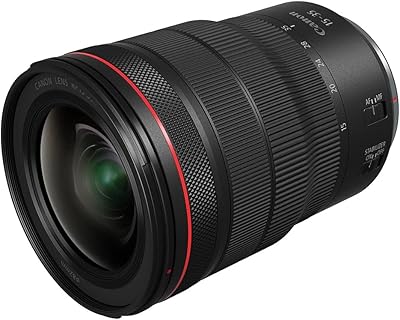
Canon RF 15-35mm F2.8 L IS Lens
85%
96%
Optical Sharpness
93%
Image Stabilization
91%
Autofocus Speed & Accuracy
94%
Build Quality & Weather Sealing
71%
Value for Money
More
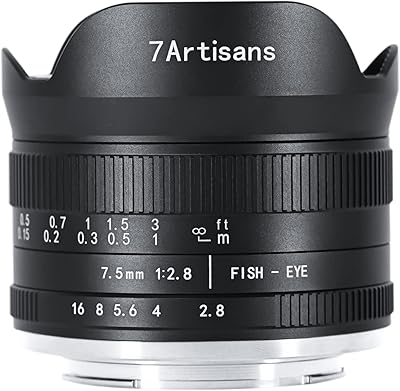
7artisans 7.5mm f2.8 Mark II Fisheye Lens for Canon RF
85%
88%
Image Quality
92%
Build Quality
65%
Ease of Use (Manual Focus)
90%
Portability
85%
Low-Light Performance
More
Sigma 105mm F2.8 EX DG OS HSM Macro Lens for Canon
85%
88%
Autofocus Performance
92%
Sharpness and Image Quality
89%
Optical Stabilization (OS)
87%
Build Quality
85%
Ease of Use
More
Sigma 18-50mm F2.8 DC DN Zoom Lens
81%
88%
Autofocus Performance
83%
Optical Sharpness
81%
Build Quality
94%
Size & Portability
86%
Low-Light Performance
More
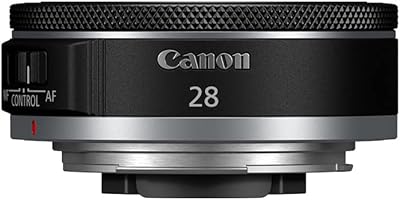
Canon RF 28mm F2.8 STM Wide-Angle Lens
79%
96%
Portability & Form Factor
78%
Image Sharpness
82%
Autofocus Performance
91%
Video Usability
58%
Build Quality
More
Canon RF 50mm F1.8 STM Lens
74%
83%
Image Sharpness
78%
Bokeh Quality
76%
Autofocus Speed & Accuracy
81%
Low-Light Performance
61%
Build Quality & Durability
More
Canon RF 24mm F1.8 Macro Lens
80%
91%
Image Sharpness
88%
Low-Light Performance
76%
Autofocus Speed & Accuracy
84%
Image Stabilization
72%
Macro Capability
More
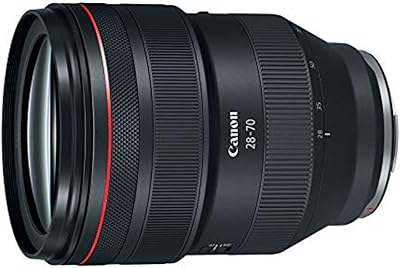
Canon RF 28-70mm F2.8 IS STM Lens
81%
91%
Image Sharpness
67%
Autofocus Performance
88%
Build Quality & Durability
76%
Image Stabilization
94%
Size & Portability
More

FAQ

No — this is an RF-mount lens, designed exclusively for Canon's full-frame mirrorless bodies like the EOS R, R5, R6, and RP. It will not physically attach to EF or EF-S mount DSLRs without an adapter, and even then, adapters are designed for EF glass going onto RF bodies, not the other way around.

It handles portraits very well — the 85mm focal length is a classic choice for flattering head-and-shoulder framing, and f/2 gives you enough aperture to separate subjects from busy backgrounds. The STM motor is quiet enough not to draw attention during ceremonies. The one trade-off is AF tracking speed, which may miss a few moments with fast-moving subjects compared to faster ring-type USM lenses.

It means the subject appears at half its real-world size on the camera sensor. So a small insect that is 20mm long would appear as a 10mm image on the sensor. This is genuine close-up capability and works well for flowers, jewelry, and food details, but it is not true 1:1 macro. Photographers who need life-size or larger reproduction for scientific or technical work should consider a dedicated 1:1 macro lens.

Quite useful, honestly. The Hybrid IS compensates for both the rotational shake you get when handholding normally and the lateral shift shake that becomes much more noticeable the closer you focus. You will still need good technique and ideally fast shutter speeds in dim light, but many photographers report being able to get sharp handheld close-ups that would have required a tripod with an unstabilized lens.

The control ring does produce a faint mechanical clicking sound depending on your camera settings and how it is configured. If you are recording audio with an on-camera microphone, this could occasionally bleed into the track. For serious video work with a boom mic or lavalier, this is a non-issue, but it is worth being aware of if you rely heavily on built-in audio.

Yes, it mounts and operates on APS-C RF bodies like the R7 and R10 without any adapter. The crop factor of 1.6x means the effective field of view becomes roughly equivalent to a 136mm lens on a full-frame camera, which actually makes it an even tighter portrait focal length. Macro magnification similarly gets a boost in effective reach on crop bodies.

Canon's L-series 85mm is a significantly different proposition — it offers a faster maximum aperture, ring-type USM autofocus for much snappier tracking, and weather sealing. This compact 85mm trades those features for a smaller size, lighter weight, and a considerably lower price. If you primarily shoot fast-moving subjects or work in adverse weather, the L-series is worth the premium. For portrait and casual macro work, most photographers find this RF 85mm more than sufficient.

For stationary or slow-moving subjects, it focuses reliably in low light, helped by the f/2 aperture letting the AF system work with more incoming light. Where it can hesitate is when the scene is very dark and contrast is low — in those situations the STM motor can hunt briefly before locking. Pairing it with a camera body that has strong dual-pixel autofocus, like the R5 or R6, helps considerably.

Some focus breathing is present — when the lens racks focus, the framing shifts slightly, which is a known characteristic of the STM motor design. It is not extreme, and most casual video shooters will not notice it in the final edit. Filmmakers shooting in controlled environments who require perfectly stable framing during focus pulls may find it mildly frustrating.

The front filter thread is 67mm, which is a common size and easy to find across most brands. A UV filter is a reasonable choice purely for front element protection, especially since weather sealing is unconfirmed on this lens. Just make sure you use a quality multi-coated filter — a cheap UV filter can introduce flare or reduce contrast, which would be a shame on an otherwise sharp optic.

Where to Buy

B&H Photo-Video-Audio
In stock $589.00
Sweetwater
In stock $589.00
Newegg.com
In stock $589.00
Full Compass Systems
In stock $689.99
Glazer's Camera
In stock $489.99
Pro Photo Supply
In stock $500.00