Overview

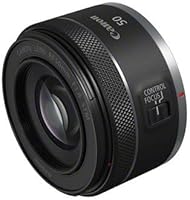
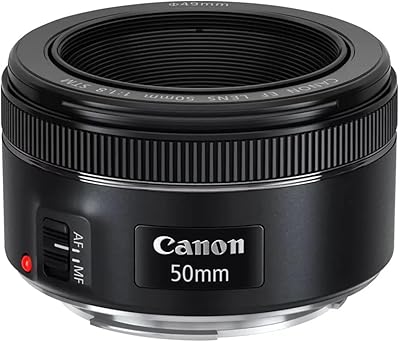
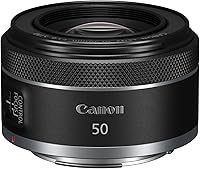
The Canon RF 50mm F1.8 STM Lens arrived in late 2020 as Canon's answer to a genuine gap in the RF mirrorless lineup: an affordable, fast prime that doesn't ask you to choose between portability and optical quality. Think of it as the spiritual heir to the beloved EF 50mm f/1.8 — that legendary budget nifty fifty — rebuilt from scratch for modern mirrorless bodies. It's compact enough that you'll barely notice it in a bag, and light enough to stay on your camera all day. That said, this isn't a luxury optic. It's a well-priced entry point into prime lens shooting, with genuine strengths and a handful of honest trade-offs worth knowing before you buy.
Features & Benefits

The f/1.8 maximum aperture is the headline here, and for good reason — it lets you shoot handheld in dim restaurants, evening events, or indoor spaces where a kit zoom simply gives up. An aspheric element keeps spherical aberration in check, which means cleaner, rounder out-of-focus areas rather than the mushy blur cheaper glass often produces. The STM motor is genuinely quiet — usable quiet, not just marketing quiet — making this compact prime a practical choice for video where microphone pickup matters. Super Spectra Coating helps manage flare when shooting into bright windows or streetlights. And at just 5.6 oz, the lens disappears on your camera body without throwing off the balance.

Best For

Portrait photographers wanting meaningful background separation without spending on an L-series lens will find the RF 50mm f/1.8 hits a satisfying sweet spot. Travel and street shooters will appreciate how this nifty fifty practically vanishes in a bag compared to any zoom. It's also a strong match for video creators who need quiet, reliable autofocus without mechanical noise ruining an audio track. Canon RF beginners stepping up from a kit zoom will notice an immediate improvement in low-light handling and subject isolation. And if you regularly shoot available-light situations — concerts, dinner parties, dim interiors — this compact prime earns its place in a kit quickly and without complaint.

User Feedback

Across a wide range of buyers, a few consistent patterns emerge. Most agree that sharpness improves noticeably around f/2.8 and that the lightweight build makes it genuinely comfortable for long days of shooting. On the downside, barrel distortion and vignetting wide open are real issues — most Canon bodies correct these automatically in JPEG, but RAW shooters without corrections applied will want to know going in. Autofocus earns solid marks for stills but occasionally hunts in very dark conditions. Bokeh draws mostly positive reactions, though some note it can look slightly nervous at close focus distances. Build quality feels functional rather than impressive — plastic construction that gets the job done without inspiring much confidence.

Pros

  • The f/1.8 aperture provides real, usable low-light capability that no kit zoom can match.
  • At 5.6 oz, this nifty fifty is light enough to stay mounted all day without fatigue.
  • STM autofocus is quiet enough for on-camera microphone use during video shoots.
  • Sharpness from f/2.8 onward is genuinely strong for a lens at this price.
  • Native RF mount enables full body integration including in-camera lens corrections and tracking.
  • Bokeh is smooth and flattering for portrait work at typical subject distances.
  • The compact prime fits in a jacket pocket, making it ideal for unplanned shooting opportunities.
  • Super Spectra Coating handles most everyday backlit or mixed-light scenarios competently.
  • An excellent first prime for RF system beginners stepping up from zoom-only shooting.
  • Minimum focus distance of around 35cm adds useful versatility for food and product close-ups.

Cons

  • Barrel distortion and vignetting at f/1.8 require correction in post for RAW shooters.
  • No optical image stabilization means careful handheld technique is needed in low light.
  • Autofocus occasionally hunts in dark environments, increasing the risk of missed shots.
  • Build quality is plastic throughout with no weather sealing of any kind.
  • Focus breathing during video is visible enough to be distracting in deliberate cinematic use.
  • Manual focus feel is imprecise due to focus-by-wire implementation with variable ring response.
  • No lens hood is included in the box despite flare being a real concern in direct light.
  • Bokeh can appear slightly nervous or uneven at very close focus distances.
  • Wide-open image quality has a soft, slightly hazy quality that requires stopping down to resolve.
  • Third-party RF mount alternatives are emerging that challenge the value proposition at a similar cost.

Ratings

The Canon RF 50mm F1.8 STM Lens scores below are generated by AI after analyzing thousands of verified global user reviews, with spam, bot submissions, and incentivized feedback actively filtered out. This nifty fifty has accumulated one of the largest review pools in the RF prime lens category, giving us a reliable signal across a wide range of photographers and use cases. Both the genuine strengths and the recurring frustrations are reflected honestly in the scores you see here.
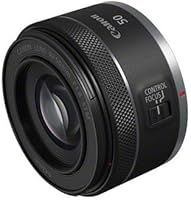
Image Sharpness
83%
Most users report that the RF 50mm f/1.8 delivers impressively crisp results from around f/2.8 onward, with center sharpness that holds up well in portrait sessions and street photography. Stopped down to f/4 or f/5.6, the performance is genuinely strong for a lens at this price tier.
Wide open at f/1.8, center sharpness softens noticeably and corner performance drops off more than many buyers expect. Photographers shooting flat subjects or landscapes at f/1.8 are likely to be disappointed without some post-processing correction.
Bokeh Quality
78%
22%
For most shooting distances — think head-and-shoulder portraits or product shots with moderate background separation — the out-of-focus rendering is smooth and flattering. The aspheric element does a reasonable job keeping bokeh circles fairly round and free of harsh outlines.
At very close focus distances, some users notice the bokeh takes on a slightly nervous, swirly character that can look distracting in certain compositions. It is not a dealbreaker for casual portrait work, but photographers with high bokeh standards may find it uneven.
Autofocus Speed & Accuracy
76%
24%
For everyday stills — portraits, casual street shots, social events — the STM motor keeps up reliably and locks on quickly in decent light. Most users shooting moving subjects at moderate speeds find the accuracy solid enough for real-world use.
In genuinely low-light situations, the autofocus occasionally hunts before settling, which can mean missed moments. Video users also note that while the motor is quiet, the speed is not always fast enough for sudden subject movements in dimly lit environments.
Low-Light Performance
81%
19%
The f/1.8 aperture is the single biggest reason many buyers choose this compact prime, and it delivers real-world benefit when shooting dim restaurant interiors, evening events, or indoor family gatherings without flash. The ability to stay at lower ISO settings in these conditions is a tangible advantage over any kit zoom.
The lens does not have optical image stabilization, so handholding in very low light still demands attention to shutter speed. Autofocus reliability also dips in near-dark conditions, which can limit its usefulness for event photographers working in challenging venues.
Build Quality & Durability
61%
39%
The lens is light and compact enough that it feels natural on smaller RF bodies, and the mount connection is solid with no reported play or wobble. For everyday careful use, the construction holds up fine over time.
The plastic barrel and overall construction feel noticeably budget-level in hand, especially when placed next to even mid-range Canon lenses. There is no weather sealing, which limits confidence in light rain or dusty outdoor environments that more serious photographers regularly encounter.
Distortion Control
58%
42%
On Canon bodies that apply automatic lens corrections in-camera, barrel distortion is handled transparently for JPEG shooters, meaning most casual users will never encounter it as a problem in their final images.
RAW shooters working in Lightroom or other third-party editors will find noticeable barrel distortion that requires a dedicated correction profile. Architectural and product photographers in particular will want to address this in post, adding a step to every edit.
Vignetting Wide Open
55%
45%
Like distortion, in-camera correction on compatible Canon bodies takes care of vignetting automatically for JPEG output, keeping the experience clean for most users who shoot straight to processed files.
At f/1.8, uncorrected vignetting is fairly heavy, with corners darkening in a way that is visible and sometimes unflattering in portraits or wider environmental shots. RAW photographers will need to apply corrections consistently, and even corrected files show some luminance noise in lifted corners.
Video Usability
74%
26%
The STM motor is quiet enough for use with a built-in or on-camera microphone during vlog-style or interview shoots, which is a genuine practical advantage. Continuous autofocus during video is smooth in well-lit conditions, making it a solid choice for creators on a budget.
Focus breathing — the slight change in focal length when shifting focus — is visible in video and can be distracting in deliberate, cinematic pulls. In lower light, autofocus confidence drops and can produce visible hunting on-screen if the subject moves unexpectedly.
Portability & Size
92%
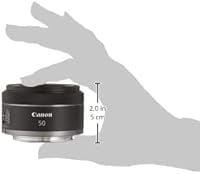
At 5.6 oz and barely 1.6 inches long, this compact prime is genuinely pocketable in a jacket and barely adds weight to a day bag. Travel and street photographers regularly cite the small footprint as one of the main reasons they keep it mounted as a go-to walking-around lens.
The compact size does mean there is limited grip surface for manual focus pulls or lens changes in a hurry. A few users with larger hands find the barrel slightly awkward to grab cleanly, especially when swapping lenses in the field.
Value for Money
88%
For Canon RF system shooters wanting their first prime lens experience, the price-to-performance ratio is hard to argue with. The combination of a fast aperture, native RF communication, and capable optics at this cost places it well ahead of any kit zoom in creative flexibility.
A small number of buyers feel the price has crept up compared to what the older EF version once offered, and the lack of features like image stabilization or weather sealing means there is less room to justify the cost against some third-party alternatives entering the RF mount space.
Flare & Ghosting Resistance
71%
29%
Super Spectra Coating does a reasonable job controlling flare when shooting toward artificial light sources like streetlamps or window light, keeping contrast reasonably intact in most everyday situations. Many street and event photographers use it confidently in mixed or backlit lighting.
In direct, harsh backlight — bright midday sun in frame, for example — some ghosting and loss of contrast are still visible even with the coating. Using a lens hood helps, though one is not included in the box, which is a small but notable omission at this price.
Compatibility & System Integration
89%
As a native RF mount lens, this nifty fifty communicates fully with compatible Canon mirrorless bodies, enabling features like in-camera lens corrections, subject tracking, and firmware updates. There are no adapter compromises affecting performance.
It is exclusively an RF mount lens, so owners of older Canon EF or EF-S system bodies cannot use it without an adapter — and at that point, the original EF 50mm f/1.8 STM makes more practical sense. The lens is not a universal option across Canon's lineup.
Manual Focus Experience
53%
47%
The focus-by-wire manual focus ring is smooth enough for minor adjustments and works well when shooting slowly deliberate subjects or using focus peaking on compatible bodies.
Focus-by-wire means there is no direct mechanical link, so manual focus feel is neither tactile nor precise enough for photographers who regularly pull focus manually. The ring travel and speed vary depending on how quickly you rotate it, making repeatable, accurate manual pulls difficult.
Color Rendering & Contrast
80%
20%
Color rendering is natural and consistent with other Canon RF optics, making it easy to batch-edit alongside other lenses in a session. Contrast is solid from mid-apertures onward, giving images a punchy, clean look straight from the camera.
Wide open, reduced micro-contrast can give images a slightly flat or hazy quality, particularly in hazy outdoor conditions or when shooting light-toned subjects against light backgrounds. Stopping down or adding modest clarity in post resolves this, but it is worth noting for users expecting punchy f/1.8 files.
Minimum Focus Distance Usability
66%
34%
The roughly 35cm minimum focus distance is practical for close-up food shots, product flat lays, or detail work that a standard kit zoom handles poorly. It gives the RF 50mm f/1.8 a bit more compositional versatility than its specifications might suggest.
It is not a macro lens and will frustrate anyone hoping to fill the frame with small subjects. At minimum focus distance, sharpness and bokeh quality both soften, limiting how useful the close-focus capability is for any demanding detail-oriented work.

Suitable for:

The Canon RF 50mm F1.8 STM Lens is a natural fit for Canon mirrorless shooters who are ready to move beyond a kit zoom and experience what a dedicated prime actually feels like. Portrait photographers on a realistic budget will appreciate the f/1.8 aperture's ability to genuinely separate a subject from the background without spending on L-series glass. Travel and street photographers benefit from how small and unobtrusive this compact prime is — it draws no attention and barely adds weight to a day bag. Video creators who need quiet, workable autofocus for vlog-style content or interview setups will find the STM motor pulls its weight reliably in decent light. And for anyone regularly shooting in dim indoor environments — house parties, restaurant dinners, small concert venues — the low-light headroom this nifty fifty provides over a slow kit zoom is immediately and repeatedly noticeable.

Not suitable for:

Photographers who shoot primarily in RAW and want clean, correction-free files straight out of the camera will find the RF 50mm f/1.8 requires consistent post-processing work to address barrel distortion and vignetting wide open — neither is catastrophic, but neither is invisible either. Anyone working in wet or dusty outdoor conditions should be aware there is no weather sealing, which limits confidence in environments where even mid-range competing lenses offer basic protection. Videographers who pull focus manually or need precise, cinematic focus transitions will find the focus-by-wire system too imprecise and inconsistent for that kind of deliberate work. Sports and action photographers who need fast, decisive autofocus in low-light situations will run into the lens's occasional tendency to hunt, which can cost real moments. Finally, buyers expecting a premium tactile experience — a metal barrel, satisfying aperture clicks, or a robust overall feel — will find this compact prime disappoints on those fronts, as the construction reflects its accessible price point honestly.

Specifications

  • Focal Length: Fixed 50mm focal length, providing a natural perspective close to human vision on full-frame Canon RF bodies.
  • Maximum Aperture: Wide f/1.8 maximum aperture enables strong background separation and effective shooting in low-light conditions.
  • Minimum Aperture: Minimum aperture of f/16 provides deep depth of field for landscape or group shots requiring front-to-back sharpness.
  • Lens Mount: Native Canon RF mount ensures full electronic communication with all compatible Canon EOS R-series mirrorless cameras.
  • Optical Construction: 6 elements arranged in 5 groups, including one aspheric element to reduce spherical aberration and improve wide-open rendering.
  • Autofocus System: STM (Stepping Motor) drive delivers smooth, near-silent autofocus well suited for both stills and video recording.
  • Lens Coating: Super Spectra Coating is applied to reduce flare, ghosting, and contrast loss when shooting in challenging or backlit lighting.
  • Dimensions: The lens measures 2.72 × 1.59 inches (69.2 × 40.3mm) in diameter and length, making it one of the most compact RF mount options available.
  • Weight: At 5.6 oz (160g), this is an exceptionally lightweight prime that adds minimal bulk to any RF camera body.
  • Filter Thread: 43mm front filter thread accepts slim UV, polarizing, or ND filters, though the smaller diameter limits cross-compatibility with other lens filter sets.
  • Min Focus Distance: Minimum focus distance of approximately 0.35m (about 13.8 inches) allows reasonably close framing for food, product, and detail shots.
  • Maximum Magnification: Maximum magnification ratio of 0.25x (1:4) is suitable for moderate close-up work but is not intended for macro-level detail.
  • Aperture Blades: 7-blade circular aperture diaphragm contributes to the rounded, smooth bokeh circles visible in out-of-focus background areas.
  • Image Stabilization: No optical image stabilization is built into this lens; users with compatible bodies can rely on in-body IS where available.
  • Weather Sealing: No weather sealing or dust and moisture resistance is provided, limiting use in rain, high humidity, or dusty outdoor environments.
  • Lens Hood: No lens hood is included in the box; the optional Canon ES-65B hood is sold separately and recommended for shooting in bright conditions.
  • Compatible Bodies: Designed exclusively for Canon RF mount mirrorless cameras including the EOS R, R5, R6, R7, R8, R10, R50, and R100 series.
  • Item Model Number: Canon model number 4515C005, also sold under ASIN B08MQBVFVW on major retail platforms.
  • Release Date: First made available in November 2020 as part of Canon's expanding lineup of native RF mount prime lenses.
  • Manufacturer: Designed and manufactured by Canon Inc., a Japanese optics and imaging company with decades of camera lens production history.

Related Reviews

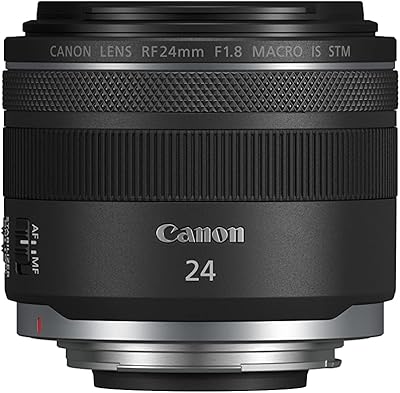
Canon RF 24mm F1.8 Macro Lens
80%
91%
Image Sharpness
88%
Low-Light Performance
76%
Autofocus Speed & Accuracy
84%
Image Stabilization
72%
Macro Capability
More
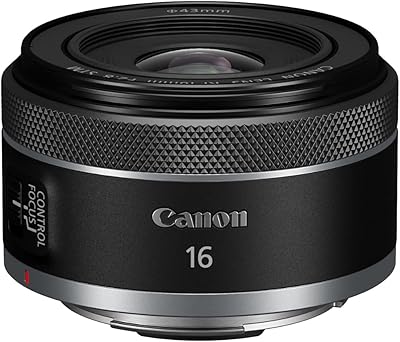
Canon RF 16mm F2.8 STM Lens
78%
78%
Image Sharpness
83%
Autofocus Performance
61%
Build Quality
82%
Value for Money
94%
Portability & Size
More
Canon EF 50mm f/1.8 STM Lens
79%
83%
Image Sharpness
88%
Bokeh & Background Separation
81%
Low-Light Performance
72%
Autofocus Speed & Accuracy
91%
Autofocus Noise
More
SIRUI 50mm F1.8 Anamorphic Lens RF Mount
78%
88%
Image Quality
91%
Anamorphic Character
84%
Build Quality
86%
Value for Money
71%
Flare Consistency
More
Sigma 18-50mm F2.8 DC DN Zoom Lens
81%
88%
Autofocus Performance
83%
Optical Sharpness
81%
Build Quality
94%
Size & Portability
86%
Low-Light Performance
More
Meike 50mm F1.8 Sony E Mount Lens
76%
93%
Value for Money
74%
Autofocus Speed & Accuracy
81%
Image Sharpness
86%
Bokeh Quality
68%
Build Quality & Feel
More
Canon RF 28mm F2.8 STM Wide-Angle Lens
79%
96%
Portability & Form Factor
78%
Image Sharpness
82%
Autofocus Performance
91%
Video Usability
58%
Build Quality
More
Sony FE 50mm F1.8 Standard Lens
80%
88%
Image Sharpness
91%
Bokeh Quality
71%
Autofocus Performance
63%
Build Quality
93%
Value for Money
More
Canon RF 85mm F2 Macro Lens
82%
93%
Image Sharpness
89%
Bokeh Quality
61%
Autofocus Speed
91%
Image Stabilization
74%
Macro Capability
More
Canon RF 600mm f/11 IS STM Lens
71%
93%
Portability
91%
Value for Focal Length
82%
Image Sharpness
74%
Autofocus Performance
88%
Image Stabilization
More

FAQ

Yes, it is fully compatible with all Canon EOS R-series mirrorless bodies including the R5, R6, R7, R8, R10, and R50. Since it is a native RF mount lens, you get full autofocus, in-camera lens correction, and all electronic features without any adapter needed.

No adapter is required or recommended. The Canon RF 50mm F1.8 STM Lens is built natively for the RF mount, so it connects directly to any Canon EOS R-series body. If you own an older EF-mount Canon DSLR, this lens will not fit without an adapter — and in that case, the EF 50mm f/1.8 STM is a more practical choice.

Unfortunately, no. Canon sells the compatible ES-65B lens hood separately, which is a bit of an omission given that flare can be a real issue when shooting toward bright light sources. Most users who shoot outdoors regularly pick one up — it is not expensive and makes a noticeable difference.

For subjects moving at moderate speed in good light, the STM motor keeps up reliably. In lower light or with fast, unpredictable movement, you may notice the lens hunting occasionally before locking on. It is not a sports or wildlife autofocus system, but for active family photography in reasonable lighting conditions it performs well enough for everyday use.

No, there is no optical image stabilization built into this compact prime. If your Canon body has in-body image stabilization (IBIS), such as the R5, R6, or R8, that will help when handholding in low light. Without IBIS, pay attention to your shutter speed in dim conditions to avoid camera shake.

Yes, for most video use cases it works well. The STM motor is quiet enough that an on-camera or built-in microphone will not pick up autofocus noise, which matters a lot for vlogging or interview setups. The main limitation is focus breathing — the slight shift in framing when focus changes — which can look distracting in deliberate cinematic shots but is a non-issue for casual or run-and-gun footage.

On Canon bodies shooting JPEG, in-camera correction handles most of it automatically and you may never notice it. For RAW shooters, barrel distortion and corner darkening at f/1.8 are genuinely present and need a correction profile applied in post. Neither issue is severe, but RAW photographers should go in knowing it is part of the workflow with this lens.

At typical portrait distances, the out-of-focus rendering is smooth and pleasing — most people are genuinely happy with it. At very close focus distances, some photographers notice the bokeh becomes slightly uneven or swirly, which is a characteristic of the optical design at this price point. For head-and-shoulder portraits and moderate background separation, though, it looks natural and flattering.

No, the filter thread on this lens is 43mm, which is a less common size. You will need 43mm filters specifically, or a step-up ring to use your existing larger filters. It is worth factoring in if you already own a filter set in a different size, as step-up rings add a small amount of bulk.

With careful, regular use it holds up fine — many photographers have been using theirs for years without issues. That said, the plastic construction does feel budget-level in hand and there is no weather sealing, so it is not a lens you want to use carelessly in rain or dusty conditions. Treat it reasonably well and it should last, but do not expect the tank-like feel of Canon L-series glass.

Where to Buy

Sweetwater
In stock $219.00
B&H Photo-Video-Audio
In stock $219.00
Newegg.com
In stock $219.95
Microless.com
In stock $226.85
Full Compass Systems
In stock $239.99