Overview

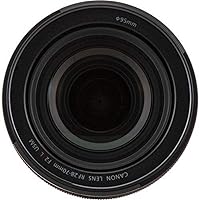
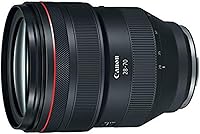
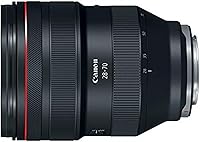
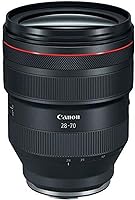
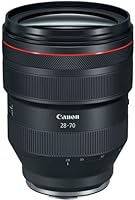
The Canon RF 28-70mm F2 L Zoom Lens arrived as something the photography world had never quite seen before: a standard zoom that holds a constant f/2 aperture across its entire focal range. Built exclusively for Canon EOS R full-frame mirrorless bodies, it carries the L-series badge — Canon's longstanding mark of professional optical and mechanical standards. This is not a lens aimed at casual shooters or those building a lightweight travel kit. It is a serious tool, sized and weighted accordingly, designed for professionals who refuse to compromise on light-gathering capability when reaching for a zoom.
Features & Benefits

What makes this RF zoom lens genuinely compelling in practice is how that f/2 aperture behaves across real shooting conditions. At a dimly lit wedding reception or a theater performance, you can stay at 70mm and still pull in light that slower zooms simply cannot. The ring-type USM autofocus is fast and nearly inaudible, which matters enormously for video work or quiet ceremonies. The customizable control ring adds a tactile efficiency professionals appreciate — direct aperture or exposure adjustment without diving into menus. Dust and water resistance, combined with a fluorine-coated front element, means this L-series standard zoom is built to handle unpredictable field conditions without hesitation.

Best For

Wedding and event photographers are probably the most natural fit for the Canon f/2 zoom — the focal range covers wide room shots through flattering portrait compression, all without swapping glass mid-shoot. Portrait photographers will find the subject separation at f/2 genuinely rivals many primes. Documentary and photojournalism work benefits from the lens's reliability in low-light environments where flash is unwelcome or prohibited. Video shooters on EOS R bodies get silent autofocus and smooth exposure control via the control ring. That said, if you prioritize a compact travel setup or shoot primarily outdoors in good light, this lens may be more than you need.

User Feedback

Across verified buyer reviews, the sharpness wide open draws consistent praise — many photographers note it outperforms their expectations for a zoom at f/2, with edge-to-edge clarity that holds up even in critical portrait crops. Autofocus reliability during fast-moving events is another frequently mentioned strength. The size and weight come up regularly, but most buyers frame this as a conscious trade-off they accepted before purchasing, not a surprise disappointment. A few reviewers note the zoom range feels slightly narrow for all-purpose use, and the minimum focus distance has drawn mild criticism from those who occasionally need closer working room. Overall sentiment leans strongly positive.

Pros

  • Sharpness at f/2 wide open genuinely surprises photographers accustomed to zoom lenses that soften at maximum aperture.
  • The constant f/2 aperture means no light penalty when zooming — what you set is what you get across the full range.
  • Near-silent USM autofocus lets you shoot ceremonies and quiet environments without disturbing the moment.
  • This RF zoom lens covers weddings, portraits, and editorial work without requiring a single lens change mid-shoot.
  • Dust and water resistance holds up in unpredictable field conditions — light rain and dusty outdoor venues are not a concern.
  • The customizable control ring adds a tactile, menu-free way to adjust exposure that experienced photographers integrate quickly.
  • Bokeh rendering at 70mm rivals fast primes for portrait work, with smooth, natural background transitions.
  • The fluorine-coated front element repels smudges and moisture, keeping cleaning quick and infrequent.
  • Chromatic aberration is well-controlled even in high-contrast backlit situations that expose weaknesses in other zooms.
  • Buyers consolidating a fast prime kit often find this lens replaces multiple pieces of glass in a single, more practical package.

Cons

  • At 3.15 pounds, fatigue accumulates noticeably during extended handheld shoots lasting several hours.
  • The 28–70mm range feels restrictive for photographers who regularly need reach beyond 70mm.
  • Vignetting wide open at f/2 is visible without correction, particularly at the 28mm end.
  • Minimum focus distance limits close-up versatility, making it a poor fit for product or detail photography.
  • Focus breathing during video rack focuses is noticeable enough to concern videographers working on narrative productions.
  • The control ring can be rotated accidentally mid-shoot until muscle memory for its position is fully developed.
  • Strict RF-mount exclusivity means the lens has no residual value or compatibility if you ever move away from Canon EOS R bodies.
  • Corner softness at f/2 on certain body pairings is minor but present for photographers who examine edges critically.
  • The investment is difficult to justify for shooters who work primarily in well-lit conditions where the f/2 aperture rarely comes into play.
  • Buyers expecting macro-adjacent close-focus capability will need a separate solution — this lens does not perform in that role.

Ratings

The scores below reflect an AI-driven analysis of verified global buyer reviews for the Canon RF 28-70mm F2 L Zoom Lens, with spam, bot-generated, and incentivized submissions actively filtered out before scoring. Real-world feedback from wedding photographers, video professionals, and studio shooters across multiple markets was weighted to surface genuine consensus. Both the standout strengths and the honest frustrations are represented here without softening either side.

Optical Sharpness
96%
Photographers consistently report that sharpness wide open at f/2 is the single most surprising attribute of this RF zoom lens — surprising because most fast zooms soften noticeably at maximum aperture. Wedding shooters describe pulling tack-sharp images from dimly lit receptions without stopping down at all.
A small number of reviewers note very slight softness in the extreme corners at f/2 on certain EOS R bodies, though this is rarely visible in practical shooting contexts and largely disappears by f/2.8.
Low-Light Performance
94%
The constant f/2 aperture is genuinely transformative for event and documentary work — shooters describe dropping ISO by two full stops compared to their previous f/4 zoom, resulting in cleaner files straight out of camera in candlelit venues and dimly lit performance halls.
At longer focal lengths combined with maximum aperture, some photographers note that depth of field becomes extremely thin, requiring more precise focus technique than shooters accustomed to slower lenses may initially expect.
Autofocus Speed & Accuracy
91%
The ring-type USM motor earns consistent praise for snapping onto subjects quickly and quietly during live ceremonies and theatrical performances. Video shooters particularly appreciate how imperceptible the focus motor noise is when recording with an on-camera microphone.
A handful of reviewers report occasional hesitation when tracking erratically moving subjects in very low contrast scenes, though this appears to reflect camera body AF system behavior as much as the lens itself.
Build Quality & Weather Sealing
93%
The L-series construction inspires confidence among professionals who shoot outdoors in unpredictable conditions. Photojournalists and event photographers describe using this lens through light rain and dusty environments without any concern, crediting the fluorine-coated front element for keeping cleaning simple.
The overall bulk means the lens puts meaningful stress on camera mounts and wrist joints during extended handheld sessions, which some users consider a durability concern for the body mount over years of heavy use.
Bokeh Quality
89%
Portrait photographers describe the background separation at f/2 as comparable to their dedicated prime lenses, with smooth, creamy out-of-focus rendering that holds up in high-resolution crops. Subject isolation at 70mm is particularly praised for professional headshots and editorial work.
A few reviewers note that bokeh transitions at closer focus distances can appear slightly busier than what the smoothest prime lenses deliver at equivalent apertures, though this is a minor observation rather than a widespread complaint.
Control Ring Usability
83%
Photographers who adapt quickly to the control ring describe it as genuinely useful on fast-paced shoots — being able to adjust aperture directly at the lens without shifting a thumb to the camera body speeds up workflow in unpredictable lighting situations.
New users occasionally report accidentally rotating the control ring mid-shoot, causing unintended exposure changes before they internalize the ring positioning. It takes deliberate muscle memory to integrate smoothly into existing shooting habits.
Video Performance
88%
Silent autofocus tracking and the smooth control ring make this L-series standard zoom a genuinely capable video tool for EOS R users. Cinematographers working in hybrid photo-video roles praise the ability to pull smooth exposure adjustments without visible stepping artifacts in footage.
Some videographers note measurable focus breathing during rack focus pulls at longer focal lengths, which can be distracting in carefully composed narrative or commercial video work where a cine-specific lens might be preferred.
Chromatic Aberration Control
87%
Users report very minimal fringing even in high-contrast scenes like backlit portraits against bright windows — a situation where many zoom lenses struggle visibly. This is frequently called out by photographers who habitually check edges of their frames during post-processing.
Some mild lateral chromatic aberration is reported at the wider end of the zoom range in extreme contrast situations, though in-camera and Lightroom corrections handle this effectively with Canon's lens profile applied.
Distortion & Vignetting
78%
22%
With lens corrections applied — which Canon cameras handle automatically — distortion at both ends of the zoom range is well-managed for a constant f/2 optic. Architectural photographers shooting at 28mm find the corrected output acceptably straight for most professional uses.
Vignetting wide open at f/2 is noticeable without correction, particularly at 28mm, and some photographers shooting JPEGs or video without automatic profiles applied report needing to address corner darkening in post.
Portability & Handling
61%
39%
Photographers who treat size as a deliberate trade-off for optical performance report that the balance on larger EOS R bodies like the EOS R5 is actually quite comfortable during structured shoots. The grip is secure, and the zoom ring action draws praise for being smooth without being loose.
At 3.15 pounds, this is a demanding lens for all-day handheld shooting, and travel photographers or those who cover multiple hours of ceremony footage report fatigue that accumulates noticeably compared to lighter alternatives.
Zoom Range Versatility
72%
28%
For photographers whose core work lives between environmental portraits and tighter editorial compositions, the 28–70mm range covers a practical and frequently used slice of focal lengths without requiring a lens change mid-shoot.
Buyers who expected a more flexible walk-around zoom occasionally express that the range feels constrained — particularly at the telephoto end — and some mention wishing for even 85mm to cover tight portrait scenarios without repositioning.
Minimum Focus Distance
66%
34%
For standard portrait, event, and journalistic work, the minimum focus distance is rarely a limiting factor, and most users in these genres never encounter a practical issue with how close the lens can focus.
Product photographers and those who occasionally need close-up environmental details report that the 0.18x maximum magnification and relatively long minimum focus distance make the lens unsuitable as a macro substitute, requiring a dedicated close-up lens for those scenarios.
Value for Money
74%
26%
Professional photographers who previously carried two or three fast primes to cover the same focal range describe the investment as justifiable when viewed as consolidating glass rather than adding to a kit. The replacement cost of equivalent prime coverage often exceeds this lens.
For photographers outside professional event work, the price-to-use-case ratio is harder to defend, and several reviewers acknowledge that a fast prime or a slower zoom at a fraction of the cost would meet their actual needs more practically.
Lens Compatibility & Communication
91%
The 12-pin communication system ensures the lens and EOS R body share detailed data rapidly, which buyers notice in consistent metering behavior, reliable EXIF reporting, and optimal in-body image stabilization coordination across shooting conditions.
Compatibility is strictly limited to Canon RF mount bodies, which is an inherent design constraint rather than a flaw, but photographers considering future system flexibility should factor this into their long-term decision-making.
Flare & Ghosting Resistance
81%
19%
Event and wedding photographers shooting toward mixed artificial and natural light sources report that this Canon f/2 zoom handles flare tastefully, with the fluorine coating and Canon's optical coatings keeping ghosting subtle enough that most frames require no post-processing intervention.
In particularly challenging backlit situations with multiple strong point light sources — festival stages with theatrical lighting, for example — some reviewers note ghost artifacts that require minor post-production cleanup or careful framing to avoid.

Suitable for:

The Canon RF 28-70mm F2 L Zoom Lens is built for photographers and videographers who work in demanding, often uncontrolled environments where light and timing cannot be negotiated. Wedding photographers will find it particularly valuable — the ability to shoot a candlelit ceremony at f/2 across a versatile focal range without swapping lenses mid-aisle is a meaningful professional advantage. Portrait and editorial photographers benefit from subject separation and smooth background rendering that rivals dedicated prime lenses, without the limitations of a fixed focal length. Photojournalists and documentary shooters operating in available-light situations — concert halls, courtrooms, dimly lit press conferences — get a tool that keeps ISO lower and files cleaner. Hybrid shooters producing both photo and video on EOS R bodies will appreciate the near-silent USM autofocus and the control ring for smooth, on-the-fly exposure adjustments during recording. Studio professionals who want a single lens capable of covering everything from environmental full-body shots to tighter compositional work will find the 28–70mm range a practical single-lens solution for structured sessions.
Not suitable for:

The Canon RF 28-70mm F2 L Zoom Lens is not the right choice for photographers who prioritize a lightweight, travel-friendly kit. At over three pounds, it demands physical commitment during extended handheld sessions, and paired with an EOS R body, the combined system is genuinely heavy for all-day street shooting or backpacking-style travel photography. Beginners or hobbyists who shoot mostly outdoors in good light will find that a slower, more affordable zoom covers their actual needs without the added bulk and investment. Macro and close-up photographers will run into the limits of a 0.18x maximum magnification fairly quickly and should factor in a dedicated close-focus lens alongside this one. Those considering a flexible multi-system future should also note that this lens is strictly RF mount — it brings no crossover value if they ever move outside the Canon EOS R ecosystem. Finally, photographers who regularly shoot beyond 70mm — wildlife, sports with distant subjects, or tight telephoto compression — will find this lens stops short of their working range and should look at Canon's RF telephoto options instead.
Specifications

  • Focal Length: This lens covers a 28–70mm zoom range, making it suitable for wide environmental shots through standard portrait compression on full-frame EOS R bodies.
  • Max Aperture: A constant f/2 maximum aperture is maintained across the entire zoom range, providing consistent light-gathering capability at every focal length.
  • Min Aperture: The minimum aperture is f/22, offering a full range of exposure control for situations requiring maximum depth of field.
  • Lens Mount: Designed exclusively for the Canon RF mount, this lens is compatible only with Canon EOS R series full-frame mirrorless camera bodies.
  • Autofocus: A ring-type Ultrasonic Motor (USM) drives autofocus, delivering fast and near-silent focusing performance suited to both stills and video applications.
  • Control Ring: A customizable control ring on the lens barrel allows direct assignment of aperture, ISO, or exposure compensation for quick, menu-free adjustments.
  • Weather Sealing: The lens features dust- and water-resistant construction throughout, providing reliable protection during professional use in variable outdoor conditions.
  • Front Coating: A fluorine coating on the front element repels water, dust, and fingerprints, reducing cleaning frequency and protecting optical performance in the field.
  • Communication Pins: A 12-pin communication system enables high-speed electronic data transfer between the lens and compatible EOS R bodies for optimized metering and autofocus coordination.
  • Max Magnification: The maximum magnification ratio is 0.18x, which supports standard close-focus needs for portraits and environmental details but is not suited for macro work.
  • Dimensions: The lens measures 4.1 × 4.1 × 5.5 inches, reflecting the substantial optical construction required to achieve a constant f/2 aperture in this zoom range.
  • Weight: At 3.15 pounds, this is a physically demanding lens by zoom standards, a deliberate engineering outcome of its large-aperture optical formula.
  • Lens Series: This lens belongs to Canon's L-series lineup, which denotes professional-grade optical quality, premium build materials, and rigorous manufacturing standards.
  • Lens Type: Classified as a standard zoom lens, it covers the most commonly used focal lengths for editorial, event, portrait, and documentary photography.
  • Filter Thread: The lens accepts 95mm front filters, which is a notably large filter diameter reflecting the size of the front optical element required for the f/2 aperture.
  • Lens Construction: The optical design includes multiple specialized elements engineered to suppress chromatic aberration and maintain edge-to-edge sharpness even at maximum aperture.
  • Image Stabilization: This lens does not include optical image stabilization, relying instead on the in-body image stabilization systems available in compatible EOS R camera bodies.
  • Compatibility: The lens is designed solely for Canon EOS R full-frame mirrorless bodies and is not compatible with EF-mount DSLRs or APS-C EOS R bodies without optical compromise.

Related Reviews

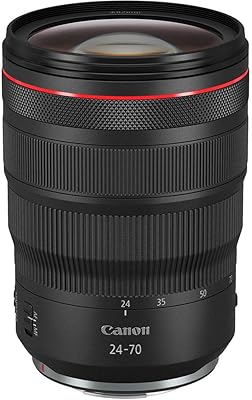
Canon RF 24-70mm F2.8 L Zoom Lens
84%
96%
Optical Sharpness
93%
Autofocus Performance
91%
Image Stabilization
94%
Build Quality & Weather Sealing
92%
Aperture Consistency
More
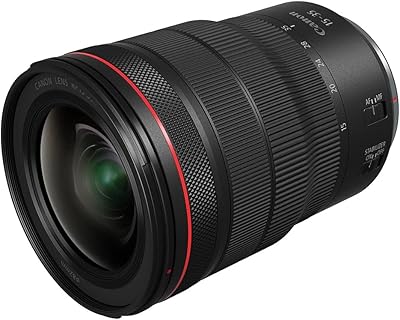
Canon RF 15-35mm F2.8 L IS Lens
85%
96%
Optical Sharpness
93%
Image Stabilization
91%
Autofocus Speed & Accuracy
94%
Build Quality & Weather Sealing
71%
Value for Money
More
Canon RF 28-70mm F2.8 IS STM Lens
81%
91%
Image Sharpness
67%
Autofocus Performance
88%
Build Quality & Durability
76%
Image Stabilization
94%
Size & Portability
More
Canon RF 16mm F2.8 STM Lens
78%
78%
Image Sharpness
83%
Autofocus Performance
61%
Build Quality
82%
Value for Money
94%
Portability & Size
More
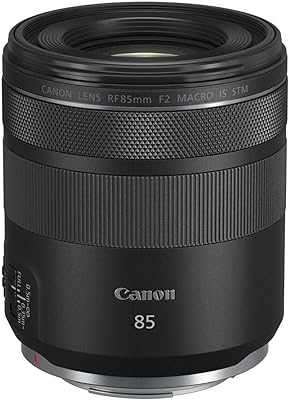
Canon RF 85mm F2 Macro Lens
82%
93%
Image Sharpness
89%
Bokeh Quality
61%
Autofocus Speed
91%
Image Stabilization
74%
Macro Capability
More
Canon RF 70-200mm F2.8 L Telephoto Lens
84%
94%
Autofocus Speed & Accuracy
93%
Image Sharpness
91%
Image Stabilization
92%
Build Quality & Durability
67%
Value for Money
More
Canon RF 100mm F2.8 L Macro Lens
84%
96%
Image Sharpness
93%
Macro Magnification
89%
Bokeh & Rendering
88%
Image Stabilization
71%
Autofocus Performance
More
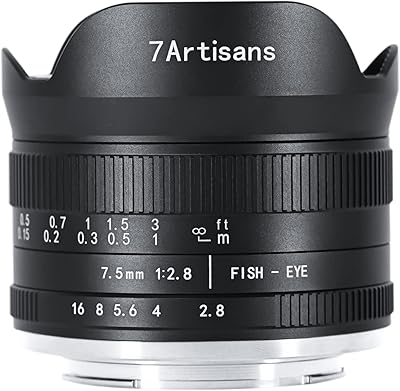
7artisans 7.5mm f2.8 Mark II Fisheye Lens for Canon RF
85%
88%
Image Quality
92%
Build Quality
65%
Ease of Use (Manual Focus)
90%
Portability
85%
Low-Light Performance
More
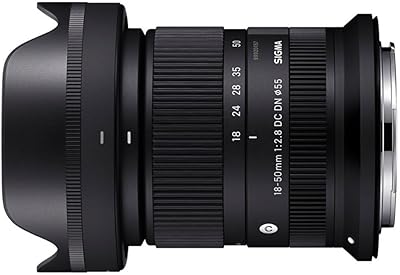
Sigma 18-50mm F2.8 DC DN Zoom Lens
81%
88%
Autofocus Performance
83%
Optical Sharpness
81%
Build Quality
94%
Size & Portability
86%
Low-Light Performance
More
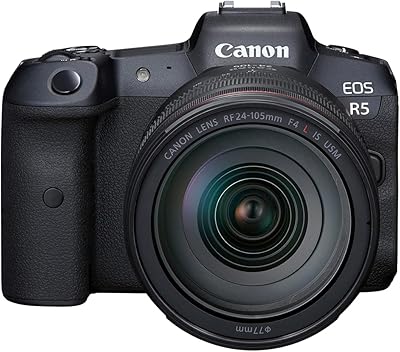
Canon EOS R5 Mirrorless Camera
81%
97%
Image Quality
95%
Autofocus Performance
82%
Video Capability
93%
Build Quality & Durability
88%
In-Body Image Stabilization
More

FAQ

Physically, the RF mount fits all EOS R bodies including APS-C models like the R50 and R100. However, the Canon RF 28-70mm F2 L Zoom Lens is designed for full-frame sensors — on an APS-C body you will get a cropped field of view equivalent to roughly 45–112mm, and the full optical performance the lens was engineered for is only realized on full-frame EOS R bodies like the R5, R6, or R3.
It handles real-world field conditions well. The dust- and water-resistant sealing throughout the barrel is professional-grade, and the fluorine-coated front element sheds water droplets and smudges effectively. It is not fully waterproof, so heavy downpours warrant some caution, but light rain, coastal spray, and dusty outdoor venues are well within its tolerance.

Yes, and the ring-type USM motor is genuinely quiet — quiet enough that on-camera microphones rarely pick it up during recording. The customizable control ring also allows smooth, stepped or stepless exposure adjustments during a take, which video shooters find useful for adapting to changing light without cutting.

No, there is no optical stabilization built into this lens. Canon's approach is to rely on the in-body image stabilization (IBIS) found in bodies like the EOS R5 and R6 series. If you are shooting on a body without IBIS, such as the original EOS R, you will be working without stabilization assistance, which matters more at slower shutter speeds.

It takes 95mm front filters, which is a large diameter. Availability has improved considerably as this lens has been on the market for several years, and most major filter brands — B+W, Hoya, Kenko — produce quality options at 95mm. That said, 95mm filters cost noticeably more than smaller common sizes like 77mm or 82mm, so factor that into your accessory budget.

At 70mm and f/2, subject separation is strong and background rendering is smooth and natural — most portrait photographers describe it as comparable to a good prime in practical shooting. A fast 85mm prime may still deliver marginally smoother bokeh at equivalent distances, but in real-world portrait work at typical shooting distances, the difference is subtle enough that most clients will never notice.

It covers the core of a wedding day very well — ceremony wide shots, couple portraits, reception candids, and detail work all fall comfortably within the range. Many photographers use it as their primary lens for the day. That said, you may want something wider for tight venue interiors and something longer for ceremony moments when you cannot move closer, so a compact wide prime and a 70–200mm are common companions.

The control ring rotates continuously without a hard stop, similar in feel to a manual focus ring. It can be set to operate in stepped clicks or smoothly depending on your assigned function and camera settings. Some photographers accidentally nudge it early in their ownership, so it is worth double-checking your exposure settings during the learning phase until handling the ring becomes automatic.

The minimum focus distance is approximately 0.39 meters at the wide end, with a maximum magnification of 0.18x — adequate for environmental product context shots and close portraits, but not for detailed close-up product work where you need to fill the frame with small subjects. If close-up or macro product photography is a regular need, a dedicated macro lens would serve that role better alongside this one.

The zoom ring action is consistently described by buyers as smooth with a deliberate resistance that feels appropriate for a professional L-series lens — it does not drift or creep on its own. Most photographers report that it strikes a good balance between being firm enough to stay put and fluid enough to operate confidently during a fast-moving shoot.

Where to Buy

B&H Photo-Video-Audio
In stock $3,399.00
Full Compass Systems
In stock $3,399.00
Willoughby's Photo Emporium
In stock $2,995.00
Abe's of Maine
In stock $3,149.00
camerabox.com.sa
In stock $3,385.57
National Camera Exchange
In stock $3,399.00