Overview

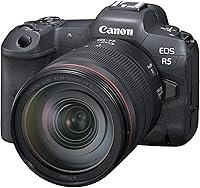
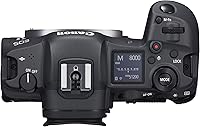
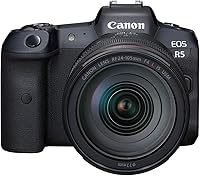
The Canon EOS R5 Mirrorless Camera sits at the top of Canon's full-frame lineup, designed for photographers and videographers who need both elite image quality and serious video capability in one body. This is not entry-level gear — the price makes that clear, and the feature set confirms it. The RF mount ecosystem backs this hybrid camera with an expanding library of high-quality lenses, and the included RF 24-105mm f/4 L IS USM gives you a practical, versatile starting point right out of the box. Weather-sealed magnesium alloy construction adds real confidence when shooting in rain, dust, or rough outdoor conditions where cheaper cameras would give you pause.
Features & Benefits

The 45-megapixel full-frame sensor is the kind of resolution that lets you crop aggressively in post or deliver large commercial prints without losing meaningful detail. The autofocus system covers the full frame with over a thousand focus points, and deep learning subject tracking locks onto a person's eye at a wedding reception or follows a bird banking through the sky with striking reliability. 8K video is genuinely capable, but it comes with real-world demands: CFexpress cards are non-negotiable, file sizes are substantial, and early firmware ran into heat limits during extended recording — subsequent updates improved the situation considerably. In-body stabilization working alongside the kit lens IS makes handheld shooting at slower shutter speeds noticeably more forgiving.

Best For

The R5 is built for people who depend on their camera professionally or shoot at a level where performance gaps have real consequences. Wedding and portrait photographers benefit most from the fast, accurate autofocus under pressure and high-resolution files that hold up to heavy cropping or large-format printing. Wildlife and sports shooters gain from the burst speed and subject tracking. Filmmakers and hybrid content creators get a body that handles both disciplines without meaningful compromise. This full-frame mirrorless is, plainly, not the right tool for beginners or casual travel photographers — and anyone who buys one should budget separately for CFexpress storage, fast card readers, and the computing power to handle large files.

User Feedback

With a 4.6-star average across nearly a thousand ratings, the R5 has earned genuine enthusiasm from its owners, with autofocus performance and raw image quality drawing the most consistent praise. Long-term users report the camera holds up reliably after months of heavy daily shooting, and initial impressions tend to only strengthen over time. The most documented frustration was 8K overheating in early units: extended recording sessions would cut out sooner than expected, a legitimate problem for video professionals. Firmware updates have meaningfully reduced this, though it has not been entirely eliminated. Battery life during video-intensive work is another recurring complaint. Users coming from Canon DSLRs also face a steep learning curve adjusting to the new menu system and RF controls.

Pros

  • 45MP full-frame sensor delivers files with enough resolution to crop heavily and still produce large commercial prints.
  • Deep-learning autofocus tracks human and animal subjects with impressive reliability across unpredictable, real-world shooting conditions.
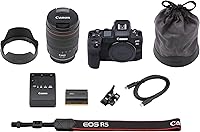
  • The included RF 24-105mm f/4 L IS USM lens provides immediate, professional-grade versatility without an extra purchase.
  • In-body 5-axis stabilization makes handheld shooting at slower shutter speeds far more forgiving in low light.
  • Dual card slots allow simultaneous backup during critical shoots, reducing the risk of losing irreplaceable files.
  • Silent 20fps electronic shutter lets the R5 cover fast action discreetly in quiet venues like ceremonies or courtrooms.
  • Weather-sealed magnesium alloy construction holds up reliably in rain, dust, and rough outdoor conditions.
  • Long-term owners report the camera remains competitive years after purchase, making it a durable professional investment.
  • Built-in Wi-Fi enables same-day image delivery to clients directly from the camera, without returning to a desktop.

Cons

  • 8K recording overheating during extended sessions was a documented early issue; firmware has improved but not fully resolved it.
  • Battery drains noticeably faster during video or high-resolution burst shooting, requiring multiple spares for full-day work.
  • CFexpress Type B cards required for 8K recording are significantly more expensive than standard SD storage.
  • The menu system has a steep learning curve, especially for photographers coming from non-Canon systems.
  • Rolling shutter artifacts appear at the electronic shutter setting, limiting its use for fast lateral motion in some scenarios.
  • Micro-HDMI output rather than full-size HDMI is a recurring frustration for videographers connecting to on-set monitors.
  • Processing and storing 45MP RAW files and 8K footage demands fast card readers, large drives, and capable editing hardware.
  • Total cost of ownership — body, CFexpress cards, lenses, and storage — is substantially higher than the body price alone suggests.
  • The tilting screen, while useful, lacks full articulation, which limits certain video shooting angles compared to competing bodies.

Ratings

The scores below were generated by AI after analyzing thousands of verified owner reviews for the Canon EOS R5 Mirrorless Camera worldwide, with spam, bot activity, and incentivized feedback actively filtered out. The R5 earns strong marks across most categories, but this analysis does not shy away from the real frustrations that professional and enthusiast users have reported. Both the standout strengths and the genuine pain points are reflected transparently in every score.
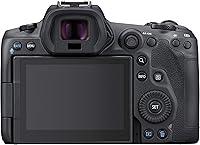
Image Quality
97%
Owners shooting commercial work or large-format prints consistently describe the 45MP files as exceptional, with detail that holds up even after heavy cropping. Wildlife photographers note they can pull a usable frame from a wider shot when a subject moves unexpectedly, something simply not possible with lower-resolution bodies.
A small number of users point out that at very high ISO settings, fine detail in shadows can deteriorate more than expected for a sensor at this tier. The gap between base ISO and expanded ISO performance is noticeable enough that some professionals avoid pushing beyond 12800 in critical work.
Autofocus Performance
95%
The deep-learning subject tracking draws near-universal praise from wedding photographers who need the camera to hold focus on a moving subject across a crowded reception floor without constant intervention. Bird and wildlife shooters report that eye-detection locks on and holds with a consistency that previously required much more manual effort.
A recurring complaint involves occasional confusion when multiple subjects occupy the same frame and the camera must decide which to prioritize. In fast-moving group scenarios, some users report brief hesitations before the system commits to the intended subject.
Video Capability
82%
18%
For hybrid shooters who need cinema-quality footage and high-res stills from one body, the R5 delivers genuinely impressive results. Filmmakers shooting short-form commercial content praise the flexibility of having 8K footage to reframe in post without cropping into a lower-resolution image.
Early firmware versions allowed the camera to overheat after relatively short 8K recording sessions, cutting out mid-shoot — a serious problem in professional video contexts. Subsequent firmware updates have helped considerably, but some users on extended shoots still report hitting thermal limits before they would like.
Build Quality & Durability
93%
Photographers shooting outdoor events in unpredictable weather describe the magnesium alloy body and weather sealing as genuinely reassuring, not just a spec on paper. The grip feels substantial and well-balanced, especially when paired with heavier L-series glass.
A few users note that the body feels slightly bulkier than some competing full-frame mirrorless options, which can be tiring during long handheld sessions. The added weight is a deliberate trade-off for durability, but it is worth factoring in for photographers who travel light.
In-Body Image Stabilization
88%
Street and event photographers working in low light appreciate being able to shoot handheld at shutter speeds they would previously have considered unusable without a tripod. When paired with the IS in the included 24-105mm lens, the coordinated stabilization system adds a meaningful extra margin of sharpness.
Some video shooters note that while IBIS is effective for gentle movement, more pronounced camera motion during walking shots still produces visible wobble that requires additional stabilization in post. It is not a replacement for a gimbal in demanding run-and-gun video scenarios.
Battery Life
61%
39%
For standard still photography with moderate chimping and review, most users get through a reasonable day of shooting on a single charge. The LP-E6NH battery is an improvement over older Canon battery designs, and the dual-slot body does not drain power faster than direct competitors.
Battery consumption during 8K or high-resolution video recording is a consistent complaint — many users report needing two or three batteries for a full day of hybrid shooting. The cost of carrying multiple spares adds to an already significant total investment, and some professionals have invested in battery grips to compensate.
High-Speed Burst Shooting
86%
Sports and wildlife photographers praise the ability to fire 20fps silently using the electronic shutter, which is especially useful in quiet venues or when not wanting to disturb subjects. The buffer handles a strong run of RAW files before slowing, giving shooters confidence during critical moments.
Rolling shutter artifacts at the electronic shutter setting are a documented issue and frustrate photographers shooting fast lateral motion. At the mechanical shutter's 12fps, rolling shutter is not a concern, but the trade-off in speed is real for certain action scenarios.
Ergonomics & Handling
84%
Users transitioning from Canon DSLRs find the button layout and grip shape familiar enough to adapt quickly. The tilting rear screen is particularly appreciated by photographers who shoot from low angles or need a discreet waist-level composition during street or event work.
The menu system draws criticism from users coming from competing brands, and even experienced Canon shooters note the depth of customization options can be disorienting at first. A fully articulating screen is something a number of video-focused users wish the R5 had over the tilting-only design.
Lens Ecosystem (RF Mount)
89%
The RF mount has matured into a strong ecosystem, with professional-grade primes and zooms available across focal lengths. The included 24-105mm f/4 L lens covers a genuinely useful range for events, travel, and studio work without needing an immediate additional purchase.
Native RF lenses at the top of the range carry significant price premiums, and building out a full professional kit represents a substantial long-term investment beyond the body itself. EF lens adapters work reliably, but some autofocus advantages of native RF glass are not fully available with adapted lenses.
Storage & Workflow Requirements
58%
42%
The dual card slot design — CFexpress Type B alongside SD UHS-II — gives professionals a practical redundancy setup, with the option to write simultaneously to both cards during critical shoots like weddings. Long-term owners appreciate this as a genuine safety net rather than a token feature.
CFexpress Type B cards are noticeably more expensive than SD cards, and the volume of data generated by 45MP RAW files and 8K footage demands fast card readers, large storage drives, and capable editing hardware. First-time R5 buyers consistently report underestimating the total cost of building a functional workflow around this camera.
Video Autofocus
87%
Content creators shooting solo — where manually pulling focus while on camera is impractical — consistently praise the R5 for holding face and eye tracking through natural head movement and minor repositioning. The confidence to move freely without a dedicated focus puller is a meaningful practical advantage for small production teams.
In challenging lighting or when shooting through glass or mesh, the video autofocus can hunt briefly before reacquiring. A handful of videographers note that during slow cinematic pulls, the AF transitions are not always smooth enough to use without adjustment in post.
Connectivity & Sharing
74%
26%
Built-in Wi-Fi and Bluetooth allow photographers to transfer images directly to a smartphone for quick social media delivery without returning to a desktop. Wedding and event shooters who need to send previews to clients on the same day find this workflow genuinely useful.
Transfer speeds over Wi-Fi for large RAW files are slow enough that most professionals still rely on a physical card reader for bulk transfers. The Micro-HDMI port, rather than a full-size HDMI, is a practical frustration for videographers who connect to external monitors frequently on set.
Value for Money
71%
29%
For working professionals who bill at rates where the camera pays for itself within months, the R5 justifies its price through reliability and output quality. Long-term owners emphasize that they have not felt the need to upgrade, which points to genuine longevity in the investment.
For enthusiast photographers who are not generating income from their work, the price requires honest self-assessment of whether the performance gap over more affordable full-frame alternatives is worth the difference. The total cost of ownership — including CFexpress cards, storage, and compatible lenses — makes the initial body price just the starting point.
Learning Curve
66%
34%
Experienced Canon DSLR users find enough familiar logic in the control layout to get up and running without starting from scratch. The depth of customization ultimately rewards the time invested, and most owners report feeling comfortable after several weeks of regular shooting.
Users coming from other brands, or photographers upgrading from entry-level systems, describe the menu depth and settings interactions as genuinely overwhelming in the early weeks. Several reviewers recommend planning dedicated practice time before deploying the camera in high-pressure professional situations.

Suitable for:

The Canon EOS R5 Mirrorless Camera was built for photographers and videographers who work at a level where their equipment genuinely has to perform under pressure. Wedding photographers will appreciate how the deep-learning autofocus holds eye contact with subjects moving through a crowded reception without requiring constant manual correction, and the 45MP files give them plenty of room to crop and reframe in post without losing print-worthy resolution. Wildlife and sports shooters benefit from the burst speed and subject tracking working together — locking onto a bird in erratic flight and holding it is the kind of thing that used to require much more effort or luck. Hybrid content creators who need one body to handle both high-resolution stills and serious video work will find the R5 genuinely capable of covering both disciplines without embarrassing compromises. Studio and commercial photographers producing work destined for billboards, large-scale advertising print, or clients who demand flexibility in delivery formats have a sensor here that justifies the investment. The robust, weather-sealed body also makes it a dependable choice for professionals shooting in outdoor or unpredictable environments where cheaper gear creates anxiety.
Not suitable for:

If you are a casual photographer, a first-time camera buyer, or someone who primarily shoots vacation photos and family events, the Canon EOS R5 Mirrorless Camera is genuinely not the right tool — and buying it would mean paying a significant premium for capabilities you will rarely use. The learning curve is real: even experienced photographers transitioning from Canon DSLRs or other brands report needing weeks of deliberate practice before the menu system and custom settings feel natural, which is a poor experience if you need to shoot confidently right away. The storage demands alone can be a dealbreaker for casual users — 45MP RAW files fill cards quickly, CFexpress Type B cards are expensive, and the computing power needed to process 8K footage is non-trivial. Battery life during video-heavy shooting is a known limitation, meaning professionals doing extended video work need to carry multiple spares, which adds both cost and bag weight. Anyone hoping to travel light with a minimal kit will also find the body size and weight, combined with the cost of native RF lenses, pushes this system toward the heavy and expensive end of the spectrum.
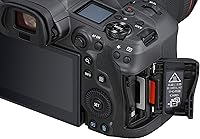
Specifications

  • Sensor: Full-frame 45MP CMOS sensor delivers high-resolution files suitable for large-format printing and aggressive post-production cropping.
  • Processor: DIGIC X image processor handles rapid data throughput from the high-resolution sensor, supporting fast burst rates and complex autofocus calculations.
  • ISO Range: Native ISO range of 100–51200 is expandable to a minimum of 50 and a maximum of 102400 for low-light shooting.
  • Autofocus: Dual Pixel CMOS AF II covers approximately 100% of the frame with 1,053 selectable AF areas and deep-learning subject tracking for people and animals.
  • Burst Rate: Shoots up to 12fps with the mechanical shutter and up to 20fps using the silent electronic shutter.
  • Video Resolution: Records 8K UHD (4320p) video encoded in H.264 or H.265, with additional options for 4K and Full HD recording.
  • Stabilization: 5-axis in-body sensor-shift image stabilization works in coordination with optically stabilized lenses for enhanced handheld shooting.
  • Lens Mount: Canon RF mount with full electronic communication; compatible with EF and EF-S lenses via optional Mount Adapter EF-EOS R.
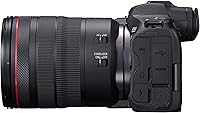
  • Card Slots: Slot 1 accepts CFexpress Type B cards; Slot 2 accepts SD, SDHC, and SDXC cards up to UHS-II speed class.
  • Viewfinder: Electronic viewfinder with 0.76x magnification provides a clear, real-time exposure preview in all lighting conditions.
  • Rear Screen: 3.2″ tilting LCD touchscreen with a resolution of 2,100,000 dots allows flexible composition at various shooting angles.
  • Shutter Speed: Mechanical shutter range spans 30 seconds to 1/8000s, with a flash sync speed of 1/250s.
  • Connectivity: Built-in Bluetooth and Wi-Fi enable wireless image transfer and remote control; physical ports include Micro-HDMI output and a 3.5mm microphone input.
  • File Formats: Captures stills in JPEG and RAW (14-bit), with aspect ratio options of 3:2, 4:3, and 16:9.
  • Included Lens: Ships with the RF 24-105mm f/4 L IS USM lens, an 18-element telephoto zoom with optical image stabilization and a 77mm filter thread.
  • Body Weight: Camera body weighs approximately 3.16 pounds (738g) including battery and one memory card.
  • Battery: Powered by the LP-E6NH Lithium-Ion battery (80g); a single charge supports approximately 320 shots under standard CIPA testing conditions.
  • Weather Sealing: Magnesium alloy body construction includes dust and moisture resistance for use in challenging outdoor environments.
  • Shooting Modes: Supports Scene Intelligent Auto, Program AE, Shutter Priority AE, Aperture Priority AE, Manual, Bulb, and three custom shooting modes.
  • Warranty: Backed by a 1-year limited manufacturer warranty from Canon USA covering defects in materials and workmanship.

Related Reviews
Canon EOS R3 Mirrorless Camera
84%
96%
Autofocus Performance
93%
Continuous Shooting Speed
91%
Low-Light Image Quality
62%
Still Image Resolution
88%
Video Capability
More
Canon EOS R7
Canon EOS R7
83%
94%
Autofocus Performance
91%
Burst Speed & Pre-Capture
88%
Image Quality
83%
Video Quality
86%
In-Body Image Stabilization
More
Canon EOS R8
Canon EOS R8
75%
93%
Autofocus Performance
89%
Image Quality
84%
Video Quality
88%
Portability & Build
41%
Stabilization
More
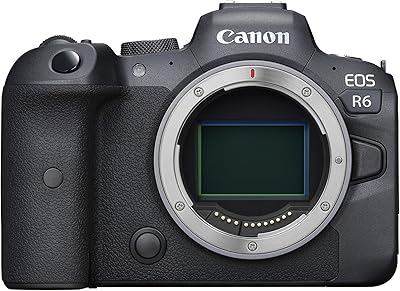
Canon EOS R6 Full-Frame Mirrorless Camera
79%
94%
Autofocus Performance
91%
Image Stabilization
89%
High ISO and Low-Light Quality
76%
Video Capabilities
88%
Burst Speed and Action Performance
More
Canon EOS RP
Canon EOS RP
74%
88%
Image Quality
83%
Autofocus Performance
93%
Portability & Form Factor
54%
Battery Life
61%
Video Capabilities
More
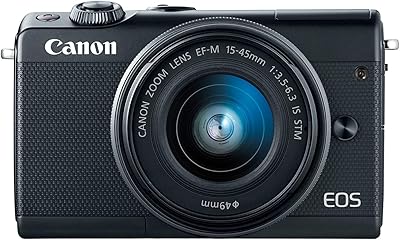
Canon EOS M100 Mirrorless Camera with 15-45mm Lens
84%
92%
Autofocus Performance
89%
Ease of Use
88%
Image Quality
95%
Portability/Weight
63%
Low-Light Performance
More
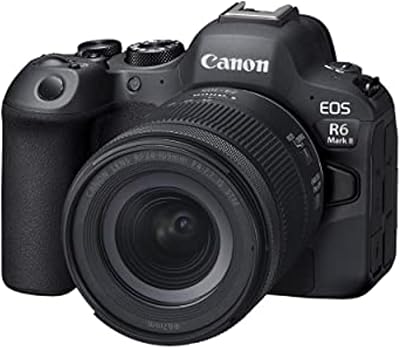
Canon EOS R6 Mark II Mirrorless Camera
83%
96%
Autofocus Performance
91%
Video Quality
89%
Burst Speed & Buffer
84%
Image Quality & Dynamic Range
93%
Build Quality & Weather Sealing
More
Canon EOS R50
Canon EOS R50
79%
93%
Autofocus Performance
88%
Image Quality
86%
4K Video Quality
57%
Battery Life
91%
Portability & Build
More
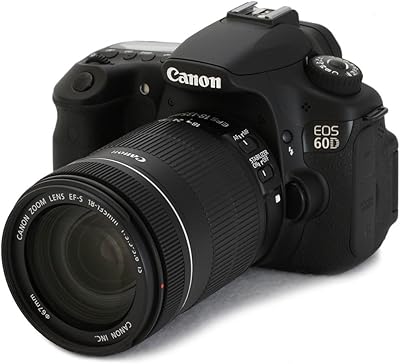
Canon EOS 60D DSLR Camera Body
85%
88%
Image Quality
91%
Build Quality
83%
Video Recording
86%
Autofocus Performance
89%
Ease of Use
More
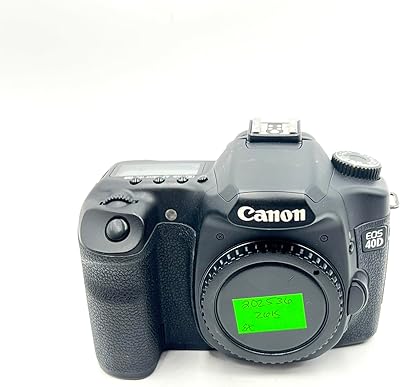
Canon EOS 40D Digital SLR Camera
84%
90%
Image Quality
85%
Build Quality & Durability
87%
Battery Life
84%
Ease of Use
88%
Autofocus Performance
More

FAQ

Canon has released multiple firmware updates that significantly extended the recording time before the camera hits its thermal limit. Most users report a meaningful improvement, particularly when shooting in cooler environments. That said, the R5 can still overheat during very long continuous 8K sessions, especially in warm conditions. If your work involves extended video recording runs, it is worth testing the camera under your actual shooting conditions before relying on it for a critical job.

You can shoot stills and lower-resolution video entirely to the SD slot, and many photographers do exactly that for day-to-day work. However, 8K video recording requires the CFexpress Type B slot — SD cards simply do not have the write speed to keep up with that data rate. CFexpress Type B cards are noticeably more expensive than SD, so factor that into your budget when planning a kit.

Yes, Canon sells the Mount Adapter EF-EOS R specifically for this purpose, and it works reliably with the full range of EF and EF-S lenses. Autofocus remains fully functional, and image stabilization in adapted lenses continues to work. The one thing you do lose is access to certain advanced RF-specific features, like some of the more granular AF customization options that are only available with native RF glass.

Under purely still-shooting conditions with moderate chimping, most photographers report getting through 300 to 500 shots on a single charge. The moment you start mixing in video recording or shooting in very cold weather, that number drops noticeably. Most professional photographers using this body carry at least two or three batteries to a wedding, and some add a battery grip for added peace of mind during long days.

If you are coming from a Canon DSLR, the transition is manageable — the physical layout and button logic will feel familiar. The menu system is deeper and takes time to navigate confidently, but most users find their footing within a few weeks of regular shooting. If you are switching from a non-Canon DSLR, expect a steeper adjustment period. Either way, it is worth dedicating time to practice before deploying it in high-pressure professional situations.

A single 45MP RAW file can run between 25 and 50 megabytes, and 8K footage generates data at a rate that fills drives quickly during longer shoots. You will want a fast CFexpress card reader, at minimum a high-capacity SSD for active projects, and a robust backup system for archiving. If you are editing 8K footage, your computer also needs to be capable enough to handle the processing load without constant dropped frames or slowdowns.

Yes, in practical terms it is one of the more appreciated features among owners, particularly for handheld work in lower light. When you are shooting indoors at an event without flash and need to drop your shutter speed to compensate, the 5-axis IBIS gives you a meaningful buffer before camera shake becomes visible in the image. Paired with the optical IS in the included 24-105mm lens, the coordinated system is noticeably more effective than IBIS or optical IS working alone.

The animal and human subject tracking is one of the consistently praised aspects of the R5 among its owners. For pets, the camera can lock onto an animal's eye and hold it through movement, which reduces the number of missed shots dramatically compared to older AF systems. Kids running around in varied lighting are similarly manageable — the system tends to reacquire quickly after brief obstructions. It is not infallible, but it handles unpredictable subjects better than most competing systems in its class.

Most professional users adapt to it quickly and report that it provides an accurate enough preview for confident exposure and focus assessment. The magnification at 0.76x is competitive within its class. In very bright outdoor conditions, some users note that the EVF can feel slightly less natural than an optical viewfinder, but this is a common characteristic across mirrorless cameras and rarely a dealbreaker for experienced shooters.

For photographers who want the option to shoot high-quality video without buying a separate dedicated body, the R5 is a strong choice. You do not need to use 8K to benefit from excellent video quality — 4K modes are very capable and far more manageable in terms of storage and processing demands. The autofocus that works so well for stills carries over naturally into video, which makes occasional video work feel less technically demanding than it might on a body with weaker AF.

Where to Buy

B&H Photo-Video-Audio
In stock $2,799.00
Newegg.com
In stock $2,799.00
newegg.com
In stock $3,559.95
Full Compass Systems
In stock $3,299.00
Willoughby's Photo Emporium
In stock $2,599.00
Panamoz.com
In stock $2,673.00