Overview

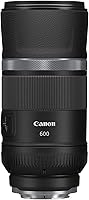
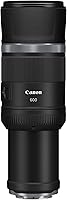
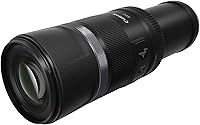
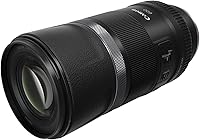
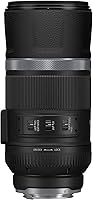
The Canon RF 600mm f/11 IS STM Lens is Canon's first genuinely compact super-telephoto prime for the RF mirrorless system, and it changes what 600mm reach actually looks like in your bag. Traditional lenses at this focal length are heavy, expensive, and demand a tripod just to carry. This one weighs just over 2 lbs and collapses into itself when not in use, thanks to a retractable locking barrel. The fixed f/11 aperture is the trade-off that makes all of this possible — Canon locked the diaphragm to allow a dramatically shorter optical path and a fraction of the typical price. That is a deliberate engineering decision, not a corner cut.

Features & Benefits

The technology packed into this retractable telephoto becomes more impressive when you understand what the Diffractive Optics are actually doing. The gapless dual-layer DO elements let Canon shrink the physical length without sacrificing color accuracy — chromatic aberration stays well controlled even toward the edges of the frame. The optical image stabilization delivers up to 5 stops of shake correction, which matters enormously when hand-holding at 600mm on a moving subject. Autofocus runs on a Stepping Motor, keeping tracking quiet and smooth — genuinely useful for video work as much as wildlife. At just over 2 lbs, the total package is manageable for hours of fieldwork.

Best For

The RF 600mm f/11 is purpose-built for outdoor, daylight shooting at range. Wildlife photographers stalking birds or tracking distant animals in open environments will find this lens genuinely capable — the reach and the weight work together in a way that traditional telephoto glass simply cannot match at this price point. Safari travellers who cannot afford to check a second bag just for a lens will appreciate how compactly it packs. That said, anyone shooting indoor sports, low-light events, or wanting to pair an extender will hit a hard wall at f/11. Within its intended conditions, it performs well above its class.

User Feedback

Owners of this super-telephoto prime consistently praise the value-to-reach ratio — getting 600mm of usable focal length at this price, in this size, has genuinely surprised a lot of buyers. Autofocus earns mostly positive marks for wildlife and bird tracking, though some note it struggles with erratic movement compared to Canon's faster-aperture options. Sharpness is generally strong in good light, with most users satisfied by centre-frame performance. The main friction point is the barrel lock — a handful of shooters report it disengaging unexpectedly in the field, which is worth knowing before a critical shoot. The overall consensus is clear: capable, portable, and honest about what it is.

Pros

  • At this focal length and price, the portability is genuinely unmatched — nothing else comes close for Canon RF shooters.
  • Five stops of optical image stabilization makes hand-holding at 600mm a realistic option in good light.
  • The retractable barrel keeps the lens compact enough to fit in a standard camera bag without a dedicated slot.
  • Diffractive Optics control chromatic aberration well, keeping images clean across the frame in daylight.
  • STM autofocus tracks birds and wildlife quietly, with no intrusive motor noise during video capture.
  • Sharpness in bright conditions is strong, especially in the centre of the frame where it counts most.
  • Weighing just over 2 lbs, it is comfortable enough to hand-hold through long fieldwork sessions.
  • The Canon RF 600mm f/11 IS STM Lens opens up super-telephoto shooting to photographers who could not previously justify the cost or bulk.
  • For safari travel where bag space is finite, the size-to-reach trade-off is almost impossible to beat.

Cons

  • The fixed f/11 aperture offers no flexibility in lower light — ISO climbs fast when clouds roll in.
  • No compatibility with Canon extenders means you are locked at 600mm with no room to push further.
  • Autofocus can struggle with unpredictable or fast-changing subject movement compared to faster-aperture alternatives.
  • The barrel lock has been reported to disengage unexpectedly in the field, which is a real concern during active shooting.
  • Minimum focusing distance of nearly 15 feet limits usefulness for closer subjects like insects or small perched birds.
  • Maximum magnification of 0.14x makes it a poor choice for any close-up or quasi-macro work.
  • There are no aperture blades, so bokeh rendering lacks the smooth, rounded quality many portrait and nature shooters prefer.
  • In overcast or dawn and dusk conditions, the lens loses much of its practical appeal due to light limitations.
  • The optical design, while clever, means physical length changes between stored and shooting positions, which can feel awkward to new users.

Ratings

Our AI rating system analyzed verified global user reviews for the Canon RF 600mm f/11 IS STM Lens, actively filtering out incentivized, duplicate, and bot-generated feedback to surface what real photographers actually experience in the field. The scores below reflect a transparent, balanced synthesis of both the genuine strengths and the recurring frustrations buyers have reported across wildlife, bird, travel, and sports shooting contexts. You will find the praise is well-earned in specific areas, and the lower scores point to real trade-offs worth understanding before you buy.

Portability
93%
Users consistently describe this as the single biggest reason they bought the lens — the ability to pack 600mm of reach alongside a body and two other lenses in a standard carry-on bag is simply not possible with traditional super-telephoto glass. Safari and travel photographers especially praise how light and compact it feels on the strap during long walking days.
A small number of users find the extended shooting length still draws attention and can feel unwieldy on smaller RF mirrorless bodies, particularly without a grip attached. The retractable design also means an extra step before shooting that takes some adjustment to build into muscle memory.
Value for Focal Length
91%
At this focal length, the price point is genuinely unusual — photographers who previously considered 600mm out of reach financially have found this lens opens a door that simply did not exist before. The optical quality delivered relative to the cost is the most praised aspect across reviews from beginners and experienced shooters alike.
Some experienced telephoto shooters feel the fixed aperture fundamentally limits its usability enough to question the value proposition for serious work. If you already own faster super-telephoto glass, the savings here may not justify adding a lens with such a narrow operational window.
Image Sharpness
82%
18%
Centre-frame sharpness in good daylight is one of the lens's clearest strengths — birds and wildlife captured at distance come back with genuine detail that holds up well at 100 percent on screen. The Diffractive Optics do an effective job controlling the chromatic fringing that typically plagues budget telephoto options at this reach.
Edge and corner sharpness is noticeably softer, which matters less for wildlife but becomes relevant if you are filling the frame with landscape backgrounds or structured subjects. A handful of users also report slight softness when conditions are not ideal — haze, heat shimmer, or low contrast lighting reduce the sharpness advantage meaningfully.
Autofocus Performance
74%
26%
For predictable subjects — birds perched or moving steadily, animals walking or running in a consistent direction — the STM motor acquires and holds focus reliably enough for most wildlife scenarios. Users shooting on the EOS R5 and R6 specifically note that the camera body's subject detection does much of the heavy lifting, producing solid bird-in-flight hit rates in bright light.
Fast, erratic, or unpredictable movement — think flushed birds changing direction suddenly — pushes the STM system to its limits, and users report a higher miss rate compared to Canon's faster-aperture telephoto options. The f/11 aperture also gives the autofocus system less light to work with, which compounds tracking struggles in anything other than strong outdoor light.
Image Stabilization
88%
Five stops of stabilization at 600mm is a meaningful real-world advantage — users describe being able to hand-hold and get sharp frames at shutter speeds that would normally require a monopod or tripod, which is a genuine practical benefit during long fieldwork sessions. The coordination between lens IS and in-body stabilization on compatible RF bodies adds another layer of confidence.
Stabilization effectiveness drops noticeably in very long telephoto sequences or when panning to track fast-moving subjects, where the system can occasionally overcorrect. A few users note that the IS system is audible during video recording in very quiet environments, which can be picked up by on-camera microphones.
Low Light Capability
38%
62%
In bright, direct sunlight the fixed f/11 aperture is workable, and some users appreciate that the exposure is entirely predictable and consistent without any accidental aperture changes mid-session.
This is where the lens genuinely struggles — anything other than strong outdoor daylight forces ISO values high enough to introduce noise that undermines the sharpness advantage the optics otherwise provide. Dawn, dusk, overcast days, and any indoor environment essentially take this retractable telephoto off the table as a viable option.
Build Quality
71%
29%
The physical construction feels solid enough for regular outdoor use, and the lens balances reasonably well on mid-sized RF bodies despite the unusual optical design. Canon's finish quality is consistent with what buyers expect from the brand at this tier.
The retractable barrel lock mechanism has drawn criticism from a consistent group of users who report it disengaging during active shooting — a frustration that feels like a reliability concern on a lens meant for fast-moving subjects in the field. The overall build does not feel as robust as Canon's L-series glass, which some users expected given the price.
Barrel Lock Reliability
58%
42%
When the lock engages cleanly, the barrel stays firmly in position through normal shooting movement, and most users report no issues under relaxed shooting conditions or when handling the lens deliberately.
Enough buyers have flagged unexpected barrel retraction during active use that it constitutes a genuine pattern rather than isolated incidents — some have missed shots because the lens partially collapsed mid-session. This is arguably the most operationally frustrating hardware issue with the RF 600mm f/11 in real-world use.
Compatibility Range
44%
56%
For Canon RF full-frame mirrorless users, native mount compatibility means full electronic communication, IS coordination, and access to the latest autofocus modes without adapters or workarounds.
The complete absence of extender support is a significant limitation — photographers who want 840mm or beyond are simply blocked, with no official path forward. The RF-only mount also excludes a large base of EF-mount Canon DSLR users who might otherwise have been interested.
Chromatic Aberration Control
84%
The gapless dual-layer DO element noticeably reduces the colour fringing along high-contrast edges that typically shows up in budget telephoto designs at extreme focal lengths, and most users find in-camera correction handles any residual issues cleanly.
In very high-contrast situations — bright sky behind dark branches, or white water birds against shadowed backgrounds — some residual fringing does appear that requires correction in post-processing. It is manageable but worth knowing if you shoot in raw and prefer to deliver files with minimal editing.
Video Usability
67%
33%
The near-silent STM motor is a genuine asset for video shooters who want to record wildlife or birds without audible focus hunting noise in the audio track, and continuous tracking in good light is smooth enough for documentary-style clips.
The fixed f/11 aperture removes all depth-of-field control that video shooters typically rely on for cinematic separation, and the inability to make exposure adjustments via aperture forces all exposure decisions through shutter speed or ISO alone. Combined with the IS noise concern, it is a workable but compromised video tool.
Handling & Balance
76%
24%
Pairing this super-telephoto prime with a mid-sized body like the EOS R6 or R5 produces a balanced, manageable combination that users describe as comfortable for extended hand-holding sessions during wildlife walks or safaris.
On smaller RF bodies without a battery grip, the combination can feel front-heavy and awkward during rapid repositioning, particularly when tracking birds that change direction quickly. The extended barrel length also makes lens-cap management and quick draw from a bag slightly more fiddly than fixed-length alternatives.
Weather Sealing
52%
48%
Some users have used this retractable telephoto in light rain and drizzle without apparent damage, and Canon's overall build tolerances at this price tier have held up for most under normal outdoor conditions.
Canon does not officially specify weather sealing for this lens the way it does for its L-series glass, which means shooting in wet conditions is an undocumented risk. Users who regularly shoot in challenging weather conditions — coastal environments, rainforest safaris, mountain locations — should factor this uncertainty into their decision.

Suitable for:

The Canon RF 600mm f/11 IS STM Lens was built for a very specific kind of photographer, and if you fit that profile, it is hard to argue against it. Wildlife and bird photographers who shoot primarily in daylight conditions — open fields, wetlands, safari parks, coastal habitats — will find the reach and the portability combination genuinely freeing. Instead of committing to a heavy, expensive telephoto that demands dedicated carrying equipment, you get 600mm that fits inside a standard camera bag alongside everything else you need. Travel photographers heading to national parks or game reserves will especially appreciate not having to make sacrifices between reach and practicality. It also makes a compelling entry point for Canon RF mirrorless users who want to explore super-telephoto shooting without spending several times more on traditional long glass.

Not suitable for:

There is a clear ceiling on where this retractable telephoto performs well, and buyers who ignore it will be disappointed. The fixed f/11 aperture means that in anything other than bright outdoor light, you are fighting your camera's ISO limits just to get a clean exposure. Indoor sports arenas, evening wildlife, overcast bird shooting — all of these scenarios push the lens into uncomfortable territory. It is also incompatible with Canon extenders, which cuts off any path to 840mm or 1200mm reach that many wildlife shooters eventually want. Videographers who need smooth exposure transitions will find the fixed diaphragm a frustrating constraint. If your shooting regularly takes you into mixed or low-light environments, the RF 600mm f/11 is the wrong tool, regardless of how attractive the price and portability look on paper.

Specifications

  • Focal Length: This super-telephoto prime covers a fixed 600mm focal length with no zoom range.
  • Maximum Aperture: The aperture is fixed at f/11 with no adjustable diaphragm blades, a deliberate design choice to enable the compact form factor.
  • Lens Mount: Designed exclusively for Canon RF-mount full-frame mirrorless digital cameras.
  • Optical Design: The lens is built with 10 elements arranged in 7 groups, incorporating a gapless dual-layer Diffractive Optics element to control chromatic aberration.
  • Image Stabilization: Canon's Optical Image Stabilizer provides up to 5 stops of shake correction, enabling hand-held shooting at this extreme focal length in suitable conditions.
  • Autofocus Motor: A Stepping Motor (STM) drives autofocus, delivering smooth and near-silent focus tracking well suited to both stills and video.
  • Minimum Focus Distance: The closest focusing distance is 14.76 ft (approximately 4.5 m), which limits usefulness for nearby subjects.
  • Maximum Magnification: Maximum magnification ratio is 0.14x, placing it well outside macro or close-up photography territory.
  • Barrel Design: The lens features a retractable, locking barrel that collapses for transport and extends with a twist-and-lock mechanism for shooting.
  • Aperture Blades: There are no aperture blades; the fixed diaphragm means no adjustable bokeh shape and no exposure flexibility in the field.
  • Weight: The lens weighs approximately 2.05 lbs (around 930 g), making it notably light for a 600mm super-telephoto prime.
  • Dimensions: Physical dimensions measure approximately 9.45 x 3.6 inches (240 x 91 mm) in the extended shooting position.
  • Filter Thread: The lens accepts front-mounted screw-in filters via a 82mm filter thread diameter.
  • Lens Construction: Canon uses gapless dual-layer DO elements that reduce the physical length of the optical path without compromising image quality at the edges.
  • Compatibility: Compatible with Canon RF-mount full-frame mirrorless bodies only; it is not compatible with Canon EF-mount DSLRs or APS-C RF bodies without crop factor considerations.
  • Extender Support: This retractable telephoto does not support Canon RF extenders, locking users to the native 600mm focal length with no option to extend reach further.
  • Model Number: The official Canon model number is 3986C002, and the Amazon ASIN is B08C6Z5F2L.
  • Manufacturer: Manufactured and supported by Canon USA, with standard Canon warranty terms applicable at time of purchase.

Related Reviews
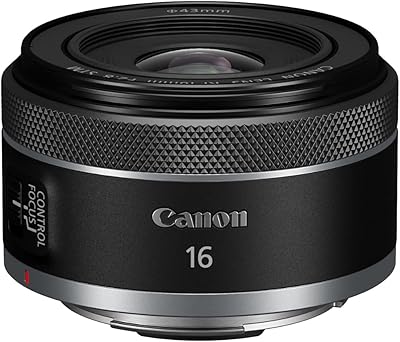
Canon RF 16mm F2.8 STM Lens
78%
78%
Image Sharpness
83%
Autofocus Performance
61%
Build Quality
82%
Value for Money
94%
Portability & Size
More
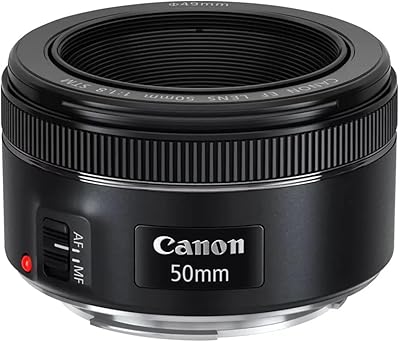
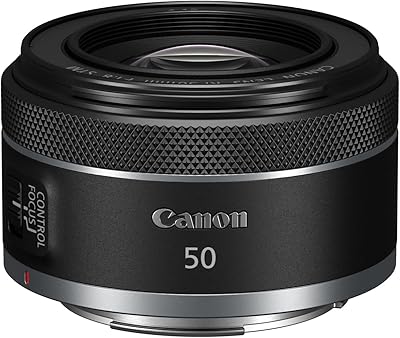
Canon RF 50mm F1.8 STM Lens
74%
83%
Image Sharpness
78%
Bokeh Quality
76%
Autofocus Speed & Accuracy
81%
Low-Light Performance
61%
Build Quality & Durability
More
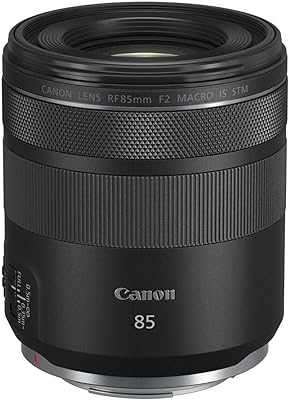
Canon RF 85mm F2 Macro Lens
82%
93%
Image Sharpness
89%
Bokeh Quality
61%
Autofocus Speed
91%
Image Stabilization
74%
Macro Capability
More
Canon EF 50mm f/1.8 STM Lens
79%
83%
Image Sharpness
88%
Bokeh & Background Separation
81%
Low-Light Performance
72%
Autofocus Speed & Accuracy
91%
Autofocus Noise
More
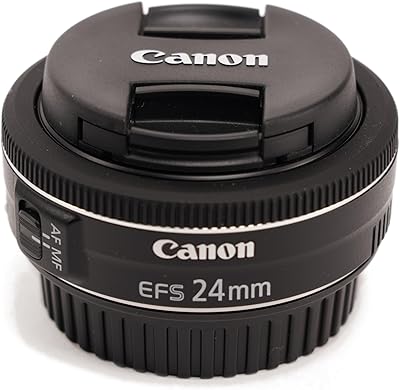
Canon EF-S 24mm f/2.8 STM Lens
79%
88%
Image Sharpness
82%
Autofocus Performance
61%
Build Quality
96%
Portability & Size
74%
Low-Light Capability
More
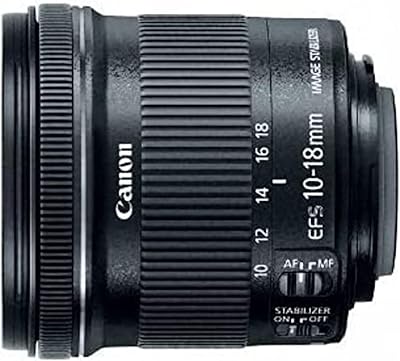
Canon EF-S 10-18mm STM Wide-Angle Lens
75%
83%
Image Sharpness
86%
Autofocus Performance
81%
Image Stabilization
58%
Distortion & Vignetting
54%
Low-Light Capability
More
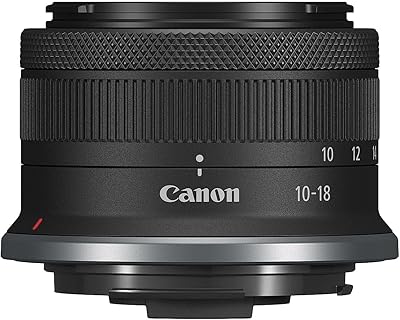
Canon RF-S10-18mm F4.5-6.3 IS STM Zoom Lens
83%
91%
Image Sharpness
84%
Autofocus Performance
88%
Image Stabilization
76%
Build Quality & Handling
93%
Vlogging Usability
More
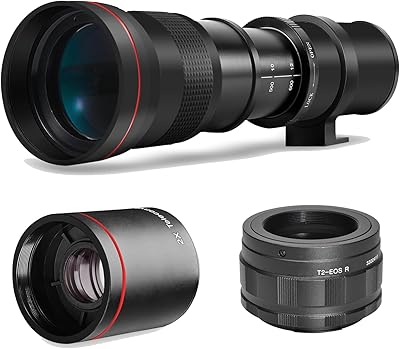
BM Premium 420-1600mm f/8.3 Telephoto Zoom Lens
69%
83%
Value for Money
88%
Focal Reach
57%
Image Sharpness
61%
Manual Focus Usability
59%
Build Quality
More
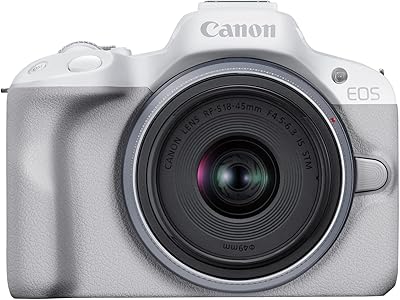
Canon EOS R50
Canon EOS R50
79%
93%
Autofocus Performance
88%
Image Quality
86%
4K Video Quality
57%
Battery Life
91%
Portability & Build
More
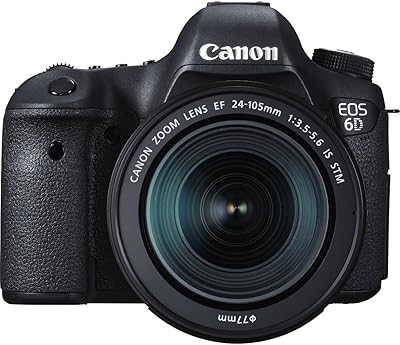
Canon EOS 6D DSLR Camera with EF 24-105mm f/3.5-5.6 IS STM Lens Kit
84%
94%
Image Quality
82%
Autofocus Performance
88%
Ease of Use
90%
Low-Light Performance
85%
Build Quality
More

FAQ

Yes, both the EOS R5 and R6 use the Canon RF mount, so this super-telephoto prime will attach and function fully on either body. You will get access to the full autofocus system, image stabilization coordination, and lens communication features those cameras offer.

No, you cannot change it — f/11 is built into the optical design permanently with no aperture blades inside the lens. Canon made this trade-off intentionally: locking the aperture allowed them to use Diffractive Optics to dramatically shorten the physical length of the lens and keep the price accessible. If you need a variable aperture at 600mm, you are looking at a significantly larger and more expensive lens.

In good daylight conditions, yes — it handles bird-in-flight work reasonably well. The STM autofocus tracks moving subjects quietly and the 5-stop image stabilization helps with keeping things sharp at 600mm. The main caveat is lighting: if you are shooting at dawn, dusk, or on overcast days, the fixed f/11 aperture will force your ISO higher than you would like.

Unfortunately no. The RF 600mm f/11 is not compatible with Canon's RF extenders, so you cannot push it to 840mm or 1200mm the way you could with some other Canon telephoto options. What you see is what you get — 600mm and nothing beyond it.

You rotate the barrel to extend and lock it into the shooting position, and rotate it back to collapse it for transport. It is a fairly simple mechanism and works well most of the time. Some users have reported the lock releasing unexpectedly during active shooting, so it is worth developing a habit of double-checking the lock is engaged before raising the camera to your eye.

Anything in low or mixed light is where it struggles most — indoor sports, evening wildlife, concerts, or poorly lit events. It also does not focus close enough for insects or small perched birds at typical approach distances, and the 0.14x maximum magnification rules out any detailed close-up work. If your subjects are not outdoors in decent daylight, this retractable telephoto is likely not your best option.

Centre-frame sharpness is genuinely strong in good light, and most users are satisfied with it. Edge performance is decent but not exceptional — the Diffractive Optics do a solid job controlling chromatic aberration, but like many telephoto primes, the corners can soften slightly. For wildlife and birds where your subject is usually centre-frame anyway, it rarely becomes a real-world issue.

At just over 2 lbs it is remarkably manageable for a 600mm optic. Most photographers report being able to hand-hold it comfortably for extended periods, especially when combined with the image stabilization doing some of the work. If you are used to traditional long telephoto glass, the difference in fatigue over a full day in the field is noticeable.

Physically yes, it mounts and communicates fine on APS-C RF bodies. The 1.6x crop factor means your effective field of view narrows to the equivalent of about 960mm, which can actually be useful for distant wildlife. Just keep in mind that the light-gathering constraints of f/11 become even more relevant on a smaller sensor.

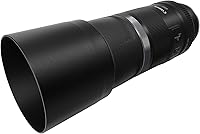
A lens hood is included in the box. However, the lens does not ship with a dedicated tripod collar — given its light weight, Canon likely assumes most users will hand-hold or mount via the camera body. If you plan to use it on a monopod or tripod for extended sessions, a third-party collar solution is worth considering for better balance.

Where to Buy