Overview

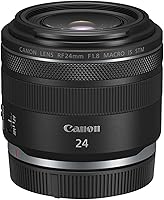
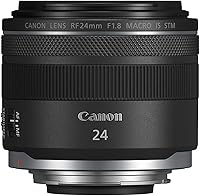
The Canon RF 24mm F1.8 Macro Lens occupies an interesting spot in Canon's RF lineup — capable enough to satisfy serious shooters, priced sensibly enough to attract those stepping up from kit glass. What makes it stand out is its dual role: a wide-angle prime that also handles close-up duty, hitting 0.5x magnification without requiring a separate macro lens. It's compact and light, weighing under 10 ounces, which makes it a natural pairing on any EOS R body without throwing off balance. For travel, street work, or architecture, this wide-angle prime earns its place in the bag without demanding L-series money.
Features & Benefits

The F1.8 maximum aperture does real work here — indoors without flash, in dimly lit spaces, or when you want to push the background into soft blur on a wide lens, which isn't easy at 24mm. Optical image stabilization adds up to 5.5 stops of correction independently, and pairs with in-body stabilization on compatible EOS R cameras to reach 6.5 stops — a meaningful advantage for handheld video or low-shutter stills. A UD glass element and one aspheric element keep corner sharpness honest and chromatic aberration under control. The STM autofocus motor is impressively quiet, tracking smoothly enough for run-and-gun video without distracting hum.

Best For

This macro-capable prime suits EOS R system users who want one capable, pocketable wide-angle without carrying a bag full of glass. Travel and street photographers will appreciate how unobtrusively it sits on a mirrorless body — it doesn't attract attention or fatigue the wrist. Vloggers and content creators benefit from the quiet STM focus and strong stabilization, which matters when shooting handheld without a gimbal. Those curious about close-up work — product shots, botanical detail, food — will find the 0.5x magnification genuinely useful for casual macro, even if it won't replace a dedicated macro lens. Low-light shooters working indoors round out the ideal audience.

User Feedback

Buyers consistently praise the RF 24mm F1.8 for its sharpness wide open — something you can't take for granted on a fast wide-angle. The built-in stabilization draws specific mention from handheld shooters who notice a tangible difference. On the critical side, mild vignetting at F1.8 is a known quirk, though it corrects easily in post or in-camera. Barrel distortion exists but is handled automatically by Canon bodies. Autofocus earns solid marks in good light; it gets less decisive in tricky mixed lighting, worth noting for event work. The most consistent gap buyers flag is no weather sealing — for outdoor shooters, that's a genuine omission at this tier.

Pros

  • Sharp wide open at F1.8 — a real achievement for a wide-angle prime at this price point.
  • Dual-purpose design covers both wide-angle shooting and casual close-up macro work in one lens.
  • Optical image stabilization is effective and noticeably helps handheld stills and video.
  • STM autofocus motor runs nearly silent, making it a practical choice for video recording.
  • Lightweight and compact — barely noticeable on a mirrorless body during long shooting days.
  • UD glass and aspheric elements keep chromatic aberration well controlled across the frame.
  • Super Spectra Coating handles flare and ghosting better than expected in backlit conditions.
  • 0.5x magnification opens up close-up possibilities without carrying a second lens.
  • Pairs well with IBIS-equipped EOS R bodies for outstanding combined stabilization performance.
  • Sits at a sensible price point within the RF lineup, offering strong value without L-series cost.

Cons

  • No weather sealing makes this a risky choice for outdoor or travel shooters in unpredictable conditions.
  • 0.5x magnification is half-life-size only — not sufficient for true macro photography work.
  • Mild vignetting wide open at F1.8 requires correction in post or relies on in-camera lens correction.
  • Barrel distortion is present and depends on automatic correction, which may bother purists shooting RAW.
  • Autofocus can hesitate in tricky mixed or low-contrast lighting — less reliable than ring USM alternatives.
  • The full 6.5-stop stabilization benefit only applies when paired with an IBIS-equipped EOS R camera body.
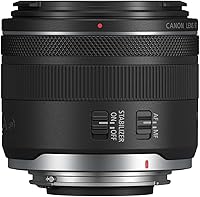
  • No aperture ring, which may frustrate shooters coming from other RF lenses or manual shooting workflows.
  • At 24mm, background compression is limited — less flattering for portraits than a 35mm or 50mm prime.

Ratings

Our AI rating system analyzed thousands of verified global purchases for the Canon RF 24mm F1.8 Macro Lens, actively filtering out incentivized reviews, duplicate accounts, and bot-generated feedback to surface what real buyers actually experience. Scores reflect a balanced synthesis of both enthusiastic praise and recurring frustrations — nothing is glossed over. Where this wide-angle prime excels, the scores show it; where it falls short, that is reflected too.

Image Sharpness
91%
Users consistently report that the RF 24mm F1.8 delivers impressive center sharpness even wide open at F1.8 — something many buyers didn't expect at this price point. Stopping down to F4 or F5.6 pushes edge-to-edge clarity to a level that competes with pricier glass, which delights travel and architecture shooters who crop aggressively.
Corner sharpness at F1.8 is noticeably softer than the center, which can be distracting in architectural or landscape shots where edge detail matters. Most users find it acceptable once stopped down, but those shooting wide open regularly for creative or low-light work should be prepared to live with some falloff at the edges.
Low-Light Performance
88%
The F1.8 aperture makes a genuine, tangible difference for indoor and evening shooting — users regularly report clean, usable results in restaurant lighting, dim interiors, and evening street scenes without reaching for flash. Combined with effective optical stabilization, handheld shots in low light come out far sharper than users expected.
At F1.8 in very low light, autofocus accuracy drops noticeably — the STM motor can hunt or land slightly off target, particularly on subjects with low contrast. Users shooting events, concerts, or candid indoor portraits flag this as a real reliability concern compared to lenses with faster, more decisive focus motors.
Autofocus Speed & Accuracy
76%
24%
In good daylight or well-lit indoor conditions, the STM autofocus is snappy and accurate enough for most everyday shooting scenarios including street photography and casual portraiture. Video shooters particularly appreciate how smoothly focus transitions from subject to subject without the jarring steps that plague noisier motors.
In mixed or dim lighting the autofocus loses confidence — hunting is a recurring complaint among users who shoot events or wildlife where decisive, fast locking is non-negotiable. Several buyers note it struggles to keep pace with moving subjects at close range, which limits its usefulness for action or unpredictable scenarios.
Image Stabilization
84%
Users with IBIS-equipped EOS R bodies rave about the coordinated stabilization, reporting usable handheld shots at shutter speeds they never thought achievable with a wide-angle lens. Even on non-IBIS bodies, the lens-based IS alone earns consistent praise for reducing camera shake during walkaround shooting and handheld video.
The jump from 5.5 to 6.5 stops only materializes with specific compatible bodies, and buyers who own older or entry-level EOS R cameras without IBIS occasionally feel misled by headline stabilization figures. A handful of users also note that IS effectiveness drops in strong wind or when shooting from moving vehicles.
Macro Capability
72%
28%
For casual close-up work — tabletop product shots, food photography, wildflowers, coins, small electronics — the 0.5x magnification is genuinely practical and saves users from carrying a dedicated macro lens. Buyers who didn't expect usable macro from a wide-angle prime are frequently pleasantly surprised by what this macro-capable prime can do in everyday situations.
Serious macro photographers find the 0.5x ceiling limiting quickly — it is half-life-size, not the 1:1 reproduction that true macro work demands. Working distance at minimum focus is also tight, which can cause the lens barrel to shade the subject or make it difficult to position supplemental lighting effectively.
Build Quality
79%
21%
The physical construction feels solid and well-assembled for a non-L-series lens — focus rings turn smoothly, the mount seats securely, and nothing flexes or rattles. Users who've carried it extensively through travel report that it holds up well to the bumps of daily use inside a camera bag.
The complete absence of weather sealing is the single most cited build complaint, and at this price tier buyers feel it is a meaningful omission. Several users who were caught in light rain report anxiety rather than confidence, and a few describe minor fogging near the rear element after exposure to humidity.
Video Performance
86%
Content creators and vloggers consistently highlight the near-silent STM motor as a key reason they chose this lens — focus pulls happen without audible motor noise bleeding into on-camera audio. The wide field of view also makes it practical for self-filming and environmental vlogging without a separate wide-angle adapter.
Breathing — the slight shift in field of view when the lens racks focus — is noticeable during dramatic focus pulls, which bothers users doing scripted or narrative video work. The lens also lacks a built-in aperture ring, so smooth aperture adjustments during video require body-side control, which can introduce exposure jumps.
Vignetting Control
63%
37%
With automatic lens correction enabled on Canon EOS R bodies, vignetting is managed transparently in JPEG output and Canon-processed RAW files, so most casual shooters never notice it as a practical issue in their final images.
Wide open at F1.8, vignetting is pronounced enough that users shooting RAW in third-party software need to apply correction manually or accept visible corner darkening. Those who shoot flat or evenly lit subjects — product photography on white backgrounds, interiors — find the uncorrected falloff frustrating to deal with in post.
Distortion Control
61%
39%
Canon bodies handle barrel distortion correction automatically and effectively for most shooting scenarios, meaning users who shoot JPEG or use Canon's Digital Photo Professional see clean, straight lines without any manual intervention needed.
Uncorrected barrel distortion is significant at 24mm, and users shooting RAW with Lightroom or Capture One need to apply a lens profile to recover straight lines — something that can slightly crop the image and frustrate architecture or interior photographers who want every pixel. A few users report that even corrected images show slight waviness at extreme edges.
Bokeh Quality
78%
22%
For a wide-angle prime, the nine-blade rounded aperture produces surprisingly pleasing background blur at close focusing distances, particularly when shooting the macro range. Users doing product and detail photography comment that backgrounds render smoothly rather than with the harsh, busy quality common on cheaper wide-angle glass.
At typical subject distances — full-body shots, environmental portraits, street scenes — the 24mm field of view simply doesn't compress backgrounds enough to produce creamy, dramatic bokeh regardless of aperture. Buyers expecting DSLR 50mm-style background separation at this focal length will be disappointed.
Flare & Ghosting Resistance
82%
18%
The Super Spectra Coating does measurable work in high-contrast situations — users shooting into the sun, toward streetlights, or against bright windows report cleaner results than they expected from a non-L-series lens. Backlit portrait and travel shots hold contrast well without the washed-out look that plagues entry-level alternatives.
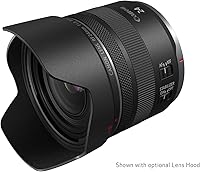
Direct point-light sources at night — streetlamps, car headlights, Christmas lights — still produce visible ghosting artifacts in some positions, which users editing night or event photography find they need to address in post. The lens lacks a petal-type hood in the box, and several users note adding an aftermarket hood substantially improves flare control.
Size & Portability
93%
At under 10 ounces and measuring just 2.5 inches long, the RF 24mm F1.8 disappears on a mirrorless body — travel photographers and street shooters love how unobtrusive the kit feels during long days of walking. It fits in jacket pockets with certain compact bodies, which frequent travelers note as a genuine lifestyle advantage.
The compact dimensions mean there is limited grip surface for the manual focus ring, which some users with larger hands find fiddly during precise manual focus pulls. A few users also note the lens cap feels cheaper than the lens itself warrants.
Value for Money
83%
Compared to Canon's L-series RF primes, the RF 24mm F1.8 offers a compelling combination of optical quality, stabilization, and macro versatility at a fraction of the cost — buyers consistently say it overdelivers relative to its price positioning within the RF ecosystem.
Third-party wide-angle prime options and some competing manufacturer offerings provide weather sealing and comparable optical performance at similar or lower prices, making the value case less clear-cut for buyers who prioritize build resilience. Those who primarily need a simple wide prime without macro may find the premium over a basic kit lens harder to justify.
Chromatic Aberration
77%
23%
The UD glass element keeps lateral chromatic aberration well controlled for a fast wide-angle prime — users shooting high-contrast edges like tree branches against bright sky or architectural details report cleaner transitions than comparable lenses in this class typically deliver.
Some longitudinal chromatic aberration (color fringing in front of and behind the focus plane) appears at F1.8, which users shooting wide open for close-up or macro work occasionally notice as magenta or green fringing around fine subject details. It clears up by F2.8 but is a known trade-off when pushing the aperture in that macro range.

Suitable for:

The Canon RF 24mm F1.8 Macro Lens is a strong match for EOS R system photographers who want a single versatile prime that punches above its weight without the cost of Canon's L-series glass. Travel and street photographers will find the compact form factor and wide field of view genuinely practical — it disappears on a mirrorless body and doesn't slow you down. Content creators and vloggers benefit from the near-silent STM autofocus and effective optical stabilization, which make handheld footage look far steadier without relying on a gimbal. Indoor and low-light shooters who prefer to work without flash will get real mileage from the F1.8 aperture. It also works well for hobbyist macro enthusiasts who want to explore close-up photography casually — shooting food, small objects, or botanical details — without investing in a dedicated macro lens.

Not suitable for:

Photographers who shoot regularly in rain, dust, or demanding outdoor conditions should look elsewhere — the Canon RF 24mm F1.8 Macro Lens has no weather sealing, which is a genuine gap for field or adventure work. Shooters who need true 1:1 macro reproduction will also be disappointed; the 0.5x maximum magnification is useful for close-up work but won't satisfy serious macro specialists who need life-size or greater detail. Sports and wildlife photographers requiring fast, decisive autofocus in unpredictable, low-contrast situations may find the STM motor underwhelming compared to Canon's RF-S or L-series alternatives with ring USM motors. And if you already own an RF-mount body without in-body image stabilization, the headline stabilization figures won't fully apply to you — the 6.5-stop coordinated IS requires an IBIS-equipped camera to achieve.
Specifications

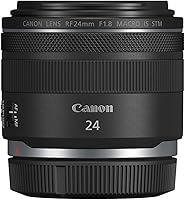
  • Focal Length: Fixed 24mm focal length, offering a wide field of view suited to environmental, architectural, and street photography.
  • Max Aperture: F1.8 maximum aperture allows strong light gathering and background separation even at a wide focal length.
  • Min Aperture: Minimum aperture of F22 provides flexibility for long-exposure or bright-condition shooting scenarios.
  • Lens Mount: Canon RF mount, compatible exclusively with Canon EOS R series mirrorless camera bodies.
  • Autofocus: STM (Stepping Motor) autofocus delivers smooth, near-silent focusing well suited to video recording and continuous tracking.
  • Min Focus Distance: Minimum focus distance of approximately 5.5 inches (0.14 m), enabling close-up shooting at half-life-size magnification.
  • Magnification: Maximum magnification of 0.5x at minimum focus distance, classified as half-life-size macro reproduction.
  • Image Stabilization: Optical Image Stabilization rated up to 5.5 stops of correction, extendable to 6.5 stops in coordinated IS mode with IBIS-equipped EOS R bodies.
  • Glass Elements: Optical formula includes one UD (Ultra-low Dispersion) element and one aspheric element to manage chromatic aberration and maintain corner sharpness.
  • Lens Coating: Canon Super Spectra Coating (SSC) is applied to reduce flare and ghosting in high-contrast and backlit shooting conditions.
  • Dimensions: Measures 2.9 inches in diameter and 2.5 inches in length, making it one of the more compact primes in the RF lineup.
  • Weight: Weighs 9.5 ounces (approximately 269 g), which balances comfortably on compact EOS R mirrorless bodies.
  • Filter Thread: 58mm front filter thread, compatible with standard circular polarizers, ND filters, and protective glass filters.
  • Weather Sealing: This lens has no weather sealing or dust resistance, and should not be used in rain, heavy humidity, or dusty field conditions.
  • Aperture Blades: Nine rounded aperture blades contribute to smooth, circular bokeh at wide aperture settings.
  • Manufacturer: Designed and manufactured by Canon USA, with model number 5668C002.
  • Compatibility: Works with all current Canon EOS R series mirrorless cameras; not compatible with EF-mount DSLR bodies without an adapter.
  • Release Date: First made available in July 2022 as part of Canon's expanding lineup of affordable RF prime lenses.

Related Reviews

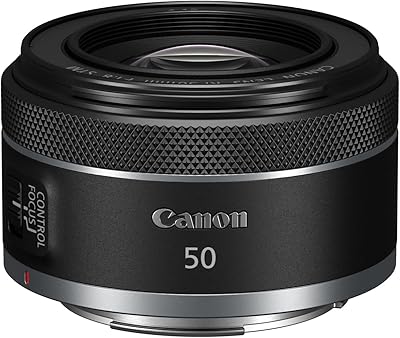
Canon RF 50mm F1.8 STM Lens
74%
83%
Image Sharpness
78%
Bokeh Quality
76%
Autofocus Speed & Accuracy
81%
Low-Light Performance
61%
Build Quality & Durability
More
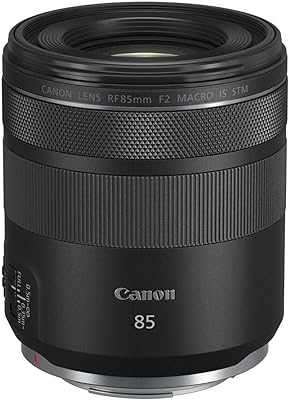
Canon RF 85mm F2 Macro Lens
82%
93%
Image Sharpness
89%
Bokeh Quality
61%
Autofocus Speed
91%
Image Stabilization
74%
Macro Capability
More
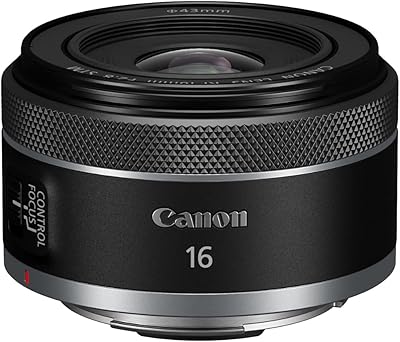
Canon RF 16mm F2.8 STM Lens
78%
78%
Image Sharpness
83%
Autofocus Performance
61%
Build Quality
82%
Value for Money
94%
Portability & Size
More
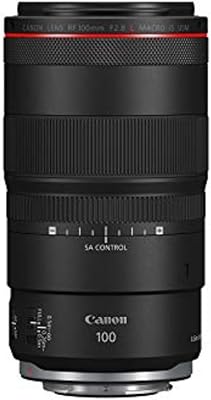
Canon RF 100mm F2.8 L Macro Lens
84%
96%
Image Sharpness
93%
Macro Magnification
89%
Bokeh & Rendering
88%
Image Stabilization
71%
Autofocus Performance
More
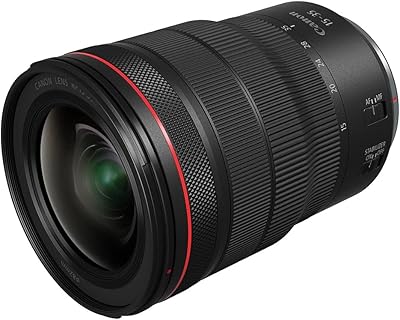
Canon RF 15-35mm F2.8 L IS Lens
85%
96%
Optical Sharpness
93%
Image Stabilization
91%
Autofocus Speed & Accuracy
94%
Build Quality & Weather Sealing
71%
Value for Money
More
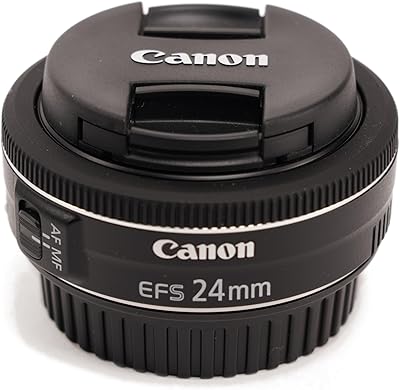
Canon EF-S 24mm f/2.8 STM Lens
79%
88%
Image Sharpness
82%
Autofocus Performance
61%
Build Quality
96%
Portability & Size
74%
Low-Light Capability
More
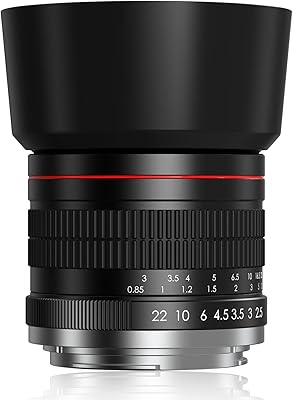
BENOISON 85mm f/1.8 Portrait Prime Lens
76%
83%
Bokeh & Background Separation
88%
Value for Money
71%
Build Quality & Feel
74%
Optical Sharpness (Center)
66%
Manual Focus Accuracy
More
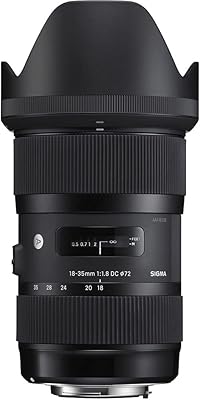
Sigma 18-35mm F1.8 Art DC HSM Lens for Canon
87%
94%
Sharpness & Image Quality
85%
Autofocus Speed & Accuracy
91%
Low-Light Performance
88%
Bokeh Quality
90%
Build Quality & Durability
More
SIRUI 50mm F1.8 Anamorphic Lens RF Mount
78%
88%
Image Quality
91%
Anamorphic Character
84%
Build Quality
86%
Value for Money
71%
Flare Consistency
More
7artisans 7.5mm f2.8 Mark II Fisheye Lens for Canon RF
85%
88%
Image Quality
92%
Build Quality
65%
Ease of Use (Manual Focus)
90%
Portability
85%
Low-Light Performance
More

FAQ

Yes, the RF 24mm F1.8 is compatible with all Canon EOS R series mirrorless cameras, including the EOS RP, R50, R8, R6, R5, and others. Keep in mind that on APS-C sensor bodies like the R50 or R7, the effective field of view will be roughly equivalent to a 38mm lens due to the 1.6x crop factor.

No — the Canon RF 24mm F1.8 Macro Lens has no weather or dust sealing. If you shoot regularly in challenging outdoor conditions, that is a real limitation to weigh against similarly priced options. Light mist probably won't cause immediate harm, but it is not a lens designed to handle exposure to moisture or grit.
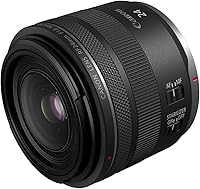
It depends on what you mean by serious. The RF 24mm F1.8 reaches 0.5x magnification, which means subjects appear at half their actual size in the frame — useful for food photography, small product shots, flowers, and casual nature work. If you need true 1:1 life-size reproduction for scientific or professional macro work, you will need a dedicated macro lens instead.

The lens-based optical stabilization still works on non-IBIS bodies and provides a meaningful benefit — Canon rates it at up to 5.5 stops of correction on its own. The 6.5-stop figure only applies when paired with an EOS R body that has in-body image stabilization, like the R6 Mark II or R5. So you will still see a real improvement in handheld sharpness, just not the maximum rated performance.

Very quiet. The STM motor is one of the quieter autofocus systems Canon offers, and in most real-world video situations you won't hear it on recorded audio. It is smooth during continuous tracking as well, without the hunting or rapid stepping that louder motors can produce.

It is a strong candidate, yes. The 24mm field of view is wide enough to be genuinely versatile — good for interiors, travel, and environmental shots — and the F1.8 aperture teaches you a lot about depth of field and available light shooting. The added macro range is a bonus that lets you experiment with close-up work without buying extra gear.

There is mild vignetting wide open at F1.8, and some barrel distortion is present as well. Canon EOS R cameras apply automatic lens correction by default, which addresses both issues in JPEG output and in RAW files processed through Canon software. If you shoot RAW and use third-party software, you may need to apply a lens profile manually.

The 24mm gives you a noticeably wider field of view, which works well for cramped interiors, architecture, and fitting more of a scene into the frame. The 35mm tends to feel more natural for street and casual documentary shooting since it is closer to how the human eye perceives a scene. Both are compact, both have IS and STM, so the choice really comes down to your preferred framing style.

The front filter thread is 58mm, which is a common size. If you already own 58mm circular polarizers, ND filters, or UV protectors, they will fit directly. If your existing filters are a different diameter, step-up or step-down rings can bridge the gap.

The overall build is good for a non-L-series lens — it feels sturdy and well-assembled, and at under 10 ounces it won't add meaningful weight to your kit. The one real caveat for travel is the absence of weather sealing, so if your trips regularly involve unpredictable weather, that is worth factoring in. For fair-weather travel and everyday carry, most users find the build entirely satisfactory.