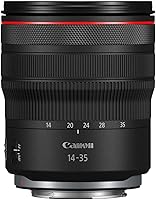
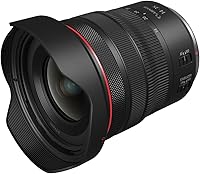
Overview

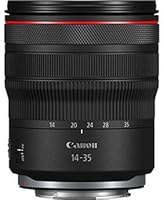
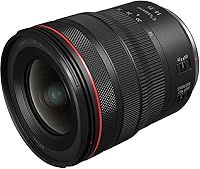
The Canon RF 14-35mm F4 L IS Lens occupies a genuinely interesting spot in Canon's RF lineup — it's the lens that asks whether you really need f/2.8, or whether a lighter, more capable solution covers your actual shooting life. For landscape, architecture, travel, and event photographers migrating to the EOS R system, the 14-35mm range is remarkably practical: wide enough for dramatic environmental shots at 14mm, yet usable as a comfortable wide-angle at 35mm. The premium price demands honest evaluation, but what distinguishes this lens from the broader conversation isn't purely optics — it's the compact form factor that makes it genuinely portable without feeling like a trade-off.

Features & Benefits

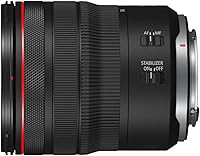
What makes this wide-angle zoom dependable in real shooting conditions is how consistent it behaves across the zoom range. The constant f/4 aperture means your exposure stays stable as you reframe — a detail that matters when you're working quickly. Optical Image Stabilization, paired with in-body stabilization on compatible EOS R bodies, gives you solid handheld confidence at 14mm where even minor camera movement becomes obvious. At the ultra-wide end, cramped interiors and tight architectural spaces suddenly become workable. The 7.9-inch minimum focus distance at all focal lengths lets you capture environmental detail up close, while L-series weather sealing and Canon's SWC and ASC coatings keep flare well-managed under challenging light.

Best For

The RF 14-35mm F4 L earns its place as a single-lens wide solution for photographers who need range without adding bulk to their bag. Landscape and travel shooters get genuine ultra-wide reach for sweeping scenes, while architecture and real estate photographers benefit from edge-to-edge sharpness and manageable distortion at typical working distances. Videographers on the EOS R system will find the silent USM autofocus and built-in stabilization genuinely practical for handheld work. For anyone transitioning from EF glass, native RF performance removes the adapter variable entirely. If portability and optical quality need to coexist in the same kit, this L-series lens makes a compelling case for itself.

User Feedback

Owners of this L-series lens consistently highlight two strengths: autofocus reliability and corner-to-corner sharpness that holds up across the zoom range in real-world use. Long-term users also report solid durability under field conditions. The recurring criticism centers on the f/4 ceiling — photographers who regularly shoot in low light without a tripod sometimes feel the pinch, which naturally leads to comparisons with the RF 15-35mm F2.8. That lens offers a full stop more speed, but at the cost of noticeably more weight and a steeper price. Distortion at 14mm draws some discussion too, with users noting that optimal results lean on in-camera correction profiles rather than pure optical performance at the extreme wide end.

Pros

  • Corner-to-corner sharpness holds up well across the entire zoom range in real shooting conditions.
  • The constant f/4 aperture keeps exposure consistent as you zoom, which simplifies shooting in changing light.
  • At roughly 1.2 lbs, this wide-angle zoom is noticeably lighter than comparable professional zooms without sacrificing build quality.
  • Optical Image Stabilization pairs effectively with in-body IS on EOS R bodies for confident handheld shooting.
  • L-series weather sealing makes it a dependable choice for outdoor work in rain, dust, and cold.
  • The 7.9-inch minimum focus distance across all focal lengths opens up close-range environmental and detail shots.
  • USM autofocus is fast, accurate, and near-silent — a genuine asset for video work.
  • SWC and ASC coatings manage flare and ghosting well under backlit and high-contrast conditions.
  • Native RF mount delivers full communication with EOS R bodies, including reliable EXIF data and in-camera corrections.
  • The 77mm filter thread is a common size, making compatible filter systems easy to find and share with other lenses.

Cons

  • f/4 is a real limitation in low-light scenarios without a tripod or supplemental lighting.
  • Optimal 14mm results depend on in-camera distortion correction, which can be a drawback for raw shooters seeking purely optical performance.
  • The price is steep relative to third-party wide-angle zooms that deliver competitive image quality.
  • At the extreme 14mm end, uncorrected distortion is noticeable and requires either profile correction or post-processing attention.
  • Photographers who occasionally venture below 14mm will find no room to push wider without switching systems or adding a prime.
  • The RF 15-35mm F2.8 L IS outperforms this lens in low-light versatility, making the choice between them genuinely difficult for mixed-use shooters.
  • No weather-sealed lens cap is included, which feels like an oversight given the overall premium positioning.
  • Vignetting at the wide end, while correctable, is noticeable enough to require attention in critical shots when shooting wide open.

Ratings

The scores below reflect an AI-driven analysis of verified global user reviews for the Canon RF 14-35mm F4 L IS Lens, with spam, bot-generated, and incentivized feedback actively filtered out to ensure the results represent genuine buyer experiences. Every category captures the full picture — not just what photographers loved, but where real frustrations surfaced in daily shooting conditions. Both the strengths and the honest limitations of this L-series lens are transparently reflected in each score.

Optical Sharpness
93%
Corner-to-corner sharpness is the single most praised attribute across user feedback, particularly for landscape and architecture shooters who pixel-peep their results. At mid-apertures like f/5.6 and f/8, the rendering across the full frame is consistently described as exceptional, even in demanding real estate and editorial contexts.
At the extreme 14mm end and wide open at f/4, some users note a slight softness in the far corners that requires stopping down to f/5.6 to fully resolve. This is a minor but measurable optical compromise that critical studio shooters occasionally flag.
Autofocus Performance
91%
The USM autofocus is fast, confident, and nearly inaudible — a combination that photographers shooting events and videographers recording ambient audio both highlight as genuinely useful in practice. Subject acquisition in good light is near-instantaneous, and tracking during video pans is smooth without the hunting behavior common in older wide-angle designs.
In very low contrast or dim environments, a small number of users report occasional hesitation before the system locks focus. It is not a frequent complaint, but it surfaces often enough in reviews from indoor event and low-light architectural photographers to be worth noting.
Build Quality
89%
L-series construction earns consistent praise for its solid, professional feel without tipping into excessive weight. The zoom and focus rings operate smoothly with well-damped resistance, and long-term users who have carried this wide-angle zoom through rainy hikes and dusty outdoor environments report no degradation in mechanical performance over time.
A small subset of users feel the plastic elements in the barrel design — standard even in L-series glass — do not convey the premium feel the price implies. The lens cap, specifically, draws recurring criticism as feeling underbuilt relative to the overall package.
Image Stabilization
86%
Optical IS paired with in-body stabilization on compatible EOS R bodies creates a noticeably stable handheld experience, particularly for slow-shutter landscape work and wide-angle video. Photographers shooting at 14mm with shutter speeds several stops below the traditional safe threshold report keepers they would not have expected without the combined IS system.
On older EOS R bodies without advanced coordinated IS modes, the stabilization benefit is more modest and closer to what you would get from the optical IS alone. A handful of videographers also note occasional IS breathing artifacts during slow panning moves when shooting at the 14mm end.
Distortion Control
67%
33%
With Canon's in-camera correction profile applied — which happens automatically for JPEG shooters and is baked into most raw processing software — the corrected output looks clean and well-controlled for architectural lines and interiors. For the vast majority of real-world shooting scenarios, users report results that meet professional standards without manual adjustment.
Without profile correction, barrel distortion at 14mm is pronounced and visually obvious in scenes with straight horizontal or vertical lines. Photographers who shoot raw and prefer optically corrected lenses with minimal reliance on software profiles find this a meaningful limitation, and it is one of the more honest criticisms that recurs across experienced user feedback.
Low-Light Capability
61%
39%
For landscape photographers working from a tripod at dusk or dawn, f/4 combined with effective IS provides adequate low-light capability without pushing ISO into noisy territory. Travel photographers shooting well-lit night markets or illuminated architecture also find the aperture sufficient when paired with modern EOS R sensor performance.
Handheld indoor event shooting, astrophotography, and reception photography in dim venues consistently expose the f/4 ceiling as a genuine limitation. Users who regularly work in mixed or low light without a tripod feel the one-stop disadvantage relative to the RF 15-35mm F2.8 acutely, and this is the most common reason buyers return or regret the purchase.
Portability & Size
92%
At approximately 1.2 lbs, this wide-angle zoom is consistently described as refreshingly manageable for a professional-grade L-series lens. Travel photographers who have previously dealt with heavier wide-angle zooms specifically cite the weight as a reason they reach for this lens more often during long shooting days.
While light by L-series standards, some photographers transitioning from mirrorless-optimized third-party primes find the lens still adds meaningful front-heaviness to smaller EOS R bodies like the RP. For ultralight travel setups, even this compact form factor occasionally feels like more than the kit demands.
Flare & Ghosting Resistance
84%
Canon's SWC and ASC coating combination performs well in backlit shooting scenarios — landscape photographers shooting into bright skies and architecture shooters framing toward windows report clean, controlled results with minimal ghosting artifacts. The coatings make a noticeable practical difference compared to older wide-angle designs without them.
At 14mm in extreme contre-jour situations with a bright point light source positioned near the frame edge, some residual flare is still visible and requires minor post-processing cleanup. It is not a chronic issue, but photographers who frequently shoot directly into strong light sources will encounter it occasionally.
Video Usability
88%
The combination of near-silent USM focus, optical IS, and a constant f/4 aperture makes this L-series lens one of the more video-capable wide options in the native RF lineup. Run-and-gun documentary and travel videographers specifically highlight how the IS handles natural walking movement at 14mm without jarring compensation artifacts.
Some videographers note minor focus breathing during rack focus transitions at the wide end, which can be distracting in narrative or commercial productions where breathing control is critical. It is a manageable limitation for documentary work but more relevant for cinema-oriented shooters.
Close-Focus Performance
81%
19%
The 7.9-inch minimum focus distance across all focal lengths is a genuine practical advantage that photographers use more than they expect. Environmental detail shots — capturing a foreground wildflower against a mountain backdrop, or a small object within a large interior — are achievable in ways that many comparable wide-angle zooms simply do not permit.
At the 14mm end with a subject at minimum focus distance, perspective distortion becomes very pronounced — elongating and warping subjects in a way that limits the creative applications compared to the cleaner 35mm close-focus results. This is a physics constraint rather than a lens flaw, but it catches some buyers off guard.
Value for Money
72%
28%
For photographers fully committed to the Canon EOS R ecosystem who need a native, weather-sealed wide-angle zoom with reliable long-term optical and mechanical performance, the investment makes reasonable sense given the build standards and lens roadmap longevity. Users who purchase for professional or serious enthusiast use consistently feel the quality holds up over time.
The pricing draws consistent pushback from photographers who benchmark it against third-party alternatives offering competitive optical performance at a meaningfully lower price point. The f/4 maximum aperture makes the gap harder to justify for buyers who expected more light-gathering capability at this tier of investment.
Chromatic Aberration
83%
Lateral chromatic aberration is well-controlled across most of the zoom range, and the in-camera correction system handles residual fringing effectively for the majority of shooting scenarios. Architecture photographers reviewing high-contrast edge transitions — dark structural lines against bright sky — generally report clean results after standard raw processing.
At 14mm wide open, some longitudinal chromatic aberration is visible in areas of strong contrast near the corners, requiring manual correction in post rather than relying solely on the automatic profile. It is not severe, but photographers delivering unretouched or minimally processed files to clients will notice it.
Weather Sealing
87%
L-series sealing delivers genuine field confidence for photographers working in unpredictable outdoor conditions. Landscape shooters who have used this wide-angle zoom through coastal fog, light rain, and dusty desert environments report consistent mechanical performance with no lens damage or degradation in image quality over extended outdoor use.
Canon does not publish a specific IP rating for this lens, which leaves some buyers uncertain about the actual limits of protection in heavier rain or submersion-adjacent scenarios. Users who regularly shoot in extreme weather conditions note that the sealing is reassuring but recommend additional precautions in truly heavy downpours.
Vignetting
69%
31%
With in-camera vignetting correction enabled, the falloff at the corners is brought to acceptable levels for most photography applications, and JPEG shooters rarely encounter it as a practical concern. Stopped down to f/5.6 or f/8, optical vignetting is minimal and non-disruptive even without software correction applied.
At f/4 and 14mm without correction, corner darkening is noticeable enough to affect critical images — particularly even-toned subjects like flat blue skies or uniform wall surfaces where falloff is most visible. Raw shooters need to actively manage this in post, which adds a small but recurring step to the editing workflow.

Suitable for:

The Canon RF 14-35mm F4 L IS Lens is purpose-built for EOS R system photographers who want a single wide-angle zoom that pulls real weight across multiple disciplines. Landscape and travel photographers will find the 14-to-35mm range genuinely practical — wide enough to capture sweeping mountain vistas or cramped cathedral interiors, yet composed enough at 35mm for environmental portraits and street scenes. Architecture and real estate shooters benefit from the consistent edge sharpness and weather sealing that allows work in unpredictable outdoor conditions. Videographers who need a stabilized, native-mount wide lens for run-and-gun work will appreciate the near-silent USM autofocus and the optical IS that pairs with in-body stabilization on compatible bodies. For anyone transitioning from Canon EF glass and tired of working around an adapter, this L-series lens delivers the clean, native RF experience that makes the system upgrade feel complete.

Not suitable for:

Photographers who regularly shoot in low-light environments without a tripod — think wedding receptions, indoor events, or astrophotography — will likely feel constrained by the f/4 maximum aperture, and should seriously consider a faster alternative before committing. The Canon RF 14-35mm F4 L IS Lens also relies meaningfully on in-camera distortion correction profiles to look its best at 14mm, which matters to photographers who shoot raw and prefer optical purity over software-assisted results. Buyers on a tighter budget exploring third-party alternatives may find comparable optical performance at a lower price point, even if they sacrifice some build refinement. Those who already own the RF 15-35mm F2.8 L IS and shoot primarily in mixed or dim light will find little reason to switch, since the extra aperture stop of the F2.8 outweighs the modest weight savings this lens offers. It is also not the right fit for photographers primarily shooting in longer focal ranges who only occasionally need ultra-wide coverage.

Specifications

  • Focal Length: Covers a 14–35mm zoom range, providing ultra-wide to moderate wide-angle coverage in a single lens.
  • Maximum Aperture: Maintains a constant f/4 maximum aperture throughout the entire zoom range for consistent exposure control.
  • Lens Mount: Designed exclusively for the Canon RF mount, compatible with all Canon EOS R series mirrorless camera bodies.
  • Image Stabilization: Built-in Optical Image Stabilization works in tandem with in-body IS on compatible EOS R bodies for enhanced handheld stability.
  • Autofocus System: Ring-type Ultrasonic Motor (USM) delivers fast, near-silent autofocus well-suited for both stills and video recording.
  • Min. Focus Distance: Achieves a minimum focusing distance of 7.9 inches at all focal lengths across the zoom range.
  • Max. Magnification: Reaches a maximum magnification ratio of 0.38x when zoomed to the 35mm focal length setting.
  • Lens Coatings: Features Canon's Sub Wavelength Structure Coating (SWC) and Air Sphere Coating (ASC) to suppress flare and ghosting under strong light sources.
  • Weather Sealing: Built to Canon L-series standards with dust and moisture resistance sealing at key joints and the lens mount.
  • Filter Thread: Accepts standard 77mm screw-in filters, a common size shared with several other Canon L-series lenses.
  • Weight: Weighs approximately 1.2 lbs (540g), making it notably lighter than most professional-grade wide-angle zooms in its class.
  • Dimensions: Measures 3.3 x 3.3 x 3.9 inches (84 x 99.8mm) in diameter and length for a relatively compact physical footprint.
  • Lens Construction: Belongs to Canon's L-series optical family, indicating professional-grade glass elements and construction standards.
  • Aperture Blades: Features a 9-blade circular aperture diaphragm designed to produce smooth, rounded out-of-focus rendering at applicable focal lengths.
  • Zoom Type: Operates as an internal zoom design, meaning the physical length of the lens barrel does not extend when zooming.
  • Closest Competitor: Sits within Canon's own lineup alongside the RF 15-35mm F2.8 L IS, offering a lighter, more compact alternative at a slower maximum aperture.
  • Item Model: Canon model number 4857C002, released to market in mid-2021 as part of the expanding native RF lens ecosystem.

Related Reviews
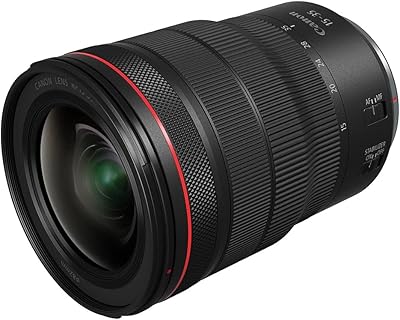
Canon RF 15-35mm F2.8 L IS Lens
85%
96%
Optical Sharpness
93%
Image Stabilization
91%
Autofocus Speed & Accuracy
94%
Build Quality & Weather Sealing
71%
Value for Money
More
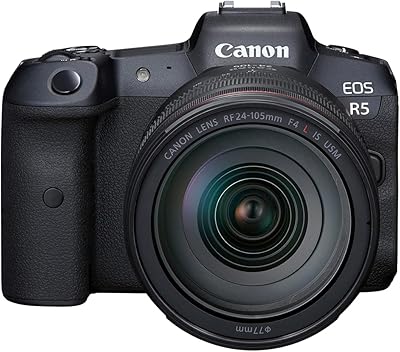
Canon EOS R5 Mirrorless Camera
81%
97%
Image Quality
95%
Autofocus Performance
82%
Video Capability
93%
Build Quality & Durability
88%
In-Body Image Stabilization
More
Canon RF 70-200mm F4 L Telephoto Lens
84%
94%
Image Sharpness
91%
Autofocus Speed & Accuracy
89%
Image Stabilization
93%
Portability & Size
61%
Low-Light Performance
More
Canon RF-S10-18mm F4.5-6.3 IS STM Zoom Lens
83%
91%
Image Sharpness
84%
Autofocus Performance
88%
Image Stabilization
76%
Build Quality & Handling
93%
Vlogging Usability
More
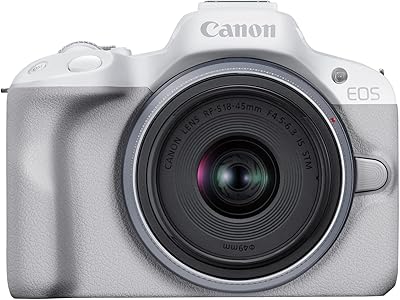
Canon EOS R50
Canon EOS R50
79%
93%
Autofocus Performance
88%
Image Quality
86%
4K Video Quality
57%
Battery Life
91%
Portability & Build
More
Canon RF 85mm F2 Macro Lens
82%
93%
Image Sharpness
89%
Bokeh Quality
61%
Autofocus Speed
91%
Image Stabilization
74%
Macro Capability
More
Canon RF 600mm f/11 IS STM Lens
71%
93%
Portability
91%
Value for Focal Length
82%
Image Sharpness
74%
Autofocus Performance
88%
Image Stabilization
More
Canon RF 16mm F2.8 STM Lens
78%
78%
Image Sharpness
83%
Autofocus Performance
61%
Build Quality
82%
Value for Money
94%
Portability & Size
More
Canon RF 50mm F1.8 STM Lens
74%
83%
Image Sharpness
78%
Bokeh Quality
76%
Autofocus Speed & Accuracy
81%
Low-Light Performance
61%
Build Quality & Durability
More
Canon RF 28-70mm F2 L Zoom Lens
83%
96%
Optical Sharpness
94%
Low-Light Performance
91%
Autofocus Speed & Accuracy
93%
Build Quality & Weather Sealing
89%
Bokeh Quality
More

FAQ

No, the RF mount is not compatible with EF-mount bodies. This wide-angle zoom is designed exclusively for Canon EOS R series mirrorless cameras. If you are using a DSLR, you would need to upgrade to an EOS R body to use it.

It depends heavily on how you shoot. For daytime landscapes, architecture, travel, and well-lit interiors, f/4 is perfectly workable. Where it becomes a genuine limitation is in dim, uncontrolled environments — think reception halls, night events, or astrophotography — where a faster aperture makes a noticeable difference. If low-light handheld shooting is a regular part of your work, it is worth considering a faster option.

The built-in Optical IS works well on its own, but it really shines when paired with in-body image stabilization on compatible EOS R bodies, which engage a coordinated stabilization mode. For wide-angle handheld video or slower shutter speed landscape work, the combined system provides noticeably smoother results than either system working alone.

There is visible barrel distortion at 14mm that is most noticeable with straight architectural lines near the frame edges. Canon's in-camera correction profile handles it automatically for JPEG shooters, and most raw processing software applies the lens profile by default. That said, photographers who prefer optically corrected results without software reliance should be aware that this lens leans on profile correction more than some purists would like.

Yes, the 77mm filter thread accepts standard screw-in filters including circular polarizers and ND filters. At 14mm, however, wide-angle CPL use requires care — the effect can be uneven across a very wide field of view, which is a physics limitation of CPL filters at ultra-wide focal lengths rather than a fault of the lens itself.

The core trade-off is speed versus size and weight. The F2.8 version gives you a full stop more light-gathering ability, which matters in low-light situations, but it is significantly heavier and larger. The RF 14-35mm F4 L also extends one millimeter wider at 14mm, which sounds small but can be meaningful for tight interior spaces. If you shoot primarily in good light and value a lighter kit, the F4 version is the more practical daily lens for most photographers.

It is actually one of the better native RF options for wide-angle video work. The USM autofocus is quiet enough not to be picked up by on-camera microphones in most scenarios, the optical IS helps with handheld movement, and the constant f/4 aperture keeps exposure stable when zooming during a shot. It is a solid choice for documentary, travel, and vlog-style video.

The minimum focus distance is 7.9 inches across all focal lengths, which is genuinely close for a wide-angle zoom. At 35mm you also get up to 0.38x magnification, which is useful for capturing environmental context alongside a close subject — think product in a scene, or a detail within a larger architectural setting. It is not a macro lens, but it handles close-focus situations better than many comparable wide zooms.

The L-series weather sealing provides meaningful protection against dust and light moisture, making it a reliable companion for outdoor landscape and travel photography in variable conditions. Long-term users generally report strong durability. That said, no lens is fully waterproof, so common sense applies in heavy rain or sandy environments.

At roughly 1.2 lbs and 3.9 inches in length, the RF 14-35mm F4 L is compact enough to sit comfortably alongside a second lens and other accessories in a mid-sized camera bag. Compared to other professional wide-angle zooms, its footprint is genuinely modest, which is one of its more practical everyday advantages for photographers who travel light.

Where to Buy

Best Buy
In stock $1,299.00
B&H Photo-Video-Audio
In stock $1,299.00
Newegg.com
In stock $1,299.00
Full Compass Systems
In stock $1,499.00
Willoughby's Photo Emporium
In stock $1,099.00
Abe's of Maine
In stock $1,289.00