


Overview

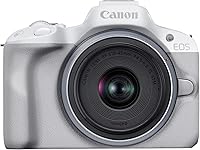
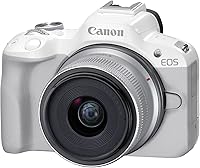
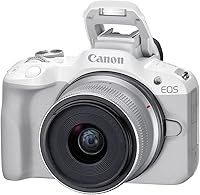
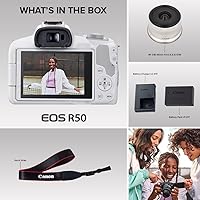
The Canon EOS R50 sits in a sweet spot that a lot of creators have been waiting for — compact enough to toss in a daypack, capable enough to make your smartphone feel genuinely outclassed. This mirrorless camera weighs just around a pound, which sounds trivial until you're halfway through a travel day and grateful you're not hauling a full-size body. The RF mount ecosystem opens up an impressive range of lenses for when you're ready to grow beyond the kit glass. It's not a cinema rig — don't expect it to replace a professional video setup — but as a hybrid stills and video tool for on-the-go creators, it delivers. The white colorway, popular with vloggers, also makes it look intentional on camera rather than accidental.

Features & Benefits

The 24.2-megapixel APS-C sensor, combined with Canon's DIGIC X processor, produces images with noticeably rich detail and accurate color that hold up when you crop or reframe in post. On the video side, this mirrorless camera reads from a 6K sensor to deliver uncropped 4K footage at 30fps — the difference shows in cleaner lines and finer texture compared to cameras that simply scale up lower-resolution grabs. The Dual Pixel autofocus with 651 zones tracks people, animals, and vehicles across almost the entire frame, doing so with a confidence that catches you off guard the first time you use it. Burst shooting at 15 frames per second handles fast-moving moments well, and the fully articulating touchscreen makes overhead and low-angle shots far less awkward to frame.

Best For

This Canon hybrid shooter makes most sense for people who create content regularly and want a dedicated camera without the bulk. Vloggers and YouTube creators will find the autofocus tracking and 4K quality a meaningful step up from anything a phone can offer, especially for talking-head footage or handheld walking shots. Travelers will appreciate how little space it takes up. Pet owners and family photographers get real mileage out of the animal subject tracking — it's the kind of feature that turns a blurry shot into a sharp one at exactly the right moment. Beginners should also know the RF mount means buying into an ecosystem with genuine depth, so future lens upgrades are actually available and worth planning for. Purely casual shooters may find it more camera than they want.

User Feedback

People who own the R50 tend to praise two things above everything else: the autofocus reliability and the vari-angle flip screen. Solo creators especially appreciate how rarely the tracking loses a subject, and the flip display makes self-recording far more manageable. The battery life, however, is a consistent point of frustration — a single charge runs short during heavy shooting days, and most owners end up carrying a spare. The kit lens is adequate for well-lit environments but noticeably soft in dim indoor light, where its limited aperture becomes a real trade-off. Some owners report rolling shutter artifacts when panning quickly with the electronic shutter, a known limitation worth considering for action content. Buyers upgrading from stabilized smartphones also tend to notice the lack of in-body stabilization fairly quickly.

Pros

  • Subject and animal tracking autofocus is among the most reliable available at this price tier.
  • Uncropped 4K footage looks noticeably sharp and detailed for YouTube and social content.
  • The fully articulating screen is a genuine advantage for solo creators filming themselves.
  • At roughly one pound with the kit lens, the R50 disappears into any travel bag without complaint.
  • Wi-Fi and Bluetooth file transfer to a phone works reliably and fits naturally into a content workflow.
  • Burst shooting at 15fps handles fast-moving subjects better than most competing cameras at this level.
  • The RF mount opens up a meaningful upgrade path for lenses as skills and budgets grow.
  • Canon's color science produces accurate, natural-looking skin tones with minimal post-processing needed.
  • The guided interface and smart auto modes make the learning curve manageable for first-time mirrorless users.
  • The white colorway doubles as an intentional aesthetic choice that looks polished in on-camera footage.

Cons

  • Battery life runs short during heavy 4K recording days — a spare battery is practically mandatory.
  • No in-body stabilization means handheld walking video looks shaky without a gimbal.
  • Rolling shutter artifacts appear during fast pans with the electronic shutter enabled.
  • The kit lens struggles in dim indoor light, limiting its usefulness after sunset without extra gear.
  • Some shooting modes apply a sensor crop to 4K footage, catching newcomers off guard mid-shoot.
  • The plastic body construction feels less reassuring than metal-chassis competitors in the same category.
  • RF lenses beyond the kit range carry a significant price premium compared to older APS-C ecosystems.
  • The shallow grip can feel uncomfortable during extended handheld shoots for users with larger hands.
  • The EVF is noticeably small compared to viewfinders on higher-tier bodies in Canon's own lineup.
  • True cost of ownership rises quickly once a second battery, faster lens, and gimbal are factored in.

Ratings

The scores below for the Canon EOS R50 were generated by our AI system after analyzing thousands of verified owner reviews from global markets, with spam, bot activity, and incentivized submissions actively filtered out before any scoring was applied. The result is an honest, balanced picture of where this mirrorless camera genuinely excels and where real buyers have run into friction. Both the strengths and the recurring pain points are reflected transparently in every category.

Autofocus Performance
93%
Owners consistently describe the subject tracking as one of the most reliable they have used at this price tier. Whether shooting a toddler running across a backyard or a pet darting around indoors, the system locks on and holds with a confidence that surprises first-time mirrorless users.
In very low light — think a dimly lit restaurant or an indoor event with mixed lighting — the tracking occasionally hesitates before acquiring a subject. It recovers quickly, but that brief lag can mean a missed shot in fast-moving environments.
Image Quality
88%
The 24.2-megapixel APS-C sensor produces images with clean, accurate color and enough detail to crop without obvious degradation. Daylight shots in particular look polished straight out of the camera, with natural skin tones that require minimal correction in post.
At higher ISO settings — particularly above 3200 — noise becomes visible and fine detail softens noticeably. It is manageable with editing software, but buyers expecting clean shots in consistently dark environments may find themselves reaching for noise reduction more than they would like.
4K Video Quality
86%
The 6K oversampled uncropped 4K output at 30fps delivers footage that looks genuinely crisp on large screens, with fine textures and smooth gradients that hold up well during color grading. For YouTube and social content, the quality is well above what most creators had access to at this price point previously.
Rolling shutter is a real issue when panning quickly with the electronic shutter enabled — horizontal lines tend to skew in a way that is distracting in fast-action footage. Some users also note that certain shooting modes crop the sensor, which catches newcomers off guard when they first encounter the field-of-view change.
Battery Life
57%
43%
For casual shooting sessions — a short walk, a family gathering, or a quick content shoot under an hour — the battery holds up adequately. Users who shoot in intervals rather than continuous recording tend to get through a half-day without issue.
Heavy 4K recording or extended shooting days will drain the battery faster than most buyers expect, and this comes up repeatedly in owner feedback as a genuine frustration. Purchasing a second battery pack is essentially a requirement for anyone using this camera professionally or on travel days.
Portability & Build
91%
At approximately one pound with the kit lens attached, this Canon hybrid shooter disappears into a bag in a way that larger mirrorless bodies simply cannot. Owners frequently cite how little they notice it during long travel days, which directly influences how often they actually take it out.
The lightweight plastic construction, while practical for portability, does feel noticeably less substantial than metal-bodied competitors in the same category. A few users mention that the grip feels slightly shallow for larger hands during extended handheld shooting sessions.
Vari-Angle Touchscreen
89%
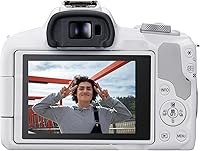
The fully articulating screen is one of the most praised physical features among solo creators and vloggers. Being able to flip it forward, tilt it downward for overhead shots, or fold it flat against the body for protection covers nearly every shooting scenario without requiring an external monitor.
The touchscreen response is generally smooth, but some owners report that tap-to-focus can lag slightly during video recording when the camera is processing heavy 4K streams. The hinge mechanism also draws occasional concern about long-term durability with daily heavy use.
Kit Lens Usability
67%
33%
The RF-S 18-45mm kit lens covers a practical everyday focal range and produces sharp results in good light. For travel photography, street shooting, and standard vlogging setups outdoors, it performs well enough that many beginners will not feel the need to upgrade immediately.
The maximum aperture of f/4.5 at the wide end becomes a real limitation indoors or after sunset, where the lens struggles to gather enough light without pushing ISO into noisy territory. Experienced photographers upgrading from faster glass will find the low-light ceiling frustrating fairly quickly.
Wireless Connectivity
82%
18%
The combination of Wi-Fi and Bluetooth allows owners to transfer images to a phone and push them to social media without touching a cable, which genuinely fits how most content creators actually work. The Canon Camera Connect app is reliable and straightforward to pair on both iOS and Android.
Transfer speeds over Wi-Fi are adequate for JPEGs but feel sluggish when moving large RAW files or long video clips. A handful of users also report that the Bluetooth connection occasionally drops and requires re-pairing after the camera has been idle for an extended period.
Continuous Shooting Speed
83%
Fifteen frames per second with the electronic shutter gives this mirrorless camera a real edge when photographing fast-moving subjects — kids at a sports event, dogs at a park, or birds in flight. The burst depth is solid enough for most action sequences without the buffer filling up mid-sequence.
The rolling shutter that appears in video at high speeds is also a factor during fast electronic burst shooting of subjects with strong horizontal lines or motion. Users shooting mechanical shutter are limited to 12fps, which is still competitive but noticeably below the electronic ceiling.
In-Body Stabilization
41%
59%
The kit lens does include optical image stabilization, which provides a meaningful baseline for handheld photography and moderately steady video walking shots in good light. For stationary or slow-moving video, the lens-based stabilization is enough to avoid obvious camera shake.
There is no in-body image stabilization, and this is a significant gap that buyers upgrading from stabilized smartphones notice almost immediately. Handheld walking video without a gimbal looks shakier than many creators expect, and this limitation effectively makes a gimbal an important accessory purchase for anyone serious about smooth footage.
Ease of Use for Beginners
84%
The guided menu system and touchscreen-driven interface make it accessible to people who have never used an interchangeable-lens camera before. Auto modes are smart enough that a first-time buyer can produce genuinely good images on day one without reading a manual.
The menu system, while navigable, is deep enough that intermediate features — like adjusting video bitrate settings or customizing AF zones — require time to locate and understand. Users coming strictly from smartphones occasionally describe the initial learning curve as steeper than they anticipated.
Electronic Viewfinder
78%
22%
The 2.36-million-dot EVF is crisp and usable in bright outdoor light where the rear screen becomes hard to read. Having the option to compose through the viewfinder is a meaningful addition that cheaper competitors in this category often omit entirely.
The EVF feels slightly small compared to viewfinders on higher-end bodies, and a few users with glasses report slight edge distortion when shooting at an angle. It also draws down battery faster when used extensively, which compounds the already-limited battery life concern.
RF Lens Ecosystem Value
85%
Buying into the RF mount means the upgrade path is genuinely broad — from affordable RF-S lenses designed for APS-C bodies to full-frame RF glass if a buyer ever steps up to a higher-tier Canon body. That forward compatibility makes the initial investment feel less like a dead end.
RF lenses, particularly the more capable ones beyond the kit range, carry a premium price that may feel disproportionate to budget-conscious buyers. The entry cost to meaningful glass upgrades is higher here than in some competing APS-C ecosystems with older, more affordable lens libraries.
Value for Money
79%
21%
For the combination of autofocus capability, 4K video quality, and portability packed into one body, the R50 offers a strong overall package for its market position. Most owners feel the camera delivers noticeably more than its price suggests, particularly in the autofocus and video departments.
The battery limitation, absent in-body stabilization, and modest kit lens mean buyers often end up spending extra on accessories — a second battery, potentially a gimbal, and eventually better glass — which raises the true cost of ownership meaningfully above the initial purchase price.

Suitable for:

The Canon EOS R50 is a strong match for anyone who has outgrown their smartphone camera and wants a genuine step up without committing to a heavy, complicated professional system. Vloggers and YouTube creators will find it particularly well-suited to their workflow — the reliable subject tracking autofocus, flip-out screen, and uncropped 4K output cover the core needs of solo content creation without requiring a crew or a cart full of accessories. Travel photographers and content creators who shoot on the move will appreciate how little space and weight this mirrorless camera adds to a bag, especially on longer trips where every ounce matters. Hobbyist photographers who want to start shooting in RAW, explore manual controls gradually, and eventually expand into better glass will find the RF mount ecosystem gives them real room to grow. Pet owners, family photographers, and anyone regularly chasing fast-moving subjects also benefit directly from the animal and subject tracking, which turns would-be blurry shots into properly sharp ones with minimal effort.

Not suitable for:

The Canon EOS R50 is not the right tool for working videographers or hybrid shooters who need professional-grade stabilization, because there is no in-body image stabilization — and if you are coming from a modern stabilized smartphone, that gap will feel more significant than the spec sheet suggests. Cinematographers or video professionals who need clean, fast-pan footage will run into rolling shutter artifacts with the electronic shutter, which is a real limitation for action-heavy or run-and-gun filmmaking. Anyone planning to shoot primarily in low-light environments — weddings in dark venues, nightlife, or indoor events without good lighting — will find the kit lens aperture a recurring obstacle, and even the sensor, while capable, is not in the same league as full-frame alternatives at high ISO. Experienced photographers who already own capable APS-C or full-frame gear will not find a meaningful upgrade in this camera. Finally, buyers on a strict budget who cannot factor in the cost of an extra battery, a faster lens, and potentially a gimbal should think carefully, because this Canon hybrid shooter works best when those supporting accessories are part of the plan.

Specifications

  • Sensor: 24.2-megapixel APS-C CMOS sensor delivers high-resolution stills with strong dynamic range and accurate color reproduction across a wide range of lighting conditions.
  • Processor: Canon's DIGIC X image processor handles rapid data readout from the sensor, enabling fast autofocus calculations, low-noise rendering, and efficient RAW file processing.
  • Video Resolution: Records 6K oversampled uncropped 4K video at up to 30fps, as well as Full-HD slow-motion footage at up to 120fps for creative post-production flexibility.
  • Autofocus System: Dual Pixel CMOS AF II covers up to 100% of the frame with 651 selectable AF zones and supports deep-learning-based subject, animal, and vehicle tracking.
  • Continuous Shooting: Captures bursts at up to 12fps with Electronic First Curtain shutter and up to 15fps with the fully Electronic Shutter for fast-action photography.
  • Viewfinder: Built-in electronic viewfinder with 2.36 million dots and approximately 0.96x magnification provides a clear, real-time optical composition reference in bright conditions.
  • Rear Screen: 3-inch fully articulating vari-angle touchscreen with 1,062,000-dot resolution and capacitive touch input supports flexible shooting angles including selfie and overhead framing.
  • ISO Range: Standard ISO range extends to 32000, with an expanded maximum of ISO 51200 available for shooting in extremely low-light environments.
  • Shutter Speed: Maximum shutter speed reaches 1/8000 sec with the Electronic Shutter and 1/4000 sec with the mechanical curtain, with a minimum of 30 seconds for long-exposure work.
  • Lens Mount: Uses the Canon RF mount, compatible with the full lineup of RF and RF-S lenses, including full-frame RF optics via the same native bayonet interface.
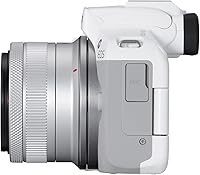
  • Kit Lens: Bundled with the RF-S 18-45mm F4.5-6.3 IS STM lens, offering a versatile everyday focal range equivalent to approximately 29-72mm on a full-frame sensor.
  • Connectivity: Equipped with built-in Wi-Fi, Bluetooth, Micro HDMI output, and a USB port for wireless file transfer, remote control, and wired device connectivity.
  • Storage Media: Accepts SD, SDHC, and SDXC memory cards with UHS-II bus support, enabling write speeds up to 30 MB/s for smooth high-speed burst buffering.
  • File Formats: Supports JPEG, HEIF, RAW, and C-RAW still image formats, and records video in H.264 and H.265 (MPEG-4) compression formats.
  • Flash Sync Speed: Maximum flash synchronization speed is 1/250 sec, with a built-in flash included on the body for fill light in casual shooting situations.
  • Body Weight: Body-only weight is approximately 375g (around 0.83 lb), rising to approximately 453g (roughly 1 lb) with battery, memory card, and kit lens attached.
  • Battery: Powered by a rechargeable LP-E17 lithium-ion battery pack, rated for approximately 210 shots per charge under standard CIPA testing conditions.
  • Warranty: Covered by a one-year limited manufacturer warranty from Canon USA, applicable to the camera body and any included accessories.

Related Reviews
Canon EOS R
Canon EOS R
88%
97%
Image Quality
94%
Autofocus Accuracy
91%
Video Performance
88%
Build Quality
90%
Ergonomics & Handling
More
Canon EOS 5D Mark IV
82%
93%
Image Quality
89%
Autofocus Performance
94%
Build Quality & Durability
61%
Video Capabilities
88%
Low-Light Performance
More
Canon EOS 5D Mark III
79%
93%
Autofocus Performance
89%
Image Quality
82%
Low-Light Capability
91%
Build Quality & Durability
61%
Video Capability
More
Canon EOS R3 Mirrorless Camera
89%
96%
Autofocus Performance
94%
Image Quality in Low Light
92%
Build Quality and Durability
93%
Video Recording Capabilities
89%
Usability and Ergonomics
More
Canon EOS R8
Canon EOS R8
75%
93%
Autofocus Performance
89%
Image Quality
84%
Video Quality
88%
Portability & Build
41%
Stabilization
More
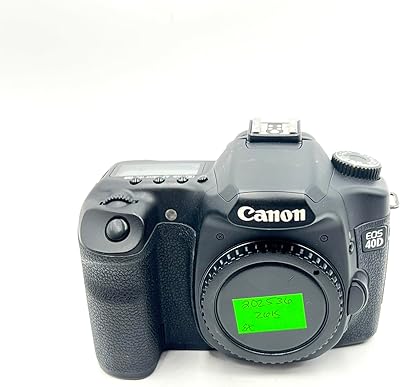
Canon EOS 40D Digital SLR Camera
84%
90%
Image Quality
85%
Build Quality & Durability
87%
Battery Life
84%
Ease of Use
88%
Autofocus Performance
More
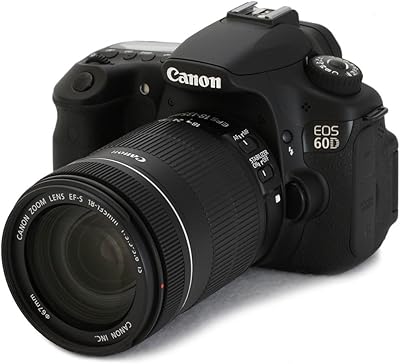
Canon EOS 60D DSLR Camera Body
85%
88%
Image Quality
91%
Build Quality
83%
Video Recording
86%
Autofocus Performance
89%
Ease of Use
More
Canon EOS R7
Canon EOS R7
83%
94%
Autofocus Performance
91%
Burst Speed & Pre-Capture
88%
Image Quality
83%
Video Quality
86%
In-Body Image Stabilization
More
Canon EOS RP
Canon EOS RP
74%
88%
Image Quality
83%
Autofocus Performance
93%
Portability & Form Factor
54%
Battery Life
61%
Video Capabilities
More
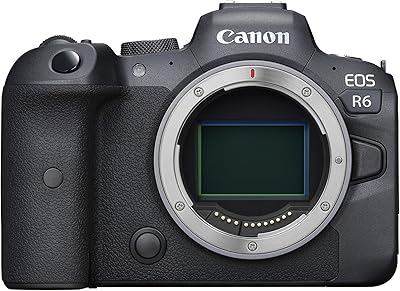
Canon EOS R6 Full-Frame Mirrorless Camera
87%
94%
Autofocus Performance
93%
Low-Light Performance
90%
Image Quality
85%
Ease of Use
91%
4K Video Quality
More

FAQ

Yes, it is one of the more approachable options in its category. The touchscreen interface feels familiar to smartphone users, the auto modes are intelligent enough to get good results immediately, and the articulating screen makes self-recording straightforward. The jump in image and video quality over a phone is noticeable right away, though you will need to adjust to the fact that optical image stabilization here is lens-based rather than the sensor-shift stabilization built into many modern phones.

In the primary 4K 30fps mode, yes — the camera uses oversampling from the full sensor width, so you get the full field of view without a crop penalty. However, some specific modes, including 4K at higher frame rates, do apply a sensor crop, which narrows the field of view noticeably. It is worth checking which mode you are using before an important shoot to avoid surprises.

Honestly, yes — buying a spare LP-E17 battery before your first serious shoot is smart. The official CIPA rating sits around 210 shots per charge, which reflects light, intermittent use. If you are recording 4K video continuously or shooting bursts for an extended period, you will drain it faster than that. Most owners who use the camera regularly keep two batteries on hand as standard practice.

Not directly — the R50 uses the RF mount, which is physically different from the EF and EF-S mounts. However, Canon makes official EF-EOS R mount adapters that allow EF and EF-S lenses to work on RF-mount bodies, including full autofocus support in most cases. It adds cost and a bit of bulk, but it is a practical option if you already own Canon glass.

It handles both scenarios well. The subject tracking uses deep learning to recognize people and animals, and it holds onto a moving subject across the frame with impressive consistency. For a dog running across a yard or a child at a birthday party, the camera does a lot of the work for you. Very fast, erratic movement in low light is where it can occasionally hesitate, but for typical family and pet photography it performs reliably.

For walking or moving shots, a gimbal helps significantly because this mirrorless camera has no in-body stabilization. The kit lens does have optical IS, which smooths out minor hand tremors during stationary or slow-moving video, but handheld walking footage without a gimbal will show visible shake. If your shooting style involves mostly static setups or seated talking-head videos, you can get by without one. For on-the-move footage, a compact gimbal is a worthwhile addition.

You need at least a UHS Speed Class 3 (U3) SD card to record 4K video reliably without dropped frames. The camera supports UHS-II cards for faster data throughput, which is especially useful if you shoot bursts heavily or want quicker in-camera processing. Sticking to a reputable brand with a confirmed V30 or V60 video speed class rating is the safest choice.

The RF-S 18-45mm kit lens is genuinely useful for outdoor shooting, travel, and general everyday photography in good light. Its limitation shows indoors or after dark, where the maximum aperture of f/4.5 struggles to gather enough light, and you will notice more noise or slower shutter speeds as a result. If you plan to shoot indoors, at events, or in any dim environment regularly, budgeting for a faster prime lens — something like the RF 50mm f/1.8 — would make a meaningful practical difference.

Yes, the R50 supports USB video output, which means it can function as a high-quality webcam or live streaming camera when connected to a computer via USB. Canon also provides the EOS Webcam Utility software for this purpose at no extra cost. For a direct clean HDMI feed to a capture card, the Micro HDMI port handles that as well, though you will need a Micro HDMI to standard HDMI cable.

The screen flips fully forward to face the same direction as the lens, so you can see yourself while recording, which is exactly what solo vloggers need. It also tilts at various angles for overhead and low-angle shots. The touchscreen stays responsive in this orientation, and you can tap to set focus or trigger the shutter directly on the screen, which removes the need for a remote trigger in most solo shooting scenarios.