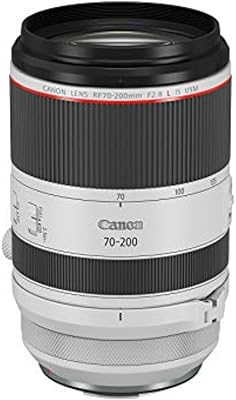
Canon RF100-500mm F4.5-7.1 L IS USM Lens
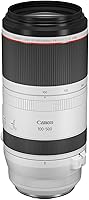
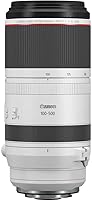
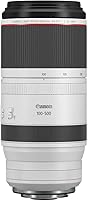
Overview
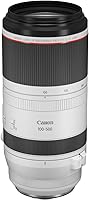
The Canon RF100-500mm F4.5-7.1 L IS USM Lens arrived in 2020 as Canon's answer for RF mirrorless shooters who needed serious reach without committing to a fixed prime. The 100–500mm focal range is genuinely useful — wide enough to frame a distant bird in context, long enough to isolate it against a blurred background. As an L-series optic, it carries full weather sealing and the optical standards Canon reserves for professional glass. It pairs natively with every EOS R body, and on the R5 or R6, the combination of optical and in-body stabilization is particularly effective for demanding outdoor work.
Features & Benefits
The autofocus on this super-telephoto zoom is one of its clearest strengths. The Dual Nano USM system tracks fast-moving subjects — a sprinting athlete, a hawk mid-turn — with speed and near-silence that won't startle wildlife. Optical stabilization delivers up to 5 stops of correction across three selectable modes, which matters enormously when shooting handheld at 400mm or beyond. At 100mm, the minimum focusing distance of just under 3 feet opens up close-up work you wouldn't expect from a lens this long. Pair it with a Canon extender and you push reach to 700mm or beyond — a meaningful upgrade path that changes the lens's long-term value considerably.
Best For
This Canon L-series lens makes the most sense for wildlife and bird photographers who want serious reach without the bulk of a dedicated prime. At roughly 3 pounds, it's light enough to carry through a full day in the field without punishing your shoulder. Sports photographers covering outdoor events — sidelines, track meets, air shows — will appreciate how quickly it responds when the action shifts. Travel shooters will find the zoom range effectively replaces several lenses. Canon EOS R5 and R6 owners gain the added benefit of coordinated stabilization between body and lens, and the RF mount keeps this investment relevant for future Canon bodies.
User Feedback
Owners of the RF 100–500mm tend to be vocal about what they love — and honest about where adjustment was needed. Autofocus tracking earns consistent praise, particularly from bird photographers who describe locking onto subjects in flight as remarkably reliable. The lens's portability surprises people who expected something far heavier given the reach. Where feedback grows more nuanced is around the f/7.1 aperture at 500mm; in overcast or fading light, pushing ISO becomes necessary, and that's a genuine trade-off worth knowing before buying. A few users also flag that the extending zoom barrel feels unfamiliar after internal-zoom designs. Overall, satisfaction remains high — most buyers feel the performance-to-portability balance justifies the investment.
Pros
- Dual Nano USM autofocus locks onto birds in flight and moving athletes with impressive consistency.
- At roughly 3 pounds, the RF 100–500mm is significantly lighter than comparable fixed primes at similar reach.
- Five stops of optical image stabilization makes handheld shooting at 400mm and beyond genuinely viable.
- Pairs with Canon 1.4x and 2x RF extenders to reach 700mm or 1000mm when needed.
- L-series weather sealing holds up reliably in rain, dust, and demanding outdoor conditions.
- Minimum focus distance of under 3 feet at 100mm adds unexpected close-up versatility in the field.
- Three selectable stabilization modes cover static subjects, panning, and tripod-mounted shooting.
- Full native RF mount communication unlocks advanced autofocus features on EOS R5 and R6 bodies.
- The 100–500mm range spans a wide enough variety of focal lengths to replace multiple lenses on a day out.
Cons
- The f/7.1 maximum aperture at 500mm forces higher ISO settings in anything less than bright outdoor light.
- No tripod collar or carrying case is included at a price point where buyers reasonably expect them.
- The extending zoom barrel design requires adjustment for photographers used to constant-length internal-zoom lenses.
- Autofocus performance on original EOS R and RP bodies does not match what R5 and R6 users experience.
- Adding the 2x extender slows autofocus noticeably and limits the lens's usefulness for fast-action shooting at extreme reach.
- Corner softness at 500mm wide open will disappoint photographers expecting prime-level sharpness at maximum extension.
- Long handheld shooting sessions — full-day safaris, multi-hour sports events — cause noticeable fatigue even at 3 pounds.
- The price makes it a difficult recommendation for anyone not already committed to the Canon RF ecosystem long-term.
Ratings
The Canon RF100-500mm F4.5-7.1 L IS USM Lens has been put through its paces by thousands of photographers worldwide, and the scores below reflect what our AI found after combing through verified purchase reviews — filtering out incentivized posts, duplicate accounts, and bot-generated feedback. From seasoned wildlife shooters to first-time L-series buyers, the data captures both where this super-telephoto zoom genuinely excels and where real users ran into friction.
Autofocus Speed & Accuracy
Image Sharpness
Image Stabilization
Build Quality & Weather Sealing
Portability & Weight
Variable Aperture Handling
Reach & Focal Range Versatility
Extender Compatibility
Value for Money
Minimum Focusing Distance
Autofocus Noise
Compatibility with EOS R Bodies
Hood & Accessories Included
Optical Distortion & Aberration Control
Suitable for:
The Canon RF100-500mm F4.5-7.1 L IS USM Lens was built for photographers who need serious reach without the physical and financial commitment of a fixed super-telephoto prime. Bird and wildlife photographers will find it particularly well-matched to their needs — the autofocus system tracks erratic subjects reliably, and the 500mm reach handles most field scenarios without requiring you to get impossibly close. Sports shooters covering outdoor events, from athletics to air shows, benefit from the zoom flexibility when action shifts position unpredictably. Travel photographers who refuse to check a second bag will appreciate that this super-telephoto zoom effectively consolidates what would otherwise be two or three lenses into one manageable package. Canon EOS R5 and R6 owners get the most out of it, since the coordinated optical and in-body stabilization unlocks handheld shooting at focal lengths that would otherwise demand a tripod. And for enthusiasts who see this as a long-term investment in the RF ecosystem, the extender compatibility adds a meaningful upgrade path — 700mm or 1000mm reach on demand is not a small thing.
Not suitable for:
Photographers who frequently shoot in low or mixed light will need to go in with realistic expectations about what the RF 100–500mm can deliver at its longest end. At 500mm the maximum aperture drops to f/7.1, which is a genuine constraint — not a marketing footnote — and it means leaning on higher ISO values in anything less than bright outdoor conditions, with the associated noise management that entails. Shooters on a tight budget will also find the price tier difficult to justify unless they are deeply committed to the Canon RF system; third-party alternatives and used EF-mount glass can cover similar focal ranges for considerably less. Those who prefer the feel of an internal-zoom design — where the barrel length stays constant regardless of focal length — may need time to adjust to how this lens physically extends at 500mm, and a minority of users never fully warm to it. Videographers who need near-silent operation in studio or interview environments should be aware that while the USM motors are quiet by DSLR standards, some faint mechanical noise can be picked up by sensitive on-camera microphones. Finally, casual photographers who shoot mostly in controlled or short-range environments will find the reach and price point of this Canon L-series lens frankly overkill for their actual needs.
Specifications
- Focal Length: This lens covers a 100–500mm zoom range, making it suitable for wildlife, sports, and travel photography from a single optic.
- Maximum Aperture: The maximum aperture varies from f/4.5 at 100mm to f/7.1 at 500mm, which is typical for a zoom of this reach but requires exposure awareness in lower light.
- Lens Mount: Designed exclusively for the Canon RF mount, it is compatible with all Canon EOS R series full-frame mirrorless cameras.
- Optical Design: The lens uses 20 elements arranged in 14 groups, incorporating Canon's latest coating technologies to manage flare and chromatic aberration across the zoom range.
- Autofocus System: Dual Nano USM motors drive the autofocus mechanism, delivering fast and near-silent operation suited to moving subjects and video recording.
- Image Stabilization: Optical image stabilization provides up to 5 stops of shake correction, with three selectable modes covering standard shooting, panning, and exposure-only compensation.
- Aperture Blades: Nine aperture blades produce a rounded diaphragm that contributes to smooth, circular bokeh when shooting at wider aperture settings.
- Min Focus Distance: At 100mm, the closest focusing distance is approximately 2.95 ft (0.9 m), enabling more versatile close-range shooting than most telephoto zooms allow.
- Max Magnification: The maximum magnification ratio is 0.12x at 100mm, offering limited but occasionally useful close-up capability without a separate macro lens.
- Filter Thread: The front element accepts 77mm screw-in filters, a common size that is compatible with a wide range of third-party circular polarizers and ND filters.
- Weight: The lens weighs approximately 3.0 lbs (1,370 g), which is notably lighter than fixed prime lenses offering comparable reach in the RF system.
- Dimensions: The lens measures approximately 3.6 inches (93.8 mm) in diameter and extends to around 9.1 inches (231.5 mm) in length at maximum zoom.
- Weather Sealing: Full L-series dust and moisture resistance is built in throughout the barrel, making it reliable for extended outdoor use in variable weather conditions.
- Extender Compatibility: The lens is fully compatible with Canon's RF 1.4x and 2x extenders, extending effective reach to 700mm and 1000mm respectively when paired with supported bodies.
- Zoom Design: This is an extending zoom design, meaning the physical barrel length increases as focal length is increased toward the 500mm end of the range.
- Stabilization Modes: The three IS modes are Standard (for handheld general use), Panning (for tracking horizontal motion), and during exposure only (recommended for tripod-mounted shooting).
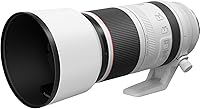
- Lens Hood: A dedicated lens hood is included in the box and attaches securely to the front of the barrel for protection against stray light and minor physical contact.
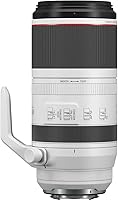
- Tripod Collar: A tripod collar is not included as standard and must be purchased separately, which is a notable omission for photographers planning to use the lens on a monopod or tripod regularly.
Related Reviews
Canon RF 70-200mm F4 L Telephoto Lens
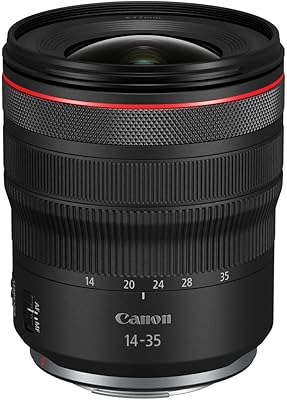
Canon RF 14-35mm F4 L IS Lens
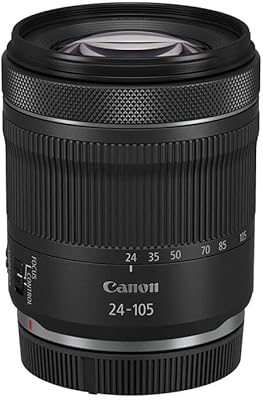
Canon RF 24-105mm F4-7.1 Zoom Lens
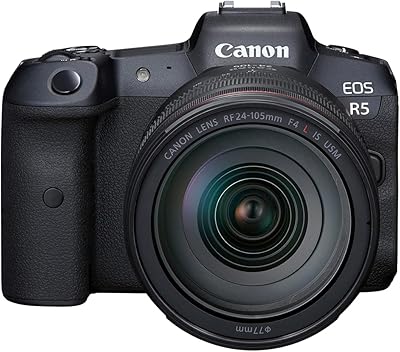
Canon EOS R5 Mirrorless Camera
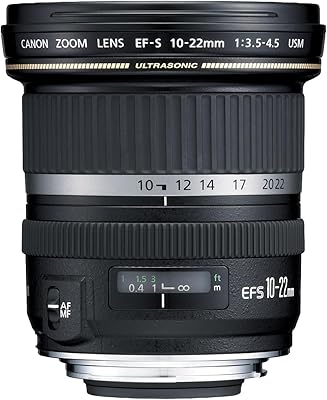
Canon EF-S 10-22mm f/3.5-4.5 USM Wide-Angle Lens
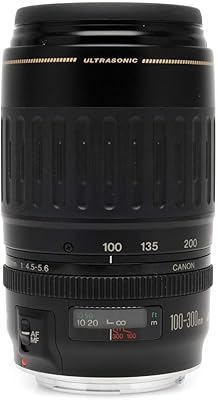
Canon EF 100-300mm f/4.5-5.6 Telephoto Zoom Lens
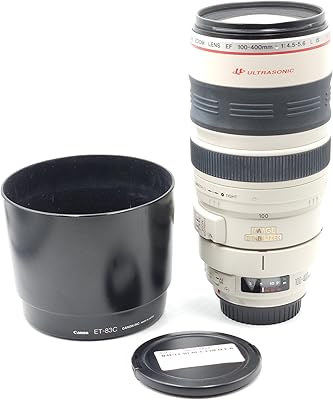
Canon EF 100-400mm f/4.5-5.6L Telephoto Zoom Lens
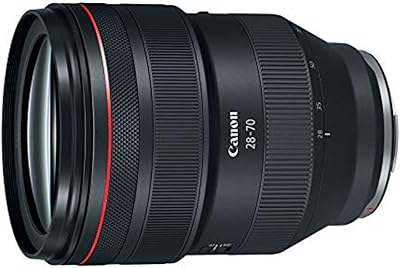
Canon RF 28-70mm F2 L Zoom Lens
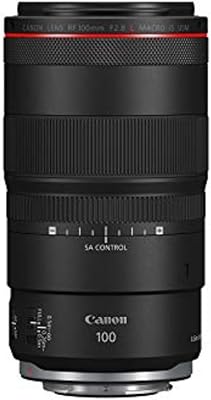
Canon RF 100mm F2.8 L Macro Lens