Overview

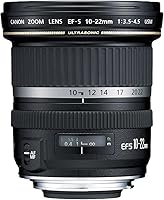
The Canon EF-S 10-22mm f/3.5-4.5 USM Wide-Angle Lens has been around since 2006, and the fact that it remains a top recommendation for Canon APS-C shooters says a lot about its staying power. On a crop-sensor body, the focal range works out to roughly 16-35mm equivalent — wide enough for sweeping landscapes, tight interiors, and dramatic architectural compositions. It sits in the mid-to-premium tier, aimed squarely at enthusiasts and semi-pros who want reliable Canon glass without jumping to full-frame. Newer third-party options have emerged, but this EF-S lens has held its ground through consistent optical performance and a build that genuinely feels worth the investment.
Features & Benefits

The ring-type USM motor is one of this wide-angle zoom's most practical strengths — it focuses quickly and nearly silently, which matters whether you are capturing a landscape or recording video where autofocus noise would ruin the take. The variable aperture runs from f/3.5 at the wide end to f/4.5 at 22mm; honest performance, but not a low-light hero, so plan accordingly if you are shooting indoors without extra light. What stands out is the full-time manual focus override — no menu diving, just grab the ring and adjust. The close minimum focusing distance of 9.5 inches opens creative angles most wide zooms simply do not allow, and at one pound, it disappears on your camera after a few hours.

Best For

This wide-angle zoom is a natural choice for landscape photographers on Canon crop-sensor bodies who need genuine width without renting full-frame gear. Architecture and real estate work benefit enormously — the extra breadth lets you capture a full room or facade without awkward stitching. Travel photographers find it earns its bag space: compact enough to forget until you need it, with a focal range covering street scenes to sweeping vistas. Street photographers who tell stories through environmental context rather than compression will also get consistent use out of it. If you shoot Canon APS-C and want a wide lens you will not outgrow in a few years, this is a logical long-term pick.

User Feedback

Owners of the Canon 10-22mm tend to land in two camps: those who bought it years ago and never felt a reason to replace it, and newer buyers who compared it against rivals from Tokina and Sigma and chose this one for AF reliability and glass quality. Sharpness across the frame is the most consistent compliment, especially stopped down to around f/8. On the critical side, barrel distortion at 10mm is noticeable, and chromatic aberration can surface in high-contrast situations — both are correctable in post, but worth knowing upfront. Videographers consistently call out the quiet autofocus during recording. Long-term owners keep coming back to build quality as the reason they never upgraded, which is perhaps the most honest endorsement a lens can get.

Pros

  • Ring-type USM autofocus is fast, accurate, and nearly silent — a real advantage for video and event work.
  • Frame-to-frame sharpness is strong, particularly when stopped down to around f/8.
  • Full-time manual focus override lets you fine-tune focus instantly without changing any camera settings.
  • At roughly one pound, the Canon 10-22mm is light enough to carry all day without fatigue.
  • A minimum focusing distance of 9.5 inches opens creative close-up angles that most wide zooms cannot match.
  • Circular aperture blades produce naturally rounded highlight shapes when shooting with a background.
  • Build quality is consistently praised by long-term owners who have used it for years without issues.
  • Compares favorably against Tokina and Sigma alternatives in autofocus reliability and overall glass quality.
  • The 10-22mm range covers landscapes, interiors, street scenes, and architecture without needing a second lens.
  • A 77mm filter thread matches many other popular lenses, reducing the need for separate filter sets.

Cons

  • Barrel distortion at 10mm is visible and requires post-processing correction for critical architectural work.
  • Chromatic aberration can appear in high-contrast scenes at the wider end of the focal range.
  • The variable aperture reaching f/4.5 at 22mm limits usefulness in dim conditions without added light.
  • Strictly limited to APS-C Canon bodies — full-frame upgraders will need to replace it entirely.
  • No optical image stabilization, which increases blur risk in lower-light handheld situations.
  • Third-party alternatives from Sigma and Tokina offer competitive optics at a lower price point.
  • The one-year manufacturer warranty is shorter than what some competing lenses offer in the same category.
  • Color fringing may require additional lens correction profiles depending on the editing software used.

Ratings

The Canon EF-S 10-22mm f/3.5-4.5 USM Wide-Angle Lens scores below were generated by our AI system after analyzing thousands of verified global user reviews, with spam, incentivized, and bot-flagged submissions actively filtered out before scoring. The results reflect a genuine cross-section of real-world experiences — from professional architecture shooters to weekend landscape enthusiasts — and both the strengths and the honest frustrations are transparently built into every number you see here.
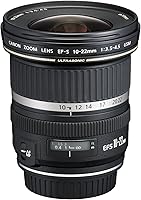
Image Sharpness
88%
Across the frame sharpness is one of the most praised qualities of this wide-angle zoom, with users consistently noting crisp detail when shooting landscapes and architectural facades, especially between f/7.1 and f/11. Even at the edges, where wide-angle lenses often struggle, buyers report results that hold up well in large prints.
At fully open apertures — particularly at 10mm — some corner softness is visible, which can be an issue for photographers who want edge-to-edge sharpness without stopping down. Wide-open performance is good but not exceptional compared to prime alternatives.
Autofocus Performance
91%
The ring-type USM motor draws consistent praise for its speed and near-total silence, making it a reliable choice for event photographers and videographers who cannot afford audible focus noise in their recordings. Users switching from kit lenses often describe the AF responsiveness as a significant step up.
In very low-contrast or dim scenes, the autofocus can occasionally hunt before locking, which is not unique to this lens but worth knowing for photographers who regularly shoot in challenging lighting. It is not a frequent complaint, but it surfaces enough to note.
Build Quality
84%
Long-term owners are some of the most vocal supporters of how well this EF-S lens holds up over years of regular use. The barrel feels solid without being heavy, and many buyers mention taking it on demanding trips — dusty roads, coastal environments — without any mechanical failures.
The lens lacks weather sealing, which is a real limitation for outdoor photographers who shoot in rain or dusty conditions without a protective cover. A few users also note that the zoom and focus rings, while smooth initially, can develop minor looseness after several years of heavy use.
Distortion Control
63%
37%
Most buyers shooting travel and street photography find the distortion levels perfectly manageable, especially since Lightroom and Capture One both include accurate lens correction profiles that fix barrel distortion at 10mm automatically with minimal effort. For casual shooting, many users simply leave it uncorrected.
Barrel distortion at the 10mm end is visible and objectively measurable, which is a genuine concern for architecture and real estate photographers who need straight lines straight out of the camera. Shooting at 14mm and beyond significantly reduces the problem, but it limits how freely you can use the full wide end.
Chromatic Aberration
67%
33%
In typical shooting conditions — overcast landscapes, indoor interiors, standard travel scenes — most users report that chromatic aberration is mild and rarely distracts from the final image. Software correction handles it well, and many buyers say they rarely notice it in practice.
In high-contrast situations, such as bright window frames against dark walls or bare tree branches against a blown-out sky, purple and green fringing can appear at the wider focal lengths. It requires an extra correction step in post, which adds friction for photographers who prefer minimal editing.
Autofocus Noise
93%
The USM motor keeps focus operation almost completely silent, which is a standout quality for video shooters who cannot use lenses with audible focus motors in their recordings. Users who switched from older Canon kit lenses or third-party options with micro-motor AF specifically mention this as a meaningful upgrade.
There is very little to fault here — the rare complaint involves a faint mechanical sound when the lens is searching for focus in difficult lighting rather than during a confident lock. For the vast majority of users and shooting scenarios, this is a non-issue.
Low-Light Capability
61%
39%
At 10mm with f/3.5, there is enough light-gathering ability to handle golden-hour landscapes and moderately lit indoor spaces without pushing ISO into problematic territory on modern APS-C sensors. Users shooting architecture in naturally lit spaces report workable results.
The variable aperture closing to f/4.5 at 22mm is a real constraint in dim environments, and photographers who regularly shoot events, interiors under artificial light, or night scenes will feel the limitation. Compared to constant-aperture competitors or a fast prime, low-light performance is genuinely weaker.
Value for Money
74%
26%
For Canon APS-C DSLR users who want native, reliable glass with strong AF and Canon color rendering, this wide-angle zoom justifies its price for most buyers who plan to keep shooting on their current system. The longevity of the lens — still relevant nearly two decades after launch — means the cost can be amortized over many years of use.
At its price point, capable third-party alternatives from Sigma and Tokina offer faster maximum apertures and comparable sharpness, making the value calculation less straightforward than it once was. Budget-conscious buyers who shoot in low light will likely find better performance-per-dollar elsewhere.
Weight & Portability
89%
Weighing just under one pound, this EF-S lens is easy to carry for full days of shooting without adding fatigue to the camera hand. Travel photographers who keep their kit lean consistently mention how little it adds to a bag already loaded with other gear.
Compared to mirrorless wide-angle alternatives, the combination of this lens on a DSLR body is noticeably bulkier — but that is a system-level consideration rather than a fault of the lens itself. On its own terms, the size and weight are well-calibrated for its focal range.
Manual Focus Usability
82%
18%
The full-time manual focus override is smooth and intuitive — you simply grab the focus ring at any point and adjust without toggling any switches or menu settings, which speeds up fine-tuning during landscape tripod work or slow-moving video shots considerably.
The focus ring travel is relatively short, which some photographers find makes precise focus at close distances feel slightly less controlled compared to dedicated manual focus lenses. It is not a dealbreaker, but users coming from cinema or adapted vintage glass may notice the difference.
Zoom Range Versatility
78%
22%
The 10-22mm range covers nearly every wide-angle scenario a crop-sensor photographer is likely to encounter — from ultra-wide 10mm for sweeping environmental context to a more controlled 22mm that works well for moderate wide compositions and environmental portraits.
The range tops out at 22mm, which means it does not overlap with standard zoom lenses that typically start at 24 or 28mm, leaving a small focal length gap that some shooters notice when switching between lenses in the field. A two-lens system needs careful planning to avoid coverage gaps.
Minimum Focus Distance
81%
19%
A minimum focus distance of 9.5 inches is genuinely shorter than most wide-angle zooms in this class, giving photographers the ability to fill the frame with relatively small subjects while retaining the expansive wide-angle background — a creative option that wider-angle lenses rarely offer.
Maximum magnification of 0.17x means this is not a substitute for a dedicated macro lens if close-up detail is a priority. The close focus capability is a bonus for creative compositions but should not be the primary reason for purchase if detailed macro work is a regular need.
Filter Compatibility
86%
The 77mm front thread is a widely standardized size, meaning most photographers with existing filter collections can use their polarizers and ND filters directly on this lens without buying adapters. This is a practical advantage that saves both money and bag space.
At the 10mm end, thick-ring circular polarizers and stacked filters can introduce visible vignetting in the corners of the frame, requiring users to invest in slim-profile filter versions. It is a manageable issue but an added cost consideration for photographers who rely heavily on optical filters.
Durability Over Time
87%
This is where the Canon 10-22mm genuinely earns long-term loyalty — owners who have carried it for five or more years consistently report no functional degradation in autofocus, optical performance, or mechanical feel. It is the kind of lens people hold onto rather than replace.
The lack of weather sealing means durability is contingent on how carefully the lens is handled in harsh conditions. Shooters who regularly work in rain, sand, or heavy humidity without protection report occasional issues with dust ingress over time, which is worth factoring into a long outdoor shooting career.

Suitable for:

The Canon EF-S 10-22mm f/3.5-4.5 USM Wide-Angle Lens is a strong match for Canon APS-C DSLR shooters who need a reliable, optically capable wide-angle zoom without committing to full-frame gear. Landscape photographers will appreciate the genuine breadth it delivers on a crop sensor — the equivalent reach of roughly 16-35mm gives you expansive sky, foreground detail, and dramatic perspective without any cropping compromises. Architecture and real estate photographers working in confined interiors will find it handles tight spaces with ease, reducing the need for multiple shots and heavy stitching in post. Travel photographers who want one versatile wide lens that stays light in the bag will also get consistent value from it on long trips. Street photographers drawn to wide, context-rich frames will find the focal range covers most of what they need for environmental storytelling. Videographers who need quiet autofocus during recording will appreciate the near-silent USM motor, which avoids the mechanical noise that cheaper lenses introduce into audio tracks.
Not suitable for:

Photographers who shoot primarily in low-light environments without supplemental lighting should think carefully before choosing this EF-S lens, because the variable aperture — which closes to f/4.5 at the long end — is a real limitation compared to a prime or a faster zoom. Full-frame Canon shooters cannot use it at all; the EF-S mount is strictly designed for APS-C bodies, so anyone planning an upgrade to a full-frame system will need to replace it. Buyers who need a truly distortion-free image straight out of the camera may find the barrel distortion at the wide end frustrating, even if it is fixable in software. Photographers who often work in high-contrast scenes — bright skies against dark foregrounds, for example — should be aware that chromatic aberration can appear at the wider focal lengths and may require additional correction. Those who prefer a prime lens for maximum sharpness and widest aperture at a single focal length will not find this zoom an ideal substitute. Budget-focused buyers may also find it difficult to justify the cost when capable third-party alternatives exist at a lower price point.

Specifications

  • Focal Length: This lens covers a zoom range of 10-22mm, designed exclusively for Canon APS-C sensor cameras.
  • Aperture Range: Maximum aperture is f/3.5 at 10mm and f/4.5 at 22mm, with a variable design across the zoom range.
  • Lens Mount: Uses the Canon EF-S mount, which is compatible only with Canon APS-C DSLR bodies.
  • Autofocus System: A ring-type Ultrasonic Motor (USM) provides fast, near-silent autofocus performance during both stills and video.
  • Manual Focus: Full-time manual focus override is available, allowing focus adjustments at any time without switching AF modes.
  • Min. Focus Distance: The minimum focusing distance is 9.5 inches (approximately 0.24m), enabling close-up wide-angle compositions.
  • Max. Magnification: Maximum magnification ratio is 0.17x, offering modest close-up capability for a wide-angle zoom.
  • Filter Thread: The front element accepts 77mm screw-in filters, a common size shared with many other Canon lenses.
  • Aperture Blades: The lens uses a circular aperture blade design, which produces naturally rounded highlight shapes when stopped down.
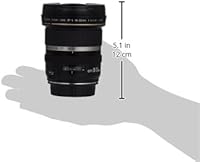
  • Weight: This wide-angle zoom weighs approximately 1 lb (385g), keeping it lightweight for extended handheld use.
  • Dimensions: The lens measures approximately 5 x 5 x 5 inches (84mm diameter x 90mm length).
  • Zoom Type: This is a wide-angle zoom lens, covering a broad field of view well-suited for landscapes and interiors.
  • Sensor Compatibility: Designed exclusively for APS-C format Canon EOS digital SLRs; not compatible with full-frame Canon bodies.
  • Image Stabilization: This lens does not include optical image stabilization, so steady technique or a tripod is recommended in low light.
  • Warranty: Canon includes a 1-year limited warranty from the manufacturer covering defects in materials and workmanship.
  • Model Number: The official Canon model number for this lens is 9518A002.
  • Manufacturer: This lens is manufactured and sold by Canon Cameras US, a division of Canon Inc.
  • Release Date: This lens was first made available in June 2006 and has remained in production without discontinuation.

Related Reviews
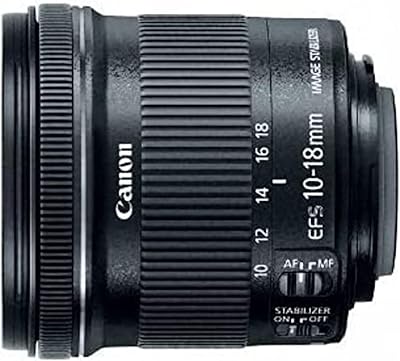
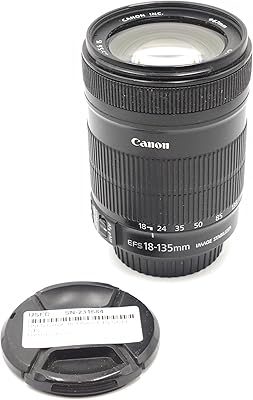
Canon EF-S 10-18mm STM Wide-Angle Lens
75%
83%
Image Sharpness
86%
Autofocus Performance
81%
Image Stabilization
58%
Distortion & Vignetting
54%
Low-Light Capability
More
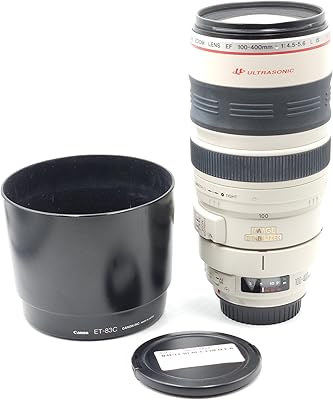
Canon EF-S 18-135mm f/3.5-5.6 IS Zoom Lens
77%
91%
Zoom Versatility
88%
Image Stabilization
76%
Sharpness & Clarity
58%
Low-Light Performance
79%
Autofocus Speed
More
Canon EF 100-300mm f/4.5-5.6 Telephoto Zoom Lens
75%
88%
Autofocus Speed
91%
Autofocus Noise
67%
Image Sharpness
43%
Image Stabilization
78%
Build Quality
More
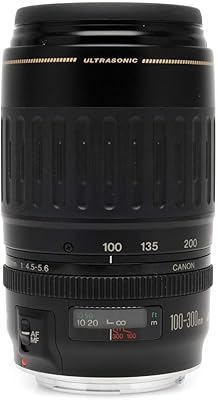
Canon EF 100-400mm f/4.5-5.6L Telephoto Zoom Lens
81%
91%
Autofocus Speed & Accuracy
88%
Image Stabilization
86%
Optical Sharpness
93%
Build Quality & Weather Sealing
67%
Push-Pull Zoom Mechanism
More
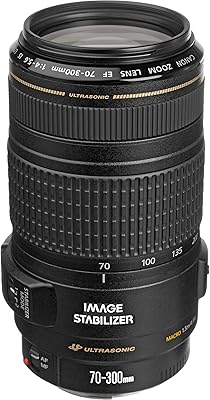
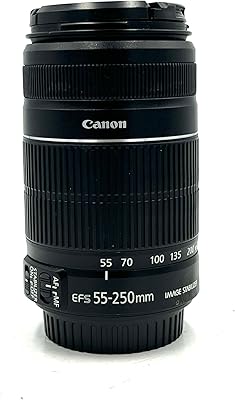
Canon EF 70-300mm IS USM Telephoto Lens
77%
91%
Image Stabilization
87%
Autofocus Performance
72%
Optical Sharpness
61%
Build Quality
78%
Value for Money
More
Canon EF-S 55-250mm f/4-5.6 IS II Telephoto Zoom Lens
82%
91%
Value for Money
88%
Image Stabilization Performance
65%
Autofocus Speed in Low Light
93%
Portability & Size
85%
Image Quality & Sharpness
More
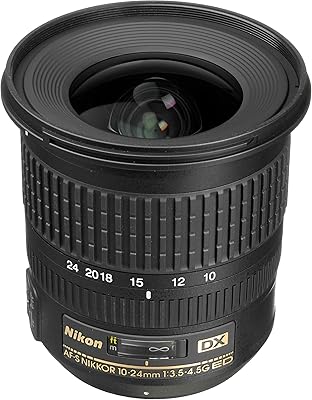
Nikon AF-S DX NIKKOR 10-24mm f/3.5-4.5G ED Zoom Lens
85%
93%
Sharpness at Wide Angles
87%
Autofocus Performance
89%
Build Quality
72%
Low Light Performance
91%
Value for Money
More
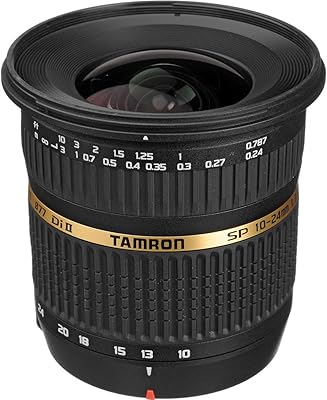
Tamron 10-24mm f/3.5-4.5 SP Di II LD Aspherical (IF) Lens for Nikon
85%
87%
Image Quality
82%
Autofocus Speed
80%
Build Quality
91%
Portability
70%
Low-Light Performance
More
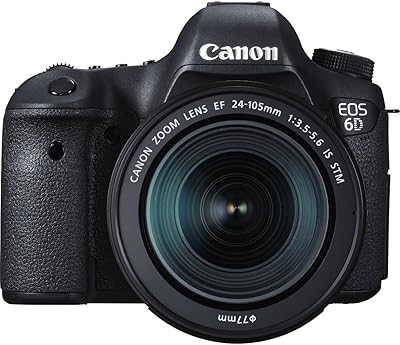
Canon EOS 6D DSLR Camera with EF 24-105mm f/3.5-5.6 IS STM Lens Kit
84%
94%
Image Quality
82%
Autofocus Performance
88%
Ease of Use
90%
Low-Light Performance
85%
Build Quality
More
Canon EF 50mm f/1.4 USM Camera Lens
80%
91%
Bokeh & Background Separation
88%
Low-Light Performance
84%
Autofocus Speed & Accuracy
63%
Sharpness Wide Open
78%
Build Quality & Feel
More

FAQ

Yes, it is fully compatible with any Canon APS-C DSLR, including the Rebel series and the 90D. The EF-S mount was designed for exactly these bodies, so autofocus, metering, and all automatic exposure modes will work without any workarounds.

No. EF-S lenses physically cannot mount on full-frame Canon bodies — the mount design prevents it. If you are shooting full-frame or planning to upgrade, you would need to look at Canon EF wide-angle options instead.

On an APS-C body, the crop factor multiplies the focal length by roughly 1.6x, so 10mm behaves like a 16mm lens on a full-frame camera. That gives you a genuinely wide field of view — wide enough for sweeping landscapes, large interiors, and dramatic architectural shots without feeling gimmicky.

Not really. The ring-type USM motor is one of the quietest autofocus systems available, and most users who record video with it report no audible focusing noise in their clips. It is one of the main reasons videographers prefer this over noisier budget alternatives.

It is noticeable if you are shooting straight lines — architecture, door frames, horizon lines — right at the wide end. That said, virtually every wide-angle zoom shows some barrel distortion at maximum width, and modern editing software like Lightroom or Capture One has built-in lens correction profiles for this lens that fix it with a single click.

No, it does not. For landscapes and architecture on a tripod, that is rarely an issue. For handheld shooting in dim conditions, you will want to compensate with higher ISO or a faster shutter — the variable aperture means you cannot rely on maximum light transmission across the entire zoom range either.

The Tokina has a clear advantage in low-light situations thanks to its constant f/2.8 aperture, which is significantly faster. However, the Canon edges ahead in autofocus speed and silence, and many users find the Canon's color rendering and overall sharpness profile more consistent. If low light is your primary concern, the Tokina is worth serious consideration; otherwise, this EF-S lens holds its own.

Yes, the front element accepts standard 77mm screw-in filters. Polarizers and neutral density filters both work well on it, though with ultra-wide lenses you do need to be careful with thick-ring circular polarizers as they can vignette at 10mm.

It is solid for a consumer-to-prosumer lens — the barrel feels well-constructed and long-term owners consistently mention durability as a reason they have kept it for many years. That said, it is not weather-sealed, so you would want to be cautious in rain or dusty environments without some form of protection.

For Canon APS-C DSLR shooters, yes — it still delivers sharp images, reliable autofocus, and a useful focal range that newer Canon mirrorless users do not always have easy access to in the EF-S format. If you are shooting on a DSLR body and have no immediate plans to switch systems, the age of the optical design is not a practical disadvantage for most shooting situations.

Where to Buy