Overview

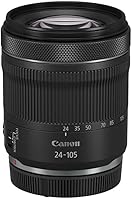
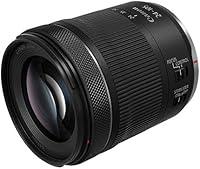
The Canon RF 24-105mm F4-7.1 Zoom Lens occupies a practical sweet spot in Canon's RF lineup — wide enough for landscapes, long enough for portraits, and compact enough to stay on your camera all day. It was never designed to compete with the F4L on paper; the goal was giving enthusiasts a lighter, more affordable entry into the RF ecosystem. The variable aperture is a known trade-off that keeps the size sensible, and for most daylight shooting it rarely becomes an obstacle. Moving up from a kit lens, this all-in-one lens represents a meaningful step forward in optical quality and real-world versatility.
Features & Benefits

The 5-stop image stabilization is where this RF zoom earns genuine respect. In practice, that translates to sharp handheld shots at shutter speeds you would normally consider risky — a real asset for travel and indoor shooting without flash. The STM autofocus motor runs nearly silent, which matters far more than its spec-sheet billing suggests: video shooters will appreciate how cleanly it tracks moving subjects without intruding on audio. A minimum focusing distance of 0.66 ft delivers unexpected close-up capability useful for food or product work. Its compact, 1.2-pound build also pairs with Canon's in-body stabilization for even steadier handheld results.

Best For

This all-in-one lens is a natural fit for travel photographers who want one capable optic without the weight penalty of an L-series. It suits content creators and vloggers particularly well — the quiet motor and solid stabilization handle run-and-gun shooting without much fuss. Photographers working mostly in good light, whether on the street or scouting a new city, will rarely feel constrained by the variable aperture. It also makes a sensible choice for anyone coming from a crop-sensor system who wants to explore full-frame RF shooting without immediately committing to a heavier, more expensive setup. Versatility is the point here, not peak optical performance.

User Feedback

Owners consistently praise image sharpness through the mid-range focal lengths and the overall value the 24-105 STM delivers relative to its cost. Portability comes up repeatedly — many users genuinely leave everything else at home on trips. The most common frustration is equally predictable: at 105mm you are working with F7.1, and that narrows your options indoors or in fading light. Some reviewers note that distortion and vignetting are present at the wide end, though Canon bodies correct these automatically and effectively. Comparisons to the F4L are inevitable; most buyers conclude the optical gap is smaller than the price gap, though bokeh and build do favor the pricier version.

Pros

  • Covers 24-105mm in a single compact package, handling most travel and everyday shooting situations confidently.
  • Five-stop optical stabilization makes handheld shooting genuinely reliable, even in lower light conditions.
  • STM autofocus is impressively quiet, making it a practical choice for video work where audio matters.
  • Weighing just 1.2 pounds, this all-in-one lens is noticeably lighter than comparable constant-aperture zooms.
  • A minimum focusing distance of 0.66 ft adds useful close-up versatility that surprises many first-time users.
  • Plays well with Canon RF body stabilization systems for even more effective handheld performance.
  • Image sharpness through the mid-range focal lengths consistently earns praise from real-world users.
  • Represents a genuine optical and build-quality step up from entry-level kit lenses at an accessible price.
  • 67mm filter thread is a common, affordable size, making accessory investment straightforward.

Cons

  • At 105mm the maximum aperture drops to F7.1, which significantly limits creative and technical options in low light.
  • No weather sealing means shooting in rain or dusty environments carries real risk.
  • Distortion and vignetting at the wide end require in-camera or post-processing correction, adding a step to raw workflows.
  • Bokeh rendering at the long end lacks the smoothness that constant-aperture lenses in the same range produce.
  • Zoom and focus rings can feel plasticky compared to Canon L-series glass, which may bother tactile-sensitive shooters.
  • Subject tracking for fast-moving targets is adequate but noticeably behind Canon lenses equipped with nano USM motors.
  • The variable aperture complicates manual exposure settings when zooming mid-shoot, requiring constant compensation.
  • Buyers comparing it to the F4L version often feel the optical gap, particularly in edge sharpness and contrast at wider apertures.

Ratings

Our AI rating system analyzed thousands of verified global user reviews for the Canon RF 24-105mm F4-7.1 Zoom Lens, actively filtering out incentivized submissions, repeated accounts, and bot activity to surface what real photographers genuinely think. The scores below reflect both the genuine strengths that keep buyers satisfied long after purchase and the recurring pain points that informed shoppers deserve to know before committing. Nothing has been smoothed over — where this all-in-one lens earns high marks, the data is clear, and where it falls short, that is reflected too.

Versatility & Focal Range
91%
Covering 24mm to 105mm in a single mount means most travel and everyday shooting situations are handled without swapping glass. Users consistently report leaving other lenses at home on trips, relying on this RF zoom from wide cityscapes to compressed portrait work in the same afternoon.
At the telephoto end, 105mm starts to feel limiting for wildlife or sports where reach matters. A few users noted they still reach for a dedicated telephoto when subjects are more than moderate distance away.
Image Stabilization
88%
The 5-stop optical stabilization earns consistent real-world praise, particularly from users shooting inside churches, museums, or dimly lit markets where flash is unwelcome. On bodies with in-body stabilization, the combined effect makes handheld shots at unusually slow shutter speeds reliably usable.
Some users report the stabilization introduces a slight wobble during heavy panning shots, requiring adjustment to technique. A small number noted that the IS system occasionally hunts before locking, adding a brief lag in certain handheld video scenarios.
Autofocus Performance
79%
21%
For video creators and casual photographers, the STM motor is a genuine asset — quiet, smooth, and unobtrusive in footage. Subject tracking on modern EOS R bodies pairs well with the lens, handling portraits, walking subjects, and pet photography without meaningful complaint from everyday users.
Fast, erratic movement — sprinting children, dogs mid-run, or birds in flight — exposes the STM motor's limitations relative to Canon's nano USM lenses. Several reviewers noted that tracking confidence drops noticeably in lower contrast or low-light scenes.
Low-Light Capability
52%
48%
At 24mm with F4 available, the lens handles moderate indoor or dusk shooting reasonably well, and the stabilization helps compensate for slower shutter speeds in stationary scenes. Users shooting in good ambient light rarely encounter meaningful exposure problems across the zoom range.
The F7.1 maximum aperture at 105mm is a recurring frustration for users shooting indoor events, dim receptions, or evening street photography. ISO climbs quickly in those conditions, and even with stabilization, moving subjects become difficult to freeze cleanly.
Build Quality & Handling
67%
33%
The lens feels solid enough for daily use and regular travel, and its compact dimensions make it comfortable to carry for extended periods without hand fatigue. Users upgrading from entry-level kit lenses notice the improved feel immediately.
Compared to Canon's L-series glass, the plastic construction of the zoom and focus rings draws repeated criticism from experienced photographers. The lack of weather sealing is also a sore point for users who shoot in rain or dusty outdoor conditions.
Optical Sharpness
83%
Through the mid-range focal lengths — roughly 35mm to 85mm — the 24-105 STM delivers sharp, detailed images that hold up well in print and large-screen display. Users shooting in good light consistently praise the center sharpness as punching above expectations for the price tier.
Edge sharpness at wide apertures and corner performance at 24mm are areas where the lens shows its mid-range character. Stopped down to F8 or beyond the situation improves meaningfully, but wide-open corners on flat subjects like architecture reveal clear limitations.
Video Usability
84%
The combination of silent STM focus, effective stabilization, and a practical zoom range makes this all-in-one lens a strong everyday video option for vloggers and content creators. Users filming travel documentaries or YouTube content report it handles transitions and subject tracking smoothly in typical shooting conditions.
The variable aperture creates exposure shifts when zooming mid-clip, which is an unwelcome complication for users without automatic exposure compensation enabled. Breathing — the slight shift in framing during focus pulls — is also noticeable enough to bother more technically demanding video producers.
Portability & Weight
93%
At 1.2 pounds, this RF zoom is one of the lighter options in the 24-105mm zoom class, and that advantage becomes very tangible over a long day of shooting. Multiple users specifically mention it as the reason they chose it over the heavier F4L for travel.
While light for its focal range, it is still a meaningful addition to a mirrorless body and bag compared to a compact prime. Users pairing it with larger RF bodies like the EOS R3 note that the size balance feels slightly mismatched.
Close-Up Performance
76%
24%
The 0.4x maximum magnification and short minimum focus distance catch many buyers off guard in the best way — it handles food photography, flat lays, and detailed product shots better than expected from a general-purpose zoom. Travel photographers find it genuinely useful for capturing market textures, signage, or architectural details up close.
It is not a replacement for a dedicated macro lens, and at closer focus distances the lens exhibits some softness and chromatic fringing. Users with serious macro needs will find the 0.4x ceiling limiting after initial enthusiasm fades.
Distortion & Correction
71%
29%
In-camera JPEG processing and Canon's lens correction profiles in major raw editors handle distortion and vignetting effectively, leaving most users with clean, corrected files without extra effort. For photographers shooting corrected JPEGs or using Canon's Digital Photo Professional, the issue is largely transparent.
Users shooting raw in third-party software occasionally encounter noticeable barrel distortion at 24mm and vignetting in corners before correction is applied. Those who prefer minimal post-processing or shoot in specific scenarios where uncorrected files matter will need to account for this consistently.
Value for Money
86%
Within its intended market tier, this all-in-one lens delivers a compelling mix of features at a price meaningfully below the F4L. Enthusiasts stepping up from a basic kit lens consistently describe it as a worthwhile investment that meaningfully expanded what they could capture.
Buyers who later move toward more specialized shooting — portraiture, event photography, or professional video — often feel the lens eventually requires a more capable replacement sooner than hoped. The price gap to the F4L also narrows in real terms when third-party deals are available, which makes the value case slightly less clear-cut.
Bokeh & Background Separation
58%
42%
At 105mm and closer focusing distances, the 24-105 STM can produce pleasing subject separation for casual portrait work in good light. Users shooting environmental portraits or travel headshots find the results acceptable for social media and personal use.
The variable aperture fundamentally limits background blur potential compared to constant F2.8 or F4 alternatives, and this is where comparisons to the F4L sting most. Photographers who care about smooth, creamy out-of-focus rendering will find this lens consistently disappointing beyond casual snapshots.
Compatibility & Integration
94%
Native RF mount communication means every supported EOS R body gets full stabilization coordination, lens correction data, and AF performance without adapters or workarounds. Users with multiple Canon RF bodies report it transitions between them without any reconfiguration needed.
The lens is entirely RF-specific — owners of EF-mount or EF-M bodies cannot use it without an adapter, and even then miss out on full integration benefits. There is no meaningful cross-system flexibility, which matters only to photographers managing a mixed Canon kit.

Suitable for:

The Canon RF 24-105mm F4-7.1 Zoom Lens is a strong match for travel photographers who want a single, capable optic that covers the majority of real-world shooting situations without straining their back or their budget. If you shoot primarily outdoors or in well-lit environments — street scenes, landscapes, family outings, tourist destinations — the variable aperture rarely becomes a genuine obstacle, and the stabilization buys you extra latitude when the light starts to dip. Content creators and vloggers working on Canon EOS R-series bodies will find the near-silent STM motor and smooth AF tracking especially useful, particularly in situations where an obtrusive focus sound would ruin a take. Enthusiasts who are stepping off crop-sensor cameras or upgrading from a basic kit lens will notice a clear improvement in sharpness, build quality, and operational finesse. It also pairs well with Canon's in-body stabilization systems, making it a thoughtful choice for anyone who prioritizes handheld shooting across long days of mixed conditions.
Not suitable for:

Photographers who regularly work in challenging light — dimly lit event venues, indoor sports arenas, or candlelit restaurant interiors — will find the F7.1 maximum aperture at the long end a persistent frustration, as it pushes ISO higher than many shooters are comfortable with. The 24-105 STM is also not the right call if you need professional-grade build quality, weather sealing, or the smoother background separation that a constant F4 aperture provides; for those needs, Canon's RF 24-105mm F4L is the more honest recommendation, assuming the additional investment is viable. Sports and wildlife photographers who depend on fast, precise tracking of erratic subjects may find the STM motor adequate for casual use but underpowered compared to Canon's nano USM or ring USM alternatives. Anyone who shoots portraits as a primary genre and cares deeply about subject-background separation will likely find this all-in-one lens leaves them wanting more at 105mm, especially in mixed indoor lighting. If maximum optical performance in any single focal length is the priority over versatility, a well-chosen prime will simply outperform this RF zoom across the board.

Specifications

  • Focal Length: This RF zoom covers a 24-105mm range, spanning wide-angle through short telephoto on full-frame Canon RF mirrorless cameras.
  • Aperture Range: The maximum aperture is F4 at the wide end, stepping down to F7.1 at 105mm as a consequence of its compact variable-aperture design.
  • Lens Mount: Designed exclusively for Canon's RF mount, it communicates fully with compatible EOS R-series bodies for stabilization and autofocus coordination.
  • Autofocus Motor: A Stepping Motor (STM) drives autofocus, delivering smooth, near-silent focus transitions well suited to video recording and quiet environments.
  • Image Stabilization: Canon's Optical Image Stabilizer is rated for up to 5 stops of shake correction, and works in combination with in-body stabilization on supported bodies.
  • Min Focus Distance: The minimum focusing distance in autofocus mode is 0.66 ft (approximately 0.2 m), enabling close-up work at a comfortable working range.
  • Max Magnification: Maximum magnification reaches 0.4x, providing useful macro-adjacent capability for product, food, or detail photography without a dedicated macro lens.
  • Lens Construction: The optical formula comprises 14 elements arranged in 12 groups, incorporating Canon's coating technologies to manage flare and chromatic aberration.
  • Filter Thread: The front element accepts 67mm filters, a widely available and affordable size that simplifies accessory selection for polarizers and ND filters.
  • Dimensions: The lens measures 3.5 inches in length with a 3.02-inch diameter, making it one of the more compact options in the RF 24-105mm class.
  • Weight: At 1.2 pounds (approximately 540g), this all-in-one lens is meaningfully lighter than constant-aperture counterparts in the same focal range.
  • Lens Type: This is a variable-aperture zoom lens, designed to balance optical versatility and portability rather than prioritize maximum light transmission.
  • Manufacturer: Manufactured by Canon Inc., a company with decades of experience producing professional and consumer camera optics.
  • Model Number: The official Canon model number is 4111C005AA, useful for cross-referencing warranty registration and authorized service records.
  • Availability: This lens was first made available in February 2020, coinciding with the expansion of Canon's RF-mount ecosystem for full-frame mirrorless cameras.
  • Battery Requirement: The lens requires one lithium-ion battery supplied by the compatible camera body; no independent power source is needed for operation.
  • Compatibility: The lens is compatible with all Canon EOS R-series full-frame mirrorless cameras equipped with an RF mount, including the EOS R, R5, R6, and R8 lines.
  • Aperture Blades: The lens uses a rounded aperture diaphragm designed to produce relatively smooth out-of-focus rendering at wider aperture settings.

Related Reviews

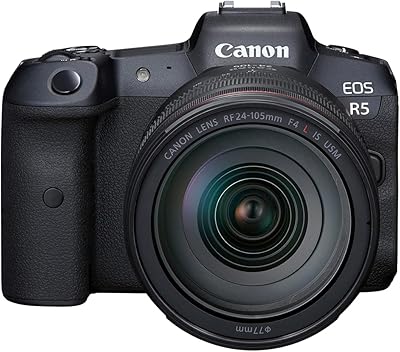
Canon EOS R5 Mirrorless Camera
81%
97%
Image Quality
95%
Autofocus Performance
82%
Video Capability
93%
Build Quality & Durability
88%
In-Body Image Stabilization
More
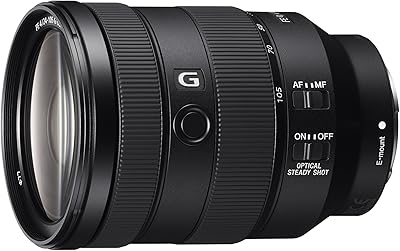
Sony FE 24-105mm F4 G OSS Lens
84%
93%
Optical Sharpness
91%
Autofocus Performance
89%
Build Quality
86%
Image Stabilization
88%
Video Performance
More
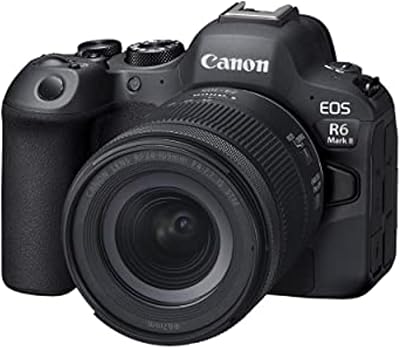
Canon EOS R6 Mark II Mirrorless Camera
83%
96%
Autofocus Performance
91%
Video Quality
89%
Burst Speed & Buffer
84%
Image Quality & Dynamic Range
93%
Build Quality & Weather Sealing
More
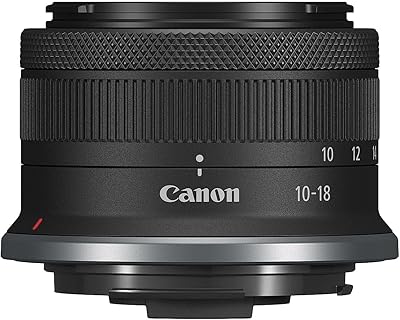
Canon RF-S10-18mm F4.5-6.3 IS STM Zoom Lens
83%
91%
Image Sharpness
84%
Autofocus Performance
88%
Image Stabilization
76%
Build Quality & Handling
93%
Vlogging Usability
More
Panasonic LUMIX S 24-105mm F4 Lens
88%
94%
Image Quality
91%
Weather Sealing & Durability
88%
Low-Light Performance
84%
Ease of Use
90%
Stabilization Performance
More
Canon RF-S 55-210mm F5-7.1 STM Telephoto Lens
79%
83%
Image Sharpness
74%
Autofocus Speed
88%
Stabilization Performance
91%
Value for Money
57%
Low-Light Performance
More
Canon EF 24-105mm f/4L IS USM Lens
76%
83%
Image Sharpness
89%
Autofocus Performance
78%
Image Stabilization
91%
Build Quality
88%
Focal Range Versatility
More
Canon EOS 6D Mark II with EF 24-105mm f/4L IS II USM
81%
93%
Image Quality
79%
Autofocus Performance
57%
Video Capabilities
91%
Bundled Lens Quality
88%
Battery Life
More
7artisans 7.5mm f2.8 Mark II Fisheye Lens for Canon RF
85%
88%
Image Quality
92%
Build Quality
65%
Ease of Use (Manual Focus)
90%
Portability
85%
Low-Light Performance
More
BM Premium 420-1600mm f/8.3 Telephoto Zoom Lens
69%
83%
Value for Money
88%
Focal Reach
57%
Image Sharpness
61%
Manual Focus Usability
59%
Build Quality
More

FAQ

Yes, the 24-105 STM uses Canon's RF mount, so it works natively with any EOS R-series full-frame body, including the R6 Mark II. You get full electronic communication, which means autofocus, image stabilization coordination, and lens correction data all work automatically.

In practical terms, 5 stops of stabilization means you can shoot handheld at shutter speeds several times slower than you normally would and still get sharp results. For still photography it is genuinely useful — walking around a dim market or shooting inside a cathedral without a tripod becomes far more viable. On bodies that also have in-body stabilization, the two systems work together and push that advantage even further.

Honest answer: it depends on what you shoot. The Canon RF 24-105mm F4-7.1 Zoom Lens is the better choice if you prioritize portability, want a versatile travel lens, and shoot mostly in decent light. If you regularly work indoors, need weather sealing, or want better background blur at the long end, the F4L earns its premium. The optical gap is smaller than some expect, but the build and aperture consistency are noticeably different.
It can, depending on your workflow. When you zoom during a shot, the aperture changes, which shifts your exposure mid-clip — something that requires either constant manual compensation or relying on auto-ISO. For static shots or cuts between focal lengths, it is rarely an issue. Many vloggers use this all-in-one lens daily without complaint, but narrative filmmakers who need strict exposure control will find it less convenient than a constant-aperture alternative.

It physically mounts and functions on any RF body, including APS-C models like the R50 and R100. On those cameras the crop factor makes the effective focal range equivalent to roughly 38-168mm, which shifts the wide-angle usefulness considerably. It is not the ideal pairing for APS-C bodies if wide coverage matters to you, but it works perfectly well for portraits and travel on those cameras.

The minimum focusing distance is 0.66 ft in autofocus, and maximum magnification reaches 0.4x — which is more capable than most zoom lenses of this type. It is not a true macro lens, but it is genuinely useful for food photography, flat lays, or isolating small details without switching glass.

For casual family photography the STM motor handles moving subjects well, especially on modern EOS R bodies with strong subject-detection algorithms. Where it starts to feel limited is in chaotic, unpredictable movement — a dog sprinting directly at you or a child mid-jump in low light. For relaxed family sessions, travel portraits, or general everyday use, it is more than adequate.

No, this RF zoom does not include weather sealing or dust and moisture resistance. Canon reserves that feature for its L-series lenses. If you shoot regularly in rain, snow, or dusty environments, you will want to be careful or consider the F4L instead.

There is noticeable barrel distortion and some vignetting at the wide end, which is common for lenses of this design. The good news is that Canon RF bodies automatically apply lens correction profiles in JPEG output, and raw files in Canon's Digital Photo Professional (and most third-party editors) include the correction data. For most photographers shooting corrected files, it is a non-issue in practice.

The front filter thread is 67mm, which is a very common size. Standard polarizing filters, neutral density filters, and UV protectors are all widely available and reasonably priced at that diameter. If you already own 67mm filters from another lens, they will fit directly without an adapter.

Where to Buy