
Overview

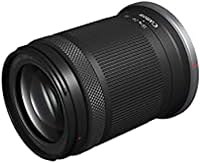
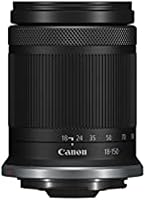
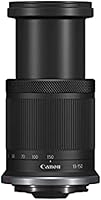
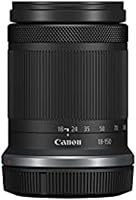
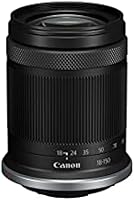
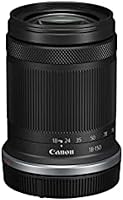
The Canon RF-S 18-150mm Mirrorless Zoom Lens is Canon's answer to the one-lens travel kit for APS-C mirrorless shooters — covering everything from wide street scenes to compressed telephoto shots without ever reaching into your bag. That 8.3x zoom range is genuinely useful in practice, not just on paper. It sits in a mid-to-premium price bracket, targeting photographers who've outgrown a basic kit lens and want something that can keep up in more demanding situations. If you've been swapping lenses mid-trip and missing shots because of it, this all-in-one zoom makes a compelling case for simplifying your setup considerably.

Features & Benefits

The standout here is the optical image stabilization, which delivers up to 4.5 stops of correction on its own — bump that to 6.5 stops when paired with an IBIS-equipped EOS R body like the R7. That combination makes a real difference when handholding at 150mm or shooting slow-paced video without a gimbal. The lead screw STM motor is genuinely quiet during recording, and Dynamic IS adds an extra layer of smoothing when walking and shooting at wide-angle. The lens weighs around 14 oz, so it won't fatigue you on a long day out. One honest caveat: at f/6.3 telephoto, indoor low-light shooting gets difficult fast.

Best For

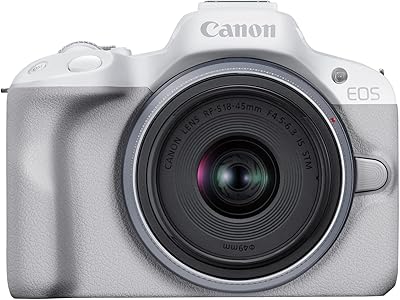
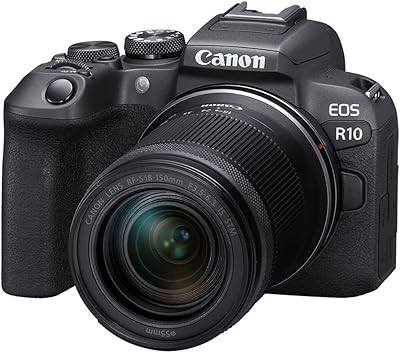
This travel lens was built with a specific type of photographer in mind. If you're using an EOS R50, R10, or R7 and want a single lens that handles cityscapes, candid portraits, and distant subjects without a bag full of glass, this is your lens. It also suits video creators who need reliable autofocus and solid stabilization without a heavy investment in dedicated glass. Where it falls short is equally worth stating: if you shoot in dim reception halls, need 400mm-plus reach for wildlife, or demand razor-sharp wide-open results, a prime or longer telephoto will serve you better. Versatility over perfection is the honest trade-off here.

User Feedback

Owners of the RF-S 18-150mm consistently praise zoom range versatility and build quality that feels solid for the price. Most consider it a meaningful upgrade from a standard 18-55mm kit lens. On the flip side, a recurring complaint is image softness at 150mm, especially wide open — acceptable for casual shooting, but obvious if you scrutinize images closely during editing. Autofocus earns generally positive marks, though some users mention occasional hesitation in low-contrast situations. Video shooters are largely satisfied with how quiet the STM performs during recording. The ongoing debate is whether this all-in-one zoom justifies its price versus buying sharper, purpose-built prime lenses instead.

Pros

  • The 8.3x zoom range handles wide-angle, everyday, and telephoto shots without ever swapping glass.
  • Built-in optical stabilization meaningfully reduces camera shake during handheld shooting and slow-paced video.
  • Pairing the RF-S 18-150mm with an IBIS-equipped EOS R body pushes stabilization to an impressive 6.5 stops combined.
  • The STM motor is quiet enough during video recording that on-camera audio remains usable.
  • At around 14 oz, this all-in-one zoom is light enough to carry all day without fatigue.
  • Dynamic IS adds useful smoothing when walking and filming at the wide-angle end.
  • Build quality feels solid and well above what most users expect at this price tier.
  • Covers the most useful focal lengths for travel, street, and casual portrait photography in a single lens.
  • Automatic APS-C crop behavior on full-frame EOS R bodies adds flexibility for dual-body shooters.

Cons

  • At f/6.3 on the telephoto end, shooting in dim or indoor conditions without stabilization becomes genuinely difficult.
  • Image sharpness drops noticeably at 150mm, especially at wider apertures — pixel-peepers will spot it in editing.
  • The variable aperture means exposure shifts as you zoom, which can disrupt consistency during fast-paced shooting.
  • Autofocus can hesitate in low-contrast or low-light scenes, causing brief hunting before locking on.
  • Reach tops out at 150mm, which is insufficient for wildlife, sports, or any subject requiring a longer telephoto.
  • The price premium over a standard kit lens is hard to justify if you rarely shoot beyond 55mm.
  • No weather sealing is confirmed, limiting confidence in wet or dusty outdoor conditions.
  • Center-to-edge sharpness at the wide end is competent but does not rival dedicated wide-angle options.
  • Users wanting a fast prime look or strong background blur will find the aperture range limiting for portraits.

Ratings

Our AI rating system analyzed verified global user reviews for the Canon RF-S 18-150mm Mirrorless Zoom Lens, actively filtering out incentivized, bot-generated, and duplicate submissions to surface what real buyers genuinely experienced. The scores below reflect both the strengths that earned strong praise and the friction points that drew consistent criticism — nothing softened, nothing inflated. Whether you're deciding between this all-in-one zoom and a multi-lens kit, these scorecards are designed to give you a transparent, honest picture.

Zoom Versatility
93%
The 8.3x zoom range is the single biggest reason buyers choose this travel lens, and the feedback reflects that clearly. Photographers repeatedly describe going from capturing a full market square at 18mm to isolating a street performer at 150mm without ever reaching for a bag — that kind of flexibility in one mounted lens genuinely changes how people shoot on trips.
A few users note that the zoom ring can feel slightly stiff when cold, and the lens extends noticeably at longer focal lengths, which some find awkward when switching positions quickly. It's a minor ergonomic complaint but worth knowing if you shoot fast-paced events.
Image Stabilization
88%
Handheld users consistently praise the IS system for making longer focal lengths manageable without a tripod — shooting at 100mm in fading afternoon light and still getting sharp frames is a scenario that comes up repeatedly in positive reviews. Those pairing it with an IBIS body like the EOS R7 report an even more noticeable improvement in both stills and walking video shots.
The 6.5-stop combined figure requires a compatible IBIS body, and users without one get a more modest real-world benefit than the headline number suggests. A handful of reviewers also noted that Dynamic IS introduces slight field-of-view cropping during video, which surprised them on first use.
Autofocus Performance
76%
24%
For everyday shooting — portraits, travel scenes, family moments — the STM autofocus locks on quickly and reliably enough that most users rarely think about it. Video shooters in particular appreciate how smoothly it transitions focus during slow panning shots without the jarring motor noise that plagues older lens designs.
Low-contrast subjects and dimly lit interiors expose the lead screw STM's limitations, with multiple users reporting brief focus hunting before the lens commits. It is not a sports or wildlife AF system, and buyers expecting fast burst-shooting performance will be left wanting.
Video Quality
84%
The combination of a quiet STM motor and effective Dynamic IS makes this one of the more capable video options in its class for travel and vlog-style content. Users shooting handheld walk-and-talk footage at wide angles consistently report smoother, more usable clips compared to lenses without Dynamic IS.
At the telephoto end, focus breathing during video pulls is noticeable and was flagged by more serious video producers as a limitation for cinematic work. Audio-critical shooters also mention that while the motor is quiet, it is not completely silent under very sensitive microphone setups.
Image Sharpness
67%
33%
At wide to mid focal lengths in good light, the RF-S 18-150mm produces genuinely clean, detailed images that are a clear step above kit lens results. Center sharpness in the 18-70mm range earns consistent praise from casual shooters and travel bloggers who share images at web and social media sizes.
Softness at the telephoto end — especially at 150mm wide open — is the most frequently cited criticism across all user groups. Stopped down to f/8 or f/11 the situation improves, but buyers used to prime lenses or L-series glass will find the long-end performance distinctly average.
Low-Light Capability
54%
46%
At the wide end, the f/3.5 maximum aperture combined with the IS system gives users a workable setup for dim indoor scenes at moderate ISO settings. Some users shooting evening travel scenes at 18-24mm reported acceptable results when leaning on the stabilization to allow slower shutter speeds.
At 150mm the f/6.3 aperture is a genuine obstacle in anything less than bright conditions, forcing high ISO values that increase noise noticeably on APS-C sensors. This is a recurring disappointment for users who hoped to use the full zoom range at indoor events or twilight shoots.
Build Quality
81%
19%
Most buyers are pleasantly surprised by how solid the barrel feels relative to the price, with the zoom and focus rings operating smoothly out of the box. The compact form factor and reasonable weight make it feel purpose-built for travel rather than a budget compromise.
There is no confirmed weather sealing, which leaves users uneasy in light rain or dusty environments — a limitation that feels noticeable when a comparable price buys weather-resistant options from some competitors. A small number of users also reported slight zoom creep when the lens is pointed downward over time.
Portability
91%
At 14.4 oz and compact when retracted, this all-in-one zoom genuinely fits the travel promise — multiple users described packing an entire day's shooting kit into a small shoulder bag for the first time because they weren't carrying two or three lenses. The size reduction compared to a telephoto zoom pairing is significant.
The lens extends considerably at 150mm, which changes the balance on smaller bodies like the R50 and can feel front-heavy during extended single-handed use. A few users also noted that the push-pull zoom mechanism during shooting draws attention in quiet public spaces.
Value for Money
73%
27%
Against the cost of buying an 18-55mm kit lens plus a separate 70-300mm telephoto, this travel lens can represent genuine savings while reducing the gear you carry daily. Users who fully use the zoom range consistently rate the value positively, especially when factoring in the stabilization and STM motor.
The debate around value versus a prime lens or a higher-grade zoom is real and comes up constantly in user discussions. Buyers who primarily shoot at one or two focal lengths often feel in retrospect that a dedicated lens at a similar price would have given them better image quality for their specific use case.
Autofocus in Video
79%
21%
For vloggers and content creators recording themselves or moving subjects at conversational distances, the continuous AF tracks reliably and transitions without obvious lurching. The near-silent motor operation holds up well under standard built-in microphone conditions on most EOS R bodies.
Subject tracking during fast-moving video sequences can slip, particularly when a subject moves laterally at longer focal lengths. Users recording events with unpredictable subject movement mention more missed focus moments than they expected from a Canon-branded native RF lens.
Compatibility & Integration
87%
Being a native RF-mount lens, communication with EOS R-series bodies is seamless — firmware updates, in-camera corrections for distortion and chromatic aberration, and coordinated IS all work without configuration. Users switching from EF-mount systems frequently highlight this integration as one of the best reasons to go native RF.
The APS-C-only design means full-frame EOS R users are locked into a cropped image, which can feel limiting on a high-resolution body like the EOS R5. Users who own both APS-C and full-frame Canon bodies sometimes wish this lens had better full-frame coverage to maximize versatility across their kit.
Lens Coatings & Flare Resistance
69%
31%
In typical shooting conditions — overcast days, shaded interiors, standard outdoor scenes — users rarely report issues with unwanted reflections or color cast, suggesting Canon's coating work is adequate for everyday use. Landscape shooters using it for travel snaps describe colors as neutral and pleasing without significant post-processing correction needed.
Shooting directly into or near the sun exposes some susceptibility to flare and ghosting that more premium optics handle better, which a subset of landscape and architecture photographers found frustrating. The supplied lens hood helps somewhat, but users accustomed to higher-end Canon glass noted the difference under challenging backlit conditions.

Suitable for:

The Canon RF-S 18-150mm Mirrorless Zoom Lens is a strong match for Canon APS-C mirrorless users — particularly those shooting with the EOS R50, R10, or R7 — who want a single capable lens for travel, everyday outings, and light video work. If you've ever missed a shot while fumbling with a lens change on a busy street or a family trip, the appeal of an 8.3x zoom range that handles both wide cityscapes and compressed medium telephoto in one mounted lens becomes very practical very quickly. It suits beginner-to-intermediate photographers who have grown frustrated with the limited reach of a standard kit lens and want more creative flexibility without investing in multiple primes. Video creators working on vlogs, travel content, or event coverage will particularly appreciate the quiet STM autofocus and effective stabilization, which work well together for handheld shooting. Day-trippers, event photographers, and anyone prioritizing a light, versatile bag over maximum optical performance will find this all-in-one zoom a genuinely smart choice.

Not suitable for:

The Canon RF-S 18-150mm Mirrorless Zoom Lens is not the right tool for photographers who regularly shoot in challenging low-light environments — the f/6.3 maximum aperture at the long end is a real limitation in dim reception halls, evening events, or indoor venues without strong artificial lighting. Dedicated wildlife or sports photographers who need reach well beyond 150mm will also find this travel lens comes up short, as subjects like birds in flight or athletes on a distant field require considerably longer focal lengths. Pixel-peepers and professionals who demand edge-to-edge sharpness at every focal length and aperture setting will notice softness at the telephoto end, particularly wide open, which may be a dealbreaker for commercial or print-focused work. If your shooting is concentrated in a single focal range — say, portraits at 85mm or landscapes at ultra-wide — you will get better optical quality and a wider maximum aperture by investing in a dedicated prime instead. This lens trades outright optical excellence for breadth of coverage, and buyers who prioritize the former over the latter should shop elsewhere.

Specifications

  • Focal Length: This lens covers a focal length range of 18-150mm, equivalent to approximately 29-240mm on a full-frame sensor due to the APS-C crop factor.
  • Zoom Ratio: The optical zoom ratio is 8.3x, spanning wide-angle through medium telephoto in a single lens.
  • Maximum Aperture: Maximum aperture ranges from f/3.5 at the wide end to f/6.3 at the telephoto end, following a variable aperture design.
  • Image Stabilization: In-lens optical IS provides up to 4.5 stops of shake correction as a standalone system.
  • Combined IS: When paired with a compatible IBIS-equipped EOS R-series body, coordinated stabilization reaches up to 6.5 stops of correction.
  • Dynamic IS: Dynamic IS mode is available during video recording at the wide-angle setting to compensate for movement while walking.
  • Autofocus: Autofocus is driven by a lead screw-type STM motor, designed to operate quietly and smoothly, particularly during video capture.
  • Lens Mount: The lens uses the Canon RF mount and is optimized for APS-C sensor EOS R-series camera bodies.
  • Full-Frame Use: Mounting this lens on a full-frame EOS R-series body triggers automatic APS-C sensor cropping within the camera.
  • Dimensions: The lens measures 2.7 x 2.7 x 3.3 inches (diameter x diameter x length) in its retracted position.
  • Weight: Total weight is 14.4 oz (approximately 408g), keeping the overall travel kit compact and manageable for extended use.
  • Manufacturer: Designed and manufactured by Canon USA, with model number 5564C002.
  • Availability: This lens has been available since May 2022, establishing a reasonable track record of real-world user feedback.
  • Compatible Bodies: Designed for Canon APS-C RF-mount bodies including the EOS R50, EOS R10, and EOS R7, among others.
  • Filter Thread: Specific filter thread diameter is not officially confirmed in available product data; buyers should verify before purchasing filters.

Related Reviews
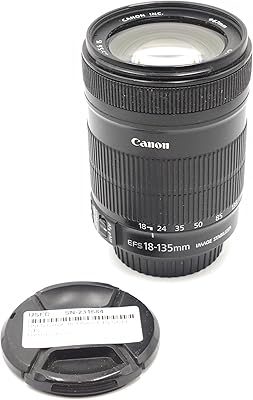
Canon EF-S 18-135mm f/3.5-5.6 IS Zoom Lens
77%
91%
Zoom Versatility
88%
Image Stabilization
76%
Sharpness & Clarity
58%
Low-Light Performance
79%
Autofocus Speed
More
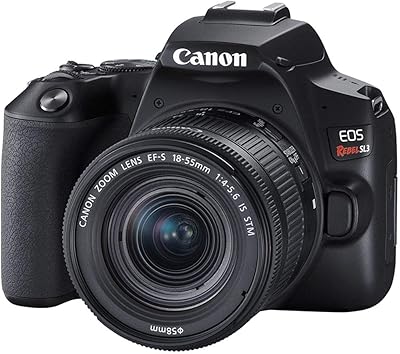
Canon EOS Rebel SL3
Canon EOS Rebel SL3
77%
88%
Image Quality
84%
Autofocus Performance
82%
Build Quality & Portability
61%
Video Capabilities
91%
Ease of Use
More
Sigma 18-50mm F2.8 DC DN Zoom Lens
81%
88%
Autofocus Performance
83%
Optical Sharpness
81%
Build Quality
94%
Size & Portability
86%
Low-Light Performance
More
Canon EOS R5 Mirrorless Camera
81%
97%
Image Quality
95%
Autofocus Performance
82%
Video Capability
93%
Build Quality & Durability
88%
In-Body Image Stabilization
More
Canon EF-S 55-250mm f/4-5.6 IS II Telephoto Zoom Lens
82%
91%
Value for Money
88%
Image Stabilization Performance
65%
Autofocus Speed in Low Light
93%
Portability & Size
85%
Image Quality & Sharpness
More
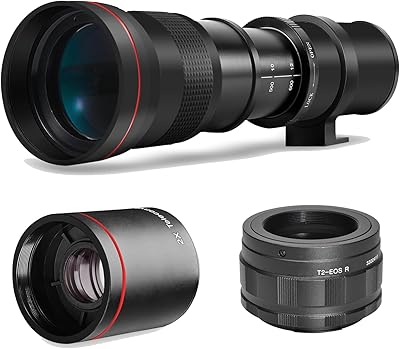
Lightdow 420-800mm F8.3 Telephoto Zoom Lens
68%
83%
Value for Money
61%
Image Sharpness
69%
Manual Focus Usability
58%
Build Quality
72%
Setup & Compatibility
More
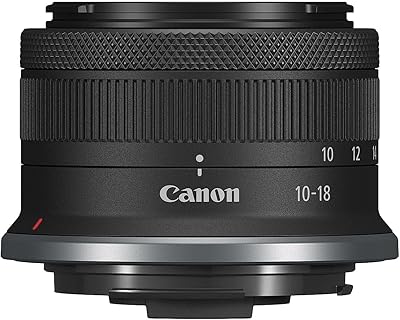
Canon RF-S10-18mm F4.5-6.3 IS STM Zoom Lens
83%
91%
Image Sharpness
84%
Autofocus Performance
88%
Image Stabilization
76%
Build Quality & Handling
93%
Vlogging Usability
More
BM Premium 420-1600mm f/8.3 Telephoto Zoom Lens
69%
83%
Value for Money
88%
Focal Reach
57%
Image Sharpness
61%
Manual Focus Usability
59%
Build Quality
More
Canon EOS R50
Canon EOS R50
79%
93%
Autofocus Performance
88%
Image Quality
86%
4K Video Quality
57%
Battery Life
91%
Portability & Build
More
Canon RF 85mm F2 Macro Lens
82%
93%
Image Sharpness
89%
Bokeh Quality
61%
Autofocus Speed
91%
Image Stabilization
74%
Macro Capability
More

FAQ

Technically yes — it mounts without any adapter on any RF-mount body. But when you attach it to a full-frame body like the EOS R6 or R5, the camera automatically applies an APS-C crop, which reduces your effective resolution. It's usable in a pinch, but this lens is really designed around APS-C bodies like the R50 or R7.

On its own, the in-lens IS is rated up to 4.5 stops, which is solid for a zoom in this range. If your camera has in-body image stabilization — like the EOS R7 — the two systems work together and Canon rates the combined performance at up to 6.5 stops. That said, real-world results vary by technique and shooting conditions, so treat those numbers as a ceiling rather than a guarantee.

It's actually one of the stronger points of the RF-S 18-150mm. The lead screw STM motor is genuinely quiet, so it won't bleed into on-camera audio the way older lens motors can. Dynamic IS kicks in during walking shots at wide-angle, which helps smooth out handheld footage noticeably. It's a capable video lens for travel content, vlogging, or event coverage without requiring a gimbal for every shot.

For most travelers, absolutely. The 18-150mm range covers architecture and landscapes at the wide end, casual portraits in the middle, and distant subjects or compressed street scenes at the long end. The main limitation to plan for is low-light shooting — the f/6.3 aperture at 150mm means you'll be leaning on IS and higher ISO in dim conditions rather than available light.

At the wide-to-mid range it's a clear step up from a basic 18-55mm kit lens, with good center sharpness in good light. The long end at 150mm is where most users notice some softness, particularly wide open. Stopped down a stop or two, results improve considerably. It's not a lens for pixel-level scrutiny of telephoto shots, but for general use and web-sized output it performs well.

For everyday subjects — people walking, casual action, kids playing — the STM AF is reasonably responsive and reliable. It can hesitate slightly in low contrast or poor lighting, which is a known characteristic of lead screw STM designs. If you're shooting fast sports or unpredictable wildlife, a body with phase-detect AF like the R7 will help compensate, but dedicated action shooting still benefits from faster lens motors.

Unfortunately, Canon has not prominently published the filter thread diameter in the core product specifications we have available. Before purchasing filters, it's worth checking the physical lens markings or Canon's official lens datasheet to confirm the correct thread size — buying the wrong filter ring is an easy mistake to avoid with a quick verification.

Canon has not confirmed weather sealing for this lens in its official documentation, so it should be treated as unprotected against moisture and dust. If you're shooting in rain or dusty environments regularly, pairing it with a sealed body won't give you a fully protected system. For casual outdoor use in normal conditions it's fine, but don't count on it for serious wet-weather work.

A two-lens setup will almost always give you better optical quality at both ends, and potentially a wider maximum aperture on each. What you trade away is convenience — constant lens swapping, more weight to carry, and the risk of dust on the sensor during changes. This all-in-one zoom makes the most sense when you prioritize speed and simplicity over maximum image quality, which is a very reasonable trade-off for travel.

It's one of the more logical upgrades from a basic kit lens for someone who wants more range without complexity. The stabilization helps flatten the learning curve for handheld shooting, the STM AF is reliable for most everyday situations, and the single-lens convenience means you can focus on learning to shoot rather than managing gear. Just be aware that the variable aperture will eventually push you to understand ISO and exposure compensation as lighting conditions change.

Where to Buy