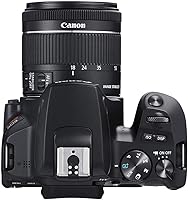
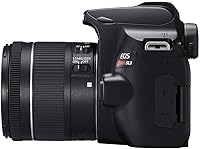
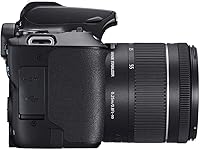
Overview

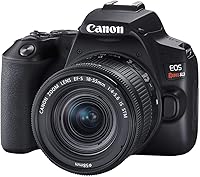
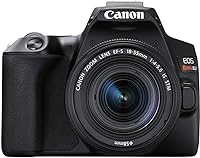
The Canon EOS Rebel SL3 earns its reputation as the smallest DSLR Canon has ever made — and that size really does matter when you're deciding whether to actually carry a camera with you. It ships ready to shoot with the EF-S 18-55mm kit lens attached, so you're not left hunting for glass on day one. Within Canon's Rebel lineup, this compact DSLR sits above the T-series in processing power and screen flexibility, while still keeping the price accessible for someone upgrading from a smartphone. Light enough to toss in a day bag, it punches well above its weight class.

Features & Benefits

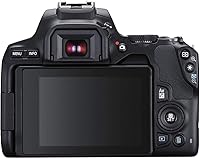
The SL3's 24.1MP sensor paired with Canon's DIGIC 8 processor produces noticeably sharp images, even in dim indoor lighting where phone cameras start to struggle. What really stands out at this price point, though, is Dual Pixel CMOS AF — it tracks subjects smoothly during live view stills and 1080p video, which is rare in this class. The vari-angle touchscreen is a practical win for anyone shooting from unconventional angles: tap to focus, flip the screen toward you, done. Battery life is also genuinely impressive, easily lasting a full day of casual shooting on a single charge without constantly hunting for an outlet.

Best For

Canon's smallest Rebel is a natural fit for first-time DSLR buyers who want real manual controls without being thrown in the deep end. Travel photographers will appreciate the compact build — this is a camera that actually fits in a carry-on without drama. Budget content creators who need a flip-out screen and dependable autofocus for casual video will find it covers the basics well. It also works nicely as a lightweight second body for anyone already owning Canon EF or EF-S lenses. Photography students learning exposure fundamentals will find the guided shooting modes a helpful bridge between auto and full manual.

User Feedback

Owners consistently praise the compact form factor and the quality of stills the sensor produces, with many noting it outperforms expectations at this tier. The kit lens earns decent marks for versatility, though edge sharpness takes a hit at wider focal lengths — worth knowing if precise detail matters to you. The criticism that surfaces most reliably involves 4K video: there is a significant crop, and Dual Pixel AF is disabled in 4K mode, which is a genuine inconvenience. The lack of weather sealing and a single card slot are also flagged as limitations by more demanding shooters. Long-term owners, however, generally report solid durability over months of regular use.

Pros

  • Produces sharp, detailed 24.1MP stills that comfortably outperform smartphone output in good light.
  • Dual Pixel CMOS AF delivers unusually smooth, reliable autofocus for live view shooting at this price point.
  • The compact, sub-450g body makes it one of the easiest DSLRs to carry consistently every day.
  • Vari-angle touchscreen opens up creative shooting angles that a fixed screen simply cannot match.
  • Battery easily lasts a full day of casual shooting without needing a spare on hand.
  • Beginner-friendly interface and guided modes reduce the intimidation factor of switching to manual controls.
  • Compatible with a wide range of Canon EF and EF-S lenses, adding long-term flexibility to the system.
  • Built-in Wi-Fi and Bluetooth make transferring select photos to a phone quick and cable-free.
  • Ships as a ready-to-shoot kit, removing the friction of sourcing a compatible first lens separately.
  • Strong long-term durability reported by owners using the camera regularly over one to two years.

Cons

  • 4K video applies a significant crop and disables Dual Pixel AF, making it impractical for serious video work.
  • The single SD card slot offers no backup redundancy — a real risk when shooting important, unrepeatable events.
  • No weather sealing limits use in rain, dusty environments, or unpredictable outdoor conditions.
  • Kit lens shows noticeable edge softness at wider focal lengths, which becomes obvious when printing large.
  • Only 9 autofocus points through the viewfinder, covering a narrow portion of the frame for fast-action subjects.
  • The plastic build, while adequate, starts to feel less confidence-inspiring compared to metal-bodied rivals over time.
  • High-ISO noise above 6400 is difficult to recover cleanly in post-processing, limiting very low-light shooting.
  • Lack of a second control dial makes switching exposure settings in manual mode slower than on step-up bodies.
  • Wi-Fi pairing process is frequently reported as unreliable, especially on Android devices.
  • Mirrorless alternatives at a similar price now offer better video specs and a more future-proof lens ecosystem.

Ratings

The Canon EOS Rebel SL3 scores here are generated by AI after analyzing thousands of verified owner reviews from global markets, with spam, bot-submitted, and incentivized feedback actively filtered out. The result is an honest snapshot of how real buyers — mostly beginners and travel photographers — feel about this compact DSLR after weeks and months of actual use. Both the genuine strengths and the recurring frustrations are reflected in every score below.

Image Quality
88%
Owners repeatedly describe being surprised by how sharp and detailed their photos look straight out of camera, especially in good natural light. The 24.1MP sensor captures enough detail that cropping in post still leaves a usable image, which beginners find forgiving when framing isn't perfect.
In very low light — dimly lit restaurants or indoor evening events — noise becomes noticeable at higher ISO settings, and some users feel a modern mirrorless sensor at a similar price handles those conditions more cleanly.
Autofocus Performance
84%
Dual Pixel CMOS AF is a genuine differentiator at this tier. Users shooting family events or casual portraits in live view consistently note that the SL3 locks onto faces and tracks moving subjects far more reliably than older entry-level DSLRs they had used before.
The 9-point phase-detection system, while adequate for static or slow-moving subjects through the optical viewfinder, feels limited when shooting fast action like kids' sports. Reviewers switching from mid-range mirrorless cameras found the AF coverage noticeably narrower.
Build Quality & Portability
82%
18%
The compact, lightweight body is one of the most consistently praised aspects across reviews. Travel photographers specifically mention that the SL3 fits in bags where a larger DSLR simply would not, and the plastic construction feels sturdy enough for everyday handling without being precious about it.
The all-plastic chassis does attract comments about feeling less premium than metal-bodied competitors, and the complete absence of weather sealing is a real drawback for anyone shooting outdoors in variable conditions. A few owners reported minor creaking around the grip over time.
Video Capabilities
61%
39%
For casual 1080p video — YouTube clips, travel footage, short social content — the SL3 performs well, with smooth Dual Pixel AF tracking making handheld shots look controlled. The vari-angle screen is genuinely useful for framing video without a monitor.
The 4K mode is a significant disappointment for anyone who treats video seriously. The heavy crop effectively turns the wide end of the kit lens into a medium focal length, and the loss of Dual Pixel AF in 4K means footage can hunt for focus at the worst moments. Most reviewers advise treating this as a 1080p camera.
Ease of Use
91%
First-time DSLR owners consistently rate this as one of the most approachable cameras they have tried. The guided menu system walks beginners through exposure settings in plain language, and the touchscreen interface makes navigating menus feel far less intimidating than older DSLR interfaces.
Users who progress quickly find the menu system and limited custom button layout start to feel restrictive within a year or so. More experienced shooters also note the lack of a top LCD panel means checking settings requires waking the rear screen, which gets slightly tedious in the field.
Kit Lens Quality
72%
28%
The EF-S 18-55mm f/4-5.6 IS STM covers a versatile range that handles everyday shooting — street scenes, portraits at the longer end, interiors at 18mm — without needing an immediate upgrade. The built-in image stabilization is a tangible help when shooting handheld in lower light.
Edge sharpness is a recurring criticism, particularly at wider focal lengths and wide-open aperture. Reviewers who printed large or pixel-peeped frequently noticed softness in the corners that the center of the frame does not exhibit. The variable aperture also limits creative control in dim conditions.
Battery Life
86%
An 820-shot rating per charge is notably strong for a camera in this class, and real-world use backs it up. Day-trip photographers report finishing full outings — several hundred shots across mixed shooting modes — without needing to reach for a spare battery.
Heavy use of the rear LCD for live view or video drains the LP-E17 battery considerably faster than the official figure suggests. Users who shoot extensively in live view mode, rather than through the viewfinder, sometimes find themselves needing a second battery for longer days.
Touchscreen & Display
83%
The 3-inch vari-angle touchscreen is one of the SL3's most practically useful features. Owners frequently mention using it for low-angle street shots or overhead flat lays — scenarios where a fixed screen would force awkward body positions — and the tap-to-focus response is quick and accurate.
Outdoor visibility in bright sunlight is only adequate, not great. A few reviewers shooting at the beach or in open fields found themselves struggling to clearly read the screen without shading it with their hand, which becomes an annoyance when shooting quickly.
Connectivity & Wireless
78%
22%
Wi-Fi and Bluetooth work reliably for transferring photos to a smartphone via the Canon Camera Connect app, and users appreciate being able to browse and pull specific shots rather than dumping an entire card. Remote shooting via the app is a bonus that hobbyists find genuinely fun to use.
The initial pairing process through the app is frequently described as fiddly, particularly on Android devices. Transfer speeds over Wi-Fi are not fast enough for bulk imports of RAW files, so users with heavy shooting sessions tend to fall back to a card reader anyway.
Value for Money
79%
21%
As a complete ready-to-shoot kit — body, lens, and battery included — buyers generally feel they get a fair return on investment, especially given the Dual Pixel AF and DIGIC 8 processor at this price bracket. Users who stick with the EF-S lens ecosystem see long-term value in the mount compatibility.
The growing availability of capable mirrorless cameras at comparable prices has started to make the SL3's value proposition feel less clear-cut than it once did. Reviewers comparing options side by side increasingly note that mirrorless alternatives offer better video, more AF points, and a more future-proof lens ecosystem for similar money.
Low Light Performance
74%
26%
For a beginner-oriented sensor, the SL3 holds up reasonably well in mixed indoor lighting — birthday parties, museum interiors, candlelit dinners — especially when the user keeps ISO below 3200. Many owners say their indoor shots are noticeably better than anything they achieved with a smartphone.
Push the ISO above 6400 and noise becomes difficult to clean up in post without losing fine detail. Users shooting events in dark venues without flash consistently flag high-ISO noise as a limitation, and the kit lens's modest maximum aperture does not help the camera pull in light at night.
Continuous Shooting Speed
67%
33%
At 5fps, the SL3 is fast enough to capture a decent burst of a child blowing out birthday candles or a dog mid-leap. For most beginner use cases, the burst rate is more than adequate and rarely feels like a limiting factor day to day.
Sports and wildlife photographers, even at the enthusiast level, will find 5fps feels sluggish compared to what mid-range mirrorless bodies now offer. The buffer also fills relatively quickly in RAW, which forces unwanted pauses during fast-action sequences.
Storage & Expandability
58%
42%
Single SD card slot accepts widely available UHS-I cards, and the SL3 writes files at a reliable pace for everyday shooting. Beginners rarely find the single-slot setup a meaningful limitation during normal use.
The absence of a second card slot means there is no backup redundancy — a real concern for anyone shooting events where losing a card would be catastrophic. Professional and semi-professional users consistently cite this as the most glaring omission that prevents the SL3 from growing with them.
Shooting Modes & Flexibility
81%
19%
The breadth of shooting modes — from fully automatic Scene Intelligent Auto to full Manual — gives beginners a gentle on-ramp while leaving room to grow into more advanced controls. The dedicated food and night portrait modes are a small touch that gets surprisingly enthusiastic mention in owner reviews.
More experienced users find the creative ceiling arrives sooner than expected. The lack of a second control dial for quick exposure adjustments in manual mode is a friction point that photographers ready to move beyond beginner habits find genuinely limiting compared to even slightly higher-tier bodies.

Suitable for:

The Canon EOS Rebel SL3 is an excellent choice for anyone making their first serious jump from a smartphone or a basic point-and-shoot who wants real creative control without being overwhelmed on day one. The guided shooting modes and intuitive touchscreen make the learning curve genuinely manageable, while the full manual exposure controls mean there is plenty of room to grow as skills develop over time. Travel photographers will find the compact, lightweight body a practical advantage — it slips into a carry-on or a small shoulder bag in a way that larger DSLRs simply do not. Hobbyists who want sharp, detailed photos of family life, landscapes, or casual portraiture will be consistently satisfied with the image output. Students studying photography fundamentals will also benefit from the mix of automatic and manual modes, making it easy to experiment with exposure settings in a forgiving, structured way. Anyone already owning Canon EF or EF-S lenses from a previous body will get immediate value from the compatible mount without investing in new glass.

Not suitable for:

Buyers who plan to use video as a primary function should think carefully before committing, because the Canon EOS Rebel SL3 is fundamentally a stills camera with video as a secondary feature — not the other way around. The heavily cropped 4K mode with disabled Dual Pixel AF is a real limitation that dedicated vloggers or hybrid shooters will find frustrating within a few weeks of use. Photographers who regularly shoot fast-moving subjects — sports, wildlife, active children at events — will find the 9-point autofocus system and 5fps burst rate limiting compared to what mid-range mirrorless cameras now offer at comparable prices. The lack of weather sealing makes it a poor fit for anyone shooting regularly in rain, dust, or harsh outdoor conditions. Professionals or advanced enthusiasts who need a backup card slot for redundancy at important events will find the single SD slot a hard dealbreaker. Those planning to invest heavily in lenses and grow into more demanding photography over the next few years may also want to consider whether the APS-C DSLR ecosystem is where they want to build long-term.

Specifications

  • Sensor: The camera uses a 24.1MP APS-C CMOS sensor with a crop factor of 1.6x relative to full-frame.
  • Processor: Canon's DIGIC 8 image processor handles noise reduction, color rendering, and file writing at improved speeds over the previous generation.
  • Autofocus: The SL3 features 9-point phase-detection AF through the viewfinder and Dual Pixel CMOS AF in live view and 1080p video modes.
  • ISO Range: Native ISO runs from 100 to 25600, with expanded settings available for extreme low-light situations.
  • Shutter Speed: The mechanical shutter operates from 1/4000s down to 30 seconds, plus a Bulb mode for long exposures.
  • Burst Rate: Continuous shooting is supported at up to 5fps, with RAW buffer filling after approximately 7 frames.
  • Video: The camera records 4K UHD at 24 or 30fps and 1080p at up to 60fps in MP4 format, with a 30-minute per-clip recording limit.
  • Screen: A 3″ vari-angle capacitive touchscreen with approximately 1.04 million dots articulates fully away from the body for creative angles.
  • Viewfinder: An optical pentamirror viewfinder offers approximately 0.87x magnification and 95% scene coverage.
  • Storage: A single SD/SDHC/SDXC slot supports UHS-I cards; dual-card redundancy is not available on this body.
  • Connectivity: Built-in Wi-Fi and Bluetooth 4.1 allow wireless image transfer and remote control via the Canon Camera Connect app.
  • Ports: The body includes one Mini-HDMI output port and one USB 2.0 Micro-B port for tethered shooting or charging.
  • Battery: The LP-E17 lithium-ion battery is rated for approximately 820 shots per charge under standard CIPA testing conditions.
  • Body Weight: The camera body weighs approximately 449g without lens, battery, or memory card installed.
  • Lens Mount: The EF-S mount accepts all Canon EF-S lenses and the full range of EF lenses via native compatibility.
  • Kit Lens: The included EF-S 18-55mm f/4-5.6 IS STM lens provides a 35mm equivalent focal range of approximately 28.8–88mm with built-in optical image stabilization.
  • Flash: A built-in pop-up flash supports eTTL metering, and a hotshoe accepts external Speedlite units for more advanced lighting setups.
  • Weather Sealing: The body has no weather or dust sealing and is not rated for use in rain, high humidity, or dusty field conditions.
  • File Formats: The camera saves stills as JPEG (Basic, Normal, or Fine compression) or 14-bit RAW (.CR3), and video as MP4.
  • Warranty: Canon includes a one-year limited manufacturer warranty covering defects in materials and workmanship from the original purchase date.

Related Reviews
Canon EOS Rebel T7
Canon EOS Rebel T7
76%
88%
Image Quality
91%
Ease of Use
74%
Autofocus Performance
82%
Build Quality & Handling
53%
Video Capability
More
Canon EOS Rebel T6i
Canon EOS Rebel T6i
79%
91%
Image Quality
83%
Autofocus Performance
88%
Ease of Use
79%
Build Quality & Handling
61%
Video Capabilities
More
Canon EOS Rebel T3i
Canon EOS Rebel T3i
76%
83%
Image Quality
91%
Ease of Use
67%
Video Performance
72%
Autofocus System
88%
Articulating Screen
More
Canon EOS Rebel T1i DSLR Camera with 18-55mm Lens
82%
91%
Image Quality
88%
Ease of Use
74%
Autofocus Performance
83%
Build Quality
87%
Video Quality
More
Canon EOS R
Canon EOS R
88%
97%
Image Quality
94%
Autofocus Accuracy
91%
Video Performance
88%
Build Quality
90%
Ergonomics & Handling
More
Canon EOS R3 Mirrorless Camera
89%
96%
Autofocus Performance
94%
Image Quality in Low Light
92%
Build Quality and Durability
93%
Video Recording Capabilities
89%
Usability and Ergonomics
More
Canon EOS 5D Mark IV
82%
93%
Image Quality
89%
Autofocus Performance
94%
Build Quality & Durability
61%
Video Capabilities
88%
Low-Light Performance
More
Canon EOS 5D Mark III
79%
93%
Autofocus Performance
89%
Image Quality
82%
Low-Light Capability
91%
Build Quality & Durability
61%
Video Capability
More
Canon EOS 40D Digital SLR Camera
84%
90%
Image Quality
85%
Build Quality & Durability
87%
Battery Life
84%
Ease of Use
88%
Autofocus Performance
More
Canon EOS R8
Canon EOS R8
75%
93%
Autofocus Performance
89%
Image Quality
84%
Video Quality
88%
Portability & Build
41%
Stabilization
More

FAQ

It depends on which lenses you have. The SL3 uses the Canon EF-S mount, so it accepts all EF-S lenses natively and also works with the full range of Canon EF lenses — the ones designed for full-frame bodies. The only lenses that will not fit are Canon EF-M lenses, which are specific to the mirrorless M-series bodies.

For casual 1080p YouTube content it works well — the vari-angle screen lets you see yourself while filming, and Dual Pixel AF tracks your face reliably. Just go in knowing that the 4K mode has a heavy crop and loses that smooth autofocus, so most users stick to 1080p for video work. If video is your primary goal and you want proper 4K, a different camera would serve you better.

It is quite significant — the crop factor effectively narrows your field of view by roughly 1.7x on top of the sensor's existing 1.6x crop, which turns the kit lens's 18mm wide end into something closer to a short telephoto. For vlogging or wide indoor shots, this is a genuine problem. If you only plan to shoot 4K outdoors with room to step back, it is manageable, but most owners end up shooting 1080p to avoid the hassle.

Yes — Canon offers free software called EOS Webcam Utility that lets you connect the SL3 to a Mac or Windows PC via USB and use it as a high-quality webcam. It is a straightforward setup and produces noticeably better image quality than a standard laptop camera, which is a nice bonus if you work from home.

Any UHS-I SD, SDHC, or SDXC card will work. For JPEG shooting, a Class 10 card is plenty. If you plan to shoot RAW files or record video, a UHS-I card rated at least U3 or V30 will keep up with the write speeds without causing lag. Brands like SanDisk Extreme and Lexar Professional are reliable choices that many owners use without issues.

The official 820-shot CIPA rating is a reasonable guide for shooting through the optical viewfinder with occasional live view. If you shoot mostly in live view mode or record a lot of video, expect that number to drop considerably — some users report closer to 300–400 shots under heavy screen use. Carrying a spare LP-E17 battery is a sensible precaution for full-day outings, and they are relatively affordable.

It sits comfortably in the middle of that range. Complete beginners can start in the fully automatic Scene Intelligent Auto mode and gradually work toward manual controls — the on-screen guides help explain what each setting does. For someone intermediate who already understands exposure and wants to push further, the limited custom button layout and lack of a second control dial can start to feel restrictive after a year or so of active learning.

Yes, the vari-angle screen articulates fully and can rotate to face directly forward, which is useful for solo vlogging or self-portraits. It is a proper flip-out hinge design — not just a tilt screen — so it can also swing down for high-angle overhead shots or flip up when the camera is low to the ground.

It is not weather-sealed, so using it in rain or dusty conditions carries a real risk of damage. Light mist for a short period is unlikely to cause immediate harm, but you should not rely on it in wet weather. If you regularly shoot outdoors in unpredictable conditions, a weather-sealed body would be a safer long-term investment.

The kit version includes the camera body, the EF-S 18-55mm f/4-5.6 IS STM lens, one LP-E17 battery, a battery charger, a neck strap, and a USB interface cable. The one thing not included is a memory card, so you will need to buy an SD card separately before you can take your first shot. A 32GB or 64GB UHS-I card is a practical starting point.